

Questions to Ask a Security Contractor in India (2026): The Interview That Separates a Professional from a Fly-by-Night
Before you sign, interview the contractor. Seven themes of questions — credentials, design, scope, installation, handover, support and privacy — each with why it matters and what a good answer sounds like versus a red-flag answer. A homeowner's script for hiring judgment, not just hands.
The contractor who installs your security system is, for the length of the job and often for years after, one of the most trusted people to ever set foot in your home. He learns where your cameras can and cannot see. He holds the passwords to the system that watches your family. He knows your gate, your blind spots, your routines. Choosing him on the strength of the lowest quotation and a confident sales pitch is how homeowners end up with a box of mismatched hardware, no documentation, admin passwords they never received, and a phone number that stops answering the day something breaks.
The good news is that you do not need to be a technical expert to tell a professional from a fly-by-night. You need to ask the right questions and listen carefully to the answers. A real contractor welcomes the interview; a chancer resents it. This guide is that interview — seven themes of questions, each with why it matters, what a good answer sounds like, and the red-flag answer that should make you keep looking. The cheapest contractor who cannot answer these will cost you far more later, because what you are really hiring is not hands and cable. It is judgment.
Scope and how to use this. This is a selection and vetting guide for a homeowner about to hire a security contractor or installer — not an installation manual, and not a price list. For what a fair quote should contain and how to compare rupee figures, see the security quotations guide; this guide is about the conversation before you sign. Ask these questions of every shortlisted contractor and compare the answers side by side. Where a contractor will supply guards, they must operate through a PSARA 2005-registered agency; anything touching cameras, footage or biometric access is personal data under the DPDP Act 2023. Life-safety functions — fire detection, escape-door release — are never chosen on price or a salesman's word; they must be certified and fit for purpose.
Why the interview matters more than the quote
Two contractors can quote nearly the same amount for what looks like the same system, and one of them will serve you well for a decade while the other disappears within a year. The quotation cannot tell you which is which, because the difference is not in the hardware line items — it is in everything the quote does not show: whether the design fits your home or came off a shelf, whether the team that turns up is trained or borrowed, whether you will receive the passwords and the documentation, and whether anyone will answer the phone in eighteen months.
That is why the interview comes first. You are not testing whether the contractor knows more than you — of course he does. You are testing whether he answers plainly, stands behind his work in writing, and treats your questions as reasonable rather than annoying. A professional has heard all of these before and has ready, specific answers. A fly-by-night deflects, over-promises, or gets defensive. Learn to hear the difference.
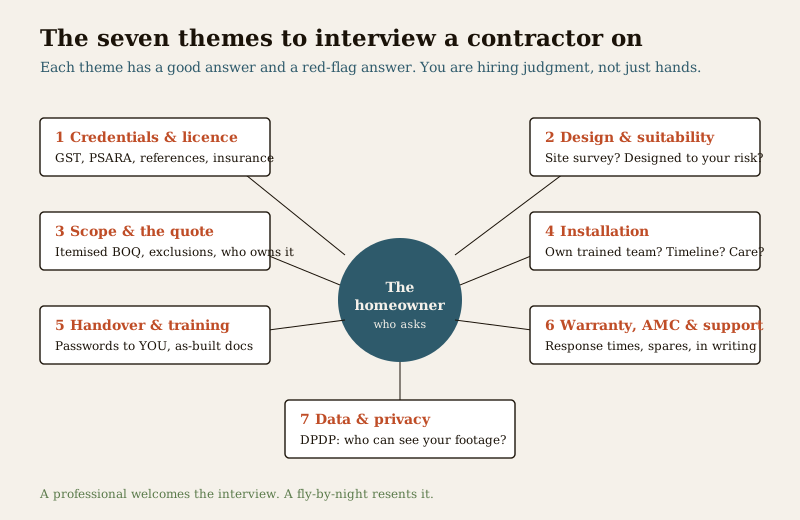
Theme 1 — Credentials, licence and track record
Start here, because everything else rests on whether this is a real, accountable business or a man with a van and a WhatsApp number.
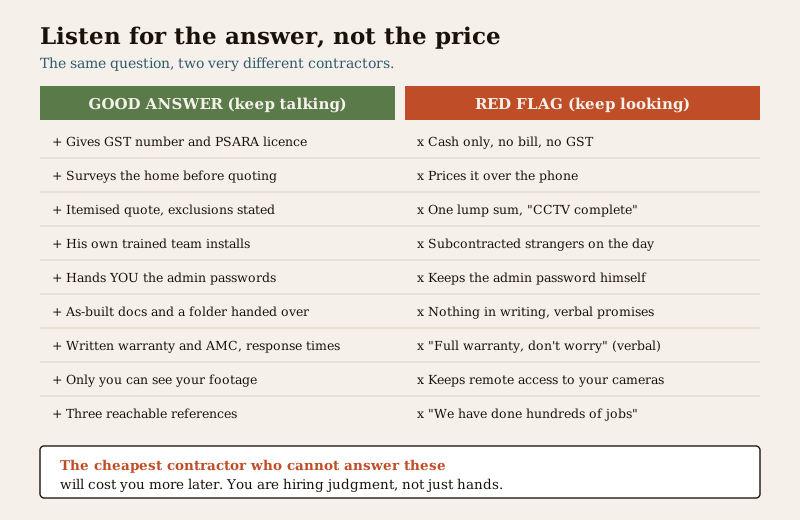
Ask: Are you a registered company, and can I have your GST number? A GST registration and a proper company or firm are the baseline of a business that files, invoices and can be held to account. A good answer gives you the GST number without hesitation and invoices you properly. The red flag is a cash-only operator who cannot or will not give a GST number and offers a discount "without bill" — that discount buys you no warranty, no recourse, and no proof the transaction happened.
Ask: If you are supplying guards, is your agency PSARA-registered? Any contractor who will place security guards must operate through an agency licensed under the Private Security Agencies (Regulation) Act, 2005. A good answer produces the PSARA licence. No licence means the guards are unvetted and the arrangement is unlawful — walk away.
Ask: How long have you been doing this, and can I speak to three customers from the last year? Track record and reachable references are the single best predictor of how you will be treated. A good contractor gives you names and numbers of recent local customers and is happy for you to call them — ideally someone whose system is a year or two old, so you learn how the contractor behaves after the money is paid. The red flag is vagueness ("we have done hundreds of jobs"), references who cannot be reached, or reluctance to let you call anyone. Call the references, and ask them the question that matters most: what happened when something went wrong?
Ask: Do you carry insurance for your work and your workers? Someone falls from a ladder in your compound, or faulty wiring causes damage — who is liable? A professional carries liability and workers' cover and can say so. A fly-by-night has none, which quietly makes you the one exposed.
Red flag, non-negotiable. Cash-only, no GST, no written contract, no reachable references. However good the price, an operator you cannot invoice, trace or hold to a warranty is not a saving — he is a liability wearing a discount.
Theme 2 — Design and suitability
A security system should be designed to your home and your risks. The commonest failure in the Indian market is the contractor who sells the same four-camera kit to every house on the street.
Ask: Will you do a site survey before you quote? A serious contractor walks your property, notes the approaches, the blind spots, the sightlines, the lighting, the power and network points, and where a determined intruder would actually try — then designs to that. A good answer is that the quote follows a survey. The red flag is a price quoted over the phone or from a photo, because a number produced without seeing your home is a kit being sold, not a system being designed.
Ask: How did you decide on this design, and why these positions? You want to hear reasoning tied to your home: this camera covers the gate approach because that is the only vehicle entry; this sensor guards the rear because it is dark and unwatched; we are not putting a camera here because it would only watch your neighbour's wall and raise a privacy problem. A good contractor designs to your risk. The red flag is "this is our standard package" with no reference to your actual layout.
Ask: Which makes and grades are you proposing, and why those? You are not testing brand names; you are testing whether the choice is reasoned. A good answer explains the grade to the need — weatherproof rating (IP) for the cameras that sit in the rain, the resolution that suits the distance, why a mid-tier line is right for your home rather than the most expensive. For how to weigh those choices yourself, the pillar how to choose a security system lays out the decision. The red flag is a contractor who cannot name the make, or who pushes the priciest option with no explanation of what the extra money buys you.
Theme 3 — Scope and the quote
The scope is where honest and dishonest contractors part ways, because the money is not only in the boxes — it is in the cabling, the civil work and the labour that a thin quote conveniently omits.
Ask: Can I have a fully itemised quotation — every item, quantity and rate? A good quote lists each camera, recorder, sensor, cable run, power supply and mount, with quantities and rates, plus labour and taxes, so you can see what you are paying for and compare like with like. The red flag is a single lump sum, or "CCTV system — complete", which hides both what you are getting and where the padding is. For how to read and compare quotes line by line, see the security quotations guide.
Ask: What is included and, more importantly, what is excluded? The dangerous money is in the exclusions. Cabling, conduit, civil work (chasing walls, core-drilling, making good the plaster and paint), the network switch, the power backup, the labour to run cable through your ceiling — any of these left out of the quote becomes a surprise bill mid-job, once you are committed and the walls are already open. A good contractor states the exclusions plainly up front. The red flag is a suspiciously low headline that turns into a much larger figure once "extras" appear.
Ask: Who owns the design and the system once I have paid? You should own your system outright — the hardware, the configuration, the passwords and the design. A good answer confirms it is all yours. The red flag is a contractor who keeps the design proprietary, locks the system so only he can service it, or treats the admin access as his rather than yours. That is a leash, not a service.
Theme 4 — Installation
Who actually turns up at your house, and how they treat it, decides whether the neat quote becomes a neat job.
Ask: Will your own trained team do the work, or is it subcontracted? A good contractor uses his own trained installers, whom he trains and stands behind. Some subcontracting is normal in this trade, but you deserve to know, and you want the accountability to stay with the company you hired. The red flag is discovering on the day that unknown, untrained labourers have been handed the job — nobody vetted, nobody accountable, and the quality of your wiring left to chance.
Ask: How long will the job take, and what is the schedule? A professional gives you a realistic timeline and sticks roughly to it. A red flag is a wildly optimistic promise ("done in a day") for a job that clearly is not a day's work, or no schedule at all.
Ask: How will you protect my home during the work? Installing cameras and cabling means ladders, drilling, dust and cable routes through your finished home. A good contractor talks about protecting furniture and floors, drilling cleanly, routing cable tidily in conduit or trunking, and cleaning up and making good afterwards. The red flag is a shrug — because a contractor careless about your walls and your dust is usually careless about your wiring too.
Theme 5 — Handover and training
This is the theme homeowners forget to ask about and most regret. A system you do not control and cannot use is only half yours.
Ask: Will you hand me the admin passwords and full login control? This is the single most important handover question. The admin credentials to your recorder, your cameras and your app must be handed to you and changed from the factory defaults to something only you hold. A good contractor sets them up in your name and gives them to you. The red flag — and it is common — is a contractor who keeps the admin password "for servicing," which means he retains the keys to the system watching your family, and you are locked out of your own home's eyes. Insist on your own admin access. It is not negotiable.
Ask: What documentation will I receive? You should get an as-built record: what was installed, where each device sits, how it is wired, the model and serial numbers, the network details, the warranty papers, and a simple user guide. A good contractor hands over a folder. The red flag is nothing in writing — which leaves the next technician (or you) blind, and conveniently ties you to the original contractor because only he knows how it was built.
Ask: Will you train us to use it? A good contractor sits with you and your family until you can arm and disarm the system, view and play back footage, add and change users, and know what to do when it beeps. The red flag is a hurried "the app is easy" and out the door, leaving you with hardware you cannot operate.
Theme 6 — Warranty, AMC and support
The install is one day; the support is years. This theme is where "the day something breaks" is decided.
Ask: What is the warranty — on the equipment and on your workmanship — and is it in writing? You want the manufacturer's warranty on the hardware and the contractor's own warranty on the installation, both in writing with clear durations. The security product warranty guide explains what these actually cover and where the gaps hide. The red flag is verbal assurances ("full warranty, don't worry") with nothing on paper — a promise you cannot enforce is not a warranty.
Ask: Do you offer an AMC, and what exactly does it include? An annual maintenance contract keeps the system healthy — periodic checks, cleaning, firmware updates, and a defined response when something fails. Ask what is covered, what costs extra, and crucially the response time: if a camera dies or the recorder stops, how fast will someone come? The security AMC buying guide sets out what a fair AMC contains and what to avoid. A good answer is specific about scope and response times; the red flag is a vague AMC with no committed response window, or none offered at all.
Ask: What happens with spares and support if a product is discontinued — or if you go out of business? A candid contractor talks about spares availability, standards-based equipment that another firm could service, and documentation good enough for a successor to pick up. The honest answer acknowledges that businesses can close and that your documentation and standard hardware are your protection. The red flag is a proprietary, locked system only he can touch — because when he vanishes, you are left with expensive hardware no one else can service.
The vanishing contractor. The most expensive words in home security are "he stopped answering the phone." Guard against it before you sign: written warranty and AMC with response times, your own admin passwords, complete as-built documentation, and standards-based hardware another firm could take over. A contractor who resists all four is one you should not hire.
Theme 7 — Data and privacy
Your cameras and any biometric access record who comes and goes in your home. Under the DPDP Act 2023, that footage and those records are personal data — and the contractor's relationship to them is a question you must ask.
Ask: Who can access my footage, and does anyone but me have remote access? The answer must be that only you and whoever you authorise can view your cameras. A good contractor sets the system up so access is yours alone and removes his own access at handover. The red flag is a contractor who keeps remote viewing access to your cameras "to help with support" — a stranger able to watch inside your home whenever he likes. Any support access must be something you switch on when you ask for help and switch off afterwards, never a standing open door.
Ask: Where is my footage stored, and who holds the keys to it? If recording is local, on your own recorder in your home, the keys are yours. If any footage goes to a cloud service, ask which one, where, for how long it is retained, and who can see it. A good contractor is clear about storage and retention. The red flag is a cloud arrangement tied to the contractor's own account, where your family's footage sits under his control rather than yours.
Match the depth of questioning to the job
You do not need to grill a contractor for a single doorbell camera the way you would for a whole-house system with access control and guards. Right-size the interview:
| System scale | The questions that matter most |
|---|---|
| One or two cameras, small system | GST and a proper bill, written warranty, your own passwords, basic documentation |
| Whole-home CCTV and alarm | The full seven themes — especially site survey, itemised quote, handover and AMC |
| Access control, biometrics, guards | All seven, plus PSARA for guards and close attention to DPDP data and privacy |
| Anything touching fire or escape doors | Certification and fitness-for-purpose, never chosen on price — insist on proof |
For life-safety elements — fire detection, smoke alarms, any lock or access device on an escape route — the questions are not about price at all. Ask for certification and proof that the product is fit for its purpose and that escape is never blocked. A contractor who is casual about life-safety has told you all you need to know.
Before you sign — the buying checklist
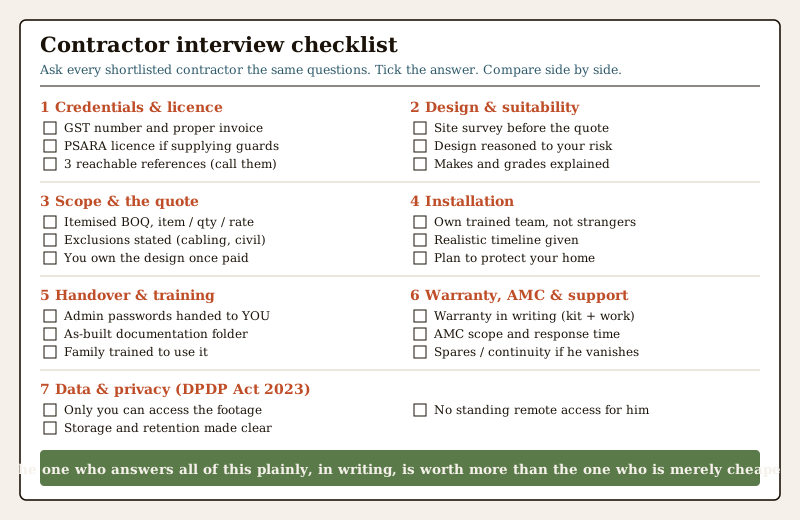
Run every shortlisted contractor through the same short list and compare the answers side by side. The one who answers plainly across all of it, in writing, is usually worth more than the one who is merely cheaper.
- Registered and licensed — GST number given, proper invoice, PSARA licence if guards are supplied, liability insurance in place.
- Reachable references — at least three recent local customers you can call, and you called them.
- Designed, not sold — a site survey happened before the quote, and the design is explained against your home's real risks.
- Itemised quote — every item, quantity and rate, with inclusions and, especially, exclusions stated in writing.
- You own it — hardware, configuration, design and passwords are yours outright once paid.
- Own trained team — you know who is installing, with a realistic schedule and a plan to protect your home.
- Full handover — admin passwords handed to you and changed from defaults, as-built documentation, and training for your family.
- Support in writing — equipment and workmanship warranty, an AMC with a defined response time, and spares/continuity you have asked about.
- Privacy respected — only you can access your footage, no standing remote access for the contractor, and clear storage and retention.
Putting it together
A good security contractor is not defensive when you interview him. He gives you a GST number and, if guards are involved, a PSARA licence. He surveys your home before he prices it and explains his design against your actual risks. His quote is itemised and honest about exclusions. His own trained team does the work and protects your home while they do it. At handover he gives you the passwords, the documentation and the training, and he removes his own access to your cameras. He puts the warranty and the AMC in writing, with response times. And he is straight about what happens the day something breaks.
None of that requires you to understand a single technical spec. It requires you to ask, and to listen for the plain answer versus the deflection. The contractor who cannot pass this interview will not be cheaper in the end — he will be far more expensive, in surprise bills, in a system you cannot control, and in the silence on the phone when you need him most. Do the interview first. You are hiring judgment.
For the wider picture, the pillar how to choose a security system frames the whole decision; the vendor and installer evaluation guide goes deeper on vetting the firm; and the buying guides hub and main security hub gather the rest.
Key takeaways
- You are hiring judgment, not hands — the interview, not the quote, tells you which contractor will serve you well for a decade and which will vanish within a year.
- Credentials first — GST, a proper invoice, PSARA for guards, insurance, and three reachable references you actually call; cash-only with no bill is a liability wearing a discount.
- Designed, not sold — insist on a site survey before the quote and a design reasoned against your home's real risks, not a shelf kit.
- Read the exclusions — a thin lump-sum quote hides the cabling, civil work and labour that become surprise bills once the walls are open.
- Own your system — the admin passwords must be handed to you and changed from defaults; a contractor who keeps them keeps the keys to the eyes on your family.
- Support in writing — warranty, AMC and response times on paper, plus standards-based hardware another firm could service the day this one disappears.
- Privacy is a buying criterion — under the DPDP Act 2023 only you should access your footage; no standing remote access for the contractor.
Where to go next
- How to choose a security system — the pillar that frames the whole decision.
- How to compare security quotations — reading and comparing the numbers behind the interview.
- Security vendor and installer evaluation — vetting the firm in depth.
- Security AMC buying guide and security product warranty guide — the support that decides "the day something breaks."
- The buying guides hub and the main security hub.
References
- Private Security Agencies (Regulation) Act, 2005 (PSARA) — any contractor supplying security guards must operate through a PSARA-registered agency; ask to see the licence before contracting.
- Digital Personal Data Protection Act, 2023 (DPDP) — home CCTV footage and biometric access records are personal data; agree in writing who may access footage, where it is stored and for how long, and ensure the contractor holds no standing remote access.
- National Building Code of India (SP 7), Bureau of Indian Standards — where a system touches fire detection or escape-door hardware, egress and life-safety provisions govern; verify the current edition (SP 7:2026) via the BIS catalogue: https://www.services.bis.gov.in/
- Goods and Services Tax (GST) — a registered contractor issues a proper tax invoice; a "no-bill" discount forfeits warranty, recourse and proof of the transaction.
This is an educational vetting guide for homeowners hiring a security contractor — not legal advice, an installation manual or a price list. Certification and fitness-for-purpose for any life-safety element are non-negotiable and never chosen on price; deploy guards only through PSARA-registered agencies, treat camera and biometric data under the DPDP Act 2023, and verify any standard's current status via the BIS catalogue before relying on it.
Export this guide
Related Guides — Deep-dive reading
How to Choose a Security System (2026): The Master Buying Guide for Indian Homes and Buildings
The mental model that ties the whole buying decision together: start from your own risk, not a product; build the layers your situation actually needs; make the big architecture choices (wired vs wireless, local vs cloud, DIY vs professional); tell real product quality from marketing; and choose a vendor you can trust.
SecurityHow to Choose a CCTV Camera (2026): The Homeowner's Decision Guide for India
Cut through the spec-sheet noise and choose the right CCTV camera for each spot around an Indian home. What actually matters — sensor and low-light performance, lens and field of view, form factor, IP and IK ratings, honest smart features — and the marketing claims to ignore.
SecurityHow to Compare Security Quotations in India (2026): Read Three Quotes Like an Expert
Three quotes for the same home security job will name different amounts, different equipment and different scope. This homeowner guide shows how to make them truly like-for-like first, read every line item, spot what a cheap quote hides, and pick on total value rather than the lowest number.
SecurityRelated Tools — Try Free
Security Vendor Evaluation Scorecard
Rate a CCTV/security installer or guarding agency across eight weighted criteria for a hire / negotiate / walk-away verdict.
Vendor ScorecardCCTV Cloud vs Local Cost Calculator
Compare cloud CCTV subscription against a local NVR + HDD — upfront, 5-year total, monthly fee and break-even.
Cloud vs LocalInterior Red Flag Checklist — Before Signing
54 red flags across 8 categories with a live risk score and personalised PDF.
Red Flag Checklist