
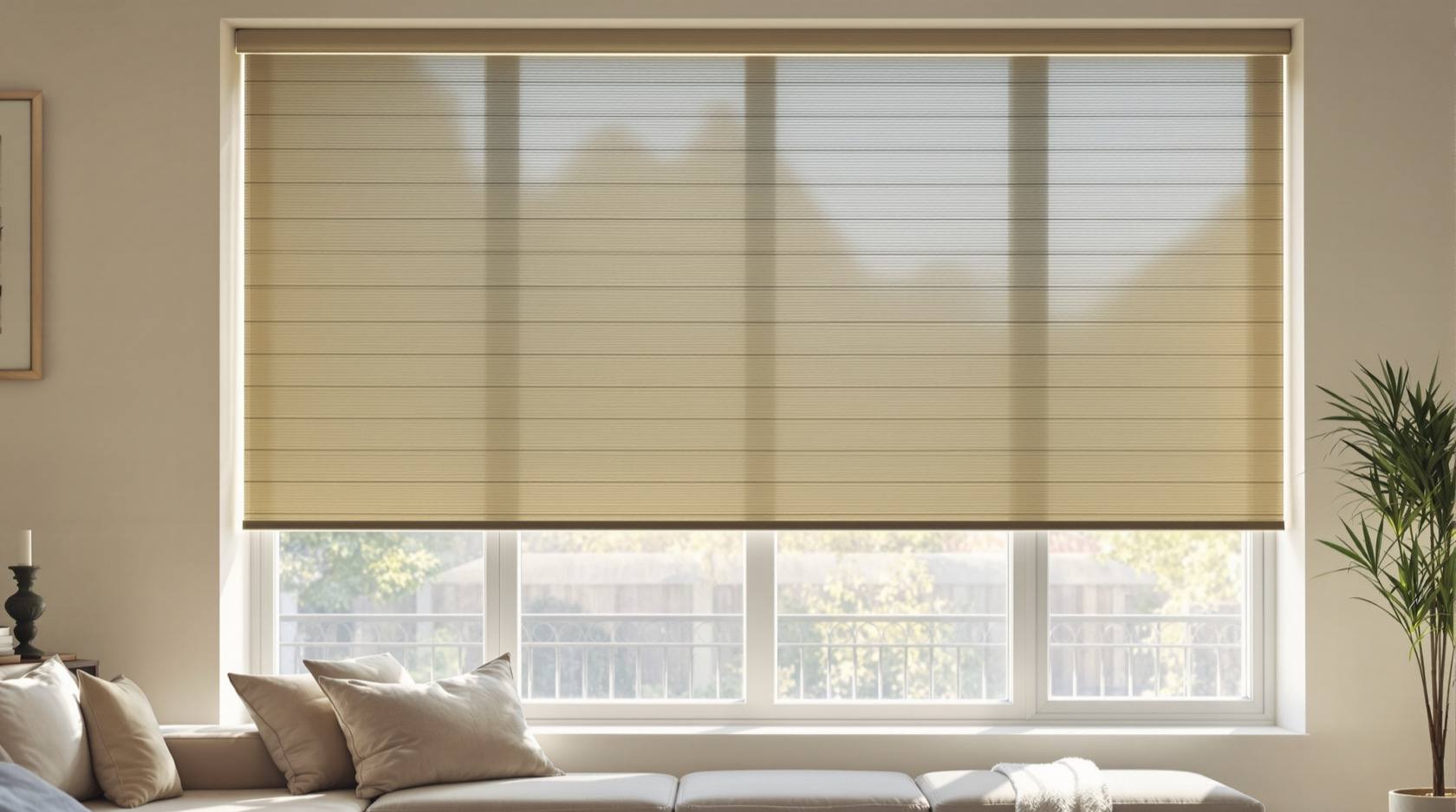
Security Curtains Blinds Integration in India (2026): Motorised Blinds for Privacy and Presence
How motorised curtains and blinds earn a place in a smart security system as a privacy and presence layer while you are home or away — with the honest limit that they are not a barrier, and the life-safety rule that they must never trap anyone at an escape window.
A motorised curtain or blind is one of the friendliest things you can add to a smart home: a tap, a schedule or a scene, and the room dresses itself. It is easy to file it under comfort and forget it. But window coverings sit exactly where security begins — at the glass that a passer-by looks through and a home is judged from. Closed at the right moment they decide whether a stranger on the street can see your television, your safe and whether anyone is in. Moving on a believable rhythm while you travel, they are one of the most convincing "someone is home" signals you can send. So they belong in the security conversation, as long as we are honest about the one thing they emphatically are not.
This is a planning guide for homeowners. Its job is to place motorised curtains and blinds correctly in your security system — what they genuinely do for privacy and presence, how they slot into scenes, and, in bold where it matters, the limit and the life-safety rule you must never cross. The blinds and curtains here are a privacy and presence layer, not the thing that keeps an intruder out; keep that distinction clear and they earn their place.
Scope & safety. Motorised curtains and blinds add convenience and a privacy or presence layer; they are not a security barrier and do not stop entry — that is the job of grilles, glazing, locks and sensors. Smart is convenience, not a guarantee: a blind that fails offline must not leave a window stuck, so keep a manual override. Life-safety is never smart-only — a motorised covering must never block or jam an emergency-escape window or exit route, and must have a manual release that works in a power cut so it cannot trap anyone in a fire. Any mains wiring is licensed work: specify it, then have a competent electrician fit it.
What motorised blinds actually do for security
Strip away the marketing and a motorised curtain or blind gives you three security-adjacent things, and only three. It controls the view in (privacy). It can produce a lived-in rhythm when you are away (presence). And it can be pulled into your scenes so a single action — goodnight, away — moves the coverings along with the alarm and the lights. That is the whole of it, and it is genuinely useful. What it does not do is resist a person trying to get through the window. Hold those two facts together and the rest of this guide follows.
The value of motorising the coverings is that these actions stop depending on someone being home to walk around drawing curtains. A blind that only closes when you remember to close it is a habit; a blind that closes at dusk on its own, or the moment you set the house to away, is a control. Let us take privacy first.
Privacy: deciding what the street can see
The most immediate security use of a blind is the plainest: closed, no one can see in. An uncovered, lit, street-facing or ground-floor window is a shop display of your home — the electronics on the wall, the almirah, whether the drawing room is occupied, whether the lights are off because everyone is out. A person casing a lane does not need to break anything to gather all of that; they only need the window left open to view. Closing the covering removes the free look.
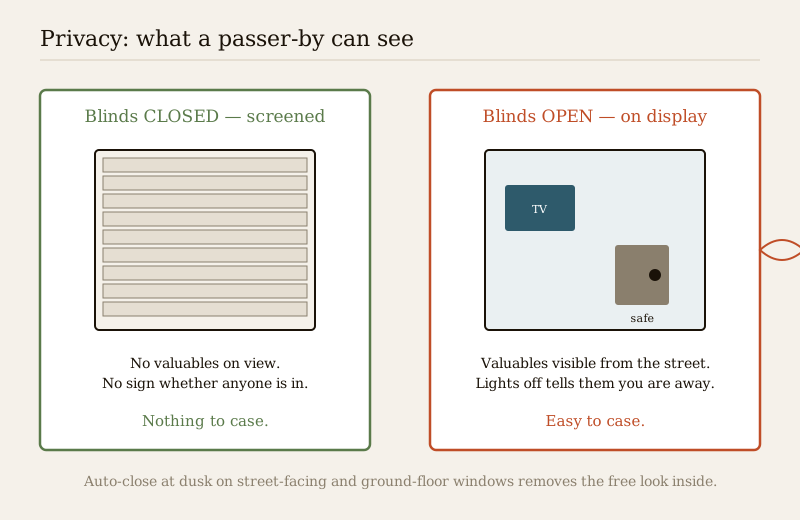
Motorising this turns a good intention into a reliable behaviour:
- Auto-close at dusk. As the light drops and interior lights come on — the exact moment a lit room becomes visible from a dark street — the coverings close on schedule or on a light sensor. This is the single highest-value privacy automation for street-facing rooms.
- Close on "away". When you set the house to away, ground-floor and street-facing coverings close so the empty home is not on display. (For presence you may want the opposite on some windows — more on that below; the two goals are reconciled per window, not globally.)
- Prioritise the vulnerable windows. Ground-floor, street-facing and any window a passer-by can reach or look through are where privacy coverings matter most. Upper floors facing your own garden matter far less. Spend the motorisation where the exposure is.
Privacy is not only about intruders. It is about not broadcasting your routine, your valuables and your absences to everyone who walks past — the quiet groundwork that makes casing harder. The wider treatment of what your smart home reveals, and how to reduce it, is in the smart security privacy guide.
Presence: blinds as an occupied-home signal
Now the mirror image. When you are away for a weekend or a fortnight, a home that never changes — coverings frozen in one position, day and night — reads as empty. The most natural signal of occupancy is the ordinary rhythm of a lived-in house: coverings open in the morning, close after dark, day after day. Motorised curtains and blinds can produce that rhythm on their own, which makes them one of the more convincing pieces of an occupancy simulation.
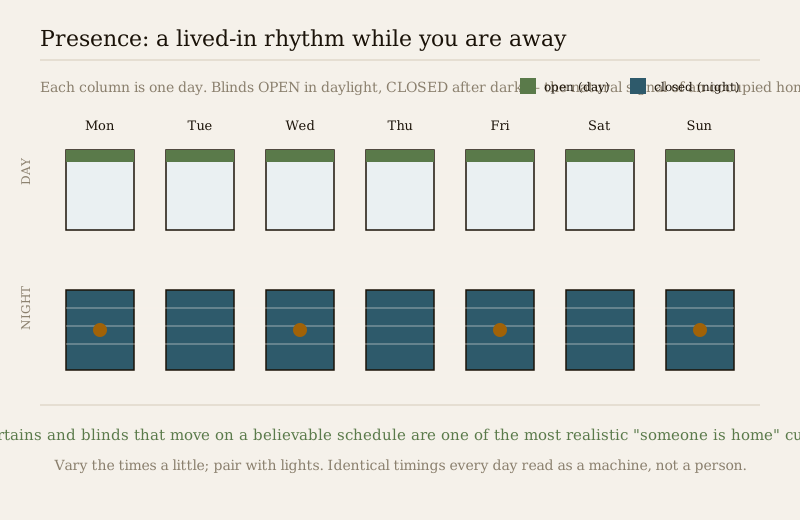
Why coverings are a strong presence cue specifically:
- Movement, not just light. A lamp on a timer is a familiar trick and a familiar giveaway. A covering that actually opens in the morning and closes at night adds real, visible change to the facade — the kind of thing a watcher expects from an occupied home.
- It pairs naturally with lights. Coverings closing at dusk as the lights come on is exactly what happens when people are in. Run the two together and the story is coherent.
- Vary it so it reads human. Identical timings to the minute every day read as a machine. Let the schedule wander a little, mix rooms, and avoid a rigid pattern. Presence is a performance; a too-perfect one is a tell.
Presence via coverings is one instrument in a larger act. It works best combined with lighting, occasional sound and staggered timing — the full method is in the occupancy simulation guide, and the way to wire a believable "away" routine that moves coverings, lights and more together is the security automation scenes guide. One honest caveat: presence simulation lowers the odds of being picked as an easy, obviously-empty target; it is a deterrent, not a guarantee, and it never replaces locks, sensors and alarms.
Blinds inside scenes
Where motorised coverings really earn their keep in security is as one line in a scene, so you never have to think about them:
| Scene | What the coverings do | Alongside |
|---|---|---|
| Goodnight | Close street-facing and ground-floor coverings | Arm the perimeter, dim or off the lights, lock up |
| Away / holiday | Coverings follow a believable open-by-day, close-by-night rhythm | Presence lighting, alarm armed, notifications on |
| Good morning | Open coverings on schedule | Disarm interior, lights as needed |
| Panic / intrusion | Optional: leave coverings as-is or open for visibility | Sirens, lights full, alert — coverings are secondary here |
The design rule is the same one that governs every scene: automate the reversible, low-stakes actions freely, and never let a convenience action work against safety. Closing a blind for privacy at night is safe and reversible. Closing a blind across a window someone might need to escape through is not — which brings us to the two things that matter more than any of the above.
The honest limit: privacy and presence, not a barrier
Here is the line, in bold because it is the one people quietly get wrong.
Motorised curtains and blinds are a privacy and presence layer. They are not a security barrier and they do not stop entry. Fabric and slats stop a look; they do not stop a hand, a tool or a body. A closed blind behind an unprotected pane is one thin, silent layer away from open — it hides the room, it does not defend it. Treating "the blinds were closed" as protection is exactly the confusion to avoid.
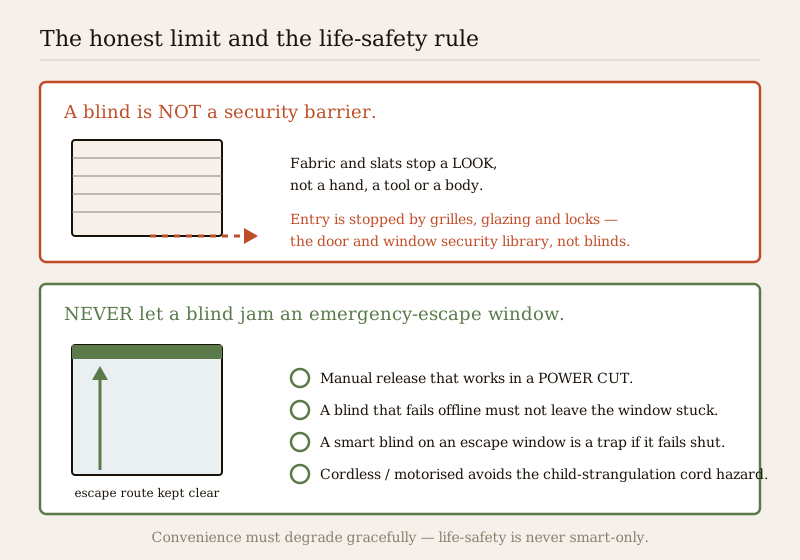
What actually resists entry at a window is a different set of things entirely: grilles, robust glazing, good locks, and the sensors that catch a breach — and those live in their own library. Do not let a smart blind stand in for any of them. Get the barrier right first with the door and window security library, and treat the motorised covering as the privacy and presence dressing on top of a window that is already properly protected.
The life-safety rule: never trap anyone at a window
This is the most important paragraph in the guide, so it is in bold.
A motorised curtain or blind must never block or jam an emergency-escape window or an exit route, and it must have a manual release that works in a power cut. In a fire, seconds and clear routes decide who gets out. A window or door meant for escape must stay usable by hand, in the dark, with no power and no app. A smart covering across such an opening that fails shut — because the Wi-Fi dropped, the hub crashed, the battery died or the power went out — is not an inconvenience; it is a potential trap. That is unacceptable on any egress path.
So the rules for coverings on or near escape openings:
- Manual override, always. Any motorised covering on a window someone might need to open must be operable by hand without power. If it cannot be released manually in an outage, it does not belong on that window.
- Fail so the window still works. A covering that goes offline must not leave the opening stuck. Prefer coverings that a person can simply push or pull aside if the motor is dead, and position them so a failed blind never jams the sash or the exit.
- Keep escape routes clear. Do not motorise a covering in a way that could obstruct a designated escape window, a fire-exit door or the path to it. Life-safety is never smart-only; the smart layer sits on top of a route that works without it. For anything touching fire strategy, the National Building Code (SP 7:2026) egress provisions are the floor, and how smart coverings and alarms coordinate is covered in the security fire-alarm integration guide.
And a separate, older hazard that motorisation actually helps with: corded blinds are a genuine child-strangulation risk. Looped operating cords have injured and killed young children. Cordless and motorised coverings remove the hanging cord entirely, which is one of the quiet safety wins of going motorised — provided you have not replaced a cord hazard with a fail-shut trap on an escape window. Get both right.
Reliability: it must degrade gracefully
The everyday India test for any smart device is the power cut and the dropped connection, and coverings are no exception. A motorised blind that only responds through the cloud is dead in a six-hour outage; a hub failure can freeze every covering in the house at once. None of that is dangerous if the covering degrades gracefully — a manual pull still works, the window still opens, the room still functions. It becomes dangerous only when there is no fallback.
- Keep a manual path. The covering should always be movable by hand, cloud or no cloud. This is both a convenience and, on escape windows, a life-safety requirement.
- Local control beats cloud-only. Coverings that can be driven from a local hub or a physical switch survive an internet outage; cloud-only coverings do not. Prefer local where the covering matters.
- Do not put anything safety-critical solely on a blind. Presence, privacy and comfort are fine to automate. Never make a motorised covering the only thing standing between a person and an escape route.
Coordinate all of this with the brain of the system in the smart security hubs guide, which covers connectivity choices — Matter, Zigbee, Z-Wave, Wi-Fi and Thread as generic standards; confirm current support at buying time — and how to keep a system working when one part fails.
Where this sits, and a quick self-check
Motorised coverings are a small, pleasant layer in a much larger picture. Place them with the smart home security pillar, which sets out how privacy, presence, barriers, sensors and alarms fit together, and pressure-test how much your home actually protects you — not how many gadgets it has — with the home security risk scorecard. If the scorecard flags an unprotected ground-floor window, the answer is a grille or better glazing, not a nicer blind.
Key takeaways
- Motorised curtains and blinds are a privacy and presence layer in a security system — genuinely useful, but never a barrier.
- Privacy: close street-facing and ground-floor coverings so no one can see your valuables, your layout or whether you are in — auto-close at dusk and on "away" are the high-value automations.
- Presence: coverings opening by day and closing by night on a believable, varied rhythm are one of the most realistic occupied-home signals while you travel; pair them with lights.
- The honest limit, in bold: blinds and curtains do not stop entry. Fabric and slats stop a look, not a hand, a tool or a body. Barriers are grilles, glazing, locks and sensors.
- The life-safety rule, in bold: a motorised covering must never jam an emergency-escape window or exit, and must have a manual release that works in a power cut. A smart blind that fails shut on an escape window is a trap.
- Degrade gracefully: keep a manual override, prefer local control, and never put anything safety-critical solely on a blind. Cordless and motorised also removes the child-cord strangulation hazard.
Where to go next
- Put coverings in context with the smart home security pillar and reduce what your home reveals with the smart security privacy guide.
- Build a believable away routine with the occupancy simulation guide and wire it as a scene with the security automation scenes guide.
- Get the actual window barrier right — grilles, glazing, locks, sensors — with the door and window security library.
- Coordinate coverings, connectivity and graceful degradation with the smart security hubs guide, and keep escape routes safe with the security fire-alarm integration guide.
- Test how protected you really are with the home security risk scorecard, and return to the smart home security hub and the security hub.
References
- National Building Code of India, SP 7:2026 (Bureau of Indian Standards) — egress and escape-route provisions relevant to any window covering on or near an emergency-escape opening.
- Digital Personal Data Protection Act, 2023 — for any camera, presence or occupancy data your smart-home system collects alongside covering automation.
- Connectivity and interoperability frameworks — Matter, Zigbee, Z-Wave, Wi-Fi and Thread — as generic standards for how motorised coverings talk to hubs and scenes; confirm the current version and device support at specification time.
- Bureau of Indian Standards (BIS) and the Bureau of Energy Efficiency (BEE) — for verifying the current status of any product standard or rating claimed by a motorised covering or its motor.
This is an educational planning guide for homeowners. Motorised curtains and blinds are a privacy and presence layer, not a security barrier — they do not stop entry, which is the job of grilles, glazing, locks and sensors. A motorised covering must never block or jam an emergency-escape window or exit route and must have a manual release that works in a power cut. Mains electrical work is qualified professional work — engage a licensed electrician, and verify any applicable National Building Code (SP 7:2026) egress and DPDP Act 2023 requirement for your project.
Export this guide
Related Guides — Deep-dive reading
Security Fire Alarm Integration in India (2026): Smart Alerts, Certified Systems, Fail-Safe Egress
The most important sentence a smart-home designer can say about fire is also the least profitable: a smart-home smoke sensor or fire notification is a helpful add-on, not a substitute for a certified fire-alarm system. This guide draws the line hard — life-safety detection and alarm belongs to the NBC-governed certified system — and then covers the genuinely useful, correctly-scoped automations the smart layer can add on a verified fire signal: unlock for egress, open the gate for the fire tender, light the escape path, stop the away-scene, and notify everyone loudly. All of it fail-safe. None of it in the way of the system that actually saves lives.
SecuritySecurity Lighting Integration for Smart Homes in India (2026): Making Light an Active Part of the Response, Not Just a Fixture
How to wire smart lighting into the security system so a sensor or camera can light an intruder for the camera to see, the alarm can throw every light full-on, and away-mode can fake occupancy — all built on a reliable base that keeps working when the hub, the network or the power drops.
SecurityGeofencing Home Security in India (2026): Convenience Without the Trap
A geofence is a virtual boundary around your home; your phone crossing it can arm the alarm as the last person leaves and light the place up as you arrive. This guide explains the genuinely useful security uses, and the honest caveats: never let a phone's location alone unlock your door, never make a geofence the only thing that arms your home, and treat continuous family tracking as sensitive data.
SecurityRelated Tools — Try Free
Home Security Risk Scorecard
Score your home across six security layers — perimeter, entry points, lighting, detection, alarm and habits — and get a prioritised action plan.
Security ScorecardWindow Treatment Selector
Curtains, blinds or a layered system? Answer five questions about your room and get a specific recommendation.
SelectorWindow Grill Design Selector
Pick a window grille style and material by priority — security, looks, budget, view — and estimate cost.
Window Tool