
Reducing Heat Gain Through Windows in India (2026): The Ranked Playbook
Every way to cut the heat coming through your windows, ranked by rupee and effectiveness: orientation, external shading, low-SHGC glass, solar-control film, blinds and the night flush.
In a hot Indian summer, the window is where most of your cooling load is born. A bare clear pane on a sunny wall admits roughly four-fifths of the sun's heat straight into the room, your air conditioner spends the afternoon fighting it, and the electricity bill follows. The reassuring part is that you have not one fix but a whole ladder of them, and the cheapest moves on that ladder are often the most effective.
This guide is the practical, ranked-by-rupee-and-effectiveness playbook for cutting heat coming in through windows. It is deliberately the actionable how-to, so it stays out of the way of its cousins. The solar heat gain and windows guide explains the science of SHGC, sun angles and why west is worst; the window shading strategies guide is the device catalogue of chajjas, fins, louvers and jaali; and the glass pages, solar control glass and low-E glass, go deep on the coatings. Here we simply rank every lever by what it costs and how much heat it stops, so you know where to spend first. For the whole window as an energy system, start at the energy-efficient windows pillar.
The one number to anchor on is SHGC, the Solar Heat Gain Coefficient. Clear single glass sits around 0.82; good solar-control glass reaches about 0.25. Everything below is, in effect, a way to push that 0.82 downward, or to stop the sun reaching the glass at all.
The ranked toolkit, at a glance
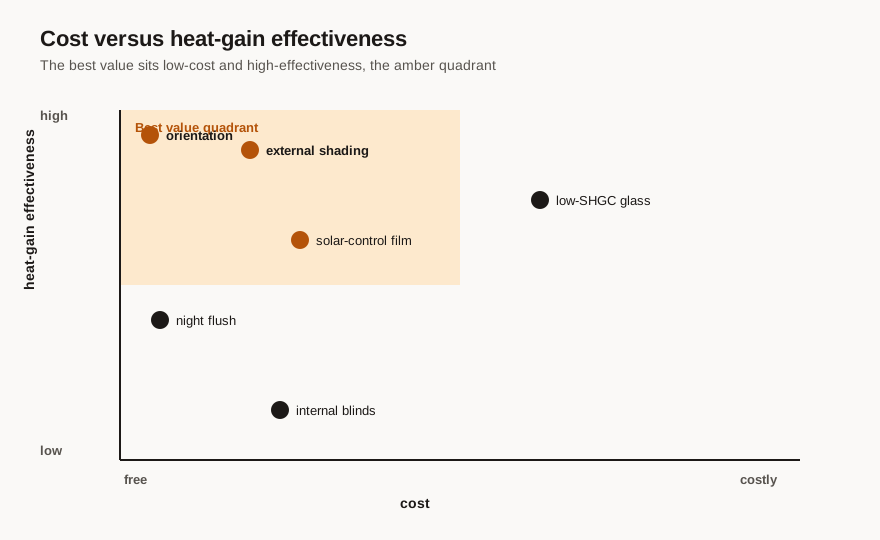
Read this table top to bottom. The early rows are cheap and powerful; the later ones are convenient but weak. In hot India, solar gain dwarfs conduction, so shading and low-SHGC glass beat chasing a cold-climate U-value.
| # | Measure | How it works | Indicative cost | Heat-gain cut | Best for |
|---|---|---|---|---|---|
| 1 | Orientation and placement | Keep large glazing off the west; put it north | near zero at design stage | very large | new builds, renovations |
| 2 | External shading (chajja, overhang, fins) | Stops the sun BEFORE it hits the glass | one-time concrete or steel, low running cost | very large (5 to 10x internal) | south, east and west walls |
| 3 | Low-SHGC glass (Low-E, solar control) | Reflects solar infrared, low SHGC, high daylight | about ₹100 to 150 per sqft over plain glass | large and permanent | new windows, AC rooms |
| 4 | Solar-control film retrofit | Sticks onto existing single glass, cuts SHGC | about ₹50 to 150 per sqft | moderate to large | existing single glazing |
| 5 | Internal blinds and curtains | Block light after heat is already inside | ₹ low | small to moderate | glare and privacy, not heat |
| 6 | Ventilation timing and night flush | Dumps stored heat, brings in cool night air | free | moderate, free comfort | non-AC rooms, shoulder seasons |
The order is not arbitrary. Each step down the list either costs more per unit of heat stopped, or stops less heat, or both.
1. Orientation and placement: the free win
The cheapest heat you ever block is the heat you never invite in. At the design stage, deciding which wall carries the big glass costs nothing and outperforms every gadget you can buy later.
- West is the worst wall. The low afternoon sun beats straight through west glass during the hottest hours. Keep west glazing small.
- North is the kind wall. Soft, indirect light with little heat. Push your largest windows and living spaces north where you can.
- South is manageable because the high summer sun is easy to shade with a modest overhang.
- East brings strong but cooler morning sun, which a room has all day to shed.
If you are renovating rather than building, you cannot move a wall, but you can choose where to add or enlarge openings, and you can reserve your shading and glass budget for the west and south.
2. External shading: stop the heat before the glass
This is the single best value move on an existing or new home. External shading is roughly 5 to 10 times more effective than internal blinds for one simple reason: it intercepts the sunlight outside, before it passes through the glass and becomes trapped radiant heat inside the room.
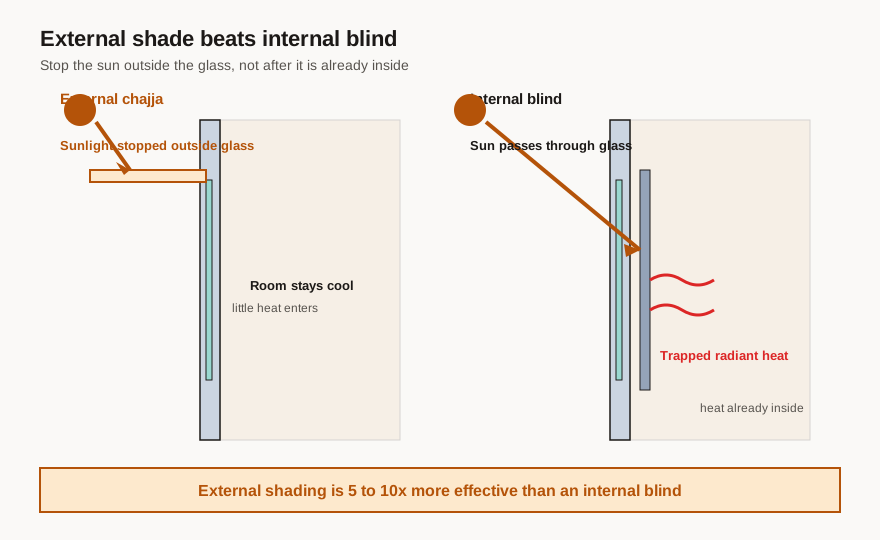
- A horizontal chajja or overhang shades the high midday and summer sun beautifully, which makes it ideal for south windows.
- Vertical fins or movable louvers handle the low east and west sun that a horizontal overhang cannot reach.
- Jaali, deep reveals and pergolas add shade while keeping daylight and breeze.
The economics are unbeatable: a chajja or fin is a one-time concrete or steel cost with near-zero running cost forever. For the full menu of devices, depths by orientation and the projection rules, see the window shading strategies guide; this is why that catalogue sits so high on the value ladder.
3. Low-SHGC glass: the permanent fix
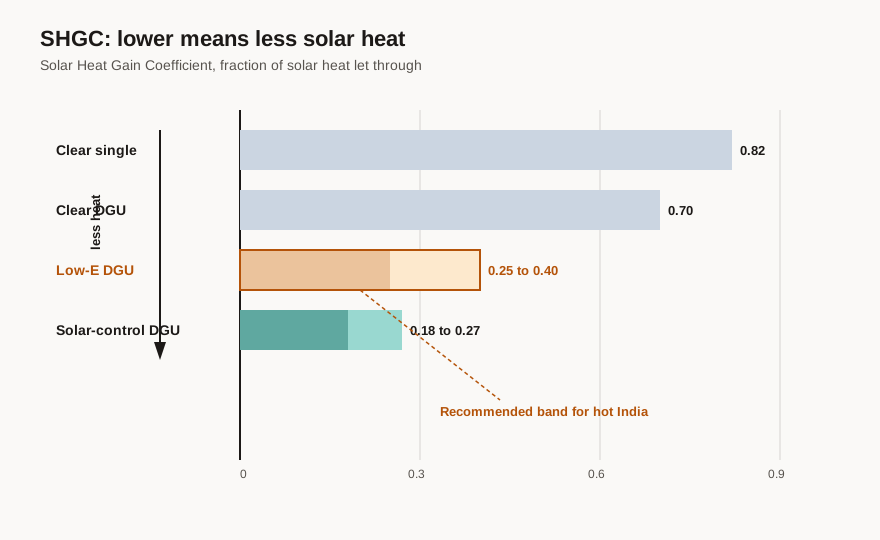
When you are buying new windows, the glass itself is the biggest permanent lever. A spectrally selective Low-E coating in a double-glazed unit reflects the sun's infrared while passing visible light, so it cuts heat hard but keeps the room bright. This pushes SHGC down from clear glass's 0.82 toward the 0.25 to 0.40 band, and aggressive solar-control glass reaches about 0.18 to 0.27.
| Glass build-up | Typical SHGC | Indicative glass cost over plain | Use it on |
|---|---|---|---|
| Clear single | about 0.82 | base | non-sun walls only |
| Clear double glazed unit | about 0.70 | DGU step-up | mild walls, acoustics |
| Spectrally selective Low-E DGU | 0.25 to 0.40 | about ₹100 to 150 per sqft | most AC rooms |
| Aggressive solar-control DGU | 0.18 to 0.27 | higher | large west and south glass |
The trick is to keep the Light-to-Solar-Gain ratio (VLT divided by SHGC) high, above about 1.25, so you cut heat without darkening the room into a cave. The solar control glass and low-E glass guides cover the coatings in detail. The honest verdict: in hot India, do not chase a sub-1.0 U-value the way cold climates do. Low SHGC plus external shading plus a tight seal beats an expensive triple-glazed unit here.
4. Solar-control film: the retrofit bargain
If you already have single glazing and replacing it is not on the table, a solar-control window film is the cheapest meaningful heat fix you can buy, at roughly ₹50 to 150 per square foot applied. The film bonds to the inside face of the existing pane and reflects a large share of solar infrared, knocking the SHGC down without changing the window.
- It is a moderate-to-large cut at a small fraction of new-glass cost, which is why it ranks just below new low-SHGC glass.
- Buy a reputable spectrally selective film, not a cheap dark tint that simply dims the room.
- Mind adhesion and warranty: a quality film professionally applied lasts years; a bargain film bubbles and peels in the heat.
Film is the right answer for rented homes, older flats and any window where the glass is sound but the SHGC is not.
5. Internal blinds and curtains: comfort, not heat control
Internal blinds, roller shades and curtains are cheap, convenient and good for glare and privacy. They are also, honestly, the least effective heat measure on this list, because by the time sunlight has passed through the glass to reach a blind, the heat is already inside the room and the blind mostly re-radiates it. Light-coloured, reflective-backed blinds help a little, but treat them as a finishing touch, not a solution. If your only tool is internal, it is far better than nothing, but plan to add external shading or film when you can.
6. Ventilation timing and the night flush
Finally, a free lever that costs nothing but discipline. Through the hot day, keep sun-facing windows shut and shaded so you are not inviting heat in. After sunset, when outside air drops below indoor temperature, open up and flush the house with cool night air, ideally cross-ventilating between opposite windows so the day's stored heat in your walls and floor is carried away.
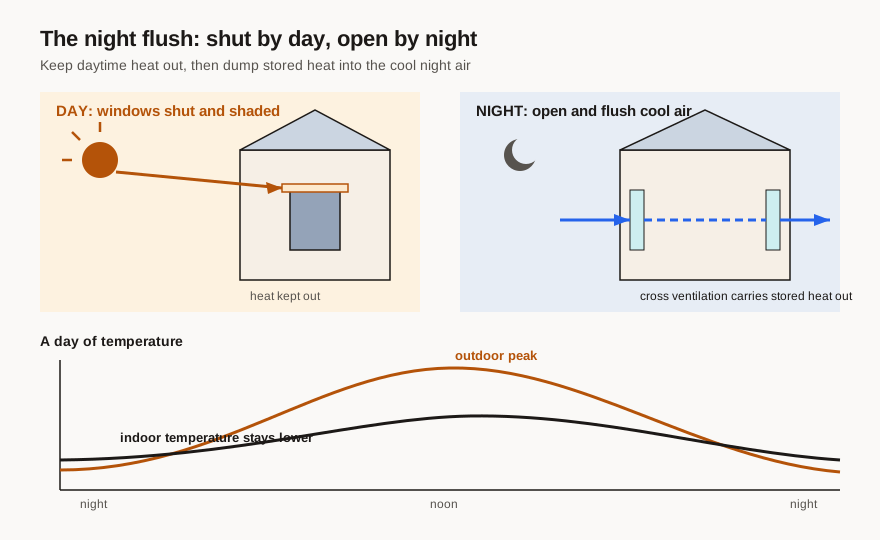
The National Building Code 2016 already nudges you toward roughly ten per cent of floor area as openable window, which is exactly what makes a good night flush possible. This is most powerful in non-AC homes and in the shoulder seasons before peak summer. For the whole-home version of this thinking, see passive cooling strategies for Indian homes; this guide is the windows-only, rupee-ranked slice of that bigger picture.
How to spend, in order
If you have a fixed budget and a hot home, work down this list and stop when the money runs out:
- First, free: fix your orientation logic and your ventilation timing. Shut sun-facing windows by day, flush at night.
- Next, cheapest hardware: add external shading, chajjas and fins, to the west and south windows. This is your best rupee-per-degree.
- For existing single glazing: apply solar-control film, about ₹50 to 150 per square foot, to the sunniest panes.
- When replacing windows: specify spectrally selective Low-E DGU, especially on west and south, and keep LSG high.
- Last and least: internal blinds for glare and privacy, not as your heat plan.
The pattern is consistent: stop the sun outside the glass first, pick a low-SHGC pane second, and treat internal blinds as comfort, not cooling. Get the order right and the 45-degree afternoon stops at the wall instead of in your living room.
References
- Eco-Niwas Samhita 2018, BEE and ECBC: https://ecbc.in/econiwas.html
- Best glass for windows in India 2026, IndiFrame: https://indiframe.com/blog/best-glass-for-windows-in-india
- Low-E glass and energy efficiency, Guardian Glass: https://www.guardianglass.com/eu/en/our-glass/glass-types/low-e-glass
- Types of Low-E and solar control glass, FG Glass India: https://fgglass.com/blogs-details/types-of-low-e-glass
- Glass and window solutions for homes, Saint-Gobain India: https://in.saint-gobain-glass.com/knowledge-center/glass-and-windows
Export this guide
Related Guides — Deep-dive reading
Window Shading Strategies for Indian Homes
The external shading device catalogue and overhang geometry, by orientation
Windows & GlazingDesigning a Naturally Energy-Efficient Indian Home
Comfort first, gadgets last — passive design, orientation, insulation, ventilation and the climate wisdom that cuts Indian energy bills
SustainabilityEnergy-Efficient Facades in India: How the Building Skin Cuts Your Cooling, Heating & Lighting Bills
How a building facade drives cooling, heating and lighting energy in India, the three levers of solar-heat-gain control, insulation and daylighting, U-value, SHGC, VLT and WWR in plain terms, ECBC and Eco-Niwas expectations, and real Indian green buildings.
Building FacadesRelated Tools — Try Free
Brise-Soleil Visualizer
Interactive horizontal-louvre cut-off angle calculator — sun altitude, louvre depth, and spacing inputs with a live shadow preview. Computes θ = arctan(spacing/depth) for façade shading, ECBC envelope compliance, hospital daylight design, and tropical sun-control detailing.
Sun Shading ToolCross-Ventilation Analyzer
Estimate airflow and air changes per hour (ACH) from room size, window areas, layout, and local wind — with NBC 2016 Part 8 compliance check.
Ventilation CalculatorWindow Orientation Planner
Pick the best window type, glass and shading by wall direction — north, east, south and west.
Window Tool