
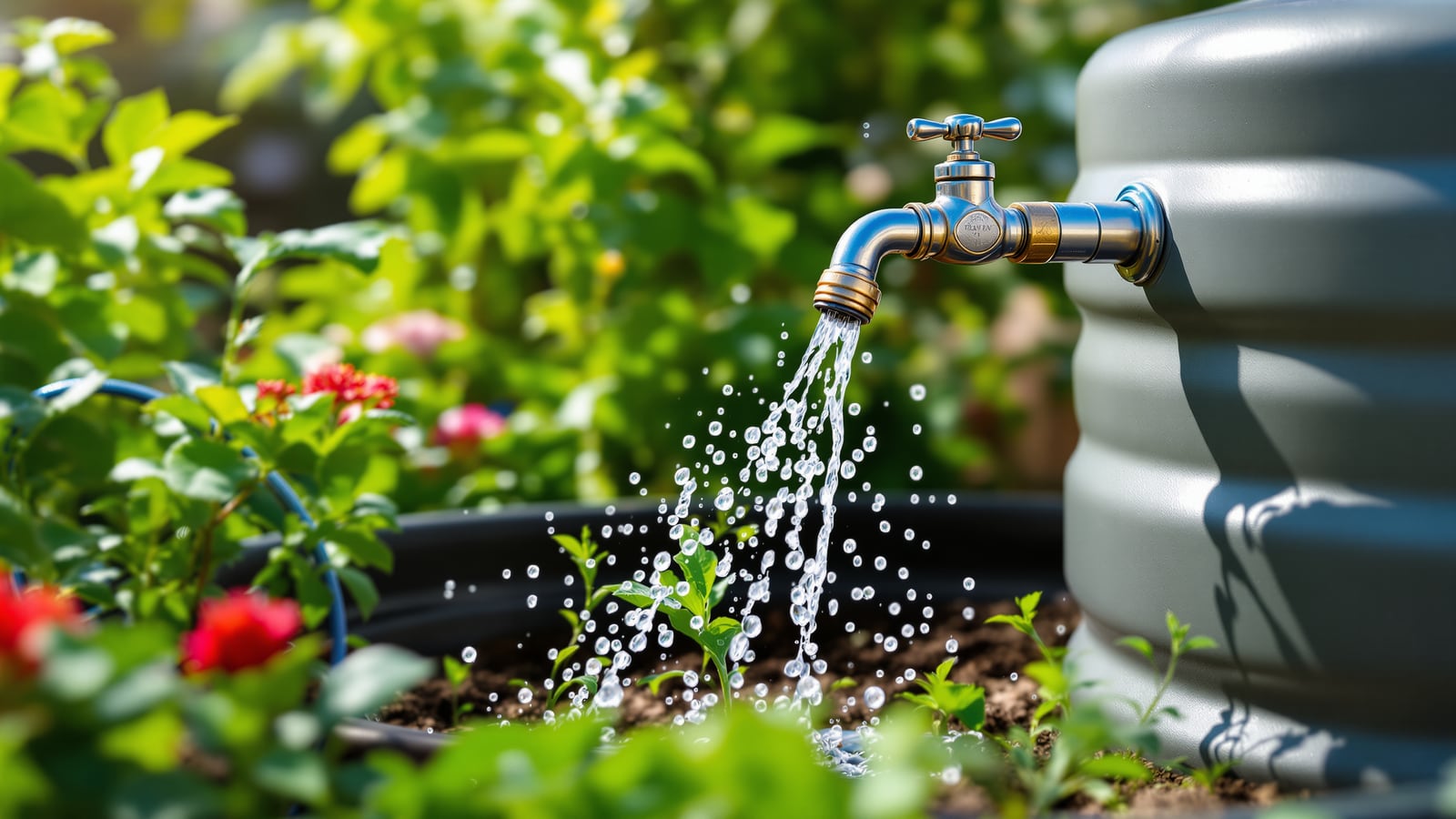
Rainwater Reuse in India: Using Stored Harvested Rain for Gardening, Flushing, Washing & Drinking
You have caught and stored the rain — now put it to work. A homeowner's guide to reusing stored rainwater around the house: non-potable uses through a second plumbing line, pumping it up to an overhead tank, treating it to drinking standard, keeping it from going stale, and blending it with your municipal or borewell supply.
Harvesting the rain is only half the job. Once a monsoon has filled your storage tank, the real value comes from using that water in place of municipal or borewell supply. This is a practical, India-first guide to rainwater reuse at home — where stored rain fits, how to plumb it in, how far to treat it, and how to keep it from turning stale between showers.
This guide assumes you already have a collection-and-storage system in place. For designing that system — catchment, first-flush, filtration and storage — start with the rainwater harvesting guide for India. Here we pick up after the tank is full.
The golden rule of reuse: match the water to the job. Most of what a house consumes never needs to be drinking quality, so the easiest, cheapest wins come from sending stored rain to those non-potable uses first.
Match the water to the use
Rooftop rainwater collected through a proper rainwater filtration setup is soft and low in dissolved salts — genuinely good water. But it has run over a roof, so it can carry dust, bird droppings, leaf litter and the odd microbe. That makes it excellent for non-potable uses as-is, and suitable for drinking only after extra treatment. The table below is a sensible order of priority.
| Household use | Quality needed | Stored rain suitable? | Treatment before use |
|---|---|---|---|
| Garden & landscape watering | Low | Yes, directly | First-flush + basic screen filter |
| WC & urinal flushing | Low | Yes, directly | Basic filtration |
| Floor & balcony cleaning | Low | Yes, directly | Basic filtration |
| Car & two-wheeler washing | Low–medium | Yes | Fine sediment filter (avoid grit) |
| Washing machine / laundry | Medium | Yes, with care | Sediment + carbon filter |
| Bathing & showering | Medium–high | With treatment | Filtration + disinfection |
| Drinking & cooking | High (potable) | Only if fully treated | Filtration + UV and/or RO |
Start at the top of that list. Gardening, flushing, washdown and car washing together are often a third or more of a home's daily water — and every litre of stored rain sent there is a litre of municipal or borewell water saved, with no health risk and almost no treatment cost.
Non-potable uses — the second plumbing line
The clean way to reuse rain for flushing, gardening and washing is a separate, non-potable plumbing line kept entirely apart from your drinking-water pipes. This is the same idea as a dual water supply: a second set of pipes, ideally a different colour, feeding WC cisterns, garden taps, washdown points and (optionally) the washing machine — while the fresh line stays reserved for drinking, cooking and bathing.
- Gardening is the simplest reuse of all — a garden tap or drip line straight off the stored-rain pump. Plants actually prefer soft rainwater to hard borewell water.
- WC flushing is the single biggest non-potable draw in most homes. Feeding cisterns from stored rain can cut fresh-water use noticeably.
- Car and two-wheeler washing and floor, balcony and terrace cleaning are ideal — soft water leaves fewer spots.
- Washing machines can run on filtered stored rain; the soft water even reduces detergent use. Add a sediment plus carbon filter so no grit or colour reaches your clothes.
The one rule that matters: a non-potable line must never cross-connect to the drinking supply, and every non-potable tap should be labelled so no one drinks from it by mistake.
Pumping stored rain up to an overhead tank
Most stored rain sits in an underground tank or sump, so you need to lift it. The tidy approach is to pump stored rain into a dedicated overhead reuse tank — separate from your municipal/borewell overhead tank — from where gravity feeds all the non-potable outlets. A small pump on a level switch or timer keeps the reuse tank topped up.
- Size the pump to your tank heights and daily reuse demand; a modest domestic pump is usually plenty. See the general guidance in the rainwater tank sizer and pair it with the right pump from the borewell/booster pump guides on this hub.
- Fit a coarse and fine filter on the delivery line so sediment does not reach cisterns or the washing machine.
- Keep the reuse overhead tank covered and opaque — light and open lids are what turn clean rain green.
Treating rain to drinking (potable) standard
Rooftop rain can be made drinkable, but only with honest extra treatment. Because it has flowed over a roof, assume it carries dust, organic matter and microbes, and treat accordingly. A typical potable train is filtration to remove sediment, activated carbon to catch colour and odour, then disinfection by UV and/or RO for the final polish.
For choosing and sizing that equipment, follow the drinking-water systems guide for India, which covers filtration, UV and RO in detail. A few cautions specific to rainwater:
- Discard the first flush of every storm so the dirtiest roof-wash never enters storage — this is your first line of defence.
- Test the treated water against India's drinking-water standard (IS 10500, by name) before anyone relies on it. Do not assume; measure.
- If your roof has lead flashing, bitumen felt, asbestos sheet or heavy bird activity, be extra cautious about a potable line — non-potable reuse is the safer route there.
Water saved and ₹ saved, at a glance
Reuse pays back in two currencies: litres of fresh water not drawn and rupees not spent on tanker water or the marginal cost of municipal/borewell supply. The figures below are indicative for a typical Indian household of four — your real numbers depend on rainfall, roof area and tariffs.
| Reuse application | Water saved (indicative) | Notes |
|---|---|---|
| WC flushing | ~120–180 litres/day | Biggest single saving |
| Garden & landscape | ~50–150 litres/day | Seasonal, higher in summer |
| Car/floor washing | ~30–60 litres/day | Weekend-heavy |
| Laundry (rain-fed) | ~40–80 litres/day | Soft water cuts detergent too |
At tanker rates that often run ₹300 to ₹800 per 1,000 litres in shortage-hit cities, displacing even a few hundred litres a day adds up to real money across a monsoon-fed year. To put your own bathroom and household savings in numbers, use the bathroom water savings calculator.
Keeping stored rain from going stale
Clean rainwater does not "expire", but standing water in the light grows algae and picks up smells. Keep it fresh with three habits:
- Cover the tank and keep it opaque — no sunlight, no algae. A sealed, light-proof tank is the single biggest factor.
- Keep it moving. The best preservative is use — a tank that turns over every week or two rarely goes stale. Plumb reuse into everyday flushing and gardening so the water is always being refreshed.
- Fit an overflow and a mosquito-proof screen on every opening so it stays sealed against pests and can shed excess safely.
If water will sit for a long dry spell, a light periodic disinfection dose keeps it sweet — but for most homes, simply using the water is enough.
Combining rain with your municipal or borewell supply
Rain is seasonal, so treat it as a first source, backed up rather than your only source. Two simple arrangements work well:
- Auto top-up: the reuse tank draws from stored rain first; when it runs low, a float or solenoid lets municipal or borewell water top it up. You use rain whenever it is available and never run dry.
- Priority switching on the potable side: keep drinking on your treated municipal/borewell line, and route only the non-potable demand to stored rain, switching to mains automatically when the rain tank empties.
Protect the connection with an air gap or backflow preventer so stored rain can never flow back into the municipal main. For the layout and controls of running two sources together, see the dual water supply guide.
A note on treated sewage and greywater
This guide is about rainwater — clean water off your roof. Treated sewage and recycled greywater are a completely different source with different quality and rules, and are handled separately. If your building reuses STP-treated water for flushing or landscape, that belongs under the sewage-treatment track — see green building water credits for how treated-water reuse is credited. Never mix a rain line and a treated-sewage line, or treat one as the other.
References
- Central Ground Water Board (CGWB) — guidance on rainwater harvesting and reuse.
- CPHEEO Manual on Water Supply and Treatment — domestic demand figures and reuse practice.
- IS 10500 — Indian Standard for drinking-water quality (verify treated rain against it before potable use).
- Local municipal / state pollution control board bye-laws — confirm reuse and plumbing requirements for your city.
Export this guide
Related Guides — Deep-dive reading
Dual Water Supply for Indian Buildings: Dual Plumbing, Colour-Coded Networks & Cross-Connection Control
How a dual water supply splits a building into two independent lines — fresh potable water for drinking and bathing, treated/recycled water for WC flushing, gardening and washdown — with colour-coded piping, separate storage, and the backflow protection that keeps the two from ever mixing.
PlumbingRooftop Water Recycling Integration in Homes: One Non-Potable System from Rain and Greywater
How to combine rooftop rainwater harvesting with greywater and STP reuse into a single non-potable water system — the storage, dual plumbing, controls and seasonal logic that make two sources behave like one reliable supply.
Sewage Treatment PlantsWater Supply Systems in India: How Water Reaches Every Tap in Your Home
The complete map of how water gets into an Indian home and out to every fixture — the sources it comes from, the sump-pump-overhead-tank storage model that buffers intermittent supply, how gravity and pressurised distribution differ, and the demand figures that size the whole thing.
PlumbingRelated Tools — Try Free
Rainwater Tank Sizer
How big should your rainwater tank be? Computes annual harvest, recommended tank capacity in litres, water-bill savings, and payback — for 10 Indian cities.
RWH CalculatorOverhead Tank Size Calculator
Size the overhead roof water tank for a home from occupants, per-person use and the share of the day's water it holds, with a standard tank size.
Plumbing CalculatorShower Water Flow Calculator
Shower water use per shower, day and month by head type, plus a pressure-adequacy check for your tank height or pump and low-flow savings.
Bathroom Calculator