
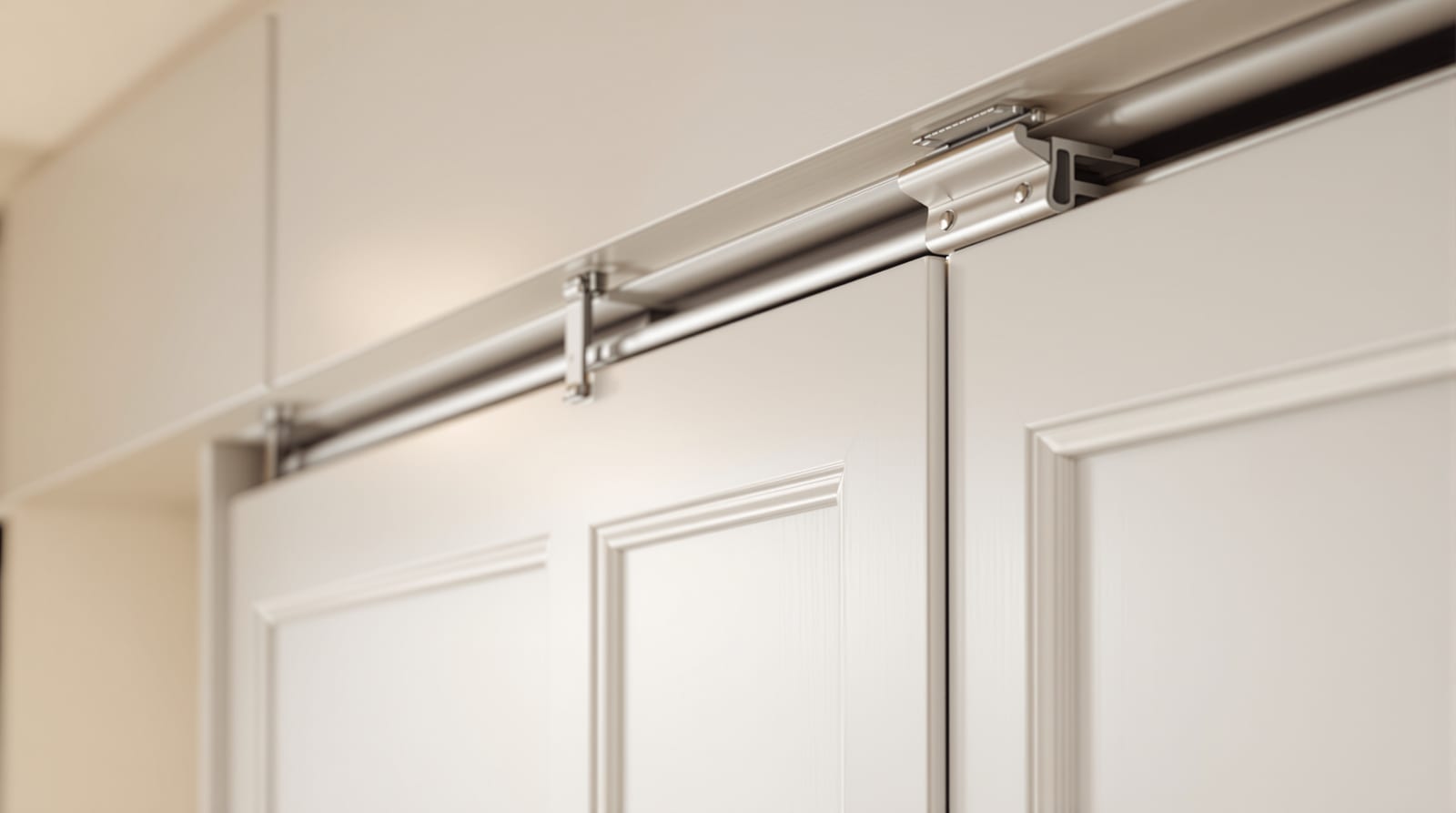
Magnetic Door Catches & Latches in India: Types, Pull Strength, Cost (2026)
How magnetic catches, push-to-open latches, ball catches and heavy-duty magnetic holders keep Indian wardrobe, cabinet and room doors shut or held open — with pull ratings, prices and fitting tips.
A magnetic door catch is the quietest, cheapest piece of hardware in the whole house — a small magnet on the frame, a steel strike plate on the door, and a soft "click" that holds a shutter shut without a visible bolt or knob. In Indian homes it does the unglamorous work that a tower bolt or aldrop would look clumsy doing: holding wardrobe shutters, kitchen cabinet doors, crockery units, light internal doors and pooja-cupboard panels closed against gravity, draughts and the gentle warp that monsoon humidity puts into ply. This guide covers the four families of magnetic hardware — catches, push-to-open magnetic latches, ball catches and heavy-duty magnetic holders/stoppers — what each is for, how to read pull-strength ratings, what they cost in rupees, and how to fit them so they actually hold.
This is a deep dive on one component. For the full picture of door locks, hinges, handles and closers, see our door hardware guide for India. For holding a door open or stopping it banging a wall, pair this with door stoppers in India.
What a magnetic catch is — and what it is not
A magnetic catch is a holding device, not a locking device. It keeps a door or shutter in the closed position with magnetic attraction; it offers zero security and no protection against a determined push. That distinction matters in Indian buying conversations, because catches are sometimes confused with latches and bolts.
- A catch holds a door shut by friction or magnetism — you open it with a normal pull. Examples: magnetic catch, ball catch, roller catch.
- A latch engages a moving part (a sprung bolt or a push-release mechanism) and needs an action to release — a handle turn or, for push-to-open, a second push. A tower bolt or latch physically pins the door to the frame.
- A lock needs a key or code.
So a magnetic catch belongs on furniture and light internal doors where you want a clean look and an easy one-finger pull, not on a main door or anywhere security matters.
Why magnets win on furniture
The reason magnetic catches dominate Indian modular wardrobes and kitchens is simple: they are silent, self-aligning (the magnet pulls the last few millimetres shut), have no moving parts to wear out, and survive the humidity and dust that jam mechanical roller catches. On a 600 mm wide wardrobe shutter that has swelled slightly in the monsoon, a magnet still drags it home where a tight ball catch would refuse to seat.
The four families of magnetic hardware
1. Magnetic catches (the everyday workhorse)
A two-part device: a plastic or metal housing holding one or two bar magnets screwed to the cabinet/frame, and a flat steel strike plate screwed to the inside face of the shutter. When the shutter closes, the steel meets the magnet and holds. Single-magnet catches suit light doors; double (twin) magnet catches roughly double the holding force for wider or heavier shutters. Most have a slotted strike plate so you can fine-tune alignment after fitting.
Use them on: wardrobe shutters, kitchen base and wall units, crockery and TV units, study tables, pooja cupboards, and light internal cupboard doors. Typical price ₹50-300 per piece depending on single vs double magnet and brand (Hettich, Hafele, Ebco, Dorset, local).
2. Push-to-open magnetic latches (handleless look)
These are the heart of the handleless modular kitchen and wardrobe trend. A spring-loaded magnetic latch (often called a "push-latch" or "tip-on") is mounted inside the carcass. Push the shutter — it pops out a few centimetres on a magnet/spring; push again — it latches shut. No handle, no knob, perfectly flush fronts. Hettich's "Push to open" and similar systems are common; on heavier shutters a magnetic version with a stronger spring is specified. Price typically ₹150-600 per latch, more for branded soft-close-compatible units. These need accurate fitting and a small clearance gap, so they are usually a fitter/carpenter job, not DIY.
3. Magnetic ball catches
A hybrid: a spring-loaded steel ball (or roller) in a barrel that snaps into a strike, sometimes magnet-assisted. Common on traditional wooden cabinet doors, almirahs and shutters where a slim mortise-style fitting into the door edge is wanted. They give a more positive "snap" and hold than a plain magnet, but the spring can weaken and they are noisier. Price ₹60-250. Good where you want resistance against an accidental swing-open (a child's almirah, a top-hung shutter).
4. Heavy-duty magnetic door holders / stoppers
A different job entirely: these hold a swinging room door OPEN against a wall or skirting so it doesn't slam in the breeze or bang the wall handle-first. A strong magnet body is fixed to the wall/floor near the skirting and a steel catch plate on the door bottom; swing the door open and it "parks" magnetically. Pull strength is high (commonly rated 5-12 kg / ~50-120 N) so it resists a monsoon draught but releases with a normal pull. Brands like Ozone, Dorset and Godrej sell wall-mount and floor-mount magnetic door holders. Price ₹150-600. This overlaps with door stoppers — see door stoppers in India for spring buffers, floor-mount stoppers and hydraulic options.
Reading pull-strength ratings
Manufacturers rate magnetic catches by holding force, given in kilograms-force (kgf) or newtons (1 kgf ≈ 9.8 N). It is the straight pull needed to separate magnet from plate when perfectly aligned and clean. Real-world holding is always lower because of paint, dust, a thin air gap, or a strike plate that isn't dead flat against the magnet.
Rules of thumb for specifying:
- A single magnetic catch typically holds ~2-4 kg; a double/twin holds ~4-8 kg.
- Match force to shutter weight and width: a tall 2100 mm wardrobe shutter has leverage, so use a double catch (or two catches, top and bottom).
- For a door you want held OPEN, choose a heavy-duty holder rated 5 kg+; lighter ones drift loose in a breeze.
- Bigger is not always better: an over-strong push-to-open latch makes the shutter hard to nudge open and stresses thin ply over time.
| Magnetic catch type | Typical use in Indian homes | Holding force (indicative) | Price (₹, per piece, ex-fitting) |
|---|---|---|---|
| Single magnetic catch | Light wardrobe/cabinet shutters, pooja cupboard, crockery unit | ~2-4 kg | 50-150 |
| Double / twin magnetic catch | Wide or tall wardrobe shutters, kitchen tall units | ~4-8 kg | 100-300 |
| Push-to-open magnetic latch | Handleless modular kitchen & wardrobe, flush shutters | spring + magnet, light pop-out | 150-600 |
| Magnetic ball / roller catch | Wooden almirahs, traditional cabinet doors, top-hung shutters | ~3-6 kg snap | 60-250 |
| Heavy-duty magnetic door holder/stopper | Hold a swing room door open against wall/skirting | ~5-12 kg | 150-600 |
Prices are indicative and vary by city, brand and vendor; add 18% GST and ₹0 to a small fitting charge if a carpenter installs as part of larger work. Branded soft-close and push-to-open systems sit at the top of each range.
Magnetic catch vs tower bolt, latch or aldrop — what to use where
This is the question that confuses most homeowners, so be clear about the job:
- Holding a furniture shutter or light internal cupboard closed, clean look, frequent use: magnetic catch (or push-to-open for handleless). A tower bolt here would be ugly and slow.
- Holding a room door shut for privacy (bedroom, bath): use a mortise latch with handle, not a magnet — a magnet won't keep a privacy door reliably shut against a draught and offers no privacy click. See mortise locks if that slug exists, else the door hardware guide.
- Securing a door (any exterior or security-relevant door): never a magnet — use a tower bolt, aldrop or lock.
- Holding a swing door OPEN: heavy-duty magnetic holder or a door stopper.
- Stopping a flush, handleless wardrobe from looking cluttered: push-to-open magnetic latch, which suits the minimalist door designs and wardrobe doors aesthetic.
Indian standards touch this area lightly: IS 7196 covers tower bolts and IS 208 covers handles, but plain magnetic catches are commodity furniture fittings sold to manufacturer spec rather than a single Indian Standard — so buy on holding-force rating and brand reputation, not a code number.
Fitting a magnetic catch (DIY-friendly)
A plain magnetic catch is one of the few door fittings a confident homeowner can do with a screwdriver and a pencil. The order matters: fit the magnet first, then let it position the strike plate.
1. Mark the magnet position on the cabinet side or frame — usually top inside corner for a wardrobe, behind the shutter where it won't be seen. Allow the housing to sit a millimetre or two proud so it actually touches the strike.
2. Screw the magnet housing to the frame. Don't overtighten into thin ply; use the supplied short screws.
3. Stick the steel strike plate to the magnet, lining it up.
4. Close the shutter gently so the strike plate transfers a pencil/screw mark onto the shutter back, OR press it so its self-adhesive (if provided) tacks in place.
5. Open and screw the strike plate to the shutter. Use the slotted holes to nudge alignment until the shutter sits flush when closed.
6. Test and adjust the gap. If it holds too weakly, the magnet sits too far back — pack it forward with a thin washer. If the shutter springs open, the magnet is too strong or the plate is misaligned.
Push-to-open latches and ball catches that mortise into the door edge are better left to a carpenter, because depth and clearance are fussy and a wrong cut can't be undone in ply.
Indian-climate notes
In coastal and high-humidity homes, prefer stainless or coated steel strike plates and brass/zinc magnet housings — bare steel plates rust and lose grip, and a rusty plate stains the inside of a pale laminate shutter. In termite-prone regions the catch itself is unaffected, but a swollen or warped ply shutter changes the gap, so use catches with slotted, re-adjustable strikes so you can re-seat them after the first monsoon. Dust is the silent enemy of push-to-open latches; a yearly wipe keeps the pop-out crisp.
Frequently asked questions
Will a magnetic door catch keep my bedroom door shut for privacy?
Not reliably, and it gives no privacy at all — anyone can push it open. A magnet is for furniture and light cupboard shutters. For a bedroom or bathroom door use a mortise latch with a handle, or a privacy turn-lock. Reserve magnets for wardrobes, cabinets and pooja cupboards.
How strong a magnetic catch do I need for a tall wardrobe shutter?
For a full-height 2100 mm shutter, use a double/twin catch (around 4-8 kg holding force) or fit two single catches near the top and bottom. A single light catch on a tall shutter lets the bottom edge drift open because of leverage and any slight warp.
What is the difference between a magnetic catch and a push-to-open latch?
A magnetic catch just holds the shutter shut and you pull it open with a handle or finger groove. A push-to-open magnetic latch has a spring so a press pops the handleless shutter out a few centimetres, then a second press latches it shut — that is what gives modular kitchens their flat, handle-free look.
Are magnetic door catches covered by an Indian Standard?
Plain magnetic catches are commodity furniture fittings sold to manufacturer holding-force specs rather than one dedicated IS code; related hardware like tower bolts (IS 7196) and handles (IS 208) is standardised. Buy on rated holding force, corrosion-resistant materials and a trusted brand (Hettich, Hafele, Ebco, Dorset, Ozone) instead.
Can I use a magnetic catch to hold a door open?
Yes, but use a purpose-made heavy-duty magnetic door holder rated around 5-12 kg, not a small furniture catch. It mounts to the wall or floor near the skirting with a catch plate on the door bottom, parking the door open against draughts. For other ways to hold or buffer a door, see our door stoppers guide.
Export this guide
Related Guides — Deep-dive reading
Door Hardware Guide India 2026: Hinges, Handles, Locks, Closers and Every Fitting Explained
What each piece of door hardware actually does, where it belongs, which material (SS304, brass, zinc or iron) survives Indian conditions, the quality signals to check before you pay, and a buyer's checklist with 2026 prices.
Home Doors & EntrancesComplete Guide to Interior Hardware
The 8–12% of the interior budget that decides whether everything else works
Materials & FinishesTypes of Door Locks for Indian Homes: Complete Buying Guide (2026)
Mortise, rim, cylindrical, deadbolt, multipoint, aldrop and smart locks — which lock suits your main door, bedroom, bathroom and gate, with security ratings, prices and trusted brands.
Home Doors & EntrancesRelated Tools — Try Free
Window Hardware Cost Calculator
Estimate window hardware cost — hinges, handles, locks, rollers and multipoint gears.
Window CalculatorDoor Security Rating Calculator
Score your main door out of 100 across leaf, frame, lock and hardware — and see the top upgrades.
Security ToolDoor Hardware Cost Estimator
Estimate the all-in hardware cost for a door — hinges, lock, handle, closer, bolts, stopper and fitting — with GST.
Door Calculator