
Fire Alarm System Cost in India (2026): What a Code-Compliant System Really Costs
An honest, building-scale look at what a fire alarm SYSTEM costs in India — the control panel, detectors, manual call points, sounders, wiring and battery backup — and how conventional versus addressable architecture, the number of zones, floors and occupancy type move the total, always as indicative bands to price against three itemised quotes and never below the code minimum.
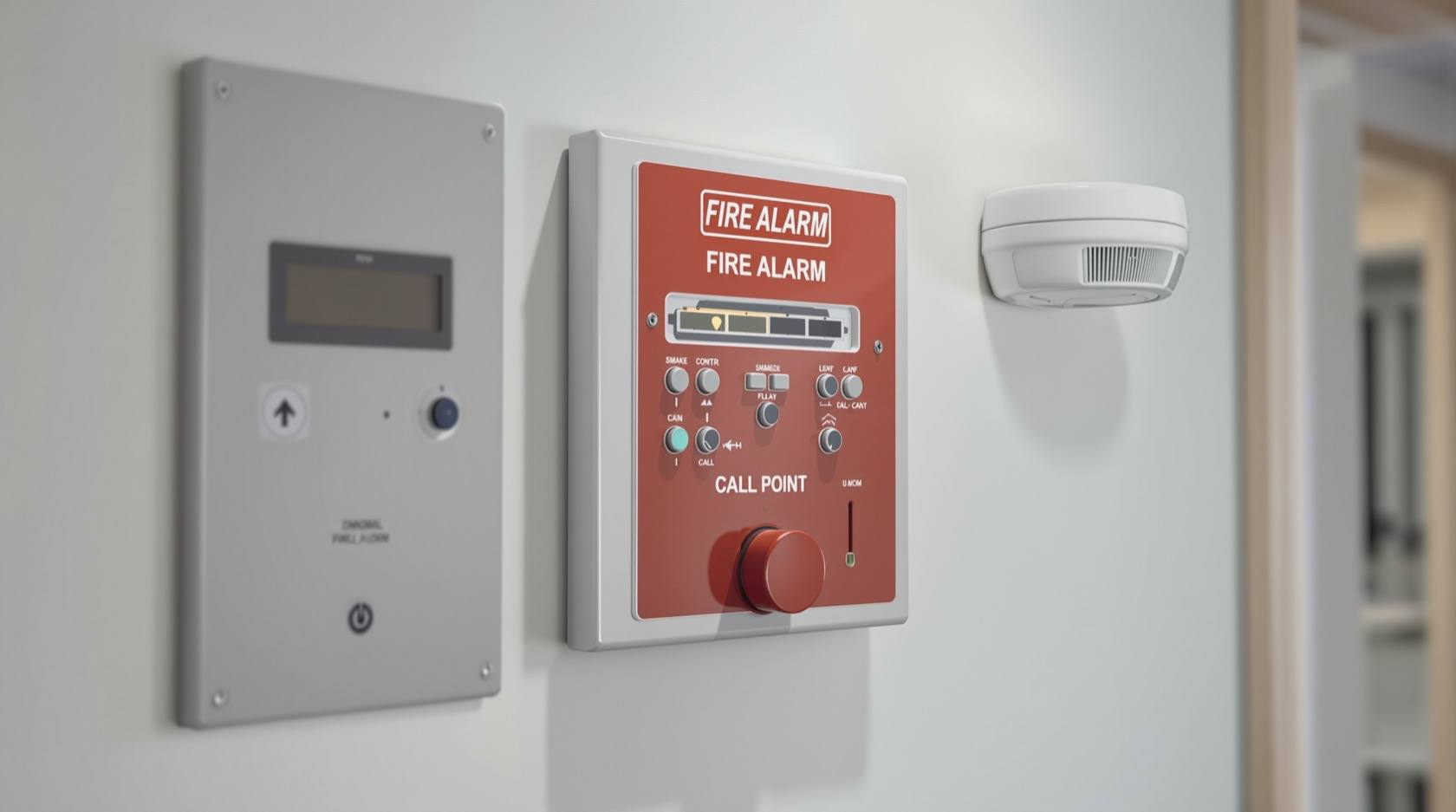
Ask what "a fire alarm" costs and the answer depends entirely on what you mean. A single battery smoke alarm you screw to a bedroom ceiling costs a few hundred rupees. A building fire alarm SYSTEM — the thing a fire officer signs off, the thing your occupancy legally needs — is a different animal altogether: a fire alarm control panel (FACP) wired to detectors and manual call points across every floor, sounders and strobes to warn everyone at once, a battery-backed supply that keeps working when the mains fails, and the conduit and cable that ties it together. That is a system, and its cost is a building-scale number, not a shop-shelf number.
This guide is about that number, honestly. It breaks the fire alarm system cost into where the money actually goes — panel, detection devices, notification, wiring and install, then commissioning — and it names the single biggest driver of the total: whether the system is conventional or addressable. Every figure here is a wide, indicative 2026 band, because real prices move with the building, the brand, the city and the contractor. Use them to sanity-check a quote and to understand what drives it up or down — never as a fixed rate, and never as a reason to shave a system below what the code requires.
There is one line that runs through everything below and never bends: a fire alarm system is life-safety, and it is code-governed. In most buildings it is mandatory under the National Building Code (NBC = SP 7:2026) and your local fire NOC, you specify it to the code and to the fire officer, and you do not "value-engineer" it below the minimum to hit a budget. Cost literacy here means budgeting correctly for a compliant system — not finding a cheaper way to be non-compliant.
Scope & safety. This is a budgeting and planning guide for architects, facility managers, developers and consultants — not an installation manual, and not fire-safety design advice for your specific building. Every rupee figure is an indicative 2026 band that varies widely by building size, occupancy, brand, city and contractor; treat it as a way to read a quote, never as a fixed price. Design, installation, wiring and commissioning belong to a licensed fire-safety contractor, and the system must meet NBC (SP 7:2026), the relevant BIS code of practice for automatic fire detection and alarm systems, and your local fire NOC — verify the current editions before relying on any of them. Get at least three written, itemised quotes, compare them line by line, and separate one-time capex from ongoing opex. GST applies to equipment and services. Above all: life-safety is never the place to cut. If a cheaper quote gets there by dropping devices, thinning cable, or skipping commissioning, it is not a saving — it is a non-compliant system that can fail when it matters most.
What a fire alarm system actually is — the bill of materials
Before you can read a quote, you need to know what a compliant quote must contain. A fire alarm system is not one product; it is an assembly, and a cheap quote usually gets cheap by quietly leaving parts of this list out.
- Fire alarm control panel (FACP). The brain. It supervises every device, annunciates where an alarm or fault is, and triggers the notification. Panel cost scales with the number of zones (conventional) or loops and addressable points (addressable), plus brand and approvals.
- Detection devices. Smoke detectors, heat detectors and multi-sensor detectors placed to cover the areas the code requires. Different spaces call for different detectors — a heat detector over a kitchen or plant room, smoke detectors in corridors and rooms — and the mix matters to both safety and cost.
- Manual call points (MCPs). The red "break-glass" stations at exits and on escape routes that let a person raise the alarm by hand. Required on egress paths under the code — not optional.
- Notification devices. Sounders, hooters, bells and strobes that warn everyone in the building simultaneously. Coverage has to reach every occupied space at an audible (and, where needed, visible) level — this is a life-safety function, not a convenience.
- Zone wiring, conduit and containment. Fire-survival or fire-retardant (FRLS) cabling in proper conduit or containment, routed across floors and risers. On a real building this is a large share of the cost — often as much as the devices — and it is labour-heavy.
- Battery-backed power supply. A supervised power supply with standby batteries so the system keeps detecting and sounding through a mains failure for the code-required standby and alarm duration. Batteries are a consumable and a recurring cost.
- Install, commissioning and documentation. Mounting, wiring, addressing (for addressable systems), a full commissioning test of every device, cause-and-effect verification, and the as-built and test documentation the fire officer will want to see.
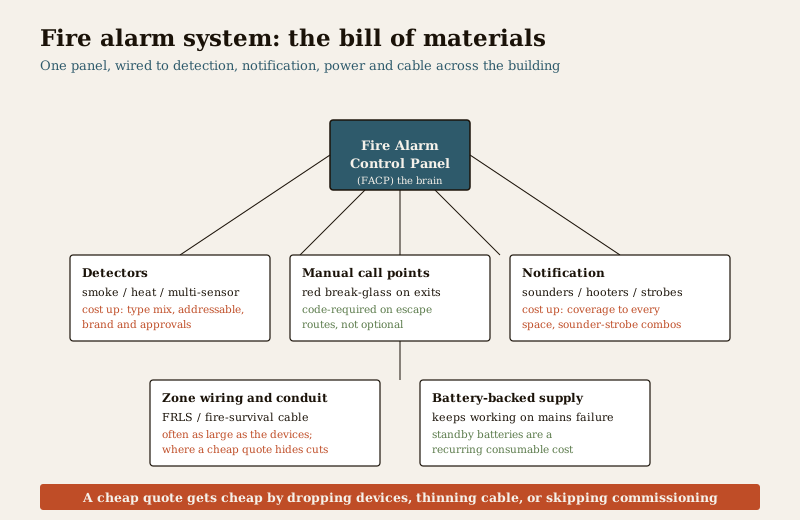
Every one of those lines should appear, itemised, in a proper quote. If a quote is a single lump sum with no device schedule, no cable specification and no commissioning line, you cannot compare it and you cannot trust it. This is exactly the discipline the security cost planning guide sets out for every safety system, and it applies with extra force to something that has to work in a fire.
The choice that drives cost most: conventional versus addressable
If one decision moves the total more than any other, it is the system architecture. This is the first thing to settle, because it changes the panel, the wiring topology and the per-point cost all at once.
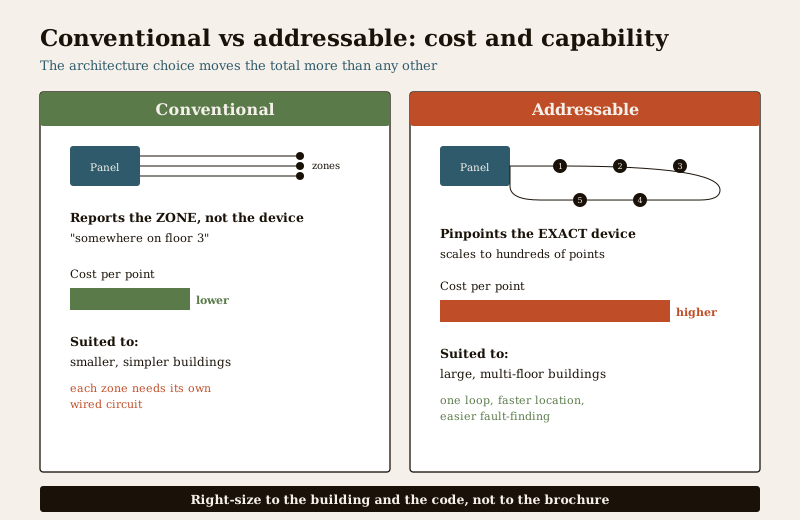
Conventional systems divide the building into zones — a wire loop per zone, each covering an area or a floor. When a detector activates, the panel tells you the zone, not the individual device. That is cheaper per point and perfectly appropriate for smaller, simpler buildings, but in a large building "somewhere on floor 3" is a slow way to find a fire, and every zone needs its own wired circuit.
Addressable systems give every device a unique address on a loop, so the panel names the exact detector or call point that has activated. That precision is worth a great deal in a large or multi-floor building — faster location, easier fault-finding, simpler wiring topology (a loop instead of many radial zones), and the ability to scale to hundreds or thousands of points. It costs more per point and the panel is more expensive, but it is often the right — and sometimes the code-expected — choice as buildings get bigger.
The honest rule is: right-size to the building and the code, not to the brochure. A small premises does not need an addressable loop to be compliant; a large multi-storey building is poorly served by conventional zoning even if it is cheaper. Studio Matrx covers the two architectures in depth for the technical choice — this guide only prices the consequence.
Where the money goes — per point, per zone, and a small-building band
Now the numbers, and every one is a wide, indicative 2026 band that you must frame with its drivers and check against three itemised quotes. Device prices are for the device alone; the "installed per point" figure is the honest number, because it folds in the wiring, conduit, labour and a share of the panel and commissioning that a device on a ceiling actually costs.
| Item | Indicative 2026 band (verify locally) | What moves you up or down the band |
|---|---|---|
| Smoke / heat detector (device only) | roughly ₹400 to ₹1,500 (conventional); roughly ₹1,500 to ₹4,000+ (addressable) | Architecture, brand and approvals, multi-sensor vs single, intrinsic-safety for hazardous areas |
| Manual call point (device only) | roughly ₹300 to ₹1,200 (conventional); more for addressable | Architecture, brand, weatherproof or hazardous-area rating |
| Sounder / hooter / strobe (device only) | roughly ₹500 to ₹2,500 | Sounder vs combined sounder-strobe, output level, weatherproofing |
| Conventional FACP | roughly ₹6,000 to ₹40,000+ | Number of zones, brand, approvals |
| Addressable FACP | roughly ₹40,000 to ₹2,00,000+ | Number of loops and points, brand, network of panels |
| Fully installed cost PER POINT | roughly ₹1,500 to ₹4,000 (conventional); roughly ₹3,500 to ₹8,000+ (addressable) | Cable run length, conduit vs containment, floor height, access, labour rates |
| Small-building rough range (whole system) | very roughly ₹40,000 to a few lakh | Number of points and zones, architecture, occupancy, wiring difficulty |
Read that table with three cautions. First, the per-point installed cost is the figure that matters — a detector that looks like a few hundred rupees on a shelf costs several times that once it is wired, mounted, addressed and commissioned across a real building. Second, wiring and conduit are frequently as large as the devices, and they are where a low quote hides its corners; ask what cable specification (FRLS or fire-survival) and what containment the number assumes. Third, the small-building "whole system" band is deliberately very wide because a "small building" covers everything from a modest shop to a small multi-floor premises — get your own quotes; do not budget off the band alone. For the residential end of this spectrum, the home security system cost pillar frames how home-scale detection sits within a wider safety budget.
Capex versus opex — what a fire alarm system costs to own
The mistake buyers make with every safety system is to price the purchase and forget the running cost. A fire alarm system is a decade-long commitment with a real annual bill, and — because it is life-safety — that maintenance is not optional. It is what keeps the system, and your fire NOC, valid.
| One-time (capex) | Ongoing (opex) |
|---|---|
| Fire alarm control panel | Annual maintenance contract (AMC) — inspection and servicing |
| Detectors, call points, sounders, strobes | Periodic testing (typically quarterly / half-yearly device and cause-and-effect checks) |
| Zone wiring, conduit, containment, risers | Standby battery replacement (a consumable, every few years) |
| Battery-backed power supply and standby batteries | Detector cleaning and end-of-life replacement (detectors have a service life) |
| Design, installation and addressing labour | False-alarm management and re-commissioning after alterations |
| Commissioning, testing and documentation | Records for fire NOC renewal and audits |
A useful way to think about the AMC is as a recurring percentage of the installed system value each year — an indicative planning figure, not a quoted rate, and one you should get in writing from the contractor. Skimping on the AMC is a false economy twice over: an untested system may fail in a fire, and a lapsed maintenance record can invalidate your fire NOC. Budget the opex from day one, alongside your other safety running costs such as burglar alarm monitoring and maintenance.
How the cost scales — zones, floors and occupancy
Total cost scales, roughly, with the number of devices, and that in turn scales with building size, the number of floors, and the occupancy type. Three drivers pull the total up:
- Size and number of points. More area means more detectors, more call points on more escape routes, and more notification devices to keep every space audible. Cost tracks the device count more than the floor area directly.
- Floors and risers. Every additional floor adds vertical cable runs, more zones or loop length, and often a repeater or annunciator so the alarm state is visible where staff and the fire service need it. Multi-floor buildings also tilt the architecture decision toward addressable.
- Occupancy type and code requirement. This is the driver that sets the floor. A residential building, an assembly occupancy, a hospital, a hotel, a school and an industrial building are held to different provisions under NBC (SP 7:2026) and the local fire authority. The occupancy decides how much detection, notification and standby capacity you are required to have — and that requirement is a floor you specify up to, never a target you shop down from.
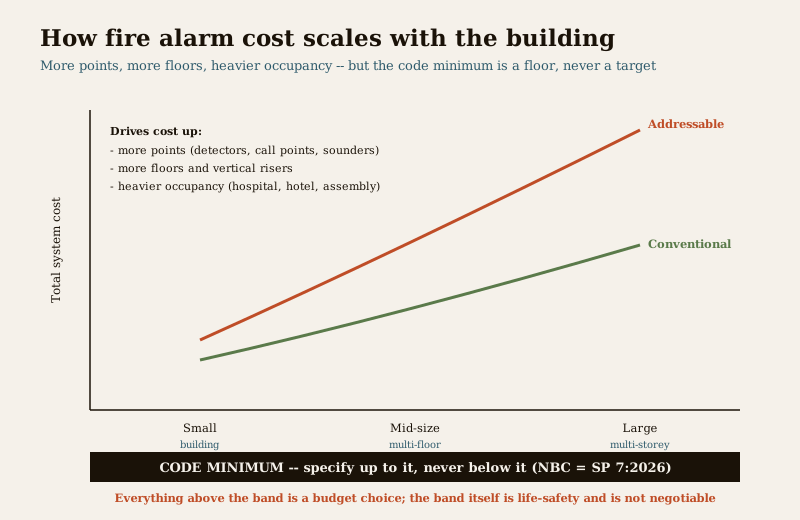
The bold band along the bottom of that figure is the whole point. Everything above it is a design and budget conversation — architecture, brand, coverage beyond the minimum, integration. The band itself is not negotiable. You can decide how far above the code minimum to invest; you cannot decide to sit below it.
Reading a quote — and what a cheap one hides
Three itemised quotes only help if you can read them. Line them up against the bill of materials above and look for what is missing, because the cheapest quote is usually cheap for a reason you can see if you look.
- A full device schedule. Every detector, call point, sounder and strobe, by type and location. No schedule, no comparison.
- The cable and containment specification. What cable grade (FRLS or fire-survival) and what conduit or containment. This is the most common place to cut, and the least visible once it is behind a wall.
- Panel type and capacity. Zones (conventional) or loops and points (addressable), with headroom for the building — not a panel sized exactly to today with no spare capacity.
- Battery standby capacity. The standby and alarm duration the code requires, sized correctly — not the smallest battery that fits.
- Commissioning and documentation. A line for testing every device, verifying cause-and-effect, and producing the as-built and test records. A quote with no commissioning line is quoting a bag of parts, not a working system.
- AMC terms. The ongoing cost, in writing, so you are comparing total cost of ownership and not just purchase price.
A quote that is dramatically below the others is not a bargain to grab; it is a prompt to ask which of those lines it dropped. In a burglar alarm, a corner cut costs you a nuisance. In a fire alarm, it costs you the one function you bought the system for.
Never value-engineer below the code
This is the sentence to end on, because it governs every number above. A fire alarm system is life-safety and it is code-governed. It is mandatory in most buildings under NBC (SP 7:2026) and your fire NOC, it is designed to the code and to the fire officer, and its design, installation and commissioning belong to a licensed fire-safety contractor. You are free — and wise — to be cost-literate: to right-size the architecture, to get three itemised quotes, to budget the opex, to invest where it adds real protection and not where it does not. What you are never free to do is trim the system below the code minimum to hit a number. That is not saving money; it is buying non-compliance, and in a fire it is the difference that matters most. Specify to the code, fund it properly, and let the fire-safety contractor build it right.
For the wider picture of how fire alarm spend sits inside a whole-building safety budget, the security cost planning guide and the fire-safety hub put it in context; the cost sub-hub gathers every budgeting guide in one place.
Key takeaways
- A fire alarm system is a building-scale assembly, not a single alarm — panel, detectors, call points, sounders and strobes, zone wiring and conduit, a battery-backed supply, and commissioning. A cheap quote gets cheap by dropping parts of that list.
- Conventional versus addressable is the biggest cost driver — conventional reports the zone and costs less per point (good for smaller buildings); addressable pinpoints the exact device, scales to many points, and costs more (right for large, multi-floor buildings).
- Price per installed point, not per shelf device — wiring, conduit, labour and commissioning make the real number several times the bare device price, and wiring is often as large as the devices.
- Separate capex from opex — the AMC, periodic testing and battery replacement are a real, non-optional annual bill that keeps the system, and your fire NOC, valid.
- Cost scales with points, floors and occupancy — and the occupancy sets a code minimum you specify up to, never a target you shop down from.
- Get three written, itemised quotes, compare them line by line, and never value-engineer below the code minimum — a fire alarm is life-safety, and the corner you cut is the function you bought.
Where to go next
- The home security system cost pillar — how detection and alarm spend fits inside a whole-building safety budget.
- The burglar alarm cost guide — the closely related intrusion-alarm running costs to budget alongside.
- The security cost planning guide — how to read a quote and plan a whole safety budget honestly.
- The fire-safety hub and the cost sub-hub — the technical fire-safety library and every budgeting guide in one place.
- The main security hub for the wider plan-decide-coordinate library.
References
- National Building Code of India (SP 7), Bureau of Indian Standards — fire and life-safety provisions, occupancy classification, detection and alarm requirements, means of egress and standby power. Verify the current edition (SP 7:2026) via the BIS catalogue: https://www.services.bis.gov.in/
- Bureau of Indian Standards — the relevant BIS code of practice for the selection, installation and maintenance of automatic fire detection and alarm systems governs system design and device placement; verify the current standard and edition via the BIS catalogue before relying on it.
- Local fire NOC and state fire-service requirements — a building fire alarm system is typically a condition of the fire No-Objection Certificate; requirements and mandatory occupancies are set by the state fire authority, which the licensed fire-safety contractor designs to.
- Goods and Services Tax — GST applies to fire alarm equipment and to design, installation, commissioning and maintenance services; confirm applicable rates at the time of purchase.
This is an educational budgeting and planning overview for architects, facility managers, developers and consultants — not legal advice, fire-safety design advice, or an installation manual. Every rupee figure is an indicative 2026 band that varies widely by building, occupancy, brand, city and contractor; get at least three written, itemised quotes. A fire alarm system is life-safety and code-governed: design, installation and commissioning belong to a licensed fire-safety contractor, the system must meet NBC (SP 7:2026), the relevant BIS code of practice and your local fire NOC, and it must never be specified below the code minimum. Verify any standard's current status via the BIS catalogue before relying on it.
Export this guide
Related Guides — Deep-dive reading
How to Choose a Fire Alarm in India (2026): A Life-Safety, Code-Governed Buying Guide
A fire alarm is not shopped on price or looks. It is specified to the National Building Code and the local fire officer, built from listed and certified parts, and installed by a licensed contractor. This guide shows a homeowner, manager or architect how to choose and verify one correctly.
SecurityConventional vs Addressable Fire Alarm in India (2026): Which System, and When
An even-handed, life-safety head-to-head for facility managers, builders, architects and consultants: a conventional system tells you which zone is in alarm; an addressable system names the exact device — so you choose to the code, the building's size and occupancy, and the fire officer, not to the cheapest quote.
SecurityAddressable Fire Alarm Systems in India (2026): Loops, Exact Location & When You Need One
The system for larger, complex buildings where you must know exactly which device triggered - how the loop and unique device addresses work, when the Fire NOC demands one, and how to specify it well.
SecurityRelated Tools — Try Free
Acoustic Privacy (STC) Visualizer
Indian healthcare acoustic visualizer — compare wall assemblies and noise sources, see received SPL after STC attenuation, and check FGI 2018 / IS 1950 / NABH speech-privacy compliance with live dual-canvas waveform.
Acoustic ToolContract Studio
AI generates professional architecture service agreements with milestones and scope.
ArchitectAIMaterial Schedule Generator
Generate a room-wise finish schedule — walls, floors, ceilings, trim, and joinery by location.
Material Schedule