
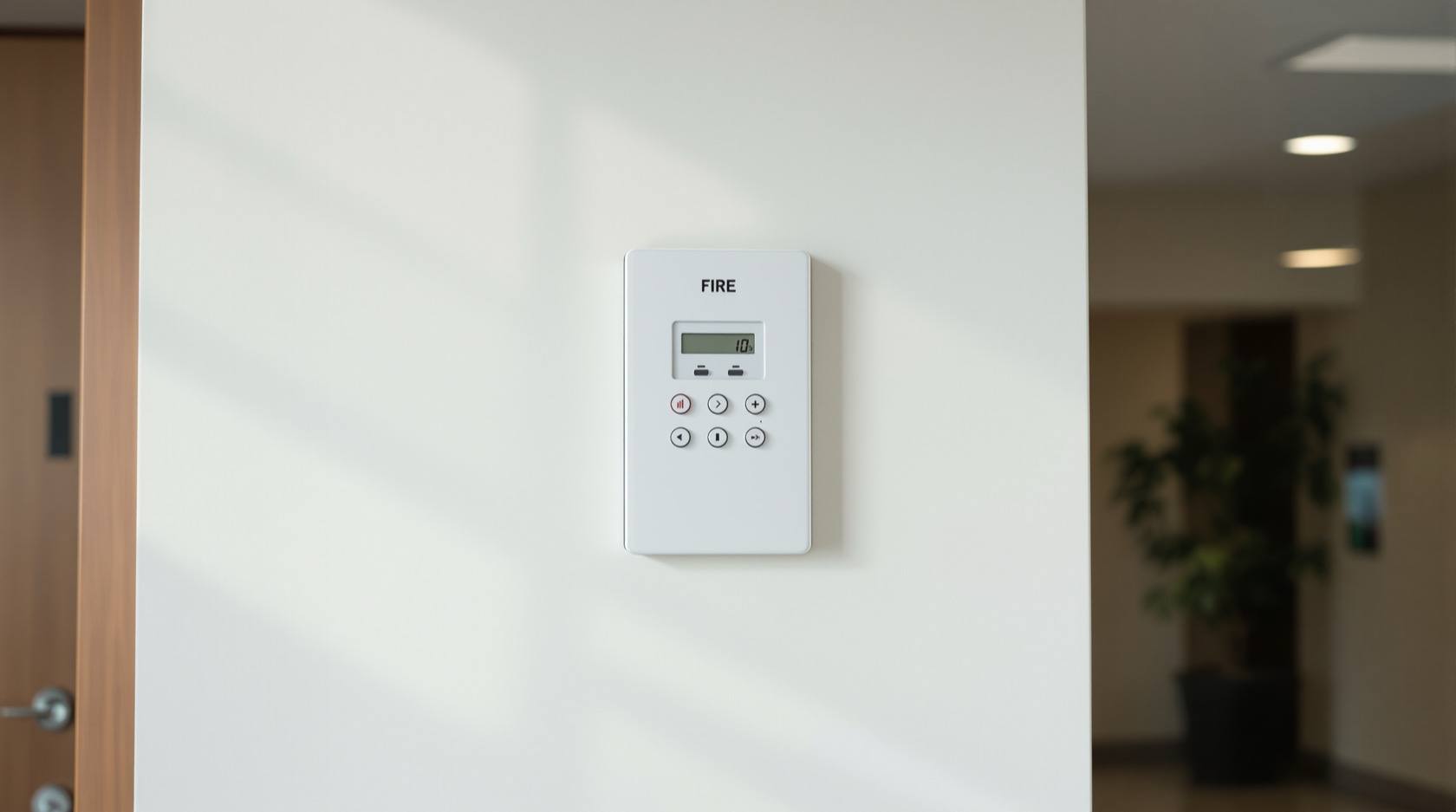
Conventional vs Addressable Fire Alarm in India (2026): Which System, and When
An even-handed, life-safety head-to-head for facility managers, builders, architects and consultants: a conventional system tells you which zone is in alarm; an addressable system names the exact device — so you choose to the code, the building's size and occupancy, and the fire officer, not to the cheapest quote.
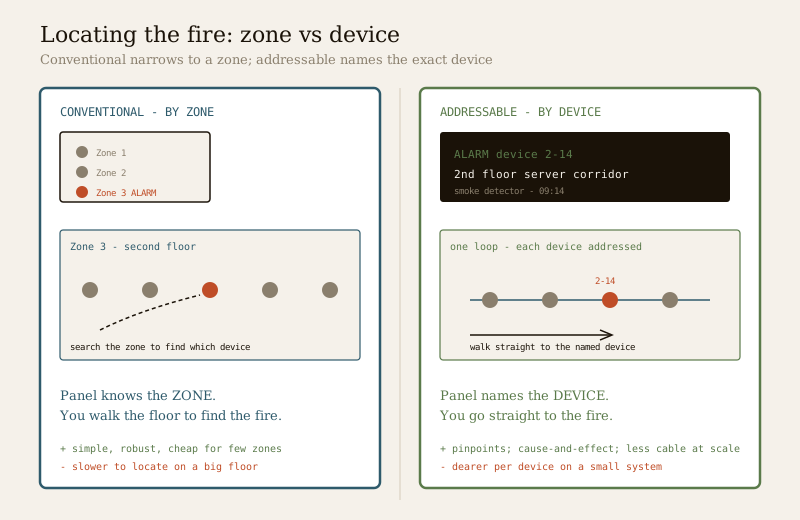
Stand in front of two fire alarm panels the moment a detector triggers and you see the whole difference in a heartbeat. One panel lights a lamp that says "Zone 3" — somewhere on the second floor, a device has gone into alarm, and now someone has to walk that floor to find which one and why. The other panel prints a line of text: "Smoke detector 2-14, second-floor server room corridor" — you know the exact device, and the exact place, before you have left the lobby. That is the essence of conventional versus addressable fire detection, and it is one of the most common decisions a facility manager, builder, architect or consultant has to sign off on.
The honest answer to "which is better" is: it depends on the building. Both are legitimate, code-recognised ways to detect fire and raise the alarm. A conventional system is not "the cheap, inferior one" and an addressable system is not "the expensive, over-specified one" — each is the right answer for a particular size, layout and occupancy, and each is the wrong answer somewhere else. The job is to match the system to the building and to what the code and the fire officer require, not to pick the lower quote and hope. This guide is a neutral head-to-head to help you do that. For the wider decision — detector types, coverage, integration — see how to choose a fire alarm; this one is strictly conventional vs addressable.
Scope and how to read this. This is a planning and decision guide for professionals, not an installation manual or a price list. A fire alarm is life-safety equipment: the choice between conventional and addressable is made to the National Building Code (NBC = SP 7:2026), the building's size, height and occupancy, and the approval of the local fire officer — and the system is designed and installed by a licensed fire contractor, never selected down to the cheapest option. Both systems are valid; neither "wins" universally. For money in depth see the fire alarm cost guide; this is an even-handed comparison, not a sales pitch for either side.
What each system is
Conventional — detection by zone
A conventional fire alarm divides the building into zones — typically a floor, a wing or a defined area — and wires the detectors and call points of each zone together on their own circuit back to the control panel. When any device in a zone activates, the panel lights that zone's indicator. The panel knows the zone is in alarm; it does not know which device in the zone tripped. To find the actual fire (or the actual fault), someone physically searches the zone until they find the detector that has operated.
Everything hangs on how you draw the zones. Small zones give you a more precise location but need more circuits and cabling; large zones save wire but leave a bigger area to search. Conventional systems are simple, well understood, robust, and every fire technician in India can service them.
Addressable — detection by device
An addressable system puts every detector, call point and module on a loop — a single wired circuit that runs out from the panel, past every device, and back to it. Each device carries a unique address, so when one operates the panel can name it exactly: this detector, in this room, on this floor. Instead of "Zone 3", the panel tells you "device 2-14, second-floor server corridor".
Because each device is individually known, the panel can do much more than announce an alarm. It can run cause-and-effect programming (this detector triggers those shutters, that fan, this stairwell pressurisation), report the exact device that has a fault or is dirty, allow a single device to be disabled for maintenance without blinding a whole zone, and hold a rich event log. The addressable fire alarm systems guide covers this technology in depth.
The head-to-head
Neither column below is all strength or all weakness. Read it as trade-offs, not a scoreboard.
| Dimension | Conventional (by zone) | Addressable (by device) |
|---|---|---|
| Locating the fire | Narrows to a zone; someone searches the area to find the device | Pinpoints the exact device and location on the panel — faster response in a large building |
| Wiring | Separate circuit per zone; more cabling as zones multiply | One loop serves many devices; often less cable for a large device count |
| Scale | Fine for small buildings and few zones; gets unwieldy as zones grow | Scales to large, complex buildings with hundreds of devices across many floors |
| Up-front cost | Cheaper for small systems — simpler panel and devices | Higher per-device cost, offset by wiring and labour savings at scale; standard for larger buildings |
| Fault-finding | Fault reported to zone level; harder to diagnose the exact device | Reports the exact device in fault or needing cleaning — quicker, cheaper maintenance |
| Features | Basic detect-and-sound; limited programming | Cause-and-effect, individual disablement, detailed logs and reporting |
| Maintenance downtime | Isolating a zone can take a whole area offline | Disable one device for service without blinding the zone |
| Simplicity and servicing | Very simple, robust, serviceable by any technician | More capable but needs a technician familiar with the panel and its programming |
A few of these deserve unpacking. On wiring, the intuition that "more devices means more cable" is true for conventional but often inverts for addressable: because a single loop threads many devices, a building with a high device count can need less cable, not more, which is part of why addressable becomes economical at scale even though each device costs more. On cost, the fair statement is that conventional is genuinely cheaper for a small system, while for a large one the addressable premium per device is offset by reduced cabling and labour and by cheaper fault-finding over the system's life — so "cheaper" flips with size. And on fault-finding, the day-to-day reality of owning the system matters as much as the day of a fire: a dirty detector on a conventional panel means searching a zone, while an addressable panel simply names it.
Which suits which building
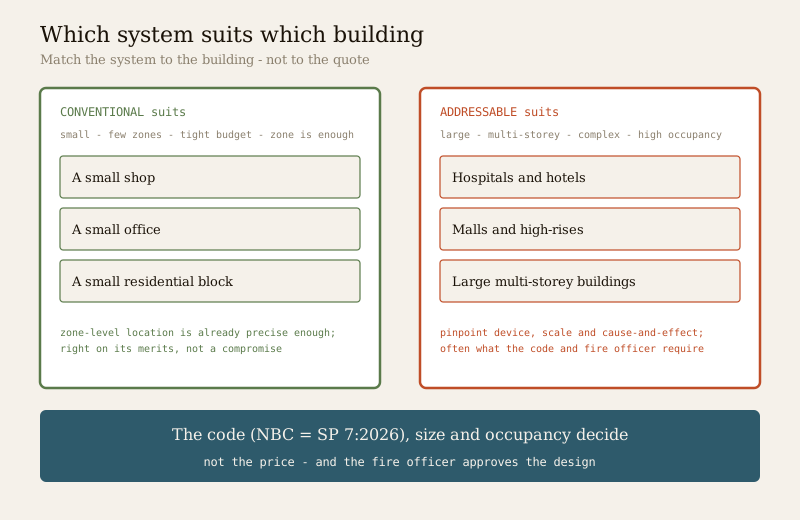
This is the part that actually decides it. The question is not "which is better" but "which suits this building" — its size, its layout, its height, and how many people occupy it.
- A small shop, a small office, a small residential block — few zones, tight budget. A conventional system is the sensible, code-recognised choice. When the whole premises is one or a handful of zones, "Zone 2, ground floor rear" is already a precise enough location — you can see the area at a glance and find the device in seconds. Paying an addressable premium to name a device in a building you can walk end to end buys little. Conventional is right here on its merits, not as a compromise.
- A large, multi-storey or complex building — offices, apartments, a school. As floors and zones multiply, a conventional panel's "which zone" becomes a real delay: a big floor is a lot of ground to search while a fire grows. Addressable pays for itself in response time, in easier fault-finding across a big device count, and often in less cabling. At this scale the loop architecture is usually the more economical answer too.
- Hospitals, hotels, malls, high-rises and high-occupancy buildings. Here addressable is effectively the norm, and is frequently what the code and the fire officer require. When a building holds hundreds or thousands of people, sleeping guests, patients who cannot self-evacuate, or complex smoke-control and shutter interlocks, you need the panel to name the device instantly and to drive cause-and-effect — pressurise this stair, drop that shutter, recall the lifts. The pinpoint location and the programmability are life-safety features, not luxuries.
- A phased, growing or complex-layout building. Addressable's ability to add and identify individual devices, and to reconfigure cause-and-effect in software, suits a building that will change over time better than re-zoning conventional circuits.
The honest life-safety message
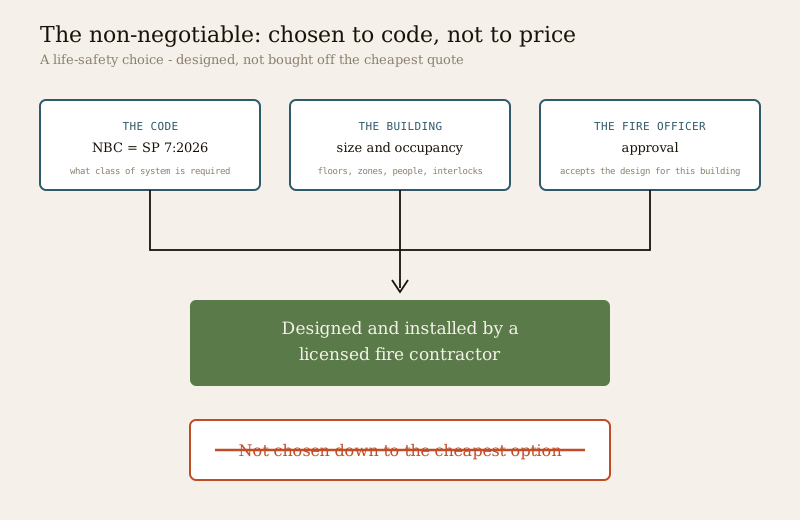
It is tempting to reduce this to a cost table and pick the cheaper box. Do not. A fire alarm is life-safety equipment, and the choice between conventional and addressable is governed by three things, in this order:
1. The code. The National Building Code (NBC = SP 7:2026) and the fire provisions that apply to the building's occupancy and height set what class of system is acceptable. For many large and high-occupancy buildings, the code and the authority steer you to addressable — that is not up for value-engineering.
2. The building — size, height and occupancy. The right system follows from the real building: how many floors and zones, how many people, whether they sleep or need help to evacuate, how complex the smoke-control and interlocks are.
3. The fire officer's approval. The local fire authority approves the design. What they will accept for this building, in this jurisdiction, is a hard input — not a preference you argue around.
And the system that results from those three is designed and installed by a licensed fire contractor who sizes zones or loops, specifies detectors, programmes cause-and-effect and commissions the panel to the code. The professional's job is to bring the code, the building and the fire officer together into a design — not to hand the client the cheaper of two quotes. A conventional system chosen because it is right for a small building is a good decision; a conventional system chosen only because it was cheaper for a building the code wanted addressable is a dangerous one. For faults and panel behaviour once installed, see the fire alarm panel faults guide.
How to decide
There is no universal winner — there is a right fit for each building. A workable way to reach it:
- Start from the code and the occupancy, not the budget. Establish what NBC (SP 7:2026) and the fire officer require for this building's use, height and occupant load. That often narrows the choice before cost enters.
- Count the zones and devices. A handful of zones in a small, low-occupancy building points to conventional. Many floors, a large device count, sleeping or vulnerable occupants, or complex interlocks point to addressable.
- Weigh the whole-life cost, not just the quote. For a small system conventional is genuinely cheaper. For a large one, factor the wiring and labour savings of a loop and the cheaper fault-finding over years — addressable's premium is frequently offset.
- Value the features you will actually use. If the building needs cause-and-effect, individual disablement and precise fault reporting, that is a reason for addressable in itself. If it does not, do not pay for programmability you will never touch.
- Have a licensed fire contractor design it, and get the fire officer's sign-off. The final call is a designed, approved system — not a box chosen from a catalogue.
For the broader menu of fire-alarm decisions this sits inside, see how to choose a fire alarm; for costs, the fire alarm cost guide; and for the addressable side in full, addressable fire alarm systems. This guide is one of the head-to-heads in the security comparison pillar and the compare sub-hub.
Key takeaways
- Conventional detects by zone; addressable detects by device. A conventional panel tells you which zone is in alarm and you search it; an addressable panel names the exact device and location.
- Both are legitimate, code-recognised systems. Neither is inherently better — each is the right answer for a particular building and the wrong one elsewhere.
- Addressable pinpoints the fire faster in a large building, often needs less cable at scale, reports the exact device in fault, and supports cause-and-effect — which is why it is the norm for hospitals, hotels, malls and high-rises.
- Conventional is simpler and cheaper for a small building with few zones — a small shop, office or residential block where zone-level location is already precise enough.
- The choice is made to the code (NBC = SP 7:2026), the building's size and occupancy, and the fire officer's approval — designed and installed by a licensed fire contractor, never chosen down to the cheapest option.
Where to go next
- How to choose a fire alarm — the wider decision this comparison sits inside.
- Addressable fire alarm systems — the addressable technology in depth.
- Fire alarm system cost — the money, in detail, for both approaches.
- Fire alarm panel faults — living with the panel once it is installed.
- The security comparison pillar, the compare sub-hub, the fire-safety sub-hub and the main security hub.
References
- National Building Code of India (SP 7), Bureau of Indian Standards — Part 4 Fire and Life Safety: fire detection and alarm requirements, occupancy classification, and the provisions that determine what class of system a building needs. Verify the current edition (SP 7:2026) via the BIS catalogue: https://www.services.bis.gov.in/
- Local fire authority / State Fire Services — the fire officer approves the fire-alarm design for a given building and occupancy; their acceptance is a binding input to the conventional-versus-addressable decision.
- Manufacturers' fire alarm control panel and loop documentation — the definitive reference for zone and loop capacities, addressing and cause-and-effect programming for a specific system, used by the licensed contractor at design stage.
This is an educational comparison for facility managers, builders, architects and security consultants — not legal advice, a fire-safety design or an installation manual. Fire alarm selection is life-safety-critical and must be made to the National Building Code (SP 7:2026), the building's size and occupancy and the local fire officer's approval, and designed and installed by a licensed fire contractor. Verify any standard's current status via the BIS catalogue before relying on it.
Export this guide
Related Guides — Deep-dive reading
Addressable Fire Alarm Systems in India (2026): Loops, Exact Location & When You Need One
The system for larger, complex buildings where you must know exactly which device triggered - how the loop and unique device addresses work, when the Fire NOC demands one, and how to specify it well.
SecurityConventional Fire Alarm Systems in India (2026): Zones, Cost & When They Fit
The simpler, lower-cost fire-alarm architecture for small, simple buildings - how zone wiring works, what the panel can and cannot tell you, and exactly where it fits and where it does not.
SecurityHow to Choose a Fire Alarm in India (2026): A Life-Safety, Code-Governed Buying Guide
A fire alarm is not shopped on price or looks. It is specified to the National Building Code and the local fire officer, built from listed and certified parts, and installed by a licensed contractor. This guide shows a homeowner, manager or architect how to choose and verify one correctly.
SecurityRelated Tools — Try Free
Before vs After — Cost Reality Check
Compare what you expected to pay vs what you actually paid, category by category.
Reality CheckFire Alarm System Selector
Conventional, addressable or wireless? Answer three questions about your building's size, whether it is a retrofit and how hard cabling is, and get the right fire-alarm architecture to consider — with the non-negotiables. A planning guide, not a system design.
Alarm SystemCircadian Light Meter
Patient-centric circadian lighting visualizer for Indian healthcare design — time-of-day × intensity → CCT, melanopic lux (EML / mEDI), melatonin suppression, and an alertness curve. Calibrated against WELL v2 L03 Circadian Lighting Design, CIE S 026:2018, Brainard 2001, and Lucas et al. 2014.
Circadian Tool