
Home Automation in India: The Complete Guide (2026)
From a single automated light to a fully wired villa — the categories, the wired-vs-wireless decision, system architecture, and how installation actually happens.
Home automation is what separates a pile of smart gadgets from a home that runs itself. A smart bulb you switch on with your phone is a smart device. That same bulb turning on automatically at sunset, dimming to 30% after 10 PM, and switching off when the room is empty for ten minutes — that is home automation. The difference is a rules engine making decisions so you do not have to.
In India, home automation has moved from a luxury-villa indulgence to something achievable in a rented two-bedroom flat for a modest budget. But the market is noisy, and the gap between a ₹40,000 retrofit setup and a ₹40-lakh wired KNX install is rarely explained honestly. This guide lays out the categories you can automate, the fundamental wired-versus-wireless choice, how the system is actually architected, and the phases of a real installation — so you can plan with clear eyes.
This is a companion to the Studio Matrx smart homes pillar guide. Where a subject deserves depth we link out — protocols, networking, security, lighting and cost.
Automation is not about controlling your home from your phone. It is about not needing to — the best automated home is one you rarely have to touch at all.
What home automation actually is
Home automation is the behaviour layer of a smart home. It takes inputs — a sensor reading, a time of day, your phone's location, a voice command — and produces outputs: a light dims, a curtain opens, an AC starts, a door locks. The logic lives in a controller or hub, and it runs whether or not you are paying attention.
The crucial distinction from plain smart devices is autonomy. Smart devices wait for commands. Automated homes anticipate. A well-designed automation is invisible: you only notice it when it stops working.
| Smart device (manual) | Home automation (autonomous) | |
|---|---|---|
| Trigger | You, every time | Sensor, schedule, location, event |
| Example | Tap app to turn on AC | AC starts when you are 2 km from home |
| Effort over time | Constant | Set once, forget |
| Failure mode | You do it manually | Rare, but harder to debug |
The automation categories
Almost everything worth automating falls into five categories. Most homes start with lighting and grow from there.
Lighting
The most rewarding place to start. Schedules, motion-triggered corridor and bathroom lights, dimming scenes for evenings, and "all off" at bedtime. Retrofit switch modules from Wipro, Havells and Schneider keep your existing switchplates. Read the smart lighting guide for fixtures, colour temperature and scene design.
Climate
Automating ACs, fans and geysers against schedules, occupancy and outdoor temperature is where Indian homes save the most money. A geyser that heats only before your bath, or an AC that pre-cools before you arrive and shuts off when you leave, pays for itself. See the energy management guide.
Security and access
Motion and door/window sensors, cameras, and smart door locks that log every entry and can be opened remotely for a delivery. Automations arm the home when everyone leaves and alert you to unexpected motion. The door automation guide and security systems guide go deeper.
Entertainment
Multi-room audio, TV and AV that respond to scenes — "Movie" dims the lights, lowers the shades and powers on the system in one command. This is where wired homes and platforms like Control4 and Crestron show their strength.
Curtains and shades
Motorised curtain tracks and roller blinds that open at sunrise, close at sunset for privacy, or drop automatically when the afternoon sun heats a west-facing room. A genuine comfort and energy win in Indian summers.
Where to begin
You do not automate a whole home at once. The categories reward a specific order: start with lighting because it is cheap, reversible and immediately satisfying; add climate next because it saves real money; then security for peace of mind; and treat entertainment and shades as comfort upgrades once the essentials work reliably.
| Priority | Category | Why first | Rough spend |
|---|---|---|---|
| 1 | Lighting | Cheap, reversible, daily payoff | ₹8K–₹40K |
| 2 | Climate | Biggest energy savings | ₹15K–₹1L |
| 3 | Security / access | Peace of mind, resale value | ₹20K–₹1.5L |
| 4 | Shades / entertainment | Comfort and lifestyle | ₹30K–₹5L+ |
Designing good automations
The technology is the easy part; writing rules that help rather than annoy is the craft. A few principles hold across every Indian home.
- Fail safe, not dark. If a motion sensor dies, the corridor light should default on, not off. Never let an automation trap someone in the dark.
- Respect manual override. A physical switch or app tap must always beat the automation. People distrust a home that fights them.
- Keep rules few and legible. Ten clear automations you understand beat fifty clever ones you cannot debug at 11 PM.
- Account for guests and help staff. Not everyone in an Indian household carries the app. Voice and physical switches must still work for domestic help, elderly parents and visitors.
- Test the power-cut case. With India's outages, confirm the system recovers gracefully when the grid and Wi-Fi return — a good local controller matters here.
Wired vs wireless: the fundamental choice
This is the single most consequential decision in home automation, and it usually comes down to whether you are building/renovating or retrofitting a finished home.
The decision table
| Factor | Choose wired | Choose wireless |
|---|---|---|
| Stage | New build or full renovation | Finished / occupied home |
| Ownership | Own the property long-term | Renting or may move |
| Budget | ₹8L–₹40L+ | ₹40K–₹4L |
| Reliability need | Mission-critical, zero drop | Everyday convenience |
| Technology | KNX, Crestron, Control4 | Wi-Fi, Zigbee, Z-Wave, Matter, Thread |
| Install | Certified integrator | DIY or light professional help |
For most Indian homeowners in apartments, wireless with Zigbee or Matter hits the sweet spot: reliable enough, no wall-breaking, and easy to take with you. The protocols guide explains why a Zigbee/Thread mesh is more robust than pure Wi-Fi for many small sensors.
System architecture
Every automation system, wired or wireless, follows the same signal flow: sensors and inputs → controller/hub → actuators → app and voice, with an optional cloud link for remote access.
Sensors and inputs
The senses of the home: motion (PIR), door/window contacts, temperature, humidity, light-level and occupancy sensors, plus your own inputs — the app, voice, and physical switches.
Controller / hub
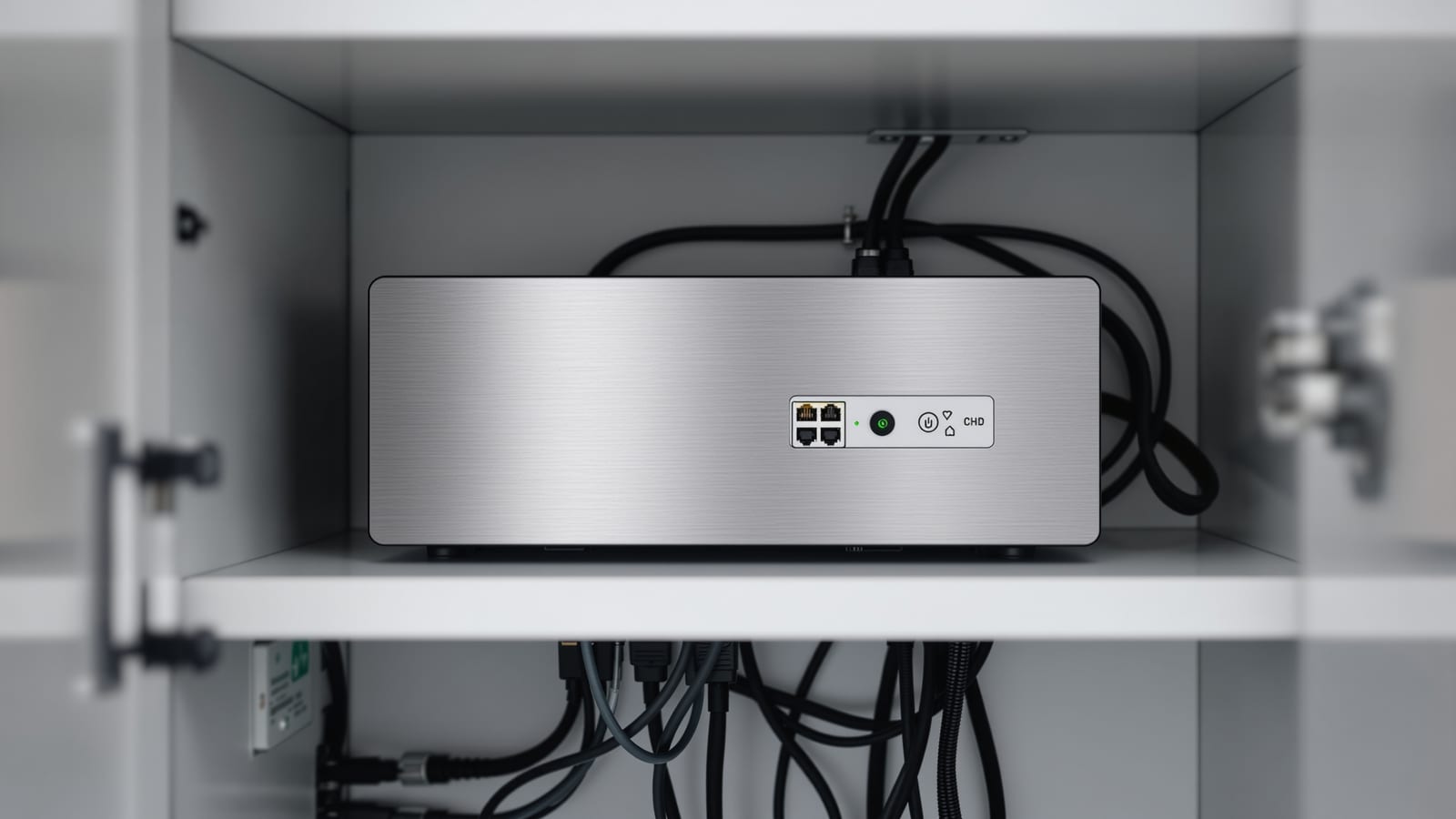
The brain that holds the rules and coordinates everything. Options range from an Amazon Echo or Google Nest, to Apple HomeKit, to Home Assistant on a small local computer, up to a wired KNX or Crestron processor. A local controller keeps automations running even when broadband drops — a real advantage in India.
Actuators
The muscles: switch modules, dimmers, lock motors, curtain motors, relays for geysers and pumps, and IR/RF blasters for ACs and TVs. They receive commands and act on the physical world.
App, voice and cloud
The interface. The cloud link lets you control the home when away, but a well-designed system keeps core automations local so nothing breaks when the internet does. This local-vs-cloud balance also matters for privacy under India's DPDP Act — see the networking guide.
Installation phases
A serious automation project runs in four phases. Skipping the planning phase is the most common and expensive mistake.
| Phase | What happens | When |
|---|---|---|
| 1. Plan | Map rooms, list automations, choose wired/wireless, budget | Before any purchase |
| 2. Carcassing | Conduit, cabling, back-boxes (wired systems only) | During civil/electrical work |
| 3. Device install | Fit switches, sensors, locks, hub, actuators | After walls/finishes done |
| 4. Commissioning | Program rules, test scenes, train the household | Final stage |
For wired KNX/Crestron work, phase 2 must happen during construction — you cannot retrofit conduit into finished walls without breaking them. This is why the wired-vs-wireless decision is tied so tightly to your building stage. Wireless systems skip phase 2 entirely, which is exactly why they suit finished and rented homes. Read the smart home design guide before you finalise a wired plan.
Cost and maintenance
| Setup | Typical cost | Ongoing |
|---|---|---|
| Wireless starter (2–3 rooms) | ₹40,000–₹90,000 | Occasional firmware updates |
| Wireless whole-flat | ₹1.5L–₹4L | Battery swaps in sensors, updates |
| Wired KNX/Crestron villa | ₹8L–₹40L+ | Annual service contract advised |
Budget beyond the devices: a solid mesh network is the foundation, and wired systems carry a recurring integrator relationship. Estimate your project with the smart home cost calculator, and check payback on energy automations with the ROI calculator. Maintenance is mostly keeping firmware current, replacing sensor batteries once or twice a year, and periodically pruning automations that no longer serve you.
Common Indian pitfalls to avoid
A few mistakes recur often enough in Indian homes to call out directly.
- Under-spending on the router. People spend lakhs on devices and run them over a ₹1,500 ISP router. Dropped devices almost always trace back to weak Wi-Fi. Fix the network first.
- Cloud-only everything. With frequent outages, a home that dies when broadband drops is a poor design. Insist on local fallback for lights and locks.
- Ignoring the neutral wire. Many older Indian switchboards lack a neutral at the switch, which some retrofit modules require. Check before you buy.
- Buying orphan brands. A cheap no-name device whose app vanishes in a year becomes e-waste. Prefer brands and Matter certification likely to survive.
- Over-automating early. Start with five rules you understand. Complexity you cannot maintain is worse than manual switches.
Future technology
- Matter and Thread are collapsing the wired-vs-wireless gap — a low-power mesh that is nearly as reliable as cabling, with none of the wall-breaking.
- AI-driven automation that learns patterns rather than following rigid rules — the home that infers your routine instead of being told it.
- Local-first controllers gaining ground as privacy and reliability concerns push buyers away from cloud-only systems.
- Ageing-in-place automation — fall detection, activity monitoring and voice-first control for India's elderly.
Plan first, match the technology to your building stage, keep the core logic local, and grow in stages. Done that way, home automation in India is one of the highest-return upgrades you can make to how a home feels to live in.
References
- National Building Code of India 2016 (NBC), BIS
- Bureau of Indian Standards — Electrotechnical standards
- IEC 60364 — Low-voltage electrical installations
- KNX Association — Standard for home and building control
- Bureau of Energy Efficiency (BEE) — Standards and Labelling
- Connectivity Standards Alliance — Matter and Thread
Export this guide
Related Guides — Deep-dive reading
Smart Home Maintenance & Troubleshooting for Indian Homes
A smart home is not a one-time purchase — it is a small fleet of computers that needs firmware updates, fresh batteries, occasional reboots and a plan for the day a manufacturer switches off the cloud. This guide gives you a maintenance calendar, a troubleshooting flow for the failures Indian homes actually see, and the UPS and security hygiene that keep it all running through power cuts and voltage swings.
Smart HomeThe Complete Smart Home Checklist (India): Plan, Buy, Install, Secure
A printable, do-it-in-order checklist for building a smart home in India — five phases from setting goals and picking an ecosystem, through buying the right ISI-marked kit, installing and naming it safely, locking down passwords and privacy, to living with it and keeping it maintained. Tick the boxes; skip the expensive mistakes.
Smart HomeSecurity Upgrade Guide for Existing Homes in India
How to retrofit real security into a home you already live in — wireless-first, minimal construction, and a phased budget that starts with quick wins before big spends.
SecurityRelated Tools — Try Free
Motorized Curtain Cost Calculator
Estimate the all-in cost to motorise curtains — motors, tracks, hub and installation.
Cost CalculatorSmart Curtain ROI Calculator
Estimate the energy savings and payback of motorising and automating curtains on harsh-sun windows.
ROI CalculatorCross-Ventilation Analyzer
Estimate airflow and air changes per hour (ACH) from room size, window areas, layout, and local wind — with NBC 2016 Part 8 compliance check.
Ventilation Calculator