
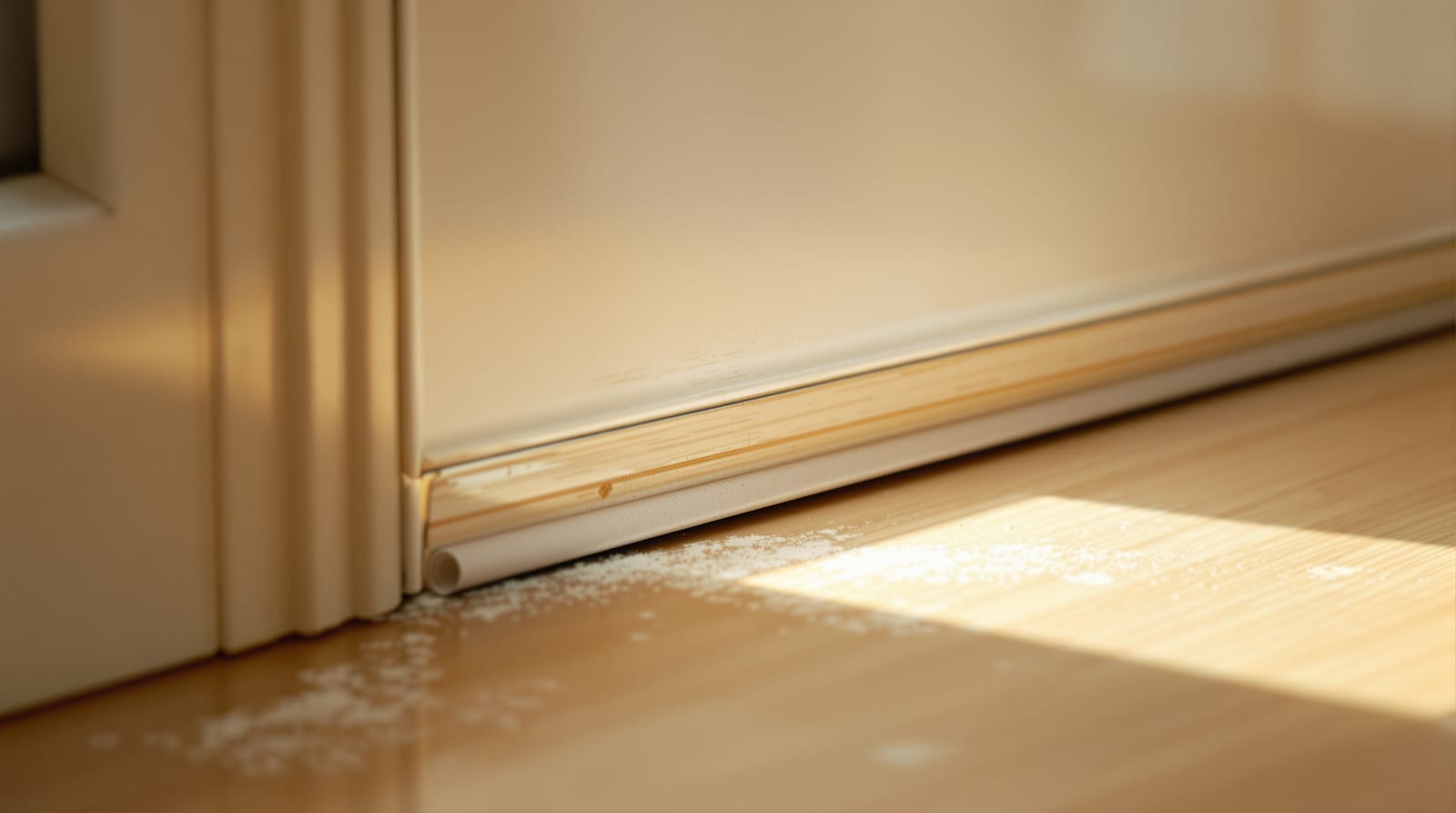
Gap Under Door Fix: Seal the Bottom Gap (India 2026)
Why the gap under your door matters and the ranked fixes — sweeps, draught excluders, threshold strips and drop seals — with prices and steps.
That thin line of light under your closed door is doing more damage than it looks. The right gap under door fix keeps cool air in, dust and insects out, and the room quieter — and most of it is a calm 30-minute job with a screwdriver, not a carpenter visit. This guide explains why the gap matters, ranks the fixes from cheapest sticky-strip to neat automatic drop seal, and shows you exactly how to measure the gap and fit each one. We will also be honest about the case where a big gap means the door itself is the wrong size and no seal will save it.
Why the gap under your door matters
A standard interior door is hung with a deliberate clearance at the bottom — usually 8-12 mm — so it swings freely over the floor, tiles or a rug. A little gap is normal and even helps air circulate. The trouble starts when the gap is large, uneven, or opens onto something it should be sealed against (outside, a dusty corridor, a noisy room, an air-conditioned room).
Here is what a too-big gap actually costs you:
| Problem | What you notice | Why the gap causes it |
|---|---|---|
| AC / cooling loss | Room never gets cold, high bill | Cooled air is denser and spills out under the door |
| Draughts | Cold air river across the floor | Pressure difference pulls air through the gap |
| Dust & grit | Constant fine dust near the door | Indian dust is relentless; the gap is an open door for it |
| Insects | Ants, cockroaches, mosquitoes | A 10 mm gap is a motorway for crawling pests |
| Light spill | Glow under a bedroom door at night | Light leaks straight through |
| Noise | TV, talk, traffic bleeds in | Sound takes the path of least resistance — the gap |
| Smells & smoke | Kitchen or bathroom odours travel | Air movement carries them room to room |
For an air-conditioned bedroom or a home office, sealing the bottom is one of the highest-value small jobs in the house. For more on the AC-loss side, run the door draught saving calculator before you spend anything — it helps you decide which rooms are worth sealing first.
How to measure the gap (do this first)
Don't buy anything until you have measured. Close the door and look from the inside:
1. Height of the gap. Slide a ruler or a stack of coins under the closed door at three points — hinge side, middle, latch side. Note the largest.
2. Is it even? If the gap is 6 mm at the hinge and 16 mm at the latch, the door is hung unevenly — see uneven door gaps fix first; a seal alone will look and work badly on a slanted gap.
3. Door width. Measure the full leaf width so you buy a sweep long enough to trim down.
4. Floor type under the door. Tile, marble, wood, or a rug threshold changes which fix works (a brush sweep glides over a rug; a rigid rubber blade can catch).
5. Door material & thickness. Hollow flush doors take screws poorly; a stick-on seal or a screw-with-wall-plug-style fixing is safer.
A gap of 8-12 mm is normal and easily sealed. A gap over 15-18 mm, or one that varies wildly, is a flag that the door is undersized or badly hung — keep reading to the last section.
The fixes, ranked
From cheapest and easiest to most permanent:
| Fix | Best for | Difficulty | Time | Parts cost (₹) |
|---|---|---|---|---|
| Stick-on draught excluder / weatherstrip tape | Small even gap, hollow doors, renters | Easy | 15 min | 100-500 |
| Screw-on door sweep (brush or rubber blade) | Most interior & AC doors | Easy | 30 min | 250-900 |
| Twin-sided draught excluder (slide-on guard) | No-screw renters, both sides sealed | Easy | 20 min | 300-800 |
| Threshold / floor strip | External & main doors, big gaps | Moderate | 45-60 min | 400-1,500 |
| Adding a beading / packing strip to the leaf | Door slightly undersized | Moderate | 1 hr | 200-700 + carpenter |
| Automatic drop seal (mortised) | Quiet rooms, acoustic, premium | Pro | 1-2 hr | 1,200-4,000 + fitting |
| Carpenter visit to re-hang / re-size | Big or uneven gap, sagging door | Pro | Half day | 400-1,500 labour |
GST of 18% applies on the goods. Prices are metro-indicative; tier-2 cities run cheaper.
1. Stick-on draught excluder (the cheapest start)
A self-adhesive foam or rubber strip you press onto the bottom edge of the leaf. Brilliant for a small, even gap and for renters who cannot drill. Weakness: adhesive fails on dusty or humid surfaces, and it drags if the gap is tight. Clean the surface with a dry cloth first; in monsoon humidity, press hard and leave the door open an hour before closing.
2. Screw-on door sweep (the workhorse)
A metal or PVC channel with a brush or flexible rubber blade that screws to the face of the door, bottom edge, so the blade just kisses the floor. This is the best all-round gap under door fix for AC bedrooms and offices. Brush sweeps glide over rugs and uneven tile; rubber blades seal tighter on smooth floors but can squeak or catch.
3. Threshold / floor strip
For main doors and external doors with a big gap, a low aluminium threshold strip on the floor, paired with a sweep on the door, gives a proper seal against draughts, water splash and insects. Needs the door leaf to clear it — measure carefully or the door will jam.
4. Automatic drop seal
The premium option: a spring-loaded seal mortised into the bottom of the leaf that drops down when the door closes and lifts when it opens, so nothing drags on the floor. Best for acoustic doors and rooms where you want a flush, silent finish. This is pro fitting — link with soundproof existing door diy if noise is your main reason.
Step-by-step: fitting a screw-on door sweep
Difficulty: easy. Time: 30 minutes. Cost: ₹250-900 part, or ₹400-800 if a carpenter does it.
1. Measure the door width and the gap height. Buy a sweep slightly wider than the door and with a blade depth that covers your gap plus 2-3 mm.
2. Close the door and check the gap is even. If it slopes badly, fix the hang first — see uneven door gaps fix.
3. Cut the sweep to length with a hacksaw — sweep width should match the door width, not overhang the frame.
4. Hold the sweep against the bottom face of the door (the side facing the room you want sealed — usually the AC/cooler side). The blade should just brush the floor when the door is shut, not bend or drag.
5. Mark the screw holes with a pencil. Most sweeps have slotted holes so you can adjust height.
6. Pilot-drill small holes if it is a solid door; for a hollow flush door, drill only into the solid bottom rail or use the supplied self-tapping screws — see flush doors for where the solid rail sits.
7. Screw it on loosely, close the door, slide the sweep down until the blade kisses the floor, then tighten fully.
8. Test: open and close a few times. The door should swing freely with light contact, no scraping. Re-check after a week.
Tools & materials you'll need
- Door sweep / draught excluder / threshold strip (your chosen fix)
- Hacksaw or fine-tooth saw (to trim to length)
- Tape measure and pencil
- Screwdriver or cordless driver
- Small drill bit for pilot holes
- Spirit level (to check the gap is even)
- Dry cloth and a little spirit/cleaner (for stick-on types)
- Wall plugs / self-tapping screws (for hollow doors)
Routine: keep the seal working
| Cadence | Check |
|---|---|
| Monthly | Wipe dust off the brush/blade; vacuum the gap line |
| Every monsoon onset | Confirm stick-on adhesive hasn't lifted in humidity |
| Every 6 months | Re-check screw tightness; the blade should still kiss the floor |
| Yearly | Replace a worn brush sweep; brushes flatten and lose seal over time |
For a whole-home schedule, the home door maintenance planner ties this into hinges, locks and polish so nothing is forgotten.
When a big gap means the door is undersized
This is the honest part. If the gap is over 15-18 mm, or it is huge after a new tile or marble floor was laid (which raised the floor and left the old door hanging high), no sweep will look right and a tall brush will drag. The real causes:
- The floor was raised and the door wasn't trimmed up at the frame — it now sits high.
- The door is genuinely smaller than the opening (common with badly fitted replacement leaves).
- The door has dropped at the hinges so it sits crooked — that is a sagging door problem, not a gap problem.
The fixes for an undersized door are carpenter work: add a beading or packing strip to the bottom of the leaf to make it taller, or fit a threshold strip on the floor to raise the meeting line, or in the worst case replace the leaf — see door replacement guide and price it with door cost India 2026. Don't keep stacking thicker sweeps on an undersized door; it looks bad and never seals. Stop and call a carpenter if the door is structurally sagging, the frame is rotted at the floor (see door bottom rot repair), or it is an automatic / sensor door where you should isolate power before touching anything.
For a wider map of bottom-edge and clearance faults, start from the door troubleshooting hub or the full complete door guide.
Frequently asked questions
What is a normal gap under an interior door in India?
About 8-12 mm at the bottom is normal so the door clears tiles, mats and a rug. A gap over 15 mm starts leaking too much AC air and dust, and a gap that varies a lot side to side usually means the door is hung unevenly.
Will a door sweep stop insects and cockroaches?
A good rubber-blade sweep or a brush sweep set to just touch the floor blocks crawling insects and most dust. For a gap onto outdoors, pair the sweep with a floor threshold strip for a proper seal, and check the side gaps too.
Can I seal the gap without drilling, as a renter?
Yes. Use a self-adhesive draught excluder strip, or a twin-sided slide-on draught guard that grips the bottom of the door with no screws. Clean the surface first and press hard, especially in humid monsoon weather so the adhesive holds.
My floor was tiled and now the door scrapes — what do I do?
The floor rose and the door is now too low. Don't force it. A carpenter should trim the bottom of the leaf so it clears the new floor, then you fit a sweep to the new gap. If it scrapes only on one side, see door dragging on floor.
Does sealing the bottom really cut my AC bill?
It helps noticeably in a closed, air-conditioned room because cooled air is heavier and pours out under the door. Sealing the bottom plus the sides keeps the cold in. Use the door draught saving calculator to see the likely effect for your room before buying.
How long does a brush sweep last?
A quality brush sweep lasts a few years, but the bristles flatten and lose their seal over time. Replace it when the brush no longer touches the floor along its whole length, and wipe the dust off it monthly so it stays soft.
Export this guide
Related Guides — Deep-dive reading
Soundproof Doors in India: How Doors Leak Sound, STC Ratings, Seals & Real Costs
A door is the weakest acoustic link in any wall - and it usually leaks through the gaps, not the panel - so here is how to actually quieten a bedroom, home theatre or street-facing room, from a 1,500-rupee seal kit to a proper acoustic door.
Home Doors & EntrancesHow to Stop Door Draughts: DIY Sealing Guide India 2026
Seal the four sides of any door to block draughts, dust, insects, noise and AC loss — a step-by-step DIY guide with Indian prices.
Home Doors & EntrancesSoundproof an Existing Door DIY: Cheap Fixes (India 2026)
Seal the gaps, add mass and quieten a noisy room without replacing the door — realistic dB gains, step-by-step, and ₹ costs.
Home Doors & EntrancesRelated Tools — Try Free
Acoustic Privacy (STC) Visualizer
Indian healthcare acoustic visualizer — compare wall assemblies and noise sources, see received SPL after STC attenuation, and check FGI 2018 / IS 1950 / NABH speech-privacy compliance with live dual-canvas waveform.
Acoustic ToolDoor Cost Calculator
Estimate the all-in cost of a door — leaf, frame, hardware, fitting and GST — by type, material and size.
Door CalculatorMaterial Schedule Generator
Generate a room-wise finish schedule — walls, floors, ceilings, trim, and joinery by location.
Material Schedule