
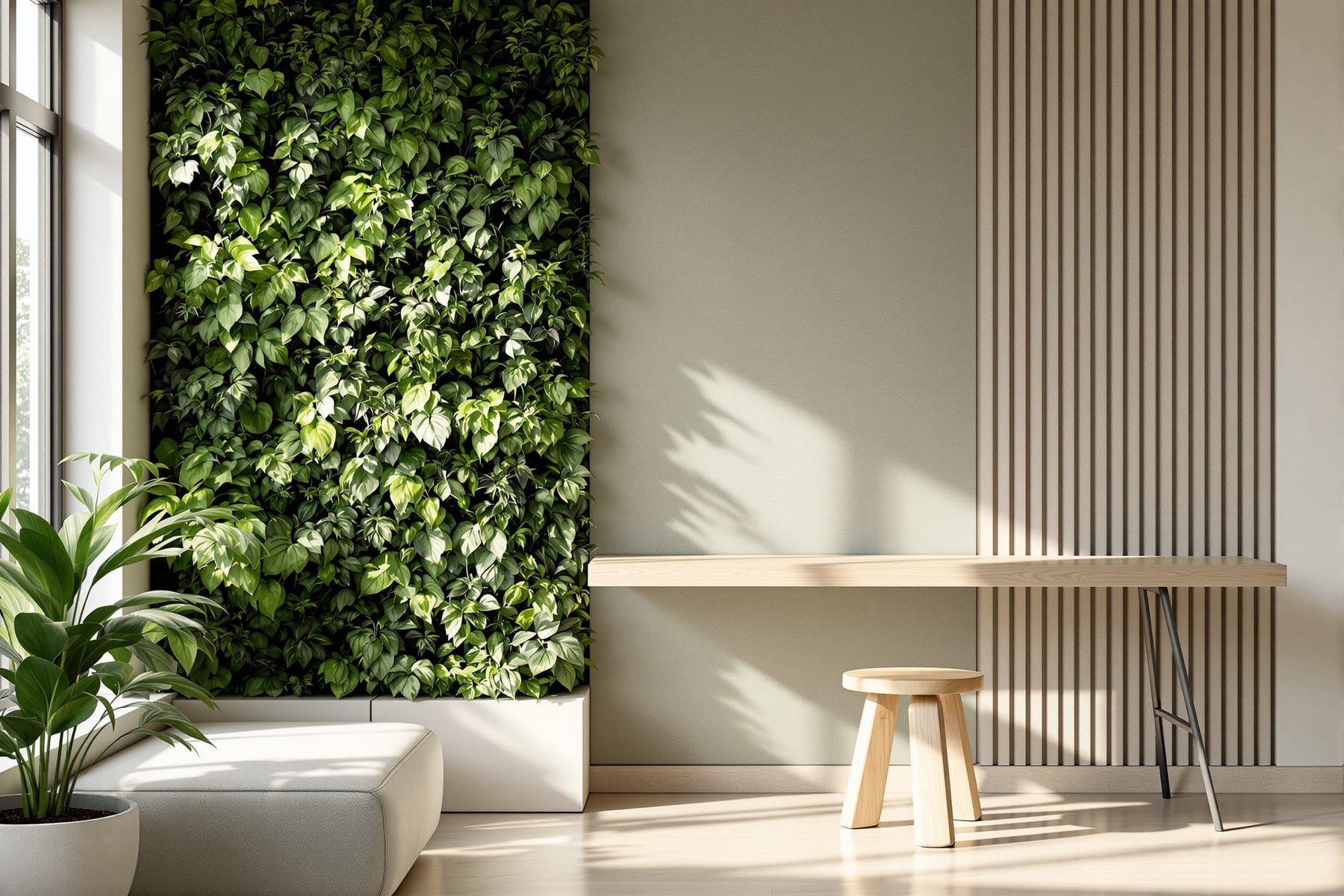
Specialty & Functional Walls: The Complete Guide for Indian Homes
Walls that do a job — absorb sound, grow plants, store, display or glow. The whole family of functional walls, which problem each one solves, how they're built, the truth about green walls, and what they cost to install and to keep.
Most walls are asked only to look good. But a wall is a large, permanent surface at eye level and arm's reach — and some of the best ones in a modern home are put to work. A wall can soak up the echo in a media room, grow a garden of living plants, hold a family's notes and photographs, store a workshop's tools, or glow softly at night. These are functional walls: features that earn their keep by solving a real, recurring problem rather than merely decorating. They are the most useful corner of the wall-finish world, and the one where a good idea pays back every single day.
This is the complete guide to specialty and functional walls for Indian homes — a deep dive under the master wall-finishes guide into the walls that do a job. We will map the whole family, help you start from the problem rather than the product, show how the main ones are actually built, tell the honest truth about green walls (the most wanted and most misunderstood), and lay out what each costs — both to install and, crucially, to keep.
The functional-wall family
Functional walls are a surprisingly broad family, and most homeowners know only two or three of them. Seeing the full set is how you discover the one that fixes a frustration you had stopped noticing.
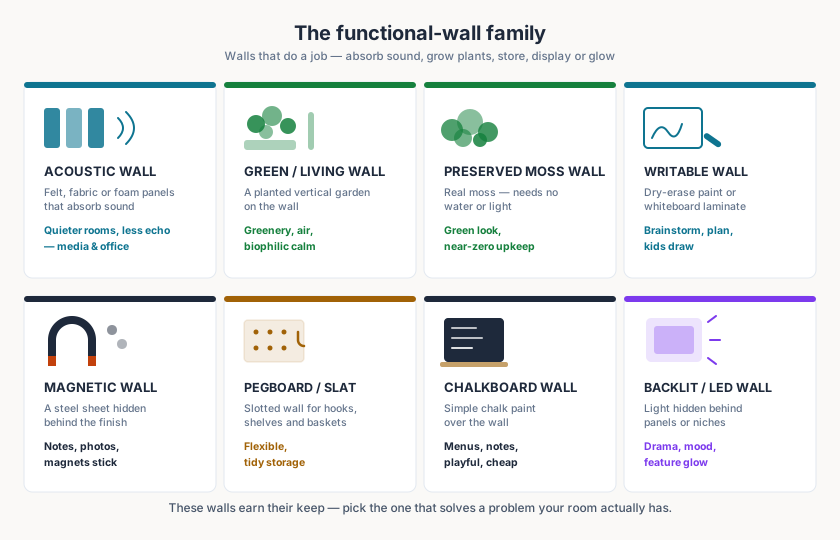
- Acoustic wall — felt, fabric or foam panels that absorb sound, for quieter media rooms and offices.
- Green / living wall — a planted vertical garden that brings greenery, air and biophilic calm.
- Preserved moss wall — real moss that needs no water or light, for the green look with near-zero upkeep.
- Writable / whiteboard wall — dry-erase paint or laminate to brainstorm, plan or let kids draw.
- Magnetic wall — a steel sheet behind the finish so notes, photos and magnets stick.
- Pegboard / slat storage — a slotted wall for flexible, re-arrangeable hooks and shelves.
- Chalkboard wall — chalk paint for menus, notes and playful, cheap character.
- Backlit / LED wall — light behind panels or niches for drama, mood and a feature glow.
The unifying idea: these walls earn their keep — pick the one that solves a problem your room actually has.
Start from the problem
The mistake with functional walls is to fall for the idea — a green wall looks wonderful on a mood board — and only later ask whether it solves anything. Reverse it. Name the frustration first, and the right wall follows.
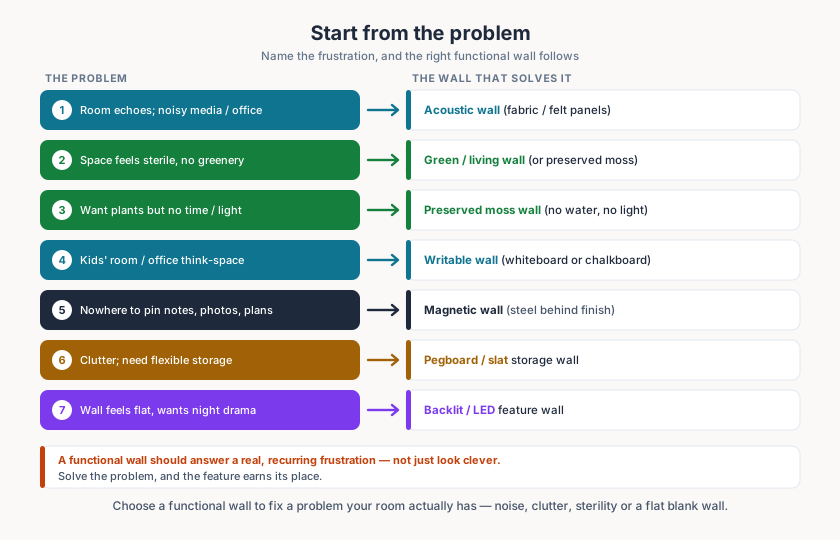
A room that echoes or a noisy home office points to an acoustic wall. A space that feels sterile and green-starved points to a living or moss wall. Wanting plants but having no time or light for them points to a preserved moss wall. A kids' room or home office that needs a think-space points to a writable or chalkboard wall. Nowhere to pin notes and photos? A magnetic wall. Clutter with no home? A pegboard or slat storage wall. A flat wall that wants drama at night? A backlit LED feature. A functional wall should answer a real, recurring frustration — solve the problem, and the feature earns its place.
How the main ones are built
Every functional wall hides a system behind its face — and understanding that system tells you what it needs (a cavity, a steel sheet, an irrigation line, a firm fixing) and whether your wall can take it.
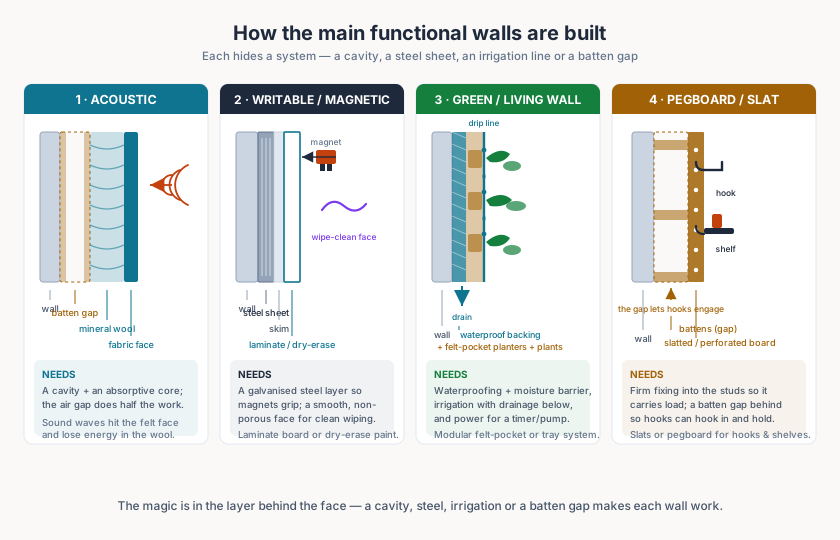
An acoustic wall is fabric or felt over an absorptive mineral-wool or foam core on battens — the air gap does half the sound-soaking. A writable or magnetic wall needs a smooth, non-porous dry-erase face and, for magnets, a hidden galvanised steel sheet beneath the finish. A green / living wall is the most demanding: a waterproof backing, a modular felt-pocket or tray planter system, a drip irrigation line with drainage, and power for a timer. A pegboard or slat wall is a slotted board on battens, with the gap behind letting hooks engage — fixed firmly into the structure to carry weight. The magic, in every case, is the layer behind the face.
Green walls: the honest truth
Green walls deserve their own section because they are the most desired functional wall and the one most often regretted. A living wall is not a finish — it is a garden mounted vertically, with a garden's needs.
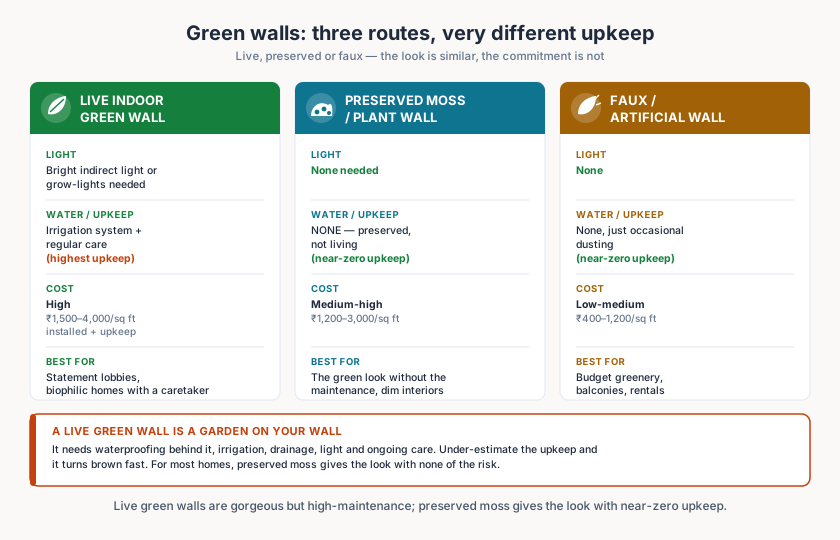
There are three routes, and they look similar but demand utterly different commitment. A live indoor green wall needs bright light or grow-lights, an irrigation system and regular care, and costs ₹1,500–4,000/sq ft installed plus ongoing upkeep — magnificent, but it browns fast if neglected, and it needs waterproofing, irrigation and drainage behind it. A preserved moss wall is real moss that is preserved, not living: no water, no light, near-zero upkeep, at ₹1,200–3,000/sq ft — the green look without the risk. A faux / artificial wall is cheapest at ₹400–1,200/sq ft and needs only occasional dusting. For most Indian homes without a dedicated caretaker, preserved moss gives the biophilic look with none of the maintenance — a point worth weighing against the romance of a living wall (and see indoor plants and biophilic design for the wider idea).
What they cost — and cost to keep
Functional walls span a huge price range, but the number that catches people out is not the install cost — it is the upkeep. Budget both.
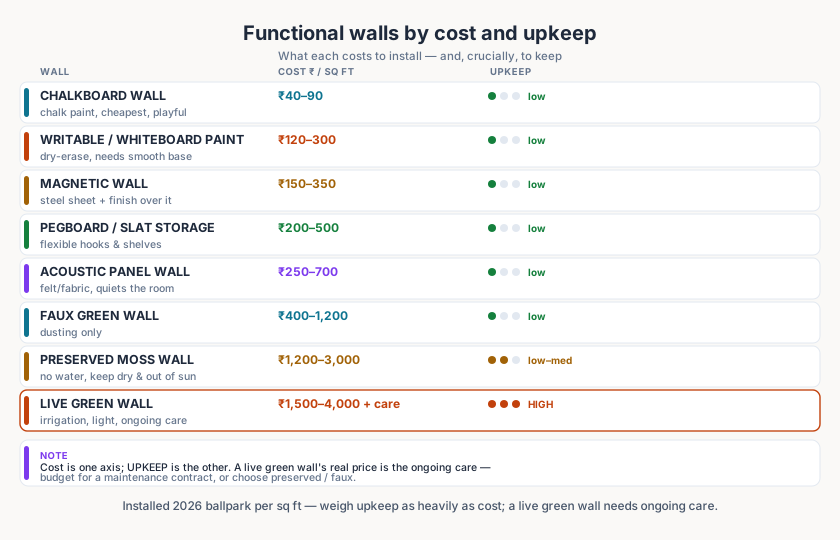
At the affordable, low-upkeep end sit the chalkboard (₹40–90/sq ft), writable/whiteboard (₹120–300), magnetic (₹150–350) and pegboard/slat (₹200–500) walls — cheap to run and easy to live with. Acoustic panel walls (₹250–700) and faux green walls (₹400–1,200) are still low-maintenance. At the top sit preserved moss (₹1,200–3,000, low-to-medium upkeep) and the live green wall (₹1,500–4,000 plus care, high upkeep). The lesson is that cost is only one axis: a live green wall's real price is the ongoing care, so budget for a maintenance contract — or choose preserved or faux and be honest about how much upkeep your household will really do.
Functional walls are where a wall stops being a backdrop and starts pulling its weight. Choose one to solve a genuine problem — noise, clutter, sterility, a flat blank wall — size the upkeep honestly, and it becomes the most quietly useful surface in the house. When the wall's real job is simply to look right, step back to the master wall-finishes guide and the decorative and finish options there.
Export this guide
Related Guides — Deep-dive reading
Green & Living Walls: The Complete Guide for Indian Homes
A garden on your wall — the three routes (live, preserved and faux), how a live wall is built, choosing plants for Indian light, the honest care reality, and how to choose by cost and upkeep.
Wall FinishesAcoustic Wall Panels: The Complete Guide for Indian Homes
The walls that quiet a room — how acoustic panels absorb sound, the panel types, how they're installed, where they help most, and the crucial difference between absorption and soundproofing.
Wall FinishesBathroom Wall Finishes: The Complete Guide for Indian Homes
Wet, splash and dry walls each need a different finish — the bathroom's zones, the best finish for each, why waterproofing comes first, tricks to enlarge a small bath, and three budget combinations.
Wall FinishesRelated Tools — Try Free
Landscape Cost Calculator
Estimate a garden's cost — hardscape, softscape, lawn, irrigation, lighting and annual upkeep — by area, tier and city.
Budget CalculatorMonsoon-Readiness Checklist
Pre-rain home audit across 9 categories — terrace, drains, waterproofing, electrical, HVAC, pest, vehicles, documents.
Seasonal AuditRainwater Tank Sizer
How big should your rainwater tank be? Computes annual harvest, recommended tank capacity in litres, water-bill savings, and payback — for 10 Indian cities.
RWH Calculator