
Acoustic Wall Panels: The Complete Guide for Indian Homes
The walls that quiet a room — how acoustic panels absorb sound, the panel types, how they're installed, where they help most, and the crucial difference between absorption and soundproofing.
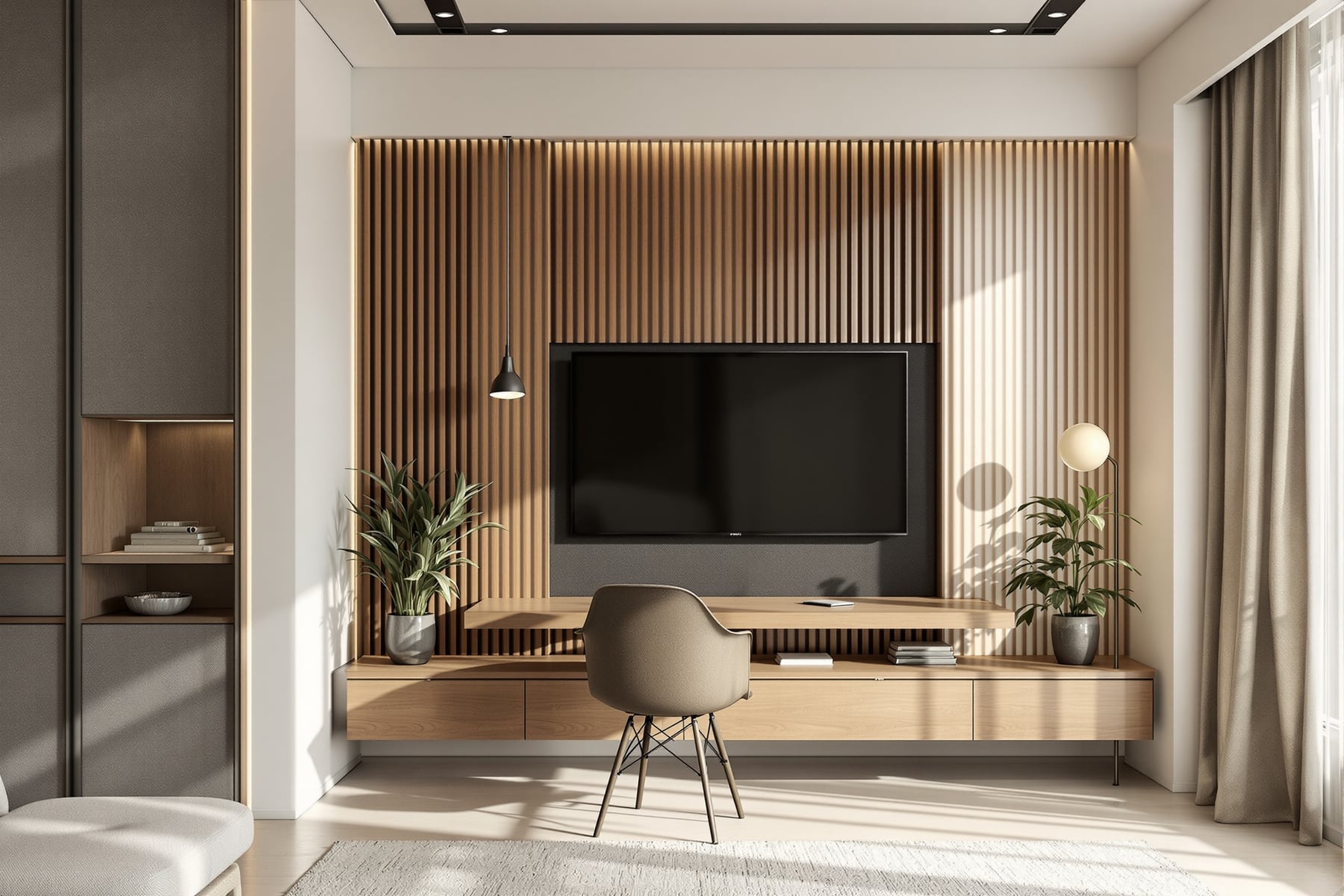
Some walls are asked to do a job you hear rather than see. In a media room where dialogue muddies into echo, a home office where every call sounds like a bathroom, or an open-plan living space where hard floors and glass turn conversation into a din, an acoustic wall panel earns its keep — it soaks up the sound that a bare wall would bounce back, leaving the room calmer and audio clearer. And because the popular wood-slat-on-felt panels look genuinely handsome, an acoustic wall doubles as a warm feature wall that happens to fix your sound.
This is the complete guide to acoustic wall panels for Indian homes — a deep dive under the specialty & functional walls guide and the master wall-finishes guide. We will explain how acoustic panels actually work, show the panel types, cover how they are installed for best effect, map where they help most, and clear up the single biggest misconception: the difference between absorbing sound and blocking it.
How acoustic panels work
The physics is simple once you see it, and understanding it is what stops people buying the wrong product for the wrong problem.
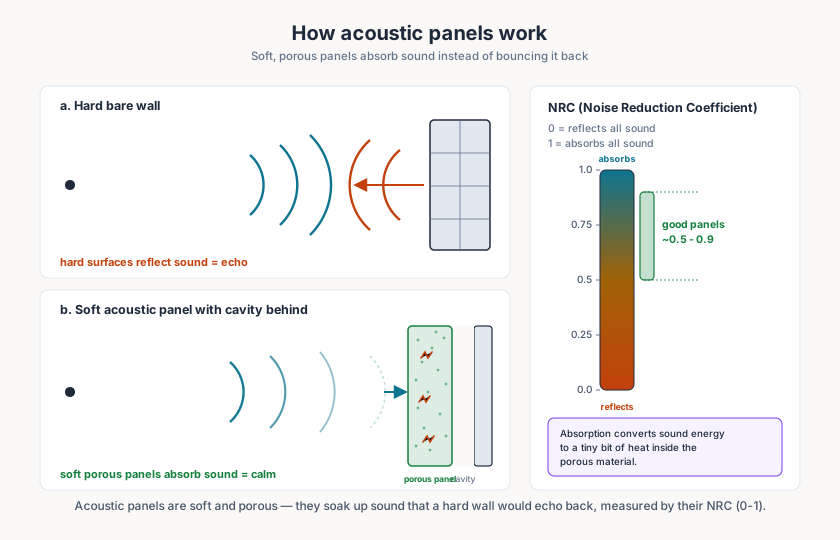
A hard, bare wall reflects sound, which bounces around the room as echo and reverb, muddying every voice and note. A soft, porous acoustic panel absorbs that sound instead — the sound energy enters the porous material and is converted to a tiny amount of heat, so it does not bounce back. How well a panel does this is measured by its NRC (Noise Reduction Coefficient), a number from 0 (reflects everything) to 1 (absorbs everything); good acoustic panels sit around 0.5–0.9. The whole game is replacing reflective surface with absorptive surface.
Acoustic panel types
Acoustic panels span from purely functional foam to genuinely beautiful wood, and they trade looks against how much sound they absorb.
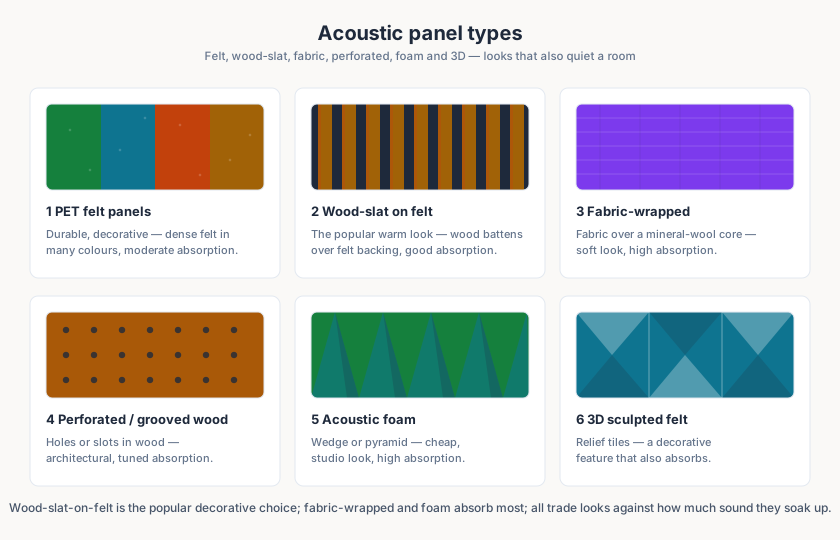
The main types: PET felt panels (durable, colourful, moderately absorptive), wood-slat on felt (wood battens over a felt backing — the popular warm look, with good absorption), fabric-wrapped (fabric over a mineral-wool core — high absorption, soft look), perforated or grooved wood (architectural, with tuned absorption), acoustic foam (cheap, studio-style, high absorption), and 3D sculpted felt (decorative relief tiles that also absorb). Wood-slat-on-felt is the everyday decorative favourite; fabric-wrapped and foam absorb the most; all of them trade appearance against how much sound they soak up.
Installing acoustic panels
Where and how you mount acoustic panels changes how well they work — and a small air gap is a surprisingly big deal.
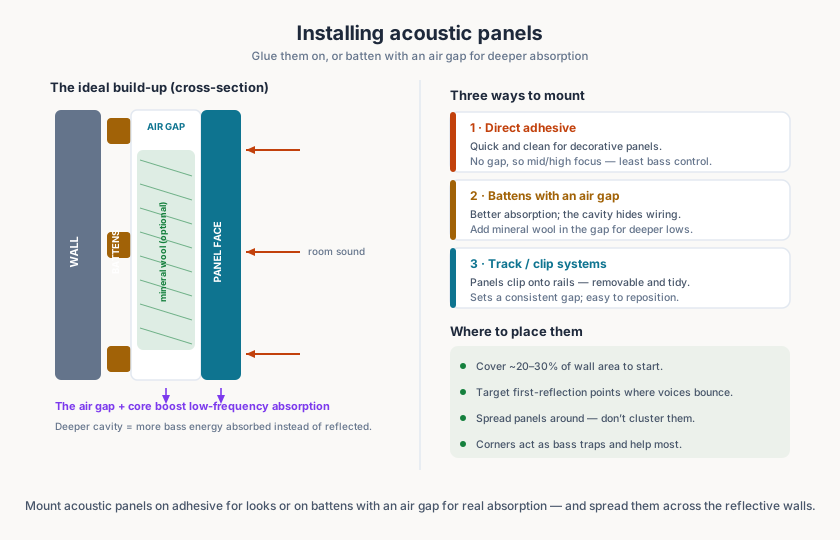
You can mount them three ways: direct adhesive (quick, for decorative panels), battens with an air gap (better absorption, and it hides wiring), or track/clip systems. The air gap matters because it — and an optional mineral-wool core behind the panel — boosts absorption of lower frequencies. On placement, the rule of thumb is to cover roughly 20–30% of the wall area to start, targeting the reflective walls and first-reflection points where voices and audio bounce, and to spread panels around rather than clustering them (corners, which act as bass traps, help most).
Where acoustic panels help most
Acoustic panels are a targeted tool, and they shine wherever hard surfaces turn sound into echo.
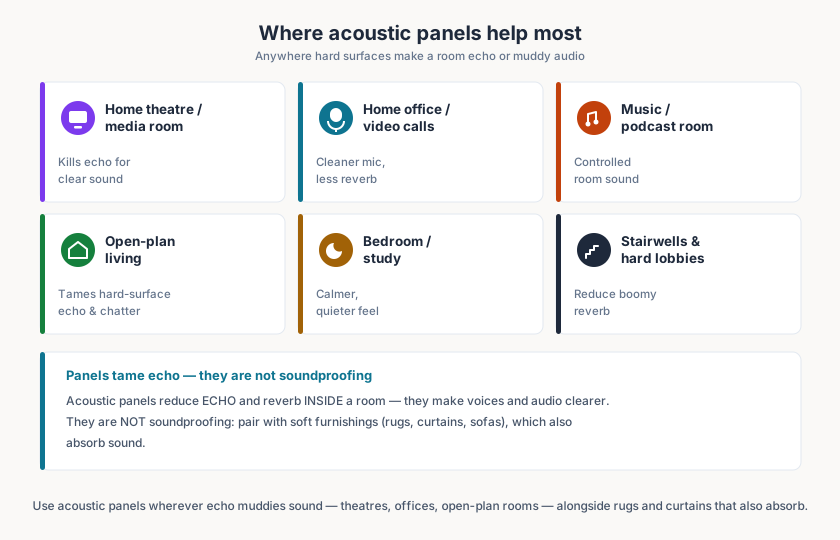
They deliver most in a home theatre or media room (killing echo for clear sound), a home office or video-call space (a cleaner mic and less reverb), a music or podcast room (controlled room sound), open-plan living (taming hard-surface echo and chatter), a bedroom or study (a calmer, quieter feel), and stairwells and hard lobbies (reducing boomy reverb). One caveat to hold onto: acoustic panels reduce echo and reverb inside a room — they are not soundproofing — and they work best alongside soft furnishings (rugs, curtains, sofas) that also absorb sound.
Absorption versus soundproofing
This is the misunderstanding that leads to the most disappointment, so it deserves to be stated plainly.
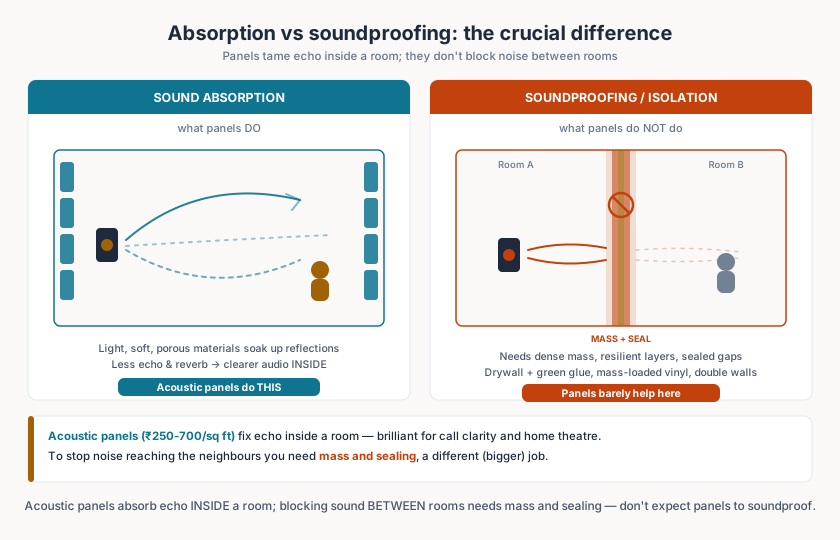
Sound absorption — what acoustic panels do — softens sound inside a room, reducing echo and reverb so audio is clearer; it uses light, soft, porous materials. Soundproofing (isolation) — what panels do not do — stops sound travelling between rooms, and it needs the opposite: dense mass, resilient layers and sealed gaps (think heavier drywall, mass-loaded vinyl, double walls, sealed doors). So acoustic panels (roughly ₹250–700/sq ft) will make your calls and home theatre sound better, but they will not stop the neighbours hearing you — that is a different, bigger job. Knowing which problem you actually have is the whole point.
Acoustic wall panels are the rare finish that solves a problem you feel more than see — turning an echoey, tiring room into a calm, clear one, while looking like a warm designer feature. Match the panel to how much absorption you need, spread them across the reflective walls, and pair them with rugs and curtains. Just remember they tame echo, not transmission. For the wider family of walls that do a job, return to the specialty & functional walls guide.
Interactive · Acoustic panels needed
33 panels · ₹14,850
20–30% of wall area is the usual target for echo control.
Panels to buy
0 panels
130 sq ft treated · good echo control
Export this guide
Related Guides — Deep-dive reading
Acoustic Comfort in Homes
Why hard, echoey Indian rooms quietly tire you out — and how rugs, curtains, layout and a few smart fixes turn noise into calm for better sleep, focus and lower stress.
Healthy HomesAcoustic Insulation Materials in India: Soundproofing Products Explained (2026)
The materials that quiet a room and block noise between rooms - mineral wool, acoustic gypsum, mass-loaded vinyl, resilient channels, damping compound and seals. What each does, where it goes, indicative cost, and why soundproofing is always a system, not a single product.
Building MaterialsSoundproof & Acoustic Curtains: What They Can (and Can't) Do (India 2026)
The honest acoustics guide — heavy, full, floor-to-ceiling curtains absorb echo and soften mid-high noise, but no curtain blocks low-frequency traffic rumble like a wall. Here is what actually helps, by how much, and what it costs.
Window TreatmentsRelated Tools — Try Free
Concept Generator
Get 3 AI-generated design concepts for any room with style, materials, and cost estimate.
DesignAIAcoustic Curtain Calculator
Estimate how much noise and echo heavy, full curtains will dampen — and where they help vs where they can't.
Acoustic ToolDesign Style Finder Quiz
Answer 10 visual questions to discover your Indian interior style profile with materials and colours.
Interactive Quiz