
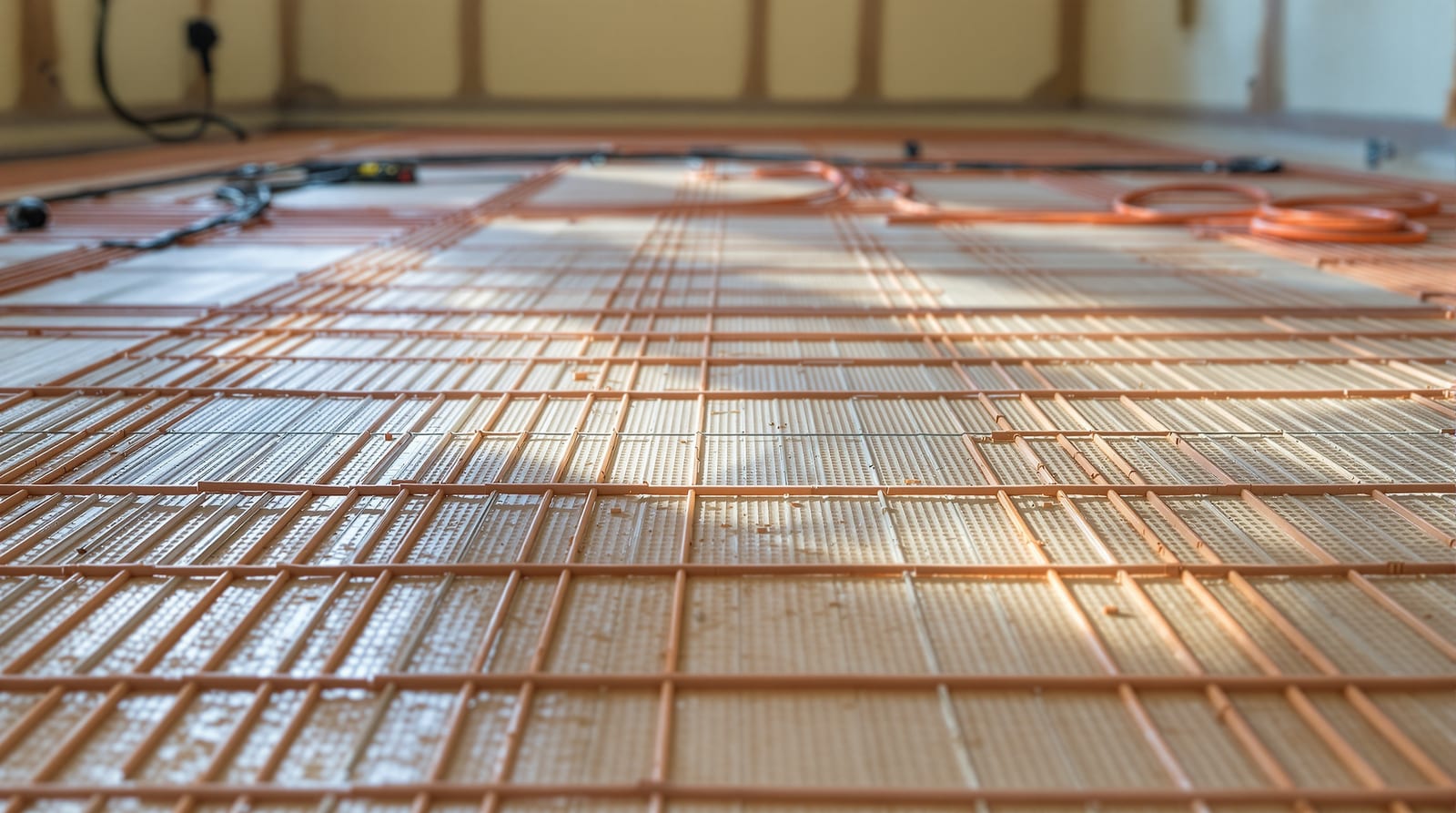
Underfloor Heating in India: Electric vs Hydronic Warm Floors for Hill Stations and North Indian Winters
The two systems explained, which floor finishes actually conduct the heat, the build-up layers under your tile, real install and running costs in rupees, and the handful of cold Indian regions where underfloor heating genuinely earns its place.
In Shimla in January, a bare granite or vitrified floor is a slab of cold that pulls warmth out of your feet the moment you step out of bed. This is the one problem underfloor heating solves better than any radiator or blower: instead of heating the air near the ceiling, it warms the surface you actually stand on, then lets that gentle radiant heat rise evenly through the room. It is a genuinely worthwhile, even transformative, upgrade in India's cold belt — and a pointless, expensive mistake almost everywhere else. This guide explains the two systems, which floor finishes pass the heat and which choke it, the layers that go under your tile, what it costs to install and to run, and exactly where in India it earns its keep.
What underfloor heating actually is
Underfloor heating (UFH), also called radiant floor heating, turns the entire floor into a low-temperature heat emitter. The floor surface sits at a mild 24 to 29 degrees C — warm to the foot, never hot — and that large warm area radiates heat upward across the whole room. Because the heat starts at the floor and the warmest air is where people are, rooms feel comfortable at a lower air temperature than with a wall heater, there are no hot-and-cold spots, no blown dust, no noise and nothing on the walls. In a cold hill home it removes the single most uncomfortable thing about winter mornings: the cold floor.
There are two completely different ways to deliver that heat, and choosing between them is the first real decision.
The two systems: electric vs hydronic
Electric (dry) systems use a thin heating cable, usually pre-spaced onto a self-adhesive mesh mat, laid across the floor and embedded in the tile adhesive or a thin screed. It is essentially a giant, very low-power electric blanket under your floor, controlled by a thermostat. The cable is slim (about 3 to 4 mm), so it adds almost no height — ideal for retrofits and single rooms like a bathroom or a bedroom. It heats up fast (30 to 60 minutes) and is cheap and simple to install, but electricity is the most expensive way to make heat, so it suits small areas and intermittent use, not heating a whole house all day.
Hydronic (wet) systems circulate warm water (typically 35 to 45 degrees C) through a network of cross-linked polyethylene (PEX) pipes laid in loops across the floor and buried in a screed. The water is heated by a boiler, a heat pump, a gas geyser-style unit or even solar, and pushed around by a small pump through a manifold. Hydronic is more expensive and disruptive to install (it needs 50 to 75 mm of screed and proper plumbing), responds slowly, and really wants to run continuously through the cold season — but once it is on, the running cost per unit of heat is far lower, especially if paired with a heat pump or solar. It is the right choice when you are heating a whole new-build home through a long, genuinely cold winter.
| Factor | Electric (heating mat / cable) | Hydronic (warm-water PEX) |
|---|---|---|
| How it heats | Resistance cable in adhesive / thin screed | Warm water in PEX pipes in thick screed |
| Heat source | Mains electricity + thermostat | Boiler, heat pump, gas unit or solar |
| Build-up height added | ~3-6 mm (very low) | ~50-75 mm screed + pipe |
| Best for | Single rooms, bathrooms, retrofits, intermittent use | Whole-house, new-build, all-winter use |
| Warm-up time | Fast (30-60 min) | Slow (2-4 hr), runs continuously |
| Install cost (indicative, applied) | ₹350-700 per sq ft | ₹500-1,100 per sq ft |
| Running cost per unit heat | High (pure electric resistance) | Low-moderate (very low with heat pump/solar) |
| Disruption to retrofit | Low | High (raises floor, needs plumbing) |
| Maintenance | Almost none (thermostat only) | Pump, manifold, boiler servicing |
| Typical lifespan | Cable 20-25 yr, thermostat ~10 yr | Pipe 40-50 yr in screed |
Costs are indicative for 2026, vary widely by region, brand, area and heat source, and exclude 18 percent GST. The simple rule: small area or single room, choose electric; whole house heated all winter, choose hydronic.
Which floors conduct the heat (this decides everything)
UFH only works if the heat can travel up through the floor finish into the room. Dense, thin, conductive finishes are excellent; thick or insulating finishes fight the system, waste energy and can be damaged. Choosing the wrong finish is the most common and most expensive UFH mistake.
| Floor finish | Suitability over UFH | Why |
|---|---|---|
| Vitrified / porcelain tile | Excellent | Dense, thin, high conductivity, dimensionally stable, no moisture worry |
| Natural stone (granite, marble, Kota, slate) | Excellent | Dense thermal mass, conducts and stores heat beautifully |
| Engineered wood | Good (preferred wood) | Stable plywood core tolerates the warmth; keep surface below 27 degrees C |
| Microcement / polished screed | Very good | Thin, seamless, dense, conducts well |
| Laminate / SPC (rated for UFH) | Good if rated | Use only boards the maker certifies for UFH; thin underlay |
| Thin vinyl / LVT (rated) | Good if rated | Must be heat-rated; some vinyls soften or discolour |
| Solid hardwood (thick) | Poor | Moves, cups and gaps with heat cycling; insulates |
| Thick carpet / heavy rug | Poor | High tog value blankets the heat in; defeats the system |
| Cork (thick) | Poor for UFH | Excellent natural insulator — great underfoot, wrong over UFH |
The headline for India is convenient: the tile and stone floors most cold-region homes already want for durability are precisely the best conductors. If you want the cosy look of wood over UFH, specify engineered wood, never thick solid hardwood — the plywood core stays dimensionally stable while a solid plank cups and develops gaps as the heat cycles on and off. For the wood decision in detail, compare the two in our guide on engineered wood versus solid wood flooring in India, and read the dedicated engineered wood flooring in India overview. Granite owners can read more on its behaviour in granite flooring in India.
One caveat on stone and tile: thermal mass cuts both ways. Dense stone takes longer to warm up and longer to cool down, which suits continuous hydronic heating but blunts the fast on-off appeal of electric mats. A heavy rug over UFH is self-defeating — it traps the heat under it. Use thin, UFH-friendly rugs only.
The build-up: what goes under your tile
Whichever system you pick, the layers are similar in principle, and one layer is non-negotiable: insulation below the heating element. Without it, half your heat drives downward into the slab and into the flat below instead of up into your room. This single layer is the difference between an efficient heated floor and an electricity bill that horrifies you.
A typical electric-mat build-up under tile, from the structural slab upward, runs: structural slab, then thermal insulation board (commonly an XPS or cement-faced insulation board, 6 to 25 mm), then the heating cable/mat fixed to it, then a flexible C2 tile adhesive embedding the cable, and finally the tile and grout. The thermostat's floor sensor probe is threaded in a conduit between two cable runs so it can be replaced if it ever fails. A hydronic build-up replaces the thin adhesive layer with a 50 to 75 mm sand-cement (or anhydrite) screed in which the PEX loops are cast.
Electric underfloor heating under tile (section)
Two practical points for the installer. First, the cable must be embedded fully in adhesive or screed with no air gaps and never overlap or cross itself, or it will overheat at that point and fail. Second, an electric mat must be on a dedicated circuit with an RCD/earth-leakage protection — it is electricity in a wet, walked-on floor, and that protection is not optional, especially in a bathroom.
Where it makes sense in India (and where it does not)
This is the part most imported UFH brochures will not tell you honestly: across the vast majority of India, underfloor heating is a waste of money. The country is hot or warm for most of the year; in Mumbai, Chennai, Bengaluru, Hyderabad or Pune you would use a heated floor a handful of nights a year, if at all, and the install cost will never pay back. The whole logic of UFH depends on a long, genuinely cold season.
It makes real sense in India's cold belt:
- Himachal Pradesh — Shimla, Manali, Dharamshala, Kufri and similar high towns with long, freezing winters and snow.
- Uttarakhand hills — Mussoorie, Nainital, Dehradun's cold pockets, Auli, Chakrata.
- Jammu and Kashmir and Ladakh — Srinagar, Gulmarg, Pahalgam, Leh, where winters are severe and prolonged.
- The high Northeast — Tawang, Shillong's cold spells, Gangtok and high Arunachal and Sikkim.
- Hill stations elsewhere at altitude — parts of the Nilgiris (Ooty, Coonoor) and Munnar see cool-to-cold evenings where a bathroom mat is a genuine luxury.
Even in these regions, be selective. The highest-value, lowest-cost application is a single electric mat in the master bathroom — a warm floor under bare feet first thing on a freezing morning, for a modest install cost and brief daily running. Bedrooms are the next most worthwhile. Whole-house hydronic only pays off in a new-build in the coldest towns where the system will run all season; retrofitting it into an existing home means tearing up floors and is rarely worth it. For the wider cold-climate flooring strategy — warm finishes, snow-melt entries, rugs and damp control — UFH is one tool in the kit covered in flooring for hill stations in India, and the underlying physics of warm versus cold floors is explained in flooring and thermal comfort in India.
Costs: install and running
Install cost depends on system, area, finish and heat source. As broad 2026 benchmarks, applied and excluding GST: electric mat systems run roughly ₹350 to ₹700 per sq ft installed (mat, insulation, thermostat and labour); hydronic systems run roughly ₹500 to ₹1,100 per sq ft installed, plus the heat source (a heat pump or boiler is a separate, significant cost). A typical 40 sq ft hill-station bathroom done in electric therefore lands around ₹15,000 to ₹30,000 plus the tiling — a very achievable luxury.
Running cost is where the two systems diverge sharply. Electric UFH consumes about 100 to 150 watts per sq m. A 6 sq m bathroom mat (roughly 0.9 kW) run for 3 hours a day on a cold morning uses about 2.7 units; at ₹7 to ₹9 a unit that is roughly ₹19 to ₹24 a day — trivial for a bathroom, but multiply that across a whole house run all day and electric becomes painfully expensive. Hydronic costs more to build but far less to run per unit of heat, and dramatically less if the water is heated by a heat pump (which delivers three to four units of heat per unit of electricity) or by solar. That is exactly why electric suits small intermittent rooms and hydronic suits whole-home, all-winter heating.
Two levers cut the running cost more than anything else: good insulation under the element (so the heat goes up, not down) and a smart thermostat with a timer (so the floor is warm when you wake and idle when you are out).
Controls: the thermostat does the saving
A UFH system is only as efficient as its control. Every installation should have a thermostat with two sensors — a floor sensor (the probe in the screed/adhesive that protects the floor finish from over-heating, critical for wood and vinyl) and an air sensor — plus, ideally, programmability. The features worth paying for:
- Programmable timer / schedule so the floor warms before you wake and switches off when the house is empty. Because stone and tile hold heat, set the start time well before you want it (the floor warms slowly).
- Floor temperature limit to cap the surface at a finish-safe level (around 27 degrees C for engineered wood and vinyl) so the floor is never damaged.
- Smart / Wi-Fi control with app and geofencing for whole-house hydronic, which runs more steadily and benefits from gentle modulation rather than hard on-off.
- Zoning so you only heat the rooms you use — bathrooms and bedrooms in the morning, living areas in the evening.
For an electric bathroom mat, a simple programmable floor-sensing thermostat is enough. For whole-house hydronic, a zoned smart controller with weather compensation is what makes the low running cost real.
Frequently asked questions
Is underfloor heating worth it in India?
Only in the genuinely cold regions — the Himachal, Uttarakhand, Kashmir and high-Northeast hill belt — where winters are long and cold. There, a heated floor (especially an electric mat in the bathroom and bedrooms) is a transformative comfort upgrade. Across the rest of India, where it would run only a few nights a year, it almost never pays back and is better skipped.
Electric or hydronic — which should I choose?
Choose electric for single rooms, bathrooms, retrofits and intermittent use: it is cheap, slim and fast to install but costly to run over large areas. Choose hydronic for a whole new-build home heated all winter: it costs more and takes more screed depth to install, but the running cost per unit of heat is far lower, especially with a heat pump or solar.
Can I put underfloor heating under any flooring?
No. Dense, thin, conductive finishes — vitrified tile, porcelain, natural stone, microcement and engineered wood — work beautifully. Thick solid hardwood, thick carpet and cork insulate the heat and can be damaged, so avoid them. If you want wood, use engineered wood, and only use laminate, SPC or vinyl that the maker specifically certifies as suitable for underfloor heating.
What does underfloor heating cost to install in India?
As indicative 2026 figures excluding GST, electric mat systems run about ₹350 to ₹700 per sq ft installed and hydronic systems about ₹500 to ₹1,100 per sq ft plus the heat source. A small hill-station bathroom done in electric typically lands around ₹15,000 to ₹30,000 plus tiling — an affordable comfort. Whole-house hydronic is a major investment that only makes sense in the coldest towns.
Will underfloor heating make my electricity bill explode?
For a small electric mat in a bathroom run a few hours on cold mornings, no — it is only a few rupees a day. The bill problem comes from running electric resistance heating across a whole house all day, which is expensive. Insulation under the element and a programmable thermostat with a timer are what keep running costs sensible, and hydronic with a heat pump or solar is far cheaper to run at whole-house scale.
Export this guide
Related Guides — Deep-dive reading
Flooring for Cold Climate India: Best Warm Floors for Hill-Station Homes in Shimla, Manali, Dehradun, Mussoorie, Ooty, the Northeast and J&K
Why warmth underfoot is the priority in cold hill homes: how wood, laminate, engineered, cork and carpet beat cold bare stone, why underfloor heating is genuinely worth it here when it is rarely viable elsewhere in India, plus snow-melt entry management, damp control and the right rugs.
Flooring & SurfacesFlooring Thermal Comfort in India: How Your Floor Affects Heat, Cold and Energy Bills
The physics of why stone and tile feel cool while wood, cork and carpet feel warm, and how to match the floor to your climate zone so the surface under your feet works with the weather instead of against it.
Flooring & SurfacesComplete Home Flooring Guide for Indian Homes (2026)
The authoritative overview of every flooring family — tiles, stone, wood, vinyl and seamless — with India ₹/sq ft costs, room-by-room logic and laying basics.
Flooring & SurfacesRelated Tools — Try Free
Flooring Cost Calculator
Estimate the all-in cost of a floor — material, laying, wastage, skirting and GST — by area and material.
Flooring CalculatorMaterial Schedule Generator
Generate a room-wise finish schedule — walls, floors, ceilings, trim, and joinery by location.
Material ScheduleWooden Flooring Cost Calculator
Estimate installed wood or wood-look floor cost — solid, engineered, laminate or SPC — with underlay and skirting.
Flooring Calculator