
Fire Door Ratings India: 30 to 180 Min Codes (India 2026)
A specifier's deep-dive into 30/60/90/120/180-minute fire-door ratings, integrity vs insulation, IS 3614 testing, and where NBC 2016 demands each.
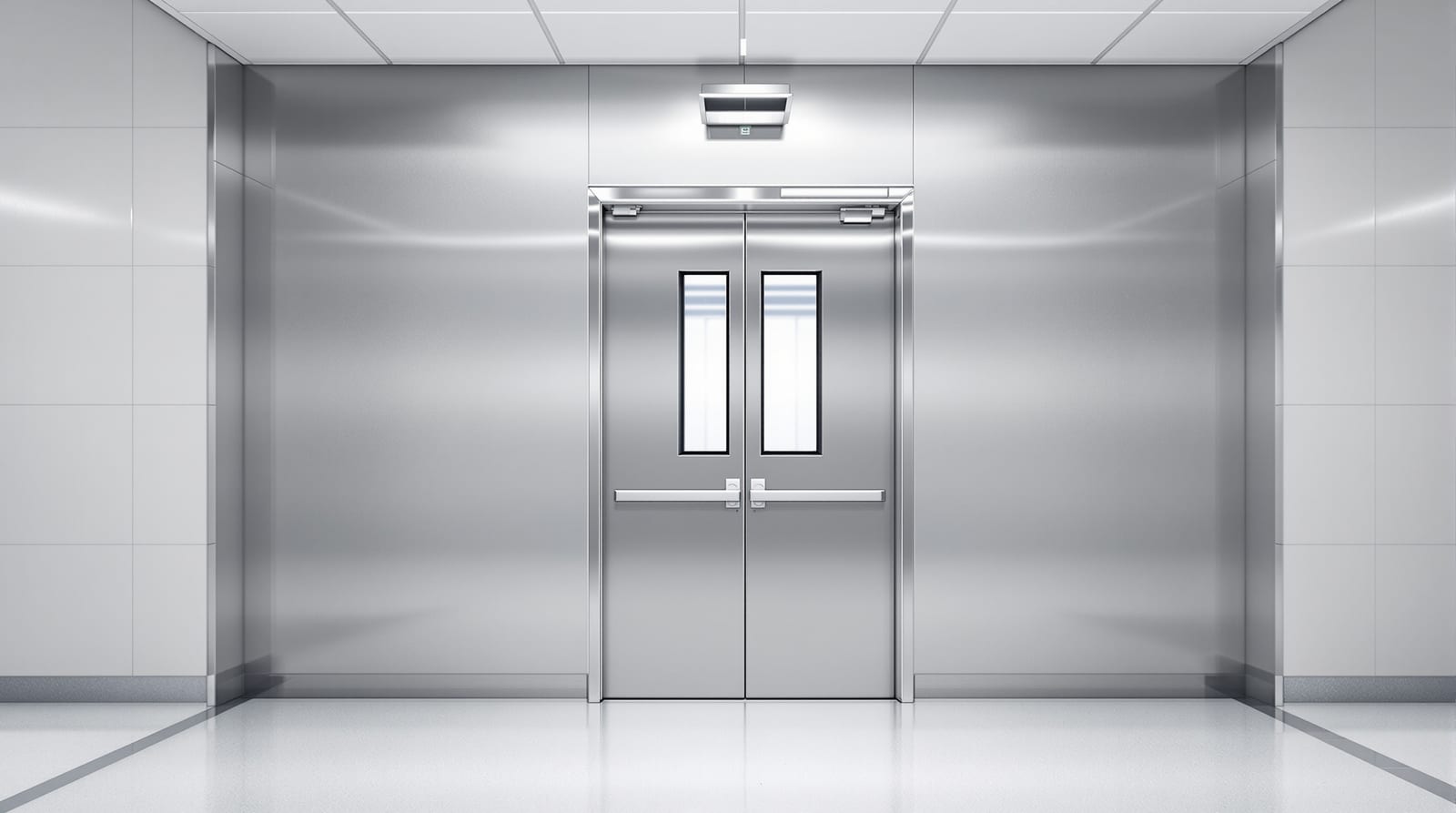
A fire door is not a single product but a tested system, and its number — 30, 60, 90, 120 or 180 minutes — is the single most misunderstood figure in Indian building specification. Getting fire door ratings India right means understanding three things at once: what the minutes measure, how the door earns them in a furnace test, and where NBC 2016 Part 4 actually demands each tier. This guide is the code-and-ratings companion to our product overview in fire-rated doors; here we go deep on the engineering and the regulation behind the number stamped on the leaf. For the wider context see the cluster pillar complete door guide and the phase index of specialty doors.
What the rating minutes actually measure
The rating is a duration of fire resistance demonstrated under a standard furnace time–temperature curve — not a guarantee the door survives any real fire for that long. A 120-minute door has held back a controlled furnace, ramping past roughly 1,000°C, for two hours while meeting defined performance criteria. Two of those criteria matter most, and the European notation E and I (also used by Indian labs reporting against EN 1634) names them precisely.
Integrity (E) is the door's ability to stop flames and hot gases passing through to the unexposed side. Failure is a sustained flame, a gap that lets a gauge through, or cotton-pad ignition. Almost every fire door sold in India is rated for integrity.
Insulation (I) is the limit on temperature rise on the unexposed face — typically a 140°C average and 180°C peak rise above ambient. A door can hold integrity long after it has lost insulation: the leaf stays sealed but becomes too hot to touch or to stand beside. Where people must wait near a door — refuge areas, escape lobbies — insulation matters; for a pure compartment barrier, integrity may be enough.
| Notation | Property | Failure criterion | Typical use |
|---|---|---|---|
| E | Integrity | Sustained flame / gap gauge / cotton-pad ignition | All fire doors |
| I | Insulation | >140°C avg or >180°C peak rise on unexposed face | Refuge, escape lobbies, occupied-adjacent walls |
| EW | Radiation | Heat radiated through ≤15 kW/m² at 1 m | Where radiant heat to escape route is a concern |
| S | Smoke (Sa/S200) | Cold/ambient smoke leakage limit | Smoke-control and lobby doors |
So "120/120" means 120 minutes integrity and 120 minutes insulation, while "120/60" or "E120 I60" is a perfectly valid door that holds flame for two hours but only limits heat for one. Always read both figures, not just the headline minute.
How a door earns its rating — IS 3614, BS 476-22 and EN 1634
In India fire doors are tested and certified under IS 3614 Part 1 for wooden/timber doors and IS 3614 Part 2 for metallic doors. Many manufacturers additionally — or instead — hold certificates to BS 476 Part 22 (the long-established British integrity test) or the harmonised EN 1634-1, which reports both integrity and insulation in the E/I notation. NBC accepts results from accredited labs against these standards; the practical point is to ask which standard the certificate is to, because BS 476-22 reports integrity only, while EN 1634 reports integrity and insulation separately.
The critical, repeatedly-violated rule: the rating belongs to the whole tested assembly, not the leaf. A door is certified as a specific combination of leaf core, frame, intumescent and smoke seals, vision-panel glazing, hinges, lock/latch, and self-closer — all as installed in the furnace test. Swap the closer for an unrated one, fit a glass panel the leaf was never tested with, or hang a 90-minute leaf in a 60-minute frame and the certificate is void. Specifiers should demand a single certificate covering the complete set, and site teams must install strictly per the manufacturer's tested configuration.
The intumescent system
Intumescent seals fitted into the leaf edge or frame rebate expand many times their volume at around 200–250°C, sealing the gap as the door and frame distort. Cold-smoke (brush or fin) seals handle ambient smoke before the fire builds. These seals are integral to the rating, not an accessory — a 60-minute set without its intumescent seals is not a 60-minute door.
Where NBC 2016 Part 4 requires each rating
NBC 2016 Part 4 (Fire and Life Safety) is the governing document for where fire doors go and what rating they need, read alongside the state fire-service rules and the local fire NOC conditions. The exact minute depends on the compartment, the occupancy and the building height, so the table below is a planning guide — confirm every door against the approved fire scheme and your fire consultant, not against a generic chart.
| Location | Typical rating | Notes |
|---|---|---|
| Internal corridor / smoke-stop door | 30–60 min | Often smoke-control duty too; see smoke-control doors |
| Door to / within protected staircase | 60–120 min | The escape stair is critical; higher for tall buildings |
| Basement / parking compartment | 120 min | High fire load, restricted access |
| Refuge area access | 120 min (E and I) | Insulation matters — people wait here |
| Service / electrical / DG shafts | 120 min | Protect risers and plant rooms |
| Compartment / firewall openings | Match wall (90–240 min) | Door rated to the barrier it pierces |
| Lift lobby / pressurised lobby | 60–120 min + smoke | Coordinate with pressurisation |
A recurring error is specifying a high integrity figure where insulation is what the brief needs — refuge areas and escape lobbies should call out both E and I. Conversely, paying for full 120/120 insulated assemblies on every internal door inflates cost with no code benefit. Match the rating to the duty.
Cost bands by rating (India 2026)
Fire-door pricing scales with rating, core type and the certified hardware pack. Treat these as supply-only bands unless noted; installed cost adds the frame fixing, sealing and closer commissioning, and GST is 18%. Final pricing is always a vendor quote against the approved spec.
| Rating / type | Indicative band (₹) | Basis |
|---|---|---|
| Wooden FRD (leaf, by rating) | 500–1,200 / sqft | Higher minute = denser core |
| 60-minute timber set (leaf+frame+seals+closer) | 15,000–35,000 / set | Complete certified assembly |
| 120-minute timber set | 30,000–70,000 / set | Heavier core, upgraded hardware |
| Steel fire door | 4,000–6,500 / sqm | Metallic, IS 3614 Part 2 |
Budget for the whole assembly, not the bare leaf — the seals, vision glazing, rated hinges, lock and self-closer can be a third of the cost and are non-negotiable for the certificate. For early estimates use the fire door rating selector and the fire door requirement checker to confirm where each rating is needed.
Keeping the rating valid in service
A rated assembly only performs if it stays as certified: a wedged-open door, a removed closer, a painted-over intumescent seal, an oversized gap or a non-rated replacement hinge can each void the rating in practice even if the certificate still sits in the file. Treat the assembly as a maintained life-safety system — see fire door maintenance and inspection for the inspection regime, and note that fire-rated openings can also take the form of fire-rated rolling shutters for large industrial spans. For occupant-safe exit doors that must also be rated, coordinate with fire-exit doors.
Frequently asked questions
Does a 120-minute fire door survive a real fire for two hours?
No. The minute figure is performance under a standard furnace time–temperature curve in a lab, used for comparison and code compliance. A real fire's behaviour depends on fuel load, ventilation and how the door is installed and maintained. The rating is a benchmark, not a field warranty — which is exactly why installation and upkeep to the tested configuration matter so much.
What is the difference between an E rating and an EI rating?
E is integrity — stopping flame and hot gas. I is insulation — limiting the temperature rise on the unexposed face (typically 140°C average / 180°C peak). E120 means two hours of flame containment; EI120 adds two hours of heat limitation. Use EI where people stand near the door, such as refuge areas; E may suffice for a pure compartment barrier. Always check both numbers.
Can I fit a rated leaf with any frame and hardware?
No. The rating is certified for the complete assembly tested together — leaf, frame, intumescent and smoke seals, glazing, hinges, lock/latch and self-closer. Substituting any element with an untested item voids the rating. Specify and install strictly to the manufacturer's single certificate covering the full set.
Which standard should the certificate be to — IS 3614, BS 476 or EN 1634?
IS 3614 Part 1 (wooden) and Part 2 (metallic) are the Indian standards; many doors also carry BS 476 Part 22 or EN 1634 certification, accepted from accredited labs. BS 476-22 reports integrity only; EN 1634 reports integrity and insulation separately. Ask which standard the certificate is to so you know whether insulation has actually been demonstrated.
Who decides the rating each door needs?
NBC 2016 Part 4, the state fire rules and the fire NOC conditions set the requirement, interpreted by your fire consultant against the building's occupancy and height. Specialty and fire doors are project-engineered: confirm every rating on the approved fire scheme, and get the final spec and price from a vendor quoting against that scheme.
Export this guide
Related Guides — Deep-dive reading
Fire Rated Doors in India: IS 3614 Ratings, Cost & Where They're Required (2026)
What a fire-check door is, how the 30/60/90/120-minute ratings work to IS 3614, where the NBC makes them mandatory, and why the whole assembly must be certified.
Home Doors & EntrancesSmoke-Control Doors in India: Smoke-Tight Sa/S200 Guide 2026
How smoke-control doors differ from fire doors, where NBC stairwell pressurisation needs them, and the seals, gaskets and drop seals that make a leaf smoke-tight.
Home Doors & EntrancesEmergency Exit Planning in India (2026): Number of Exits, Travel Distance & Two-Way Escape
The building-scale means of egress that a home escape plan sits inside: why you need two independent, remote exits, how travel distance and exit width scale with occupant load, and why exits must open outward, discharge to safety, and never be locked.
SecurityRelated Tools — Try Free
Fire Door Rating Checker
See the likely fire-door rating (30/60/90/120 min) and components a location needs per IS 3614 / NBC — guidance, confirm with your architect.
Compliance ToolFire Door Requirement Checker
See where fire doors are required and what rating and egress hardware your building needs, per NBC 2016 and IS 3614.
Door ToolBefore vs After — Cost Reality Check
Compare what you expected to pay vs what you actually paid, category by category.
Reality Check