
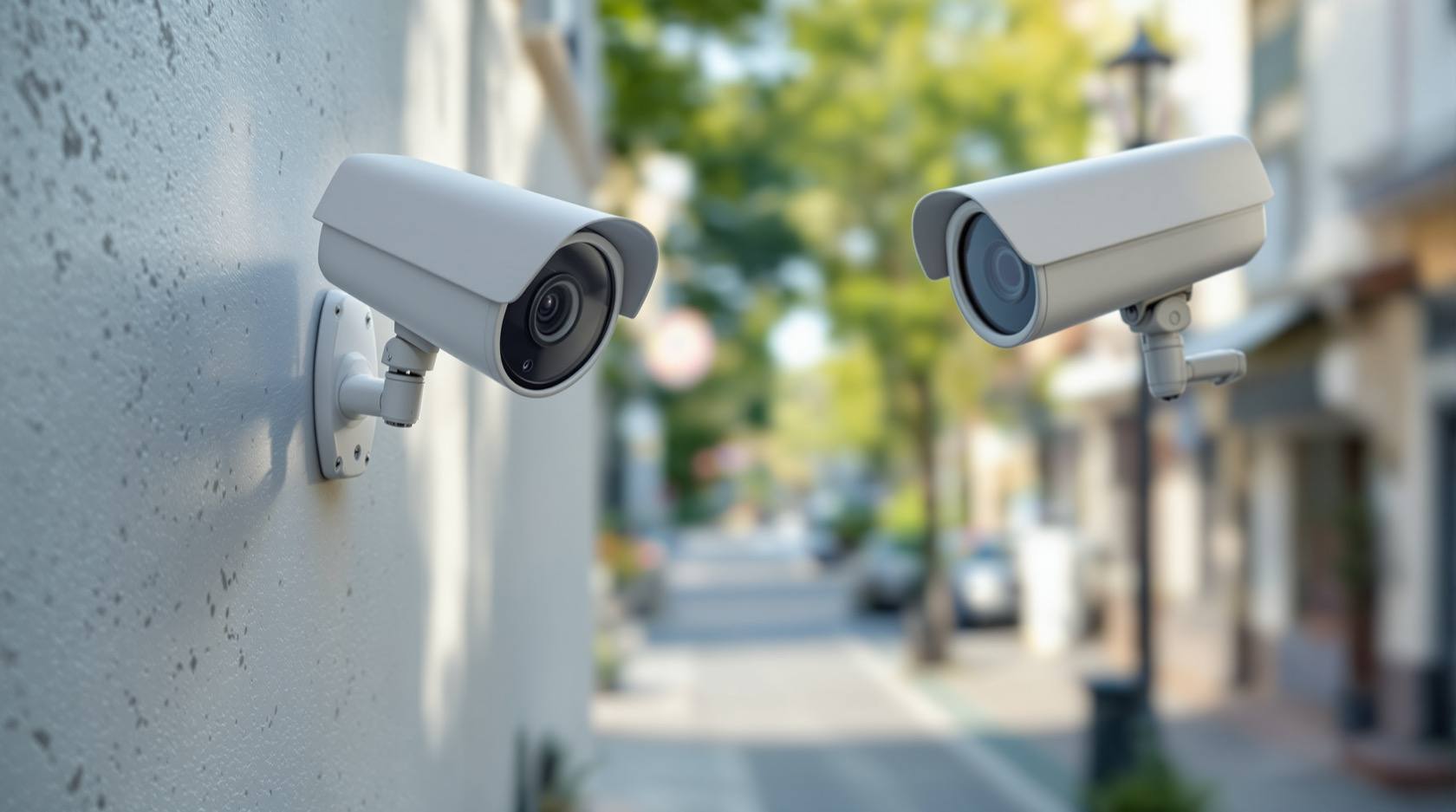
Ethical AI Surveillance in India (2026): Restraint, Oversight and Dignity
Modern cameras ship with face recognition, behaviour analytics and automatic alerts. This guide is about using that power with restraint — most homes should leave the clever AI features off, and treat any that stay on as a decision about people, not a toggle.
The camera you buy today is not the camera you bought five years ago. It can pick a face out of a crowd, tell a person from a parcel, read a number plate, and flag someone "loitering" — all on the device, all with a single toggle in the app. That power is real. The question this guide answers is a quieter one: just because your camera can do these things, should it? For most homes, an RWA, or a small shop, the honest answer is that ethical ai surveillance means switching most of it off, and treating the little you keep on as a decision about people, not a feature you enabled by accident.
More capability is not more right. A silent camera on your gate is one thing. A system that recognises the domestic worker's face, scores your neighbour's teenager as "suspicious", and pings your phone with an automated judgement is another thing entirely — and it can quietly harm people who have done nothing wrong. This guide sits inside Studio Matrx's privacy, ethics and data protection hub and is written to help you use AI features with restraint and dignity.
Scope & how to read this. This is practical, pro-restraint guidance grounded in the spirit of India's Digital Personal Data Protection Act, 2023 (DPDP Act) and the right to privacy — not legal advice. For anything with legal weight — a workplace, a tenancy, a community-wide deployment, a police or court request — take professional advice and consult a lawyer or your Data Protection Officer. Everywhere, choose the least-intrusive option that meets a real need.
What these AI features actually are
The marketing words hide a handful of distinct capabilities. It helps to name them plainly:
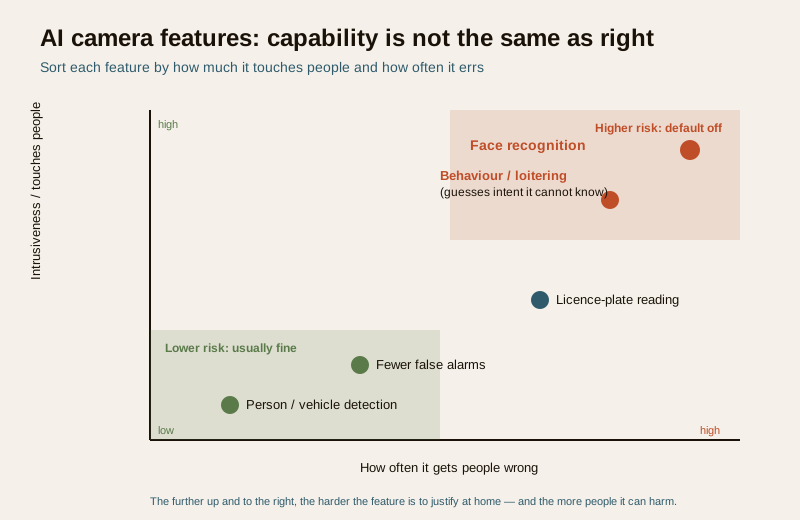
- Face recognition — matching a live face against a stored database of faces to identify who someone is. This is the most sensitive feature of all.
- Person and vehicle detection — telling a human or a car apart from a swaying branch, so you get fewer useless alerts. This is comparatively benign.
- Behaviour and loitering analytics — the camera guessing intent from movement: "loitering", "crowd", "left object", "climbing". These are inferences, not facts.
- Automatic alerts and actions — the system deciding, on its own, to notify, sound a siren, or trigger a gate.
- Licence-plate reading (ANPR) — capturing and logging number plates that pass.
Person-versus-parcel detection to cut false alarms is a world away from running face recognition on everyone who walks past your gate. Sorting these features by how much they touch people — and how often they get it wrong — is the whole game.
The real limits — bias, error, and creep
AI surveillance is sold as certainty. It is not. Being honest about the limits is the foundation of using it ethically.
- False positives and false negatives. Every analytic gets things wrong. It flags an innocent visitor as a threat, or misses a real one. A "match" is a probability, never a proof — and the person on the wrong end of a false match pays the price for the machine's mistake.
- Demographic bias. Face-recognition accuracy is not equal across everyone. Independent testing has repeatedly found these systems perform less reliably for some groups than others — meaning the errors do not fall evenly. Deploying one on your household or street risks putting that unequal error onto real people, often the ones with the least power to object.
- Inference is not fact. "Loitering" is a camera's guess about intent. A person waiting for a bus, a child playing, a worker resting, an elderly neighbour catching their breath — all can be scored as "suspicious" by a model that cannot know why anyone is standing still.
- Function creep. A system bought for "who is at the gate" slowly becomes a tool to track when the maid arrives, how long the delivery agent lingers, which neighbours visit whom. The capability quietly outgrows the purpose it was justified by.
- The chilling effect. People who know they are being profiled behave differently. Being watched and scored — in your own building, your own street — changes how residents, workers and visitors move through a place. Dignity is diminished before any error is even made.
None of this means the technology is evil. It means it must be handled with humility, and pointed at as few people as possible. For the specific case of faces, see facial recognition and privacy in India.
The ethical guardrails
If an AI feature is going to stay on, it has to pass through a set of guardrails. These are not optional extras — they are what separates responsible use from surveillance.
| Guardrail | What it means in practice |
|---|---|
| A narrow, justified purpose | One specific, real problem — not "because it came with the camera". If you cannot name the harm you are preventing, switch it off. |
| Proportionality | Do not run face recognition on residents, domestic staff, children or regular visitors just because you can. Use the least-intrusive feature that solves the actual problem. |
| Meaningful human oversight | A person reviews before anything happens to anyone. Never automated adverse action. |
| Transparency | Tell people. Signage that says AI or face recognition is in use, not just that cameras exist. |
| Data minimisation | Do not build a face database. Do not keep clips forever. Collect and retain the least you need, then delete. |
| Contestability | A person wrongly flagged can question it and have it corrected by a human. |
Two of these deserve to be underlined, because they are the ones most often broken.
Never automate an adverse decision about a person. No auto-denying entry on a face "match". No auto-flagging a worker as a thief. No wage deduction, discipline, or "she was late again" judgement produced by an algorithm. A machine may sort or surface; only a human, accountable and able to be questioned, may act. Automated adverse action against a person is where AI surveillance does its deepest harm.
Under the DPDP Act 2023, information derived from biometrics — a face template especially — is personal data of a sensitive kind, and inferences a system draws about a person are still data about that person. That means the Act's plain-language principles apply: a lawful, clear purpose; notice to the people affected; using no more than you need; keeping it no longer than you need; keeping it secure; and honouring a person's right to access, correction and erasure. A purely household use of a couple of cameras may sit outside some formal obligations, but the ethical duties never switch off. Build these in from the start with privacy by design for security systems.
Special caution: face recognition and vulnerable people
Face recognition deserves its own warning, because it is the feature most likely to cause quiet, lasting harm — and the one homes reach for most casually.
- Do not run face recognition on the people who live and work in your home. Residents, domestic workers, a nanny, a caregiver, children — matching and logging their faces to build a record of comings and goings is neither necessary nor kind. It treats the people closest to you as subjects to be tracked.
- Never surveil the vulnerable to control them. Elderly relatives, people with disabilities, children, and staff are not there to be profiled by a machine. The Rights of Persons with Disabilities Act 2016 and basic dignity both point the same way: care is not the same as monitoring, and safety features must never become instruments of control.
- Consent is not real when there is a power gap. A domestic worker cannot freely refuse their employer's camera. A tenant cannot easily object to a landlord's system. "They agreed" means little across an imbalance of power — so the duty falls on you, the custodian, to not put them under a face-recognition lens in the first place.
Dignity comes first. The people in front of your camera — the worker at your door, the child in the lane, the visitor at the gate — have a right to move through the world without being profiled by an algorithm in your app. When in doubt, protect them by leaving the feature off. Restraint is the respectful choice, and almost always the right one.
Should you switch this AI feature on? A simple test
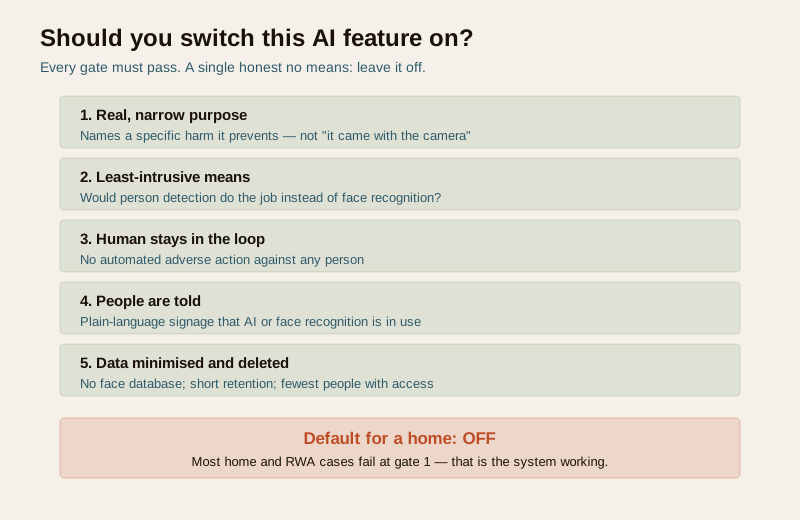
Before you enable any analytic — face recognition, behaviour scoring, plate reading, auto-actions — walk it through these questions. A single honest "no" means leave it off.
1. Is there a real, specific problem this feature solves that a plain camera does not? (Not "it might be handy.")
2. Is this the least-intrusive way to solve it? (Would person-detection do, instead of face recognition?)
3. Does a human stay in the loop before anything happens to anyone? (No automated adverse action.)
4. Have the people affected been told, in plain language, with signage?
5. Can you avoid building a database and delete data on a short schedule?
6. Would you be comfortable if this feature were pointed at you — your face, your movements, your child?
Most home and RWA situations fail at step one. That is not a defeat; it is the system working. The default for face recognition and behaviour analytics on a home should be off. If you are weighing an AI camera at all, read AI-powered CCTV in India and facial recognition CCTV cameras in India with a sceptical eye.
The ethical-use checklist
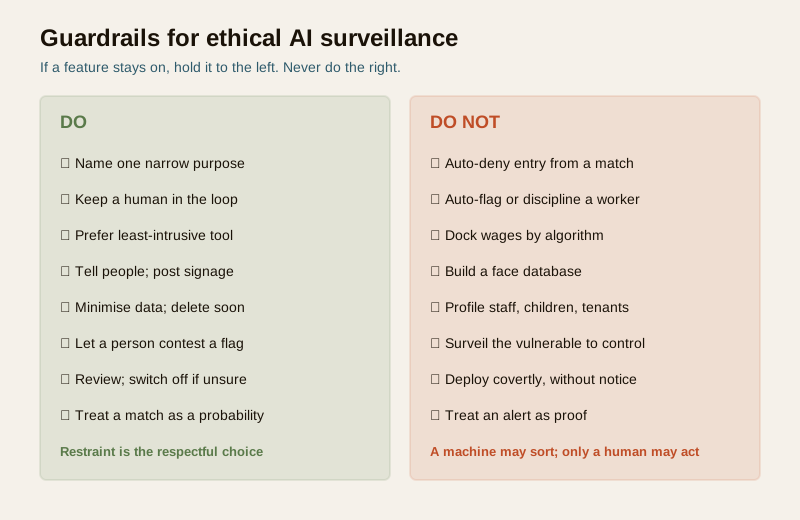
If, after the test, a narrow AI feature genuinely earns its place, hold it to this:
- Name the purpose in one sentence and write it down. If you cannot, turn the feature off.
- Pick the least-intrusive tool — person or vehicle detection over face recognition wherever it will do.
- Keep a human in every decision loop. Alerts inform a person; they never act on their own against anyone.
- Post honest signage that AI or face recognition is in use — not just a generic camera sticker.
- Minimise and delete. No face database. Short retention. Fewest people with access. Mask what you must not see.
- Give people a way to contest a wrong flag and have a human correct it.
- Review it periodically. Is the purpose still real? Has creep set in? If in doubt, switch it off.
Switch it off — do not do this
Some uses are simply wrong for a home, an RWA or a small business. Do not do these, regardless of what the product allows:
- Do not auto-deny entry, auto-flag a worker, or drive any discipline, wage or eviction decision from an algorithm. A human decides, accountable and questionable.
- Do not run face recognition on residents, domestic staff, children or regular visitors to log their movements.
- Do not build a face database of the people around you, or share face data and clips beyond a genuine, narrow need.
- Do not use behaviour or loitering analytics to profile individuals — especially the vulnerable, workers, women, tenants or children.
- Do not deploy covertly. Secret AI surveillance strips away the notice and consent that make anything defensible.
- Do not treat an AI "match" or "alert" as proof. It is a probability that a human must check.
When to get legal or professional advice
This guide is a starting point, not the last word. Bring in a professional whenever the stakes rise beyond a purely personal, household setting:
- Any workplace or staff monitoring — small shop included — engages labour law, dignity and the DPDP Act. Consult a lawyer or your Data Protection Officer before deploying AI analytics on employees.
- RWA or community-wide deployments affect many people at once; face recognition or ANPR across a society is a decision for the community with legal input, not a solo install.
- Any tenancy — a landlord using AI cameras on a rented space touches tenant rights; take advice.
- A police or court request, or a suspected data breach involving footage or face data — follow due process and get legal guidance; do not act on it alone.
For the broader camera-privacy picture that underpins all of this, work through the CCTV privacy guide for India.
Key takeaways
- More capability is not more right. Ethical AI surveillance is mostly about restraint — leaving face recognition and behaviour analytics off for the great majority of homes.
- Know the limits. These systems produce false positives and negatives, carry demographic bias, infer intent they cannot know, and quietly creep beyond their purpose.
- Guardrails, not toggles. A narrow purpose, proportionality, meaningful human oversight, transparency, data minimisation and contestability — or the feature does not run.
- Never automate an adverse decision about a person. No auto-denial, no algorithmic discipline, no wage or eviction call from a machine.
- Protect the vulnerable. Do not profile residents, staff, children or people with disabilities; consent is not free across a power gap.
- When it has legal weight, get advice. Workplaces, communities, tenancies and any breach or court request are matters for a lawyer or your DPO — not a solo call.
References
- Digital Personal Data Protection Act, 2023 — governs personal data including biometric-derived and inferred data; apply its plain-language principles of lawful purpose, notice, minimisation, storage limitation, security and data-principal rights. Verify current text and rules before relying on them.
- Right to privacy (Constitution Article 21; K.S. Puttaswamy line of reasoning) — recognises informational privacy at a general level; treat surveillance of identifiable people as engaging it.
- Rights of Persons with Disabilities Act, 2016 — dignity and non-discrimination principles relevant to not surveilling vulnerable people; seek advice for any specific application.
- Independent evaluations of face-recognition systems — have repeatedly shown accuracy varies across demographic groups; treat any match as a probability requiring human review, never proof.
This is an educational overview, not legal advice. Whether and how you may lawfully deploy AI surveillance features depends on your exact facts — consult a qualified lawyer or your Data Protection Officer, and defer to due process for anything with legal weight.
Export this guide
Related Guides — Deep-dive reading
Security Privacy Assessment for Indian Homes
Getting the privacy side of home security right: camera placement ethics and limits, notice and consent, the extra caution audio demands, and treating footage as personal data you store, retain and delete responsibly under India's DPDP Act 2023 direction.
SecurityFacial Recognition Privacy in India (2026): The Face Is Not Just Another Password
A face is biometric data you can never change if it leaks, and it can be captured without your cooperation. Before you enrol anyone's face into a lock, camera or entry system, understand the privacy duties, the consent it demands, and the alternatives you must always offer.
SecuritySecurity Guide for Senior-Citizen Homes
How to protect elderly people living independently or with family in India without stripping away their dignity or independence — verifying who is at the door, simple one-touch systems, the overlap of security with fall and medical emergencies, respectful remote reassurance for family, and honest vetting of caregivers and help.
SecurityRelated Tools — Try Free
CCTV Camera Coverage & Count Calculator
Estimate how many CCTV cameras you need, the NVR channels, storage in TB for your retention period, and an indicative all-in cost with GST.
CCTV CalculatorCCTV Placement Compliance Checker
A quick DPDP-grounded privacy and safety self-check for where a camera is pointed — flags the items to fix.
ComplianceChild & Elder Home-Safety Audit
Room-by-room safety audit for households with children or seniors — 10 categories, 70+ checkpoints tagged by audience.
Safety Audit