
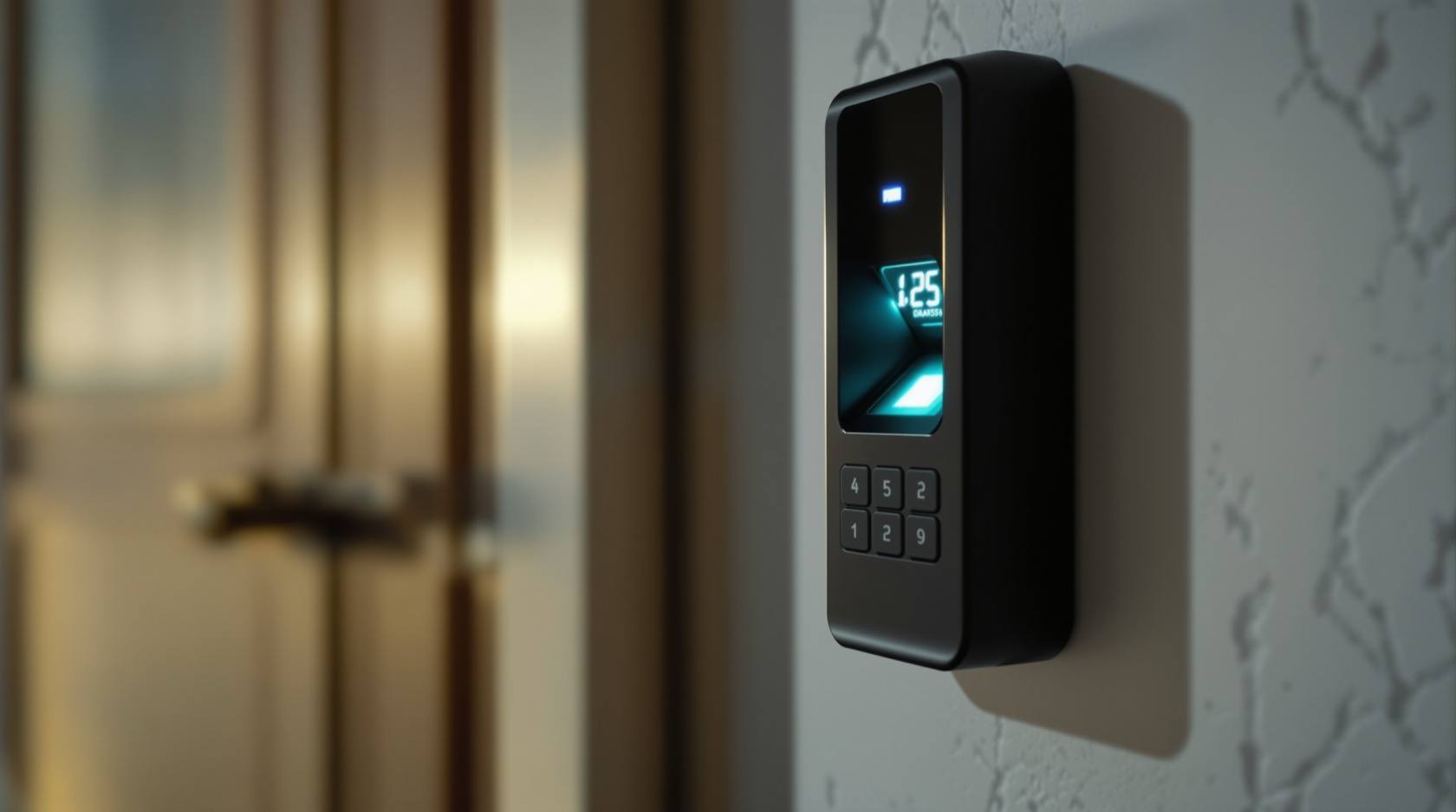
Biometric Data Protection in India (2026): Guarding What You Cannot Change
Fingerprints, faces and iris scans are permanent. If a home lock, an office attendance reader or an RWA gate collects them, they demand more care than any password. Here is how to hold biometric data lawfully, minimally and decently.
A password can be changed in a minute. A leaked card can be cancelled and reprinted. Your fingerprint cannot. Neither can your face, your iris or the pattern of veins in your palm. That single fact is the whole reason biometric data protection deserves a guide of its own, separate from ordinary access control and CCTV. Once a fingerprint template or a face image escapes a database, the person it belongs to carries that exposure for life.
Biometric readers have quietly spread into ordinary Indian homes and communities: a fingerprint lock on the front door, a face-entry panel at the flat, a thumb scanner for the maid or the office team, a biometric gate the RWA installed for residents. Each of these collects something intimate and permanent. This guide is for whoever ends up holding that data — a homeowner, an RWA committee, a small employer — and equally for the resident or worker being asked to press their thumb. It sits inside the privacy and data protection hub.
Scope & how to read this. This is practical, protective guidance grounded in the Digital Personal Data Protection Act, 2023 (DPDP Act), not legal advice. A couple of biometric locks for your own family is very different from an RWA or office holding hundreds of people's fingerprints; the larger the system, the more you must take real legal or Data Protection Officer advice before collecting anything. Throughout, prefer the least-intrusive option: if a card or PIN does the job, you may not need a fingerprint at all.
Why biometrics are special — and riskier than a PIN
It is tempting to treat a fingerprint as just another key. It is not. Five properties set biometric data apart, and every one of them raises the stakes.
- It is unique to one person. A fingerprint or iris identifies exactly one human being, with almost no ambiguity. That is precisely what makes it powerful, and precisely why a leak is so damaging.
- It is unchangeable. You cannot rotate a compromised fingerprint the way you rotate a stolen password. The harm from a breach is not a bad week; it is potentially permanent.
- It is uniquely identifying across systems. The same thumbprint can link a person's records across an office, a gym, a society and a government service. Collected carelessly, it becomes a thread that ties a person's whole life together.
- It enables silent tracking. A face-recognition or fingerprint log quietly records who went where and when. That is surveillance data, whether or not anyone meant it to be.
- A breach causes lasting harm. A stolen biometric database cannot be undone with a reset link. This is why minimisation and security matter far more here than for a keypad code.
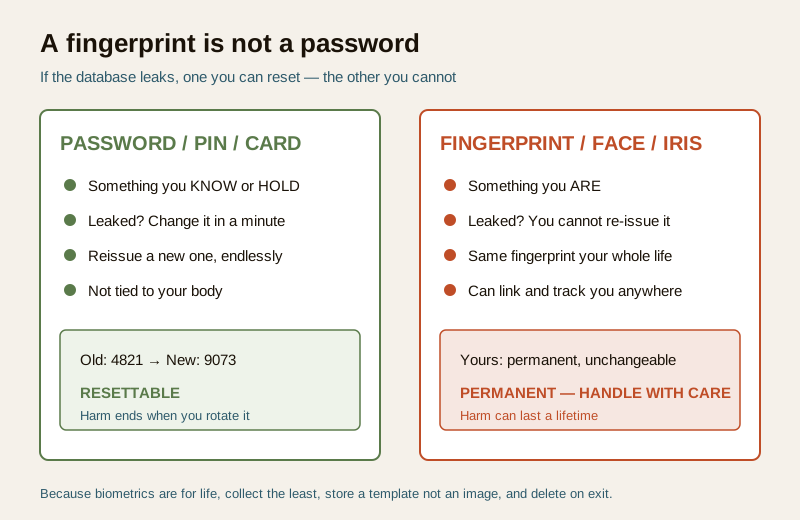
The honest conclusion is not "never use biometrics". It is: use them only where they genuinely earn their place, collect the least possible, and guard it well. For a home lock this is manageable; for a shared database it is a serious responsibility. The mechanics of choosing and fitting the hardware are covered in biometric locks for the home and, for shared entrances, biometric access control; this guide is only about protecting the data those systems create.
What the DPDP Act asks of whoever holds the database
When you collect a person's fingerprint or face and keep it, you are handling their personal data, and the DPDP Act's principles apply in plain, common-sense terms. You do not need to be a lawyer to honour them.
| DPDP principle | What it means for a biometric system |
|---|---|
| Lawful purpose | Have one clear, honest reason (door entry, attendance). Do not repurpose the data for anything else later. |
| Notice and consent | Tell each person what you collect, why, and who holds it; take genuine, un-coerced consent before enrolling them. |
| Alternative | Always offer a non-biometric route (card or PIN) so no one is forced to give a fingerprint to enter or work. |
| Minimisation | Store a mathematical template, not raw fingerprint or face images; keep it on-device or local where you can; encrypt it. |
| Storage limitation | Delete a person's biometric when they move out, leave the job, or withdraw consent. Do not keep it forever. |
| Security | Know exactly who holds the database, where it physically sits, and who can access it; restrict that tightly. |
| Accountability | Be able to answer, honestly, "whose data do we hold, why, and how is it protected?" |
Two of these deserve special emphasis in the Indian home-and-community setting.
Always offer a real alternative. No resident should be told "fingerprint or you cannot enter", and no worker "thumb scan or no attendance". A card, a PIN or a manual register must exist beside the biometric so that giving a fingerprint stays a genuine choice. Forcing a biometric is the fastest way to turn a convenience into coercion.
Minimise ruthlessly. A well-designed system does not store a picture of your fingerprint. It converts the scan into a one-way mathematical template — a number that cannot be turned back into your print — and, ideally, keeps it encrypted on the reader itself rather than on a shared cloud or an office PC. The difference is the difference between a survivable incident and a lifelong one.
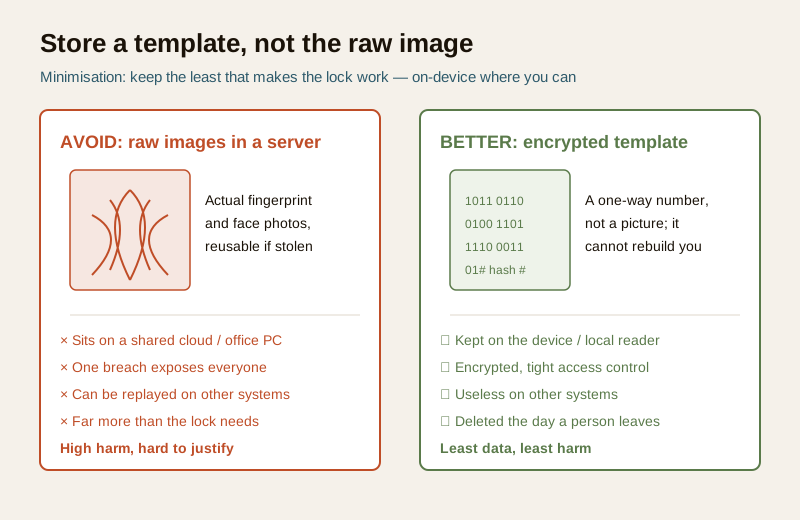
The deeper design habits — deciding a biometric is even necessary, building in consent and deletion from the start — belong to privacy by design for security systems, and the access-log side of the same systems is covered in access control data privacy.
The rights of the person being enrolled
If you are the resident, the employee or the domestic worker being asked to press your thumb, you are not powerless. In the spirit of the DPDP Act you can expect, and ask for, the following.
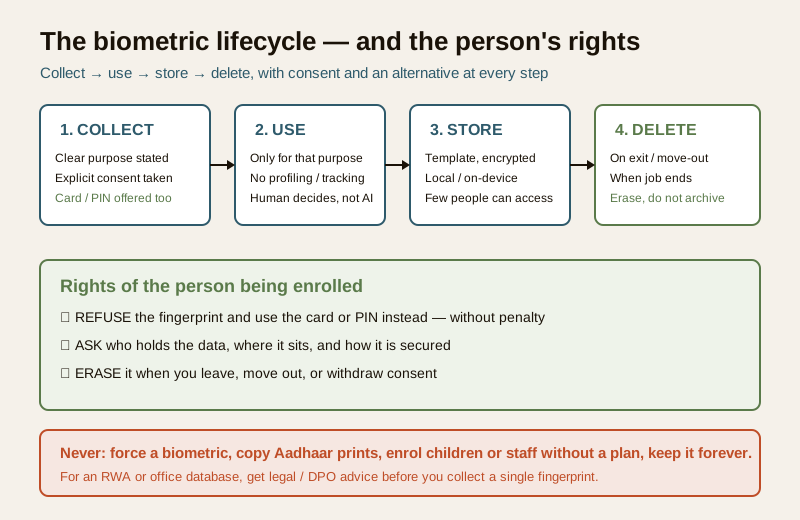
Your rights, in plain terms. You may refuse a biometric and use the card or PIN instead, without being penalised. You may ask who holds your data, where it is stored, and how it is secured. You may withdraw consent and ask for erasure when you leave, move out, or simply change your mind. A responsible custodian will honour all three without argument.
If the answer to "where is my fingerprint stored and who can see it?" is a shrug, that itself is a warning sign. A system that cannot tell you where the data lives cannot protect it.
Special cautions for Indian homes and communities
A few situations come up again and again, and each needs its own restraint.
- Do not casually use or store Aadhaar biometrics. An RWA or a small office has no business copying, scanning or retaining residents' Aadhaar fingerprints for its own gate or attendance. Aadhaar authentication is a regulated, specific process; a society's convenience is not a reason to touch it. Run your own separate, minimal system if you must have biometrics at all.
- Children's biometrics deserve extra protection. Enrolling a child's fingerprint or face for a gate or a play area should be a rare, carefully-justified, parent-consented decision — not a default. Prefer a parent-held card.
- Workers' biometrics are not a control tool. A domestic worker's or a security guard's fingerprint is for the narrow purpose agreed (entry, attendance), never for tracking, profiling or as leverage in a dispute. Delete it when they leave. Coercing a vulnerable worker into biometric enrolment is exactly what this section exists to prevent.
- Face entry is biometric too. A face-recognition panel raises the same permanence and consent questions, plus its own error and bias risks. If your system uses faces, read facial recognition privacy and keep it firmly under human oversight.
What to ask before you give a fingerprint
Whether you are a resident facing a new RWA gate or an employee facing a new attendance reader, a short set of questions tells you a great deal.
- What exactly are you collecting, and why? A vague answer is a red flag.
- Is there a card or PIN alternative I can use instead? There should be.
- Do you store an image or a template, and is it encrypted? Template and encrypted is the answer you want.
- Where does the data physically sit, and who can access it? On-device and few people is far safer than a shared cloud.
- When and how is my data deleted? There must be a clear answer for when you leave or move out.
- Who is accountable if it leaks? For a community or office system, there should be a named person and, ideally, legal or DPO backing.
A biometric data protection checklist
For whoever runs a home, RWA or small-office biometric system, work through this before and after you deploy.
- Justify it. Confirm a card or PIN genuinely would not do the job before choosing biometrics at all.
- Offer the alternative. Provide a non-biometric route for everyone, always.
- Take real consent. Notice in plain language, freely given, with the purpose stated.
- Store templates, not images. Encrypted, on-device or local wherever possible.
- Lock down access. Know exactly who holds the database and keep that list short.
- Set a deletion trigger. Erase a person's biometric on exit, move-out, job-end or withdrawal of consent.
- Keep humans in charge. For face systems especially, no automatic adverse action; a person reviews.
- Get advice for anything shared. For an RWA or workplace database, involve a lawyer or Data Protection Officer.
Never do this with biometrics
- Never force a fingerprint or face scan with no alternative.
- Never store raw fingerprint or face images on a shared cloud or an ordinary office computer if a template on the device will do.
- Never copy or retain Aadhaar biometrics for a private gate or attendance system.
- Never enrol children or vulnerable workers casually, or use their biometrics to monitor, punish or control.
- Never keep a person's biometric after they have left, moved out, or withdrawn consent.
- Never treat a leaked biometric like a leaked password — there is no reset, so prevention is the whole game.
When to bring in legal or professional help
- A community or workplace database — the moment you are holding many people's biometrics, treat it as a data protection responsibility, not a gadget. Consult a lawyer or a Data Protection Officer on consent, retention and security before you collect anything.
- A suspected breach — if a biometric database may have leaked, take legal advice promptly and follow due process; a biometric leak is more serious than a password leak precisely because it cannot be reset.
- Any coercion or dispute — if residents or workers feel forced, or a fingerprint is being used against someone, that is a rights issue for a professional, not a committee.
Protective bottom line (not legal advice). Biometrics are permanent, so the safe posture is restraint: collect them only where truly needed, always with an alternative, store a minimal encrypted template rather than an image, keep it local, delete it on exit, and get legal or DPO advice before any shared system. When in doubt, a card or PIN is the kinder and safer default.
Key takeaways
- A fingerprint is not a password. It cannot be reissued, so a biometric leak can cause lasting harm — protection and minimisation matter more here than anywhere else in home security.
- Offer a non-biometric alternative, always. A card or PIN beside the reader keeps consent genuine and no one coerced.
- Store a template, not an image. Encrypt it, keep it on-device or local, and restrict who can access it.
- Delete on exit. Erase a person's biometric when they move out, leave the job, or withdraw consent — never keep it forever.
- Respect the enrolled person's rights. They may refuse, ask where their data lives, and demand erasure.
- Get advice for shared systems. RWA and office biometric databases need a lawyer or Data Protection Officer — this guide is a starting point, not a substitute.
References
- Digital Personal Data Protection Act, 2023 — handle personal data, including biometric data, with lawful purpose, notice and consent, minimisation, storage limitation, security and accountability; verify the current text and rules before relying on it.
- Right to privacy (Constitution Art. 21; K.S. Puttaswamy) — informational privacy is a recognised right in India; treat permanent biometric identifiers with corresponding care and seek qualified legal advice for your situation.
- Manufacturer specification sheets — confirm whether a lock or reader stores an encrypted template on-device versus raw images on a server, and how enrolment data can be deleted, before you buy or deploy.
This is an educational overview, not legal advice. How you may lawfully collect and hold biometric data depends on your exact facts and the scale of your system — consult a qualified lawyer or a Data Protection Officer, especially for any RWA or workplace biometric database.
Export this guide
Related Guides — Deep-dive reading
Facial Recognition Privacy in India (2026): The Face Is Not Just Another Password
A face is biometric data you can never change if it leaks, and it can be captured without your cooperation. Before you enrol anyone's face into a lock, camera or entry system, understand the privacy duties, the consent it demands, and the alternatives you must always offer.
SecuritySmart Lock Privacy in India (2026): What Your Lock Knows and How to Keep It Minimal (DPDP)
A smart lock quietly collects fingerprints, a log of who opened your door when, and an app account tied to your identity. Here is what it knows and how to keep that data minimal and safe under the DPDP Act, 2023.
SecuritySecurity Privacy Assessment for Indian Homes
Getting the privacy side of home security right: camera placement ethics and limits, notice and consent, the extra caution audio demands, and treating footage as personal data you store, retain and delete responsibly under India's DPDP Act 2023 direction.
SecurityRelated Tools — Try Free
Biometric-Capacity Calculator
Whether a biometric reader can hold all the enrolments and how many devices you need, with a 1:N speed note.
Biometric CapacitySmart Lock Finder
Find the right smart lock — access methods, tier and must-haves like a mechanical override — for your door and budget.
Door ToolAccess-Control Power Calculator
Total current and power an access system draws, to size the power supply — locks, readers and controllers.
AC Power