
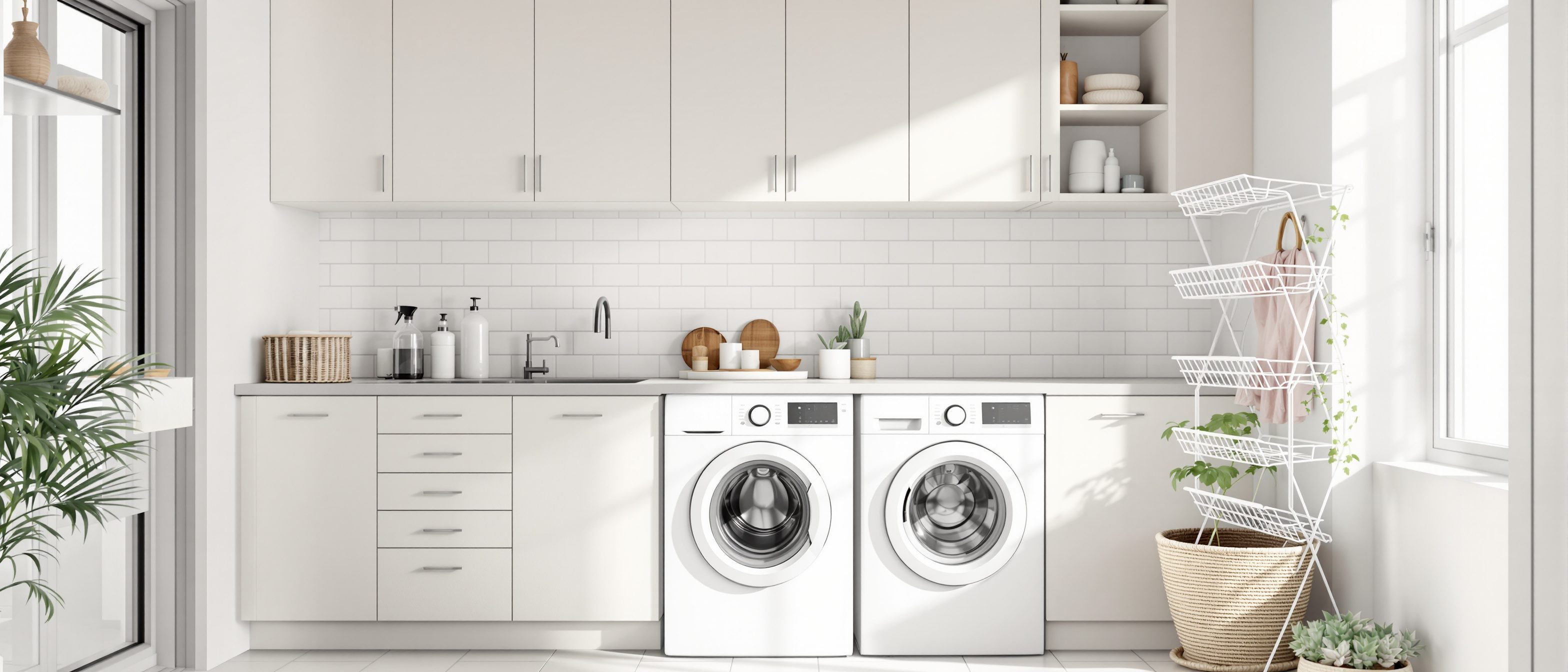
Designing Utility Rooms
How to plan a proper back-of-house utility room in an Indian home — the hardworking space where washing, drying, cleaning kit and the inverter all live together, designed instead of leftover.
Walk into most newly handed-over Indian homes and the laundry tells the same story. The washing machine sits in a bathroom doorway because that was the only drain. Wet clothes hang off the balcony grille, the staircase railing and a folding airer wedged in the passage. The brooms live behind the kitchen door, the mop bucket lives wherever it was last used, and the inverter battery sits exposed in the corner gathering dust. Nobody planned any of it, because the utility is the one space families forget to design — it has no Pinterest board and no guests ever see it.
Yet this is the hardest-working square metre in the house. It runs every single day, in a climate that is humid for half the year, and when it is done badly the failure leaks out everywhere: damp smells in the kitchen, clutter in the living room, a tripping hazard of buckets in the passage. A family of four generates two to three machine loads of washing a week, plus mopping water, plus a steady churn of cleaning equipment — and all of it needs a home with water, drainage, air and storage in the right relationship.
This guide is about designing a proper utility room — the kind you get in an independent house, a villa, a duplex, or a generously planned flat — rather than squeezing the function onto a balcony. If you only have a service balcony to work with, the balcony-specific playbook lives in our utility area optimization guide; read that one and come back here for the principles that scale up.
Design the utility as a real room with three things in the right order — plumbing, then a wet/dry split, then full-height storage — and the rest of the house instantly feels tidier, because the mess that used to leak everywhere now has somewhere to live.
1. What a utility room actually has to hold
The first mistake is planning a utility around the washing machine alone. The machine is one of a dozen things that need to live here, and every one of them has a space and a service requirement you must design for from the start — retrofitting plumbing or a drain after the floor is laid is brutally expensive. Map the full list before you draw a single line.
| What the utility must hold | Space / service need |
|---|---|
| Washing machine (front-load) | 600 mm wide × 600 mm deep niche, water inlet + drain point, 16 A socket above splash height |
| Dryer or second machine | Another 600 mm bay beside or stacked above; vented dryers need an outside duct |
| Utility / wash sink | Deep single bowl, 600 mm run min, hot/cold inlet, waste to trap, worktop at 900 mm |
| Indoor drying | Ceiling pulley rack or wall-fold rack over a floor trap, 1.5–2.0 m of rail |
| Outdoor drying | Wall-mounted line bracket or balcony line reachable from the room |
| Cleaning equipment | Tall 300 mm bay for brooms, mop, wiper, vacuum upright |
| Cleaning supplies | Sealed shelves 350 mm deep for detergents, acids, scrubs (child-safe, ventilated) |
| Ironing | Wall-fold board or a clear 1.2 m worktop run with a 6 A socket |
| Inverter + stabiliser | Ventilated, raised cabinet on a plinth; batteries need air, not a sealed box |
| Water purifier | Wall point near the sink, inlet + drain, 6 A socket |
| Second prep sink (optional) | Where the kitchen overflows — washing vegetables, large vessels, festival cooking |
| Bulk + seasonal store | High shelves above head height for buckets, spare bedding, festival kit |
Notice how many of these need water, a drain or a socket. That is why the plumbing wall is the spine of the whole design: cluster every wet function — washer, dryer, sink, purifier, floor trap — against one external wall so the pipework runs short, straight and accessible. Everything that is merely dry storage can then go on the opposite wall, well away from splashes.
"Things which are physically close, work close together; things which are far apart, work apart." Christopher Alexander's reminder in A Pattern Language is the whole argument for a plumbing wall — keep the wet jobs adjacent so the pipes, and the person using them, never have to travel.
2. Where the utility goes: balcony vs dedicated room
The single biggest decision is whether the utility is a strip or a room, and that is usually decided for you by the kind of home you live in. Be honest about which you have, because the strategies are completely different.
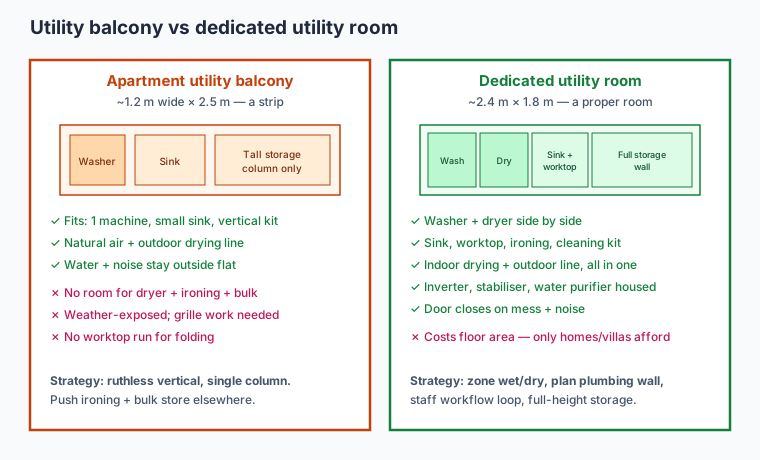
Figure 1: A utility balcony is a strip — it fits a single machine column and forces ironing and bulk storage elsewhere. A dedicated room holds the whole laundry-and-service workflow behind a door that closes on the mess and noise.
In a flat, the utility is almost always a service balcony about 1.2 m wide — barely enough for one machine, a small sink and a vertical storage column. The right move there is ruthless verticality and pushing ironing and bulk storage into the bedroom or a passage cupboard; that is exactly what the apartment utility-area guide is for.
In an independent house, villa, row house or duplex, you can afford a genuine room of around 2.4 m × 1.8 m (about 4.3 sq m). That extra width changes everything: washer and dryer sit side by side, the sink gets a worktop for folding, ironing has a home, and the inverter and purifier are housed rather than parked. The cost is floor area — roughly the size of a small bedroom's worth of plumbing and finishes — but for a family that runs daily washing and employs help, it pays back in a calmer house every single day. If you are choosing a layout at the planning stage, sketch both options to scale with the Layout Planner before you commit a single wall.
3. Zoning wet from dry
The organising principle of a good utility is a clean split between the wet zone and the dry zone. Mixing them is what produces rusting hinges, swollen MDF, mouldy detergent boxes and a generally grim, smelly room. Draw an imaginary line down the middle and assign every function to one side or the other.
| Function | Zone | Why |
|---|---|---|
| Washing machine, dryer | Wet | Water connections, splashes, condensation |
| Utility sink + worktop | Wet | Standing water, drips while scrubbing |
| Floor trap + drying drips | Wet | Falling water needs a slope and a drain below |
| Water purifier | Wet | Inlet and a drain line |
| Brooms, mop, vacuum | Dry (but wipeable) | Stored damp at first; keep on a tiled, drained corner |
| Detergents, acids, supplies | Dry, sealed | Cardboard and powders ruin in damp; ventilate, child-lock |
| Ironing + folded linen | Dry | Must never meet a splash; keep far from the sink |
| Inverter, stabiliser | Dry, ventilated, raised | Electronics + water is a hazard; lift on a 75 mm plinth |
| Bulk + seasonal store | Dry, high | Out of the splash zone, above head height |
The wet zone gets full-height tiling, a gently sloped floor and a floor trap; the dry zone gets a 75 mm plinth under all storage so that even if water reaches it, nothing sits in the wet. Once the zones are clear, the layout almost designs itself.
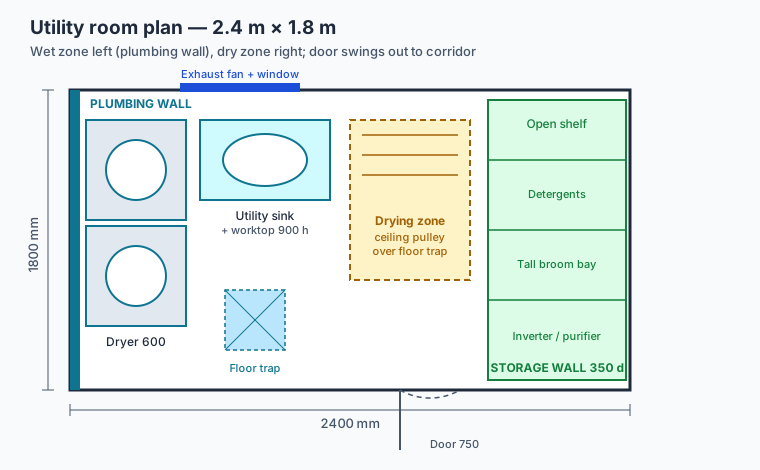
Figure 2: A worked 2.4 × 1.8 m plan. Every wet function clusters on the left plumbing wall; the drying zone sits centrally over the floor trap; the storage wall runs full height down the dry right-hand side. The door swings out so it never fouls the room.
4. Plumbing, drainage and the floor
This is the part that must be right before tiling, because it is buried. Get a plumber to set out the inlet and waste points off your dimensioned plan, not by eye on site.
Each machine needs a dedicated water inlet with its own isolation valve — never tee both machines off one tap, because a burst hose then floods unstoppably. Machine waste should discharge into a standpipe or a floor trap, not be jammed into the sink waste, where back-siphoning leaves dirty water in your bowl. The utility sink needs hot and cold (a small instant geyser is a luxury worth having for hand-washing in winter) draining to a bottle trap. The water purifier wants its own inlet and a reject-water drain.
The floor is the quiet hero. Lay it with a fall of roughly 1:80 toward a floor trap so that machine overflow, mopping water and drying drips all run to one point and away — a level utility floor is a puddle waiting to happen. Choose anti-skid matt vitrified tiles, not glossy ones, because the floor will be wet daily and someone will be standing on it with bare feet. Run a 150 mm tiled skirting up every wall, and silicone the machine-to-wall and sink-to-wall junctions.
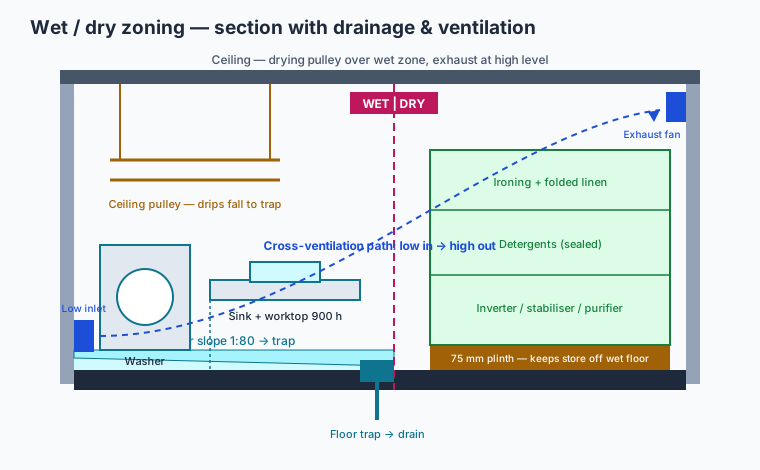
Figure 3: In section, the wet zone floor slopes to a trap that catches both machine overflow and drips from the ceiling drying rack above. The dry zone storage stands on a plinth, and air moves from a low inlet across the room to a high exhaust — the cross-flow that keeps damp from settling.
5. Ventilation and damp control
A utility makes warm, wet air all day, and in an Indian monsoon that air will breed mould and a sour smell within a week if it has nowhere to go. The fix is cross-ventilation: an opening low on one side (a louvred door, a grille, or a window left ajar) and an extract high on the opposite side. Fit a wall or ceiling exhaust fan sized for the room — for a 4–5 sq m utility, an exhaust giving around 8–12 air changes per hour is the right order — and put it on the same switch habit as the lights so it actually runs.
The National Building Code is explicit that wet service areas need mechanical extraction where natural cross-ventilation is inadequate; a sealed utility with one tiny window is exactly the situation it warns against.
The NBC 2016 requires that bathrooms, kitchens and similar wet service spaces be provided with permanent ventilation or mechanical exhaust — treat the utility as a wet service space and ventilate it like one, not like a cupboard.
Keep detergent and powder stores in sealed, ventilated cabinets rather than open shelves so the humidity does not cake them, raise everything off the floor on that 75 mm plinth, and choose marine-ply or moisture-resistant board with a laminate face for any joinery — ordinary MDF in a utility swells and crumbles within a couple of monsoons.
6. The storage wall: brooms, supplies and the inverter
The dry wall opposite the plumbing is where the room earns its keep as a storage space. Plan it full height, 350 mm deep, and divide it by what it holds rather than as identical shelves.
Give brooms, the mop, the floor wiper and an upright vacuum a tall, narrow bay — 300 mm wide and full height — with a couple of hooks and a removable tray at the bottom for the wet mop head. Detergents, scrubs, acids and refills go on adjustable shelves at 300–350 mm spacing, behind a door with a simple child-lock if you have small children, because the utility is where the most dangerous household chemicals live. The inverter and stabiliser want a ventilated cabinet — louvred doors or a grille, never a sealed box, because lead-acid batteries off-gas and overheat without air — lifted on the plinth and within reach of the meter point. Buckets, spare bedding, festival decorations and other bulky seasonal goods belong on the high shelves above head height, where they are out of the daily reach zone.
To size the run before you build it, the storage capacity calculator turns your wall length and shelf spacing into honest litres so you can see whether the wall really holds everything on the list. For the deeper logic of how to allocate that storage across a whole home, our pillar guide on storage planning before interior design is the place to start, and the professional treatment in storage as a design discipline goes further still.
7. Drying: ceiling and wall, never the floor
India's drying problem is real — monsoon weeks with no sun, particulate-heavy city air, and pigeons on the balcony — so a designed utility plans for both indoor and outdoor drying. The golden rule is that drying lives on the ceiling and walls, never on the floor, where a free-standing airer eats the room and trips everyone.
The best indoor solution is a ceiling-mounted pulley rack hung directly over the floor trap, so drips fall to the drain and not onto your storage. It pulls clothes up out of the way when loaded and lowers to waist height for hanging — a few metres of rail dries a full load. A wall-fold rack folds flat against the dry wall when not in use. For outdoor drying, a wall bracket line or a reachable balcony line handles sunny days. Keep the indoor drying zone deliberately separate from the dry storage wall, because evaporating clothes pump humidity into the room and you do not want that next to your linen and ironing. The drying-solution comparison in the utility area guide sizes each option if you want to choose between them.
8. Designing for the helper's workflow
In most Indian homes the utility is operated as much by a domestic helper as by the family, and a room designed around that workflow runs far more smoothly. Think through the actual sequence: clothes come in, get sorted, go into the machine, come out, get hung, dry, come down, get ironed, get folded, and get carried away — and mopping water gets filled, used and emptied through the same room.
Lay the room out as a loop so that sequence flows without crossing the helper's own path: sorting basket near the door, machine on the plumbing wall, drying centrally, a clear worktop for folding and ironing on the dry side, and a stack point near the exit for finished laundry to be carried out. Put the mop-bucket fill tap low and near the floor trap so a heavy bucket is filled and emptied without lifting it across the room. Provide a stool or a clear standing space at the sink, because hand-washing and scrubbing happen seated or bent for long stretches. Anthropometric guidance puts a comfortable standing worktop at around 900 mm and a seated wash position lower — give the room both. A utility that respects the body using it is a utility that actually gets kept clean.
To set the room out accurately on site, measure the available shell carefully first with the room measurement tool, then test the machine, sink and storage positions to scale in the Layout Planner before anything is fixed.
Sources & further reading
- Bureau of Indian Standards, National Building Code of India 2016 — Part 9 (Plumbing Services) and Part 8 (Building Services), on drainage, water supply and ventilation of wet service areas.
- Christopher Alexander, A Pattern Language — patterns on workspace adjacency, laundry and service rooms.
- Julie Morgenstern, Organizing from the Inside Out — zoning a hardworking utility space by function and frequency of use.
- Ernst Neufert, Architects' Data — anthropometric and ergonomic standards for worktop heights, reach zones and service-space clearances.
- Bureau of Indian Standards, IS 2064 — recommendations for sanitary appliance fixing heights and clearances.
- Studio Matrx, Utility Area Optimization — the apartment utility-balcony companion to this room-scale guide.
If you are planning the back-of-house of a whole home, read this alongside storage planning before interior design for the master strategy, seasonal storage solutions for the festival and winter goods that overflow into the utility, and mudrooms for Indian homes for the arrival-and-cleanup zone that works hand in hand with the utility.
Export this guide
Related Guides — Deep-dive reading
Utility Area Optimization
Making the washing, drying and cleaning-storage corner of a small flat work hard
Apartment LivingMudrooms for Indian Homes
The threshold where the outside is left behind — designing a real shoes, dust and wet-weather drop-zone, from a slim niche in a flat to a proper mudroom in a house.
StorageBathroom Planning for New Homes in India: Get It Right Before You Build
The bathroom decisions you cannot undo once the slab is cast — location and stacking, sunken vs non-sunken slabs, waterproofing, and the plumbing, electrical and ventilation you must coordinate with the civil work, stage by stage.
BathroomsRelated Tools — Try Free
Cross-Ventilation Analyzer
Estimate airflow and air changes per hour (ACH) from room size, window areas, layout, and local wind — with NBC 2016 Part 8 compliance check.
Ventilation CalculatorApartment vs Villa Interior Planning Guide
Compare ceiling height, structural flexibility, lighting, storage, and services between apartments and villas.
Planning GuideBathroom Exhaust Fan Calculator
Size a bathroom exhaust fan from room volume and air changes per hour — output in CFM and CMH with a recommended fan rating and diameter.
Bathroom Calculator