
How to Choose a Water Tank in India: Buyer's Guide (2026)
A homeowner's shopping guide to buying the right water tank — layers, food-grade ISI mark, capacity, warranty and a brand-vs-local checklist so you pay for quality, not marketing.
Buying a water tank feels simple until you stand in the shop and face a wall of near-identical black drums with prices that swing by 40% for the "same" litres. This guide is the buying decision — how to read the layers, the ISI mark and the warranty so you pay for quality that lasts 15+ years, not for a sticker. For how each tank type actually works, we link the technical pillars; here we focus on what to put in your cart.
New to tank types? Start with the Water Storage Tanks Guide for how overhead, sump, RCC and steel tanks differ — then come back here to choose and buy.
Step 1 — Pick the material for the job
Material is decided by where the tank sits, not by budget alone. One line each — follow the link for the full type breakdown:
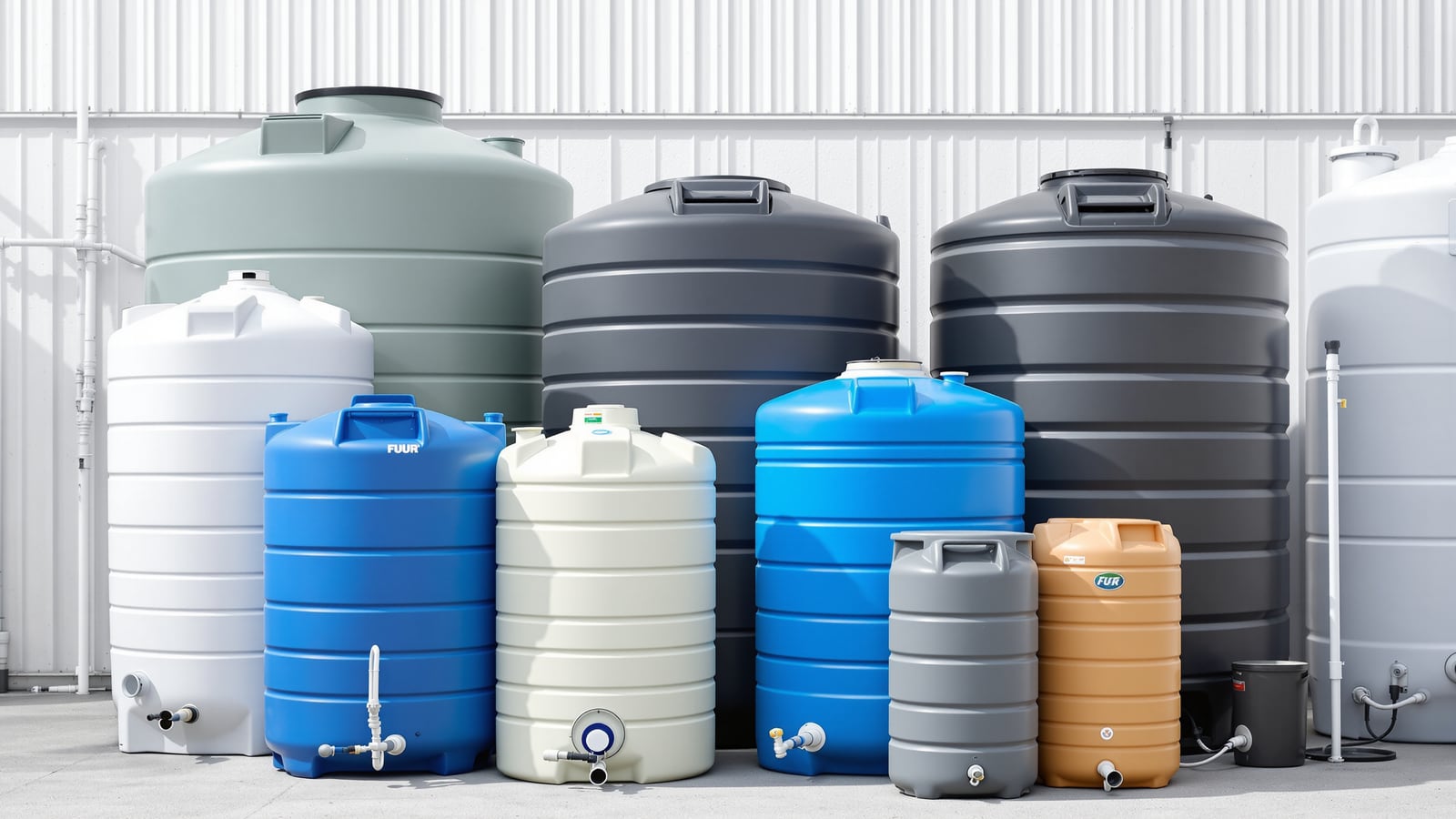
- Overhead (on the roof): food-grade plastic (LLDPE) is the default — light, cheap, no rust, easy to lift up. See Plastic Water Tanks.
- Underground sump: RCC (cast in place) for large permanent storage, or a plastic sump tank for quick, leak-proof installs. Compare in the Underground Sump Tanks guide.
- Premium / large / rooftop-exposed: stainless steel or modular (bolted panel) tanks — higher cost, longer life, hygienic. See Steel Water Tanks and Modular Water Tanks.
For most homes the real decision is which plastic overhead tank — so the rest of this guide is about buying that well.
Step 2 — Understand LAYERS (this is what you actually pay for)
The number of layers is the single biggest quality-and-price lever on a plastic tank. The wall is extruded in one, three, four or five plies, each adding protection:
| Layers | What each layer adds | Buy it for |
|---|---|---|
| Single-layer | One plain plastic wall. Cheapest. | Non-drinking use, temporary sites, tight budgets |
| 3-layer | Black inner (blocks light/algae) + middle body + coloured outer (UV) | The sensible default for most homes |
| 4-layer | Adds a dedicated UV-stabilised outer for harsh rooftop sun | Hot regions, fully exposed rooftops |
| 5-layer | Adds a food-grade + anti-microbial inner liner | Drinking water, health-conscious buyers |
What to actually pay for: the jump from single to 3-layer is worth every rupee — it kills algae and slows UV cracking. The jump from 3 to 4/5-layer is worth it if the tank sits in full sun or holds drinking water; the marketing gap between "4" and "5" is smaller than the price gap, so read the feature list, not the number. Insist that the inner layer is food-grade regardless of layer count — that is the layer your water touches.
Step 3 — Insist on FOOD-GRADE and the ISI mark
This is non-negotiable for water you or your family drink or cook with.
- Food-grade means the inner surface won't leach chemicals or impart taste. A cheap non-food-grade drum can smell of plastic for months.
- Polyethylene (plastic) storage tanks in India are covered by the BIS standard IS 12701. A genuine tank carries the ISI mark with the licence number moulded or printed on it — not a loose sticker you can peel.
- The ISI mark is your defence against counterfeits and substandard resin. If a shopkeeper can't show the mark, treat the tank as industrial-grade and walk on.
Rule of thumb: for drinking water, no ISI mark = no sale. Photograph the moulded licence number before it leaves the shop.
Step 4 — Size it to your real need (don't undersize)
Under-buying is the most common regret — you run dry every summer and end up buying a second tank. Size from people and habit, not from a round number.
- A common planning figure is roughly 135–150 litres per person per day for a full-service home; lean households manage on less.
- Add a buffer for supply gaps — if municipal water comes on alternate days, you need at least two days of storage.
- Don't oversize wildly either: a huge tank that never turns over breeds stagnation and stresses your roof slab.
- If your need is genuinely large, it is often smarter to split storage — a sump for bulk and a right-sized overhead tank the pump fills — than to hang one giant tank off the roof.
Rather than guess, run the numbers: our Bathroom Water Tank Calculator turns occupants and usage into a recommended litreage in seconds.
Step 5 — Colour: black wins for hygiene
Colour is not cosmetic on a water tank:
- Black (or a dark inner layer) blocks sunlight, which is what starves algae — it's the safest all-round choice, especially for exposed tanks.
- Lighter tanks look neater but let light through single-wall plastic; only buy a pale tank if it has a genuine black/opaque inner layer.
- If you dislike a black tank on the roof, choose a 3+ layer tank with a coloured UV outer and a black inner — you get the looks and the algae protection.
Step 6 — Warranty, thickness and where to buy
The specs that separate a branded tank from a cheap drum:
- Warranty: reputable brands offer 5 to 10 years, sometimes more on premium ranges. Get it in writing on the invoice with the batch/licence number — a verbal promise is worthless during a claim.
- Wall thickness & weight are your quality proxy. For the same litres, a heavier tank usually means more (and better) resin and a thicker wall that resists UV and impact. Ask the stated weight in kg and compare — a suspiciously light "bargain" tank is thin-walled.
- Branded vs local: branded tanks cost more but bundle consistent food-grade resin, the ISI licence, real warranty and after-sales. Unbranded local tanks can be fine for non-drinking or budget use — but you carry the risk on resin quality and get no claim path.
- Where to buy: a local sanitaryware dealer lets you inspect weight, layers and the moulded ISI mark in person and arranges the awkward rooftop lift; online is convenient for standard sizes but confirm the exact model, layer count and warranty before ordering.
| What to check | Why it matters | What to pick |
|---|---|---|
| Layers | Algae, UV and hygiene protection | 3-layer default; 4/5-layer for sun or drinking water |
| ISI mark | Genuine food-grade, not counterfeit | Moulded ISI + licence no. (IS 12701 for plastic) |
| Capacity | Avoid running dry in summer | Sized from occupants + supply-gap buffer |
| Colour | Starves algae | Black, or dark opaque inner layer |
| Warranty | Your only recourse if it fails | 5-10 yr, in writing on the invoice |
| Wall thickness / weight | Real resin quality proxy | Heavier tank for the same litres |
| Brand | Resin consistency + after-sales | Branded for drinking; local only for budget/non-drinking |
Good, better, best at a glance
| Tier | Typical buy | Best for |
|---|---|---|
| Good | Single/3-layer local plastic tank | Non-drinking, budget, temporary use |
| Better | Branded 3-4 layer food-grade ISI tank | Everyday home overhead storage |
| Best | 5-layer food-grade branded, or stainless steel | Drinking water, exposed roofs, long life |
Prices swing by region, litreage and brand, so treat any figure as indicative — for real budgeting see the Water Tank Cost Guide.
The one-minute buyer's checklist
- Match material to location (roof = plastic, sump = RCC/plastic, premium = steel/modular).
- Choose layers by use: 3-layer default, 4/5-layer for sun or drinking water.
- Demand a moulded ISI mark and food-grade inner for anything you drink.
- Size it from occupants and supply gaps — run the calculator, don't undersize.
- Prefer black / dark-inner tanks to starve algae.
- Get the warranty in writing (5-10 yr) and compare weight as a quality proxy.
- Go branded for drinking water; local only for budget, non-drinking use.
For the bigger picture, start from the Plumbing Buying Guide and the Water Storage Tanks Guide — then buy with this checklist in hand. Studio Matrx builds these guides so you shop on facts, not on the shop's markup.
References
- Bureau of Indian Standards (BIS) — IS 12701, specification for rotational moulded polyethylene water storage tanks (look for the ISI mark and licence number).
Export this guide
Related Guides — Deep-dive reading
Plastic (Polyethylene) Water Tanks in India: Layers, Food-Grade, Sizes, Lifespan & Cost
The black or blue rotomoulded PE tank on almost every Indian roof — how rotational moulding works, single versus triple and four or five layer construction, food-grade FDA and BIS material, black anti-algae versus white and coloured bodies, common 500, 1000, 2000 and 5000 litre sizes, UV degradation and lifespan, cleaning, fittings, pros and cons against RCC and steel, and indicative prices.
PlumbingPlumbing Buying Guide: How to Buy Plumbing Products in India (2026)
The shopping and decision layer for buying plumbing products in India — the universal buying rules that apply to pipes, pumps, tanks, purifiers and fittings: insist on the BIS/ISI mark and the right IS standard, know when branded beats local, weigh warranty and after-sales, spot counterfeits, match the product to your need without oversizing, and read price against quality before you pay.
PlumbingHow to Choose a Wash Basin in India: Mount Type, Size, Tap Holes & Budget (2026 Buyer's Guide)
A buyer's decision guide to picking the right wash basin — matching the mount type to your vanity and space, sizing it to the room, getting the tap-hole config right for your faucet, judging material and durability, checking what's in the box, good/better/best rupee tiers, the IS 2556 vitreous-china mark, and how to spot seconds, hairline cracks and warranty traps.
BathroomsRelated Tools — Try Free
Rainwater Tank Sizer
How big should your rainwater tank be? Computes annual harvest, recommended tank capacity in litres, water-bill savings, and payback — for 10 Indian cities.
RWH CalculatorBathroom Water Tank Calculator
Size the overhead storage tank and sump a home needs for its bathrooms and daily use, by people, bathrooms and reserve days.
Bathroom CalculatorWater Storage Days Calculator
Find how many days your water storage lasts in a supply cut from total capacity, occupants and per-person use.
Plumbing Calculator