

Best Windows for Airflow: Which Window Type Moves the Most Air
Casement, louvered, awning or sliding — ranking window types by effective openable area, the scoop effect and how to pair an inlet with an outlet in an Indian home.
Two homes can have windows of exactly the same size and yet feel completely different on a still, humid afternoon. The difference is rarely the glass. It is the window type — the way the sash opens, how much of the hole in the wall actually clears for air to pass through, and whether the open sash can catch a passing breeze and steer it indoors. This guide ranks window types by how much air they move, so you can choose the right one before you order.
A window that opens 50 per cent of its frame can never out-ventilate one that opens 100 per cent — no matter how big it is or how the room is planned.
This is the airflow pillar for our Windows and Ventilation cluster. It is deliberately narrow: it picks the window TYPE that breathes. It does not tell you where to place windows — that is Window Design for Cross Ventilation, which covers the inlet, outlet and the path of the breeze. It does not tell you how to cool a home without the AC — that is Passive Cooling Through Windows. And it is not a tour of every window style — that is Types of Home Windows in India. Pick the type here; place and cool with those.
The number that matters: effective openable area
Window area on a drawing is not airflow. What moves air is the effective free area — the clear opening left once the sash, frame, mesh and track are subtracted. The National Building Code (NBC 2016) sets a floor: openable area should be at least roughly 10 per cent of the room's carpet area. That is a minimum for daylight and fresh air, not a target for comfort. For genuine cross-flow in a hot-humid Indian summer, you want far more, and you want it to actually open.
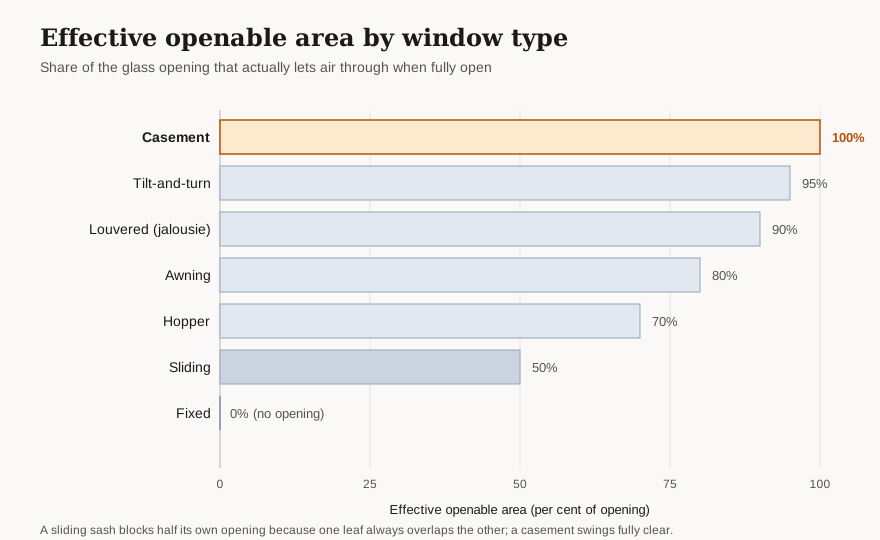
Here is the trap. A 1.5 m wide sliding window looks generous, but a sliding sash can only ever slide in front of the other half — so only about 50 per cent of the frame is ever open. A casement of the same size swings its entire sash clear, so close to 90-100 per cent of the frame becomes free area. Same hole in the wall, double the airflow.
The scoop effect — why casements win
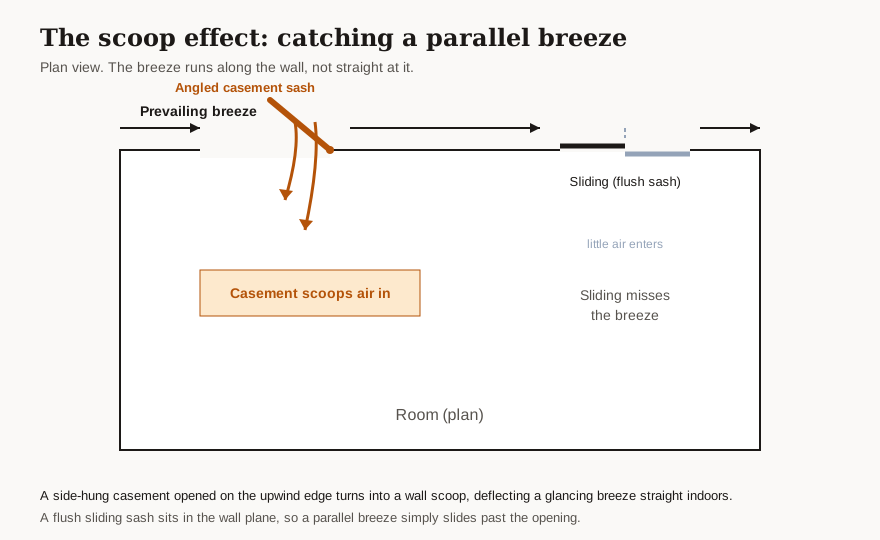
A casement does more than open fully. When you angle its sash partly into an oncoming breeze, the glass acts as a scoop or wind-catcher, deflecting passing air that would otherwise slip along the wall and pulling it into the room. A flush sliding sash cannot do this; it sits in the plane of the wall and only admits the air that happens to blow straight at it. On a site where the prevailing breeze runs parallel to a facade, an angled casement can capture air a sliding window of the same size would miss entirely.
Louvered (jalousie) windows take a different route to high airflow: their slats open across the whole opening at once, giving close to full free area while staying angled to shed light rain. Awning windows hinge at the top and vent outward, so they can stay open in a drizzle. Each trades something for airflow — the ranking below makes the trade explicit.
Ranking window types for airflow
| Window type | Max openable area | Airflow rating | Rain tolerance | Best for |
|---|---|---|---|---|
| Casement | ~90-100 per cent | Excellent (scoop effect) | Low (swings out into wind) | Bedrooms, living rooms, capturing parallel breeze |
| Louvered / jalousie | ~85-95 per cent | Excellent, fully adjustable | Good (angled slats shed rain) | Humid coasts, bathrooms, Kerala and Goa |
| Awning | ~70-90 per cent | Very good | Excellent (vents in light rain) | Monsoon belts, high-level vents, kitchens |
| Tilt-and-turn | ~90-100 per cent | Very good (two modes) | Good in tilt mode | Apartments wanting secure trickle plus full open |
| Hopper | ~60-80 per cent | Good (top air exhaust) | Good | Toilets, basements, stack-exhaust outlets |
| Pivot | ~50-90 per cent | Good | Moderate | Large openings, stairwell ventilation |
| Sliding | ~50 per cent | Moderate | Good (closes flush) | Balconies, tight reveals, dusty cities |
| Bay / bow | Depends on opening sashes | Moderate | Varies | Daylight and view, light venting |
| Single / double-hung | ~50 per cent (one or both sashes) | Moderate (double-hung better) | Good | Heritage looks; double-hung beats single |
| Fixed (picture) | 0 per cent | None | N/A | Daylight and views only, never for airflow |
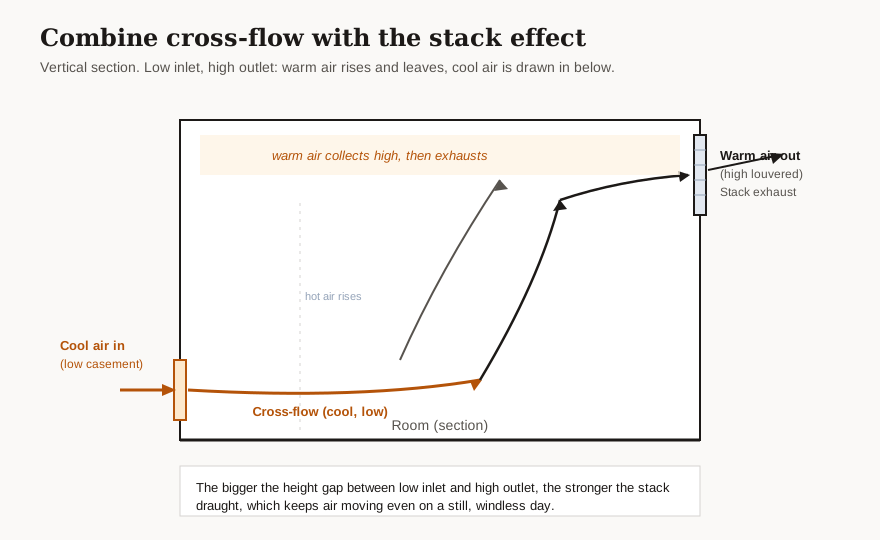
A quick word on single versus double-hung. A single-hung opens only the bottom sash, so warm air trapped at the ceiling has no escape. A double-hung opens top and bottom: cool air enters low while hot air exhausts high through the same window — a small stack effect in one frame. If you like the hung look, choose double-hung.
Pairing an inlet type with an outlet type
Airflow is a two-window job. Air needs a way in and a way out, and the two openings rarely want to be the same type. The classic move is to make the inlet smaller than the outlet: squeezing air through a smaller entry speeds it up (a venturi effect), so a brisk jet sweeps the room before leaving through a larger exit.
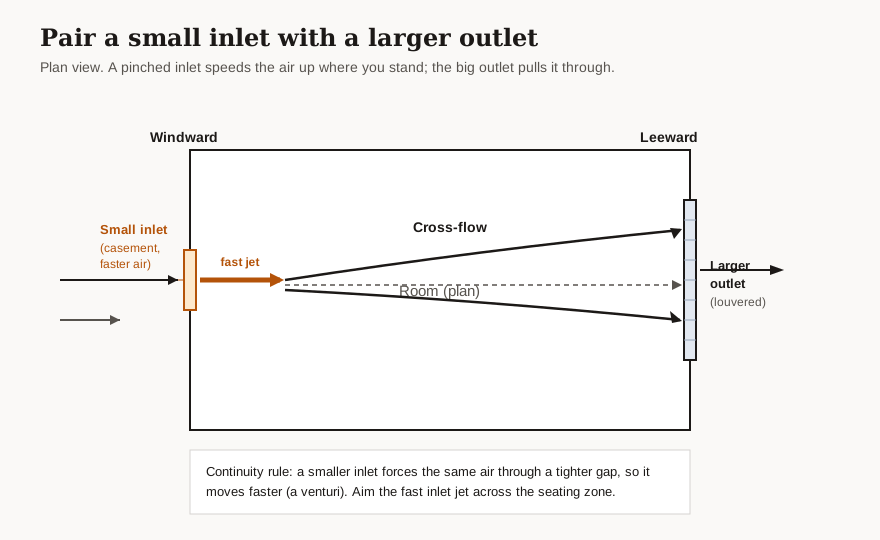
- Inlet (windward side): a casement angled to scoop the breeze, kept modest in size to accelerate the air.
- Outlet (leeward or adjacent wall): a larger louvered, awning or hopper window, ideally set higher to also exhaust the hottest air.
- Put the two on opposite or adjacent walls, never side by side on the same wall, or the air short-circuits.
For the full geometry of where these go, hand off to Window Design for Cross Ventilation — this guide has done its job once you have chosen the two types.
Choosing by room and climate
| Room or context | Recommended type | Why |
|---|---|---|
| Living room, master bedroom | Casement or tilt-and-turn | Maximum free area plus scoop capture |
| Coastal, humid (Kerala, Goa, Mumbai) | Louvered / jalousie | High airflow that still sheds salt-laden rain |
| Monsoon-heavy facade | Awning | Vents while it rains |
| Bathroom, toilet | Hopper or small louvered | Exhausts moist air, holds privacy |
| Dusty city (Delhi-NCR), balconies | Sliding (with tight mesh) | Closes flush; pair with mosquito and dust screens |
| Views only | Fixed | Zero airflow — never your only window |
A crucial honesty: every operable window in India eventually needs a mesh, and finer mesh costs airflow. A tighter anti-PM2.5 screen blocks more dust and mosquitoes but throttles the breeze you just engineered. Choose the openable type first, then size the mesh to the threat — the detail lives in Mosquito-Proof Window Solutions for India.
Where this fits — the cluster
This pillar picks the type. Four spokes finish the job: keep wind-driven rain out with monsoon-friendly window designs, beat city grime with dust control through window design, choose the right window screens and meshes, and stop dengue with mosquito-proof window solutions. For placement and cooling, lean on the two existing guides linked above — they own those lanes, this one owns the type.
References
- National Building Code of India 2016, Bureau of Indian Standards: https://www.bis.gov.in/standards/technical-department/national-building-code/
- Bureau of Energy Efficiency, Eco-Niwas Samhita (residential energy code): https://beeindia.gov.in/en/programmes/eco-niwas-samhita
- Ministry of Housing and Urban Affairs, design guidelines: https://mohua.gov.in/
Export this guide
Related Guides — Deep-dive reading
Window Design for Cross Ventilation (India): Inlet, Outlet and the Path of the Breeze
How to size, place and choose windows so a breeze actually crosses the room, windward inlet to leeward outlet, with the right window types and a clear flow path.
Windows & GlazingAwning Windows Guide (India): Rain-Proof Ventilation for Kitchens and Baths
Top-hinged, outward-opening windows that shed rain and breathe high on the wall — the monsoon-smart choice for baths, kitchens and over picture windows.
Windows & GlazingNatural Bathroom Ventilation India: Windows, Ventilators, Jaali, Cross-Ventilation & the Stack Effect
How to ventilate an Indian bathroom with air and daylight instead of only a fan — sizing the openable window to NBC, using top-hung ventilators, louvres and jaali, driving airflow with the stack effect and cross-ventilation, keeping privacy, and knowing exactly where the monsoon forces you to add a fan.
BathroomsRelated Tools — Try Free
Cross-Ventilation Analyzer
Estimate airflow and air changes per hour (ACH) from room size, window areas, layout, and local wind — with NBC 2016 Part 8 compliance check.
Ventilation CalculatorWindow Size Calculator
Get the right window size, glazing area and openable area for any room using NBC daylight rules.
Window ToolFull-Room BOQ — Living, Bedroom, Kitchen, Bath
Room-wise BOQ across living, bedrooms, kitchen, utility, and bathrooms with line-item pricing.
Full-Room BOQ