
Wooden Window Cost in India (2026): By Species, Plus the 20-Year Upkeep Bill
What timber windows cost by species, what drives the price, and why the reseal-every-few-years upkeep makes wood the dearest window to own over 20 years.
A wooden window is the most beautiful frame you can put in an Indian home, and the most expensive one to own. Not because the purchase price is the highest, it usually is not, but because the bill does not stop at installation. Wood asks for a reseal, polish or repaint every two to four years, and that recurring labour quietly turns the cheapest-looking timber window into the dearest one over twenty years.
This is the dedicated cost deep-dive for timber windows. For the full material profile, species behaviour, climate fit and durability, read Wooden Windows in India, that is the full guide; this is the cost deep-dive. For the all-materials price comparison see the pillar, Home Window Cost in India, and the frame face-off in Window Frame Materials Compared.
Wood is rarely the most expensive window to buy. It is almost always the most expensive window to keep.
What a wooden window costs to buy
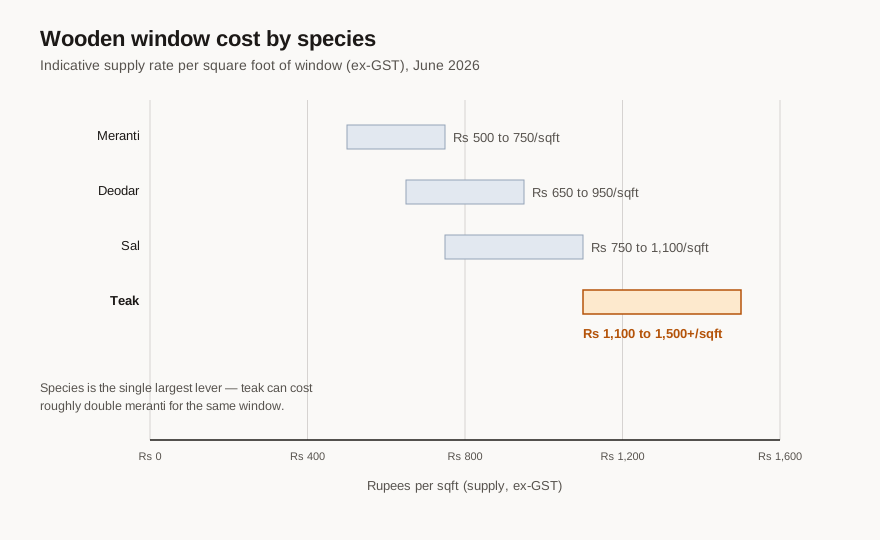
Supply rates for timber windows run ₹500 to ₹1,500 per square foot and up, indicative June 2026, supply only. Install, civil work and 18 per cent GST are extra. The single biggest swing factor is species.
| Timber species | Indicative supply ₹/sqft | Character |
|---|---|---|
| Meranti / mahogany | 500 to 750 | Cheaper entry timber; decent, less rot-resistant |
| Deodar (Himalayan cedar) | 650 to 950 | Moderate price, good all-round, naturally aromatic |
| Sal | 750 to 1,100 | About 50 per cent harder than teak, strong, pest-resistant |
| Teak (Burma / plantation) | 1,100 to 1,500+ | Best in class; natural oils, humid-tolerant, premium |
Premium first-grade Burma teak in large sections sits well above ₹1,500/sqft. These are frame-plus-glazing rates for a standard single-glazed casement or sliding unit; specialty joinery and double glazing push higher.
What drives the number
Four levers move a timber quote more than anything else.
- Species. As the table shows, teak can cost roughly double meranti for the same window. This is the largest single lever.
- Section size and density. Larger, heavier timber sections (more cubic feet of wood) for big spans or grand sashes cost more per square foot, not less.
- Joinery quality. Mortise-and-tenon hand joinery, true-to-line frames and well-cut rebates from a skilled carpenter cost far more than machine-jointed budget work, and last far longer.
- Finish. Melamine, PU (polyurethane) or marine-grade exterior coatings, plus the number of coats, add to both the first bill and the upkeep bill.
Glazing, hardware and the line-item build-up
The supply rate above is frame and standard glass. Real quotes stack up like this for a single window.
| Line item | Indicative cost | Notes |
|---|---|---|
| Timber frame + single glazing | ₹500 to 1,500/sqft | By species, above |
| Glazing upgrade to DGU / Low-E / toughened | +₹250 to 800/sqft | Lower heat gain, better acoustics |
| Hardware (handles, stays, locks, mesh) | ₹800 to 3,000/window | Brass and quality fittings cost more |
| Installation / fixing labour | ₹30 to 65/sqft or ₹800 to 2,200/opening | Higher above the 3rd floor, scaffolding |
| Civil + waterproofing | varies | Sill, lintel, sealant, drip detail, plaster making-good |
| GST | +18 per cent | On materials and services |
Worked example: one 4ft x 4ft teak casement
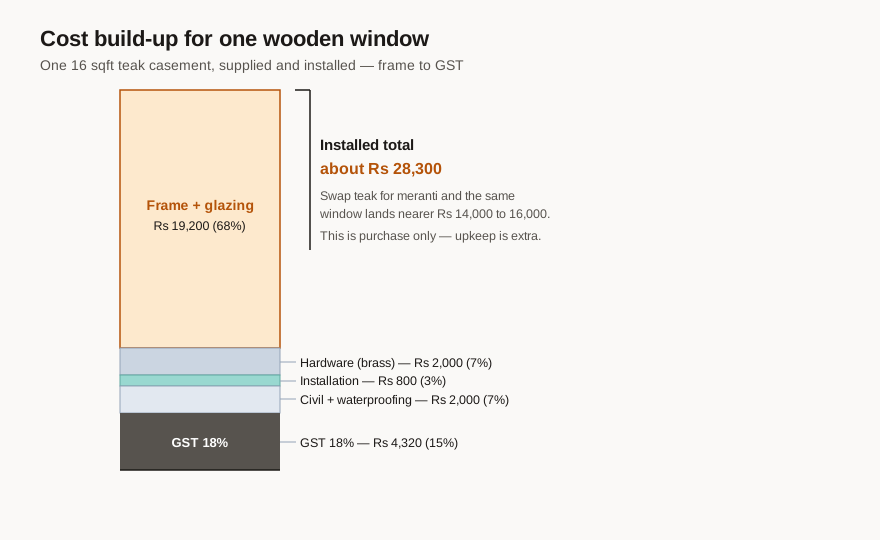
Take a single 4ft by 4ft = 16 sqft teak casement, supplied and installed.
- Frame plus single glazing at ₹1,200/sqft: ₹19,200
- Hardware (good brass set): ₹2,000
- Installation at ₹50/sqft: ₹800
- Subtotal: ₹22,000
- GST at 18 per cent: ₹3,960
- Total: about ₹25,960, before any civil work.
Swap teak for meranti and the same window lands nearer ₹14,000 to ₹16,000. Add a double-glazed unit and you climb past ₹30,000. These are indicative; confirm with itemised quotes from fabricators.
The part most quotes hide: the 20-year upkeep bill
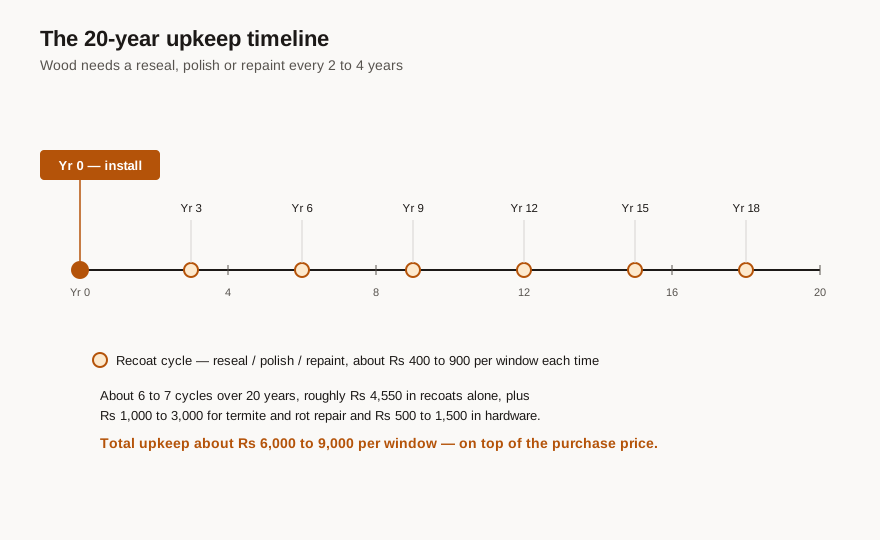
Here is where timber separates from plastic and metal. uPVC and aluminium need little more than an annual wipe-down, a gasket check and occasional hardware lubrication; no recoating, ever. Wood needs a reseal, polish or repaint every two to four years, plus constant vigilance against termites and monsoon rot. That is a recurring line on your household budget for as long as the window stands.
For the full cross-material upkeep treatment, see Window Maintenance Cost in India; here we focus the math on wood alone.
Reckon ₹400 to ₹900 per window per recoat cycle (material plus carpenter or painter labour), and assume one cycle every three years. Over 20 years that is roughly six to seven cycles.
| Upkeep item over 20 years | Per window | Notes |
|---|---|---|
| Recoat cycles (about 7 x ₹650) | ~₹4,550 | Reseal / polish / repaint every 2 to 4 years |
| Termite + rot treatment / repairs | ₹1,000 to 3,000 | Climate-dependent; coastal and monsoon worst |
| Hardware replacement | ₹500 to 1,500 | Hinges, stays over two decades |
| Total upkeep, per window | ~₹6,000 to 9,000 | On top of purchase |
20-year cost to own: wood vs uPVC
Now put purchase and upkeep together for that 16 sqft window over twenty years, comparing a mid-teak timber window against a comparable mid-tier uPVC unit.
| Teak window | uPVC window | |
|---|---|---|
| Purchase (installed, incl. GST) | ~₹26,000 | ~₹14,000 |
| 20-year upkeep | ~₹7,500 | ~₹1,500 |
| 20-year cost to own | ~₹33,500 | ~₹15,500 |
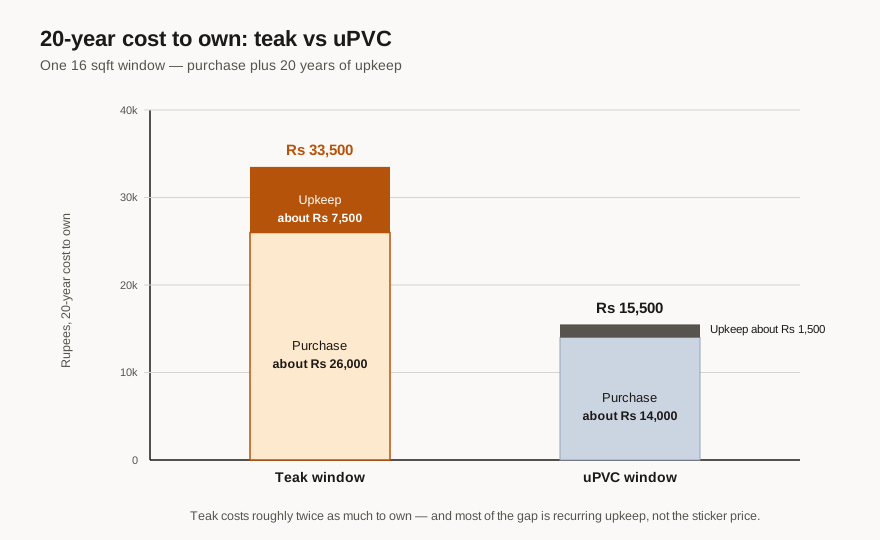
The gap is stark: the teak window costs roughly twice as much to own over two decades, and most of that gap is the recurring upkeep, not the higher sticker price. Scale it to a 1,200 sqft home with 18 to 22 openings and the maintenance difference alone runs into well over a lakh across twenty years.
Over ten to twenty years a well-kept timber window can cost 2.5 to 4 times what uPVC costs, almost entirely because of repainting and resealing labour.
So is wood worth it?
Honestly, sometimes. None of this means wood is a mistake; it means you should buy it with eyes open. Choose timber when:
- The look genuinely matters, heritage homes, character restorations, period interiors, where uPVC or aluminium would feel wrong.
- You accept the upkeep as part of owning a beautiful thing, the way you would a wooden floor or antique furniture.
- You go teak or sal, not cheap meranti, in any rain- or sun-exposed elevation, so the wood survives the monsoon between coats.
- You commit to the 2-to-4-year recoat discipline; a neglected timber window in coastal or monsoon India fails fast, and a failed frame is the most expensive outcome of all.
If you want timber warmth with low upkeep, ask your fabricator about aluclad composite (wood inside, aluminium-clad weatherproof outside), it carries the highest first cost but sheds the recoating bill. Otherwise, for pure rupees over twenty years, uPVC or coated aluminium win comfortably.
For the species and climate detail behind these numbers, return to Wooden Windows in India. To price the alternatives side by side, use the pillar, Home Window Cost in India.
References
- uPVC windows price per sq ft 2026 (Building and Interiors): https://buildingandinteriors.com/upvc-windows-price-per-sq-ft-india-2026-cost-guide/
- Types of wood for windows in India (GreenFortune): https://thegreenfortune.com/types-of-wood-for-windows/
- Wood vs uPVC vs aluminium frames (PlyPrice): https://www.plyprice.com/blog/window-frame-material-comparison
- uPVC windows price per sq ft (Weatherseal): https://weatherseal.com/upvc-windows/upvc-windows-price-per-sq-ft-in-india-latest-cost/
- Aluminium windows price and installation cost (Alcoi): https://alcoi.in/aluminium-windows-price-and-installation-cost/
Export this guide
Related Guides — Deep-dive reading
Wooden Windows Guide (India): Teak, Sal, Deodar and the Maintenance Truth
The warmest, most classic frame in India — and the honest cost of keeping timber alive through the monsoon.
Windows & GlazingAluminium Door Cost in India 2026: ₹/Sq Ft by Profile Grade, Finish, Glazing & Hardware
A focused 2026 cost guide for aluminium doors in India — ₹ per sq ft of opening by profile grade (economy domal vs branded system sections vs thermal-break), powder-coat vs anodised vs wood-finish surcharge, glazing, rollers/locks/handles, sliding vs openable, fitting and GST, with a worked balcony/utility example.
Home Doors & EntrancesWindow Frame Materials in India (2026): uPVC vs Aluminium vs Wood vs Steel vs Composite
The buyer's decision guide for choosing a window frame material by budget, climate, thermal priority, look, maintenance and lifespan.
Windows & GlazingRelated Tools — Try Free
Window Maintenance Cost Calculator
Estimate annual window upkeep by frame material — yearly, per-window and 5-year cost.
Window CalculatorWindow Cost Calculator
Estimate window price plus installation by type, frame material, size, glass and quantity.
Window CalculatorWindow Material Comparison Tool
Compare uPVC, aluminium, wood, steel and composite windows on cost, life, upkeep and insulation.
Compare