
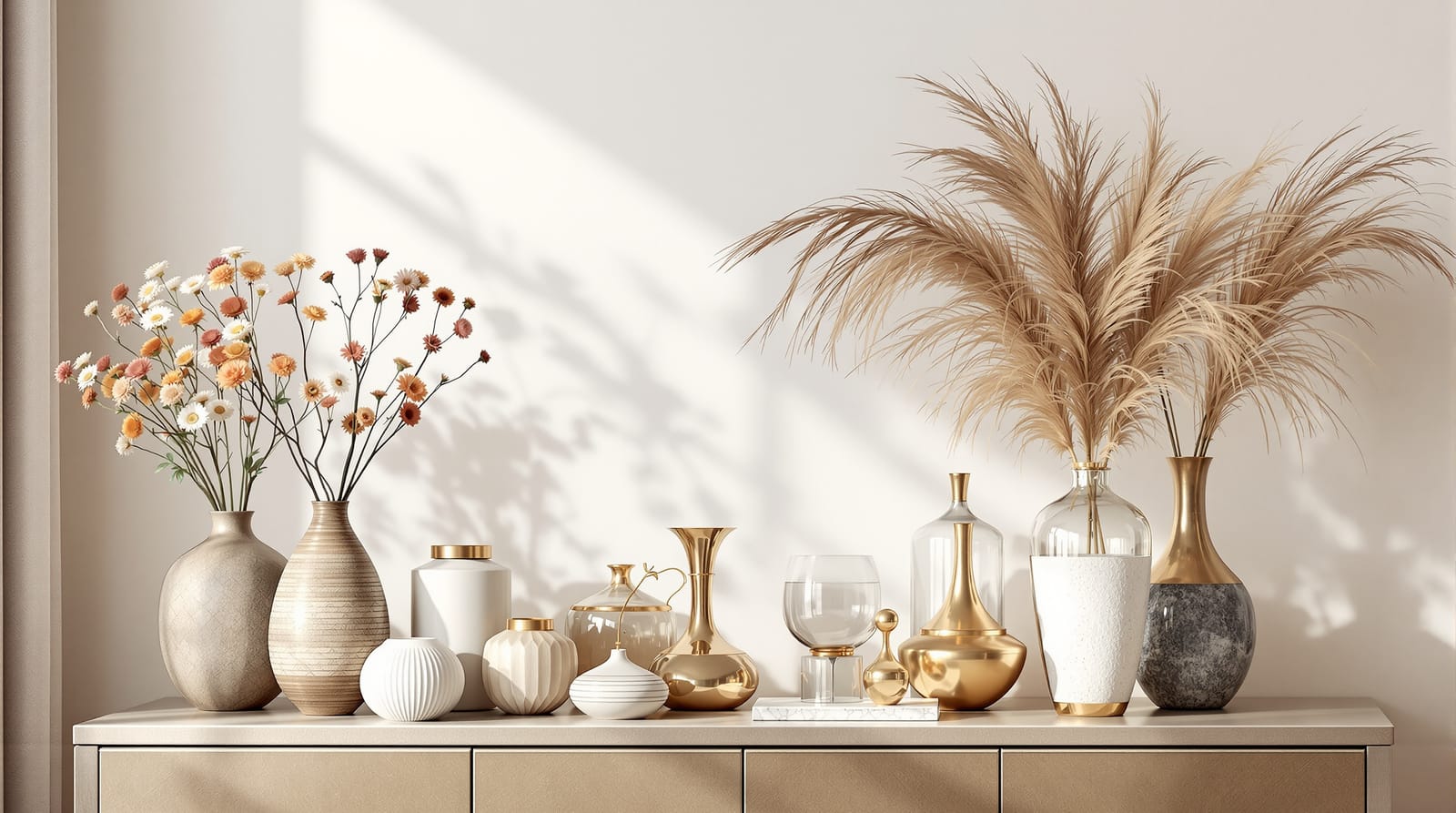
Vases & Floral Arrangements — A 2026 Decor Guide for Indian Homes
Ceramic, glass, metal & stone vases · Fresh, dried, pampas & faux · How to pair and arrange them
A vase of flowers is the fastest way to make a room feel alive, cared-for and finished. It is the one decor move that changes with the seasons, costs as little or as much as you like, and works in every style of home. But the magic is in the pairing: the right vase makes ordinary stems look styled, and the wrong proportions make even expensive flowers look awkward. This guide covers the four vase materials worth owning, the four kinds of arrangement - fresh, dried, pampas and faux - and the simple rules for putting them together in an Indian home.
Vases vs Planters — a Quick Distinction
A vase holds cut stems, dried botanicals or faux arrangements as decor; a planter holds a living, growing plant in soil. They are styled differently and live in different places. This guide is about vases and arrangements - for living potted greenery, see our guide to Decorative Planters.
Choosing the Right Vase
The vase is half the arrangement. Match its material and shape to the stems and to your room.
Ceramic vases
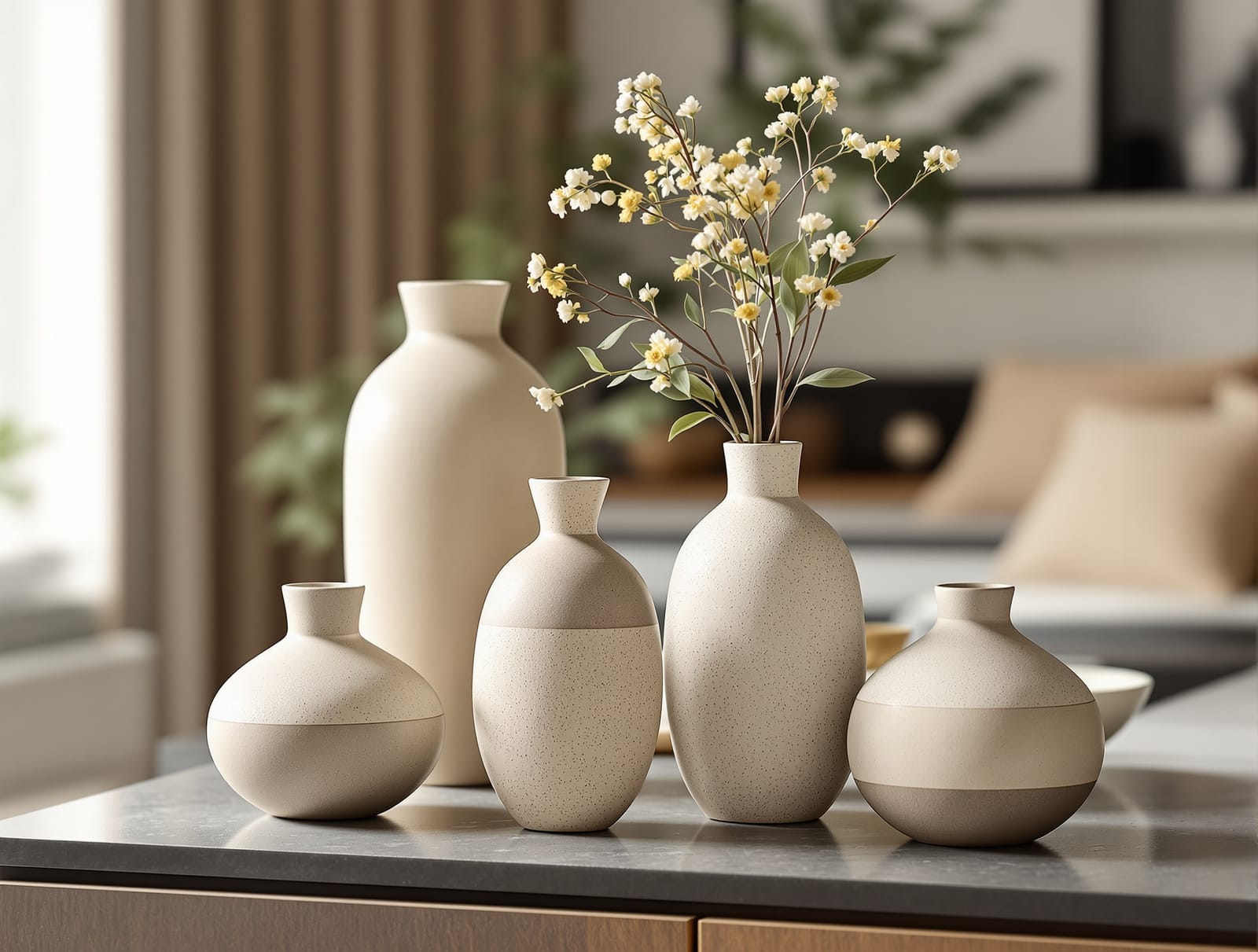
The everyday workhorse - opaque, sturdy and available in every shape, glaze and colour. A matte stoneware vase suits minimal, Japandi and Scandinavian rooms; a glazed or hand-painted one leans traditional or bohemian. Because the body is opaque, ceramic hides stems and murky water, so it forgives a less-than-perfect arrangement. A wide-mouthed ceramic vase is the most useful single piece to own.
Glass vases
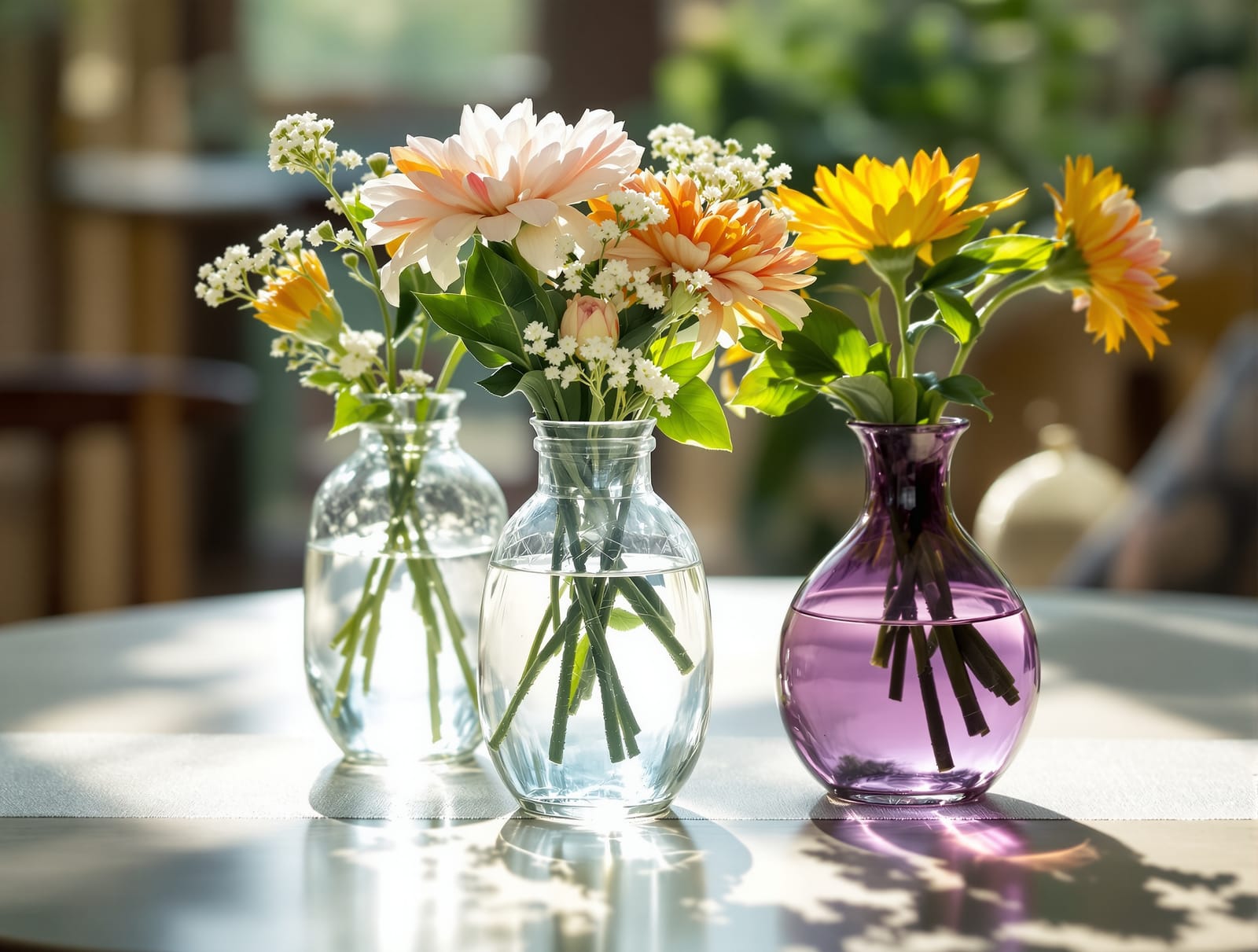
Glass is light, airy and timeless - it disappears so the flowers take centre stage, and it catches daylight beautifully. The trade-off is honesty: clear glass shows the stems and the water, so keep both clean and change the water often (easy in Indian heat, where it clouds fast). Perfect for minimal and contemporary rooms, and for a single dramatic stem or a loose seasonal bunch.
Metal vases
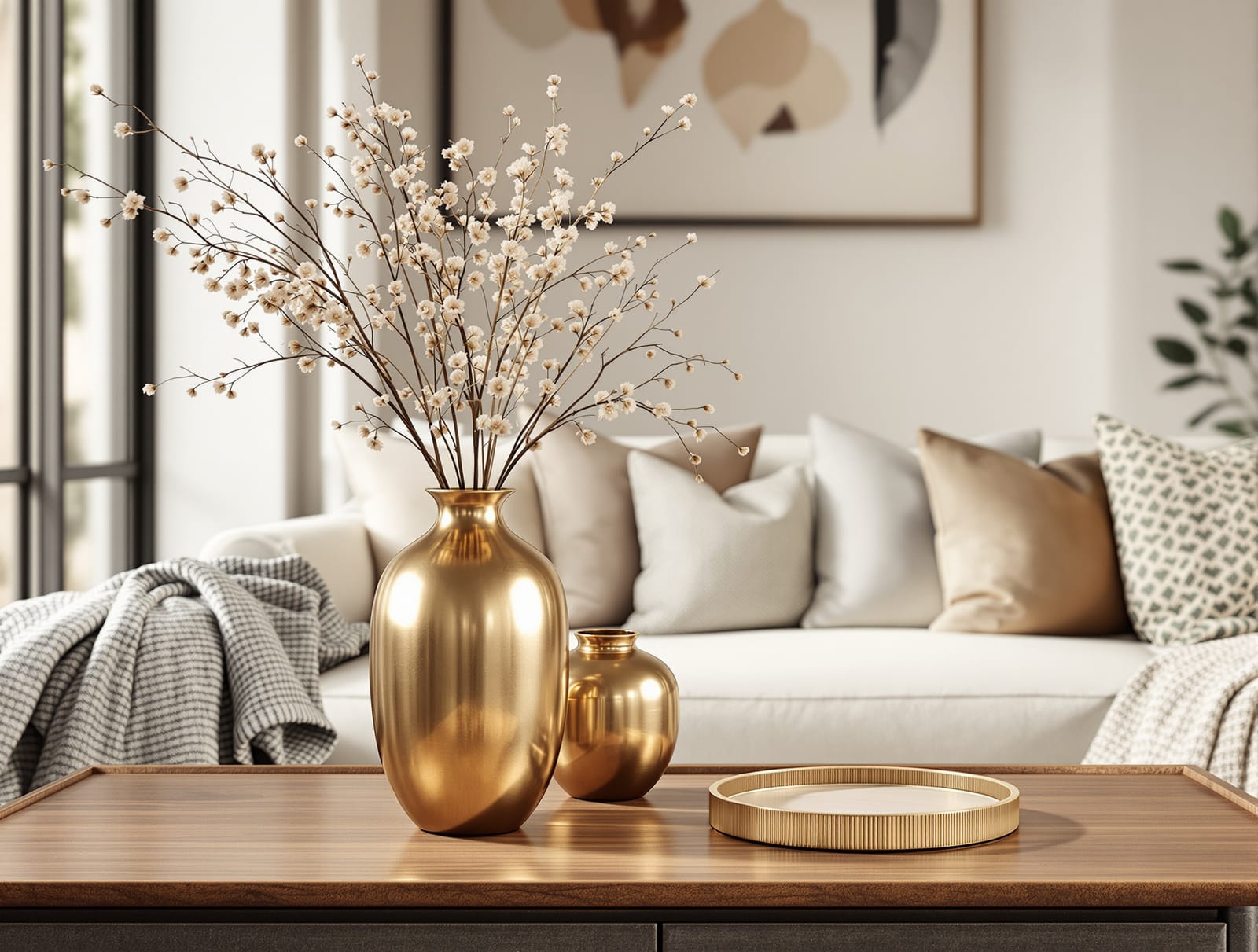
Brass, copper and matte-black metal vases add warmth, shine and a touch of luxe. Brass in particular feels right at home in India and pairs beautifully with traditional, Indo-contemporary and luxury interiors. Metal suits dried arrangements and sturdy stems especially; use a liner or change water promptly to avoid tarnish inside. A pair of brass vases flanking a console reads instantly elegant.
Stone vases
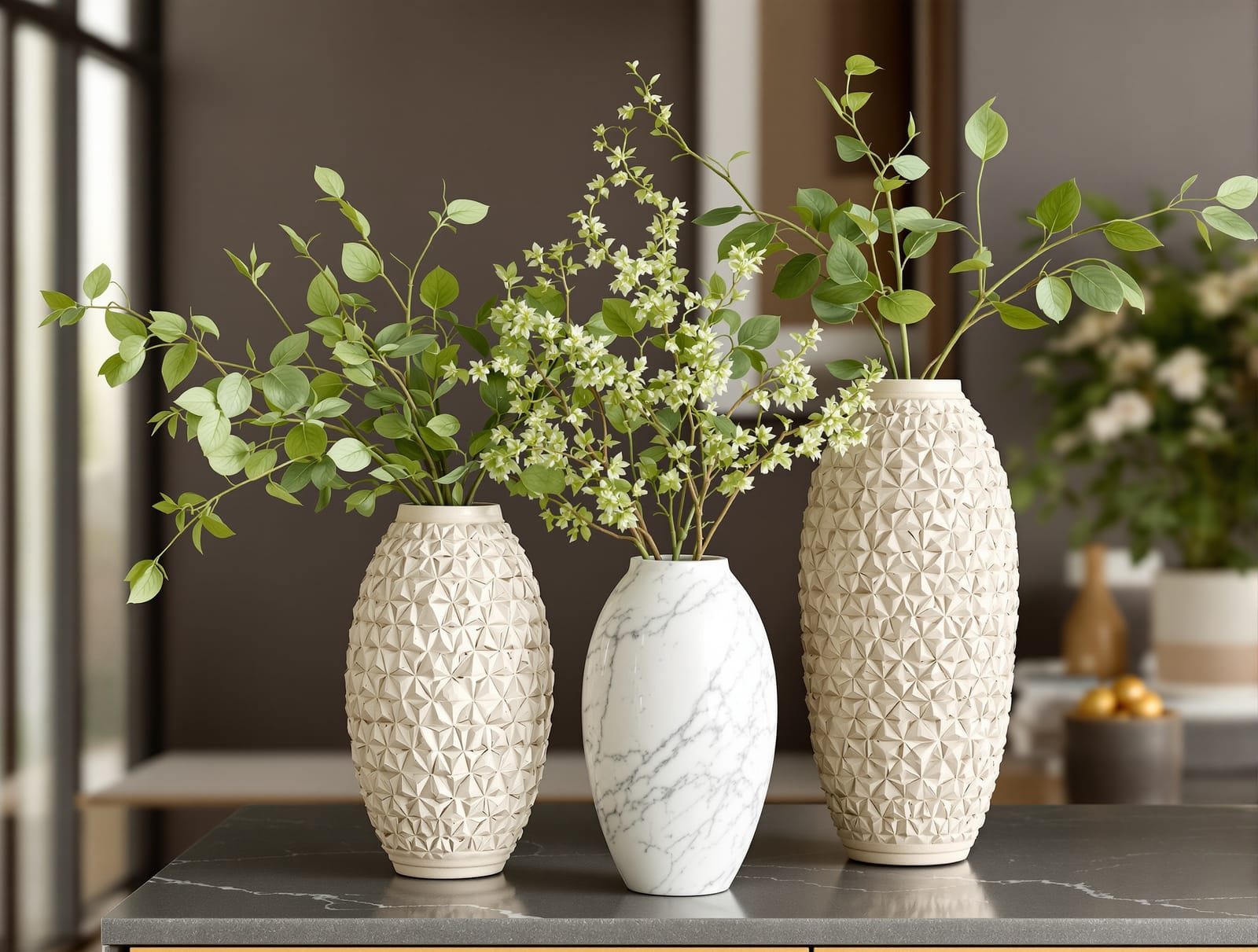
Marble, travertine and carved stone vases are weighty, tactile and quietly luxurious. Their natural texture makes them sculptural objects in their own right - beautiful even with a single branch or empty. They anchor contemporary, wabi-sabi and luxury rooms. They are heavy, so place them where they will not be knocked, and they pair best with minimal, architectural stems.
What to Put in Them
Fresh flower arrangements
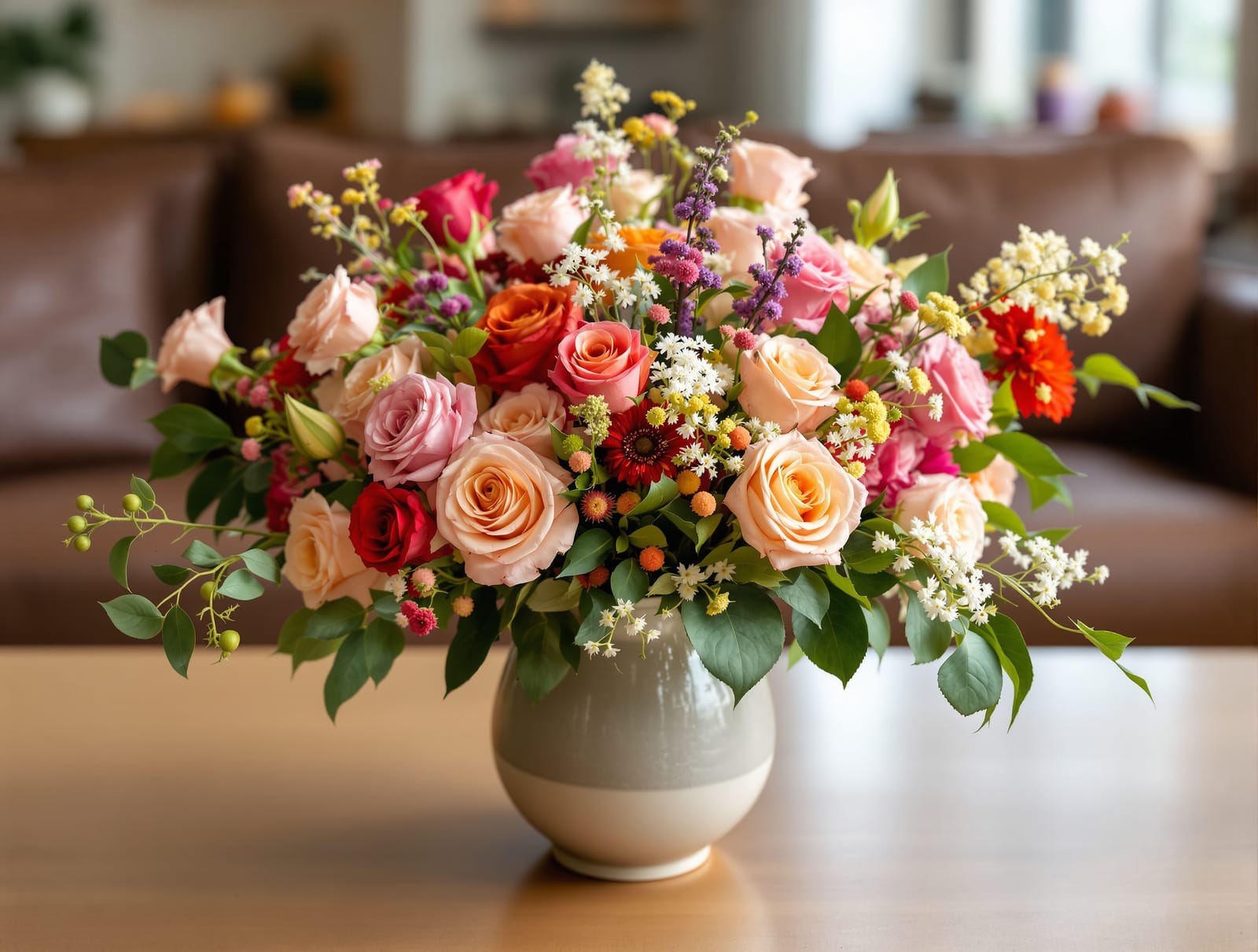
Nothing beats the life and fragrance of fresh flowers. Buy seasonal and local - it is cheaper, lasts longer and looks more natural than imported blooms. In the Indian heat, condition stems by cutting them at an angle and standing them in clean water, keep arrangements out of direct sun, and refresh the water every day or two. Hardy choices like chrysanthemums, tuberose, lilies, marigold and gerbera last well.
Dried flowers
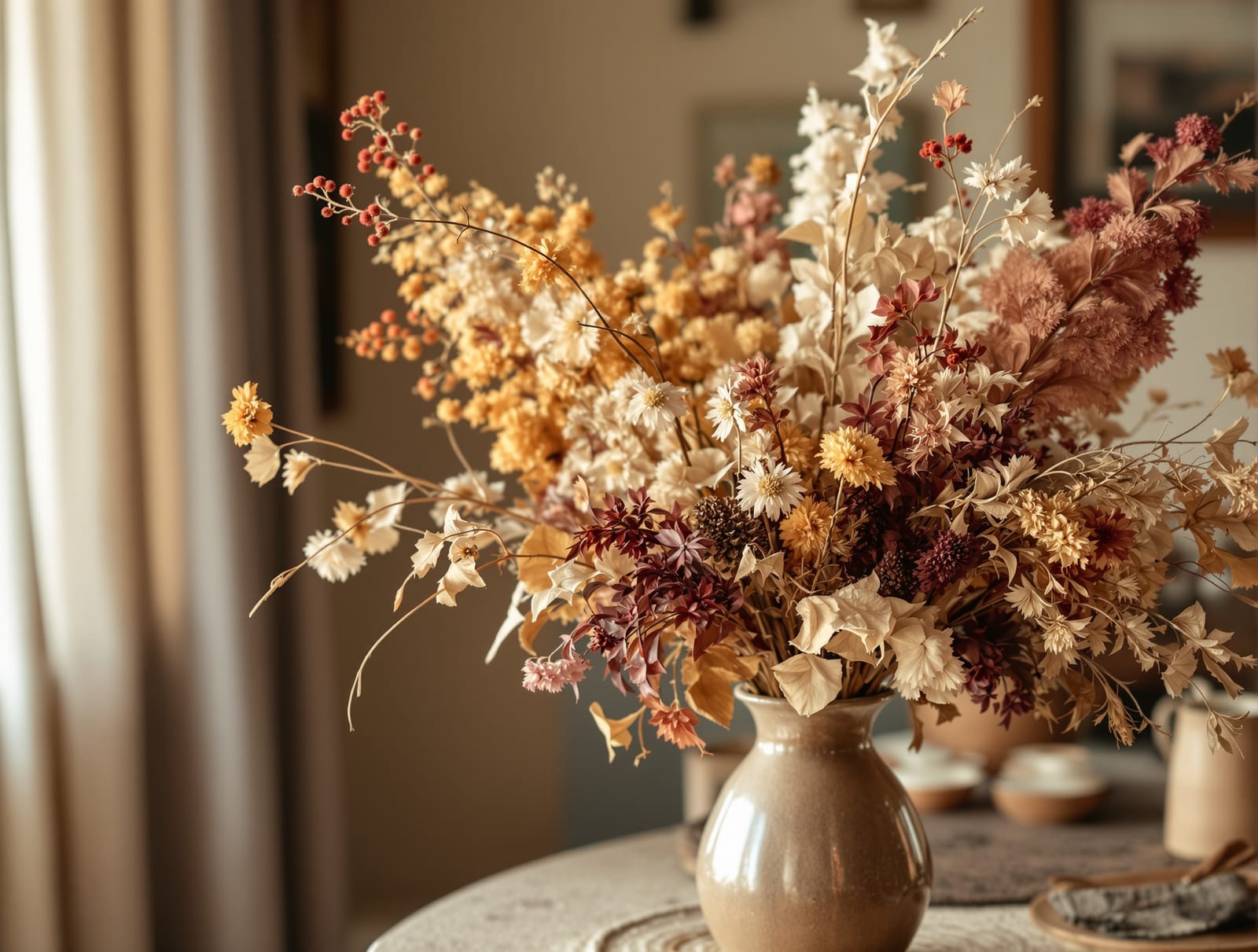
Dried flowers and seed heads give you the organic shape of flowers with none of the upkeep - they last months, need no water, and bring warm, muted, earthy tones. They suit modern, boho and minimal rooms and are ideal for spots too dark or too busy for fresh stems. The one rule: dust them gently now and then, and replace them when they fade or look tired rather than letting them gather grime.
Pampas grass
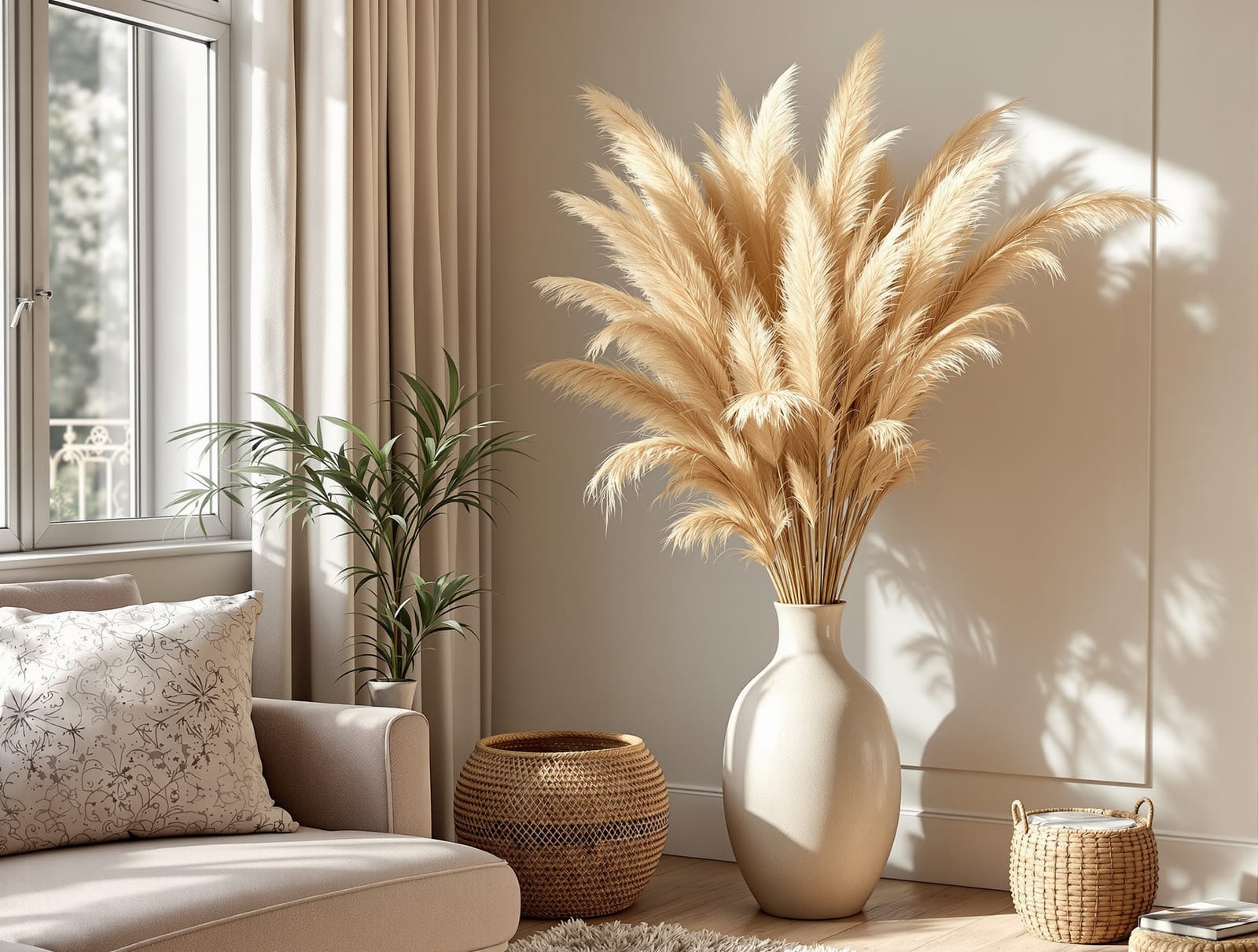
The soft, feathery plume that defined a decade of boho interiors - and still works in moderation. A tall bunch of pampas in a large floor vase fills an empty corner and adds height and texture with zero maintenance. Use it sparingly (a little goes a long way), and give it a quick shake outdoors or a light hairspray to reduce shedding, which is its main drawback indoors.
Artificial floral installations
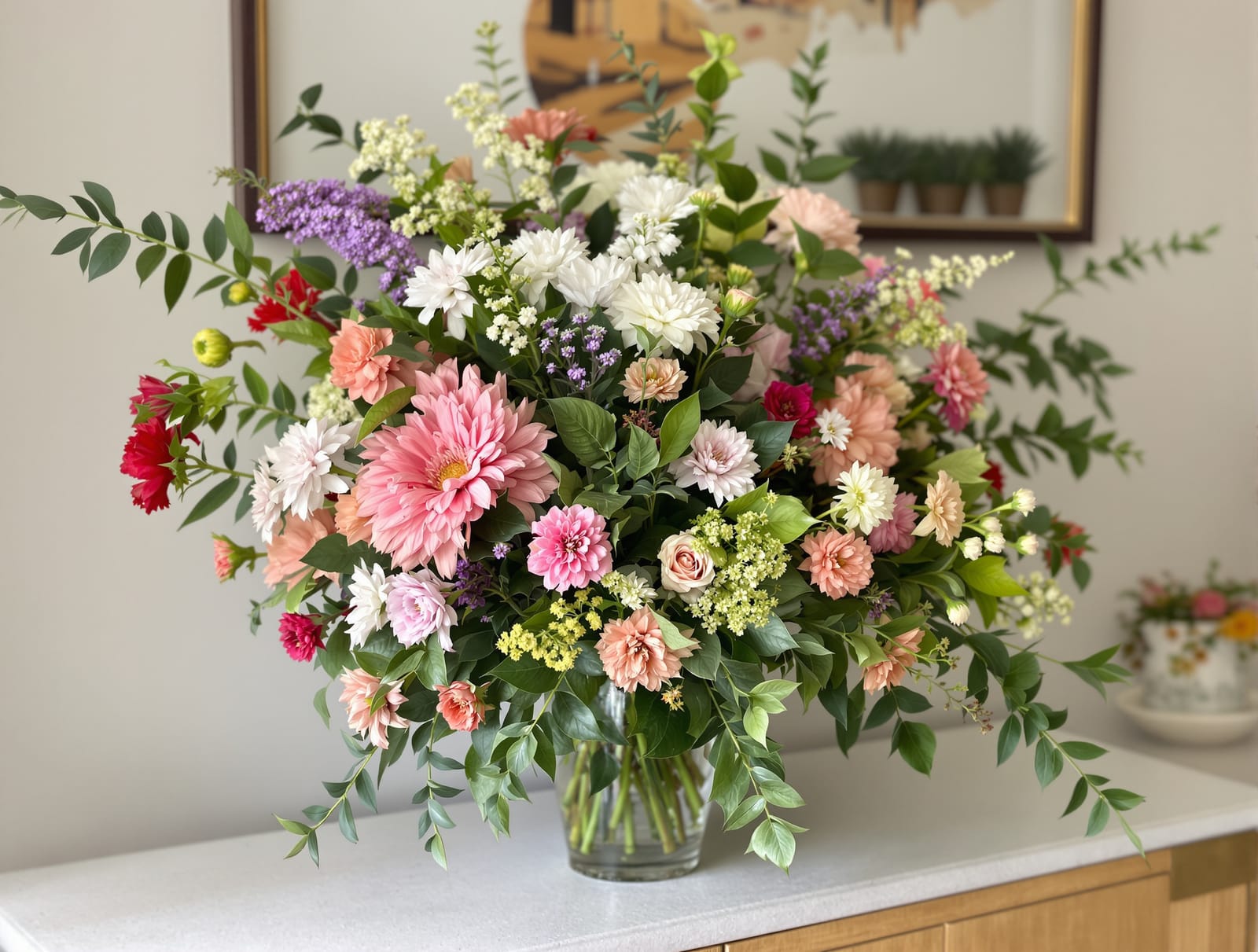
Faux flowers have come a long way - good-quality silk and real-touch stems look convincing and are a sensible choice for high shelves, dim corners, holiday homes and anyone who travels. Buy the best quality you can (cheap plastic looks cheap), keep the arrangement realistic in colour and shape, and dust regularly. The giveaway with faux is always dust and over-perfect symmetry, so style it a little loose and keep it clean.
Arranging Like a Pro
A few rules turn a fistful of stems into a styled arrangement:
- Proportion: the arrangement should be roughly one-and-a-half to two times the height of the vase, or as wide as the vase is tall. Too short looks stunted; too tall topples.
- Odd numbers and loose shapes: group stems in threes and fives, and let them fan naturally rather than forcing a tight dome.
- Thriller, filler, spiller: one tall focal stem, soft filler flowers around it, and something that trails or drapes over the rim.
- A single stem is enough: in a minimal room, one dramatic branch or lily in a beautiful vase beats a busy bunch.
- Vary heights when grouping vases: cluster three vases of different heights rather than lining up matching ones.
Where to Place Them
Vases earn their keep on the entryway console (the first thing guests see), the coffee table as part of a styled vignette, the dining table as a low centrepiece, a mantel or shelf, and the bedside. Tall floor vases with pampas or branches fill awkward empty corners. Wherever they go, give them light and a backdrop that lets the shape read.
Match Vases to Your Style
Echo your room's larger look - see the same home across styles on our Moodboards, or preview your own room restyled with DesignAI:
- Minimal and Japandi - matte ceramic and clear glass, a single stem or branch.
- Luxury and Traditional - brass and crystal, a lush fresh arrangement.
- Contemporary and wabi-sabi - stone and sculptural ceramic, minimal greenery.
- Bohemian - mixed vases, pampas, dried stems, collected and layered.
Budget — What It Costs in India
| Tier | Typical spend | What you get |
|---|---|---|
| Starter | ₹500 - ₹2,500 | A good ceramic or glass vase, a weekly bunch of seasonal flowers |
| Mid | ₹2,500 - ₹8,000 | A brass or designer vase, a mix of fresh and dried, quality pampas |
| Premium | ₹8,000 - ₹30,000+ | Marble or designer vases, florist arrangements, real-touch faux installations |
Where to Buy in India
- Vases: Nestasia, The White Teak Company, Good Earth, Fabindia, Ellementry, Pure Home + Living, Amazon, and local potters and brass markets.
- Fresh flowers: local florists and flower markets, Ferns N Petals, Interflora, and Ugaoo for stems and plants.
- Dried, pampas and faux: Nestasia, Amazon and specialist decor stores.
Ten Common Mistakes
1. Wrong proportion - flowers too short or too tall for the vase.
2. Overcrowding stems into a tight, unnatural dome.
3. Cloudy, smelly water in a glass vase - change it often in the heat.
4. Dusty faux flowers - the single biggest giveaway that they are fake.
5. Cheap plastic-looking artificial stems instead of good silk or real-touch.
6. A tiny lone vase lost on a large surface - group or go bigger.
7. Letting pampas shed all over the floor - shake it out first.
8. Direct sun wilting fresh flowers within a day.
9. Faux arrangements that are too perfectly symmetrical to be believable.
10. Forgetting to refresh - swap the season's flowers to keep the room alive.
FAQ
How tall should flowers be in a vase?
As a rule of thumb, the arrangement should stand about one-and-a-half to two times the height of the vase, or be roughly as wide as the vase is tall. This proportion looks balanced and keeps the stems stable.
What is the best vase material?
There is no single best - ceramic is the forgiving everyday choice, glass is timeless and lets flowers shine, brass and metal add warmth and luxe, and stone is sculptural and weighty. Owning one of each in different heights covers almost every arrangement.
How do I keep fresh flowers alive longer in Indian heat?
Cut the stems at an angle, use clean water and change it every day or two, keep the vase out of direct sun and away from ripening fruit, and remove any leaves below the waterline. Buying hardy, seasonal, locally grown flowers also helps a lot.
Are artificial flowers a good idea?
Yes, if you buy good-quality silk or real-touch stems, keep the arrangement realistic and loose, and dust it regularly. Faux is ideal for high shelves, dark corners, holiday homes and frequent travellers. Cheap plastic flowers and dust are what make faux look fake.
How do I style pampas grass without it looking dated?
Use it sparingly - one bunch in a tall vase in a corner, not all over the house - in a neutral, undyed tone, and pair it with simple modern furniture. Shake out loose seeds outdoors and a light mist of hairspray reduces shedding.
Do dried flowers last forever?
They last many months but not forever - they fade, gather dust and grow brittle over time. Dust them gently, keep them out of damp, and replace the arrangement when it starts to look tired rather than letting it linger.
Buy one good vase in each material, learn the proportion rule, and let the season decide the flowers - that is all it takes to keep a room feeling fresh year-round.
Last verified: June 2026 · Next verify: June 2027.
Export this guide
Related Guides — Deep-dive reading
Decorative Mirrors — A 2026 Guide for Indian Homes
Space, light and a focal point in one move · Full-height to Venetian · Where to place them and why
Design StylesBohemian Interiors — A 2026 Eclectic Style Guide for Indian Homes
Collected, layered, alive · Rust and jewel tones · Curated eclecticism, never clutter
Design StylesLuxury & Statement Lighting: Drama, Sculpture & Scale (2026)
How to design lighting that actually feels luxurious in an Indian home — layered scenes, deep shadow-and-highlight contrast, hidden sources and premium materials — and how to place one sculptural statement fixture as the jewel of a room without over-lighting the whole thing.
LightingRelated Tools — Try Free
Design Style Finder Quiz
Answer 10 visual questions to discover your Indian interior style profile with materials and colours.
Interactive QuizFurniture Layout Designer
Smart furniture layouts by flat type (1BHK–4BHK) and design style like Japandi or Contemporary Indian.
Layout DesignerInterior Budget Allocation Map
How ₹5L / ₹10L / ₹20L budgets should be distributed across rooms with visual charts and tier breakdown.
Reference Guide