
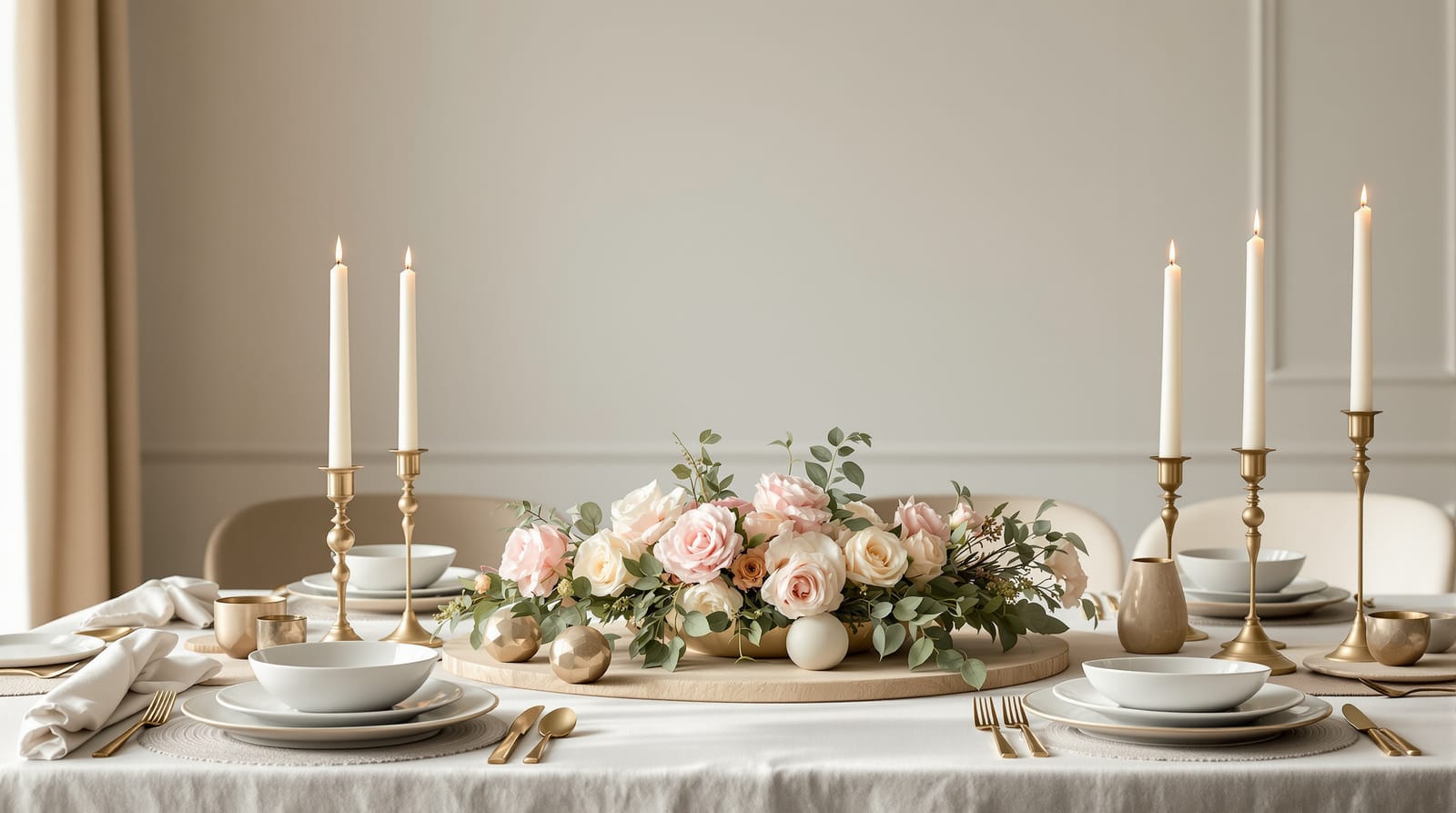
Dining Table Decor — A 2026 Styling Guide for Indian Homes
Centrepieces, florals, bowls & candlestands · Everyday to festive, kept low for conversation
The dining table is where an Indian home actually gathers - for everyday meals, for guests, for the long festive lunches that run all afternoon. How you dress that table sets the tone before a single dish arrives. And unlike most decor, dining-table styling is wonderfully flexible: a low, simple centrepiece for a Tuesday dinner, a fully dressed table for Diwali or a celebration. This guide covers the four elements that do the work - and the one rule that matters most: keep it low enough to talk across.
Everyday vs Occasion Styling
There are really two modes, and good dining tables switch between them easily.
Everyday is restraint: a single low runner or a small bowl of fruit, maybe one short vase. It should never get in the way of dinner or feel like something to clear away every night.
Occasion is layering: a fuller centrepiece, fresh flowers, candlestands, cloth napkins and a runner. This is the table for guests, festivals and celebrations. The trick is to build up from the everyday base rather than starting from scratch each time.
The Four Dining-Table Essentials
Centerpieces
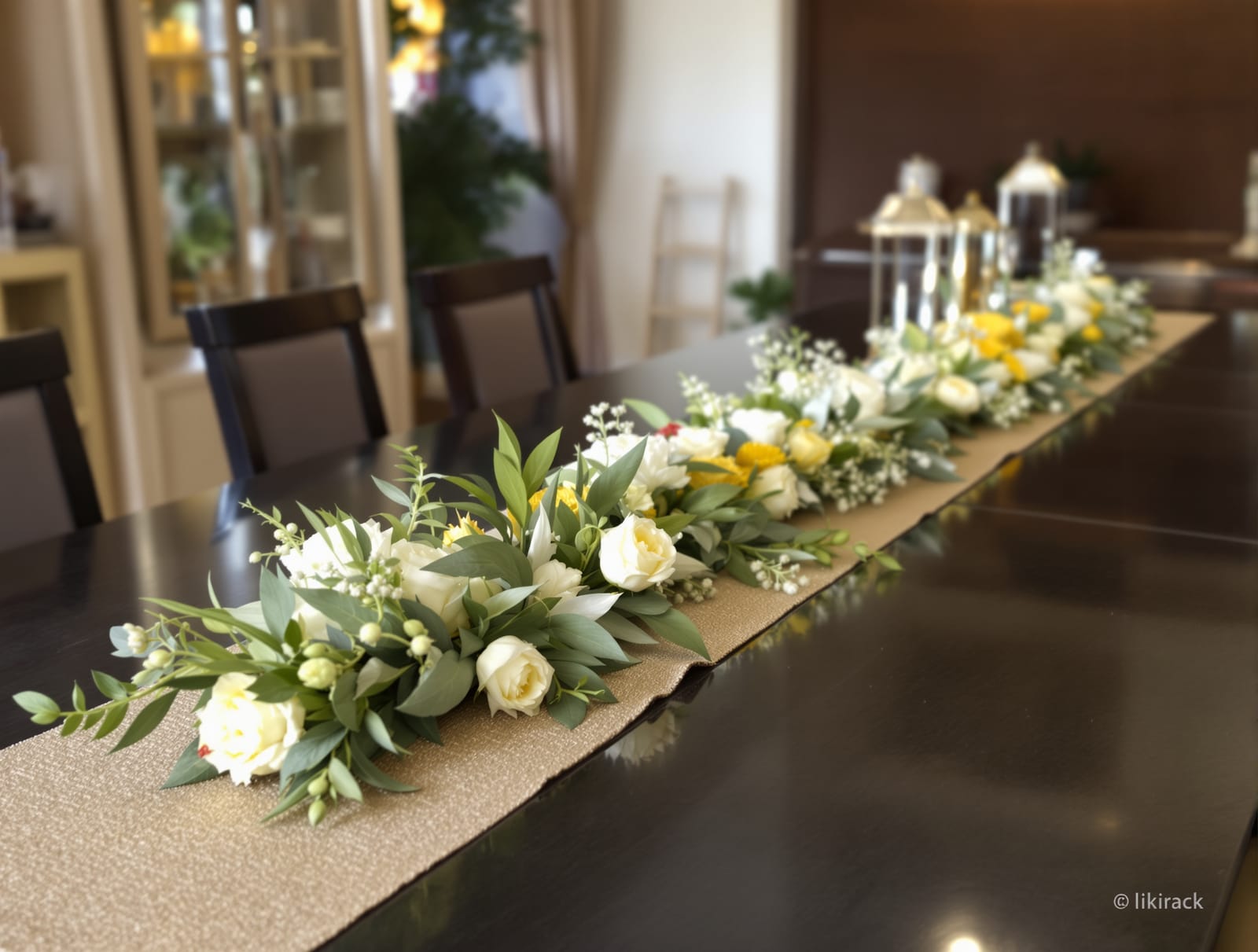
The centrepiece is the anchor. On a rectangular table, a long low arrangement - a runner of foliage, a row of small vases, or a tray of candles - works better than a single tall object. On a round table, one central piece is right. The golden rule in Indian homes: keep it low and keep it movable, because the table also has to hold many serving dishes at mealtime.
Floral arrangements
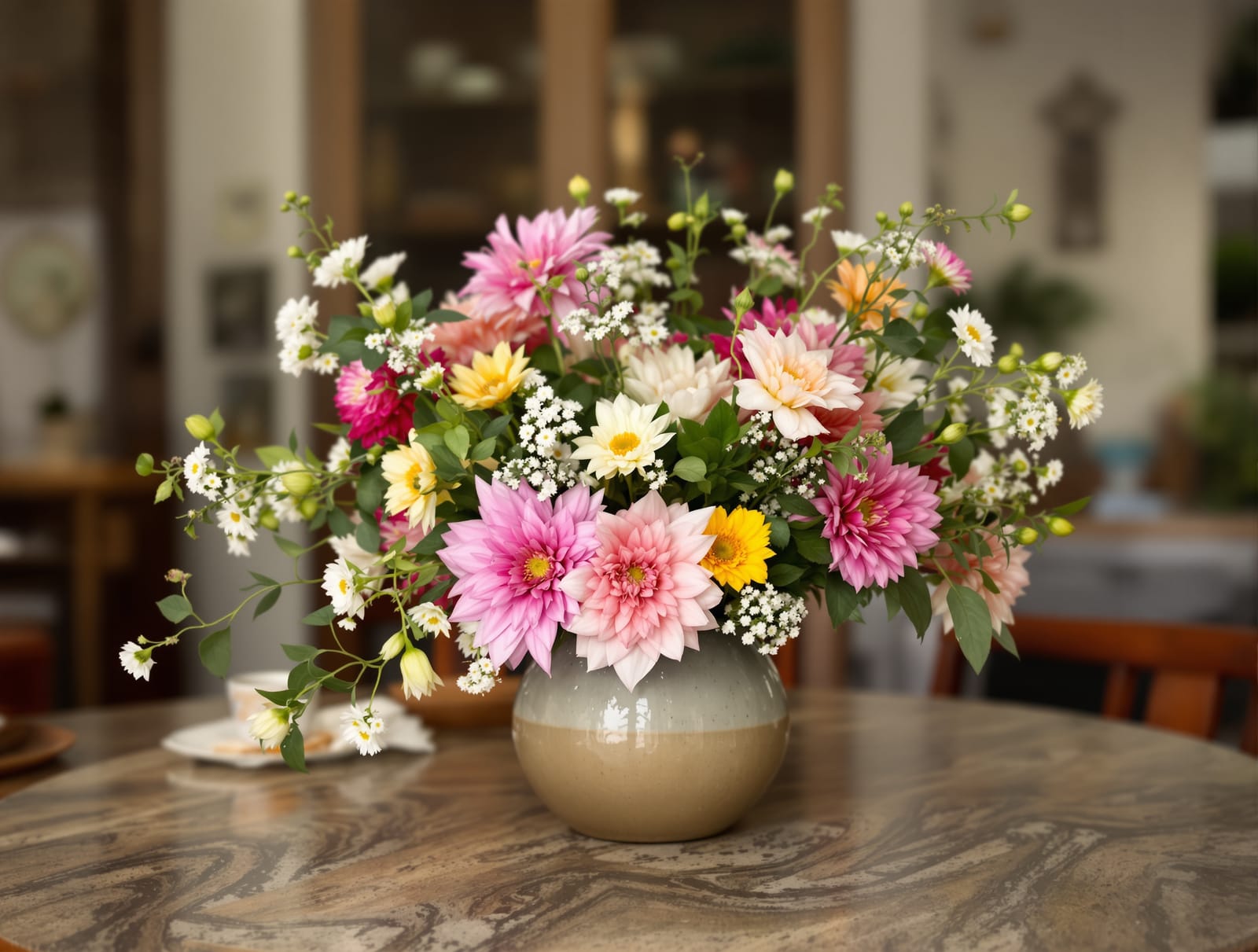
Fresh flowers bring instant life, colour and a little ceremony. Keep them low and loose so guests can see over them, and choose unscented or lightly scented blooms so the fragrance does not fight the food. In Indian heat, hardy choices - chrysanthemums, tuberose, marigold, or simple greenery - last longer; refresh the water daily. A single seasonal swap of flowers re-dresses the whole table.
Decorative bowls
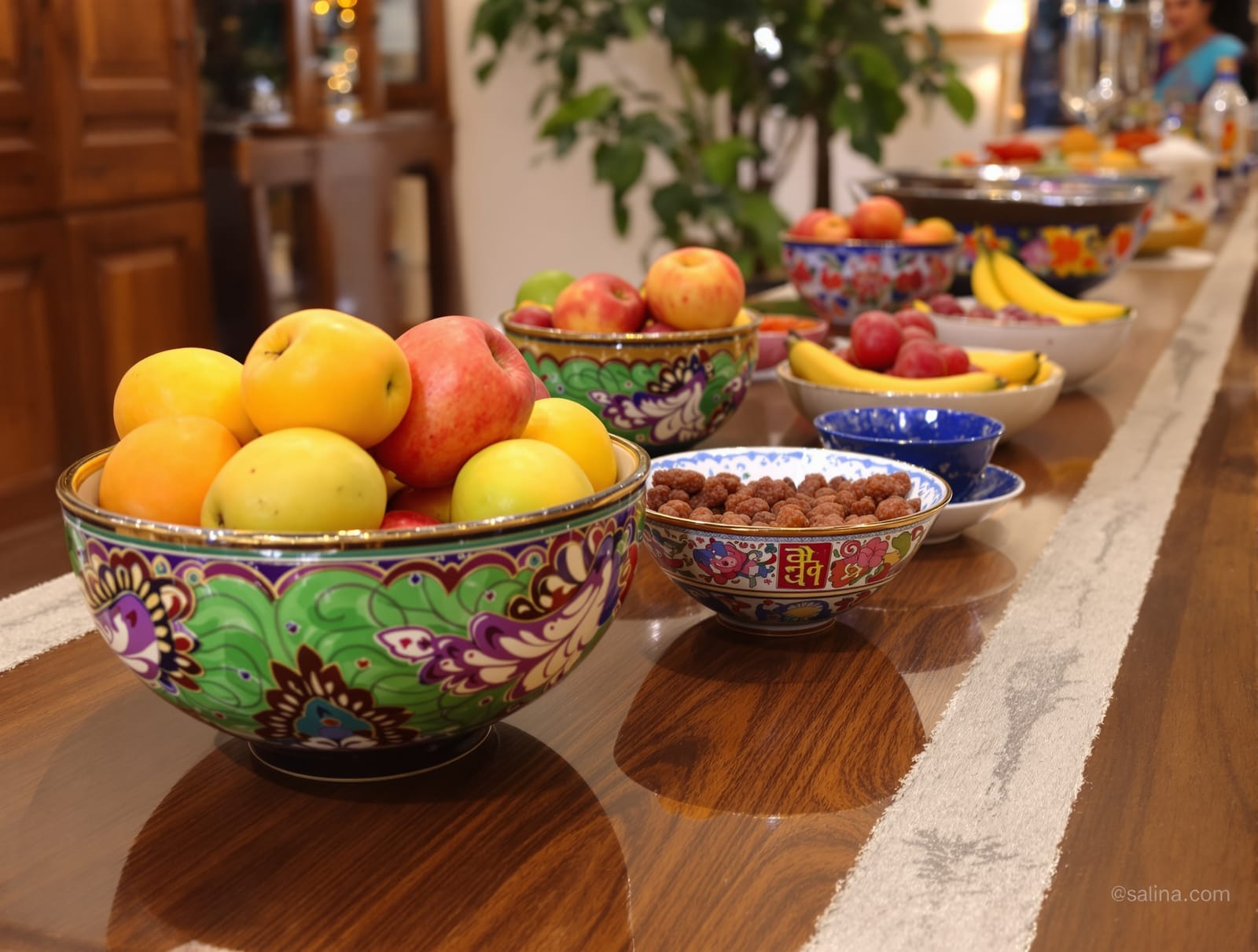
A beautiful bowl is the most practical centrepiece there is. Fill it with seasonal fruit - mosambi, oranges, pomegranates - and it is decor you can eat, perfect for everyday. Empty or filled with decorative spheres, it works for occasions too. Brass, ceramic, glass or marble all suit different styles. A pair of smaller bowls can flank a runner on a long table.
Candlestands
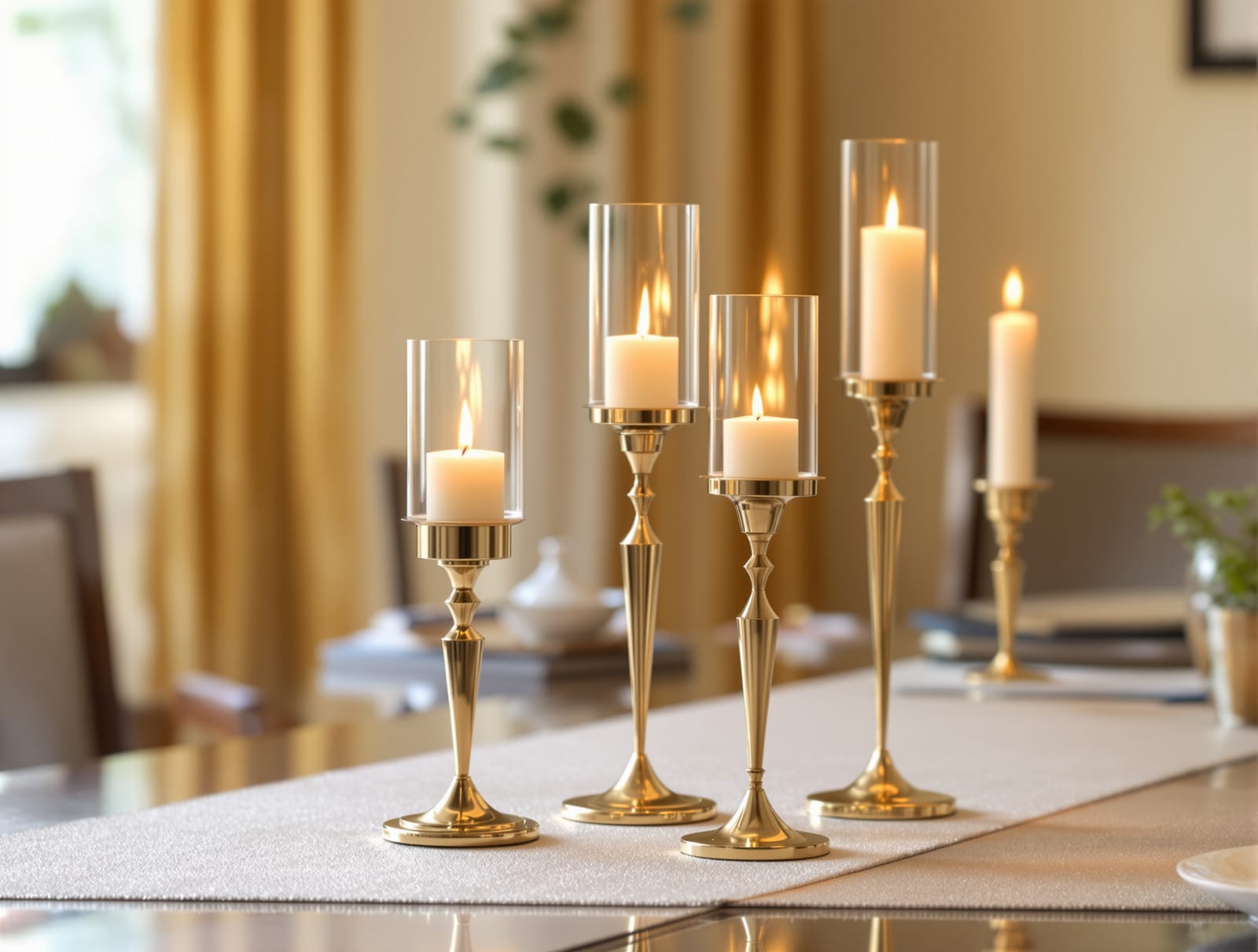
Candlelight transforms a dinner. Tall candlestands lift the light above the food without blocking sightlines, while low tealights and votives add a warm scatter. Brass and glass candlestands suit Indian tables beautifully, and pair naturally with festive diyas. Keep dining candles unscented so they do not interfere with the aroma of the meal, and never leave them burning unattended.
Height, Scale & Proportion
The single most important rule: keep everything below eye level - roughly under 30 cm at the centre - so people can see and talk across the table. The only exception is slim candlestands, which carry light up on a narrow stem without blocking the view.
Then scale to the table: a long table wants a long, low, linear arrangement rather than one lonely object; a round table wants a single central piece. And always leave room for the food - an Indian meal arrives with many dishes, so the decor must share the surface gracefully, not own it.
Festive & Seasonal Tables
This is where the Indian dining table shines. For Diwali, weddings and celebrations: a marigold-and-leaf runner, brass urli bowls floating flowers and tealights, a row of diyas, and metallic or richly coloured linens. For everyday seasons, simply swap the flowers and the bowl's contents. The base stays; the season changes on top.
Match Your Table to Your Style
Echo your room's larger look - explore the same home across styles on our Moodboards:
- Traditional and Indo-contemporary - brass urli, marigold, diyas, a carved runner.
- Contemporary and Minimal - one sculptural bowl or a single low arrangement, restrained.
- Luxury - crystal, tall candlestands, a lush floral centrepiece.
Layer in a runner or cloth napkins from your Decorative Textiles, let the candlestands play off your Decorative Lighting, and when the dining room is done, style the Coffee Table next - or preview a whole styled room in your taste with DesignAI.
Budget — What It Costs in India
Indicative ranges to style one dining table.
| Tier | Typical spend | What you get |
|---|---|---|
| Starter | ₹1,000 - ₹3,000 | A runner, a simple bowl, a few tealights |
| Mid | ₹3,000 - ₹10,000 | A good centrepiece bowl, candlestands, fresh flowers, linens |
| Premium | ₹10,000 - ₹35,000+ | Crystal or designer centrepiece, tall candlestands, a florist arrangement |
Where to Buy in India
- Centrepieces, bowls, candlestands: Good Earth, Fabindia, Nestasia, Ellementry, Address Home and Amazon.
- Flowers: local florists and flower markets for fresh, seasonal stems; refresh for occasions.
- Festive brass and diyas: local markets and emporiums, especially before Diwali.
Ten Common Mistakes
1. A centrepiece so tall guests cannot see or talk across the table.
2. So much decor there is no room left for the serving dishes.
3. Wilting or thirsty flowers - change the water daily in the heat.
4. Strongly scented candles competing with the aroma of the food.
5. A tiny arrangement lost on a long table - scale it up and out.
6. Permanent, immovable decor that gets in the way of everyday meals.
7. Clashing too many materials and colours at once.
8. Forgetting the table also needs to function - leave clear zones.
9. Leaving candles burning unattended around children.
10. Never changing it - a seasonal flower swap keeps the table alive.
FAQ
How do I decorate a dining table?
Anchor it with a low centrepiece - a runner, a bowl of fruit or a small floral arrangement - keep everything below eye level so people can talk across, add candlestands for warmth, and leave plenty of room for the serving dishes. Build it up for occasions and pare it back for everyday.
How tall should a dining table centerpiece be?
Keep the main centrepiece below about 30 cm, or roughly below seated eye level, so it never blocks conversation. The only exception is slim candlestands, which lift light up on a narrow stem without obstructing the view across the table.
What are good everyday dining table centerpiece ideas?
A bowl of seasonal fruit, a simple low runner of greenery, or a single small vase of flowers. Everyday styling should be effortless to live with and easy to move aside at mealtime.
How do I decorate a dining table for Diwali?
Use a marigold-and-leaf runner, brass urli bowls with floating flowers and tealights, a row of diyas down the centre, and richly coloured or metallic linens. Keep the candles and diyas low and safely placed.
What flowers work best for a dining table centerpiece?
Low, loose, lightly scented or unscented blooms - chrysanthemums, tuberose, marigold, lilies or simple foliage. Avoid tall arrangements that block sightlines and heavily perfumed flowers that compete with the food.
How do I style a small dining table?
Keep it to one element - a single bowl or a compact low arrangement in the centre - and leave the rest clear for plates and dishes. On a small round table, one central piece reads best.
Dress it up for the festival, pare it back for the weekday, and keep it low - that is the whole art of the Indian dining table.
Last verified: June 2026 · Next verify: June 2027.
Export this guide
Related Guides — Deep-dive reading
Vases & Floral Arrangements — A 2026 Decor Guide for Indian Homes
Ceramic, glass, metal & stone vases · Fresh, dried, pampas & faux · How to pair and arrange them
Design StylesCoffee Table Decor — A 2026 Styling Guide for Indian Homes
Books, trays, sculptures, candles & vases · The tray-and-trio formula for an effortless vignette
Design StylesBooks & Intellectual Decor — A 2026 Guide for Indian Homes
Bookshelves, coffee-table books, maps & globes · A home that reads as curious and cultured
Design StylesRelated Tools — Try Free
Before & After Studio
Generate AI before-and-after renders to preview how your redesign could look.
DesignAIDesign Style Finder Quiz
Answer 10 visual questions to discover your Indian interior style profile with materials and colours.
Interactive QuizInterior Budget Allocation Map
How ₹5L / ₹10L / ₹20L budgets should be distributed across rooms with visual charts and tier breakdown.
Reference Guide