
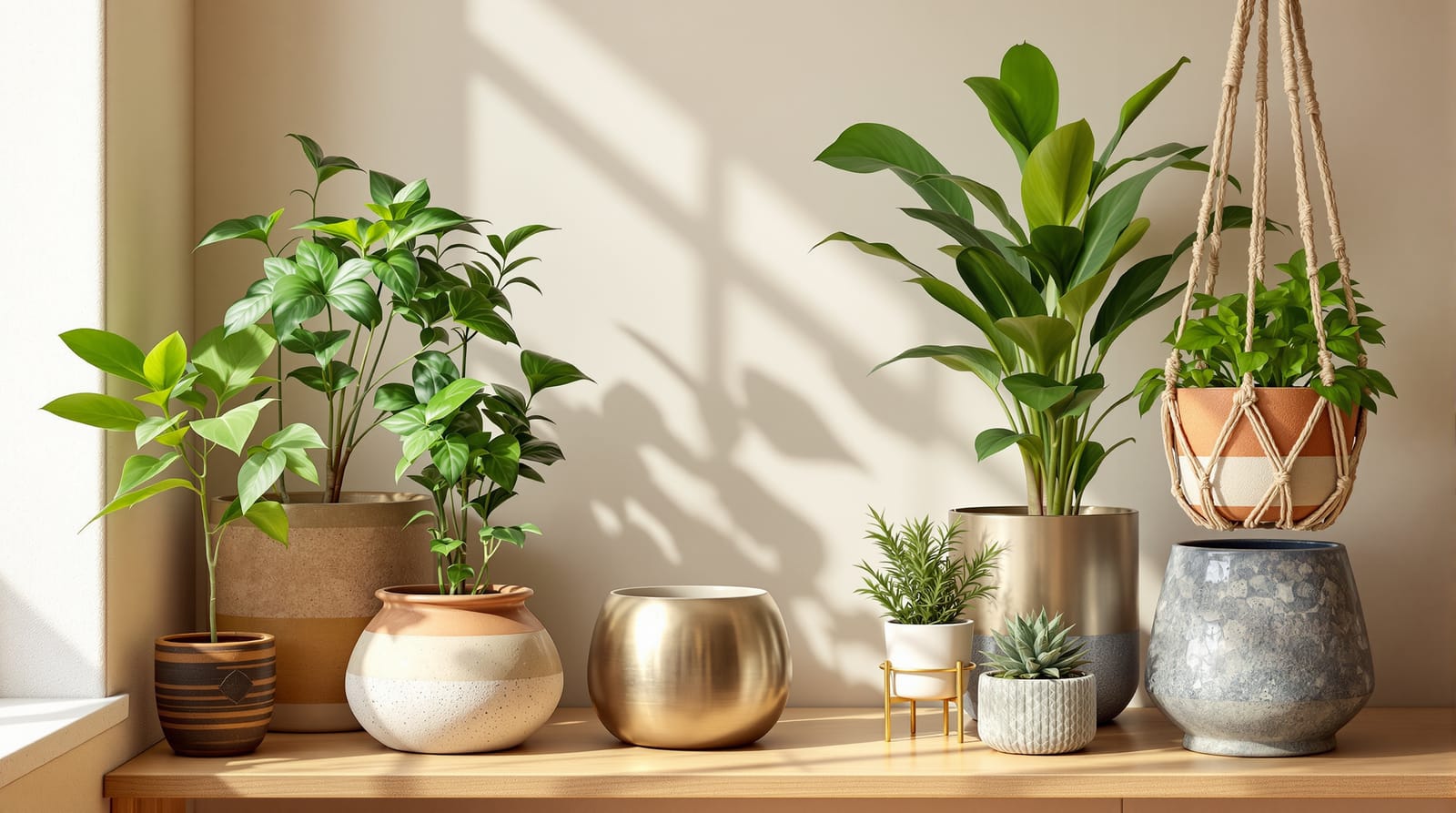
Decorative Planters — A 2026 Guide for Indian Homes
Ceramic, terracotta, stone, metal & hanging · Match the pot to the plant, the room and your style
The pot is half the decor. A healthy plant in a plain nursery grow-bag reads as a chore; the same plant in a hand-thrown ceramic vessel or a weathered terracotta urn reads as a design object — something you chose, placed and styled. In Indian homes in 2026, where balconies are shrinking, indoor greenery is booming, and a single Insta-worthy corner can define a whole room, the planter has quietly become one of the most cost-effective decor decisions you can make. It costs far less than furniture, changes the mood of a space instantly, and ties your greenery into the rest of your interior language. This guide walks through the five planter materials that matter for Indian homes, the drainage details nobody talks about, how to get size and proportion right, and where to actually buy good pots without overpaying.
The Five Planter Materials
There is no single "best" planter — each material has a look, a weight, a price band and a climate behaviour that suits some plants and rooms better than others. Here are the five you will actually choose between.
Ceramic Pots
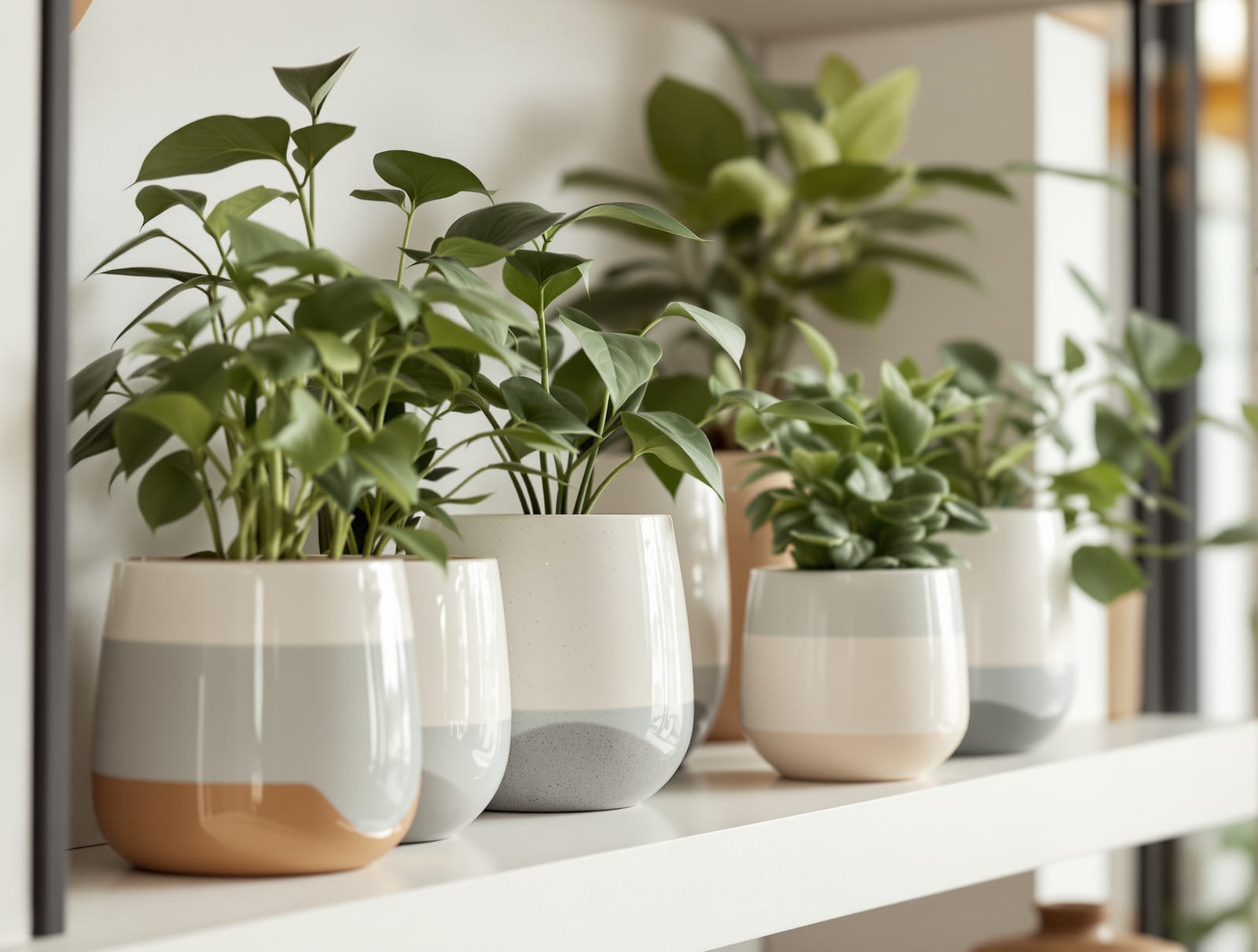
The look: Glazed ceramic is the polished, decorative end of the spectrum — glossy or matte, in colours from chalky off-white to deep cobalt and emerald. It photographs beautifully and reads as "finished," which is why it dominates living-room and styling shots.
Pros: Huge range of colours, glazes and shapes; the glaze seals the surface so it holds moisture longer than bare clay; heavy enough to stop top-heavy plants from toppling; easy to wipe clean.
Cons: Heavier and more fragile than plastic — a knock on a tile floor can chip or crack it. Glazed pots often ship without a drainage hole, and the sealed surface means roots can sit in water if you over-water. Good glazed ceramic is not cheap.
Which plants and rooms: Ideal indoors — living rooms, study shelves, console tables — for slower-drinking plants like snake plant, ZZ, pothos, peace lily and rubber plant. The moisture-holding glaze suits people who tend to under-water.
Indoor vs outdoor: Best kept indoors or on covered balconies. Cheap low-fired ceramic can craze or crack in harsh sun and monsoon freeze-thaw is irrelevant here, but repeated soaking and drying does stress poorly fired pieces.
India note: Khurja in Uttar Pradesh is the country's ceramic-pottery hub and the source behind a lot of what you see online; buying Khurja stock directly is far cheaper than branded retail. Check for a pre-drilled hole or be ready to use the cachepot method (below). The weight is a genuine consideration for upper-floor flats and railing pots.
Terracotta Pots
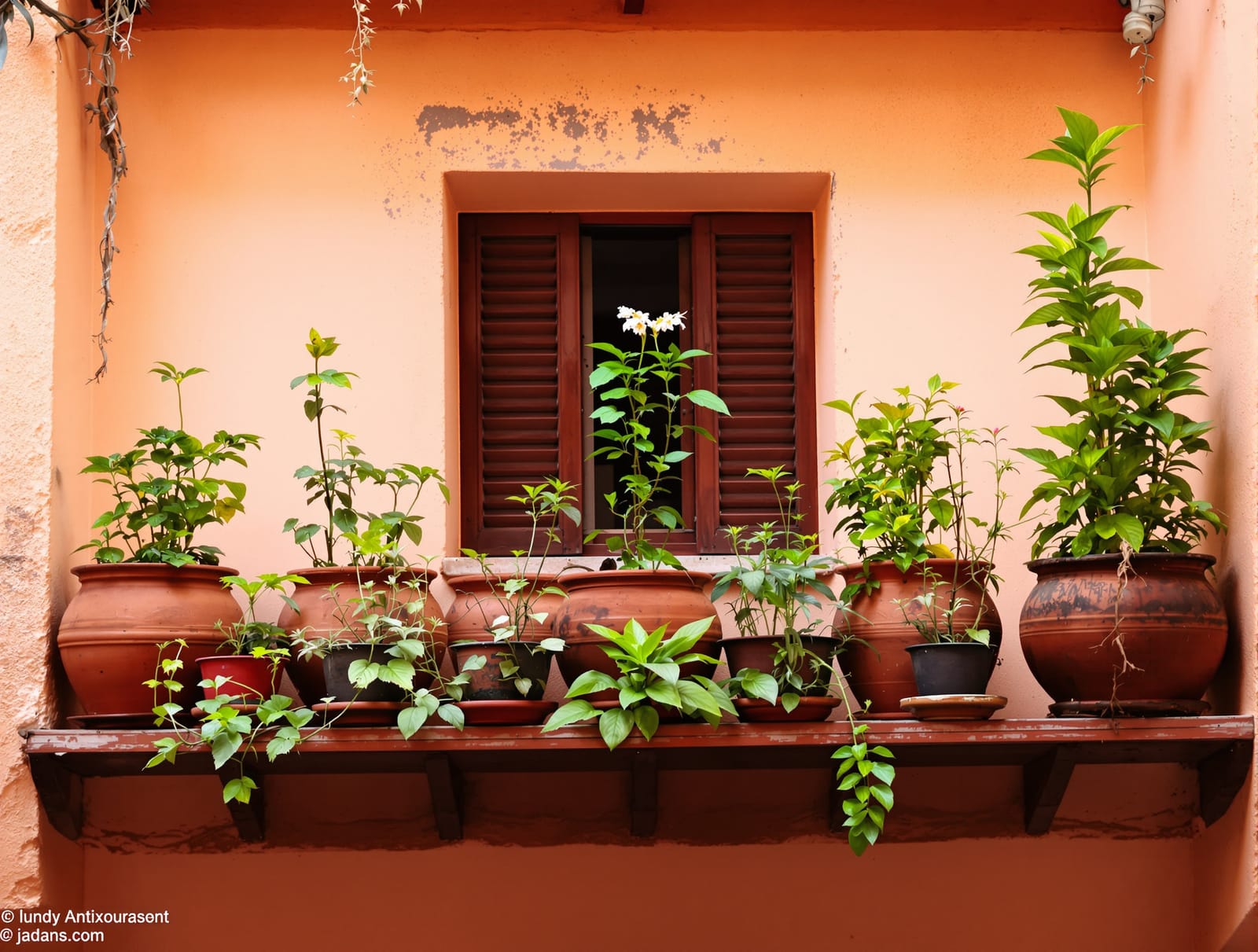
The look: The warm, earthy, unglazed orange-brown of fired clay — the most traditional, most Indian planter of all, made by kumhars (local potters) in every town. It ages gracefully, picking up a chalky patina that many people love.
Pros: Cheap, widely available, and the porous walls breathe — they let air reach the roots and let excess water evaporate, which makes terracotta very forgiving for over-waterers and excellent for plants that hate soggy feet. Almost always comes with a drainage hole.
Cons: That same porosity means the soil dries out fast, so you water more often, especially in summer. Unglazed clay is brittle, develops white salt marks (efflorescence), and a frost-free India still sees pots crack from rough handling or being dropped.
Which plants and rooms: The natural home for succulents, cacti, herbs, geraniums, adenium and most Mediterranean or desert plants. Perfect on balconies, terraces, window sills and in any traditional, rustic or coastal interior.
Indoor vs outdoor: Brilliant outdoors. Indoors it works, but the porous base can sweat moisture onto furniture and the fast drying means more watering — always use a saucer.
India note: Terracotta is the most heat-honest material for Indian summers — the evaporative cooling through the walls keeps roots a few degrees cooler than sealed plastic or metal. The trade-off is water loss, so in peak May–June you may water small terracotta pots daily. Source straight from a local kumhar or a Diwali pottery market for the best price.
Stone Planters
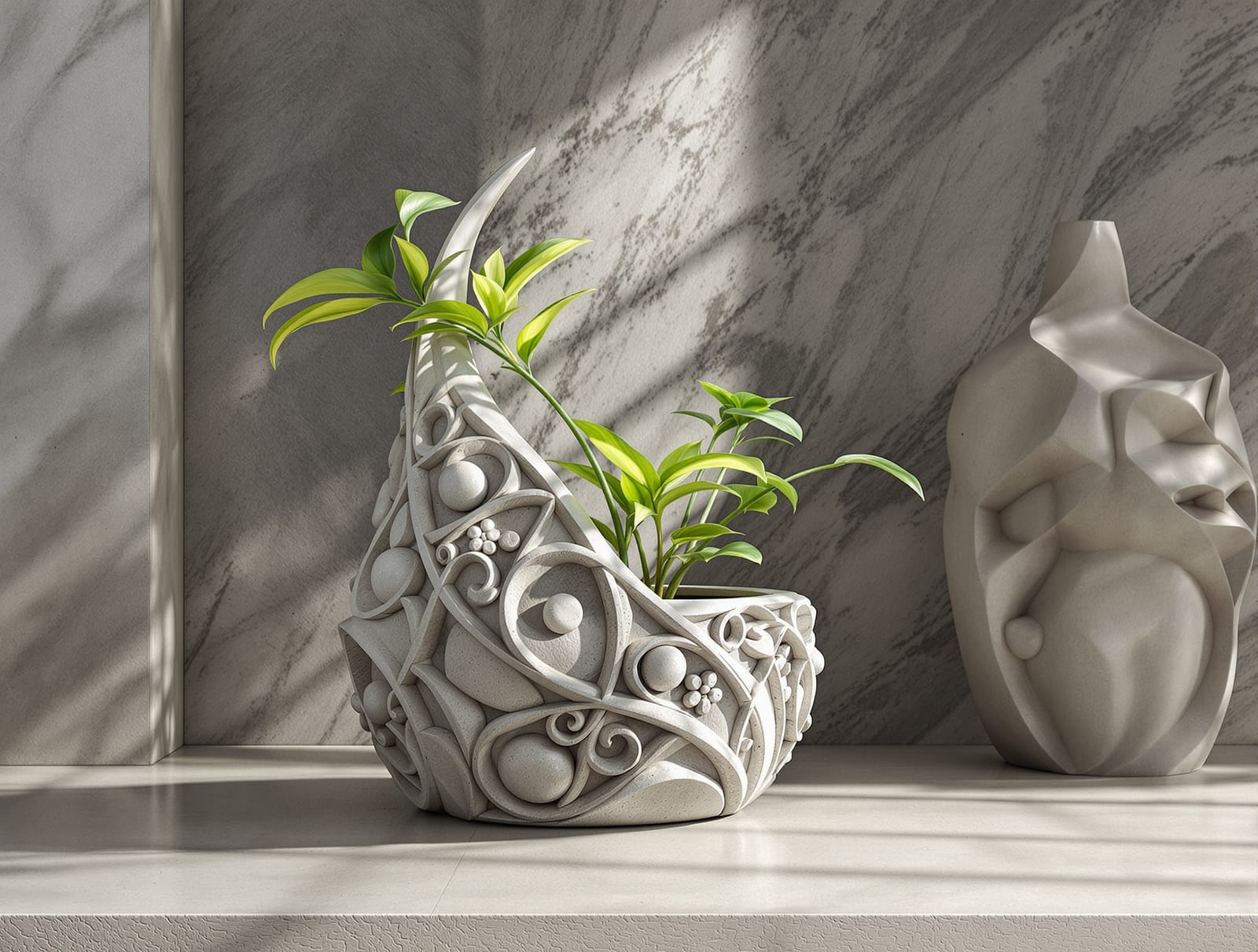
The look: Solid, architectural and permanent — carved sandstone, granite, soapstone or cast "stone-effect" concrete. Stone planters anchor a space and read as luxury or heritage, especially in entryways and courtyards.
Pros: Extremely durable, weatherproof, and so heavy that wind and top-heavy plants will not tip them. They handle full sun and monsoon without complaint, and natural stone develops a beautiful weathered character.
Cons: The weight is the headline problem — a large stone or concrete planter, filled with wet soil, can run into many tens of kilograms and is effectively immovable. Genuine carved stone is expensive, and unsealed stone can leach minerals or hold dampness against an adjacent wall.
Which plants and rooms: Large statement plants — fishtail palm, frangipani (champa), bougainvillea, areca — in courtyards, entrances, terrace gardens and large floor positions. Pairs naturally with traditional, heritage and Indo-contemporary interiors.
Indoor vs outdoor: Primarily outdoor or ground-floor indoor (lobbies, courtyards). Think hard before putting one on a balcony or upper floor.
India note: Rajasthan sandstone and South Indian granite/soapstone are widely carved and sold; "stone-effect" GRC and concrete planters give the look at a fraction of the weight and cost. Crucially — never place a heavy stone planter on a cantilevered balcony or chajja without knowing its load limit. Distribute weight near the structural wall, not the edge.
Metal Planters
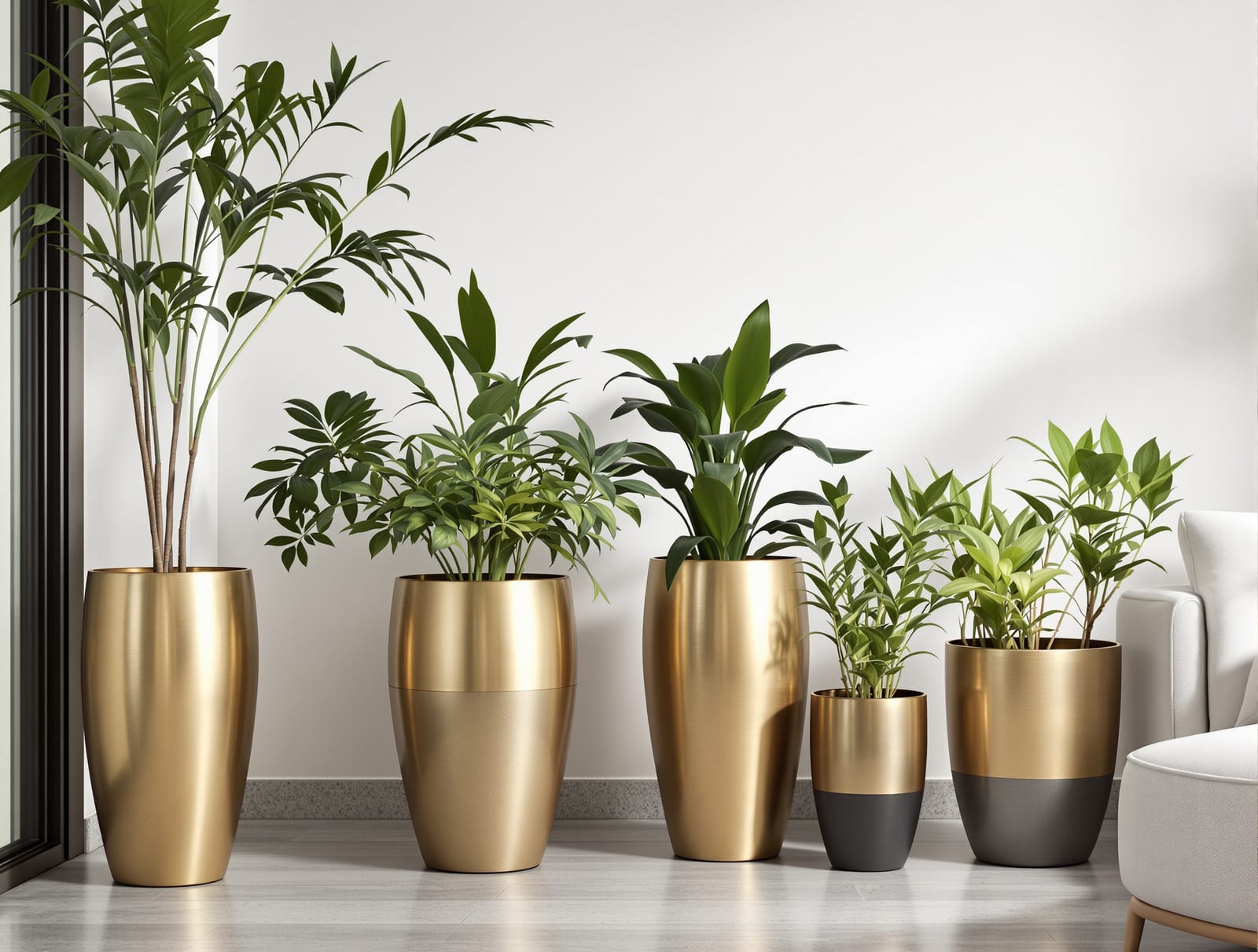
The look: Crisp and contemporary — brushed steel, matte-black powder-coated iron, hammered brass and copper. Metal reads as modern, industrial or, in brass, as warm Indian luxury.
Pros: Lightweight relative to their size, tough, and available in finishes that suit minimal, industrial and luxe schemes alike. Brass and copper bring genuine warmth and an Indian heritage note.
Cons: Metal conducts heat — in direct sun a metal pot can literally cook the roots inside. Bare iron and steel rust, and brass/copper tarnish. Most decorative metal planters have no drainage hole and are really meant as cachepots (outer covers).
Which plants and rooms: Best indoors as a decorative sleeve over a plastic grow-pot — snake plant, dracaena, fiddle-leaf fig, money plant. Black metal suits industrial lofts; brass suits luxury living rooms and pooja-adjacent corners.
Indoor vs outdoor: Keep metal out of direct afternoon sun. Indoors or shaded balconies only; on a hot terrace it becomes a root oven.
India note: In humid coastal cities — Mumbai, Chennai, Kochi, Goa — untreated metal rusts fast during the monsoon. Choose powder-coated, galvanised or genuine brass/copper, and keep a liner between wet soil and the metal. Moradabad (UP) is India's brass city if you want the real thing.
Hanging Planters
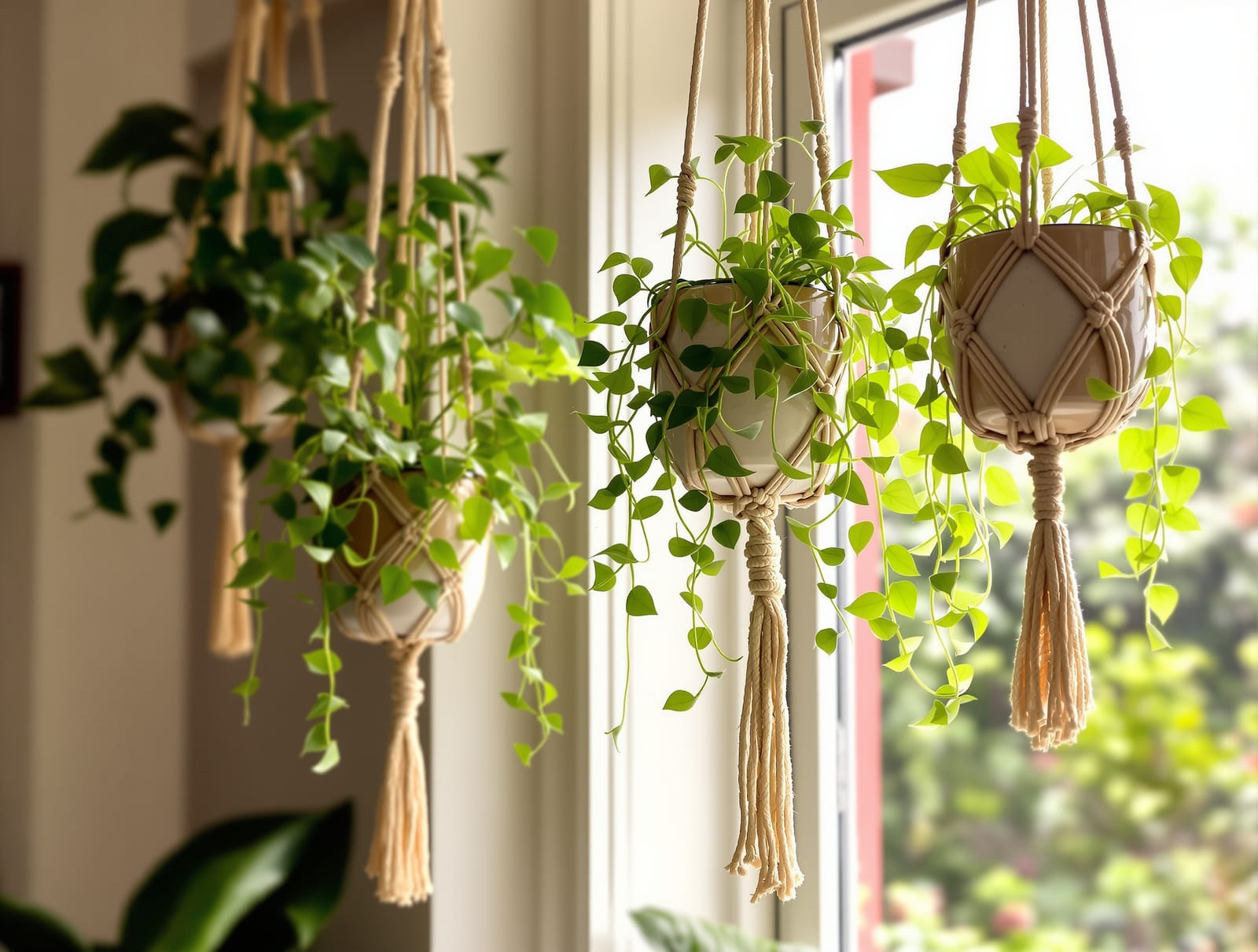
The look: Greenery at eye level and above — macramé cradles, ceramic hanging bowls, metal wall-and-ceiling planters and railing pots. They draw the eye up and are the single best trick for small flats where floor space is precious.
Pros: Use vertical space you were wasting; spectacular for trailing plants; keep greenery out of reach of pets and crawling toddlers; instantly soften a hard balcony or blank wall.
Cons: Watering is awkward and drips — you need a saucer or a take-down routine. The hook or bracket must be rated for the wet weight, and overhead pots can swing or fall in strong pre-monsoon winds.
Which plants and rooms: Trailing and cascading plants — pothos (money plant), string of pearls, spider plant, English ivy, ferns, and herbs in a kitchen window. Perfect for balconies, kitchen windows, and over reading corners.
Indoor vs outdoor: Both, but outdoor hangers must be secured against wind and the bracket checked for rust.
India note: Anchor into the slab or a proper wall plug — not just plaster. On open balconies, take hanging pots down or secure them before the first monsoon squalls; loose pots become projectiles. Self-watering or reservoir hangers cut the drip nuisance considerably.
Quick Comparison
| Material | Look | Best for | Watch-out | Indicative ₹ |
|---|---|---|---|---|
| Ceramic | Polished, colourful, glazed | Indoor styling, slow-drinking plants | Often no drainage hole; heavy & chippable | ₹300–₹3,000+ |
| Terracotta | Warm, earthy, traditional | Succulents, herbs, balconies, sun | Dries fast; white salt marks; brittle | ₹50–₹800 |
| Stone | Solid, architectural, premium | Statement plants, entries, courtyards | Very heavy; costly; needs strong floor | ₹1,500–₹20,000+ |
| Metal | Crisp, modern, brass-luxe | Indoor cachepots, contemporary rooms | Cooks roots in sun; rusts in humidity | ₹400–₹5,000+ |
| Hanging | Vertical, soft, trailing | Small flats, balconies, trailing plants | Drips; bracket load; wind risk | ₹200–₹2,500 |
Prices are broad 2026 indications and vary widely by size, finish and source.
Drainage, Saucers & Liners — the Part Everyone Skips
Almost every dead houseplant in India died of one thing: roots sitting in water. The planter is where you win or lose that battle.
Drainage holes are non-negotiable for plants potted directly into a pot. Excess water must escape, or it pools at the base and rots the roots. Terracotta almost always has a hole; many ceramic and most metal decorative pots do not. If a pot has no hole, either drill one (for ceramic, use a diamond/glass bit slowly with water) or do not plant directly into it.
The cachepot (liner) method is the elegant fix for any beautiful pot without a hole. Keep the plant in its plastic nursery grow-pot — which has holes — and drop that inside the decorative pot. Lift the inner pot out to water, let it drain in the sink, and return it. Your gorgeous metal or glazed ceramic stays dry inside and you get perfect drainage. This is how designers use those photogenic hole-less pots.
Saucers catch the runoff. Indoors, always use one under a holed pot to protect floors and furniture — and empty it; a permanently full saucer recreates the rot problem. Terracotta saucers can also sweat onto wood, so add a cork or felt pad underneath.
Why terracotta breathes: the unglazed walls are porous, so air and water move through the clay. That gives roots oxygen and lets soggy soil dry out — the reason terracotta is so forgiving for over-waterers and so loved for cacti and succulents.
Sealing stone and metal: to protect an adjacent wall from dampness, or to stop a metal pot leaching/rusting against wet soil, line the inside with a plastic liner or seal it. Concrete and porous stone can be sealed with a masonry sealer; metal benefits from a liner so soil never touches bare metal.
Efflorescence — the chalky white crust on terracotta — is harmless mineral salt from your water and fertiliser, drawn out as the pot dries. Scrub it off with a dry brush, or a soft brush and white vinegar, then rinse. It comes back; it is cosmetic.
Rust on metal in humid cities: in Mumbai, Chennai, Kochi and Goa, bare steel and iron pots will spot with rust through the monsoon. Choose powder-coated, galvanised, stainless or solid brass/copper, keep a liner between soil and metal, and dry the pot off after heavy rain.
Size & Proportion
Getting the size right is what separates a styled corner from a sad one.
The ratio rule of thumb: the planter should be roughly one-third the total height of the plant-plus-pot composition — so for a plant standing about 90 cm tall, a pot around 30 cm tall looks balanced. Too small and it looks starved; too large and the plant looks lost and the soil stays wet too long.
Repot up one size at a time. When roots circle the bottom or poke out the drainage hole, move to a pot only 5 cm (2 inches) wider in diameter. Jumping straight to a giant pot surrounds the small root ball with cold wet soil it cannot use, which invites rot. Patience beats ambition.
Height layering: group plants of staggered heights — a tall floor plant, a mid-height table plant, a low trailing one — so the eye travels. Hanging planters and plant stands let you build that vertical rhythm in a small footprint.
Group in odd numbers. Clusters of three or five pots look more natural and balanced than pairs or fours. Vary the heights within the group, repeat one material or colour to tie them together, and let one pot be the clear hero.
Match the Planter to Your Style
The planter should speak the same language as your room. If you are still defining that language, build a Moodboards of the textures and tones you love before you buy.
- Traditional & Coastal: terracotta, unglazed clay, rattan and seagrass baskets. Warm, earthy, handmade.
- Minimal & Japandi: matte ceramic in chalky neutrals — off-white, sand, charcoal, sage. Simple cylinders, no busy patterns.
- Industrial: matte-black powder-coated metal, concrete and raw stone. Hard edges, muted tones.
- Luxury: brass and copper planters, polished stone, deep glossy glazes. Metallics and sheen.
- Bohemian: a deliberate mix — macramé hangers, painted terracotta, mismatched colourful ceramics, woven baskets. The eclecticism is the point.
The fastest way to make a room feel intentional is to repeat one planter material or one colour across most of your pots, then break it with one or two accent pieces.
Styling Room by Room
The pot matters, but so does the plant — the wrong plant in the right pot still dies. Match light and watering to the spot, and see Indoor Plants for what thrives where.
- Living room: the showcase. A large glazed ceramic or stone planter with a statement plant — fiddle-leaf fig, areca palm, rubber plant — beside the sofa or in a bright corner.
- Balcony: terracotta for sun-loving plants and herbs, railing and hanging planters to save floor space. Lightweight where load is a concern; secure everything before the monsoon.
- Bathroom: humidity-lovers like ferns, pothos and peace lily in a small ceramic pot or a hanging planter near the window. Metal cachepots can rust in a steamy bathroom, so choose sealed finishes.
- Kitchen herbs: terracotta or small ceramic pots on a sunny sill, or a hanging rail of mint, curry leaf, coriander and tulsi within arm's reach of the stove.
- Entryway: a pair of stone or large ceramic planters frames a door and signals welcome. Pick a hardy plant that tolerates the in-out light and the occasional missed watering.
Where to Buy in India
You have everything from artisan studios to next-day delivery.
- Online plant-and-pot specialists: Ugaoo carries a wide range of planters bundled with plants and care advice. The White Teak Company stocks more decorative and designer planters for styled interiors.
- Designer / premium decor: Gulmohar Lane and similar studios for statement and curated planters; Fabindia for handmade terracotta, ceramic and traditional pieces.
- Ceramics at source: Khurja (UP) is India's glazed-ceramic-pottery hub — buying Khurja stock directly, or from sellers who source there, is far cheaper than branded retail.
- Local nurseries and pottery markets: Pottery Town in Bengaluru is a long-standing cluster of potters and planter sellers; most cities have an equivalent lane. Buy terracotta straight from local kumhars (potters) for the best value, especially around Diwali.
- Marketplaces: Amazon and Pepperfry for convenience, range and home delivery — useful for metal, hanging hardware and self-watering pots.
Buy stone and very large pieces locally where you can inspect weight and finish, and where return-shipping a 25 kg planter is not a nightmare.
Ten Common Mistakes
1. No drainage hole — planting straight into a sealed pot and drowning the roots. Drill it or use the cachepot method.
2. Pot far too big — a small plant swimming in a giant pot of cold wet soil rots before it grows. Go up one size.
3. Pot too small — roots strangle, the plant dries out hourly and topples. Repot when roots circle the base.
4. Too many clashing materials in one space — brass, bright ceramic, concrete and rattan all fighting. Repeat one material to unify.
5. Heavy stone on a weak balcony — a filled stone planter on a cantilevered slab or railing is a structural risk. Keep weight near the wall.
6. Metal pot in direct sun — the metal heats up and cooks the roots. Shade it or keep metal indoors.
7. Untreated metal in a humid coastal city — instant monsoon rust. Choose powder-coated, galvanised or solid brass/copper.
8. Never emptying the saucer — a permanently full saucer recreates root rot even with a drainage hole.
9. Unsecured hanging pots — brackets in plaster instead of slab, or pots left up through a monsoon squall, become falling hazards.
10. Ignoring efflorescence as "damage" — the white crust on terracotta is harmless salt, not a defect; brush it off.
FAQ
What is the best material for indoor planters in India?
For most indoor settings, glazed ceramic and decorative metal cachepots win on looks and are easy to wipe clean, while terracotta is the most forgiving for the plant because it breathes. A practical combo: keep the plant in its plastic grow-pot for drainage and slip it inside a beautiful ceramic or metal outer pot.
Do planters need drainage holes?
Yes, if you plant directly into them. Without a hole, water pools at the base and rots the roots. If a decorative pot has no hole, either drill one or use the cachepot method — an inner plastic pot with holes sitting inside the pretty outer pot.
Are terracotta pots good for Indian summers?
They are excellent for sun-loving and drought-tolerant plants because the porous walls cool the roots by evaporation. The trade-off is fast drying — in peak May–June you may need to water small terracotta pots daily. For thirsty plants in extreme heat, a glazed pot holds moisture longer.
How do I stop white marks on terracotta pots?
Those white marks are efflorescence — harmless mineral salts from hard water and fertiliser drawn out as the pot dries. Scrub them off with a dry brush, or a soft brush with diluted white vinegar, then rinse. Using filtered water and less fertiliser slows their return, but they are purely cosmetic.
What are the best planters for a balcony in India?
Terracotta for sun-loving plants, lightweight powder-coated metal or fibre pots where load matters, and railing or hanging planters to save floor space. Whatever you choose, secure everything — especially overhead pots — before the monsoon winds arrive, and check that any heavy pot sits near the structural wall, not the cantilevered edge.
Can I use metal planters outdoors in India?
Only with care. Metal heats fast in direct sun and can cook roots, and untreated steel rusts quickly in humid coastal cities. Use powder-coated, galvanised or solid brass/copper, keep them in shade, and line the inside so soil never touches bare metal.
How big should a planter be relative to the plant?
As a rule of thumb, the pot should be about one-third the total height of the plant-plus-pot, and when repotting, move up just one size — about 5 cm wider in diameter. This keeps the proportions balanced and avoids surrounding small roots with too much wet soil.
A great planter does quiet work: it makes a ₹200 plant look considered, ties your greenery to your interior, and lasts years longer than the fad it replaced. Choose the material for the plant and the climate first, get the drainage right, and let proportion and grouping do the styling. When you want help visualising a corner before you buy, DesignAI can mock up the look in your own room.
Last verified: June 2026 · Next verify: June 2027.
Export this guide
Related Guides — Deep-dive reading
Freestanding Bathtub India: Materials, Floor Load, Concealed Plumbing & Cost (2026)
The statement centrepiece tub that stands free of every wall — how acrylic, stone-resin and cast-iron differ, the floor load a filled tub imposes, the concealed rough-in you must set out before the flooring goes down, the clear space it needs all around, drainage, and honest 2026 rupee costs.
BathroomsAcrylic vs Cast Iron Bathtub: Which Is Better? (India, 2026)
A fair, India-first head-to-head between an acrylic bathtub and an enamelled cast-iron one — weighed on the factors that actually decide it here: slab load and handling, heat retention, durability, warmth to touch, repairability, price and installation — with a clear verdict by home type and budget.
BathroomsCast Iron Bathtub India: The Heirloom Tub, Weight & Slab Load, Enamel Care & Cost (2026)
Why an enamelled cast-iron bathtub is the heirloom tub — unbeatable heat retention, a quiet soak and a vitreous-enamel surface that shrugs off scratches and stains for decades — set against the one thing India buyers must plan for: the sheer weight on the slab, the crew it takes to carry it up, chip repair, the cost premium, and an honest verdict versus acrylic.
BathroomsRelated Tools — Try Free
Cross-Ventilation Analyzer
Estimate airflow and air changes per hour (ACH) from room size, window areas, layout, and local wind — with NBC 2016 Part 8 compliance check.
Ventilation CalculatorWindow Material Comparison Tool
Compare uPVC, aluminium, wood, steel and composite windows on cost, life, upkeep and insulation.
CompareDoor Material Comparison Tool
Compare 2–4 door materials on cost, durability, maintenance, security and moisture resistance.
Comparison Tool