
Turret vs Dome Camera in India (2026): Which One Sees Better at Night?
The two ceiling-and-wall CCTV shapes people mix up, decided honestly. What a turret (eyeball) and a dome each are, how they compare on night-time IR glare, image clarity, aiming, vandal-resistance, weather, discretion and cleaning — and which suits your eaves, your porch, a reachable spot or a discreet indoor corner.
Two CCTV shapes get mixed up more than any other, because from a distance they look like cousins: the rounded dome that sits flush under a ceiling or eave, and the turret — an exposed "eyeball" ball seated in an open base — that from the ground can pass for a dome at a glance. They are not the same, and the difference between them decides one thing homeowners care about a lot: how clean the night picture is. The honest one-line answer is that a turret usually gives a better night image and is easier to aim, while a dome protects its lens better and hides where it looks — so it depends on whether your priority for that spot is night clarity or a tamper-proof, discreet housing.
The key thing to hold on to is that both are, once again, the same eye in a different shell. A turret and a dome from the same range can carry an identical sensor, lens and night-vision LEDs — you are choosing a housing, not a grade of picture. What the housing changes is how the night-vision light behaves, how easy the camera is to aim, and how well the lens is shielded from hands and weather. Get those trade-offs straight and the choice for each spot becomes obvious.
Scope and how to read this. This is a neutral head-to-head to help you place cameras well, not a sales pitch for one shape or a price list. Both housings are legitimate and both win in the right spot. It is not a buying or cost guide; for choosing a camera end to end, see the selection guide cross-linked below. Cameras and their footage are personal data under the Digital Personal Data Protection Act, 2023 — point them at your own property, never into a neighbour's windows or a public street you do not control, and put up notice where people are recorded. Have a qualified installer mount and aim anything at height or outdoors.
What each one is
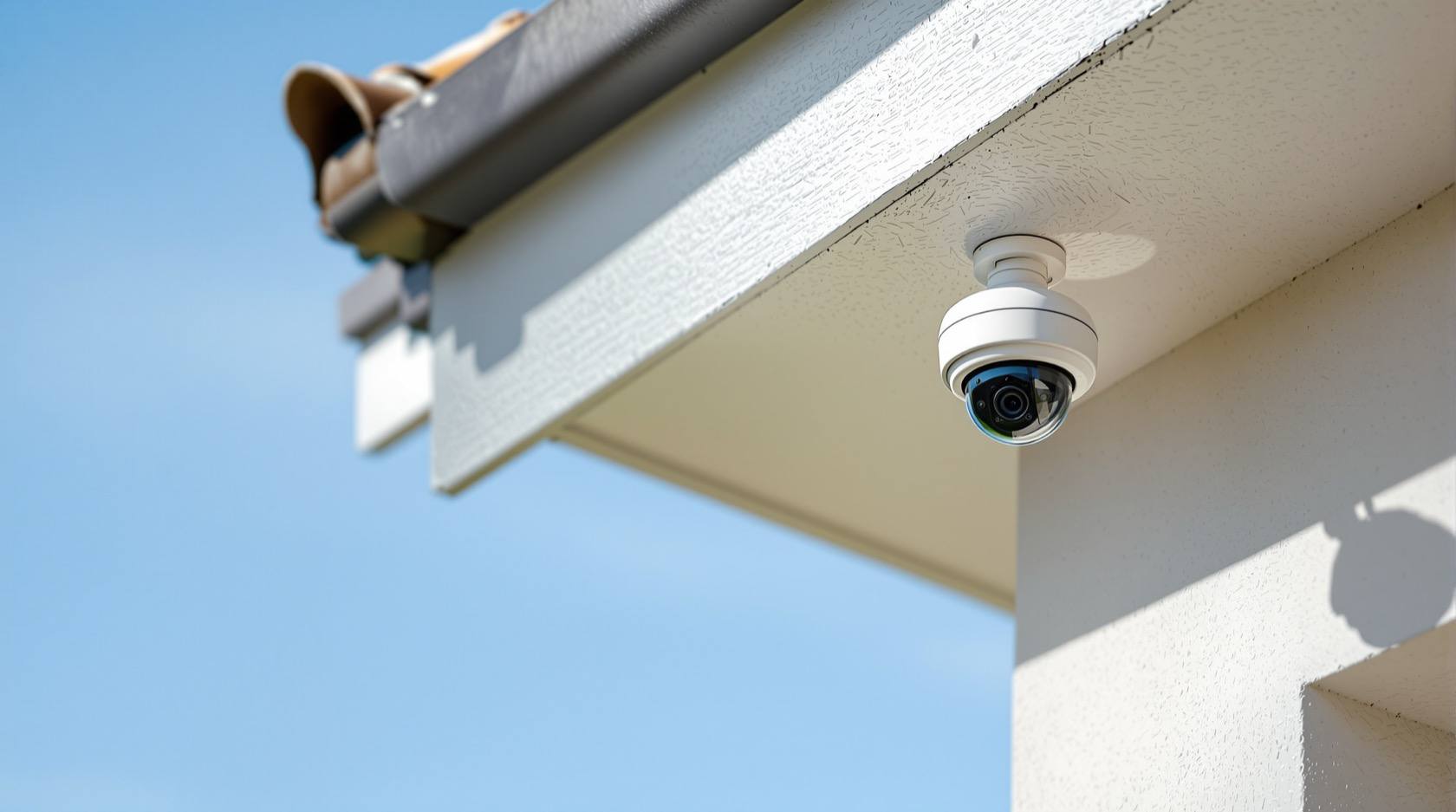
A dome camera lives inside a rounded, usually smoked, half-sphere that mounts flush to a ceiling or tight under an eave. The lens looks out through that tinted cover, so an onlooker generally cannot tell which way it points — either a feature (an intruder does not know what it watches) or a nuisance (you cannot confirm the aim from the ground). The dome protects the lens behind a hard, sealed cover, and it sits close and discreet. Its catch is that its own infra-red LEDs must shine out through the same cover the lens looks through.
A turret camera — also sold as an "eyeball" — is a ball seated in an open cup or base, with no enclosing dome over the lens. The lens and the infra-red LEDs sit out in the open air at the front of the ball, and you point the whole ball on its swivel like an eye in a socket. Because nothing covers the lens, you can see exactly where it looks, and you can grab the ball and re-aim it in seconds. The turret rose to popularity precisely because it dodges the dome's biggest night-time weakness — but its exposed lens is less protected against a determined hand or a driving monsoon than a lens tucked behind a dome.
If you are also weighing the cylindrical bullet — the torch-shaped unit on a bracket — that is a separate fork with its own logic; compare it in dome vs bullet camera. This guide stays with the two shapes people most often confuse.
The head-to-head
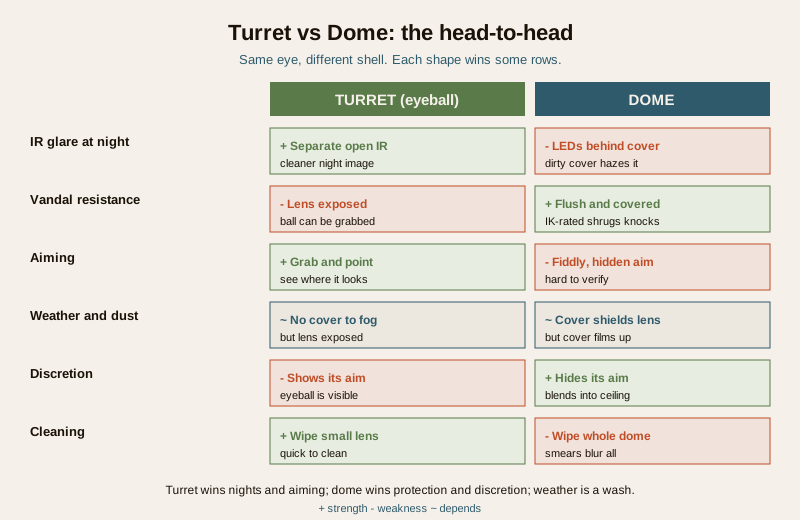
Set the two side by side across the things that actually differ in practice. Read it as trade-offs, not a scoreboard — each row has a winner, and they do not all point the same way.
| Dimension | Turret (eyeball) | Dome |
|---|---|---|
| IR glare at night | Separate open IR ahead of the lens; little internal reflection, cleaner night image | LEDs fire through the same cover; a dirty or poorly sealed dome hazes the picture |
| Image clarity | Nothing between lens and scene; consistently crisp | Crisp when the cover is clean and clear; degrades as the cover films or scratches |
| Aiming and adjusting | Grab the ball and point it; you can see exactly where it looks | Fiddlier; aim hidden behind tint, often cannot be verified from the ground |
| Vandal and tamper resistance | Lens exposed in the open cup; easier to grab or knock askew | Flush and covered; vandal-rated (IK) domes shrug off knocks and grabs |
| Weather and dust | No cover to fog, but the lens is exposed to blown rain and grime | Cover keeps rain and dust off the lens; but the cover itself can film up |
| Discretion | Shows plainly which way it points | Hides the aim; blends into a ceiling, reads as discreet |
| Cleaning | Wipe the small lens face; exposed front catches dust and webs | Whole dome must be wiped; smears and cobwebs blur everything behind it |
Three of these deserve a word, because they are where the shapes genuinely part ways.
The IR glare row is the headline, and it is the reason turrets took off. A dome's night-vision LEDs sit inside the same cover the lens looks through. If that cover is dusty, scratched, or badly sealed — or if it fogs with condensation — some of that infra-red light bounces straight back into the lens as a milky white haze that washes out the very scene you were trying to see in the dark. It is one of the most common causes of "my night footage is useless". A turret keeps its IR out in the open, physically separated from the lens, so there is nothing for the light to reflect off. This is a genuine, structural turret advantage at night, not marketing.
That said, it is a tendency, not a law: a clean, well-made, well-sealed dome images perfectly well at night. The glare is a maintenance-and-quality problem, and keeping the glass clean fixes most of it for either shape — see CCTV camera cleaning. On vandal resistance, the dome genuinely wins: its lens hides behind a hard cover that is difficult to grab, twist or block, and vandal-rated (IK-graded) domes are the standard answer for reachable, rough or public-facing spots. A turret's ball, by contrast, can be shoved out of aim or its exposed lens blocked by a hand within reach.
Which suits whom
This is where the choice actually gets made — by the spot, not by the spec sheet.
- Outdoor eaves, porches and building faces where night image matters most — turret. Where the whole point is a clean, usable picture after dark, the turret's separated IR gives the cleanest night footage with the least fuss. For most home outdoor spots under an eave or soffit, the turret is the default many installers now reach for.
- Any spot you will re-aim or fine-tune — turret. If you expect to nudge the framing after you see the footage, the grab-and-point ball is far quicker than fiddling behind a dome you cannot even confirm from the ground.
- Reachable and vandal-prone spots — dome (vandal-rated). Low ceilings, stairwells, lift lobbies, corridors, car parks and anywhere a hand, stick or ball can reach: the flush, IK-rated dome protects its lens where an exposed turret ball would be grabbed, blocked or knocked askew.
- Discreet indoor and retail spaces — dome. Where you want coverage without a hard, watched-over feeling, the dome's ceiling-flush look and hidden aim are right. A customer or visitor cannot read what it covers, and there is no exposed eyeball staring back. Shops, clinics, receptions and home interiors are dome territory.
- Harsh, dusty, driving-rain exposure — weigh it both ways. A turret has no cover to fog with condensation, but its lens sits exposed to blown grime; a good outdoor dome shields the lens but can film up. Either can be rated for outdoors — choose by whether fogging or exposure is the bigger risk at that spot, and keep whichever you pick clean.
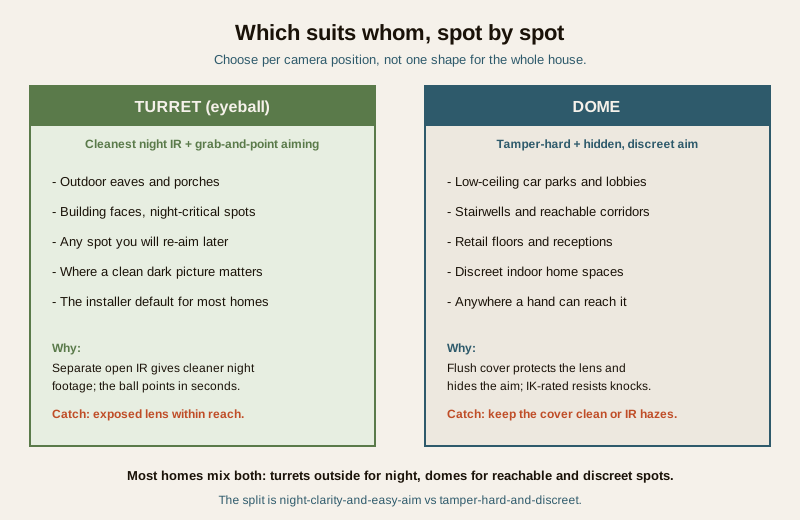
Notice the split: it comes down to night-clarity-and-easy-aiming versus tamper-hard-and-discreet. That is why plenty of homes use both — turrets doing the outdoor, night-critical work where a clean picture matters, and vandal-rated domes covering reachable, rough or discreet indoor spots. The turret's popularity is honest and earned: it became the go-to shape precisely because it dodges the dome's IR-glare problem while staying easy to aim.
The IR-glare difference, in one picture
Because it is the single reason most people end up choosing between these two, it is worth seeing plainly why a dome can haze at night and a turret usually does not.
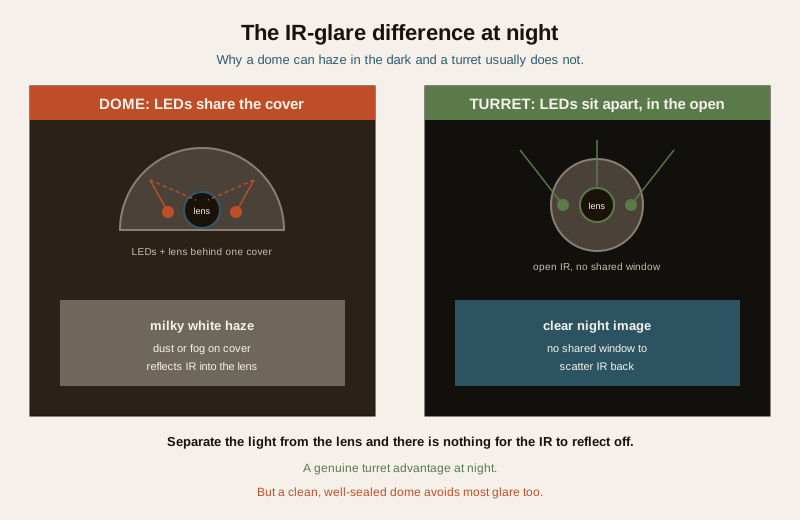
The mechanism is simple. Put the light source and the lens behind one shared window, and any dust, scratch, film or condensation on that window scatters the light back into the lens. Separate the light source from the lens — as the turret does — and there is no shared window to scatter off. It is the same reason you are told not to photograph through a dirty glass pane with the flash on. For a dome, the fix is discipline: a clean, well-gasketed, well-fitted cover keeps the haze away. For a turret, the geometry does the work for you.
How to decide, spot by spot
Do not choose a shape for the whole house. Choose one per camera position, running each spot through four quick questions:
1. Is a clean night image the top priority here? An outdoor spot where after-dark footage is the whole point favours the turret's separated IR.
2. Can someone reach it? If a hand, stick or thrown object can get to it, favour a flush, vandal-rated dome over an exposed turret ball.
3. Will I want to re-aim it later? If yes, the turret's grab-and-point ball saves a lot of ladder time; a dome's hidden aim is fiddlier to fine-tune.
4. Do I want it discreet, or do I want it obvious? A ceiling-flush dome disappears; a turret shows plainly where it looks. Choose by whether that spot should whisper or watch openly.
If a spot pulls both ways — you want the cleanest night picture and a tamper-hard, discreet housing — accept the trade-off honestly rather than expecting one shape to do everything. And remember the shape is one decision inside a bigger one: resolution, lens angle, day-night performance and whether the spot even needs a camera all matter more to the final picture than the housing does. Fit the shape into that whole-camera choice with how to choose a CCTV camera, and read the turret's own strengths in depth in turret CCTV cameras.
The honest bottom line
Turret versus dome is a night-image-and-placement decision dressed up as a product debate. The turret is the cleaner-night, easy-to-aim, honest-looking choice whose only real catch is an exposed lens that a hand or driving rain can reach; the dome is the tamper-hard, discreet, lens-protected choice whose only real catch is keeping that cover clean so its IR does not haze the dark. Neither is the "better camera" — they are two shells for the same eye, and a good system uses each where it belongs.
Key takeaways
- Turret and dome are the same camera in different housings — you are choosing a form factor for a location and a lighting condition, not a grade of picture.
- Turret = cleaner night image and easy aiming, but an exposed lens — its separated IR dodges the dome's glare, and you grab the ball to point it; its home is outdoor eaves, porches and any night-critical or re-aimed spot.
- Dome = tamper-hard, discreet and lens-protected, but the cover must stay clean — its flush cover resists grabbing and shields the lens; its home is reachable or vandal-prone spots and discreet indoor and retail spaces.
- IR glare is the reason turrets took off — a dome's LEDs firing through a dusty or badly sealed cover haze the night image; a turret's open, separated IR avoids it, and clean glass fixes it for a dome too.
- Do not pick one shape for the whole house — decide per spot with night-priority, reachable-or-not, will-I-re-aim, and discreet-or-obvious.
- Both are legitimate — the turret's popularity is earned, but a well-kept dome is the right call where the lens must be protected or hidden.
Where to go next
- Turret CCTV cameras — the turret in depth: what the eyeball shape does well and where it fits.
- Dome vs bullet camera — the other classic shape fork, if you are weighing the cylindrical bullet too.
- How to choose a CCTV camera — fit the shape choice into the whole-camera decision: resolution, lens, day-night and more.
- CCTV camera cleaning — why a clean cover or lens is half your picture quality, especially at night for a dome.
- The comparison pillar and the compare sub-hub for other "this vs that" security decisions, the CCTV sub-hub for siting and coverage, and the main security hub for the whole picture.
References
- Digital Personal Data Protection Act, 2023 — home CCTV records personal data; record only your own property, avoid neighbours' private space and public areas you do not control, post notice where people are recorded, and secure the footage. Verify current provisions at https://www.meity.gov.in/
- Ingress Protection (IP) and Impact Protection (IK) ratings, as referenced on manufacturer datasheets — the weatherproofing and vandal-resistance grades that distinguish an outdoor-ready or vandal-rated housing from an indoor-only one; check the specific rating on any camera before siting it outdoors or within reach.
This is an educational placement guide to help you choose CCTV form factors, not a buying, pricing or installation manual, and not legal advice. Both turret and dome cameras are legitimate; the right one depends on the spot and its lighting. Have a qualified installer mount and aim cameras at height or outdoors, and confirm your recording practice against the DPDP Act, 2023 before you deploy.
Export this guide
Related Guides — Deep-dive reading
How to Choose a CCTV Camera (2026): The Homeowner's Decision Guide for India
Cut through the spec-sheet noise and choose the right CCTV camera for each spot around an Indian home. What actually matters — sensor and low-light performance, lens and field of view, form factor, IP and IK ratings, honest smart features — and the marketing claims to ignore.
SecurityInfrared vs Colour Night Vision CCTV in India (2026): Which Sees Better in the Dark?
A homeowner's head-to-head between traditional infrared (IR) night vision, which lights the scene invisibly and shows a black-and-white image, and colour night vision, which keeps the picture in colour at night using a very sensitive sensor and a little white light — with an honest verdict on when each wins and why a hybrid camera is usually the smartest buy.
SecurityTurret Cameras: The Eyeball Form Factor That Became India's Default
What a turret (eyeball) camera is, why its open ball-and-socket lens gives cleaner night footage than a dome, where it fits best around an Indian home or shop, and how it compares to dome, bullet and PTZ.
SecurityRelated Tools — Try Free
CCTV Camera Type Selector
Answer five questions and get the right camera form factor — dome, vandal dome, bullet, turret or PTZ — with reasons.
Camera SelectorCCTV Camera Coverage & Count Calculator
Estimate how many CCTV cameras you need, the NVR channels, storage in TB for your retention period, and an indicative all-in cost with GST.
CCTV CalculatorWindow Cleaning Cost Calculator
Estimate professional window cleaning cost per visit and per year by access and frequency.
Window Calculator