
Dome vs Bullet Camera in India (2026): Which Shape Should You Fit Where?
The classic CCTV form-factor choice, decided honestly. What a dome and a bullet each are, how they compare on deterrence, aiming, range, vandal-resistance, weather and IR glare — and which shape suits an indoor lobby, a shop, a gate or a long driveway.
Walk into any electronics market or scroll any CCTV listing and you meet the same fork almost at once: the rounded dome that sits flush against a ceiling, and the cylindrical bullet that juts out on a bracket. It is the most visible decision in the whole system — literally, because it is the one shape everyone sees — and it is the one buyers agonise over most. The honest answer is freeing: neither shape is better. They are shaped for different jobs, and the right one depends entirely on where you are mounting it and what you want that camera to do.
The two share the same insides. The sensor, the lens, the night-vision LEDs and the processing can be identical between a dome and a bullet from the same range — you are choosing a housing, not a grade of picture. So the question is never "which shape sees better"; it is "which shape fits this spot, resists what this spot throws at it, and sends the message this spot needs". Get that framing right and the choice usually makes itself.
Scope and how to read this. This is a neutral head-to-head to help you place cameras well, not a sales pitch for one shape or a price list. Both form factors are legitimate and both win in the right spot — most homes end up with a mix. It is not a buying or cost guide; for choosing a camera end to end see the wider selection guide cross-linked below. Cameras and their footage are personal data under the Digital Personal Data Protection Act, 2023 — point them at your own property, never into a neighbour's windows or a public street you do not control, and put up notice where people are recorded. Have a qualified installer mount and aim anything at height or outdoors.
What each one is
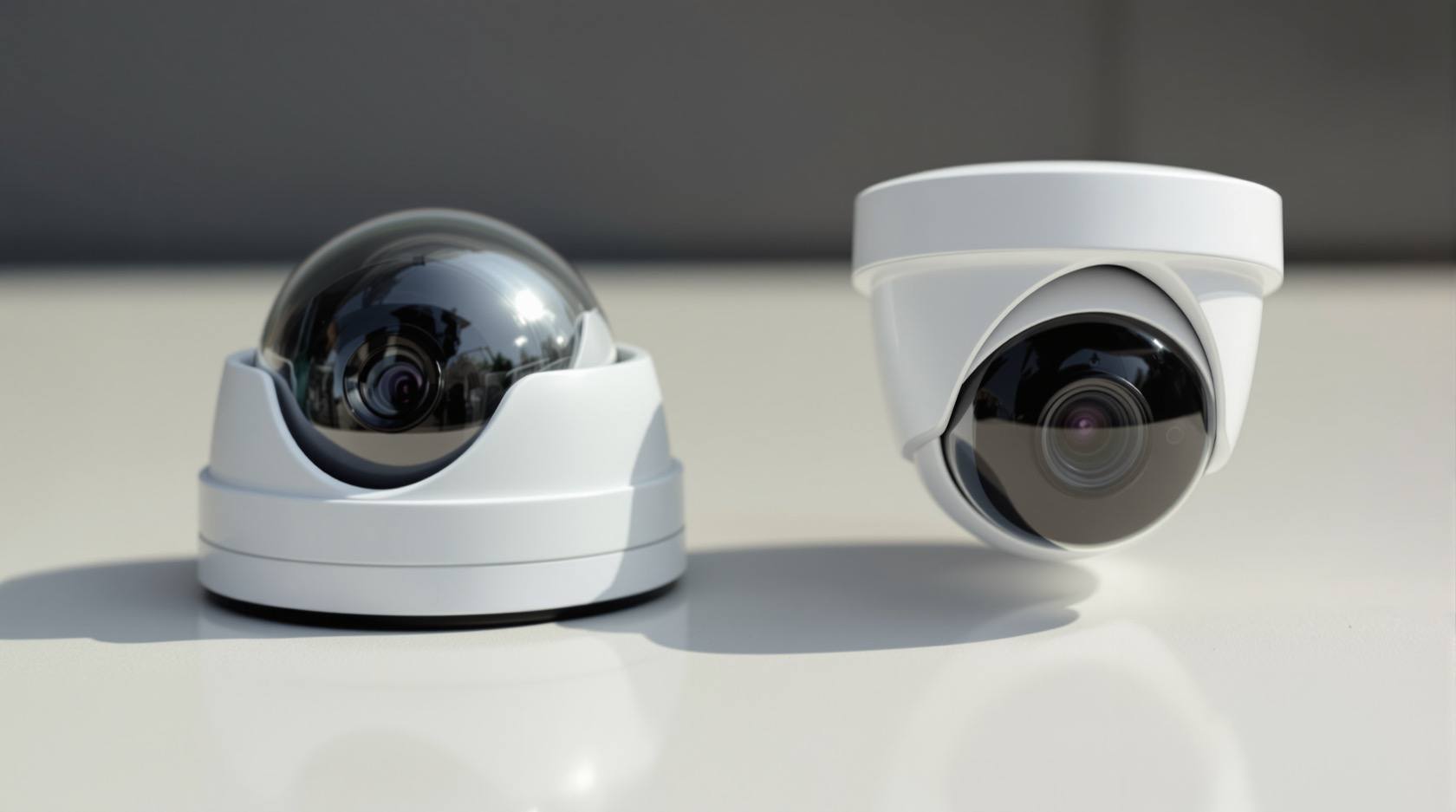
A dome camera lives inside a rounded, usually smoked, half-sphere. It mounts flush to a ceiling or tight under an eave or soffit, so it sits close to the surface and reads as discreet — often people barely register it as a camera. Because the lens hides behind a tinted dome, an onlooker generally cannot tell which way it is pointing, which is either a feature (an intruder does not know what it covers) or a nuisance (you cannot confirm the aim from the ground) depending on how you look at it. The trade-off is that the dome itself sits between the lens and the world: it needs a clean, well-gasketed cover, and its own night-vision LEDs shine through the same dome they must not reflect off.
A bullet camera is the cylindrical, torch-shaped unit on an adjustable bracket. It is unmistakably a camera, and it is obvious where it points — you can sight along the barrel and see roughly what it watches. That visibility is the whole appeal outdoors: a bullet on a wall or a pole is a plain, public statement that a place is watched. The barrel shape sheds rain naturally, often carries a sun-and-rain shield over the lens, and keeps its infra-red LEDs out at the front of the housing where they do not reflect back into the picture. The flip side is exposure: sticking out on a bracket, a bullet is easier to reach, knock askew, or tamper with than a flush dome.
There is a popular third shape worth knowing before you commit — the turret (sometimes called an "eyeball"), a ball seated in an open cup with no enclosing dome over the lens. It aims to combine the dome's tidy look with the bullet's IR performance and easy aiming, and it has become the default many installers reach for. It deserves its own comparison rather than a footnote: see turret vs dome camera.
The head-to-head
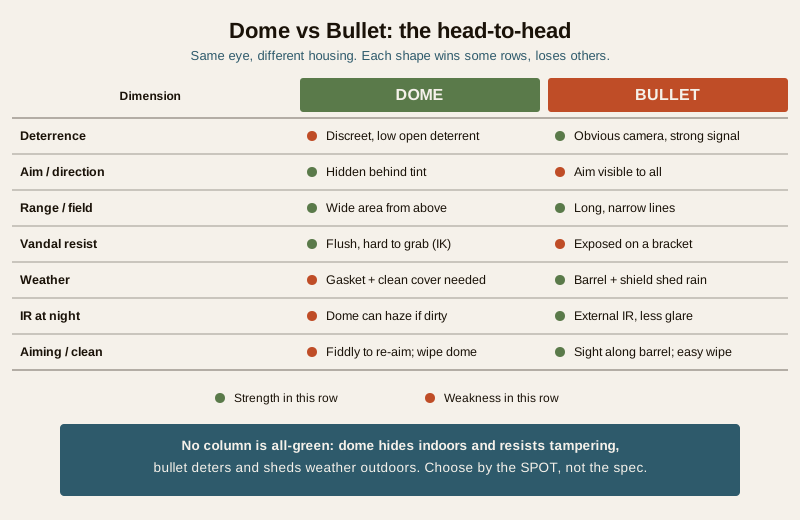
Set the two side by side across the things that actually differ in practice. Read it as trade-offs, not a scoreboard — each row has a winner, and they do not all point the same way.
| Dimension | Dome | Bullet |
|---|---|---|
| Appearance and deterrence | Discreet, blends in; low visual deterrence but harder to defeat quietly | Visibly and obviously a camera; strong open deterrent |
| Viewing direction | Hidden behind tint; onlooker cannot tell where it points | Obvious aim; anyone can see what it watches (and its blind side) |
| Range and field | Suits wide-area coverage of a room or forecourt from above | Often paired with a longer, narrower view down a driveway or fence line |
| Vandal and tamper resistance | Flush, hard to grab; vandal-rated (IK) domes shrug off knocks | Exposed on a bracket; easier to reach, knock askew or block |
| Weather | Needs a good gasket and clean cover; the dome is the weak seal | Barrel sheds rain; built-in shield keeps sun and rain off the lens |
| IR at night | LEDs can reflect off the dome as haze if the seal or cleaning is poor | External IR sits ahead of the lens; less prone to internal glare |
| Aiming and adjusting | Fiddlier to re-aim; you often cannot verify the aim from the ground | Sight along the barrel; quick to point and confirm |
| Cleaning | Whole dome must be wiped; smears and cobwebs blur everything | Lens and shield wipe easily; but the exposed front catches dust and webs |
A few of these deserve a word. The IR glare point is the one people meet most: a dome's night-vision LEDs fire through the same cover the lens looks through, so a dirty, scratched or badly sealed dome bounces that light straight back as a milky haze — a very common cause of "my night footage is useless". A bullet (and a turret) keeps its IR out front, sidestepping the problem. But that is a maintenance-and-quality issue, not a law of physics: a clean, well-made dome images perfectly at night. Whichever shape you fit, keeping the glass clean is half the picture quality — see CCTV camera cleaning.
On weather, both can be rated for the outdoors, but they fail differently. A bullet's cylinder and shield throw monsoon rain off the lens by their very shape. A dome depends on its gasket and a clean cover to keep water and grime out of that curved window; a good outdoor dome manages fine, but a cheap one collects a dirty film that ruins the view. On vandalism, the flush dome is genuinely harder to grab, twist or unplug, and vandal-rated (IK-graded) domes are the standard answer for reachable, rough or public-facing spots — a bullet on a bracket is simply easier to knock out of aim.
Which suits whom
This is where the choice actually gets made — by the spot, not by the spec sheet.
- Indoor rooms, lobbies, receptions and retail floors — dome. Where you want coverage without a hard, watched-over feeling, the dome's discreet, ceiling-flush look is right. Its hidden aim means a customer or visitor cannot read exactly what it covers, and there is no bracket sticking into a tidy interior. Shops, clinics, offices and home interiors are dome territory.
- Vandal-prone and reachable spots — dome (vandal-rated). Stairwells, lift lobbies, low ceilings, car parks, corridors and anywhere a hand can reach: the flush, IK-rated dome resists the grab-and-twist that would defeat an exposed bullet.
- Outdoor perimeter, gates, boundaries and building faces — bullet. Where you want a place to look watched, the bullet's unmistakable silhouette does deterrence work a hidden dome cannot. On a gate pillar, a compound wall or a building corner, a visible bullet says "you are on camera" before anyone tries anything.
- Long driveways, narrow approaches and fence lines — bullet. A bullet paired with a longer, narrower view is the natural fit for watching down a length — a driveway, a side passage, a boundary run — rather than blanketing a wide area.
- Wide forecourts, halls and open areas from above — dome. For a broad sweep of a large room or a forecourt from a high central point, a dome's overhead wide view covers ground tidily.
- Under an eave, soffit or porch — either, by intent. A dome tucks up discreetly; a bullet under the eave stays visible and sheds any blown rain. Choose by whether you want that spot to whisper or to announce itself.
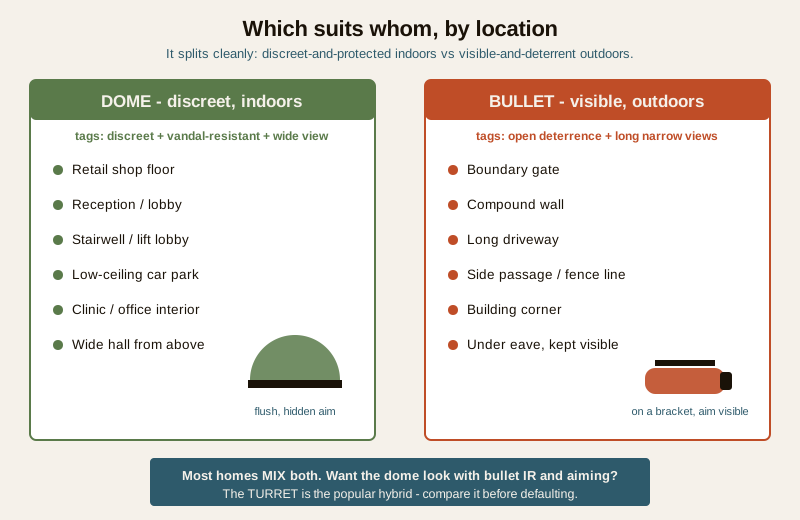
Notice the pattern: it splits almost cleanly into discreet-and-protected-indoors versus visible-and-deterrent-outdoors. That is why most real installations are not "a dome house" or "a bullet house" — they are a mix, with domes doing the quiet interior and reachable work and bullets standing guard, obvious and weatherproof, around the outside.
How to decide, spot by spot
Do not choose a shape for the whole house. Choose one per camera position, running each spot through four quick questions:
1. Do I want this camera seen or unseen? A visible deterrent at a gate or boundary points to a bullet; discreet coverage of an interior or a retail floor points to a dome.
2. Can someone reach it? If a hand, a stick or a thrown object can get to it, favour a flush vandal-rated dome over an exposed bullet.
3. Am I watching a wide area or a long, narrow line? A broad room or forecourt suits a dome's wide overhead view; a driveway, passage or fence line suits a bullet's longer reach.
4. Indoors or out, and how exposed to weather? Heavy monsoon exposure favours the bullet's self-shedding shape (or a well-sealed, well-maintained outdoor dome); sheltered interiors free you to pick on looks and deterrence alone.
If a spot pulls both ways — you want a tidy look and strong night IR and easy aiming — that is exactly the gap the turret fills, so weigh it in via turret vs dome camera before defaulting to one of the two classics. And remember the shape is one decision inside a bigger one: resolution, lens angle, day-night performance and whether the spot even needs a camera all matter more to the final picture than the housing does. Fit the shape into that whole-camera choice with how to choose a CCTV camera.
The honest bottom line
Dome versus bullet is a placement-and-purpose decision dressed up as a product debate. The dome is the discreet, tamper-hard, indoor-and-reachable choice whose only real catch is keeping that curved cover clean so IR does not haze; the bullet is the visible, weather-shedding, easy-to-aim outdoor deterrent whose only real catch is that it hangs out where it can be reached and knocked. Neither is the "better camera" — they are two housings for the same eye, and a good system uses each where it belongs.
Key takeaways
- Dome and bullet are the same camera in different housings — you are choosing a form factor for a location, not a grade of picture.
- Bullet = visible deterrence, obvious aim, self-shedding weather, easy to point — but exposed — its home is the outdoor perimeter, gates, driveways and boundaries.
- Dome = discreet, hidden aim, flush and tamper-hard, wide overhead view — but the cover must stay clean — its home is indoors, lobbies, retail and reachable or vandal-prone spots.
- IR glare is a dome's classic failure — LEDs firing through a dirty or badly sealed dome haze the night image; a bullet's external IR avoids it, and clean glass fixes it for both.
- Do not pick one shape for the whole house — decide per spot with seen-or-unseen, reachable-or-not, wide-or-long, and weather exposure.
- The turret is the popular hybrid — if you want the dome's look with the bullet's IR and aiming, compare it before defaulting to either classic.
Where to go next
- Turret vs dome camera — the third shape that splits the difference, compared head to head.
- How to choose a CCTV camera — fit the shape choice into the whole-camera decision: resolution, lens, day-night and more.
- CCTV camera cleaning — why a clean dome or lens is half your picture quality, especially at night.
- The CCTV sub-hub for siting, coverage and system design, and the main security hub for the whole picture.
References
- Digital Personal Data Protection Act, 2023 — home and business CCTV records personal data; record only your own property, avoid neighbours' private space and public areas you do not control, post notice where people are recorded, and secure the footage. Verify current provisions at https://www.meity.gov.in/
- Ingress Protection (IP) and Impact Protection (IK) ratings, as referenced on manufacturer datasheets — the weatherproofing and vandal-resistance grades that distinguish an outdoor-ready housing from an indoor-only one; check the specific rating on any camera before siting it outdoors or within reach.
This is an educational placement guide to help you choose CCTV form factors, not a buying, pricing or installation manual, and not legal advice. Both dome and bullet cameras are legitimate; the right one depends on the spot. Have a qualified installer mount and aim cameras at height or outdoors, and confirm your recording practice against the DPDP Act, 2023 before you deploy.
Export this guide
Related Guides — Deep-dive reading
How to Choose a CCTV Camera (2026): The Homeowner's Decision Guide for India
Cut through the spec-sheet noise and choose the right CCTV camera for each spot around an Indian home. What actually matters — sensor and low-light performance, lens and field of view, form factor, IP and IK ratings, honest smart features — and the marketing claims to ignore.
SecurityTurret vs Dome Camera in India (2026): Which One Sees Better at Night?
The two ceiling-and-wall CCTV shapes people mix up, decided honestly. What a turret (eyeball) and a dome each are, how they compare on night-time IR glare, image clarity, aiming, vandal-resistance, weather, discretion and cleaning — and which suits your eaves, your porch, a reachable spot or a discreet indoor corner.
SecurityDome CCTV Cameras in India: The Discreet, Vandal-Resistant Form Factor
What a dome camera is, why its low-profile housing suits indoors, lobbies and shopfronts, where its bubble can cause night glare, and how it compares to bullet, turret and PTZ cameras.
SecurityRelated Tools — Try Free
CCTV Camera Type Selector
Answer five questions and get the right camera form factor — dome, vandal dome, bullet, turret or PTZ — with reasons.
Camera SelectorCross-Ventilation Analyzer
Estimate airflow and air changes per hour (ACH) from room size, window areas, layout, and local wind — with NBC 2016 Part 8 compliance check.
Ventilation CalculatorCCTV Camera Coverage & Count Calculator
Estimate how many CCTV cameras you need, the NVR channels, storage in TB for your retention period, and an indicative all-in cost with GST.
CCTV Calculator