

Society Security Audit and Review in India (2026): Finding the Gaps Before They Find You
A practical, India-grounded guide to how a housing society or RWA reviews its own security on a regular cycle — a walk-through and checklist across perimeter, gates, guards, CCTV, lighting, common areas, visitors, incidents, emergency readiness, vendors and DPDP — then writes up findings as a prioritised, life-safety-first action list taken to the committee and AGM, and re-checked.
Security is not a thing you install once and forget. The people change — guards rotate, committees turn over, families move in and out. The equipment ages — a camera drifts out of focus, a light fuses, a barrier sticks. And quietly, complacency creeps in: a gate that is now propped open "because it is easier", a register nobody fills, a blind spot everyone has stopped noticing. A society security audit and review is the simple habit that catches all of this — a regular, honest look at what is actually there against what the community thinks is there, so gaps are found and fixed before an incident finds them first.
This guide is a self-review method for a housing society or RWA, not a statutory audit. It sits alongside the broader picture in security for gated communities, and it is usually owned by the housing society security committee as one of its recurring jobs. Much of what you review — the entry and gate management and CCTV in the common areas — has its own detailed guide; this page is the checklist that ties them together and turns findings into action.
Scope & how to read this. This is an indicative self-review a committee can run itself, not a statutory or professional security audit and not legal advice. It cites no section numbers. Anything touching fire, egress or structural safety belongs to a licensed professional and the fire officer / AHJ; for a larger community, commission an independent professional audit. Verify the specifics with a qualified professional and your society's legal advisor.
Why review security regularly
The strongest reason to audit is that everything the community set up on day one drifts. A review is how you notice the drift before it costs you.
- People change. Guards are rotated by the agency, the estate manager moves on, the committee is re-elected. Post orders written two years ago may be followed by nobody now on site.
- Equipment ages and fails silently. A camera keeps a green light but records nothing to a full disk; a boom barrier is left up because it is slow; a boundary light has been dark for months. Nothing announces these failures — a review finds them.
- Threats and the estate change. New construction next door opens a sight line, a rear gate gets used more, e-commerce deliveries multiply. The plan that fit last year may not fit now.
- Complacency creeps in. The most common security failure is not a clever intruder; it is a good procedure that everyone stopped following. Propped gates, unlogged visitors, ignored alarms — the review re-sets the baseline.
A light review each quarter and a fuller one each year keeps the community honest and keeps small problems from compounding into a serious gap.
What to audit — the scope
Break the estate into areas so nothing is skipped. Each becomes a section of the walk-through checklist. Treat the list as a floor, not a ceiling — add whatever your community has.
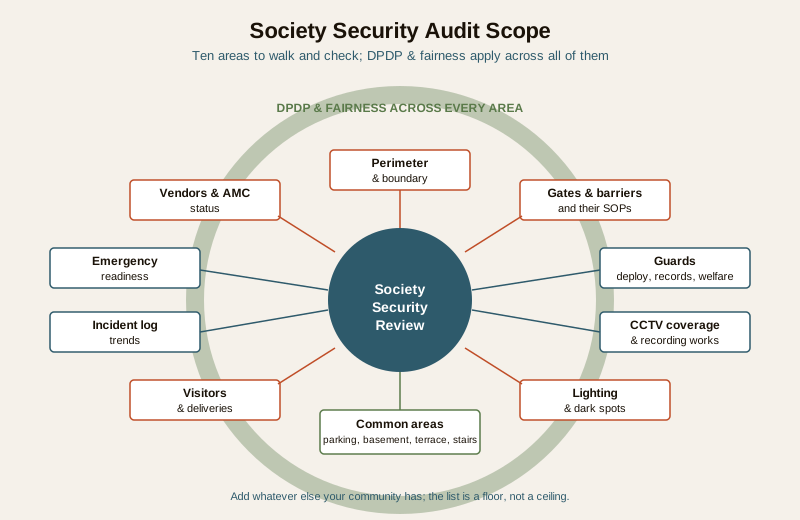
Perimeter and boundary
Walk the full boundary, slowly, at least once by day and once after dark. You are looking for the ways in that are not the gate: a low or broken wall, a gap behind the transformer, a tree or scaffold that bridges the wall, a rear service gate left unsecured, drain covers and ducts. Note where the boundary is simply invisible to guards and cameras.
Gates, barriers and their SOPs
Check that the gate procedure written down is the one actually run. Does the boom barrier work and get used, or is it left up? Is the wicket gate latched? Are vehicles and pedestrians handled per the entry and gate management plan, or has it quietly lapsed? Watch a real shift for ten minutes rather than asking the guard how it is meant to work.
Guards — deployment, alertness, records and welfare
Review how guards are actually deployed against the roster: are posts manned on all shifts, especially nights? Are the registers filled contemporaneously or scribbled at handover? Is the guard alert and briefed, or asleep in a dark cabin? And — never as an afterthought — check welfare: a chair, water, a toilet, a fan, timely pay through the licensed agency. A guard treated decently is an alert guard; this is both right and better security.
CCTV — coverage, blind spots, and recording that actually works
The single most common CCTV finding is that footage is not there when it is needed. Confirm three separate things: cameras cover the points that matter (gates, boundary approaches, lobbies, parking, basement, stairwell entries); there are no unintended blind spots or cameras knocked out of aim; and — critically — the recorder is actually recording, the disks are healthy, the clock is right, and footage is retained for the intended number of days. Test a playback from three days ago, do not assume it exists. Coverage detail lives in CCTV in the common areas.
Lighting and dark spots
Walk the estate again after dark specifically for light. List every fused or missing fixture, every corner the light does not reach — the far boundary, the basement ramp, the stairwell, the play area, the visitor parking. Dark spots are where both incidents and camera failures hide.
Common areas, parking, basement, terrace, stairwells
These shared, semi-private spaces are where problems actually occur. Check basement and parking access and lighting; terrace and roof access (locked but not in a way that blocks fire egress — that is a professional's call); stairwells and lift lobbies; the clubhouse, gym and pump rooms. Note anything left unlocked that should not be, and anything locked that must stay a usable escape route.
Visitors and deliveries
Follow the visitor and delivery process as a visitor would experience it. Is verification real or a formality? Is the least necessary data collected, or is the app hoovering up everything? Are delivery and gig workers treated with the same courtesy as guests, or made to wait in the sun and handled as suspects? Fairness is an audit item, not a nicety.
Incident log trends
Read the incident register for the review period end to end, looking for patterns rather than single events — a recurring blind spot, a gate rule people keep bypassing, a repeated equipment failure. Trends tell you where to spend; one-off panics do not.
Emergency readiness
Check that the community could actually respond: are emergency contacts current and posted (police 112, fire, ambulance, hospital, the estate manager)? When was the last fire drill? Are extinguishers in date and accessible, hydrants and alarms maintained (by a competent agency, verified by the fire officer)? Do guards know the escalation and the assembly point? Life-safety items are for professionals to certify — the audit only confirms they exist and are current.
Vendors and AMC status
List every security vendor — CCTV, gates, the visitor app, guard agency, fire systems — and check each contract and AMC is live, in date, and being honoured. A lapsed CCTV AMC is why nobody noticed the recorder died.
DPDP compliance of the data the society handles
The society collects visitor names, phone numbers, photos, vehicle numbers, worker details, app and sometimes biometric data — which makes it a data fiduciary under the Digital Personal Data Protection Act, 2023. Audit the data as seriously as the cameras: is only the least necessary collected, for a clear purpose, secured, retention-limited, and never misused to profile or shame anyone? Extra care for biometrics and workers' data.
How to run the review
You do not need consultants for a routine self-review. You need a checklist, a walk, and a few honest people.
The walk-through, with the right people
Do it on site, together: a couple of committee members, the estate manager and the guard supervisor. Walk the full scope above with the checklist in hand, by day and after dark. Look at the real system and the real records, not the assurance that "it is all fine". Reluctance to show you a register, a live playback or the disk health is itself a finding.
Gather resident feedback
Residents notice what a walk misses — a gate always propped at school time, a light that has been dark for weeks, a stairwell that feels unsafe. Collect it through a calm, official channel (a short form or a note to the committee), not a WhatsApp pile-on that names and shames workers. Feedback is data; rumour is not.
A simple audit checklist
Score each item plainly and record what you actually saw. Keep it factual and neutral — no suspicions, no labels.
| Area | What to check | Status (OK / Gap) | Severity | Note / evidence |
|---|---|---|---|---|
| Perimeter | Boundary intact; no easy climb or gap; rear gate secured | ... | ... | ... |
| Gates & SOP | Barrier works and is used; wicket latched; written SOP actually run | ... | ... | ... |
| Guards | Posts manned all shifts; registers current; alert; welfare provided | ... | ... | ... |
| CCTV | Coverage at key points; no blind spots; recording, disks, retention verified by playback | ... | ... | ... |
| Lighting | No fused or missing fixtures; no dark spots after dusk | ... | ... | ... |
| Common areas | Basement, parking, terrace, stairwells, pump rooms checked; egress not blocked | ... | ... | ... |
| Visitors & deliveries | Real verification; least data; fair, respectful treatment for all | ... | ... | ... |
| Incident log | Register read for the period; patterns identified | ... | ... | ... |
| Emergency | Contacts current and posted; drill done; extinguishers, alarms, hydrants maintained | ... | ... | ... |
| Vendors / AMC | Every security contract and AMC live, in date and honoured | ... | ... | ... |
| DPDP & fairness | Least data, clear purpose, secured, retention-limited; no profiling or unfair rules | ... | ... | ... |
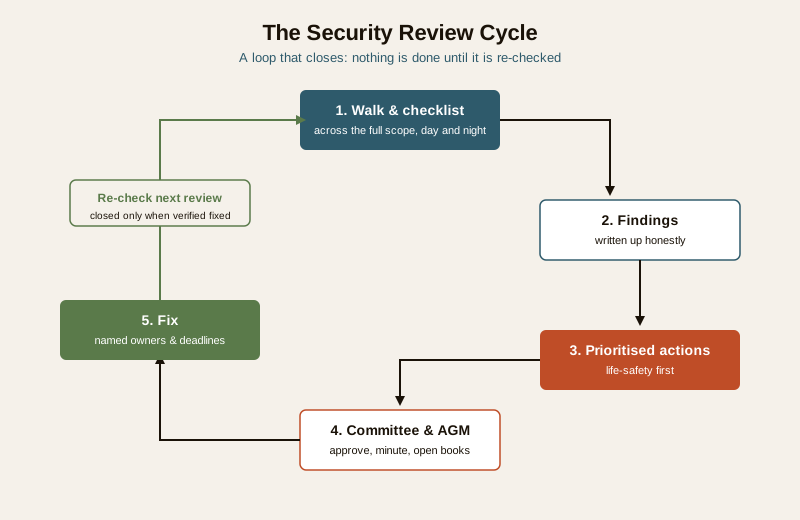
Reporting: findings into a prioritised action list
A review is worthless as a list of complaints. Its value is a short, written report that turns each gap into a decision the community can approve, own and check off. Write up what you found plainly, then rank it — and rank by risk to people first, always.
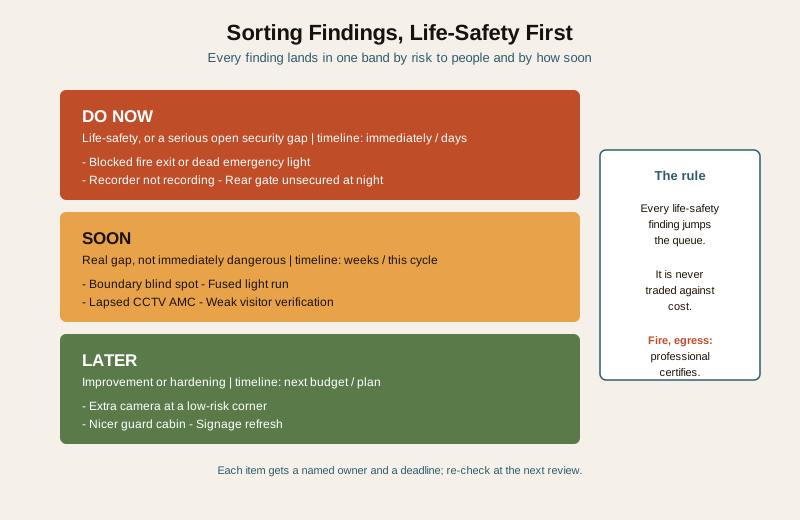
Prioritise, life-safety first
Sort every finding into three buckets by how much and how soon it can hurt someone. Life-safety items — a blocked fire exit, a dead emergency light, a locked egress — jump every queue and are never traded against cost. Then genuine security gaps, then improvements.
| Priority | Meaning | Examples | Timeline |
|---|---|---|---|
| Do now | Life-safety, or a serious open security gap | Blocked fire escape, dead emergency lighting, rear gate unsecured at night, recorder not recording | Immediately / days |
| Soon | Real gap, not immediately dangerous | A boundary blind spot, a fused light run, lapsed CCTV AMC, weak visitor verification | Weeks / this cycle |
| Later | Improvement or hardening | Extra camera at a low-risk corner, nicer guard cabin, app upgrade, signage refresh | Next budget / plan |
Take it to the committee and the AGM
The report goes to the security committee and, for anything that costs real money or changes policy, on to the managing committee and the AGM by the society's own approval route. Spending and policy are decided properly, minuted, with the books open — not by one enthusiast acting alone.
Owners, deadlines, and re-check
Every "do now" and "soon" item gets a named owner and a date. The next review opens by re-checking the last one: what was fixed, what slipped, what recurred. A finding is only closed when it has been verified fixed, not when someone said they would handle it.
| Finding | Priority | Owner | Deadline | Status at re-check |
|---|---|---|---|---|
| Rear gate left unsecured after 10pm | Do now | Estate manager | 3 days | ... |
| Basement ramp light fused; blind spot | Soon | Estate manager | 2 weeks | ... |
| CCTV AMC lapsed; disk health unknown | Do now | Committee convenor | 1 week | ... |
| Visitor app collects more data than needed | Soon | Committee | This cycle | ... |
| Extra camera at children's play corner | Later | Committee | Next budget | ... |
Frequency, and when to bring in a professional
Match the effort to the risk and the calendar.
- Light quarterly check. A short walk against the checklist, a read of the incident log, a CCTV playback test, and a scan of AMC dates. An hour or two; catches drift early.
- Fuller annual review. The complete scope above, day and night, with resident feedback, a written report, a prioritised action list to the AGM, and a re-check of last year's items. This is the one that feeds the budget.
- After any real incident, review the relevant area immediately rather than waiting for the cycle.
An independent, professional audit for larger communities
A committee self-review is right for routine assurance, but it has blind spots — the people who set up a system are not the best people to find its flaws. A larger community, or one after a serious incident or a major upgrade, should periodically commission an independent professional security audit: a licensed, experienced auditor who assesses the estate with fresh eyes, benchmarks it, and reports formally. Use the self-review to stay honest between professional audits, not to replace them. Anything touching fire and life-safety is always certified by the competent professional and the fire officer, never by the committee alone.
How it connects
A society security audit and review is the recurring health-check that keeps the rest of the community's security honest. Start from the overview in security for gated communities; the review is normally owned and run by the housing society security committee. Two of the areas it examines most closely have their own guides — entry and gate management and CCTV in the common areas. All of these, and more, live in the Community & RWA Security library.
Key takeaways
- Review security on a cycle because people, equipment and threats change and complacency creeps in — a light quarterly check and a fuller annual review catch the drift.
- Audit the whole scope: perimeter, gates and SOPs, guards (including welfare), CCTV coverage and recording that actually works, lighting, common areas, visitors, incident trends, emergency readiness, vendors and DPDP.
- Verify, do not assume — test a real CCTV playback, watch a real gate shift, read the actual register; reluctance to show you is itself a finding.
- Turn findings into a short written report with a prioritised action list — life-safety first — with a named owner and a deadline for each, taken to the committee and AGM.
- Re-check at the next review; a finding is closed only when verified fixed, not when someone promised to fix it.
- Fairness and DPDP are audit items — least data, clear purpose, secured, retention-limited, and one respectful procedure for residents, tenants, workers and delivery staff alike.
- For a larger community, commission an independent professional audit periodically; leave fire, egress and structural life-safety to the licensed professional and the fire officer.
References
- Digital Personal Data Protection Act, 2023 — the framework for how a society, as a data fiduciary, must handle the visitor, worker and resident data its security systems collect; verify current rules with the society's legal advisor.
- The Private Security Agencies (Regulation) Act, 2005 (PSARA) and its state rules — governs licensed guard agencies and guard welfare; the basis for reviewing your guard arrangements fairly.
- National Building Code of India (NBC), current edition (SP 7:2026) — the source for fire, egress and life-safety requirements the audit should confirm are met and a professional must certify; verify with the fire officer / AHJ.
- Your state's Apartment Ownership Act or Cooperative Societies Act, and the Model Bye-laws — the source of the committee's powers, spending limits and approval routes for acting on findings; confirm with the registrar or a legal advisor.
- Your society's own registered bye-laws, vendor contracts and AMCs — the operative records the review checks against; follow them over any generic checklist.
This guide is educational and India-general, an indicative self-review rather than a statutory or professional security audit, and not legal advice. It cites no section numbers. Verify the specifics with a qualified security professional and the society's legal advisor; for a larger community commission an independent audit. Apply security fairly to everyone, handle personal data under the DPDP Act, and leave fire, egress, structural life-safety and hands-on work to the licensed professionals and the fire officer.
Export this guide
Related Guides — Deep-dive reading
Parking Security Audit in India: A Walk-the-Park Method
Most parking areas were never audited honestly. This is the capstone method that ties the whole parking-security library together: walk the park by day and after dark, grade every layer Good / Weak / Absent, gate it on life-safety, and turn the gaps into a prioritised action plan before a thief or an incident finds them first.
SecurityVisitor Vehicle Management in India: A Professional Guide
The everyday weak point of every society and office gate is not the resident's car — it is the visitor, the cab, the delivery rider and the contractor who must be let in without opening the whole park to anyone. This is the process, not just the hardware: verify at the gate before the boom lifts, park visitors away from resident bays, and never jam the gate a fire tender needs.
SecurityComplete Guide to Building Type Security in India (2026): Right-Sizing Protection to Homes, Schools, Hospitals, Warehouses and Temples
The same security building blocks — perimeter, gate and access, CCTV, alarms, lighting, fire, guards and cyber — are composed very differently for a villa, a school, a hospital, a warehouse or a temple. This pillar maps the whole library of building-type guides and gives you the framework to tailor security to each kind of building.
SecurityRelated Tools — Try Free
Circadian Light Meter
Patient-centric circadian lighting visualizer for Indian healthcare design — time-of-day × intensity → CCT, melanopic lux (EML / mEDI), melatonin suppression, and an alertness curve. Calibrated against WELL v2 L03 Circadian Lighting Design, CIE S 026:2018, Brainard 2001, and Lucas et al. 2014.
Circadian ToolLift Safety Audit Checklist
Interactive checklist that scores your home lift on safety devices, compliance and upkeep.
ChecklistSociety Handover & NOC Checklist
Builder-to-RWA handover audit — 9 categories, 65+ checkpoints across legal docs, drawings, utilities, STP/WTP, fire safety, finances, warranties.
RWA Handover