

The Housing Society Security Committee in India (2026): How to Form and Run One That Works
A practical, India-grounded guide to setting up a housing society or RWA security committee that assesses risk, plans and budgets shared security, oversees guards, CCTV and gates, reviews incidents and sets fair policy — deciding properly through the managing committee and AGM, within the bye-laws and the law.
Most Indian housing societies and RWAs already spend a large slice of the maintenance levy on security — guards, a boom barrier, cameras, a visitor app — yet very few decide any of it deliberately. A housing society security committee is how a community moves from ad-hoc reactions and WhatsApp panic to a planned, budgeted and accountable approach: a small group, usually a subcommittee of the managing committee, that assesses risk, proposes what to spend, oversees the people and systems, reviews what actually happens and sets policy that is fair to everyone who lives and works on the estate. Done well it makes the place safer and calmer. Done badly it becomes a self-appointed watch that profiles workers, bans tenants and quietly breaks the law.
This guide is about the governance, not the gadgets. It sits alongside the broader picture of security for gated communities, and it feeds directly into the practical decisions the committee will end up owning: the society security budget, the entry and gate management, and hiring and managing the society's guards. The committee is the body that plans and coordinates all of those — it does not do the guarding, the installing or the policing itself.
Scope & how to read this. This explains how to form and run a security committee within your society's bye-laws and the law; it is educational, not legal advice, and it does not cite section numbers. Powers, quorums, spending limits and approval routes are set by your state's Apartment Ownership or Cooperative Societies Act, your registered bye-laws and your general body — confirm the specifics with the society's legal advisor or the registrar before you act.
What a security committee is — and what it is not
A security committee is a standing subcommittee of the managing committee, given a written mandate to focus on the community's shared safety and security. It is a planning and oversight body. It gathers information, weighs options, proposes decisions to the people who are authorised to make them, and keeps an eye on how the agreed arrangements are working. Its authority is delegated and bounded — it can recommend and coordinate, but the money and the policy are approved through the managing committee and, above certain limits, the general body (AGM or EGM).
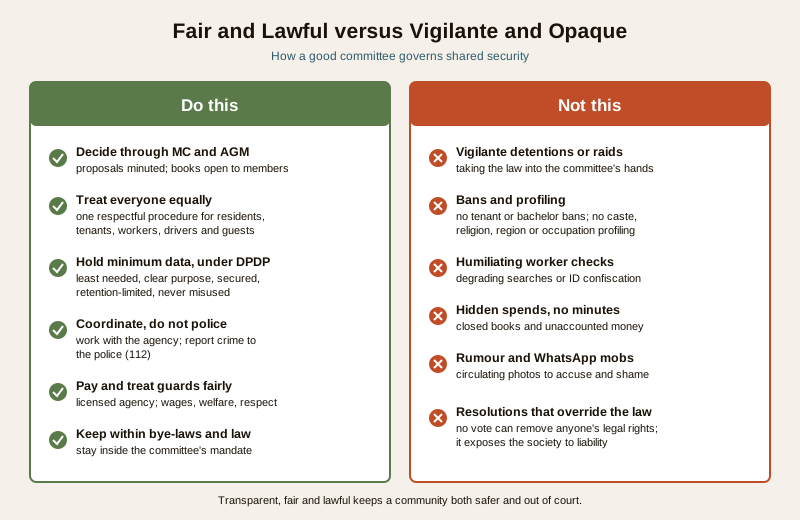
It is emphatically not a vigilante group, a private police force or a law unto itself. It does not detain people, hand out punishments, conduct "raids", override the bye-laws or the law, or decide who is allowed to live in the society. A committee resolution cannot take away a resident's or a worker's legal rights — no vote, however large the majority, makes an unlawful rule lawful. Keeping that line bright is the single most important thing a good committee does.
Mandate: what it should own
| The committee's job | What that looks like in practice |
|---|---|
| Assess risk | Walk the estate, list real vulnerabilities (gates, boundary, parking, common areas), rank them honestly rather than by rumour |
| Plan & budget shared security | Propose guard strength, CCTV, gate systems and the spend for them, with options and costs, to the managing committee and AGM |
| Oversee people & systems | Coordinate with the guard agency and the estate manager; check that guards, cameras and gates are actually working |
| Review incidents | Keep a simple, factual incident register; learn from patterns; fix root causes |
| Set & review policy | Draft clear, fair, lawful rules for entry, visitors, workers, deliveries and CCTV — for approval, not by fiat |
| Communicate | Give residents honest updates and a proper channel to raise concerns |
What it must never do
| Do not | Because |
|---|---|
| Act as vigilantes — detain, punish, "raid", or take the law into its own hands | Enforcement of the law is for the police and courts; the committee coordinates and reports, it does not police |
| Override the bye-laws or the law by resolution | A resolution cannot remove anyone's legal rights; unlawful rules expose the society and office-bearers to liability |
| Discriminate — ban "bachelors" or tenants, or profile by caste, religion, region or occupation | It is unfair and unlawful; workers and tenants are residents and people, not suspects |
| Run security opaquely — hidden spends, no minutes, closed books | The money is the members' money; security decisions must be transparent and accountable |
| Do the guard agency's or installer's job | Life-safety and hands-on work belong to licensed professionals; the committee specifies and oversees |
Who is on it, and who does what
Keep it small and workable — typically three to seven people. Balance it so it is not one street or one block, and set fixed terms so it refreshes.
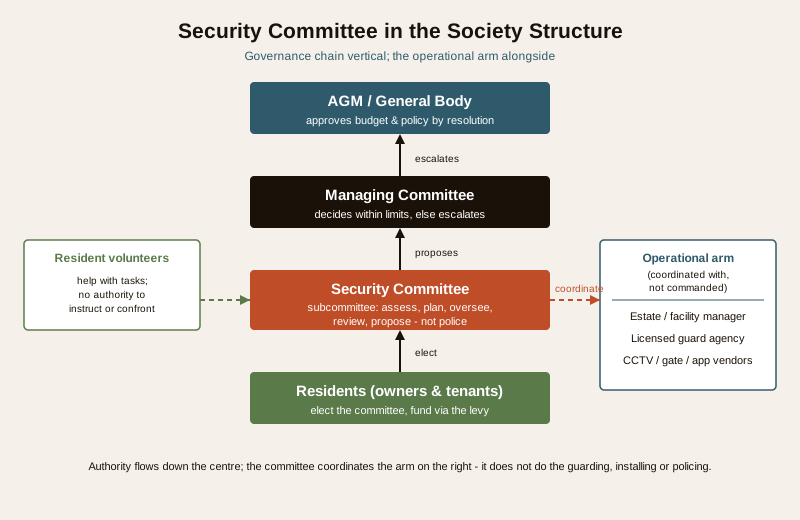
- Convenor — a managing-committee member who chairs the security committee, sets the agenda, and carries its proposals into the managing committee. The single accountable point, not a commander.
- Committee members — two to five residents with the time and temperament for it. A mix helps: someone numerate for budgets, someone patient for resident communication, someone who will insist on fairness and the rules.
- Resident volunteers — residents who help with specific tasks (a night-time gate audit, testing the visitor app, collating feedback) without being full members. Useful, but they hold no authority to instruct guards or confront anyone.
- The managing committee — the elected body the security committee reports to. It approves within its delegated powers and takes larger matters to the general body. The security committee proposes; the managing committee decides or escalates.
- The estate / facility manager — the paid professional (if the society has one) who runs day-to-day operations and is the committee's main working link to the guard agency and vendors.
- The guard supervisor — the guard agency's on-site lead. The committee coordinates through the supervisor and the estate manager; individual residents and committee members should not be issuing direct orders to guards on the ground.
How decisions get made — properly
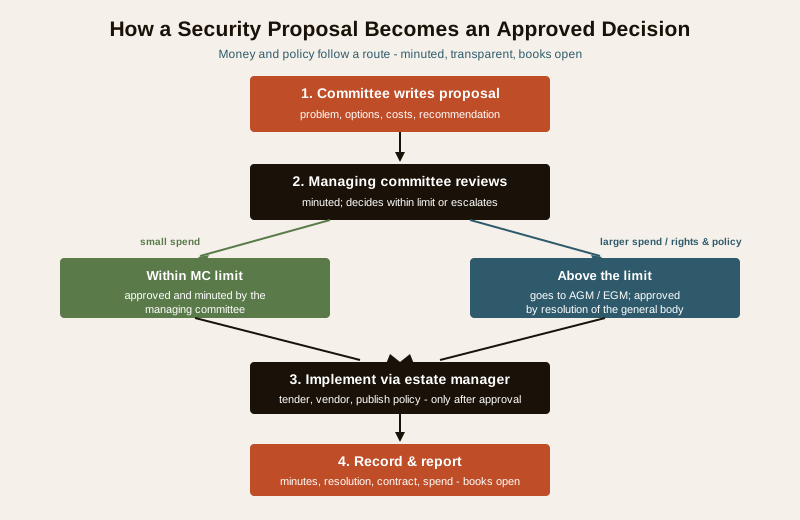
The commonest failure is a committee that "just does it" — signs a vendor, changes a gate rule, buys cameras — and only later discovers it had no authority, blew a spending limit, or broke a bye-law. Money and policy follow a route. Learn it once and use it every time.
The route from idea to approved decision
1. Proposal. The committee works up a written proposal: the problem, the options, the cost of each, and a clear recommendation. Small operational tweaks may stop here; anything touching money or residents' rights goes on.
2. Managing committee. The proposal goes to the managing committee, is minuted, and is either approved within its delegated powers or escalated.
3. AGM / EGM. Spending above the managing committee's limit, and any change of policy that affects residents' rights or the bye-laws, needs the general body's approval by resolution — properly noticed, discussed and voted, with the vote minuted.
4. Implementation. Only after approval does the committee act — issue the tender, sign the vendor, publish the policy — with the estate manager handling execution.
5. Record & report. Minutes, the resolution, the contract and the spend are recorded, and the books stay open to members.
The spending threshold that separates "managing committee can approve" from "must go to the general body" is set by your bye-laws and Act, not by this guide — check it before you commit a rupee.
A worked example: adding cameras at the rear gate
| Stage | Who | What happens | Recorded as |
|---|---|---|---|
| Trigger | Committee | Two rear-gate incidents logged; committee reviews the register | Incident register entries |
| Assess | Committee | Site walk confirms a blind spot; three quotes obtained | Committee note + quotes |
| Proposal | Committee | Written proposal: problem, 3 options, costs, DPDP and signage plan, recommendation | Proposal document |
| Decide | Managing committee | Cost exceeds MC limit, so it is placed on the AGM agenda with notice | MC minutes |
| Approve | AGM / general body | Members discuss and approve the spend and the CCTV policy by resolution | AGM minutes + resolution |
| Implement | Estate manager | Licensed vendor installs; signage put up; retention set; access limited | Contract, install record |
| Review | Committee | Committee confirms coverage, logs it in the asset list, reviews at next meeting | Committee minutes |
Reviewing incidents — a simple register that works
The committee's most valuable habit is writing things down. A plain incident register — a shared sheet or a simple app — turns anecdote and rumour into a factual record the committee can actually learn from. Keep it factual and neutral: what happened, when and where, what was done, and what it suggests. It is not a place for accusations, names of suspects, or speculation about who "looked suspicious".
What to capture, and what to keep out
| Capture (factual) | Keep out (unfair or unsafe) |
|---|---|
| Date, time and location on the estate | Guesses about who did it, or unproven accusations |
| What was observed or reported, plainly | Caste, religion, region, or "bachelor / tenant" labels |
| Action taken and by whom | Photos of workers or residents shared to blame or shame |
| Follow-up and outcome | Personal data beyond what the entry genuinely needs |
| Pattern notes for the committee's review | Anything you would not want read out at the AGM |
Review the register at each meeting for patterns — a recurring blind spot, a gate procedure people keep bypassing, a light that keeps failing — and fix the root cause rather than reacting case by case. Because the register can hold personal data, treat it under the DPDP Act, 2023: collect the least you need, restrict who can see it, keep it only as long as it is useful, and never repurpose it to target individuals.
Working with guards, agencies and vendors
The committee's role with the security workforce is to specify, coordinate and oversee — not to do the job or to mistreat the people doing it. Guards are engaged through a licensed agency under the PSARA framework; the committee's leverage is the contract and the relationship, not shouting on the ground.
The healthy division of labour
- The committee sets what "good" looks like — post orders, gate procedure, escalation, service standards — as part of an approved policy, and reviews performance.
- The estate manager is the day-to-day point of contact and holds the agency to the contract.
- The guard supervisor manages the individual guards, rosters and reliefs.
- Vendors (CCTV, gates, the visitor app) install and maintain their systems; the committee holds them to the AMC, it does not attempt the technical work itself.
Fairness to the guards is not optional and it is not charity — it is both right and required, and it makes for better security. A guard who is paid on time and correctly, given clean facilities, reasonable hours, a place to sit, water and a toilet, and treated with respect, is alert and loyal. One who is underpaid, exhausted and humiliated is neither. When the committee reviews the agency, it should look at wages and welfare as seriously as it looks at attendance. Detail lives in hiring and managing the society's guards.
Residents, communication and fairness
A security committee lives or dies by trust. The way it talks to residents — and the way it treats the people who work in the society — is as much a part of "security" as any camera.
Communicate well; avoid the WhatsApp trap
Society groups are useful for a lost-and-found notice and useless, even dangerous, as a security tool. A blurry photo and a "who is this?" spirals into rumour, accusation and sometimes a mob at the gate. The committee's job is to give residents a calm, official channel — a monthly note, a proper way to report a concern to the committee or estate manager, and clear guidance that suspicions go to the committee and genuine emergencies go to the police (dial 112), not to the group chat.
- Report concerns to the committee or estate manager, not by naming and shaming online.
- No circulating photos of workers, deliveries or residents to accuse or profile.
- Emergencies go to the police, not to a WhatsApp poll.
- The committee reports back honestly — including when nothing dramatic happened.
Fairness is a policy, not a mood
Everyone who enters the society deserves the same courteous, consistent treatment — residents, owners, tenants, domestic workers, drivers, delivery and gig staff, and guests. Fairness is not softness; it is the discipline that keeps security lawful and effective.
| Fair & lawful | Unfair & unlawful — do not adopt |
|---|---|
| One respectful entry procedure applied to everyone | Humiliating searches or separate, degrading treatment for workers |
| Verify a worker's employer and let them in to do their job | Blanket bans or ID-confiscation targeting domestic workers or drivers |
| Welcome tenants as residents with the same rights as owners | Banning tenants or "bachelors", or extra levies and curbs on them |
| Judge a concern on facts and behaviour | Profiling by caste, religion, region, dress or occupation |
| Collect the minimum visitor data, for a clear purpose | Hoarding photos, biometrics and phone numbers with no limit or plan |
A society cannot, by resolution or bye-law, deny anyone the rights the Constitution and the law give them. Rules that discriminate are not just wrong — they expose the society and its office-bearers to legal challenge and liability.
Data the committee handles — DPDP in one page
The moment a society collects visitor names, phone numbers, photos, vehicle numbers, domestic-worker details, or app and biometric data, it is acting as a data fiduciary under the Digital Personal Data Protection Act, 2023, and the security committee usually shapes how that data is handled. The committee does not need to be lawyers, but it should hold the society to a few plain principles.
- Collect the least you need for a stated purpose — a visitor log needs far less than most apps demand.
- Be clear about why you collect it and do not repurpose it.
- Secure it — restrict who can see registers, footage and app data.
- Limit retention — set a sensible cycle for footage and logs rather than keeping everything forever.
- Take extra care with biometrics and with workers' personal data, which are especially sensitive.
- Never misuse it to profile, shame or target anyone.
Put CCTV signage up, keep footage access tight, and if the society uses a visitor-management app, check what the vendor does with the data before you adopt it — the society, not the app company, answers to its members for it.
How it connects
The security committee is the governing brain of a community's shared security; the rest of the library is what it plans and oversees. Start from the overview in security for gated communities. The committee's core recurring work is the society security budget, the day-to-day entry and gate management, and hiring and managing the society's guards. All of these, and more, live in the Community & RWA Security library.
Key takeaways
- A security committee is a planning and oversight subcommittee of the managing committee — it proposes, coordinates and reviews; it is not a police force and never a vigilante group.
- Money and policy follow a route: committee proposal, managing committee, and the AGM or EGM above the limits your bye-laws set — minuted, transparent, books open.
- Keep a simple, factual incident register, review it for patterns, and fix root causes — never turn it into a list of suspicions or labels.
- Work with the guard agency, estate manager and vendors; specify and oversee rather than do their jobs, and treat guards fairly because it is both right and better security.
- Fairness is policy, not mood — one respectful procedure for everyone; no bans on tenants or "bachelors", no profiling, no humiliating checks.
- A resolution cannot override the law or anyone's rights; unlawful or discriminatory rules expose the society and its office-bearers to liability.
- Handle personal data under the DPDP Act, 2023 — least data, clear purpose, secured, retention-limited, never misused, with extra care for biometrics and workers' data.
References
- Digital Personal Data Protection Act, 2023 — the framework for how a society, as a data fiduciary, must handle visitor, worker and resident personal data; verify the current rules and any notified provisions with the society's legal advisor.
- The Private Security Agencies (Regulation) Act, 2005 (PSARA) and its state rules — governs licensed security agencies and guard welfare; the basis for engaging and reviewing your guard agency.
- Your state's Apartment Ownership Act or Cooperative Societies Act, and the Model Bye-laws — the source of the managing committee's powers, spending limits, quorums and approval routes; confirm the specifics with the registrar or a legal advisor.
- Your society's own registered bye-laws and general-body resolutions — the operative rules for how your committee is formed, delegated and held accountable.
- The Constitution of India and general anti-discrimination principles — the reason no resolution or bye-law can deny residents or workers their legal rights; get legal advice on any rule that treats a group differently.
This guide is educational and India-general, not legal advice, and cites no section numbers. Powers, limits and procedures come from your state Act, your bye-laws and your general body — verify them with the society's legal advisor, the registrar or the authority. Apply security fairly and lawfully to everyone, handle personal data under the DPDP Act, and leave guarding, installation and enforcement to the licensed professionals and the police.
Export this guide
Related Guides — Deep-dive reading
Fair and Lawful Community Security in India (2026): Dignity, Data and Governance Done Right
How a housing society can run security that is fair, dignified and within the law — rejecting discriminatory practices, respecting domestic, delivery and gig workers, honouring the DPDP Act as a data fiduciary, and governing within its bye-laws and residents' rights — and why that makes it better security, not weaker.
SecurityVisitor Vehicle Management in India: A Professional Guide
The everyday weak point of every society and office gate is not the resident's car — it is the visitor, the cab, the delivery rider and the contractor who must be let in without opening the whole park to anyone. This is the process, not just the hardware: verify at the gate before the boom lifts, park visitors away from resident bays, and never jam the gate a fire tender needs.
SecuritySociety Security Audit and Review in India (2026): Finding the Gaps Before They Find You
A practical, India-grounded guide to how a housing society or RWA reviews its own security on a regular cycle — a walk-through and checklist across perimeter, gates, guards, CCTV, lighting, common areas, visitors, incidents, emergency readiness, vendors and DPDP — then writes up findings as a prioritised, life-safety-first action list taken to the committee and AGM, and re-checked.
SecurityRelated Tools — Try Free
CCTV Camera Coverage & Count Calculator
Estimate how many CCTV cameras you need, the NVR channels, storage in TB for your retention period, and an indicative all-in cost with GST.
CCTV CalculatorSecurity System Cost Estimator
Estimate the all-in capex with GST, annual running cost and 5-year total cost of ownership of a home or building security system.
Cost EstimatorSecurity Vendor Evaluation Scorecard
Rate a CCTV/security installer or guarding agency across eight weighted criteria for a hire / negotiate / walk-away verdict.
Vendor Scorecard