
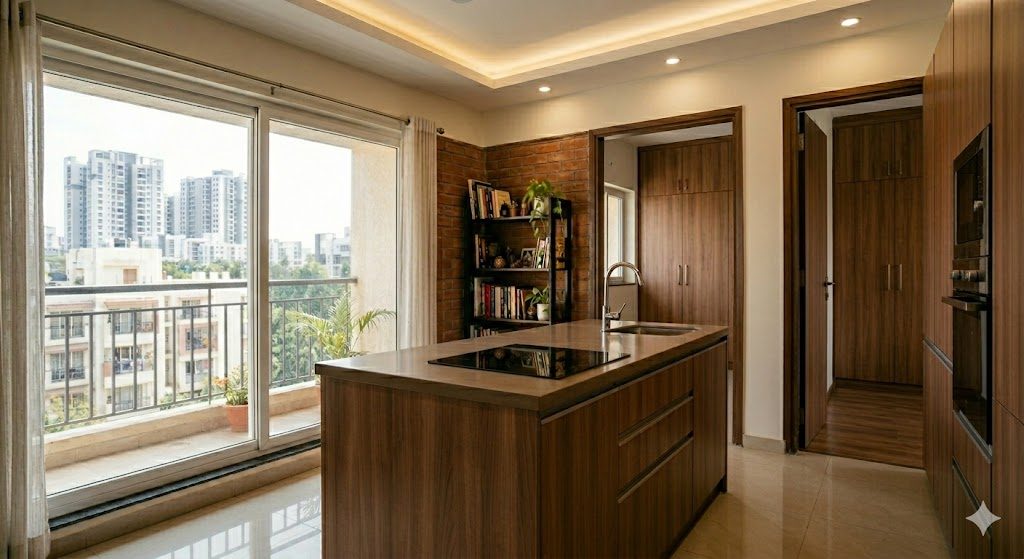
Realistic 2BHK Interior Budget in Bengaluru (2026)
What a full 2BHK interior actually costs in Bengaluru today — line by line, tier by tier
A couple in Sarjapur takes possession of a shiny new 1,100 sqft 2BHK and starts collecting interior quotes. The first design studio in a Whitefield mall quotes ₹18 lakh. A local carpenter near their layout says ₹6.5 lakh. A mid-tier brand lands at ₹11.8 lakh. Same flat, same two bedrooms — a ₹12 lakh spread. Who is lying? Usually nobody. They are quoting three different homes that happen to fit inside the same walls.
This guide gives you the number nobody publishes honestly: what a full 2BHK interior actually costs in Bengaluru in 2026, line by line, tier by tier, in real rupees against real local labour and material rates. Not a national average — a Bengaluru figure, with the city-specific factors that push your quote up or down.
The single most useful thing to internalise: a Bengaluru 2BHK interior is not one price, it is a band from roughly ₹6 lakh to ₹26 lakh, and where you land inside that band is decided almost entirely by carpentry spec and how much joinery you fit — not by the size of the flat.
The typical Bengaluru 2BHK in 2026
Across the corridors where most 2BHKs are selling — Whitefield, Sarjapur Road, Electronic City, Hebbal, Hennur, Kanakapura Road, Yelahanka — a 2BHK lands in a fairly tight band of carpet area. Builders quote super-built-up, but interiors are priced on carpet, so always work from carpet area.
| Bengaluru 2BHK type | Super built-up | Carpet area (the number that matters) | Common corridors |
|---|---|---|---|
| Compact 2BHK | 950 – 1,150 sqft | 700 – 820 sqft | Electronic City, Hennur, Kanakapura |
| Standard 2BHK | 1,150 – 1,350 sqft | 850 – 980 sqft | Sarjapur, Whitefield, Hebbal |
| Large / 2BHK+study | 1,350 – 1,600 sqft | 1,000 – 1,200 sqft | Whitefield, Yelahanka, premium gated |
For this guide the worked numbers assume a standard 1,100 sqft carpet 2BHK in Sarjapur — two bedrooms, two baths, a living-dining, a utility, one balcony, and a kitchen of about 70 to 90 sqft footprint. That is the median flat the typical Bengaluru buyer is furnishing right now.
When Bengaluru studios say "interiors", they almost always mean the fixed, built-in work: modular kitchen, wardrobes, false ceiling, electrical and lighting changes, painting, a TV or feature wall, a foyer or crockery unit, sometimes a study, plus soft furnishing and minor civil and plumbing. It usually does not include your sofa, beds, dining table and mattresses unless you specifically ask for them in the scope. Clarifying that one boundary removes half the quote confusion.
Three realistic tiers for a full Bengaluru 2BHK (2026)
Here is the honest banding for a 1,100 sqft carpet 2BHK in Bengaluru, all-in (carpentry + services + finishing + GST + design fee), excluding loose retail furniture.
| Tier | Total (1,100 sqft 2BHK) | ₹ per sqft (carpet) | What it buys you |
|---|---|---|---|
| Essential | ₹6,00,000 – 9,00,000 | ₹550 – 800 | MR/BWR ply, laminate finish, one full wardrobe + one basic, modular kitchen with standard hardware, partial false ceiling (living only), basic LED lighting, two-coat emulsion. A clean, liveable, no-frills home. |
| Comfort | ₹9,00,000 – 15,00,000 | ₹900 – 1,400 | BWP ply core, acrylic-laminate mix, two designed wardrobes, kitchen with soft-close Hettich/Hafele hardware, full false ceiling with cove lighting, a feature TV wall, layered lighting, foyer + crockery unit, soft furnishing. The Bengaluru sweet spot. |
| Premium | ₹15,00,000 – 26,00,000+ | ₹1,500 – 2,400+ | BWP / marine ply, PU paint and veneer, imported Blum hardware, designer lighting scheme, multiple feature walls, premium flooring upgrade, partial automation, branded modular, custom joinery throughout. |
Two things to notice. First, the Comfort band is wide on purpose — ₹9 lakh and ₹15 lakh are both "Comfort", separated mainly by how much joinery you add (a second wardrobe, a study, a pooja unit) and whether the kitchen runs along one wall or wraps an L with an island. Second, the ₹/sqft jumps are not linear with quality; the Premium tier mostly buys finish and hardware, not more square feet of cabinet.
For a deeper national view of how these ₹/sqft bands behave outside Bengaluru, the companion interior cost per sqft in India guide breaks the same logic across cities and spec levels. This page is the Bengaluru-specific zoom-in of that.
The full line-item breakdown (Comfort tier)
This is the table most quotes hide inside a single lump sum. Below is a realistic component-by-component breakdown for the same 1,100 sqft Sarjapur 2BHK at each tier. Use it as your line-item checklist when you compare quotes.
| Line item | Essential | Comfort | Premium | What drives it |
|---|---|---|---|---|
| Modular kitchen (base + wall + tall) | ₹1,30,000 – 1,80,000 | ₹2,20,000 – 3,20,000 | ₹4,00,000 – 7,00,000 | Ply grade, finish (laminate vs acrylic vs PU), hardware brand, countertop |
| Wardrobes — both bedrooms | ₹1,10,000 – 1,60,000 | ₹2,10,000 – 3,00,000 | ₹3,50,000 – 6,00,000 | Run length, sliding vs openable, internal fittings |
| False ceiling | ₹35,000 – 60,000 (partial) | ₹95,000 – 1,30,000 (full) | ₹1,50,000 – 2,50,000 | Area covered, cove/profile lighting, gypsum vs designer |
| TV / feature wall | ₹20,000 – 40,000 | ₹55,000 – 90,000 | ₹1,20,000 – 2,50,000 | Panelling, back-lighting, stone/veneer |
| Electrical + lighting | ₹55,000 – 80,000 | ₹85,000 – 1,20,000 | ₹1,50,000 – 2,80,000 | Number of points, switch brand, fixtures |
| Painting (full flat) | ₹55,000 – 80,000 | ₹80,000 – 1,10,000 | ₹1,40,000 – 2,20,000 | Emulsion grade, texture/accent walls |
| Flooring upgrade (optional) | ₹0 – 40,000 | ₹50,000 – 80,000 | ₹1,20,000 – 3,00,000 | Tile vs wooden/SPC vs imported |
| Foyer + crockery unit | ₹25,000 – 45,000 | ₹55,000 – 80,000 | ₹1,00,000 – 1,80,000 | Size, finish, glass/lighting |
| Study / WFH unit | ₹0 – 30,000 | ₹35,000 – 60,000 | ₹70,000 – 1,40,000 | Standalone vs built-in, storage |
| Soft furnishing + decor | ₹40,000 – 70,000 | ₹70,000 – 1,00,000 | ₹1,20,000 – 2,50,000 | Curtains, blinds, rugs, art |
| Civil + plumbing changes | ₹20,000 – 40,000 | ₹35,000 – 55,000 | ₹60,000 – 1,50,000 | Wall demolition, bathroom redo, utility |
| GST (18% on works/contract) | included in bands | included in bands | included in bands | Levied on the executed value |
| Design fee | ₹0 – 50,000 | ₹60,000 – 1,20,000 | ₹1,50,000 – 4,00,000 | Flat fee, % of project, or "free" (built into rates) |
In a Bengaluru 2BHK, kitchen plus wardrobes alone is typically 50 to 60 percent of the entire interior budget. Get those two right and the rest is rounding error.
Notice how the figure widens with finish, not floor area. The carcase ply that makes a wardrobe lasts decades; the laminate-versus-acrylic-versus-PU choice on its face is what moves you from ₹2.1 lakh to ₹6 lakh on the same two cupboards. For the kitchen specifically, the budget modular kitchen planning guide and the kitchen budget tool let you price the single biggest line item before you sit across from a salesperson.
What actually drives the Bengaluru cost
Bengaluru is not the cheapest metro for interiors, nor the dearest — but it has its own cost signature. A few local realities move your quote:
Skilled labour rates. Bengaluru carpenters and finishing crews now command ₹900 – 1,400 a day for skilled, ₹650 – 900 for helpers, and good polish or PU specialists more. The city's construction boom and competition from larger projects keep labour tight, so a 2BHK fit-out's labour component runs noticeably higher than in tier-2 Karnataka towns. On-site bespoke carpentry costs more in labour but less in transport; factory modular flips that.
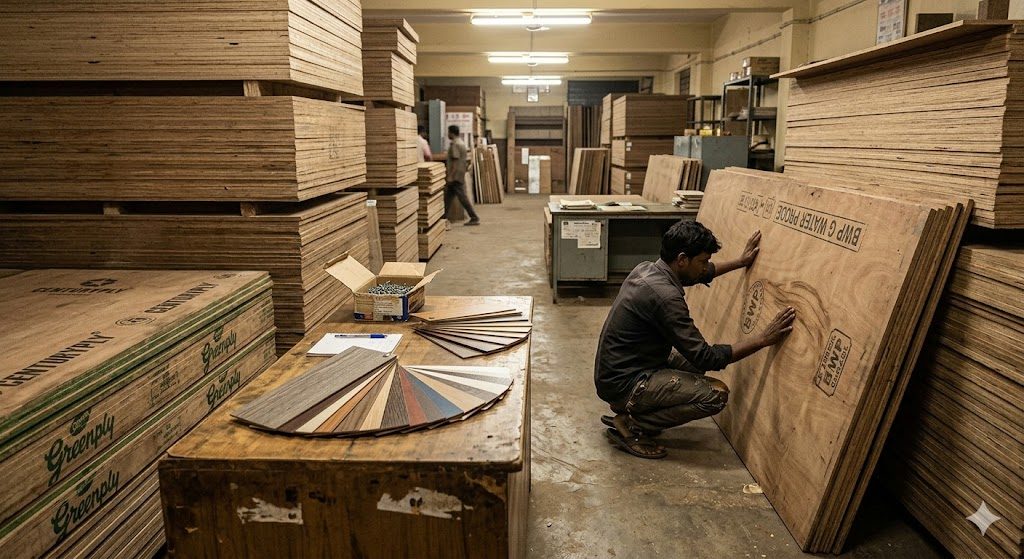
Material markets. Plywood, laminate and hardware in Bengaluru cluster around a few hubs. The Mysore Road / Bapuji Nagar belt and SP Road area are traditional plywood and laminate wholesale centres; HSR Layout and the eastern corridors have a dense cluster of modular showrooms and mid-market vendors; Yeshwanthpur and the Magadi Road stretch carry timber and boards. Buyers who source ply and laminate directly from these markets — rather than through a turnkey markup — routinely shave 8 to 15 percent off material cost, at the price of doing their own coordination.
Brand tiers, honestly. Local-and-honest Bengaluru ply brands like Century, Greenply, Kitply and Mayur sit in the mid band; premium brings in marine-grade and branded boards. Laminates run Merino, Greenlam, Century at the mid tier. Hardware ladders from local channels to Hettich and Hafele (mid) to Blum (premium). A "branded turnkey" company in a Whitefield mall often uses the same Hettich runners as a good local contractor — you are paying a brand and showroom premium of ₹1 – 2 lakh for project management and a warranty, not better steel.
Bengaluru-specific factors. Apartment association rules in gated communities restrict working hours and impose interior-work deposits and debris-removal charges (₹10,000 – 50,000 refundable plus fees) — budget for them. The city's humidity and monsoon make BWP ply and proper wet-area waterproofing non-negotiable; cutting there is a false economy. And tower logistics — service-lift booking, no drilling after 6 pm, material hauling to the 14th floor — quietly add to labour time and therefore cost.
Where Bengaluru 2BHK owners overspend — and underspend
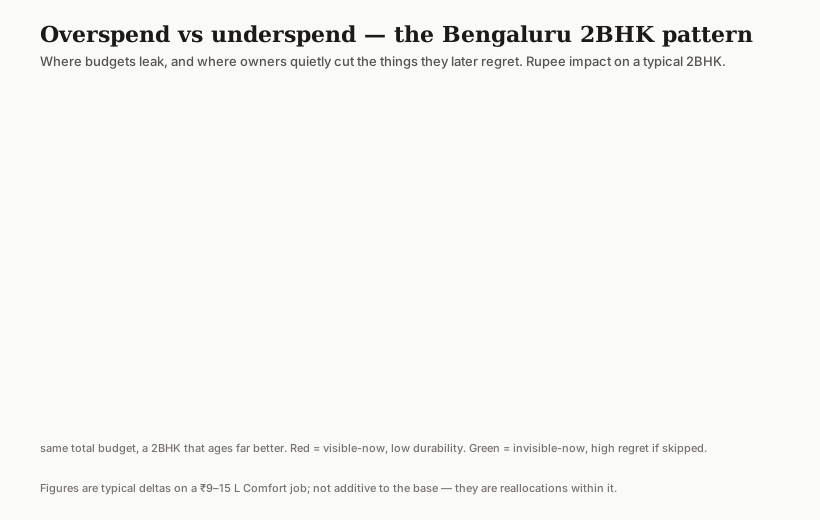
The same ₹12 lakh budget produces very different homes depending on where it leaks. The pattern in Bengaluru is remarkably consistent.
Overspend zones (claw this back):
- A branded modular premium of ₹1 – 2 lakh for the same ply and the same Hettich hardware a good local vendor uses.
- False ceiling in every room. Bedrooms rarely need a full drop ceiling; a perimeter cove or a simple plus-minus in one room does the job. Full-flat ceiling adds ₹60,000 – 90,000 you may not feel.
- Designer feature walls — fluted panels, back-lit stone, veneer — repeated across living, dining and both bedrooms. One striking wall reads better than four; the restraint saves ₹50,000 – 80,000.
- Floor-to-ceiling wardrobe lofts you need a stool to reach. Tall lofts add carpentry you will fill with suitcases once and forget.
Underspend zones (do not cut these):
- Kitchen hardware and drawer channels. Soft-close tandem boxes and good hinges outlast the carcase; ₹25,000 extra here is the best-spent money in the flat.
- Wiring and switch quality. Buried in walls, near-impossible to redo. Spend the ₹20,000 on proper conductor and decent modular switches.
- Wet-area waterproofing. Bengaluru damp and monsoon seepage punish skipped membrane work; ₹15,000 now versus a bathroom redo later.
- Lighting layers. One ceiling tube makes a ₹12 lakh home look like a ₹5 lakh one. ₹30,000 on task and accent layers transforms how the home feels.
The smart move on a fixed budget is to reallocate, not spend more — move ₹1.5 – 2.5 lakh out of show surfaces into hardware, wiring, waterproofing and light. For the room-by-room logic behind these trade-offs, see interior cost breakdown room by room, and for the allocation framework, smart budget allocation for Indian homes.
Turnkey vs piecemeal in Bengaluru
| Approach | Typical cost effect | Best for |
|---|---|---|
| Full turnkey (brand or studio) | +12 to 25% over piecemeal, single point of accountability | First-timers, NRIs furnishing remotely, those short on time |
| Designer + own contractors | Mid; design fee 5 – 10% but you control vendor margins | Owners who want a designed look without brand markup |
| Piecemeal (separate kitchen vendor, carpenter, painter, electrician) | Cheapest 8 – 18% lower, but you are the project manager | Hands-on owners living in the city, with time to coordinate |
In Bengaluru, the turnkey premium buys real things — timeline discipline, a single warranty, debris and association-paperwork handling, and someone to chase when a drawer sags. For an NRI or a busy dual-income couple, that is often worth ₹1 – 2 lakh. For a hands-on local owner, piecemeal sourcing from the Mysore Road and HSR markets genuinely saves money. The turnkey interiors in India guide covers the contract and accountability side in depth.
Timeline reality
A full 2BHK interior in Bengaluru typically runs 6 to 10 weeks of execution once the design is frozen and the advance is paid — longer for Premium with PU finishes (each PU coat needs cure time) or imported material lead times.
| Phase | Duration | Notes |
|---|---|---|
| Design freeze + 3D + BOQ | 1 – 3 weeks | Do not start site work until this is locked |
| Civil, plumbing, electrical chasing | 1 week | Noisy, dusty; association hours apply |
| False ceiling + painting (first coats) | 1.5 – 2 weeks | Ceiling before final paint |
| Carpentry / modular install | 2 – 4 weeks | The long pole; factory modular is faster on site |
| Finishing, hardware, lighting | 1 – 2 weeks | Punch-list and snagging here |
| Soft furnishing + handover | 1 week | Curtains, decor, deep clean |
Monsoon (June to September) can stretch PU and polish work and slow material movement; plan accordingly.
A worked example — 1,100 sqft 2BHK, Sarjapur, Comfort tier
The couple from the opening goes Comfort. Their frozen budget lands at ₹11,95,000 all-in:
- Modular kitchen (L-shape, BWP ply, acrylic shutters, Hettich soft-close, granite top): ₹2,60,000
- Two wardrobes (master sliding 8 ft, second openable 6 ft, laminate, organisers): ₹2,40,000
- Full false ceiling with cove lighting (living, dining, both bedrooms perimeter): ₹1,10,000
- Electrical points + layered lighting (spots, cove LED, profile, fixtures): ₹1,00,000
- Painting (premium emulsion, two accent walls): ₹90,000
- Soft furnishing (curtains, blinds, two rugs, art): ₹80,000
- TV / feature wall (panelling + back-light + console): ₹70,000
- Foyer console + crockery unit: ₹65,000
- Flooring upgrade (SPC in both bedrooms): ₹60,000
- Study / WFH built-in (corner of second bedroom): ₹45,000
- Civil + plumbing (utility shelf, one bathroom counter): ₹40,000
- Design fee + GST: ₹1,30,000 (rolled into the above as executed value)
Total ≈ ₹11,95,000, or about ₹1,085 per sqft of carpet — squarely in the Comfort band. Loose furniture (sofa, two beds, dining set) bought retail adds another ₹2.2 lakh, which they phase over the next year. This is the most common shape of a well-run Bengaluru 2BHK interior in 2026.
To pressure-test your own version of this, run your carpet area through the interior cost calculator before you take a single quote — it gives you a defensible target band to negotiate against.
GST and payment-milestone reality
Interior fit-out is a works contract; GST at 18% applies to the executed value, whether or not the vendor itemises it. A quote that looks 18% cheaper than a competitor often simply hasn't shown the tax — always ask whether the figure is GST-inclusive. Insist on a GST invoice; cash "savings" forfeit warranty and recourse.
Bengaluru studios typically structure payment in milestones. A fair, owner-protective schedule looks like this:
| Milestone | Typical % | What it should unlock |
|---|---|---|
| Booking / design advance | 10% | Locked design, 3D, signed BOQ |
| Material procurement | 35 – 40% | Ply, laminate, hardware ordered |
| Carpentry / install start | 30% | On-site work underway |
| Pre-handover | 15 – 20% | Finishing complete, snag list raised |
| Final / retention | 5 – 10% | Hold this until snags closed |
The single most important clause: never let payment run ahead of work delivered, and hold a 5 – 10% retention until the snag list is fully closed. If a vendor demands 50% upfront before any material arrives, that is a red flag.
How to get 2 to 3 comparable quotes
The reason quotes feel impossible to compare is that each vendor scopes differently. Force them onto the same sheet:
1. Fix the scope yourself first using the line-item table above, with carpet area, ply grade, finish, hardware brand and lighting count specified.
2. Send the identical scope to one branded studio, one independent designer, and one good local contractor.
3. Demand a line-item BOQ, not a lump sum — every item with quantity, rate and brand.
4. Normalise GST and design fee so you compare apples to apples.
5. Check ply grade and hardware brand in writing — the commonest hidden downgrade.
6. Visit one finished site per vendor, ideally a 2BHK 1 – 2 years old, to see how their work ages.
How to budget it, in order
1. Start from carpet area and a tier, not a vendor quote. Decide Essential, Comfort or Premium first.
2. Allocate kitchen + wardrobes first — they are 50 to 60% of the spend; everything else flexes around them.
3. Protect the non-negotiables — hardware, wiring, waterproofing, lighting — before any feature wall.
4. Lock a written, line-item BOQ with ply grade, finish and brand named, GST shown.
5. Keep a 7 to 10% contingency for site surprises, association charges and scope creep.
6. Phase loose furniture over 6 to 12 months rather than financing it into the fit-out.
7. Structure payments to milestones and hold a final retention until snags close.
8. Get three normalised quotes on the identical scope before you sign anything.
DesignAI can turn your floor plan into an itemised BOQ and a tier-by-tier budget in minutes — it drafts the line items above with realistic Bengaluru 2026 rates, so you walk into vendor meetings with a defensible number instead of a blank sheet.
References
1. CIDC — Construction Industry Development Council, schedule of labour and finishing rates (reference for skilled/unskilled day rates).
2. CPWD Plinth Area Rates and Delhi Schedule of Rates — baseline civil and finishing cost benchmarks adapted to Karnataka.
3. Bureau of Indian Standards — IS 303 (plywood grades), IS 710 (marine/BWP plywood) for ply specification and grading.
4. National Building Code of India (NBC 2016) — services, electrical and wet-area provisions for residential interiors.
5. Karnataka RERA — guidance on carpet area definition and builder disclosures for apartment buyers.
6. BMTPC — Building Materials and Technology Promotion Council, material cost and durability references.
7. CREDAI Bengaluru — regional real-estate and fit-out market context for the city's apartment corridors.
Keep planning with related cost guides: smart budget allocation for Indian homes, interior cost breakdown room by room, what ₹10 lakh of interiors gets you in India, interior cost per sqft in India, budget modular kitchen planning, and the cost calculator and kitchen budget tools.
Export this guide
Related Guides — Deep-dive reading
The Truth About Cost Per Square Foot
Why a ₹/sqft interior quote is the most misleading number in Indian home costing — and how to convert it into a real BOQ
Cost & MoneyThe Design Decisions With the Biggest Cost Consequences
A cost-leverage map of Indian home interiors — the handful of decisions that swing your total budget the most, so you spend your attention where a single choice has an outsized rupee impact.
Cost & MoneyThe Homeowner's Guide to Interior Design Budgets in India
Where the money really goes in an Indian fit-out — realistic 2026 ranges, cost-per-sqft truths, bang-for-buck upgrades, life-cycle costing and contracts
Home PlanningRelated Tools — Try Free
False Ceiling Cost Estimator
Live ₹/sqft across 8 ceiling types — POP, gypsum, designer, metal, PVC, wooden — with cove and spot lighting for 20 Indian cities.
Cost CalculatorApartment Interior Planning Checklist
51-item checklist across structural, ceiling, lighting, furniture, storage, electrical, kitchen, bathroom.
ChecklistHome Building & Interior Cost Calculator — 20 Cities
Construction + interior costs for 20 Indian cities across kitchen, wardrobes, flooring, painting, ceiling.
Cost Calculator