

Turnkey Interiors in India — The Homeowner's Decision Reference
Three Procurement Models, What's Included vs Excluded, Three Fee Structures, Twelve Red Flags & the Decision Matrix
Turnkey interiors are the dominant model in urban Indian residential design today. The Livspace, Asian Paints Beautiful Homes, Bonito Designs, HomeLane, Pepperfry Interiors phenomenon — single-window design-and-build firms offering "design + execution + handover" as one package — has reshaped how middle-class and premium Indian homeowners commission interior work.
Turnkey works for a specific homeowner profile. For others, it's an expensive convenience that delivers less than a freelance designer + direct trade contractors at 20-30% less cost. The question is not "is turnkey good or bad?" — it is "is turnkey right for ME, for THIS project?"
This guide is the homeowner's working reference for turnkey interiors in India 2025-26. It covers the three procurement models, the twelve-category include/exclude checklist, the three fee structures, the twelve specific red flags to refuse signing on, and the six-factor decision matrix that helps you decide whether turnkey is worth the premium for your project.
Turnkey is a TIME-MONEY trade. The premium of ₹ 200-500/sft buys back 150-250 hours of homeowner site management. If your hourly rate is > ₹ 1,500, turnkey is net positive on the time-money math. If it's not, owner-managed delivers the same outcome at 20-30% less.
For the cost-cluster context, see Construction Cost in India, Interior Cost per Sft in India, Hidden Costs in Interiors, Home Renovation Cost in India, and BOQ Explained for Indian Homeowners. For the design-selection framework see How to Choose the Right Architect or Interior Designer in India.
The Three Procurement Models — What Each Looks Like in Practice
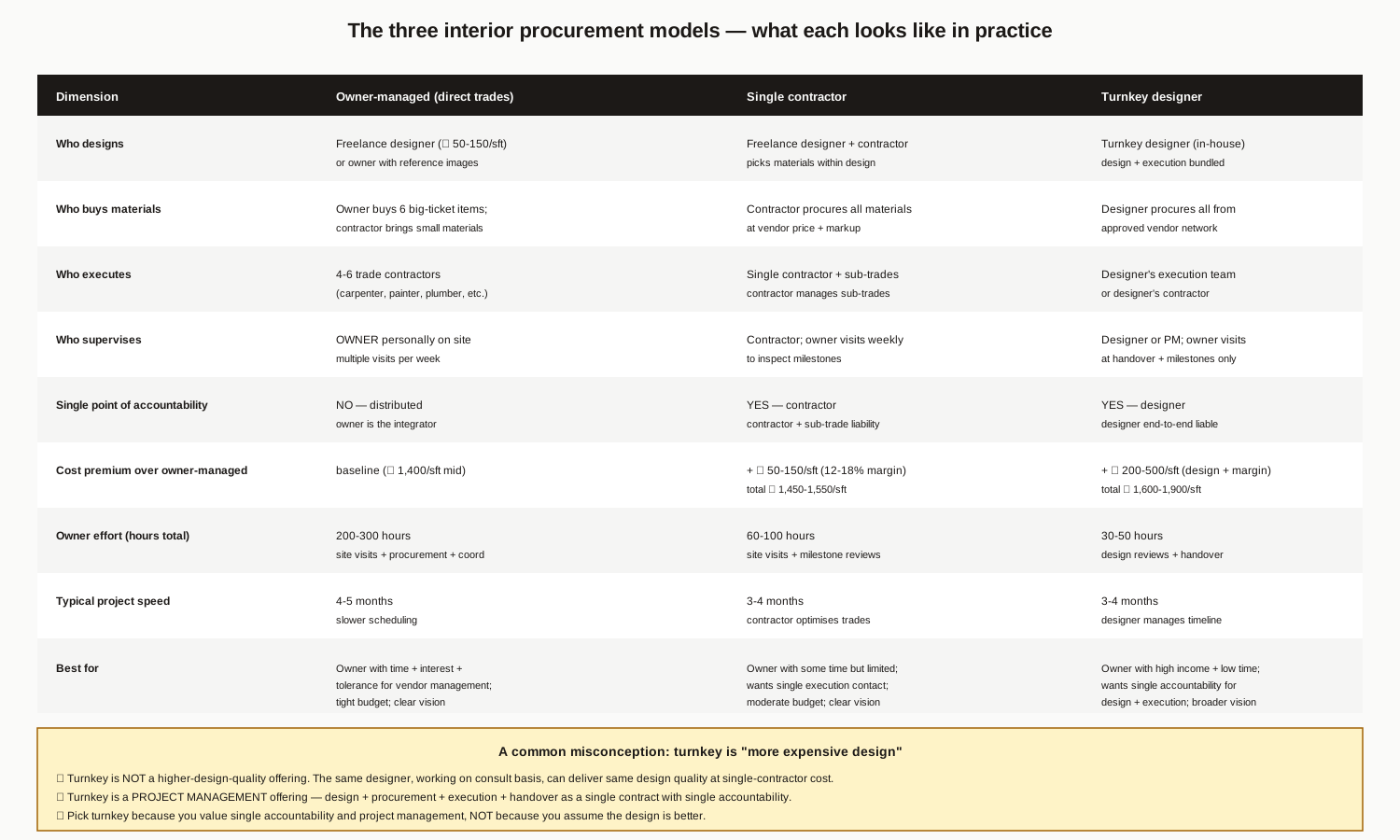
The figure above is the working comparison. Each model has a clear profile.
Owner-managed (direct trades)
You hire a freelance designer at ₹ 50-150/sft for design + supervision. You buy the six big-ticket items directly (cement, steel, kitchen module, sanitaryware, CP fittings, flooring). You contract 4-6 trade contractors directly: carpenter, painter, plumber, electrician, FC vendor, AC installer. You supervise on site personally — multiple visits per week. The integrator role is yours.
Cost: baseline ₹ 1,400/sft for mid-spec; no contractor margin layer. Effort: 200-300 hours total. Single accountability: NO — distributed across vendors. Speed: 4-5 months.
Best for: homeowners with time + interest + tolerance for vendor management, with tight budgets, with clear design vision.
Single contractor
You hire a freelance designer at ₹ 50-150/sft for design + supervision. The contractor (a single interior contractor with execution team + sub-trades) procures all materials within the design at vendor price + 12-18% markup. You supervise on milestones — weekly site visits.
Cost: + ₹ 50-150/sft over owner-managed = ₹ 1,450-1,550/sft. Effort: 60-100 hours total. Single accountability: YES — contractor end-to-end on execution. Speed: 3-4 months.
Best for: homeowners with some time but limited, who want a single execution contact while keeping design separate. The most common middle-ground in Indian residential interior work.
Turnkey designer
You hire a turnkey designer (in-house design + execution bundled). The designer procures all materials from approved vendor network. Owner visits on milestones + handover only — typically 30-50 hours total.
Cost: + ₹ 200-500/sft over owner-managed = ₹ 1,600-1,900/sft for mid-spec, ₹ 2,400-3,500/sft for premium. Effort: 30-50 hours. Single accountability: YES — designer end-to-end. Speed: 3-4 months.
Best for: homeowners with high income + low time, who want single accountability for design + execution + handover, with comfortable budget.
The common misconception
Turnkey is NOT a higher-design-quality offering. The same freelance designer, working on consult basis with you running owner-managed trades, can deliver the same design quality at single-contractor cost.
Turnkey is a project management offering — design + procurement + execution + handover as a single contract with single accountability. Pick turnkey because you value single accountability, not because you assume the design is better.
What Turnkey Includes — and What It Doesn't
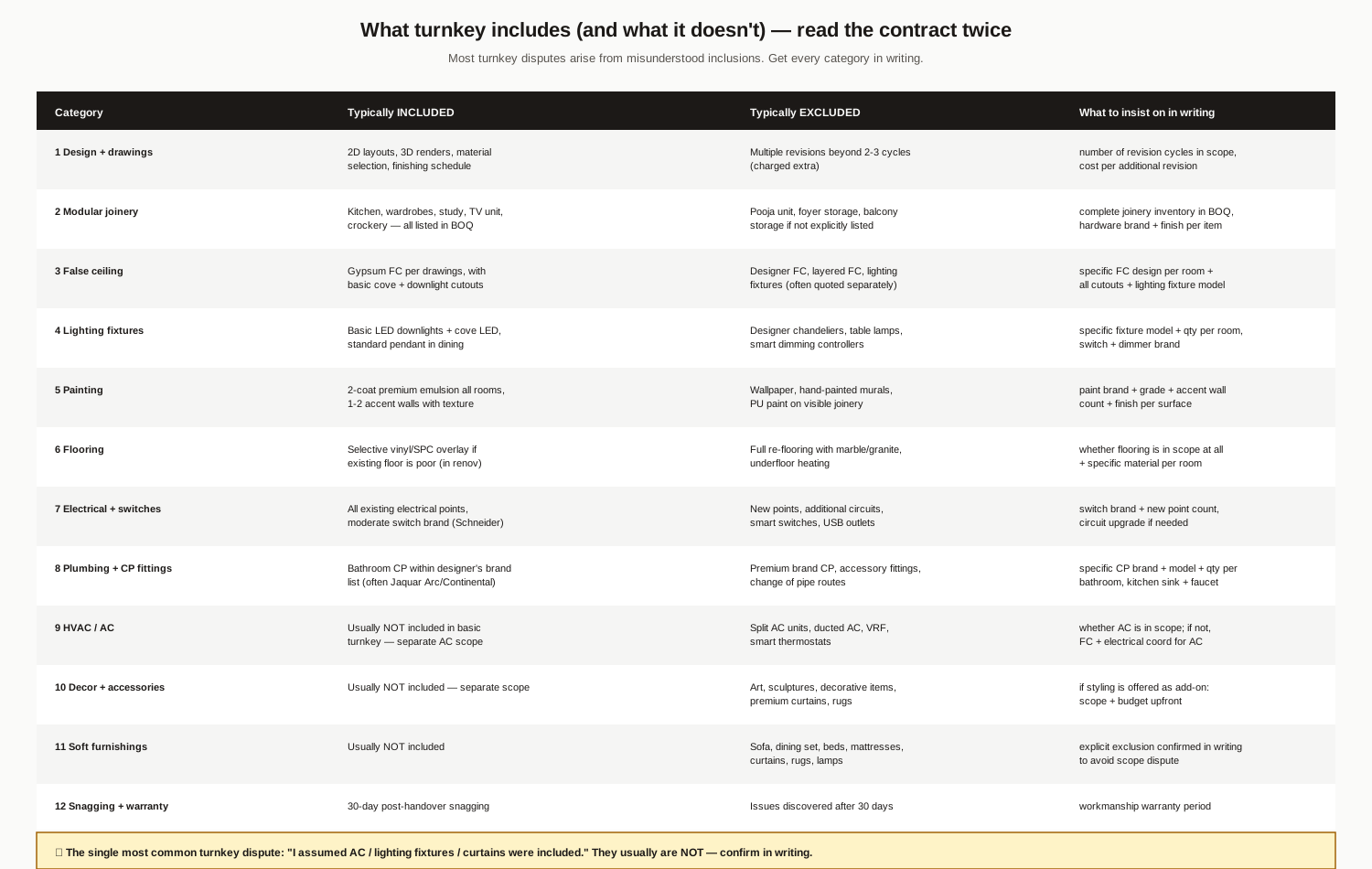
Most turnkey disputes arise from misunderstood inclusions. The figure above is the canonical category-by-category inclusion list. Get every category in writing before signing.
The twelve categories
1. Design + drawings — Included: 2D layouts, 3D renders, material selection, finishing schedule. Excluded: more than 2-3 revision cycles. Insist: number of revision cycles in scope, cost per additional revision.
2. Modular joinery — Included: kitchen, wardrobes, study, TV unit, crockery — all listed in BOQ. Excluded: pooja unit, foyer storage, balcony storage if not explicitly listed. Insist: complete joinery inventory in BOQ, hardware brand + finish per item.
3. False ceiling — Included: gypsum FC per drawings with basic cove + downlight cutouts. Excluded: designer layered FC, lighting fixtures. Insist: specific FC design per room + all cutouts.
4. Lighting fixtures — Included: basic LED downlights + cove LED + standard pendant in dining. Excluded: designer chandeliers, table lamps, smart dimming controllers. Insist: specific fixture model + qty per room.
5. Painting — Included: 2-coat premium emulsion all rooms + 1-2 accent walls with texture. Excluded: wallpaper, hand-painted murals, PU paint on joinery. Insist: paint brand + grade + accent wall count + finish per surface.
6. Flooring — Included: selective vinyl/SPC overlay if existing floor is poor (in renovations). Excluded: full re-flooring with marble/granite, underfloor heating. Insist: whether flooring is in scope at all + specific material per room.
7. Electrical + switches — Included: all existing electrical points + moderate switch brand (Schneider). Excluded: new points, additional circuits, smart switches, USB outlets. Insist: switch brand + new point count + circuit upgrade if needed.
8. Plumbing + CP fittings — Included: bathroom CP within designer's brand list (often Jaquar Arc/Continental). Excluded: premium brand CP, accessory fittings, change of pipe routes. Insist: specific CP brand + model + qty per bathroom, kitchen sink + faucet.
9. HVAC / AC — Usually NOT included in basic turnkey. Excluded: split AC, ducted AC, VRF, smart thermostats. Insist: whether AC is in scope; if not, FC + electrical coordination for AC.
10. Decor + accessories — Usually NOT included. Excluded: art, sculptures, decorative items, premium curtains, rugs. Insist: if styling is offered as add-on, scope + budget upfront.
11. Soft furnishings — Usually NOT included. Excluded: sofa, dining set, beds, mattresses, curtains, rugs, lamps. Insist: explicit exclusion confirmed in writing.
12. Snagging + warranty — Included: 30-day post-handover snagging. Excluded: issues discovered after 30 days. Insist: workmanship warranty period (target 12 months minimum).
The single most common turnkey dispute: "I assumed AC / lighting fixtures / curtains were included." They usually are NOT. Confirm in writing.
The Three Fee Structures — Three Risk Profiles
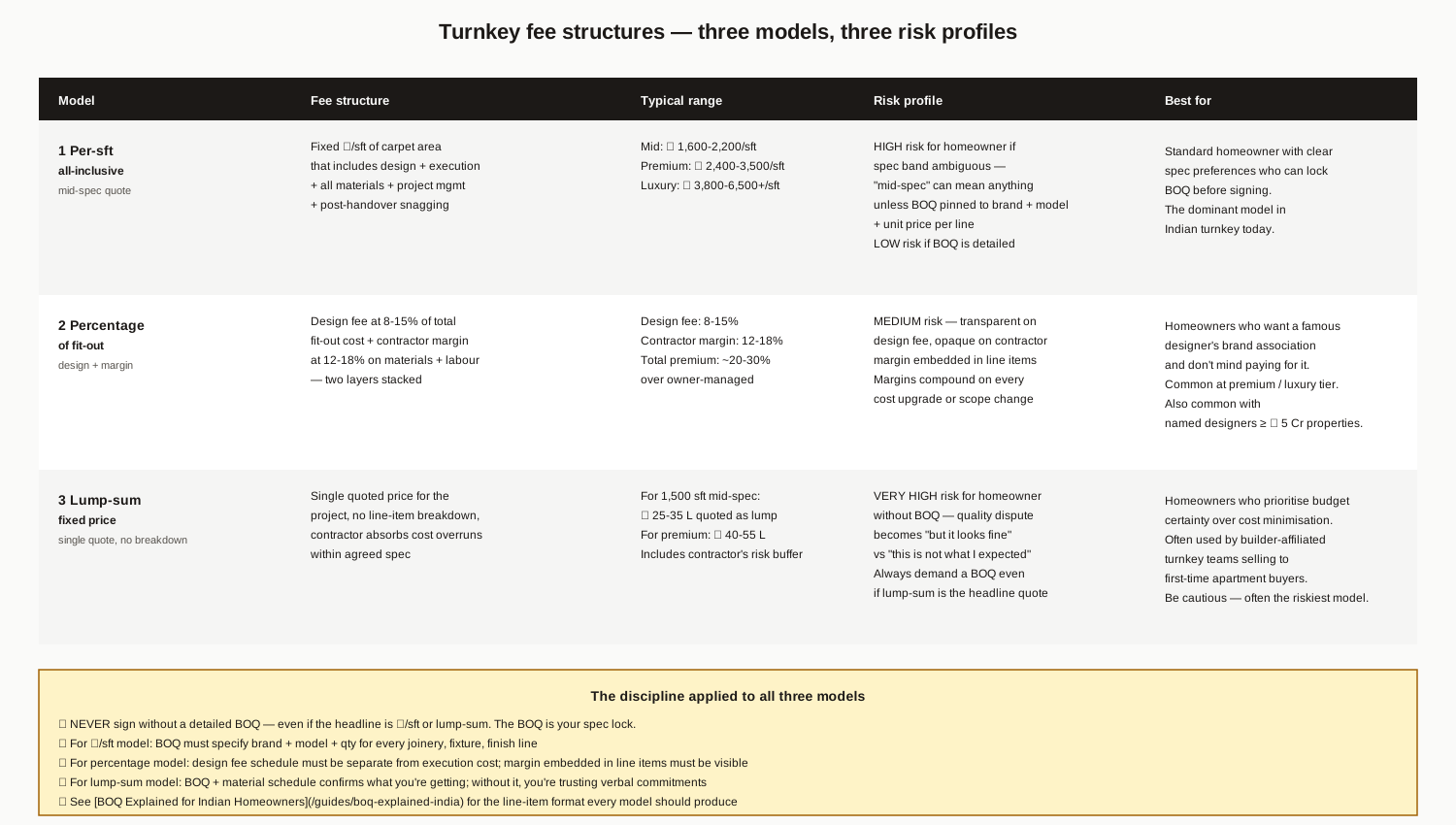
1. Per-sft all-inclusive (most common)
Fixed ₹/sft of carpet area that includes design + execution + materials + project management + post-handover snagging.
- Mid spec: ₹ 1,600-2,200/sft
- Premium: ₹ 2,400-3,500/sft
- Luxury: ₹ 3,800-6,500+/sft
Risk: HIGH for homeowner if spec band is ambiguous — "mid-spec" can mean anything unless BOQ pins brand + model + unit price per line. LOW risk if BOQ is detailed.
Best for: standard homeowner with clear spec preferences who can lock BOQ before signing. The dominant model in Indian turnkey today.
2. Percentage of fit-out
Design fee at 8-15% of total fit-out cost + contractor margin at 12-18% on materials + labour. Two layers stacked. Total premium ~20-30% over owner-managed.
Risk: MEDIUM — transparent on design fee, opaque on contractor margin embedded in line items. Margins compound on every cost upgrade or scope change.
Best for: homeowners who want a famous designer's brand association and don't mind paying for it. Common at premium / luxury tier and with named designers for ₹ 5 Cr+ properties.
3. Lump-sum fixed price
Single quoted price for the project, no line-item breakdown, contractor absorbs cost overruns within agreed spec.
- 1,500 sft mid-spec: ₹ 25-35 L quoted as lump
- Premium: ₹ 40-55 L
- Includes contractor's risk buffer (typically 8-12% built into the lump)
Risk: VERY HIGH for homeowner without BOQ — quality dispute becomes "but it looks fine" vs "this is not what I expected." Always demand a BOQ even if lump-sum is the headline quote.
Best for: homeowners who prioritise budget certainty over cost minimisation. Often used by builder-affiliated turnkey teams selling to first-time apartment buyers. Be cautious — often the riskiest model.
The discipline that applies to all three
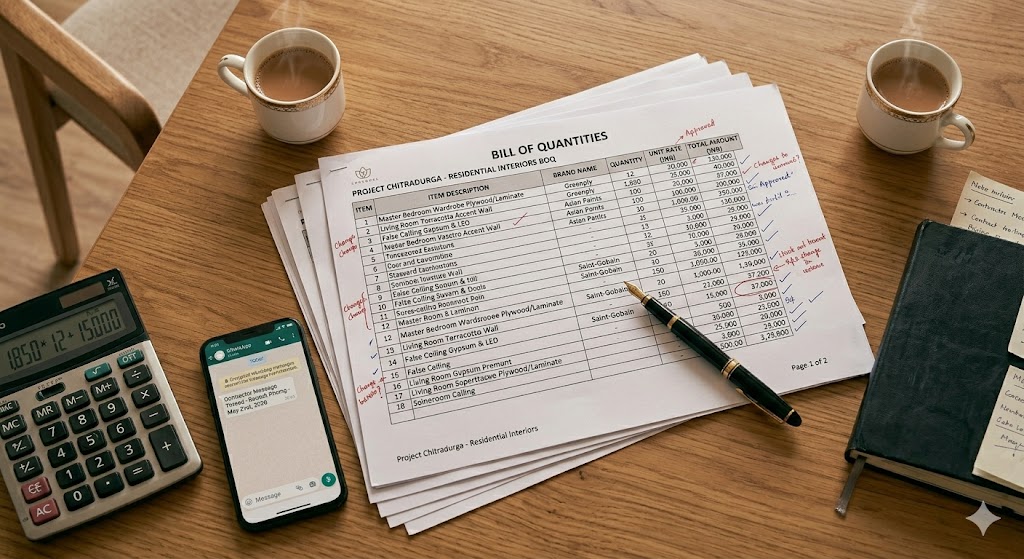
NEVER sign without a detailed BOQ — even if the headline is ₹/sft or lump-sum. The BOQ is your spec lock. See BOQ Explained for Indian Homeowners for the line-item format every model should produce.
Twelve Red Flags — Refuse to Sign Until Each Is Resolved
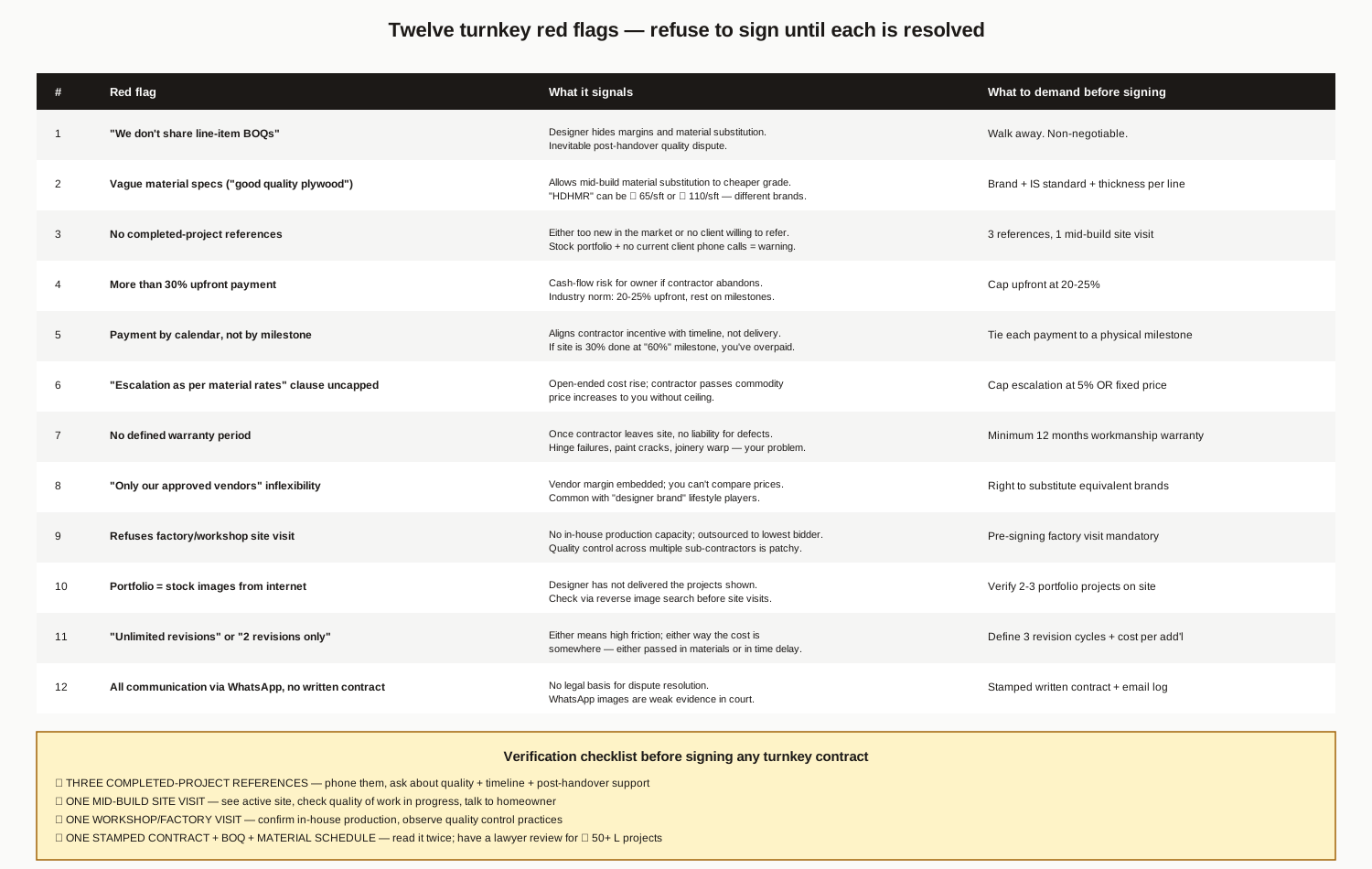
Twelve specific red flags. Any single flag is a yellow alert; multiple flags simultaneously is a refuse-to-sign condition.
1. "We don't share line-item BOQs" — Designer hides margins and material substitution. Inevitable post-handover quality dispute. Walk away. Non-negotiable.
2. Vague material specs ("good quality plywood") — Allows mid-build material substitution to cheaper grade. "HDHMR" can be ₹ 65/sft or ₹ 110/sft. Demand brand + IS standard + thickness per line.
3. No completed-project references — Either too new in the market or no client willing to refer. Stock portfolio + no current client phone calls = warning. Demand 3 references + 1 mid-build site visit.
4. More than 30% upfront payment — Cash-flow risk for owner if contractor abandons. Industry norm: 20-25% upfront. Cap upfront at 20-25%.
5. Payment by calendar, not by milestone — Aligns contractor incentive with timeline, not delivery. Tie each payment to a physical milestone.
6. "Escalation as per material rates" clause uncapped — Open-ended cost rise; contractor passes commodity price increases without ceiling. Cap escalation at 5% OR fixed price.
7. No defined warranty period — Once contractor leaves site, no liability for defects. Hinge failures, paint cracks, joinery warp — your problem. Minimum 12 months workmanship warranty.
8. "Only our approved vendors" inflexibility — Vendor margin embedded; you can't compare prices. Common with "designer brand" lifestyle players. Reserve right to substitute equivalent brands.
9. Refuses factory/workshop site visit — No in-house production capacity; outsourced to lowest bidder. Quality control across multiple sub-contractors is patchy. Pre-signing factory visit mandatory.
10. Portfolio = stock images from internet — Designer has not delivered the projects shown. Check via reverse image search before site visits. Verify 2-3 portfolio projects on site.
11. "Unlimited revisions" or "2 revisions only" — Either is friction; either way the cost is somewhere. Define 3 revision cycles + cost per add'l in writing.
12. All communication via WhatsApp, no written contract — No legal basis for dispute resolution. WhatsApp images are weak evidence in court. Stamped written contract + email log mandatory.
Verification checklist before signing
- THREE COMPLETED-PROJECT REFERENCES — phone them, ask about quality + timeline + post-handover support
- ONE MID-BUILD SITE VISIT — see active site, check quality of work in progress, talk to homeowner
- ONE WORKSHOP/FACTORY VISIT — confirm in-house production, observe quality control practices
- ONE STAMPED CONTRACT + BOQ + MATERIAL SCHEDULE — read it twice; have a lawyer review for ₹ 50+ L projects
When Turnkey Is Worth the Premium — Six-Factor Decision Matrix
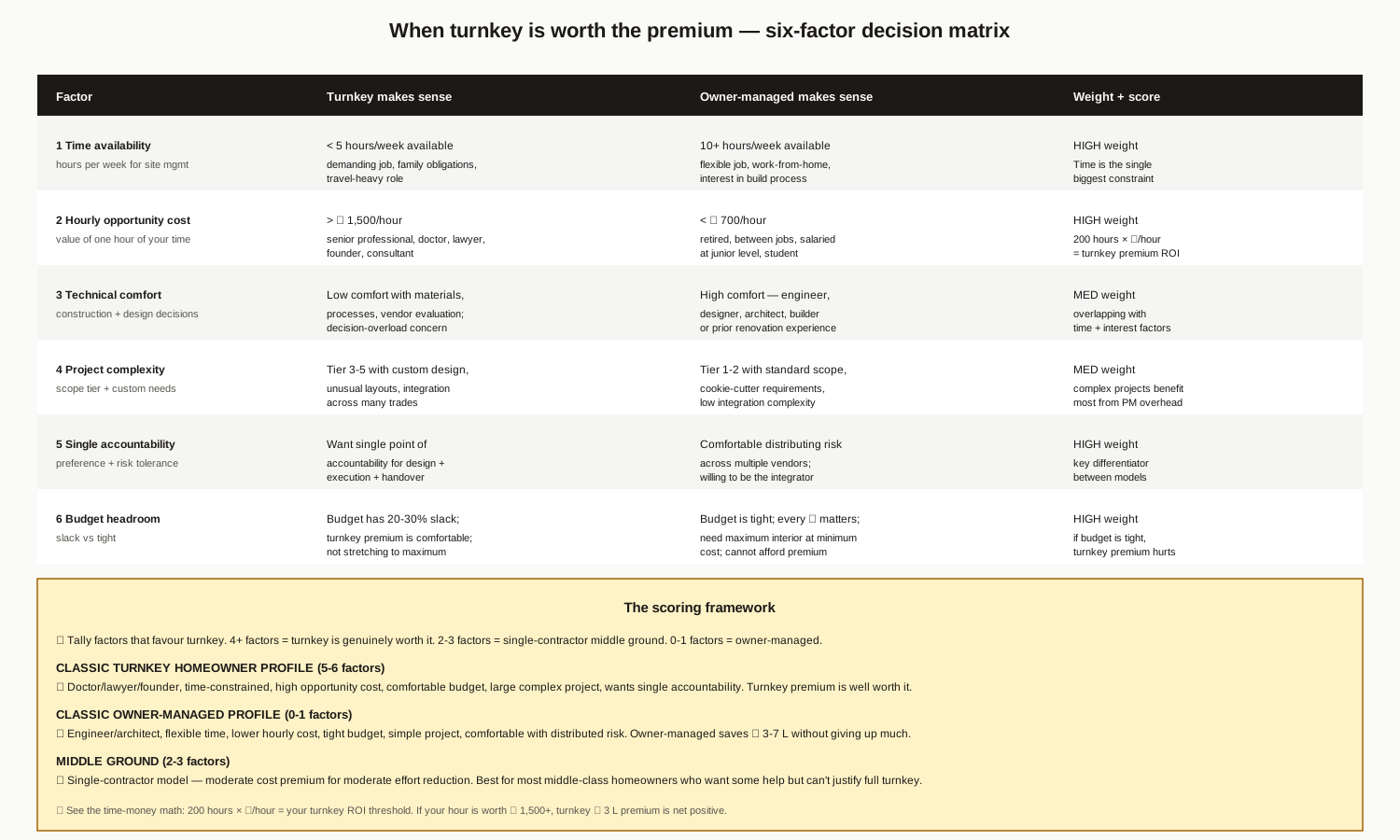
Six factors. Tally those that favour turnkey. 4+ factors = turnkey is genuinely worth it. 2-3 factors = single-contractor middle ground. 0-1 factors = owner-managed.
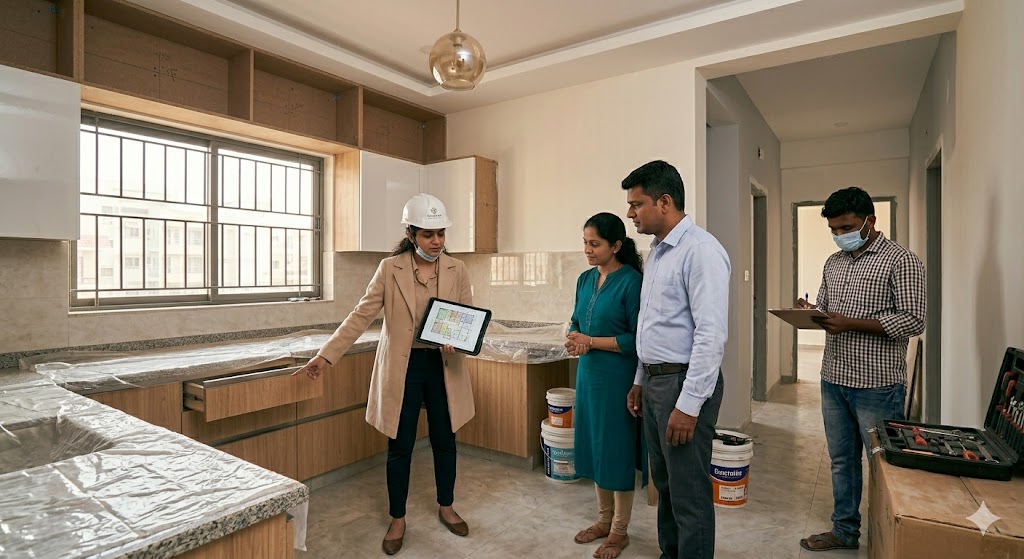
The six factors
1. Time availability: < 5 hours/week available for site management → turnkey. 10+ hours/week available → owner-managed.
2. Hourly opportunity cost: > ₹ 1,500/hour → turnkey (200 hours × ₹/hour > turnkey premium). < ₹ 700/hour → owner-managed.
3. Technical comfort: low comfort with materials, processes, vendor evaluation → turnkey. High comfort (engineer, architect, prior renovation experience) → owner-managed.
4. Project complexity: Tier 3-5 with custom design, unusual layouts, multi-trade integration → turnkey. Tier 1-2 standard scope → owner-managed.
5. Single accountability preference: want single point of accountability → turnkey. Comfortable distributing risk across vendors → owner-managed.
6. Budget headroom: 20-30% slack available → turnkey is comfortable. Budget is tight → owner-managed (every ₹ matters).
The two classic profiles
Classic turnkey homeowner (5-6 factors): doctor / lawyer / founder / consultant, time-constrained, high opportunity cost, comfortable budget, large complex project, wants single accountability. Turnkey premium of ₹ 3-7 L on a 1,500 sft project is well worth it.
Classic owner-managed homeowner (0-1 factors): engineer / architect / builder background, flexible time, lower hourly cost, tight budget, simple project, comfortable with distributed risk. Owner-managed saves ₹ 3-7 L without giving up much.
Middle-ground (2-3 factors): single-contractor model. Moderate cost premium for moderate effort reduction. Best for most middle-class homeowners who want some help but can't justify full turnkey.
The time-money math
The simplest sanity check: 200 hours × your hourly rate = your turnkey ROI threshold. If your hour is worth ₹ 1,500+, turnkey ₹ 3 L premium is net positive on time-money. If your hour is worth ₹ 500, you save ₹ 3 L for 200 hours of effort at ₹ 500/hour = ₹ 1 L of "time value" — owner-managed is the rational choice.
Six Common Turnkey Mistakes
1. Signing without BOQ. "All-inclusive ₹/sft" without line-item BOQ is a contract on a promise, not a spec. Demand BOQ.
2. Trusting the portfolio without verification. Stock images, AI-generated renders, work-in-progress photos passed as completed. Reverse image search; site visit before signing.
3. Paying calendar-based. "60% at three-month mark" without milestone tie-up. Tie payment to physical milestones (joinery installed, FC done, painting complete) not dates.
4. Assuming AC, lighting fixtures, curtains are included. They usually are NOT. Confirm in writing item-by-item.
5. Going turnkey because "they are cheaper than designer + contractor." Math doesn't work — turnkey has both layers. They're cheaper than designer + contractor only if their material brands are downgraded (which is the dispute waiting to happen).
6. Not negotiating warranty. Default warranty is 30-day snagging. Demand 12-month workmanship warranty on joinery, FC, painting, electrical. Reasonable contractors will agree.
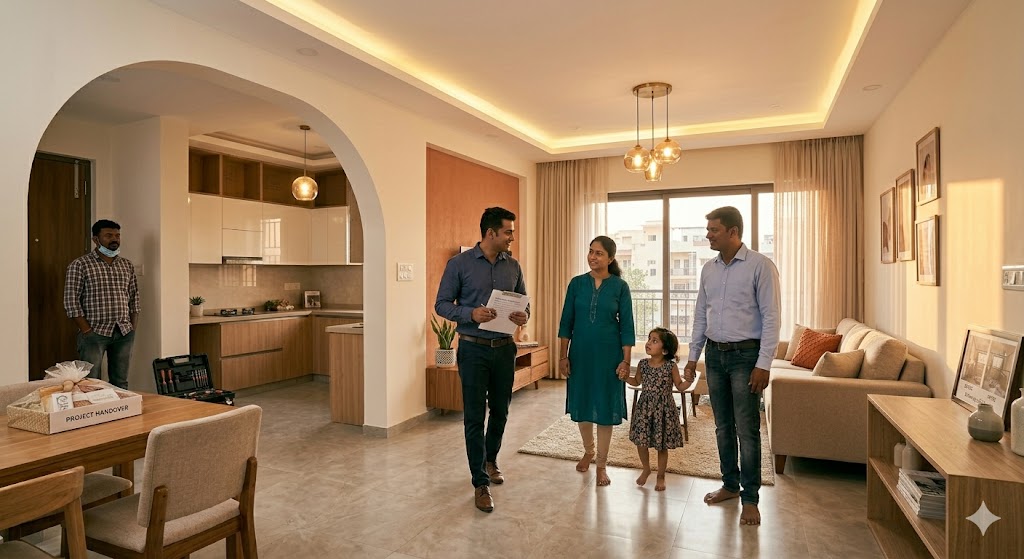
Pre-Signing Checklist for Turnkey Contracts
1. BOQ in hand with brand + model + unit price + quantity per line
2. Material schedule with IS standard + grade per material
3. Inclusion / exclusion list signed off, item-by-item
4. Fee structure locked (₹/sft / percentage / lump-sum)
5. Three references phoned
6. One mid-build site visit completed
7. One workshop / factory visit completed
8. Reverse image search done on key portfolio images
9. Payment schedule milestone-based, ≤ 25% upfront, ≤ 10% pending after snagging
10. Escalation clause capped at 5% OR fixed price
11. Warranty period minimum 12 months workmanship
12. Stamped written contract signed; lawyer review for ₹ 50+ L projects
13. Revision cycles defined (3 recommended) + cost per additional cycle
14. Communication channel primary = email, secondary = WhatsApp for daily coordination
15. Snagging period 30 days post-handover before final 10% payment
Where to Go Next
- For construction cost framework: Construction Cost in India
- For interior cost framework: Interior Cost per Sft in India
- For BOQ format that protects you: BOQ Explained for Indian Homeowners
- For interior hidden costs: Hidden Costs in Interiors
- For renovation-specific cost: Home Renovation Cost in India
- For choosing designer or architect: How to Choose the Right Architect or Interior Designer in India
- For kitchen design depth: Modular Kitchen Design Guide
- For false ceiling depth: False Ceiling Design Guide
References
1. Indian Contract Act 1872. Legal framework for service contracts.
2. Consumer Protection Act 2019. Homeowner remedies for service deficiency.
3. RERA (Real Estate Regulation and Development Act 2016). Where turnkey is bundled with property purchase.
4. Council of Architecture Practice Bylaws (2020). Architect / interior designer fee schedules.
5. Institute of Indian Interior Designers (IIID). Practice standards for member designers.
6. National Consumer Disputes Redressal Commission case law. Interior design service dispute precedents.
7. JLL India Residential Interior Market Reports (2024-25). Turnkey market size and trends.
8. Livspace, Asian Paints Beautiful Homes, Bonito Designs, HomeLane published pricing. Reference benchmarks for turnkey rates.
9. BIS material standards (IS 303, 710, 12823, 14276 — plywood, BWP, particle board, MDF). Material spec validation.
10. CMA Foundation Cost Management in Interiors (2024 edition). Cost-discipline framework.
Author's note: Turnkey is the right answer for the right homeowner; the wrong answer for many others. The single test that resolves most cases: your hourly rate. If you can earn more per hour than your turnkey premium ÷ 200 hours, turnkey is rational. If you can't, owner-managed delivers the same outcome at meaningful savings. Whatever you choose, NEVER sign without a detailed BOQ — that is the spec lock that protects you against everything below the surface. Twelve red flags. Six decision factors. Three procurement models. Pick consciously.
Disclaimer: Fee structures, premium ranges, and procurement model characteristics cited are 2025-26 indicative for Indian metro and Tier-1 markets and vary by designer, scope, project complexity, and contractor. Turnkey offerings differ materially across firms; specific contract terms must be evaluated on a case-by-case basis. Material brands, hardware grades, and finishes referenced are illustrative and reflect typical Indian residential practice; specific project specifications vary. Studio Matrx, its authors and contributors accept no liability for contractual decisions made on the basis of this guide; engage a property lawyer for contract review on projects above ₹ 50 L, and verify all references, portfolios, and credentials independently. The red flags listed are based on observed industry practice and consumer dispute case law; flag presence does not automatically indicate fraudulent intent but warrants additional verification before commitment.
Export this guide
Related Guides — Deep-dive reading
Design/Build vs. Hiring Separately: What Indian Homeowners Should Know
The procurement-model decision behind every home project — one turnkey firm that designs and builds, or an independent designer and a separately appointed contractor — and how to choose the one that fits your time, budget, and appetite for control.
Planning Your ProjectThe Truth About Cost Per Square Foot
Why a ₹/sqft interior quote is the most misleading number in Indian home costing — and how to convert it into a real BOQ
Cost & MoneyUnderstanding Construction Contracts & Retainage in India
A homeowner-protective guide to the contract and payment structure behind every interiors or build project — the contract types and when each fits, how to stage payments so your money trails the work, and the retention clause that quietly protects you more than any other.
Cost & MoneyRelated Tools — Try Free
False Ceiling Cost Estimator
Live ₹/sqft across 8 ceiling types — POP, gypsum, designer, metal, PVC, wooden — with cove and spot lighting for 20 Indian cities.
Cost CalculatorInterior Contract Clause Checklist
16 sections and 98 checkboxes covering scope, BOQ, milestones, penalties, warranty, and disputes.
Contract ChecklistMaterial Comparison Sheet
India's interior material cheatsheet — plywood, finishes, hardware, countertops, paints, waterproofing.
Reference Guide