
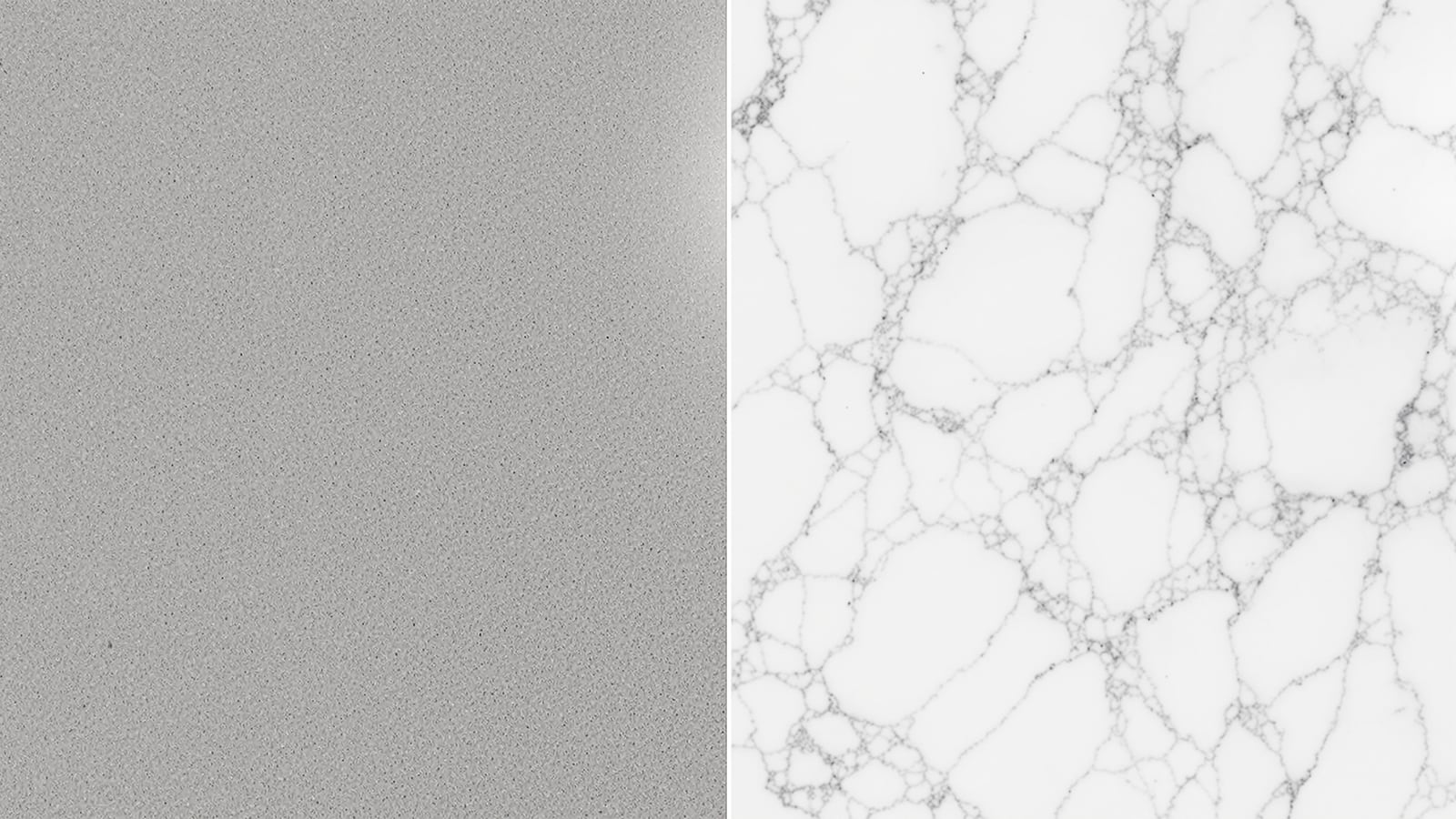
Quartz vs Marble Bathroom Vanity Top: Which Is Better? (India)
A fair, India-first head-to-head between engineered quartz and natural marble for a bathroom vanity top — porosity, staining and etching, durability, that unmistakable marble veining, maintenance, ₹ cost and an honest verdict for the wet Indian counter.
There is no more common cross-road in an Indian bathroom fit-out than this one: the fabricator lays two samples on the table — a slab of engineered quartz and a slab of natural marble — and asks which one you want cut for the vanity. They cost about the same, they look luxurious in the showroom, and they behave completely differently once toothpaste, hair dye, aftershave and three years of hard-water splash get at them. This is a Studio Matrx head-to-head for the homeowner making exactly that call, and it is deliberately fair: marble wins some rows outright, quartz wins others, and the right answer depends on what you value.
Read this alongside the two full component guides it compares — the engineered quartz vanity top guide and the marble bathroom guide — plus the bathroom vanity guide for India for how either top sits on the cabinet. If you are also weighing granite, the granite vs quartz countertop comparison is the natural next read.
The one-line version: on a bathroom counter, quartz is the sensible surface and marble is the beautiful one. Quartz is non-porous and forgiving; marble is porous, stains and etches, but no two slabs are alike. Choose quartz unless the veining is the whole point of the room.
The core difference: what each material actually is
Marble is natural metamorphic stone — mostly calcium carbonate — quarried in slabs, so every piece carries unique veining and colour. That same calcium carbonate is chemically soft and reactive, which is exactly why it stains and etches on a wet counter.
Engineered quartz is a manufactured surface: roughly 90–93% crushed quartz mineral bound in about 7–10% polymer resin and pigment, cured under vacuum and pressure. The resin is what makes it genuinely non-porous — and the pattern is printed into the batch, so it is consistent and repeatable rather than one-of-a-kind.
That single distinction — natural-and-porous versus engineered-and-sealed-by-nature — drives almost every row in the verdict below.
Porosity: the row that decides most bathrooms
This is where the two part ways hardest, and it matters more in a bathroom than anywhere else in the house because the counter stays wet for hours.
- Quartz is non-porous. It never needs sealing, ever. Hard-water splash, toothpaste, cosmetics, hair dye and soap residue sit on the surface and wipe off. Nothing soaks in.
- Marble is porous and chemically reactive. It must be sealed on install and re-sealed periodically (typically every 6–18 months in a wet bathroom). Even sealed, it is vulnerable to two separate problems:
- Etching — anything acidic (many cosmetics, cleaning products, even hard-water scale removers) chemically dissolves a dull spot into the polish. Etching is not a stain you can clean off; it is the surface being eaten. This is unique to marble and other calcium-based stones — quartz simply does not etch.
For a busy family bathroom with hard water, this row alone pushes most people to quartz.
Side-by-side scorecard
Durability on a vanity
- Quartz is hard and consistent. It resists scratches, chips and stains, and there are no weak veins for a chip to follow. Its one real weakness is heat — a hot styling tool or curling iron left directly on it can scorch the resin — but on a bathroom vanity that is a rare event.
- Marble is softer and more brittle. It scratches under grit, the corners and edges chip more easily, and a dropped perfume bottle can leave a mark. It handles heat better than quartz (natural stone), but heat is rarely the issue on a vanity.
For everyday knock-about durability, quartz wins.
Look: the row marble owns
Here is the honest counterweight. Marble's veining is created by nature over millions of years and no two slabs are identical — that river of grey or gold running across a white field is something a printed quartz pattern can imitate but never truly match. In a luxury master bath, a powder room, or any space where the vanity is the hero, marble delivers a depth and character quartz cannot.
Quartz, by contrast, is beautifully consistent — you can order a second slab and it will match — and modern marble-look quartz is convincing from arm's length. But up close, and in the right light, marble is simply more beautiful. If you are choosing with your eyes and the budget allows for its upkeep, marble wins this row outright.
Maintenance and cleaning
- Quartz: wipe with a soft cloth and mild soap. No sealing, no special cleaners, no ritual. Avoid abrasive pads and direct high heat; that is the whole care routine.
- Marble: use only pH-neutral, stone-safe cleaners — never vinegar, lemon, or generic acidic bathroom sprays, which etch it. Wipe spills immediately. Re-seal periodically. It rewards care and punishes neglect.
Cost in India
Both live in overlapping price bands, so cost is rarely the deciding factor — but the ranges differ at the extremes.
| Material | Typical ₹/sq ft (top only, fabricated) | Notes |
|---|---|---|
| Engineered quartz | ₹350–₹1,200+ | Branded slabs (Caesarstone-type) sit at the top; good local quartz mid-band |
| Indian marble (Makrana, etc.) | ₹120–₹600 | Entry marble is cheaper than quartz |
| Imported marble (Italian, Statuario) | ₹800–₹3,000+ | Premium veined slabs run far above quartz |
Add fabrication, edge profiling, cut-out for the basin and installation to either. The hidden cost of marble is ongoing — sealing product and the occasional professional polish to remove etching.
Which should you choose?
| Pick QUARTZ if… | Pick MARBLE if… |
|---|---|
| It is a family or shared bathroom | It is a low-use master or powder room |
| Your area has hard water | You will seal it and clean it carefully |
| You want zero maintenance ritual | The unique veining is the design centrepiece |
| You value a matching, repeatable look | You want one-of-a-kind natural character |
| You want a fit-and-forget surface | Budget allows for premium imported stone |
The full verdict table
| Attribute | Quartz | Marble | Winner |
|---|---|---|---|
| Porosity / sealing | Non-porous, never seal | Porous, must seal & re-seal | Quartz |
| Stain resistance | Excellent | Poor unless well sealed | Quartz |
| Etch resistance | Does not etch | Etches from acids | Quartz |
| Scratch / chip durability | High, consistent | Softer, chips more | Quartz |
| Heat tolerance | Weak (resin scorches) | Better (natural stone) | Marble |
| Beauty / uniqueness | Consistent, printed | Unrepeatable veining | Marble |
| Consistency / matching | Repeatable batches | Every slab differs | Quartz |
| Maintenance effort | Wipe clean, no ritual | Careful cleaners, resealing | Quartz |
| Hard-water suitability (India) | Very good | Needs vigilance | Quartz |
| Price range | Mid–premium | Entry to very high | Toss-up |
Bottom line: for the everyday Indian bathroom — hard water, shared use, and no appetite for a sealing calendar — engineered quartz wins on porosity, durability and maintenance, and that is why it has become the default premium vanity top. Marble wins on one thing that matters enormously to some people: raw, unrepeatable beauty. If the vanity is the star of a low-use luxury bath and you will genuinely care for it, marble earns its place. For everyone else, choose quartz and never think about the counter again.
References
- IS 15622 — Pressed ceramic and stone surfacing specifications (as applicable to engineered stone quality)
- Bureau of Indian Standards (BIS) guidance on natural stone (marble) grading and testing
- National Building Code of India (NBC) — internal finishes and wet-area material guidance
- Manufacturer care and warranty documentation for engineered quartz surfaces (follow the specific brand's cleaning and heat guidance)
Export this guide
Related Guides — Deep-dive reading
Quartz Bathroom Countertop India: Engineered Quartz Vanity Tops, Cost & vs Granite/Marble
A practical, India-first guide to engineered quartz vanity tops for bathrooms — why the non-porous, no-seal surface beats granite and marble on a wet counter, plus thickness, seams, heat caution, brand quality and honest ₹ per sq ft costs.
BathroomsHow to Choose a Wash Basin in India: Mount Type, Size, Tap Holes & Budget (2026 Buyer's Guide)
A buyer's decision guide to picking the right wash basin — matching the mount type to your vanity and space, sizing it to the room, getting the tap-hole config right for your faucet, judging material and durability, checking what's in the box, good/better/best rupee tiers, the IS 2556 vitreous-china mark, and how to spot seconds, hairline cracks and warranty traps.
BathroomsGranite Bathroom Countertop India: Vanity Tops, Sealing, Finishes & Cost
A practical, India-first guide to granite vanity countertops for the bathroom — why granite is the durable, heat- and scratch-resistant budget favourite, how to seal a porous stone against hard water and staining, polished versus leather and honed finishes, edge profiles, basin cut-outs, thickness, and honest ₹ per sq ft versus quartz, marble and solid surface.
BathroomsRelated Tools — Try Free
Material Compare — Side by Side
Compare materials side-by-side: granite vs quartz vs marble, laminate vs acrylic vs PU, and more.
ComparisonMaterial Decision Framework (M-Score)
Score 30+ Indian construction materials across cost, durability, climate fit, maintenance, and sustainability.
MaterialsMaterial Comparison Sheet
India's interior material cheatsheet — plywood, finishes, hardware, countertops, paints, waterproofing.
Reference Guide