
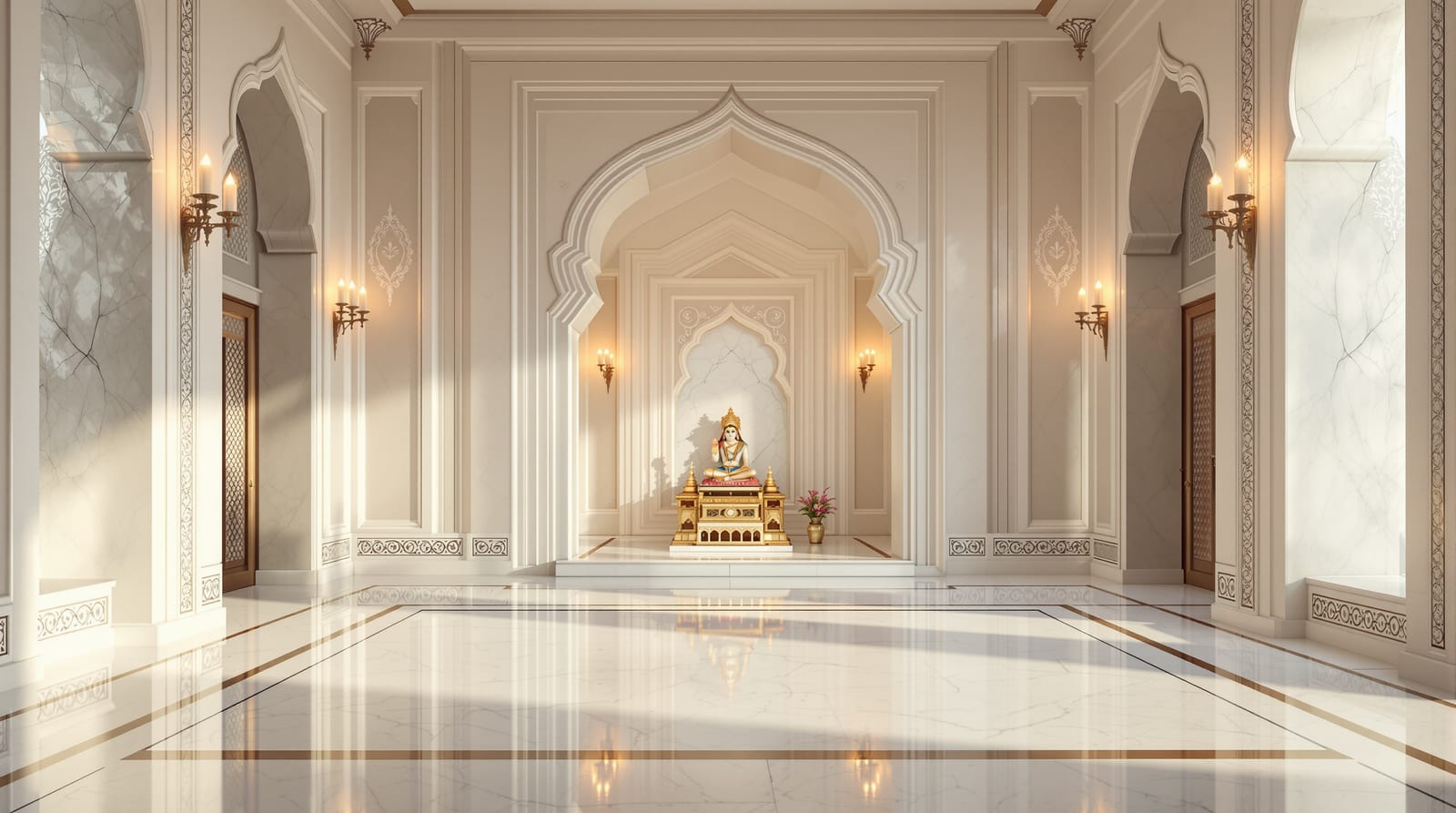
Pooja Room Flooring in India: Marble, Light Stone & Vastu Guide
The right floor for the sacred mandir room — pure light marble, light granite or marble-look PGVT, ranked for purity, Vastu and easy cleaning, with ₹/sq ft costs.
In most Indian homes the pooja room is small in size but largest in meaning. It is the one floor people touch with bare feet and bowed heads every single day, so it is judged less on fashion and more on three things: purity, calm and spotless ease of cleaning. That is why generations have reached for the same answer — light, cool stone — and why a little thought here pays off far beyond the few square feet involved.
This guide ranks the floors that suit the mandir room, weaves in genuine Vastu guidance (where it overlaps neatly with practical sense), and gives honest 2026 ₹/sq ft costs so you can match material to budget without overspending on a tiny area.
What the pooja room actually demands
A pooja room is a low-traffic, dry, indoor space, so it does not need the heavy durability of a foyer or entrance floor or the slip rating of a wet bathroom. Its real demands are different:
- Visual purity and calm. Light, restful colours — white, cream, ivory, soft beige — read as clean and sacred. They also bounce the warm glow of diyas and lamps beautifully.
- Spotless, easy cleaning. Oil from lamps, ghee, kumkum, haldi, flower stains and incense ash all land on this floor. A dense, low-porosity, stain-resistant surface that wipes clean is worth more here than anywhere else in the home.
- A cool, comfortable surface for bare feet and sitting. Many families sit on the floor for long pujas. Cool natural stone or dense tile feels right; deep-pile carpet or warm wood is rarely chosen for the mandir itself.
- A sense of permanence. This is a space families keep for decades. A timeless light-stone floor never dates, unlike a trend-driven pattern.
- Vastu alignment. For many homeowners the pooja room is the one space where Vastu genuinely guides the decision — and, helpfully, its main flooring rule (keep it light) coincides with the practical and aesthetic one.
Keep the brief simple: pure, light, easy to clean, and quietly beautiful. Resist the urge to over-design the floor; the deities, the lamps and a clean surface are the stars.
The materials, ranked for the mandir room
1. Light marble — the classic, sacred choice
White and cream marble is the traditional and still the favourite pooja room floor across India. Makrana white (the marble of the Taj Mahal and many temples) is the benchmark for purity; cream and ivory Indian marbles, and imported white marbles, are common alternatives. Marble is cool underfoot, takes a soft luminous polish that suits lamplight, and its light tone is exactly what tradition and Vastu prefer.
Its one caveat is care: marble is calcareous and reacts to acids, so haldi, kumkum and spilled lamp oil should be wiped promptly, and the floor benefits from periodic sealing. In a small, low-traffic pooja room this maintenance is minimal and entirely manageable. For the full picture see our marble flooring guide, and if you want the premium look, the Italian marble guide.
Look: pure, luminous, timeless — the definitive temple aesthetic.
Vastu note: white/light marble is ideal; it embodies purity (Sattva) and reflects positive light.
2. Light granite — durable, low-maintenance purity
If you love stone but want a floor that shrugs off stains with almost no fuss, a light granite — ivory, moon white, white galaxy or a pale grey — is excellent. Granite is far harder and less porous than marble, so oil and turmeric are far less likely to leave a mark, and it needs little upkeep. The trade-off is that truly pure-white granite is rare; most light granites carry fine speckles. For a calm mandir, choose the palest, most even pattern you can find. Details in the granite flooring guide.
Look: crisp, light, subtly speckled; very clean and modern.
Vastu note: light shades are favourable; avoid black or very dark granite in the pooja zone.
3. Marble-look vitrified / PGVT — the smart budget choice
For a contemporary home on a budget, polished glazed vitrified tile (PGVT) in a marble-look finish gives you the bright, light, glossy effect of white marble at a fraction of the cost — and it is non-porous, so haldi and lamp oil simply wipe off. Large-format tiles (e.g. 800x800 mm or 600x1200 mm) with minimal grout keep the look seamless and the cleaning effortless. Read more in the PGVT marble-look tiles guide.
Look: marble-like brightness and gloss; very low maintenance.
Vastu note: choose a light/white tile; the rule is colour, not material.
Cost and suitability table
| Material | Look | Vastu note | ₹/sq ft (indicative 2026) |
|---|---|---|---|
| Makrana / white marble | Pure, luminous, classic temple look | Ideal — light, Sattvic, reflects light | 250-700 |
| Cream / ivory Indian marble | Soft, warm-white, timeless | Favourable — light shade | 150-450 |
| Italian white marble (Statuario, Carrara) | Premium, dramatic veining | Favourable if light-toned | 350-1500 |
| Light granite (ivory, moon white) | Crisp, durable, lightly speckled | Favourable — avoid dark | 150-350 |
| Marble-look PGVT / vitrified | Bright, glossy, marble-like, low-care | Favourable — pick light tile | 90-220 |
| Kota / Tandur (light shade) | Matte, traditional, cool | Acceptable if light/cream | 60-150 |
Costs are material plus basic laying; inlay borders, brass strips and intricate motifs add to this. For a calculation tuned to your space and budget, try the flooring material selector.
Pooja room flooring as per Vastu
Vastu Shastra has clear, consistent guidance for the mandir, and most of it aligns neatly with practical good sense:
- Placement: the pooja room is ideally in the north-east (Ishan) corner of the home, with the worshipper facing east or north while praying. This is a room-location rule rather than a flooring rule, but it shapes how light falls on the floor.
- Light flooring: white, cream, ivory and light yellow floors are considered most auspicious — they signify purity and Sattva. This is the single most important flooring rule, and it matches the aesthetic and lamp-glow logic perfectly.
- Avoid dark floors in the north-east: black, very dark grey or heavily dark-veined stone is traditionally discouraged in the pooja zone (and in the NE generally). Practically, dark floors also show dust, ash and water marks more starkly, so the tradition and the practical advice point the same way.
- Keep it level, whole and clean: an unbroken, well-laid, spotless floor — no cracks, no chipped tiles — is both a Vastu and a hygiene ideal. A slightly raised mandir platform (a low marble plinth) is a common and welcomed treatment.
- Take Vastu as guidance, not anxiety: if your home's layout cannot give the pooja room the NE corner, a clean, light, well-kept floor in any quiet, undisturbed spot still serves beautifully. Intent and cleanliness matter most.
A simple inlay or border — without overdoing it
The pooja floor should be calm, but a single restrained detail can make it feel special and intentional. Common, tasteful treatments:
- A slim contrast border framing the mandir area — a thin band of a darker or coloured marble (green, maroon, black) inlaid into the white field, defining the sacred zone.
- A brass or rose-gold metal strip set flush into the stone for a fine, glinting line that catches lamplight.
- A central rangoli or lotus motif in inlaid marble or stone — a permanent rangoli underfoot, often an eight-petal lotus or a simple geometric mandala.
- A subtle raised plinth in matching marble for the deities, keeping the idols above floor level.
The diagram below shows one balanced layout: a light marble field, a slim contrast border, and a central lotus motif aligned to the deity.
Keep it simple, keep it spotless
The best pooja floor is one you can keep immaculate with minimal effort. A few practical habits:
- Wipe spills immediately — lamp oil, ghee, haldi and kumkum stain stone if left, especially on marble. A daily soft-cloth or microfibre wipe keeps the surface pristine.
- Use a pH-neutral cleaner, never acidic (no vinegar, no harsh bathroom cleaners) on marble or light stone, which etch easily. Our floor cleaning guide covers the right products for each material.
- Seal natural stone periodically so oil and turmeric sit on the surface rather than soaking in.
- Place a small tray or thali under lamps to catch oil drips — the easiest way to protect the floor.
- Keep grout lines minimal (large-format tiles) so there is less to scrub; oiled grout in a mandir is a common complaint.
Do and don't
- Do choose light, cool, low-porosity surfaces — white marble, light granite, marble-look PGVT.
- Do keep the design restrained: one border or one central motif, not a busy patterned floor.
- Do match the pooja floor to the adjacent room's flooring where the mandir is part of a larger space, so it flows; see the room-by-room flooring guide for whole-home continuity.
- Don't use dark or black stone in the pooja zone — against both Vastu and practical cleanliness.
- Don't lay deep carpet or untreated wood as the main mandir floor; both absorb oil, ash and odour and are hard to keep ritually clean.
- Don't over-polish to a mirror gloss if the room is used for sitting pujas barefoot — a soft, even polish is safer and calmer than a slippery high-shine.
Frequently asked questions
Which is the best flooring for a pooja room in India?
Light white or cream marble — especially Makrana — is the classic best choice for its purity, cool feel and timeless temple aesthetic. If you want lower maintenance, a light granite resists stains better; on a budget, a marble-look PGVT tile gives the same bright, light effect for far less. All three satisfy the core rule: keep it light and easy to clean.
What colour floor is best for the pooja room as per Vastu?
Vastu favours light, pure colours — white, cream, ivory and light yellow — which signify purity and Sattva. Dark and especially black floors are discouraged in the pooja zone and in the north-east of the home. Reassuringly, this Vastu rule matches the practical advice, since light, clean surfaces also keep the sacred space looking immaculate.
Is marble or vitrified tile better for the pooja room?
Marble gives unmatched purity, a cool natural feel and a luminous lamp-lit glow, but it stains if oil and turmeric are not wiped promptly and benefits from sealing. Marble-look vitrified (PGVT) is non-porous, stain-resistant, cheaper and lower-maintenance, but lacks the depth of real stone. Choose marble for tradition and feel; vitrified for budget and easy care.
How much does pooja room flooring cost per square foot?
For 2026, expect roughly ₹250-700/sq ft for Makrana/white marble, ₹150-450 for cream Indian marble, ₹150-350 for light granite, and ₹90-220 for marble-look PGVT, before inlay or border work. Because the pooja room is small, even premium marble adds little to the overall budget, so many families splurge a little here.
Should I add an inlay or border to the pooja room floor?
A single restrained detail — a slim contrast border, a flush brass strip, or a central lotus or rangoli motif — makes the space feel intentional and sacred without clutter. Keep the field light and plain and let one motif do the work. Avoid busy, multi-colour patterned floors, which fight the calm a mandir should have.
Export this guide
Related Guides — Deep-dive reading
Limestone Flooring India: Honed Matte Stone, Colours, Cost and Care
The soft sedimentary stone family — beige, grey, blue and cream limestone with an elegant honed matte look, cool underfoot — plus its porosity, sealing needs, ₹/sq ft cost and where it suits Indian homes.
Flooring & SurfacesFoyer & Entrance Flooring in India: Best Materials, Anti-Skid Picks, Vastu & Cost
The floor that makes the first impression and takes the hardest hits — grit, monsoon mud and footfall — done durable, impressive and safe, with a dirt-trapping entry zone and Vastu welcome notes.
Flooring & SurfacesGuest Room Flooring in India: Warm, Welcoming & Low-Maintenance Floors (2026)
How to choose a guest bedroom floor that looks fresh with little upkeep, feels welcoming, and never over-invests in a room used only occasionally.
Flooring & SurfacesRelated Tools — Try Free
Flooring Cost Calculator
Estimate the all-in cost of a floor — material, laying, wastage, skirting and GST — by area and material.
Flooring CalculatorFlooring Material Selector
Get the best flooring material for your room, budget and climate, with anti-slip checks for wet areas.
Flooring ToolMarble Flooring Cost Calculator
Estimate installed marble-floor cost — material, laying, grinding and polishing, sealing, wastage and GST.
Flooring Calculator