

PMAY Home Loan Subsidy Explained: Credit-Linked Help for First-Home Buyers (2026)
A plain-language look at how the Pradhan Mantri Awas Yojana interest subsidy works on a home loan, who the income categories are meant for, and why you must confirm the current rules on the official portal or with your lender.
The Pradhan Mantri Awas Yojana, usually shortened to PMAY, is the umbrella name for India's flagship "housing for all" effort. For someone taking a home loan, the part that matters most is the interest subsidy: a government contribution that lowers the real cost of borrowing for eligible first-home buyers. This guide explains the idea in plain language so you can tell whether it is worth chasing, and where to confirm the numbers that actually apply to you.
This is a general explainer, not financial advice, and not an official notification. PMAY has run in phases, been paused, and been relaunched, and its income slabs, subsidy amounts, loan windows and eligibility rules CHANGE. Do not treat any figure here as a current fact. Confirm your eligibility and the live scheme rules on the official PMAY portal and with your bank or housing-finance lender, and take tax questions to a CA and planning questions to a financial planner before you commit.
The core idea: a subsidy credited to your loan
A home loan charges you interest on the money you borrow. A credit-linked subsidy scheme (the mechanism inside PMAY is commonly called CLSS, the Credit Linked Subsidy Scheme) reduces that burden by having the government pay a slice of the interest on your behalf for eligible buyers.
The important mechanic is how it is delivered. Rather than a cheque in your hand, the subsidy is typically calculated as a present value and credited UP FRONT to your loan account through the lender. Because it lands as a lump reduction to what you owe, your outstanding principal drops, and every future EMI is calculated on the smaller balance. In effect, one eligible borrower ends up paying interest on less money for the rest of the loan.
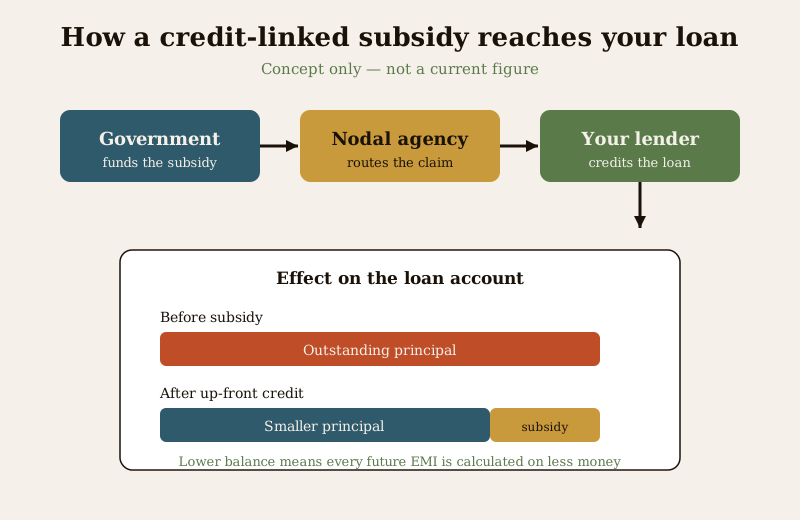
A few things follow from this design:
- The benefit applies only to a capped portion of the loan, not the whole loan. Borrow more than the eligible slab and the extra amount carries your normal interest rate.
- It is a ONE-TIME credit tied to that loan, not a rebate you claim every year.
- It flows through your lender, so the lender has to be enrolled with the scheme's nodal agencies for you to receive it.
To see roughly how a credit changes your outstanding balance and EMI, run your own figures in the PMAY subsidy calculator and treat the result as indicative only.
Beneficiary categories: EWS, LIG and MIG
PMAY sorts eligible households into income bands. You will see these acronyms constantly, so it helps to know the concept even though the exact rupee thresholds have moved between phases and you must confirm the current ones.
- EWS: Economically Weaker Section. The lowest income band, aimed at the most vulnerable households.
- LIG: Low Income Group. A step above EWS.
- MIG: Middle Income Group, sometimes split into two sub-bands (often labelled MIG-I and MIG-II) for households earning more than LIG but still within a middle-income ceiling.
The pattern across phases has been that lower-income categories are meant to receive a larger effective benefit, and that each category has its own eligible loan amount and its own dwelling-size cap. As you move up the bands, the ceiling on the subsidised loan portion and the maximum home size generally change. Because the actual thresholds, subsidised amounts and rates attached to each band have been revised over time, the table below describes the CONCEPT, not current values.
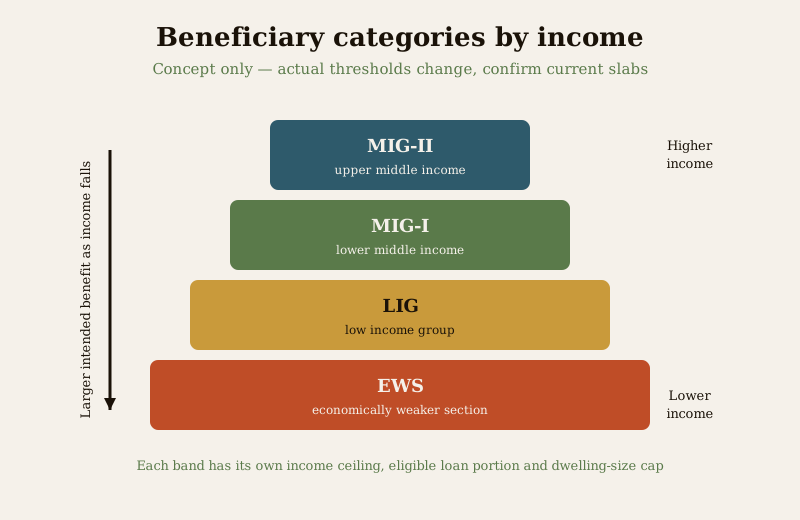
| Category | Who it is meant for (concept) | What varies by band |
|---|---|---|
| EWS | Lowest income households | Smallest income ceiling; typically the largest intended benefit; own dwelling-size cap |
| LIG | Low income households, above EWS | Higher income ceiling than EWS; own eligible loan portion and size cap |
| MIG-I | Lower middle income households | Middle-income ceiling; separate eligible loan portion; larger permitted dwelling size |
| MIG-II | Upper middle income households | Higher middle-income ceiling; separate eligible loan portion and size cap |
Do not memorise numbers from any single source, including this one. The way to use the table is to identify which band your household income falls in, then look up the CURRENT ceiling, eligible loan portion and dwelling-size cap for that band on the official portal or ask your lender to check.
Urban versus rural: PMAY-U and PMAY-G
PMAY runs on two tracks, and the interest-subsidy story above sits mostly on the urban side.
- PMAY-Urban (PMAY-U) covers towns and cities. The credit-linked interest subsidy on home loans, the CLSS mechanism, has historically lived here and is what a typical home-loan borrower in a city engages with.
- PMAY-Gramin (PMAY-G), the rural track, is oriented differently. It leans towards direct assistance for building or upgrading a house for eligible rural households, rather than an interest subsidy routed through a housing-finance loan. Delivery, targeting and the way help reaches you differ from the urban loan-subsidy route.
If you are buying or building in a village or a rural body's jurisdiction, the rural track and its own selection process are likely the relevant path, and the urban CLSS logic in this guide may not apply. Confirm which track covers your location before assuming a loan interest subsidy is available.
Eligibility conditions in plain language
Schemes like this are built around a simple intent: help households that do not already own a solid house buy or build their FIRST one. The recurring conditions across phases reflect that intent. The specifics change, so read these as the shape of the rules, not the letter of them.
- No existing pucca house: the household should not already own a permanent (pucca) house anywhere in India, in the name of any member. The scheme is for first homes, not additional property.
- First home: the assisted purchase or construction is meant to be the household's first dwelling under the scheme.
- Household definition: eligibility is usually assessed at the HOUSEHOLD level, commonly a husband, wife and unmarried children, not just the individual applicant.
- Woman ownership emphasis: the scheme has strongly encouraged, and in categories required, that the property be owned or co-owned by a woman member of the household. Sole-male ownership can be restricted for some categories. This is a deliberate feature, not a formality.
- Dwelling-size caps: each income category has a maximum carpet-area limit. Build or buy bigger than the cap for your band and you fall outside eligibility.
- Income band fit: your household income has to fall inside the ceiling for the category you are claiming under.
- Location and body: the property must be in an area the relevant track (urban or rural) covers, and often the local body has to be participating.
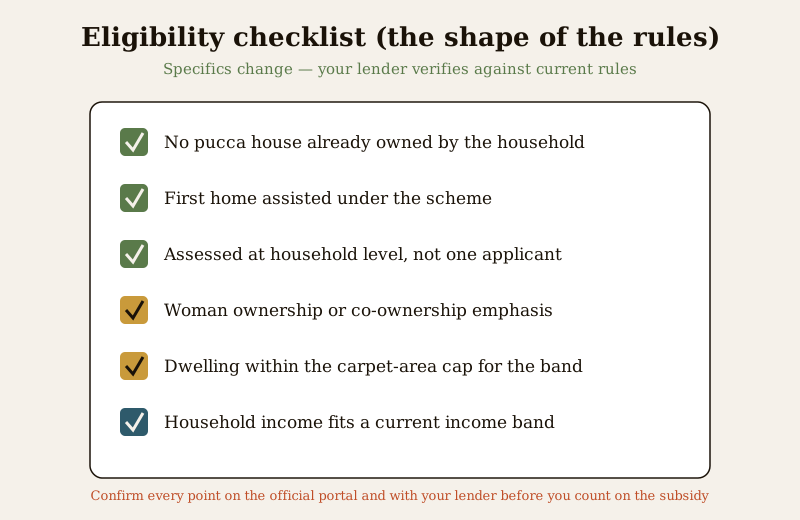
| Eligibility checkpoint | What to confirm |
|---|---|
| No pucca house already | Household owns no permanent house anywhere in India |
| First home | This is the first dwelling assisted under the scheme |
| Woman ownership | Whether your category requires a woman owner or co-owner |
| Carpet-area cap | The current maximum home size for your income band |
| Income band | Which band your household income falls into today |
| Coverage | That your town or rural body and your lender are enrolled |
Your lender verifies most of this against documents when you apply. Getting your paperwork straight early avoids surprises; our home loan eligibility explainer walks through the general checks a lender runs, which overlap heavily with what the scheme wants to see.
How to apply: through your lender, at loan time
For the urban interest subsidy, you generally do not apply in a separate queue and then bring a voucher to the bank. It is woven into the home-loan process.
1. Choose an enrolled lender. Confirm that your bank or housing-finance company is enrolled with the scheme's nodal agencies, because the subsidy is routed through them.
2. Flag eligibility at application. When you apply for the home loan, tell the lender you want to be assessed for the PMAY subsidy and state your income category. Ask them to confirm the current slab that fits you.
3. Submit the documents. Identity, address, income proof and a declaration that the household does not already own a pucca house are the usual spine. Keep the woman-ownership requirement in mind when deciding whose name the property goes in.
4. Lender forwards the claim. If you qualify, the lender submits the subsidy claim to the nodal agency on your behalf.
5. Subsidy credited to the loan. Once approved, the subsidy amount is credited to your loan account, lowering your outstanding principal, and the lender recomputes your EMI or tenure on the reduced balance.
Because the subsidy attaches to the loan, the type of loan you take and how it is structured matter. If you are still deciding between products, read how the main home loan types work first, and plan your cash side with our down payment planning guide so you are not banking on a subsidy that may or may not land. For the full picture of the borrowing journey, start from the how home loans work pillar.
Why you must confirm before you count on it
The single most important message of this guide is that PMAY is a MOVING TARGET. Over the years the scheme has opened and closed application windows, added and dropped the MIG segments, revised income ceilings and carpet-area caps, and changed how much benefit each band receives. A subsidy that a friend received two years ago may not exist in the same form, at the same slab, or with the same window open today.
So treat the subsidy as a possible bonus, not a load-bearing part of your budget. Qualify for the loan on its own terms first. Then, if the scheme is open and you fit a current category, let the subsidy improve an already-workable plan. Never stretch to a house you can only afford IF the subsidy comes through, because the rules can shift between your decision and your disbursement.
Key takeaways
- PMAY's home-loan help is a credit-linked interest subsidy, credited up front to your loan account, which lowers your principal and every future EMI for eligible first-home buyers.
- Beneficiaries are sorted into EWS, LIG and MIG bands by household income; lower bands are meant to get a larger effective benefit, and each band has its own eligible loan portion and dwelling-size cap.
- The scheme runs on two tracks: PMAY-Urban carries the loan interest subsidy, while PMAY-Gramin leans towards direct rural build-or-upgrade assistance.
- Recurring conditions: no existing pucca house, first home, household-level assessment, a strong woman-ownership emphasis, carpet-area caps and income-band fit.
- You apply through an enrolled lender at loan time, not in a separate queue; the lender forwards the claim and the subsidy lands on the loan.
- Slabs, amounts and windows CHANGE. Confirm the current rules on the official PMAY portal and with your lender before you count on any figure.
References
- Pradhan Mantri Awas Yojana, official information portals of the Ministry of Housing and Urban Affairs (urban track) and the Ministry of Rural Development (rural track). Confirm the current scheme status, income slabs, carpet-area caps and application windows here.
- Your bank or housing-finance lender, for whether they are enrolled, which category you fit today, and the exact subsidy your loan qualifies for.
- Studio Matrx, PMAY subsidy calculator, to run indicative numbers on how a credit changes your outstanding balance and EMI.
- Studio Matrx related guides: how home loans work, home loan types, home loan eligibility explained and down payment planning.
Last verified: 28 July 2026. Scheme rules, income slabs and application windows change; this guide is indicative and not a substitute for the official portal or your lender.
Export this guide
Related Guides — Deep-dive reading
How Home Loans Work in India: The Full Journey from Apply to EMI (2026)
A plain-language map of the home-loan journey end to end - what a home loan is, the players, the key terms, how interest and EMI work, the application-to-disbursement steps, and the levers you actually control - with a loan-journey table and a key-terms glossary.
Home FinancePlot Loan vs Home Loan (India): LTV, Tenure, Tax and the Composite Loan Explained (2026)
If you are buying land, a plot loan is not the same product as a home loan - it usually funds only the land at a lower loan-to-value, runs a shorter tenure, is restricted to approved non-agricultural residential plots, and often carries a build-within-N-years condition. This guide compares plot loan, home loan and the composite (plot-plus-construction) loan, explains the tax-benefit difference, and helps you pick the right product for your situation.
Home FinanceHome Construction Loan for Self-Build in India: Stage-Wise Disbursement, Pre-EMI and Moratorium Explained (2026)
How a home construction loan works when you build your own house on a plot you own or buy - stage-wise (tranche) disbursement tied to construction milestones, pre-EMI during the build versus full EMI after completion, the approved-plan and estimate requirement, the moratorium, and how it converts to a regular home loan on completion.
Home FinanceRelated Tools — Try Free
PMAY Subsidy Calculator
An illustrative net-present-value estimate of a credit-linked interest subsidy on a home loan. Verify the current scheme officially.
Finance CalculatorHome Loan EMI Calculator — 2026
Monthly EMI, total interest, tax savings, and year-by-year amortization across 10 bank rates.
EMI CalculatorCross-Ventilation Analyzer
Estimate airflow and air changes per hour (ACH) from room size, window areas, layout, and local wind — with NBC 2016 Part 8 compliance check.
Ventilation Calculator