
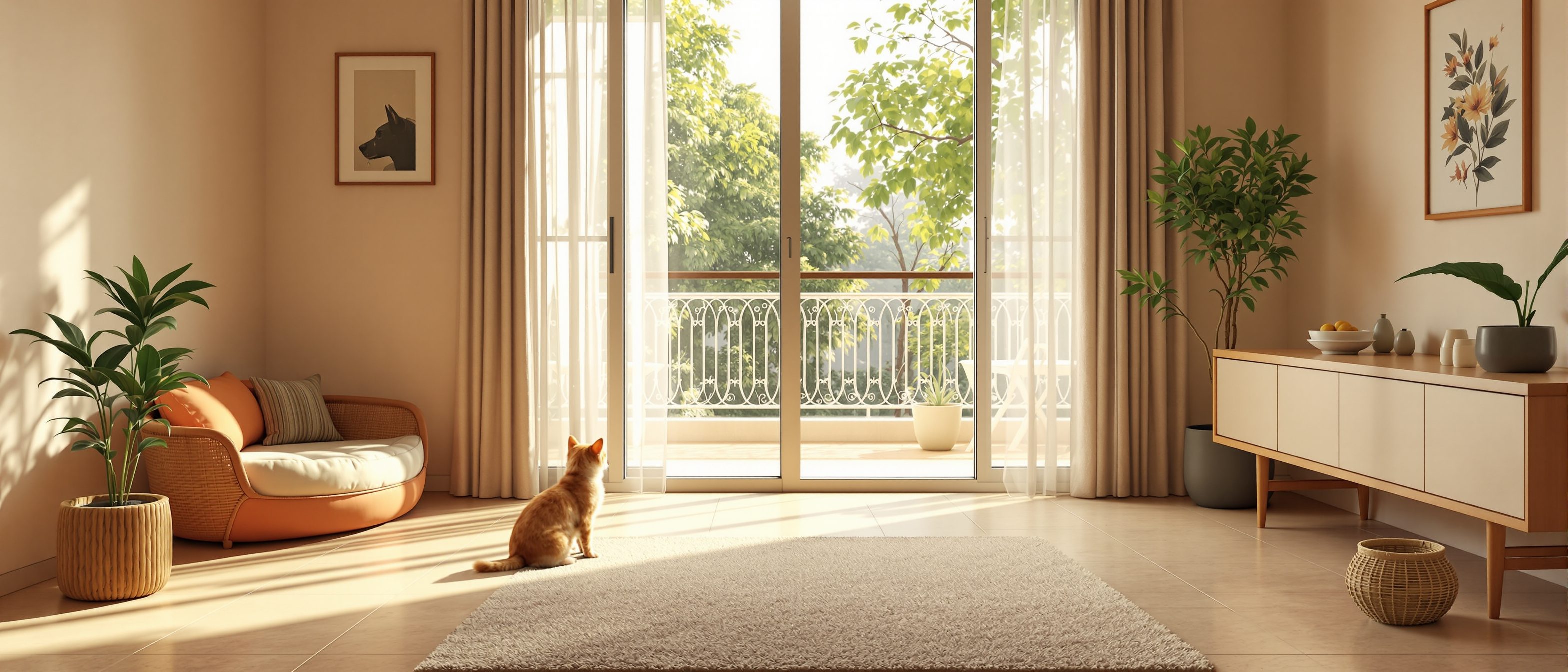
Pet-Friendly Home Design in India
Floors, zones, balcony safety and air for a home that's ready for a dog or cat
A decade ago, a dog in a Mumbai high-rise or a cat in a Bengaluru 2BHK was the exception. Today it is ordinary. Urban India has quietly become a nation of pet parents — millennial couples adopting before kids, retirees with a companion dog, joint families with a resident tomcat. The pet-care market has crossed several thousand crore and is growing double-digits a year. Yet almost no Indian home is designed for an animal. We buy the dog first and discover the problems afterward: the laminate that swelled, the marble the puppy skidded across, the balcony we now cannot use because we are terrified, the corner of the hall that permanently smells of litter.
A future-ready home assumes a pet will arrive — if not now, then within the fifteen-to-twenty-year horizon this whole cluster plans for. A pet is not a renovation. It is a lifestyle layer that lands on top of your floors, your balconies, your storage and your air. The cheap move is to anticipate it: lay the right floor, stub a drain near the entry, net the balcony before you move in. The expensive move is to retrofit around an animal that already lives with you.
Designing for a pet is not about pampering an animal; it is about choosing surfaces, zones and safety details now that quietly absorb claws, fur, accidents and a curious creature's instinct to climb — so the home stays clean, calm and safe for the next two decades.
This guide is the pet spoke of Designing Homes for 2040 in India. It pairs closely with Flexible Homes for Changing Families — a pet zone is simply another adaptable claim on space — and with Low-Maintenance Kitchen Design, because durable, wipe-clean surfaces follow exactly the same logic whether the mess is masala or muddy paws.
1. Start with five small zones, not one big idea
People imagine a pet-friendly home needs a dedicated room. It does not. It needs five small, deliberately-placed zones, each under a square metre, fixed into the plan early so they sit next to the right plumbing, door or window.
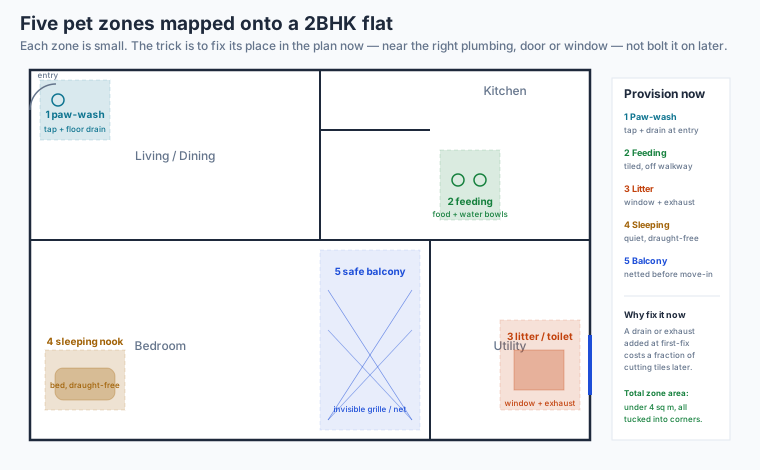
Figure 1: Five pet zones mapped onto a typical 2BHK. None is large; the value is in placing each beside the service it needs — a drain, an exhaust, a window — at first-fix rather than later.
The five are: an entry paw-clean point, a feeding station, a litter or toilet area with ventilation, a quiet sleeping nook, and a safe balcony. Sketch these onto your plan before tiling and wiring begin. Use the layout planner to test where each lands against your real walkways — the single most common mistake is putting the feeding bowls or litter tray in a corridor where everyone trips over them and the animal feels exposed.
Design principle: an animal wants its food, sleep and toilet in separate, predictable places, just as we do. Cats in particular refuse a litter tray placed beside their food. Spacing these zones apart is not aesthetics — it is the difference between a cat that uses the tray and one that does not.
2. Flooring: the one decision you cannot redo cheaply
Floor is where most pet homes fail, because flooring is the hardest, costliest thing to change once you live there. A dog's nails are harder than oak. A scared cat sprints. Accidents happen on day one of a new puppy and during any illness. Your floor must survive scratching, resist slipping when wet, and wipe clean in seconds.
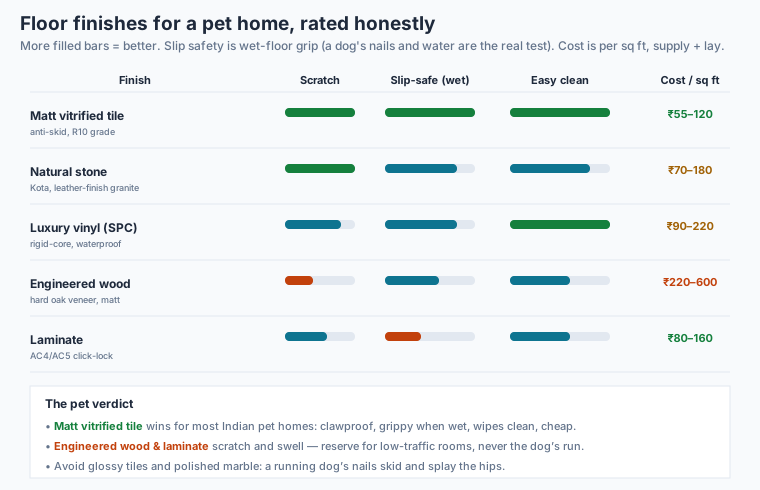
Figure 2: An honest rating across the four things that matter for a pet — scratch, wet-floor grip, ease of cleaning and cost per sq ft.
| Finish | Scratch | Slip-safe (wet) | Easy clean | Cost/sq ft (laid) | Pet verdict |
|---|---|---|---|---|---|
| Matt / anti-skid vitrified tile | Excellent | Excellent | Excellent | ₹55–120 | Best all-round; the default |
| Natural stone (Kota, leather-finish granite) | Excellent | Good | Good | ₹70–180 | Cool, tough; grout/joints need sealing |
| Luxury vinyl (SPC rigid-core) | Good | Good | Excellent | ₹90–220 | Warm underfoot, waterproof, quiet |
| Engineered wood (matt, hard veneer) | Poor | Good | Good | ₹220–600 | Scratches; keep off the dog's run |
| Laminate (AC4/AC5) | Fair | Poor | Good | ₹80–160 | Swells with accidents; gloss is slippery |
The practical reading: matt or anti-skid vitrified tile wins for most Indian pet homes — clawproof, grippy when wet, cheap, and it stays cool in summer (more on that below). Specify an R10-or-better anti-skid grade in wet-prone spots. Avoid two things many showrooms push: high-gloss tiles and polished marble. A running dog's nails cannot grip a glossy surface; the legs splay and, over years, this damages the hips. If you love wood, confine engineered wood or laminate to the master bedroom where the animal mostly sleeps, and lay tile or vinyl everywhere it runs, eats and plays. Wide, washable runners over a slippery existing floor are the cheap retrofit if you have already tiled in gloss.
3. The entry paw-clean point — a ₹4,000 stub that saves your floors
Indian streets are dusty, monsoon-muddy and, for a dog, a daily walk. Tracking that through the house is the number-one cleaning complaint of new pet parents. The fix is a small paw-clean point just inside the entry: a hand-held bidet spray or a low tap, a shallow floor drain, and an absorbent mat, on tiled (never wooden) flooring.
This is the cluster's provisioning idea in miniature. A floor drain and a water point added during first-fix plumbing — while the tiles are off and the slab is exposed — costs a few thousand rupees. Cutting a drain into a finished tiled lobby afterward means breaking tiles, re-waterproofing and re-laying: easily eight to ten times the cost, plus dust and a week of mess.
| Item | Provision now (at first-fix) | Retrofit later (finished home) |
|---|---|---|
| Floor drain at entry | ₹2,000–4,000 (with the plumber already on site) | ₹18,000–30,000 (break tiles, re-waterproof, re-lay) |
| Low tap / bidet spray point | ₹1,500–3,000 | ₹8,000–15,000 (chase a wall, re-finish) |
| Tiled (not wood) entry lobby | ₹0 extra — just a material choice | Rip out wood, re-floor: ₹15,000+ |
Even if you have no pet today, a tap-and-drain at the entry is useful for cleaning umbrellas, washing the cycle, or a future pet. It is the definition of cheap groundwork.
4. Feeding, litter and sleep: place them right, ventilate the litter
Feeding station. Put food and water bowls at the edge of the kitchen or dining area, on tile, off the main walkway, ideally on a wipe-clean tray or a tiled niche. Raised feeders suit larger or older dogs (easier on the neck and joints). Keep a low cabinet or drawer nearby for the food bin so kibble is not stored on the floor where it attracts pests.
Litter / toilet area. This is the zone people most often get wrong. A cat's litter tray, or a dog's indoor pee-pad station for rainy days, needs ventilation above all. Site it in the utility, bathroom or a corner of the balcony that has a window or, better, a small exhaust fan vented outside. The single biggest source of a "pet smell" in a flat is a litter tray in a dead-air corner. If you are doing electrical first-fix, a spare point for a 150 mm exhaust fan near this zone is a trivial add now and a wall-chasing job later.
Sleeping nook. Animals want a den: a defined, draught-free corner away from the front-door traffic and the AC's direct blast, where they can see the room but feel tucked-in. A 700–900 mm patch under a console, beside a sofa, or in a bedroom corner is enough. You do not buy this; you simply leave it in the layout. Crate-trained dogs need floor space roughly 600 × 900 mm for a medium breed — worth marking so furniture does not crowd it out.
5. Materials and fabrics that forgive claws and fur
Beyond the floor, the surfaces a pet touches daily decide how your home ages. The rule is simple: choose materials that resist scratching, shed fur instead of trapping it, and wipe or wash clean.
- Upholstery: performance fabrics, tight-weave synthetics, or leatherette resist claws and shed pet hair; loose-weave linen and bouclé trap fur and snag. Removable, washable covers are gold. Avoid silk and velvet on anything the animal sits on.
- Walls: washable, low-sheen acrylic emulsion (a wipeable grade) up to about a metre — the muddy-paw and shake-off-after-a-bath height — saves repainting. A dado of laminate, tile or PVC panelling in the dog's main zone is near-indestructible.
- Furniture edges and legs: solid wood or metal legs survive chewing far better than veneered MDF, which delaminates once gnawed. Round off sharp corners at animal height.
- Curtains: keep hems clear of the floor in the pet's zone, or use blinds, so they are not a chew or claw toy.
This durability mindset is the same one that drives Low-Maintenance Kitchen Design: pick the surface that forgives, and you stop fighting your own home.
6. Balcony and window safety — the detail that prevents tragedy
In Indian high-rises this is not a comfort issue; it is a life-or-death one. Cats and small dogs slip through railing gaps, chase a bird off a parapet, or push through an open window. Vets call the resulting fall injuries so common they have a name. A standard balcony railing leaves a 110–150 mm gap — comfortably wide for a cat and many small breeds.
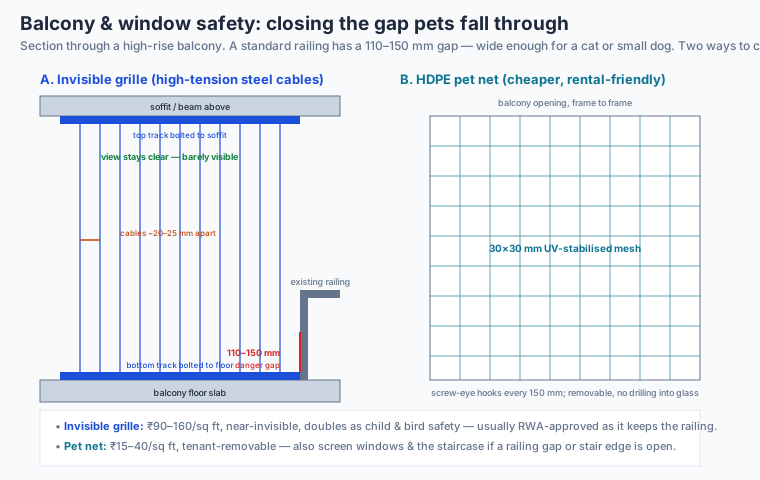
Figure 3: Two ways to close the gap — high-tension invisible grille anchored top and bottom, or a removable HDPE pet net. Both also screen windows and open staircase edges.
You have two good options:
- Invisible grille — high-tension stainless cables strung vertically at roughly 20–25 mm spacing between a top track bolted to the soffit and a bottom track on the slab. Nearly invisible from a metre away, it preserves the view and your light, doubles as child and bird safety, and — crucially in apartments — usually wins RWA approval because it keeps the existing railing and does not alter the façade. Budget ₹90–160 per sq ft.
- Pet net — UV-stabilised HDPE mesh (30 × 30 mm) hooked to screw-eyes around the opening. Cheaper at ₹15–40 per sq ft, fully tenant-removable, and ideal for rentals. The same net screens windows and any open staircase edge.
Do not forget the staircase and internal railings in duplexes and villas: a gap a kitten fits through at the landing is the same hazard at height. And mind glass railings and full-height windows — they read as solid to a sprinting dog. A film band or a low rail prevents collisions.
A note on standards: the National Building Code (NBC 2016) sets a minimum parapet/railing height of 1,050 mm (1.2 m for higher floors) but says nothing about gap size for animals or toddlers. Safety here is on you, not the builder. Treat the netting as non-negotiable, like a smoke alarm.
7. Heat, air and odour — the Indian summer problem
An Indian summer is harder on a dog than on you; they cannot sweat, and a closed-up flat at 38 °C is dangerous. Design buys comfort cheaply.
- Cool floors: vitrified tile and stone stay several degrees cooler than wood or vinyl. The patch of cool tile by a window is where the dog will lie all summer — leave it accessible, do not rug over it.
- Shade and water: cross-ventilation and a shaded spot matter more than AC. Keep a low, spill-proof water bowl topped up; in peak summer many owners add a second. A balcony the animal can safely use (netted) gives it air without heat-stroke risk.
- Air and dander: fur and dander are the hidden load. Hard floors and washable surfaces let you sweep or vacuum daily; a doormat-to-floor strategy keeps dust down. Good cross-ventilation clears odour far better than air freshener. For families with allergies, an exhaust at the litter zone plus a HEPA-grade purifier in the main room handles most dander — depth on whole-home air strategy lives elsewhere in this Future-Ready cluster, so here the focus stays on the pet sources: floor, fur, and the litter corner.
8. Storage and supplies — a cupboard you will be glad you planned
Pets come with stuff: a 10–20 kg food bin, leashes, grooming kit, medicines, toys, a spare litter bag, a travel crate. Without a home, it colonises your living room. Allocate one 600 mm-wide tall cabinet or a pull-out near the feeding or entry zone — airtight bins for food (pest- and moisture-proof in our humidity), a drawer for grooming and meds, a hook rail for leashes by the door. Plan it in the joinery; it costs almost nothing extra in a fresh fit-out and is a clumsy add-on later.
9. Safe materials and non-toxic finishes
A curious animal chews and licks. Two quiet hazards:
- Plants: several popular Indian houseplants are toxic to cats and dogs — money plant (pothos), areca and sago palm, lily, philodendron, aloe, and dieffenbachia among them. If a pet roams free, keep these out of reach or skip them; choose pet-safe greenery (areca is toxic but spider plant, areca's cousins vary — verify each).
- Finishes: favour low-VOC paints and water-based polishes, especially at animal height, and avoid loose naphthalene balls, rodent baits and strong phenyl floor cleaners within a pet's reach — many common Indian disinfectants are toxic to cats.
10. The apartment reality — RWA rules, lifts and small flats
Most Indian pet parents live in apartments, and the home design has to survive the society, not just the flat.
- Society and RWA rules: by law and repeated court and Animal Welfare Board of India advisories, an RWA cannot ban pets outright, though it may set reasonable rules — leashing in common areas, cleaning up, lift etiquette. Know your rights, but design to keep the peace: a paw-clean point means you never track the lobby; good litter ventilation means neighbours never smell it.
- Shared lifts and lobbies: keep a leash and a wipe by the door. A small mat inside the lift-lobby door of your flat catches the worst.
- Small-flat solutions: in a 1BHK or compact 2BHK, zones overlap — the feeding station shares the kitchen edge, the sleeping nook tucks under a console, the litter goes in the bathroom with the exhaust already there. Vertical helps: a wall-mounted cat shelf or a window perch gives a cat territory without floor area. The principle holds at any size — fix the five small zones, get the floor and the netting right, and a compact flat is as pet-ready as a villa.
None of this is exotic or expensive when you plan it into a build or a renovation. It is a tap and a drain, a tile choice, a net, a cabinet and five thoughtful corners. Provision them now and the home simply absorbs the dog or cat you will love for the next fifteen years — instead of being slowly damaged by it.
Sources & further reading
- Bureau of Indian Standards / National Building Code of India (NBC 2016), Part 4 (Fire & Life Safety) and Part 6 — parapet and railing heights, ventilation provisions.
- IS 15622 and IS 13630 — vitrified/ceramic tile specification and slip-resistance test methods (anti-skid grading).
- Animal Welfare Board of India (AWBI) advisories and Delhi/Bombay High Court orders on the keeping of pets in housing societies — RWAs cannot impose blanket pet bans.
- ASPCA / pet-toxicity plant lists — cross-checked common Indian houseplants (pothos, lily, sago palm, dieffenbachia) for toxicity to cats and dogs.
- BEE Eco Niwas Samhita (ENS) — residential ventilation and openable-area guidance, useful for siting the litter exhaust and cross-ventilation.
Pairs with Designing Homes for 2040 in India, Flexible Homes for Changing Families, and Low-Maintenance Kitchen Design in India.
Export this guide
Related Guides — Deep-dive reading
Bathroom Flooring Guide India: Anti-Skid Tiles, Stone, Vinyl & Epoxy Compared
Every bathroom floor material for Indian homes in one place — anti-skid ceramic and vitrified tiles, natural stone, mosaic, vinyl (SPC/LVT) and epoxy — with a full comparison table, slip ratings, ₹/sq ft costs and the safety and slope rules that keep a wet floor from becoming a hazard.
BathroomsRoof Access & Walkways
Someone will need to get onto your roof several times a year — to clear a drain, service the tank, wash the solar panels, check the waterproofing. Access designed into the house is far safer and cheaper than a ladder propped against a wall. This guide covers the ways up (mumty stairs, fixed ladders, hatches, loft ladders), the ways around (walkways and duckboards over fragile or waterproofed surfaces), and the guardrails and anchor points that make maintenance safe.
RoofingAnti Slip Flooring for Bathroom and Wet Areas in India: R-Ratings, Finishes and Genuinely Safe Tile Choices
How to choose genuinely safe flooring for bathrooms, kitchens, balconies, pools, entrances and elderly- or child-friendly homes — the R-rating system, finishes that grip wet feet, anti-skid natural stone, slope to drains and the tiles to avoid.
Flooring & SurfacesRelated Tools — Try Free
Cross-Ventilation Analyzer
Estimate airflow and air changes per hour (ACH) from room size, window areas, layout, and local wind — with NBC 2016 Part 8 compliance check.
Ventilation CalculatorWindow Cleaning Cost Calculator
Estimate professional window cleaning cost per visit and per year by access and frequency.
Window CalculatorWindow Grill Design Selector
Pick a window grille style and material by priority — security, looks, budget, view — and estimate cost.
Window Tool