

Monsoon-Friendly Window Designs: Keeping Wind-Driven Rain Out
Drainage channels, baffled weep holes, outward-sloped sills, EPDM seals and the right window type for an Indian monsoon
The Indian monsoon does not arrive as gentle drizzle. It arrives sideways. A window that is perfectly weather-tight on a still day can leak freely when a 70 km/h gust drives rain horizontally against the glass and forces water uphill, through gaps that gravity alone would never breach. Every June, lakhs of homeowners discover the same thing: the puddle on the sill, the swollen wooden frame, the black mould creeping along the reveal. None of it is bad luck. It is the predictable result of a window detailed for sunshine and asked to survive a storm.
This guide is about rain and wind-driven water — keeping the monsoon out. It is the weatherproofing lens, not the comfort one. For moving humid air during the rains, see our companion on passive cooling through windows; for which window type breathes best, the pillar best windows for airflow. Here we stay firmly on drainage, seals and the right openable for a gale.
Why monsoon water gets in
Water enters a window by four routes, and a monsoon-friendly design has to block each one:
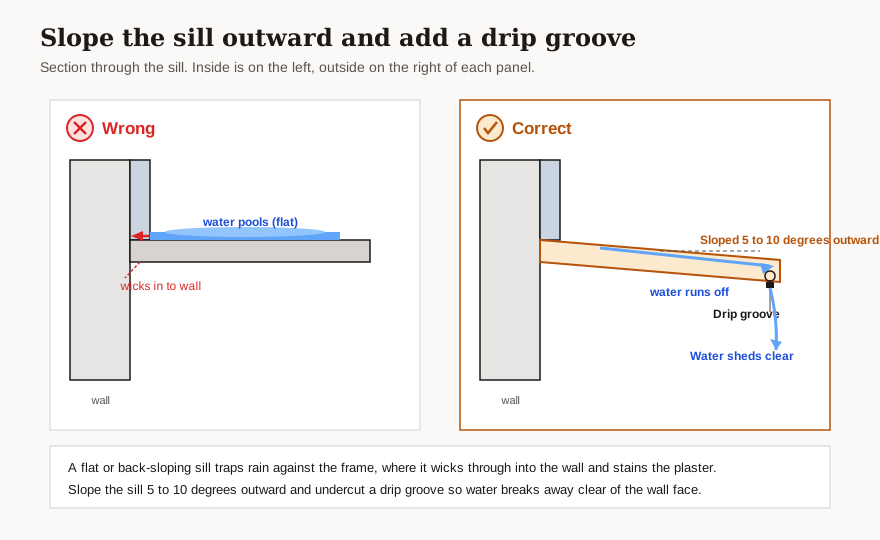
- Gravity — rain lands on the sill and sits. If the sill is flat or slopes inward, it pools and wicks back inside.
- Capillary action — water creeps through hairline gaps between sash and frame, even uphill, along thin films.
- Wind pressure — a gust raises the air pressure outside the window above the pressure inside, physically pushing water through any unsealed path. This is the killer, and the reason still-day testing lies to you.
- Trapped condensation — humid indoor air meets cold glass, runs down, and collects in the frame with nowhere to drain.
A monsoon-proof window is not one that is sealed shut. It is one that lets the small amount of water that always gets in find its way back out — fast, and only outward.
The five features that keep rain out
1. Drainage channels and concealed weep holes
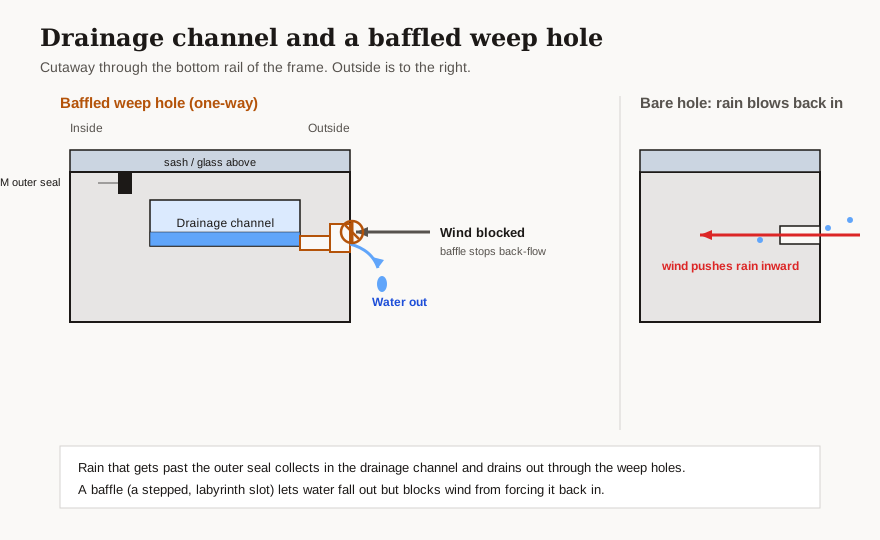
A well-made aluminium or uPVC frame is not solid — it has a hidden gutter, a drainage channel, running along the bottom of the sash track. Any water that slips past the outer seal collects here instead of pooling against the glass. The channel then drains through weep holes: small slots cut through the outer face of the frame.
The detail that matters is the baffle. A plain hole would let a strong gust blow rain straight back in. A monsoon-grade weep hole is a one-way, baffled slot — a small angled cover or internal labyrinth that lets water fall out under gravity but stops wind from forcing it back. When you shop for windows, ask to see the weep holes and confirm they are baffled, not bare. Then keep them clear: a weep hole choked with dust and dead leaves is a window with no exit.
2. The sill sloped outward
The single most common defect in Indian site-built windows is a flat or back-sloping sill. The fix is geometry: the external sill must slope 5 to 10 degrees outward so every drop runs away from the glass and off the front edge. A small drip groove cut into the underside of the projecting sill stops water tracking back along the soffit to the wall below.
3. EPDM gaskets and continuous seals
The rubber that seals sash to frame should be EPDM — ethylene propylene rubber — not the cheap PVC or foam strip that hardens and cracks within two monsoons. EPDM stays flexible for 15 years plus, resists UV and ozone, and keeps its compression set. The seal must be continuous and unbroken at the corners, where most leaks actually start. A double-gasket system, with one seal at the glass and one at the meeting rail, dramatically improves wind-driven-rain performance.
4. The right window type for rain
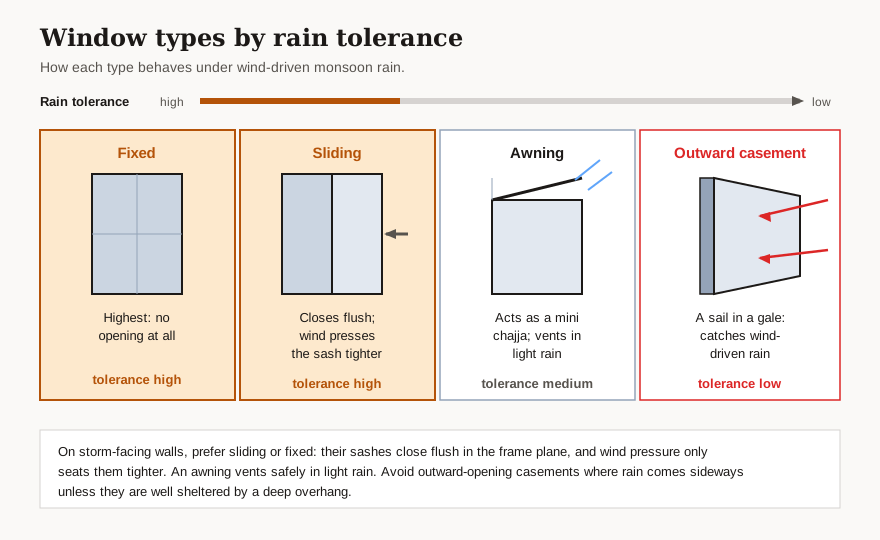
The window type decides whether you are fighting the storm or working with it. The rule is simple: in a gale you want a sash that closes flush and does not swing out into the wind.
- Sliding and fixed windows close flush within their frame — wind presses the sash harder against the seal. Best for exposed, high-wind faces.
- Awning windows hinge at the top and open outward and downward, so the sash itself becomes a tiny chajja — you can keep it cracked for ventilation in light rain without water coming in.
- Outward casements are superb for airflow but a liability in a storm: an open casement is a sail. A gust can wrench it, and rain blows straight into the open reveal. Reserve them for sheltered faces, and always be able to latch them shut.
| Window type | Closes flush? | Rain tolerance | Vent in rain? | Best monsoon use |
|---|---|---|---|---|
| Sliding | Yes | High | No | Exposed, high-wind walls |
| Fixed | Yes (none opens) | Highest | No | Storm-facing picture glass |
| Awning | Outward, top-hinged | High | Yes, light rain | Bathrooms, kitchens, vents |
| Hopper | Inward, bottom-hinged | Medium | Limited | Sheltered basements |
| Outward casement | Swings into wind | Low in a gale | No | Sheltered faces only |
| Louvered or jalousie | Slats angle down | Medium-high | Yes | Humid coastal verandahs |
5. Chajja, overhang and material
The cheapest rain defence is the one outside the window: a chajja (projecting concrete hood) or deep eave. As a working rule, a chajja should project at least half the window height, and more on weather-facing and upper-floor walls that the storm hits hardest. It keeps the bulk of the rain off the glass before any seal is even tested.
Material matters because water swells some frames and not others. Aluminium and uPVC do not swell — they shrug off the monsoon and are the default for rain-exposed openings. Wood swells, jams and rots unless it is well-seasoned, properly sealed on all six faces and re-coated every season; keep timber for sheltered, chajja-protected windows only.
Water-pressure ratings: read the label
Quality windows carry a tested water-tightness rating to standards like EN 12208, expressed as classes such as E750, E900 or E1200. The number is the test water pressure in pascals; higher is better. An E1200 rating roughly corresponds to withstanding wind-driven rain at about 80 to 90 km/h without leaking. For most Indian cities an E750 window is adequate, but for coastal and very heavy-rain zones — the Konkan and Malabar coasts, the Western Ghats hill towns, the Northeast, and high floors anywhere — specify E1200 or better. NBC 2016 and IS 875 (Part 3) wind-load provisions tell your fabricator the design wind speed for your location; match the window rating to it.
A monsoon-prep checklist
Run this before the first rains, every year.
| Task | Why it matters | When |
|---|---|---|
| Clear all weep holes and drainage channels | A blocked drain turns the frame into a trough | Pre-monsoon |
| Inspect EPDM gaskets for cracks, replace any hardened seal | Leaks start at failed rubber | Pre-monsoon |
| Confirm sill slopes outward, recut or re-grade if flat | Pooling water wicks inside | One-time, then check |
| Re-seal external frame-to-wall joint with neutral-cure silicone | The wall-to-frame gap is a hidden inlet | Every 2 to 3 years |
| Re-coat or re-seal any timber frames on all faces | Stops swelling and rot | Annually |
| Latch and test outward casements, plan to keep shut in storms | An open casement is a sail | Each storm |
| Check chajja and drip grooves are not cracked or back-falling | Failed overhang dumps water on glass | Pre-monsoon |
Where this sits
This is the rain guide. For breeze and humidity control during the rains, read passive cooling through windows — it covers night purge and operable area, deliberately staying off rain detailing so the two do not overlap. To choose the window form factor first, start at the pillar best windows for airflow and the overview of types of home windows. And since the same gaskets and tight seals that block rain also block grit, see the sibling guide on dust control through window design.
Get the drainage, the slope, the seal, the type and the chajja right, and the monsoon becomes weather you watch through clean dry glass — not water you mop off the floor.
References
- National Building Code of India 2016, Bureau of Indian Standards: https://www.bis.gov.in/standards/technical-department/national-building-code/
- IS 875 (Part 3): Design Loads (Wind Loads) for Buildings and Structures: https://www.bis.gov.in/
- EN 12208 Windows and doors — Watertightness classification: https://www.en-standard.eu/bs-en-12208-windows-and-doors-watertightness-classification/
- India Meteorological Department, Southwest Monsoon: https://mausam.imd.gov.in/
Export this guide
Related Guides — Deep-dive reading
Best Window Material for Monsoon Regions (India): Beating Rain, Swell and Rust
For Kerala, the Konkan, the Northeast, the Western Ghats and Mumbai: which frame shrugs off driving rain, humidity, swelling and rust.
Windows & GlazingDust Control Through Window Design
Seal the gaps, pick the right window type and the right mesh to keep PM2.5, pollen and road dust out of Indian homes
Windows & GlazingDoor Threshold Standards for Indian Homes: Sill, Weather Bar & Accessibility (2026)
What the strip under your door actually does - water, dust, draft and insect barrier, level transition and trip-safe accessibility - with the right material, the 12 mm accessibility limit, weather-bar and drip-groove detailing for external doors, and the wet-bathroom threshold.
Home Doors & EntrancesRelated Tools — Try Free
Cross-Ventilation Analyzer
Estimate airflow and air changes per hour (ACH) from room size, window areas, layout, and local wind — with NBC 2016 Part 8 compliance check.
Ventilation CalculatorMonsoon-Readiness Checklist
Pre-rain home audit across 9 categories — terrace, drains, waterproofing, electrical, HVAC, pest, vehicles, documents.
Seasonal AuditWindow Material Comparison Tool
Compare uPVC, aluminium, wood, steel and composite windows on cost, life, upkeep and insulation.
Compare