
Mediterranean Window Design for Indian Homes
Arched windows, painted shutters and wrought-iron grilles — adapting the Spanish, Greek and Tuscan look to Goa, Alibaug and Indian villa homes
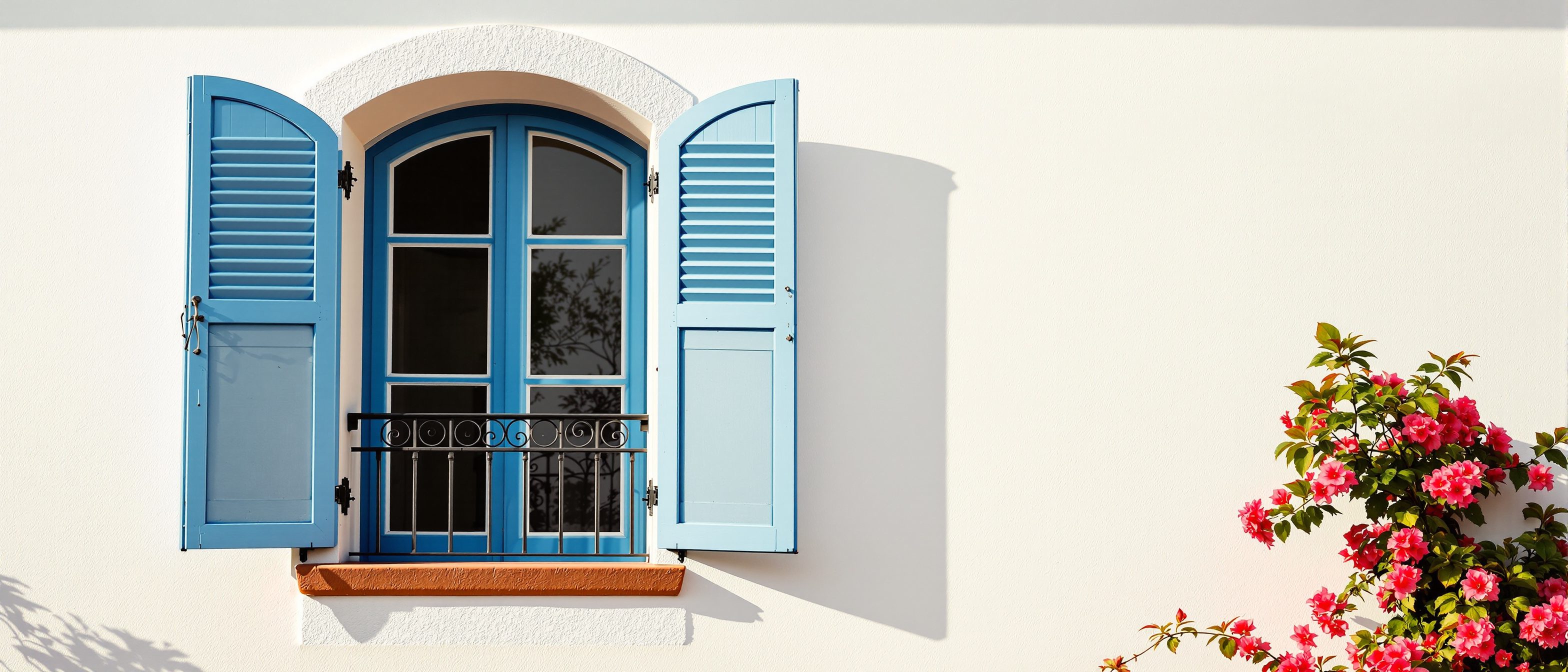
The Mediterranean window is having a long, slow moment along India's coast. Drive through Goa's new villa enclaves, the weekend-home belts of Alibaug and Karjat, or a Tuscan-themed farmhouse outside Hyderabad, and you keep meeting the same vocabulary: a gentle arch over the glass, painted timber shutters thrown open against a whitewashed wall, a slim wrought-iron rail, and a frame set deep into a thick, sun-warmed reveal. It is a look — and, helpfully, it is also a climate strategy. Thick walls, shaded openings and operable shutters were the original answer to fierce coastal sun, which is exactly the problem a Goan or Konkan home still has.
This guide stays in the styling lane: proportion, arch geometry, shutter and grille pattern, the terracotta-whitewash-ochre palette, and a get-the-look checklist for Indian villas. For how an arched or casement window actually opens, seals and costs, lean on Types of Home Windows in India. For the broader modern-window idea book this style sits within, see the pillar, Modern Window Design Ideas for Indian Homes.
Mediterranean windows are not about glass. They are about the wall the glass sits in — its thickness, its arch, its shadow, and the painted timber that softens it.
What makes a window read "Mediterranean"
The style is a loose family — Spanish, Greek-island, Tuscan, Provencal — but a handful of traits do the heavy lifting. Get three or four of these right and the eye reads "Mediterranean" instantly.
| Trait | What it looks like | Why it exists |
|---|---|---|
| Arched or rounded top | Semicircular, segmental or shallow "eyebrow" arch over the opening | Softens masonry, throws light deeper, signals hand-built craft |
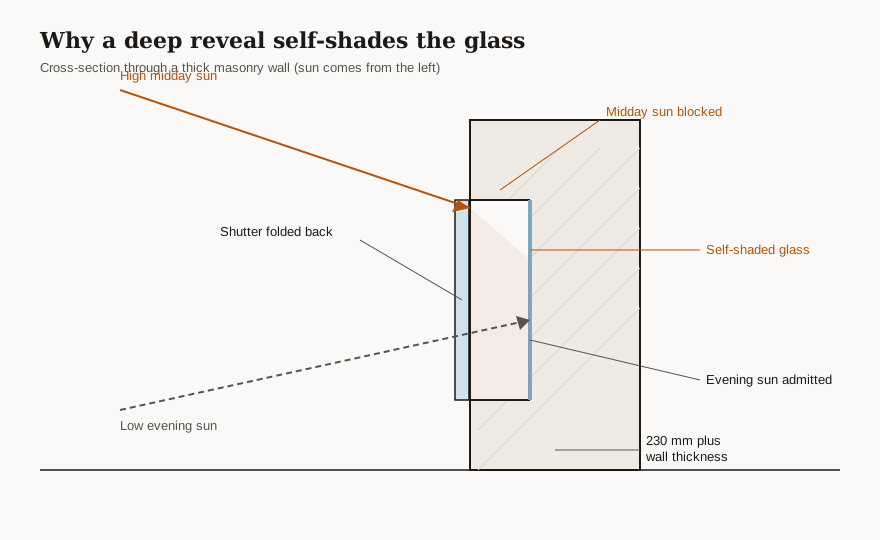
| Deep reveal | Frame set 150-300 mm back in a thick wall | Self-shading; the wall becomes the sunshade |
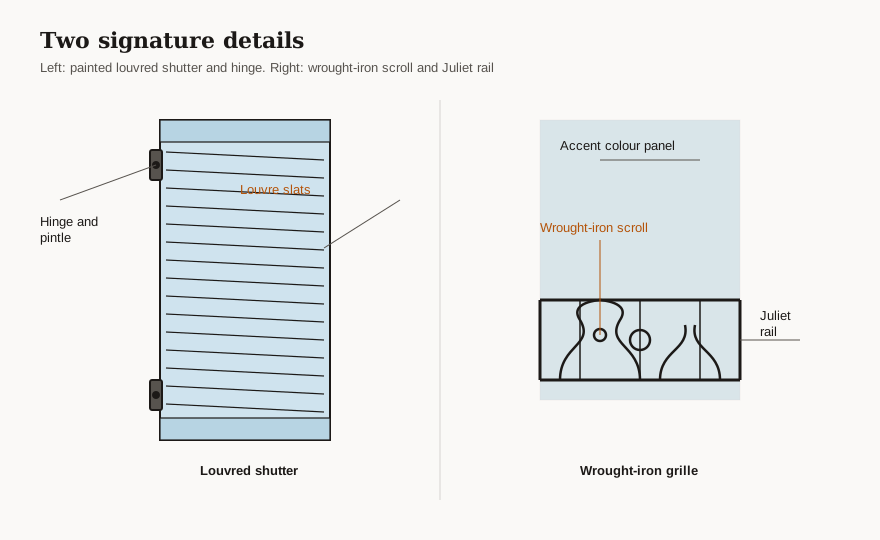
| Painted timber shutters | Solid or louvred, hinged outside, in white, ochre, sky-blue or weathered green | Daytime shade and night security without curtains |
| Small-pane casements | Multiple small lites divided by muntins, side-hinged | Pre-dates large sheet glass; gives the cottage texture |
| Wrought-iron grille / Juliet | Slim black bars, curved scrollwork, or a shallow railing | Security and a balcony "gesture" on upper floors |
| Earthy palette | Terracotta, lime-whitewash, ochre, with blue or green accents | Lime and clay were the local materials |
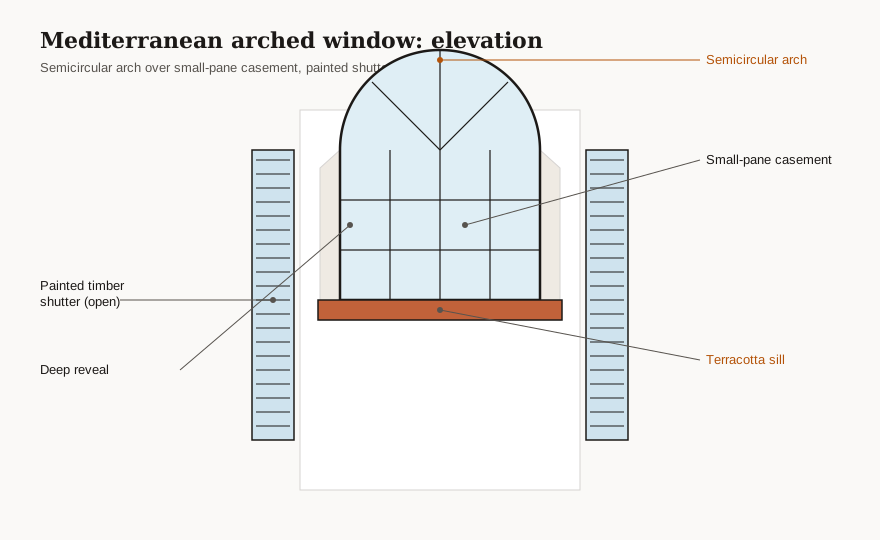
The single most important move is the arch plus deep reveal. A flush, thin-walled arched window in a 115 mm brick wall looks pasted-on. The look comes from depth — a 230 mm or thicker wall, or a built-up plaster reveal, so the opening visibly recesses and the shutter has somewhere to fold back against the wall.
Why it suits hot, coastal India
This is the rare imported style that is climatically honest here. The Mediterranean basin and the Konkan coast share the same brief: long hours of harsh, low-humidity-to-humid sun, salt air, and a need to ventilate without flooding rooms with heat or glare.
- Operable timber shutters let you shade fully in the afternoon and open at night — the same logic as a Kerala louvred shutter, just a different idiom (we contrast the two below).
- Deep reveals self-shade the glass, cutting heat gain before it reaches the pane — cheaper than chasing exotic glass.
- Small panes in painted frames hide the dust and salt streaking that plagues big sheets of glass near the sea.
- Lime whitewash reflects heat and breathes, which suits monsoon humidity better than plastic paint on masonry.
That said, do not skip the glass logic entirely. West- and south-facing arched windows in Goa or Alibaug still want solar-control or Low-E glazing behind the romance — see Types of Glass for Windows in India for the performance side.
Mediterranean vs Indo-colonial: a clean line
Because both use timber shutters and iron, the Mediterranean look is easy to confuse with the Indo-colonial windows of Colonial Window Styles in India. They are cousins, not twins, and mixing them muddies a facade. Keep the distinction sharp.
| Mediterranean (this guide) | Indo-colonial (Goa Portuguese / Pondicherry) | |
|---|---|---|
| Top profile | Rounded / arched, informal | Often tall and rectangular with a separate fanlight |
| Shutters | Painted solid or louvre, casual colours | Oyster-shell (capiz) lozenge panes, or tall louvred bungalow shutters |
| Iron | Slim grilles, scroll, Juliet rail | Heavier ornate railings, brass-and-iron bolts, white plaster bands |
| Mood | Rustic, hand-built, sun-bleached | Formal, ornamented, European-civic |
| Glass | Small-pane clear casement | Translucent nacre or late-arriving lozenge glass |
Rule of thumb: if your home wants rustic and informal, go Mediterranean; if it wants ornate and formal, the Pondicherry / Goa Portuguese idiom in the colonial guide is your reference. Do not stack capiz lozenge shutters under a Tuscan eyebrow arch.
Get the look: a build checklist
| Element | Specify this | Avoid this |
|---|---|---|
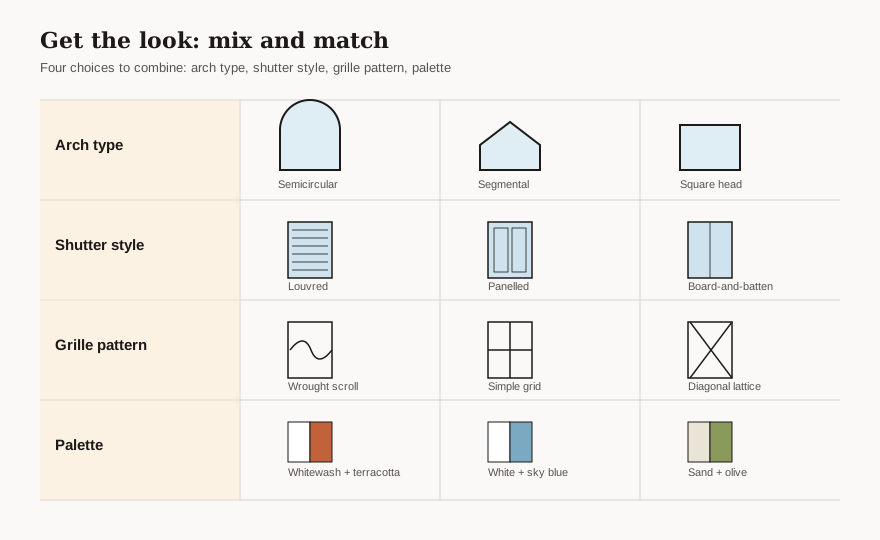
| Arch | Semicircular for Spanish, shallow segmental for Tuscan, plain for Greek-island | Pointed Gothic or ogee arches (wrong region) |
| Wall / reveal | 230 mm+ or built-up plaster reveal, lime-plastered | Thin flush walls; sharp machine edges |
| Frame | Painted timber or wood-finish; clear small panes | Mill-finish silver aluminium; mirrored glass |
| Shutters | Hinged, painted, louvred or solid; functional, not stuck-on | Fake bolt-on shutters too narrow to cover the opening |
| Grille | Slim wrought-iron scroll or simple bars in matte black | Bright chrome; heavy box grilles |
| Palette | Whitewash wall, terracotta sill, one accent (cobalt, sage, ochre) | Three or more loud colours fighting each other |
A common, lower-cost adaptation in India is the steel-look arched casement: a powder-coated MS or aluminium frame mimicking timber, paired with a genuine timber shutter only where it shows. You keep the salt-resistance of metal and the warmth of wood at the openings that matter. For the security element done as ornament rather than a cage, the slim wrought-iron approach echoes our wider Window Grills Design Guide for India — at indicative rates of MS Rs 150-300, wrought iron Rs 250-450 and SS304 Rs 600-900 per sqft, choose wrought iron for the authentic scroll, or powder-coated MS as the budget stand-in.
Palette and proportion
The palette is small and disciplined: a whitewash or warm-cream wall, a terracotta or stone sill and surround, and one accent carried on the shutters and ironwork — cobalt and white for the Greek-island read, sage or olive green for Provence, ochre and burnt-sienna for Tuscany. Indian coastal light is intense, so accents read brighter than on a European sample card; pull them down half a shade.
Proportion is where Indian builds most often slip. Mediterranean windows are usually taller than wide (roughly 1:1.4 to 1:1.8), grouped in twos or threes on a long wall, with generous whitewash around each so the opening feels carved from mass, not punched into a thin skin. Resist the builder-default wide sliding window — it kills the cottage rhythm.
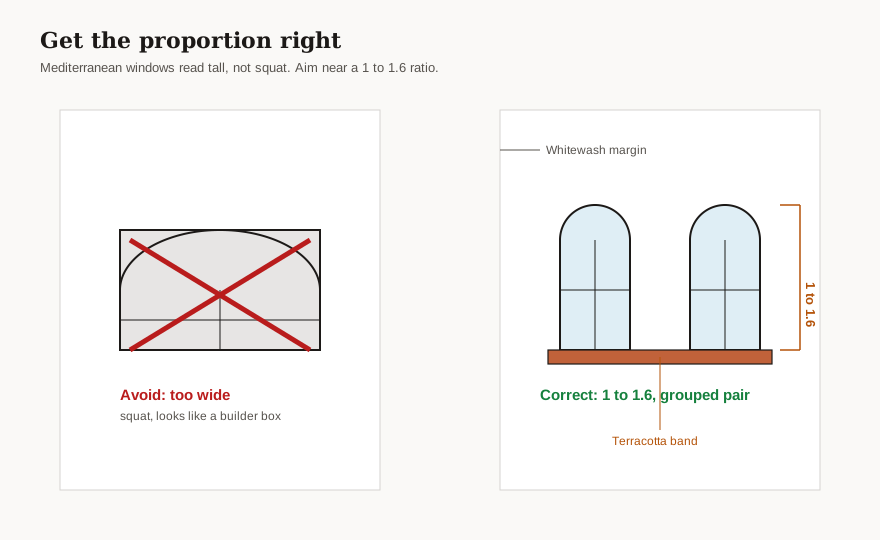
One accent colour, one arch family, one palette. Mediterranean charm dies the moment a facade tries to do all of Spain, Greece and Tuscany at once.
By home type in India
| Home | Best Mediterranean move |
|---|---|
| Goa / Konkan villa | Semicircular arches, blue-or-green louvred shutters, deep lime-plaster reveals |
| Alibaug / Karjat weekend home | Tuscan segmental arches, ochre wash, wrought-iron Juliet on the upper floor |
| Farmhouse (Hyderabad, NCR, Pune) | Grouped arched casements, terracotta sills, sage shutters against cream render |
| Apartment / balcony | A single arched accent window or a Juliet rail at the living-room opening |
For the contemporary Indian fusion — slim modern frames with these arched and shuttered accents — the related sibling Contemporary Indian Window Designs shows how to keep one or two Mediterranean gestures without theming the whole house.
References
- Tata Steel / Crittall heritage on steel windows and slim frames: https://www.crittall-windows.co.uk/about-us/history
- Wienerberger India on masonry walls, thickness and thermal mass: https://www.wienerberger.in/
- INTACH on coastal vernacular and lime-plaster conservation: https://www.intach.org/
- Bureau of Energy Efficiency ECBC residential (shading and openings): https://beeindia.gov.in/
- Goa Tourism on Indo-Portuguese houses and shutter traditions: https://www.goa-tourism.com/
Export this guide
Related Guides — Deep-dive reading
Colonial Window Styles in India
Goan oyster-shell, Franco-Tamil and British bungalow window idioms — and how to evoke them today
Windows & GlazingMinimalist Window Designs for Indian Homes
The slimline, near-frameless look — hidden frames, single large panes, no grids, monochrome detail, and how to get it without the heat and cleaning traps.
Windows & GlazingContemporary Indian Window Designs
The fusion look — slim modern frames, jali accents, courtyard glazing and stone-and-teak detail tuned to the Indian sun
Windows & GlazingRelated Tools — Try Free
Cross-Ventilation Analyzer
Estimate airflow and air changes per hour (ACH) from room size, window areas, layout, and local wind — with NBC 2016 Part 8 compliance check.
Ventilation CalculatorWindow Grill Design Selector
Pick a window grille style and material by priority — security, looks, budget, view — and estimate cost.
Window ToolBrise-Soleil Visualizer
Interactive horizontal-louvre cut-off angle calculator — sun altitude, louvre depth, and spacing inputs with a live shadow preview. Computes θ = arctan(spacing/depth) for façade shading, ECBC envelope compliance, hospital daylight design, and tropical sun-control detailing.
Sun Shading Tool