
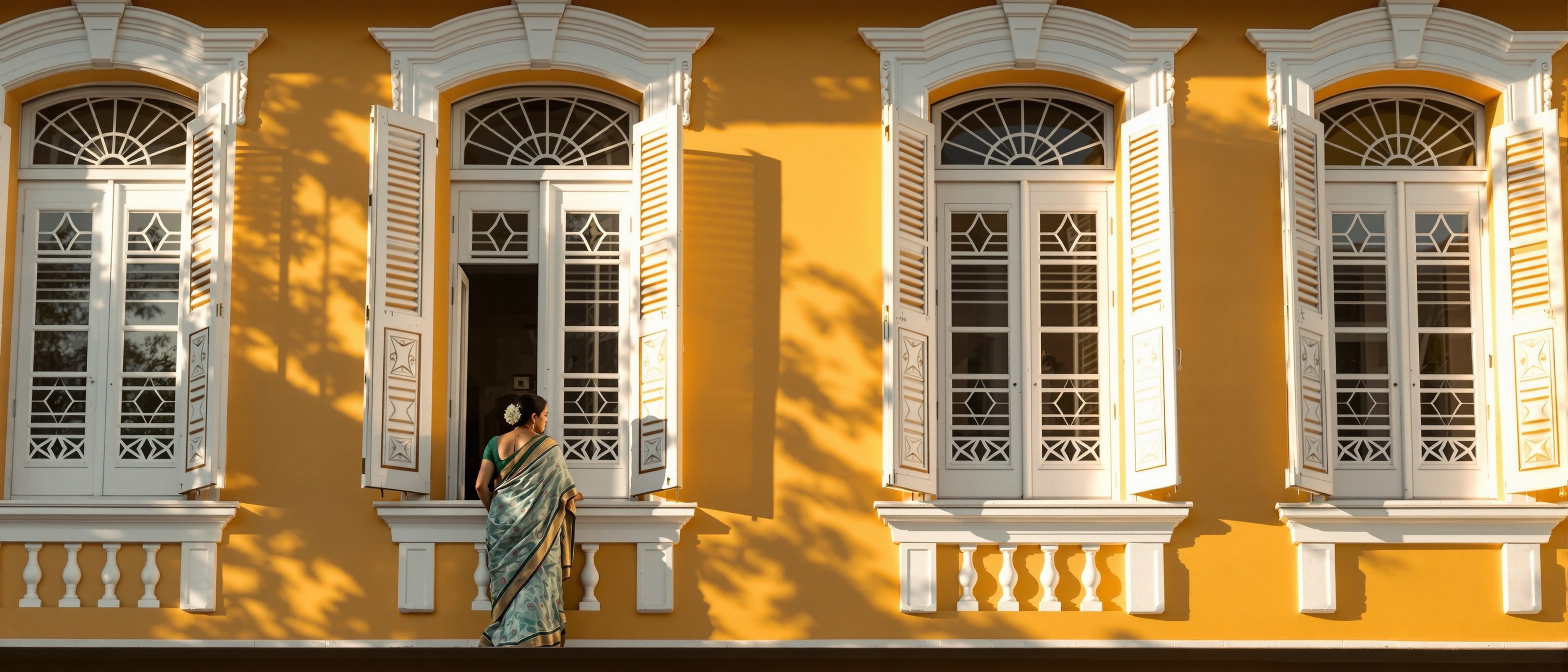
Colonial Window Styles in India
Goan oyster-shell, Franco-Tamil and British bungalow window idioms — and how to evoke them today
India's colonial windows are some of the most evocative pieces of design vocabulary the country owns. Long before affordable sheet glass arrived in the late nineteenth century, builders in Goa cut translucent oyster shells into diamonds, framed them in carved teak, and made light itself behave. In Pondicherry, French and Tamil sensibilities met in one window. In every cantonment town, the British bungalow stretched its shutters tall and crowned them with fanlights. This guide is about the window as a style object — its proportions, its shutter pattern, its mouldings and its grilles — and how to evoke these idioms in a heritage home, a restoration, or a modern home that wants a quiet colonial nod.
This is the styling lens, not the engineering one. For how a shutter actually operates, how louvres ventilate, or what a frame costs, see our window-types and materials guides linked at the end. Here we stay with the look.
If you want the whole-building context — verandahs, oyster-shell balcaos, monsoon-pitched roofs — read our companion guide Colonial Architecture in India. That guide explains the house. This one zooms into the single most photographed element of that house: its window.
Three colonial window idioms, side by side
Colonial India did not have one window style. It had at least three distinct grammars, each born of a different European power meeting a different Indian climate and craft tradition.
| Trait | Indo-Portuguese (Goa) | Franco-Tamil (Pondicherry) | British bungalow |
|---|---|---|---|
| Signature element | Oyster-shell (nacre/capiz) lozenge shutters | Fixed louvred shutters in ornate plaster frame | Tall louvred shutters plus arched fanlight |
| Glazing | Translucent shell panes (glass came late 19c) | Mostly shutter, later glass behind | Glass sash behind external louvres |
| Frame material | Carved teak, deep mouldings | Teak with thick plaster surround | Painted timber, slender profile |
| Hardware | Iron hooks, simple bolts | Brass and wrought-iron bolts | Brass espagnolette, peg stays |
| Colour | White lime mouldings, ochre or deep colour walls | White painted bands, pastel walls | White or cream over muted body |
| Security | Turned-wood or iron railings | Wrought-iron vertical bars | Occasional bars, mostly height |
| Mood | Soft, pearly diffused light | Crisp, formal, symmetrical | Airy, vertical, breezy |
The thread through all three is climate intelligence dressed as ornament. Each idiom solved the same tropical problem — harsh sun, heavy monsoon, the need for privacy and cross-ventilation — and each turned the solution into a recognisable look.
Goa: the oyster-shell window
The Indo-Portuguese oyster-shell window is India's most magical and most endangered colonial idiom. Before cheap sheet glass became available in the late nineteenth century, Goan craftsmen used the windowpane oyster — the shell known regionally as capiz, its mother-of-pearl nacre flat and faintly translucent — cut into small lozenge or diamond panes and set into a grid of thin timber glazing bars.
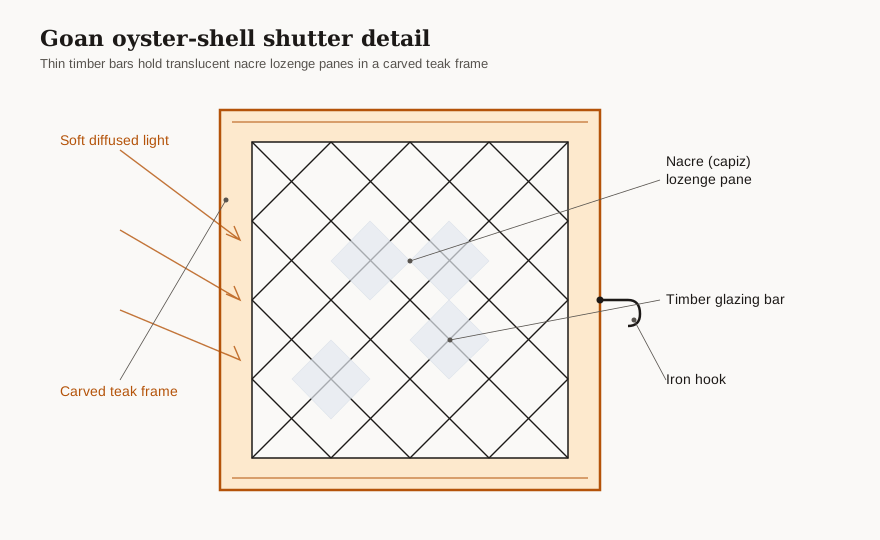
The effect is unlike glass. Light does not pass straight through; it is diffused into a soft, pearly glow that takes the bite out of the Konkan sun while still letting a room breathe. The shells gave privacy, filtered glare, and let the heat escape — all without curtains. Externally these windows sit within deep carved-teak frames, white lime mouldings, and often a little turned-wood or iron railing at the sill, the same vocabulary that decorates the Goan house's verandah and balcao.
The oyster-shell window is a vanishing craft. The few artisans who can still cut, drill and lace nacre panes are mostly tied to conservation projects. If you own one, restore it; do not replace it with glass.
To respect it today: in a genuine heritage Goan home, conserve original shutters and source replacement nacre through restoration specialists rather than swapping in float glass. In a new or modern home, evoke rather than imitate — a diamond-grid muntin pattern in frosted or fluted glass reads as a clear homage without pretending to be the real shell.
Pondicherry: the Franco-Tamil window
Pondicherry's windows carry two cultures in one frame. In the seafront "White Town" of broad boulevards, the French influence shows in ornate plaster surrounds, white painted bands, fixed louvred shutters and crisp symmetry. Cross into the Tamil quarter and the same window picks up local proportion, deeper colour and the thiruvasal sense of a framed, formal opening. The blend is the whole point.
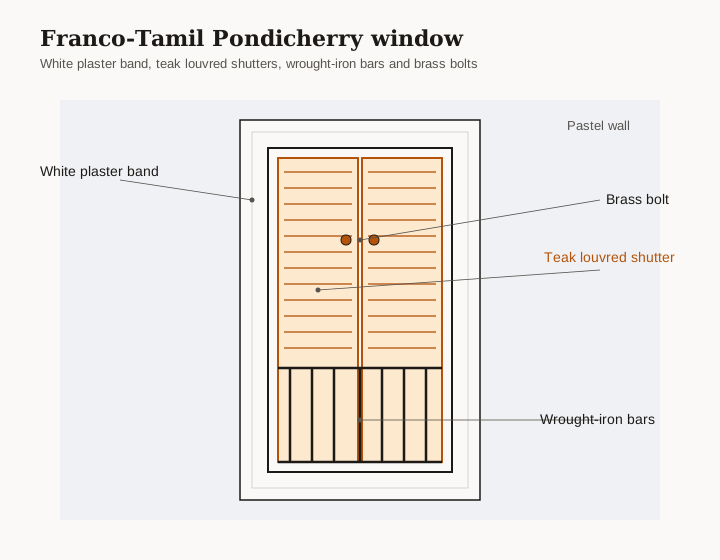
The defining details are: a thick plaster moulding around the opening, painted in a clean white band against a pastel or ochre wall; teak shutters, often with fixed or fixed-angle louvres rather than openable slats; brass and wrought-iron bolts as visible jewellery; and a row of slim wrought-iron vertical bars for security that reads as ornament, not a cage. It is a more formal, more architectural window than Goa's — less about diffused light, more about rhythm and symmetry along a street.
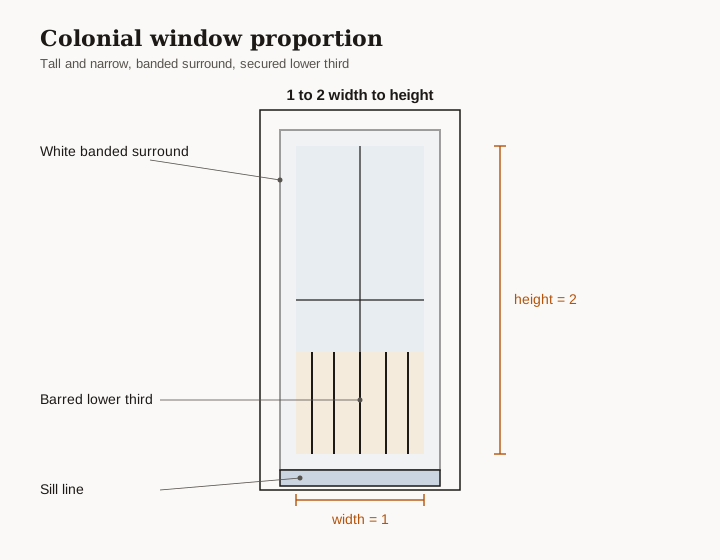
To respect it today: keep the window tall and narrow (roughly a 1:2 width-to-height feel), give it a generous white plaster or painted band, choose teak or teak-finish shutters, and add slim black or matte wrought-iron bars. Brass bolts and a pastel wall complete it.
British bungalow: tall louvres and fanlights
The British colonial bungalow took a more utilitarian, vertical approach. Its windows are tall, often reaching toward a high ceiling, with external louvred timber shutters for shade and air, a glazed sash behind for when the rains came, and frequently an arched or semicircular fanlight above the opening to bring daylight deep into the room without losing wall height.
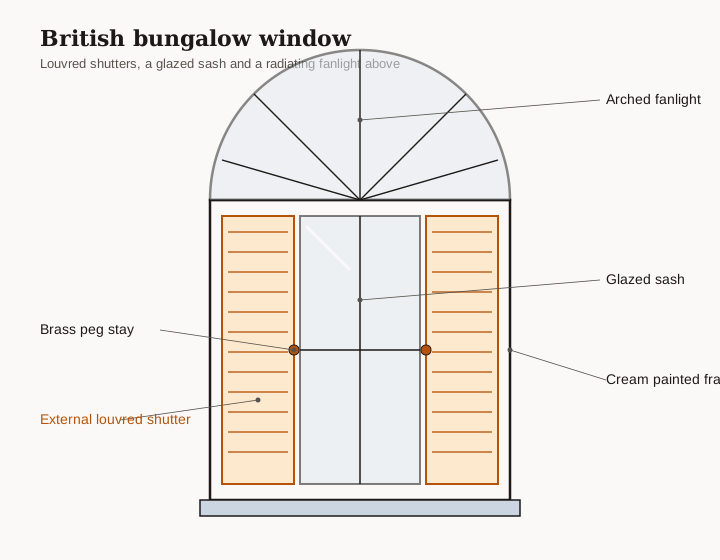
The palette is restrained: white or cream joinery over a muted body colour, brass peg stays and espagnolette bolts, slender painted profiles. Where Goa whispers in pearl and Pondicherry declaims in plaster, the bungalow window is simply breezy and practical — a machine for cross-ventilation in the heat, dressed plainly.
Get the look: a styling checklist
Use this matrix to land the right idiom for the right home.
| You want | Choose | Frame and finish | Glazing pattern | Hardware accent |
|---|---|---|---|---|
| Soft, pearly, romantic | Goa oyster-shell evocation | Carved teak, white mouldings | Diamond/lozenge grid, frosted or fluted glass | Iron hooks, turned-wood railing |
| Formal, symmetrical, street-facing | Franco-Tamil | Teak shutters, thick white plaster band | Fixed louvres, plain glass behind | Brass bolts, slim wrought-iron bars |
| Airy, vertical, practical | British bungalow | Slender painted timber, cream | Glazed sash plus arched fanlight | Brass peg stays, espagnolette |
| A subtle modern nod | Any, abstracted | uPVC or aluminium in teak or matte black | Single muntin bar suggesting the original | One restrained period detail only |
Do and avoid:
- Do match the window's proportion to the era — tall and narrow for colonial, never squat.
- Do keep mouldings and bands crisp white; it is the unifying signature across all three idioms.
- Do let one hardware detail (brass bolt, iron bar, peg stay) carry the period character.
- Avoid plasticky imitation oyster shell — a fluted or frosted diamond grid is a more honest homage.
- Avoid mixing all three grammars in one elevation; pick one and commit.
- Avoid heavy reflective glass — it kills the soft, hand-made quality these windows depend on.
Modern nods without the costume
You do not need a heritage bungalow to borrow this language. A contemporary Indian home can take a single colonial cue — a diamond muntin pattern, a deep white reveal, a row of slim black bars styled as a grille rather than a barrier — and read as quietly rooted. The trick is restraint: one period gesture against otherwise clean, modern detailing. For the fully modern, large-glazing direction, our pillar Modern Window Design Ideas for Indian Homes shows how slim frames and minimal grids can still nod to the past.
If you are drawn to the painted-shutter, arched-top, wrought-iron sensibility but want a coastal-villa feel rather than a strict colonial one, compare our sibling guide Mediterranean Window Design for Indian Homes — it shares the shutter-and-grille palette but trades colonial formality for whitewashed, terracotta warmth.
For the practical decisions underneath the style — louvred versus casement, shutter mechanisms, materials and what each costs — start from Types of Home Windows in India, then come back here for the look.
References
Export this guide
Related Guides — Deep-dive reading
Minimalist Window Designs for Indian Homes
The slimline, near-frameless look — hidden frames, single large panes, no grids, monochrome detail, and how to get it without the heat and cleaning traps.
Windows & GlazingColonial Architecture in India
The bungalow, the verandah and the Goan villa - Europe taught by the tropics
Design StylesMediterranean Window Design for Indian Homes
Arched windows, painted shutters and wrought-iron grilles — adapting the Spanish, Greek and Tuscan look to Goa, Alibaug and Indian villa homes
Windows & GlazingRelated Tools — Try Free
Cross-Ventilation Analyzer
Estimate airflow and air changes per hour (ACH) from room size, window areas, layout, and local wind — with NBC 2016 Part 8 compliance check.
Ventilation CalculatorWindow Grill Design Selector
Pick a window grille style and material by priority — security, looks, budget, view — and estimate cost.
Window ToolBrise-Soleil Visualizer
Interactive horizontal-louvre cut-off angle calculator — sun altitude, louvre depth, and spacing inputs with a live shadow preview. Computes θ = arctan(spacing/depth) for façade shading, ECBC envelope compliance, hospital daylight design, and tropical sun-control detailing.
Sun Shading Tool