
Minimalist Window Designs for Indian Homes
The slimline, near-frameless look — hidden frames, single large panes, no grids, monochrome detail, and how to get it without the heat and cleaning traps.
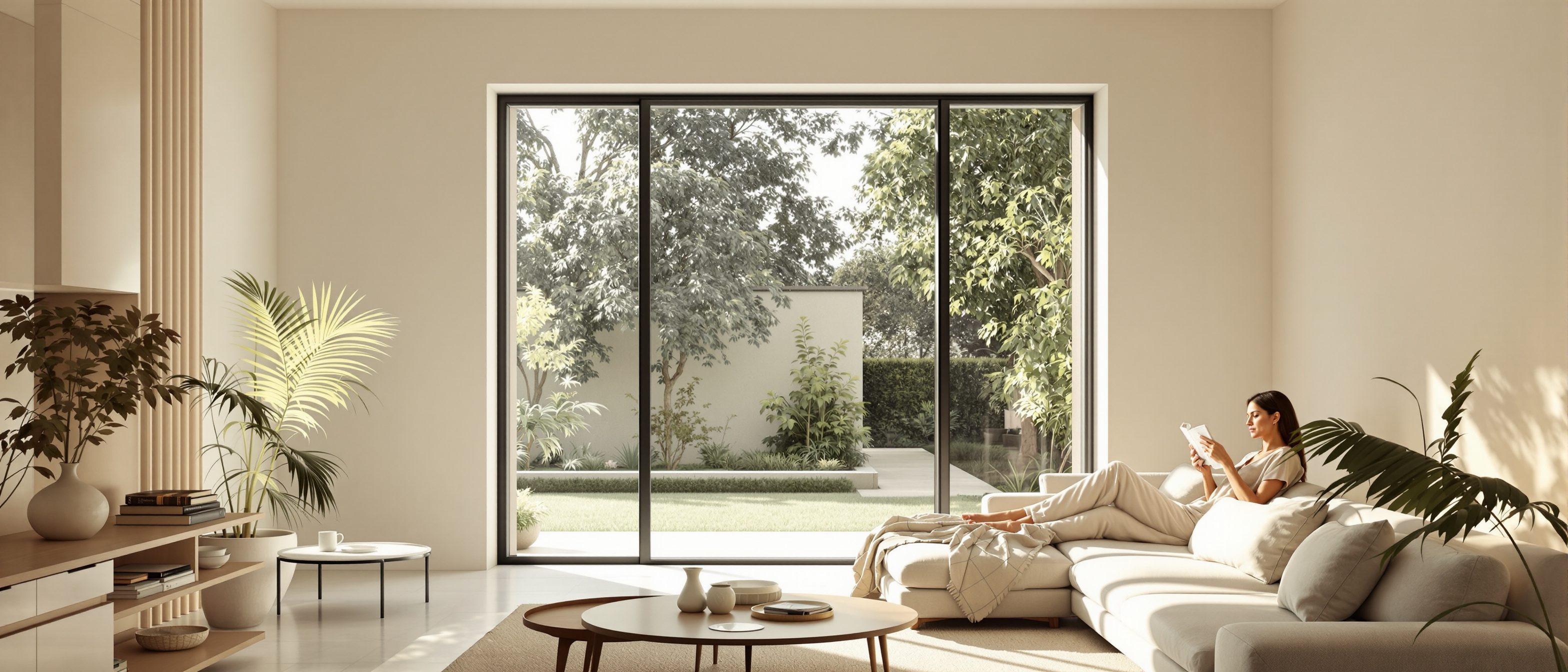
A minimalist window is not just a small window or a plain one. It is a window engineered to almost disappear, so the eye lands on the view, the light and the wall, not the frame. In an Indian home that usually means a single large pane, the slimmest possible sightline, no grids or muntins, a monochrome frame (often hidden inside the plaster), and hardware reduced to a near-invisible minimum. The discipline is subtractive: every line you remove is a design decision.
This guide is strictly about how the window looks and how to get that look. For the bigger story — the minimalist whole-home philosophy of restraint, negative space and "less but better" — see our companion pieces below. Here we stay in the window's own lane: proportion, profile, frame colour, glazing pattern and the detailing that makes a frame read as a hairline rather than a border.
Minimalism in a window is measured in millimetres of sightline, not in rupees of glass. The narrower the visible frame, the quieter the window.
What makes a window read as "minimalist"
Several specific traits separate a genuinely minimalist window from an ordinary modern one. Most of them are about what is absent.
| Trait | Minimalist version | Ordinary version |
|---|---|---|
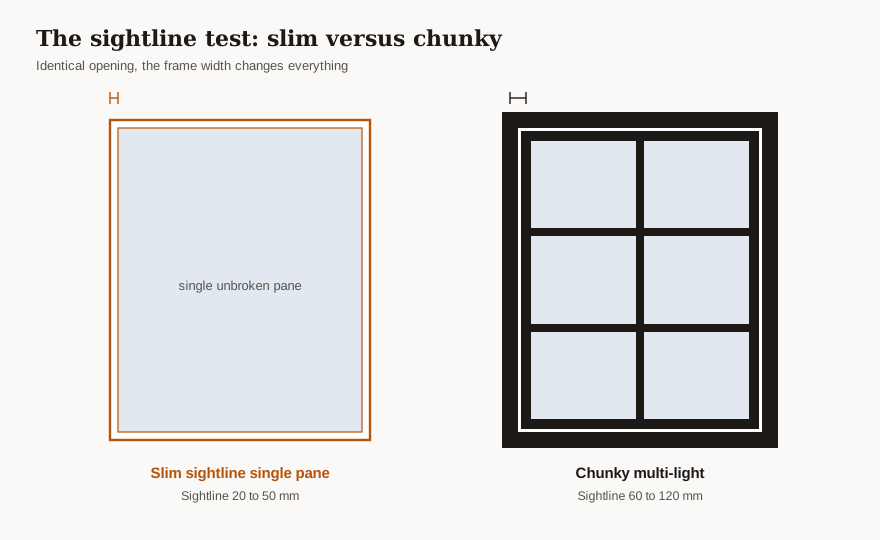
| Sightline (visible frame width) | Slim, 20-50 mm; or hidden in plaster | Chunky, 60-120 mm |
| Glazing pattern | One large unbroken pane | Multiple lights, grids, muntins |
| Frame colour | Monochrome — matte black, off-white, grey, or concealed | Mixed, glossy, wood-grain |
| Reveal / trim | Flush, plaster-in, no architrave | Beaded architrave, projecting sill |
| Hardware | Recessed or flush handle, hidden hinges | Surface locks, prominent stays |
| Operation shown | Fixed picture pane plus one discreet operable | Many visible openers |
| Proportion | Tall or wide, deliberate, full-height where possible | Standard stock sizes |
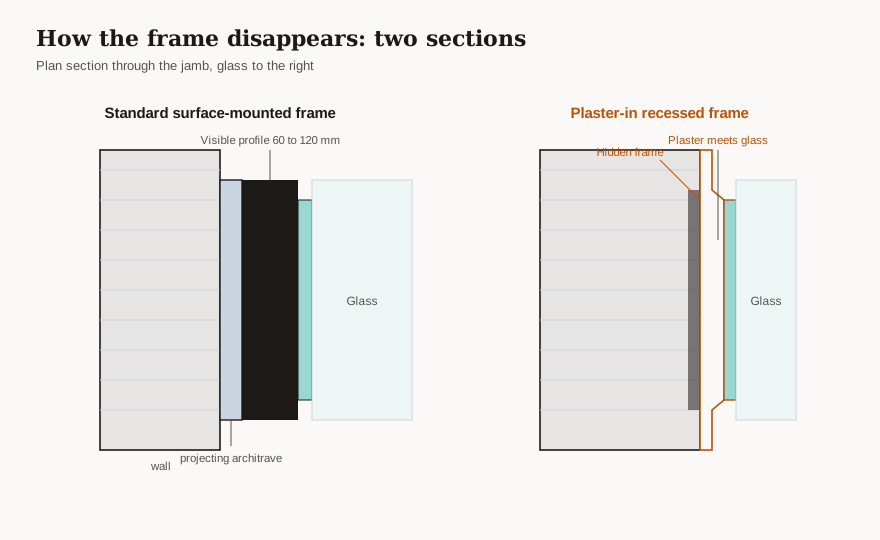
The single most powerful move is the plaster-in (or "frameless") detail, where the frame is buried in the wall and the plaster runs right up to the glass. Done well, the window looks like a hole cut cleanly in the wall — pure view, no border.
Get the look: the five moves
You can achieve a convincing minimalist window through a checklist of decisions rather than one expensive product.
| Move | What to specify | Why it matters |
|---|---|---|
| 1. Slim system | Slimline aluminium or steel-look frames; minimal-frame sliding | Cuts the sightline |
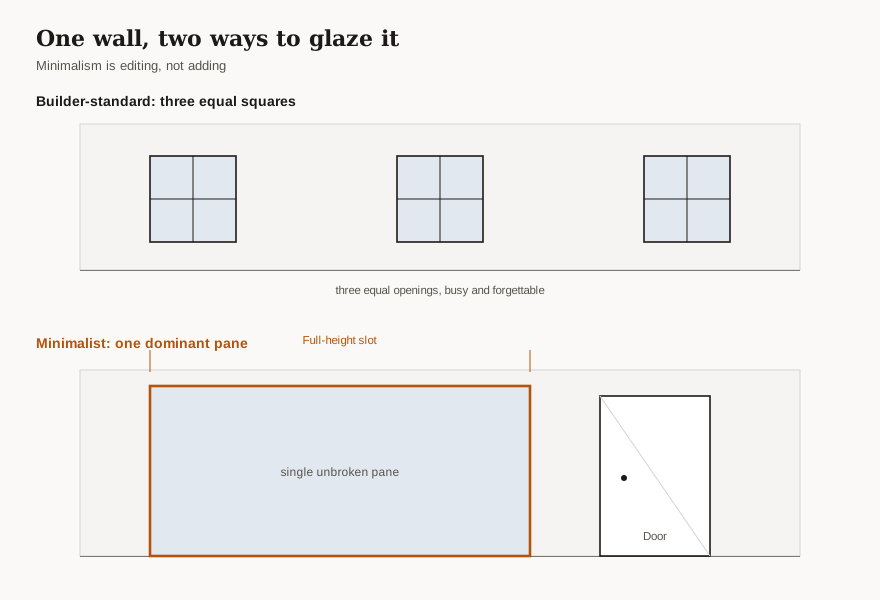
| 2. Big single pane | One large fixed light, fewer openers | Removes grid clutter |
| 3. Hide the frame | Plaster-in / recessed channel detail | Frame disappears into wall |
| 4. Go monochrome | Matte black, anthracite, off-white, grey | One quiet colour |
| 5. Disappear the hardware | Flush or recessed handles, concealed hinges | No visual snags |
A useful rule for proportion: in a minimalist composition, let one window dominate a wall rather than scattering three average ones. A tall, narrow slot beside a door or a wide horizontal band reads as intentional; a row of identical squares reads as builder-standard.
System options: what actually delivers slim sightlines
The look depends heavily on the frame system. These are the realistic choices in the Indian market, with the price anchors that carry across our window clusters (treat as indicative).
| System | Sightline character | Indicative cost (frame, per sqft) | Minimalist verdict |
|---|---|---|---|
| Slimline aluminium (minimal-frame) | Very slim, crisp, modern | Rs 350-3000 | Best all-rounder for the look |
| Steel / steel-look | Slimmest of all (steel is strong) | Premium | Sharpest, most architectural |
| uPVC | Necessarily chunkier profiles | Rs 250-800 | Hardest to make truly minimal |
| Wood | Warmer but wider frames | Rs 500-1500 | Minimal only in pale monochrome |
Installation typically adds around Rs 200 per sqft. For the full cost, durability and how-it-works detail of each material, read the type and material guides rather than budgeting from this styling guide.
Steel gives the genuinely slimmest sightline because the material is strong enough to hold large glass with a thin profile — the same physics that makes industrial Crittall-style glazing so crisp. But minimalism and the industrial look diverge sharply: minimalism wants no grid at all, while the factory aesthetic is defined by its grid. If gridded black steel is the direction you love, follow the black-frame and industrial routes below instead.
Where minimalist windows suit — and where they fight the house
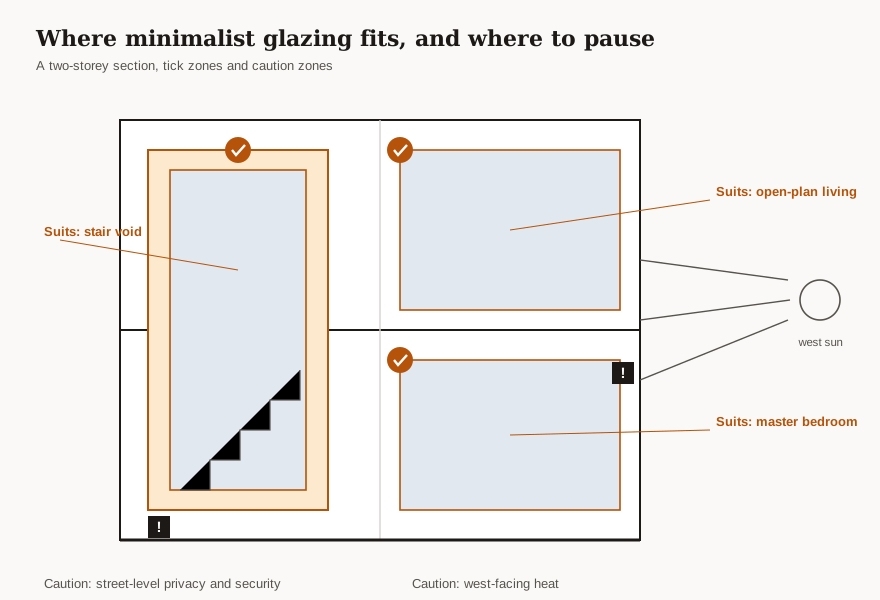
Minimalist glazing belongs in calm, modern interiors: open-plan living rooms, double-height stair voids, master bedrooms with a clean view, and any room where you want the landscape to be the artwork. It rewards good views and good housekeeping.
It struggles in three Indian situations:
- Heritage and ornate homes. A plaster-in slot fights carved teak surrounds, jali and traditional trims. Match the style to the house.
- Tight street-facing ground floors. A frameless picture pane offers no privacy and, without grilles, no security. You may need an invisible high-tensile SS cable grille — a near-transparent security layer — to keep the clean line.
- Hot, west-facing walls. A big single pane is a big heat collector.
The pitfalls nobody mentions in the showroom
Minimalism hides complexity rather than removing it. Three honest cautions:
- Cost. Slim sightlines, hidden frames and concealed hardware are precision details. Plaster-in installation must be coordinated with the mason and is unforgiving of error; large single panes are heavy and need careful handling. Minimal usually costs more than ordinary, not less.
- Cleaning and dust. A single large pane shows every smudge, and India's dust and monsoon grime are relentless. Frameless reveals collect water at the junction if the detail and drainage are sloppy — insist on a tested sill detail.
- Heat and glare with big glass. A large unbroken pane on a sunlit wall can turn a room into a greenhouse. The minimalist answer is invisible, not added grids: specify solar-control or Low-E glass and plan external shading (a deep reveal, a fin, a pergola) so the look stays clean. See our energy and shading cluster for the performance detail.
| Do | Avoid |
|---|---|
| One dominant pane per wall | A grid of identical small windows |
| Plaster-in / flush reveal | Projecting architraves and beading |
| Monochrome matte frame | Mixed colours and glossy profiles |
| Recessed or flush hardware | Surface-mounted locks and stays |
| Low-E / solar-control glass on sun-facing walls | A bare big pane facing west |
| Invisible cable grille where security is needed | Heavy bars that kill the clean line |
How this differs from the whole-home minimalism guides
If you have arrived here from our broader minimalism content, the distinction matters. Our guides on luxury minimalism in Indian homes and minimalist architecture in the Indian context are about the philosophy and the whole building — restraint, material honesty, negative space, decluttering, how a minimal home is planned and lived in. This guide is the window element only: the slim frame, the hidden detail, the single pane. Use the philosophy guides to decide whether minimalism is right for your home; use this one to specify the windows that deliver it.
For the umbrella of the modern window aesthetic — large glazing, neutral frames, indoor-outdoor flow — start at the pillar, modern window design ideas for India. To choose the right operating type behind the minimalist face, see types of home windows in India. And if you love the slim look but want it in graphic black, our sibling guide black frame windows in India covers the colour-and-finish trend, including the dark-frame heat caveat, in depth.
References
Export this guide
Related Guides — Deep-dive reading
Minimalist Door Designs in India (2026): Flush, Frameless & Concealed-Frame Doors
The clean-line, no-architrave, hidden-hardware door language behind modern Indian apartments and designer interiors — flush-to-wall doors, concealed hinges, recessed pulls, tall leaves and what the look really costs.
Home Doors & EntrancesModern Window Design Ideas for Indian Homes
The umbrella of the modern window aesthetic — large glazing, slim frames, black and neutral profiles, and a style map to eleven looks
Windows & GlazingFloor-to-Ceiling Windows (India): Maximum Light, and the Heat Trade-Off
Full-height glazing for Indian homes — how to win the daylight and view without losing the energy code, comfort or safety.
Windows & GlazingRelated Tools — Try Free
Window Hardware Cost Calculator
Estimate window hardware cost — hinges, handles, locks, rollers and multipoint gears.
Window CalculatorCross-Ventilation Analyzer
Estimate airflow and air changes per hour (ACH) from room size, window areas, layout, and local wind — with NBC 2016 Part 8 compliance check.
Ventilation CalculatorWindow Cost Calculator
Estimate window price plus installation by type, frame material, size, glass and quantity.
Window Calculator