
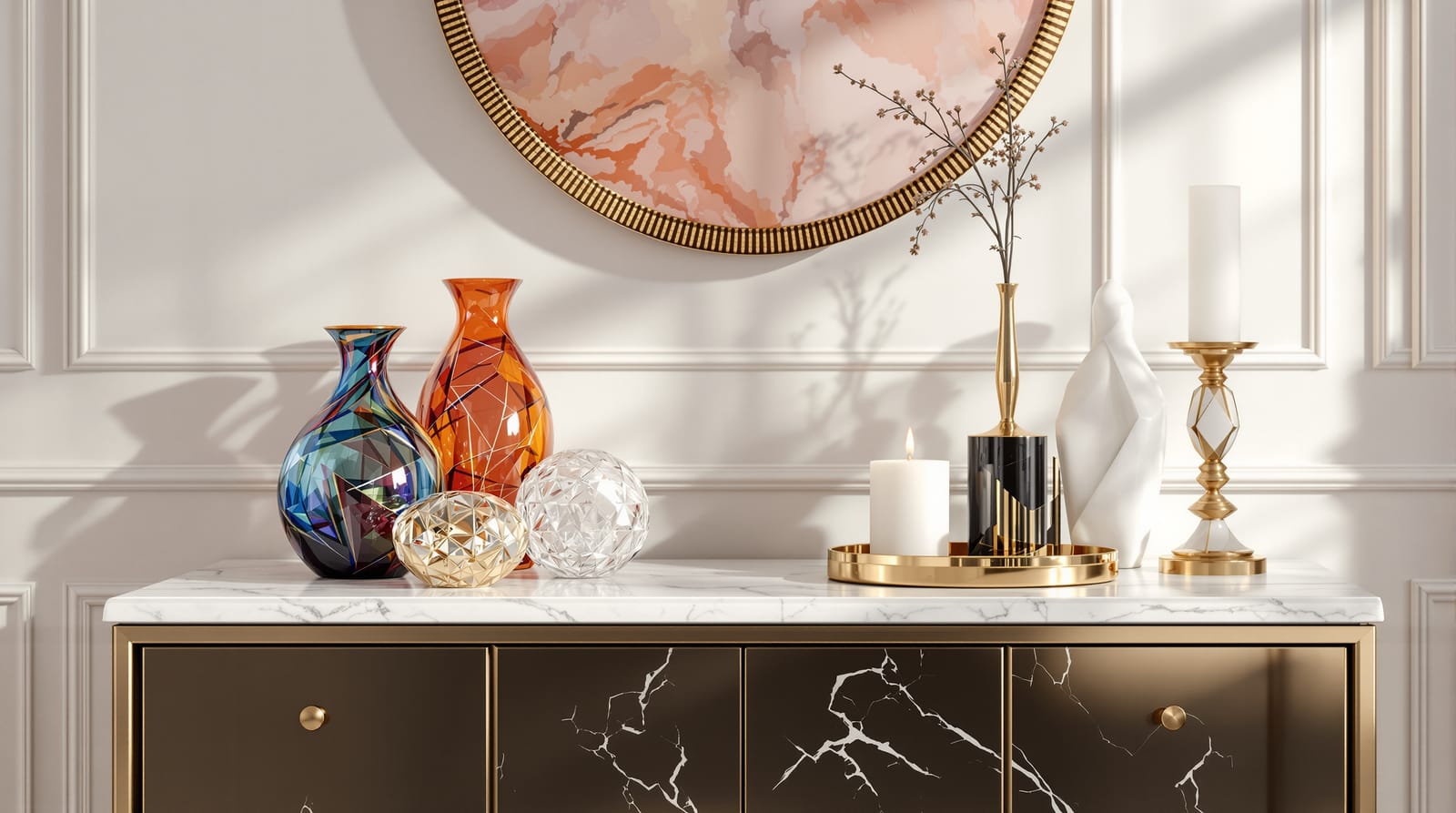
Luxury Decorative Accessories — A 2026 Guide for Indian Homes
Murano glass to crystal, marble to designer trays - the fine details that signal real luxury
True luxury is never about how much you own — it is about how well you have chosen. A vast bungalow furnished without discernment reads as wealth without taste, while a single perfectly placed Murano bowl on a quiet console says more about cultivation than any oversized chandelier. The most telling signals of a refined home are rarely the largest or costliest objects. They are the small, deliberate accessories — those that reward a second look, carry the fingerprints of a master craftsman, and have been edited down until only the finest remain. This guide is about those details: how to recognise them, live with them, and find them in India.
What Makes an Accessory Luxurious
Luxury is not a price tag; it is a set of qualities you learn to read. Four of them matter most.
Provenance. A genuine luxury object tells you where it came from and who made it. Murano glass is blown on a specific Venetian island by named furnaces; a limited-edition bronze carries a foundry stamp and an edition number. Provenance is a story you can verify.
Craftsmanship. Real luxury shows the hand: hand-blown rather than moulded glass, hand-cut rather than pressed crystal, hand-carved rather than machine-routed marble. The faint asymmetry of a blown vessel is precisely what mass production cannot fake.
Real materials. Glass, lead crystal, natural stone, solid bronze and brass, fine ceramic. These age with grace and reflect light in ways resin, plated metal and printed surfaces never will. Pick up a piece — genuine materials feel cool, dense and honest.
Restraint. The most sophisticated rooms give one fine object the space to be seen. A single museum-quality piece on an empty console outclasses a dozen competing for attention. Luxury is as much about what you leave out as what you put in.
Seven High-End Accessories
Murano Glass
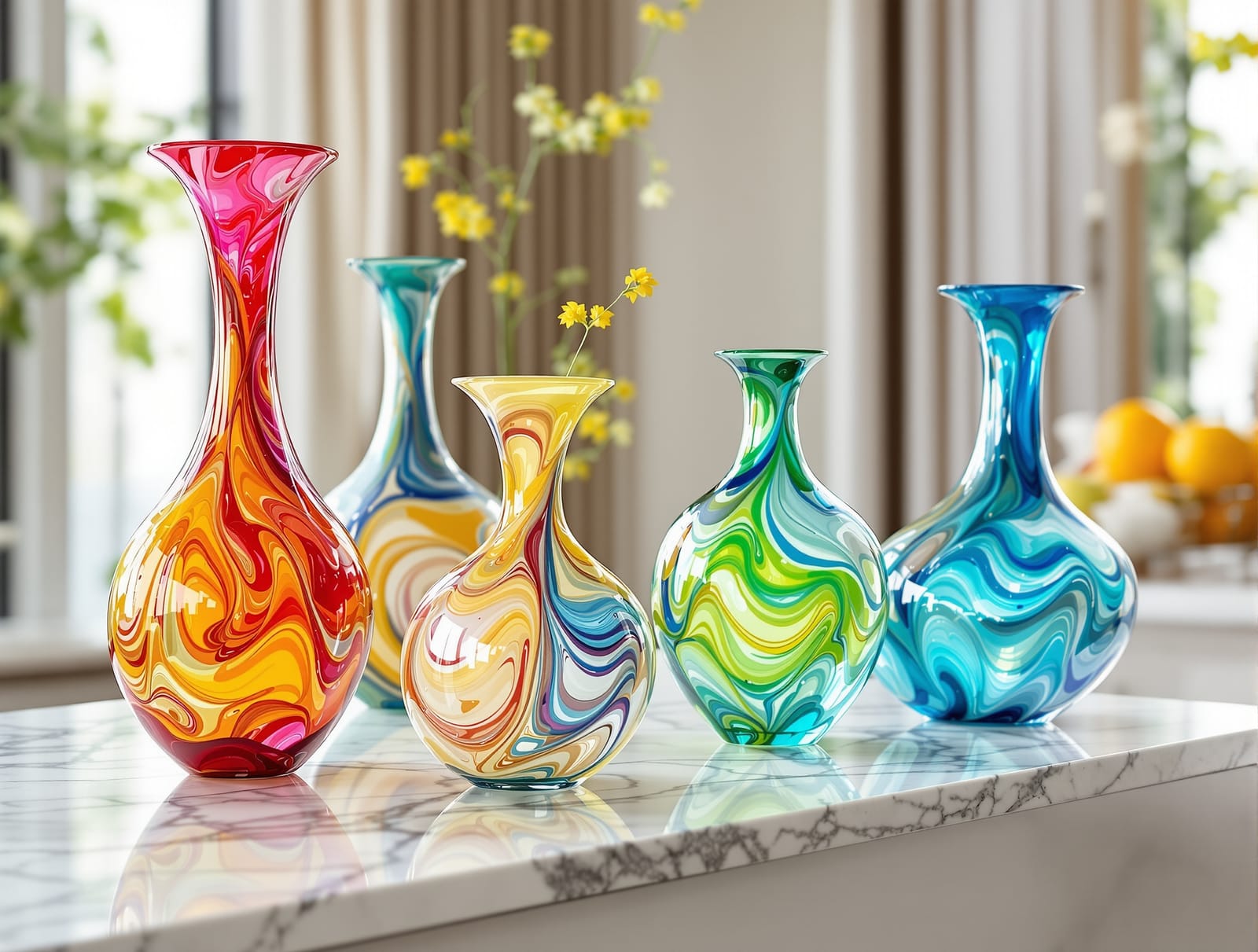
Murano glass is hand-blown on the islands of Murano near Venice, where the craft has been refined for over seven centuries. A genuine piece is defined by techniques the Venetian masters perfected — sommerso (layered colour), millefiori (mosaic canes) and gold or silver leaf suspended within the glass. To verify authenticity, look for the maker's signature or consortium seal, study the depth of colour, and feel for the weight and faint irregularities of hand-blowing. Beware "Murano-style" pieces — typically machine-pressed imitations.
How to style it: let colour do the work against quiet surroundings. A single sommerso vase or sculptural bowl reads best on a neutral console where it can catch the light. Resist grouping more than two or three pieces; a Murano object wants air around it.
India note: in our strong natural light, place Murano near a window so the layered colour glows from within. It pairs beautifully with the saturated palette many Indian homes love, but works hardest as a jewel-like accent in an otherwise restrained room.
Crystal Chandeliers
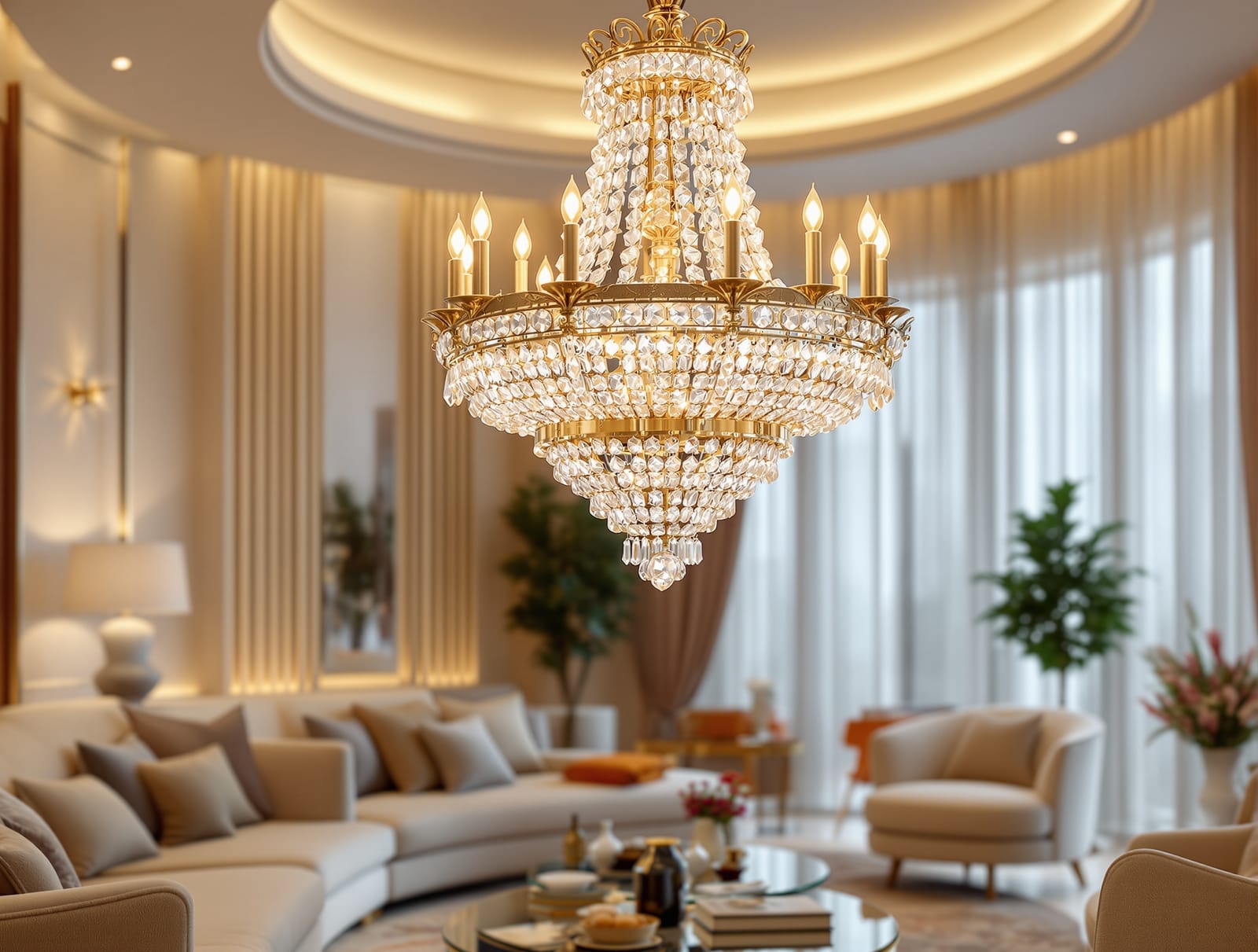
A crystal chandelier is the most theatrical accessory a home can own. Genuine lead crystal refracts light into rainbows and rings with a clear note when tapped; ordinary glass stays dull and silent. Look for crisp hand-cut facets, a solid metal frame rather than plated pot-metal, and recognisable provenance — Bohemian and traditional European crystal houses set the standard.
How to style it: scale is everything. Hang it so the lowest crystal sits well above head height in a living room, or centred over a dining table roughly 75–85 cm above the surface. Put it on a dimmer — a chandelier at full blast is a showroom; at half light it is romance.
India note: our double-height foyers and formal dining rooms are made for a chandelier, but high ceilings and ceiling fans complicate placement. Plan the drop and fan clearance together, and choose a fitting proportionate to the room — oversized in a modest space reads as trying too hard. For related fixtures, see Decorative Lighting.
Designer Clocks
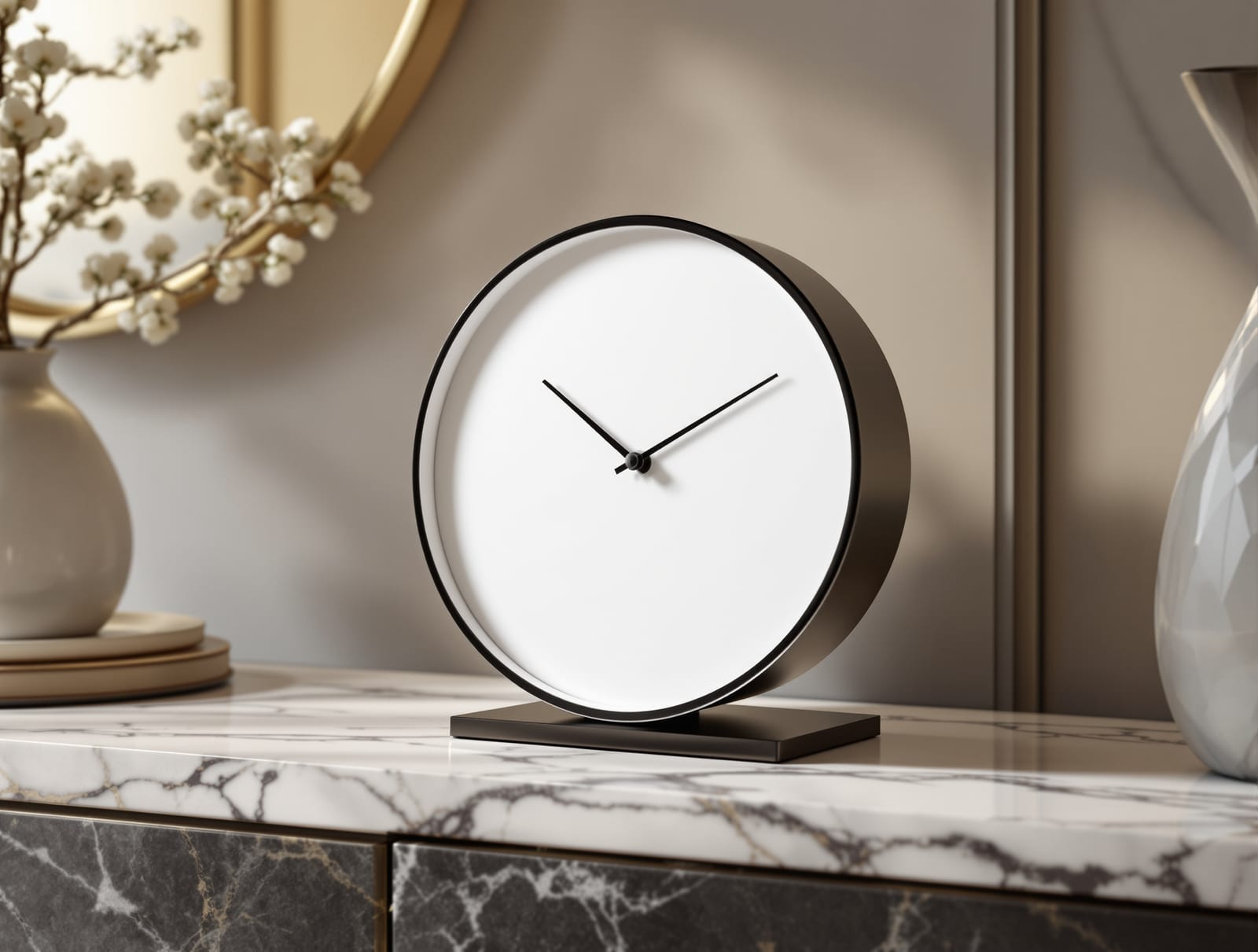
A designer clock is functional sculpture, judged at the high end by the same standards as fine furniture: material, movement and form. Look for solid materials — marble, brass, fine wood, leather — a precise movement, and the restraint of a serious design house. A table clock in honed marble anchors a console far more elegantly than another vase.
How to style it: treat it as the hero of a small vignette — a single fine clock on a spare console, beside a stack of art books, needs nothing else. Avoid the clock that shouts its brand across the room; the best ones reveal their quality up close.
India note: a quietly elegant clock is a superb gifting and styling choice for the formal drawing rooms that anchor most Indian luxury homes. Keep it tonal with the surface — pale marble on a dark console, or warm brass against a neutral wall.
Marble Art Objects
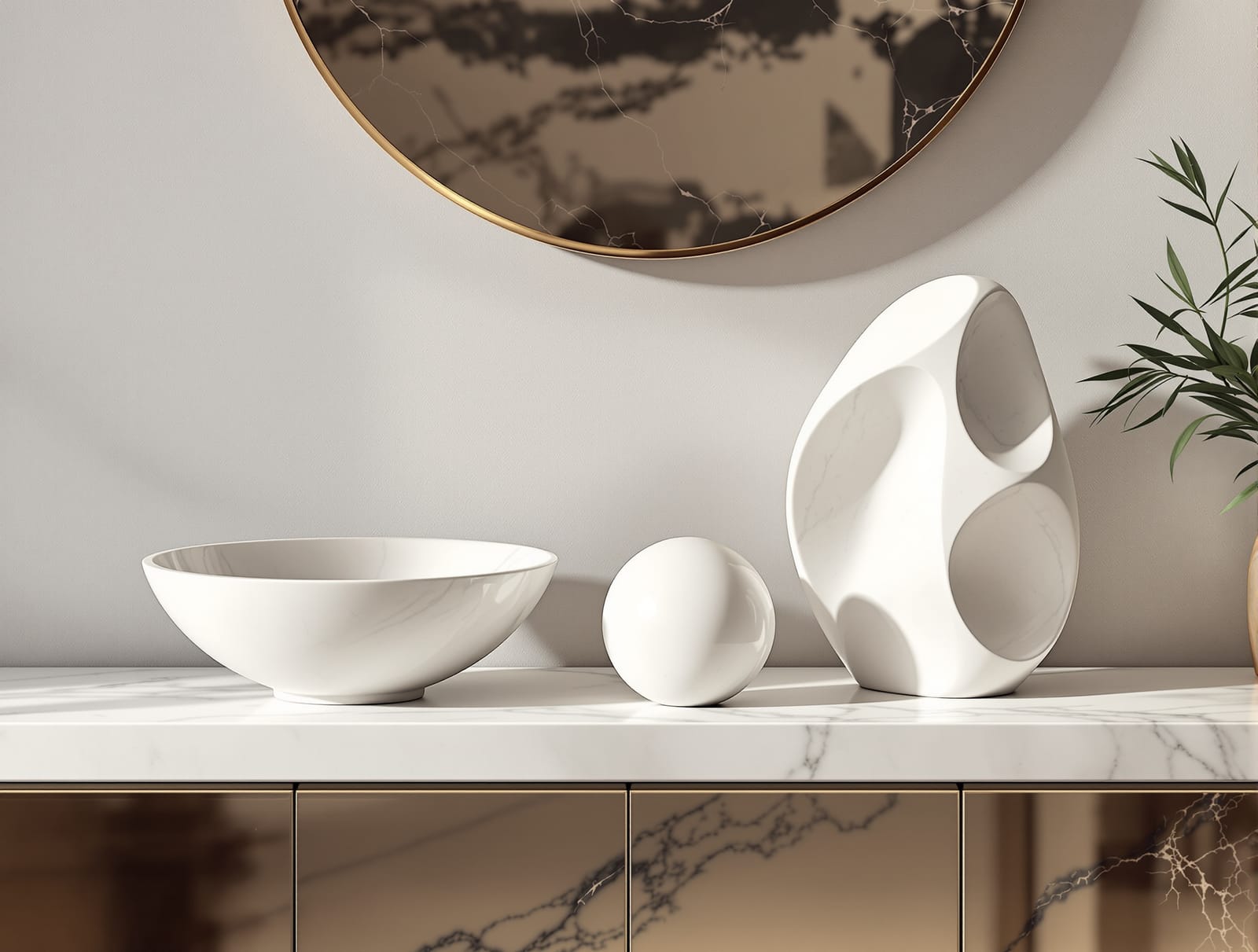
Marble objects — spheres, obelisks, abstract forms, bowls and bookends — bring permanence and weight to a tabletop. The quality lives in the stone and the carving. Look for natural marble with genuine veining (no two pieces alike), a hand-finished surface and honest heft; resin imitations are light, uniform and cold to the touch. A single piece in Makrana white can be quietly breathtaking.
How to style it: marble loves to be grouped in odd numbers of varying heights — a low bowl, a medium sphere, a taller obelisk — but keep the palette tight. Two tones reads as intentional; more muddies the effect.
India note: India is a marble country, from the legendary Makrana that built the Taj Mahal to Rajasthan's green and pink stones. Sourcing locally crafted marble objects supports our own artisans and often costs a fraction of imported equivalents — finer in provenance and gentler on the budget.
Limited-Edition Sculptures

A limited-edition sculpture is where decoration crosses into collecting. The defining marks are an edition number (for example, 3 of 25), the artist's signature, and a foundry stamp on bronze. Bronze, cast by the lost-wax method, develops a patina that deepens with age; look for fine detail, even casting and authentic documentation. A genuine edition holds and often grows in value — the opposite of mass-produced décor.
How to style it: give it a pedestal, plinth or clear shelf, and light it deliberately with a discreet spotlight. A sculpture in shadow is wasted. Let it stand alone — it should never share its surface with clutter.
India note: India has an extraordinary contemporary art scene and a deep bronze-casting tradition, including the Chola lineage of South India. Buying from established galleries and reputable artists supports living Indian sculptors and gives you a piece with real cultural roots. See also Luxury Statement Pieces.
Designer Trays
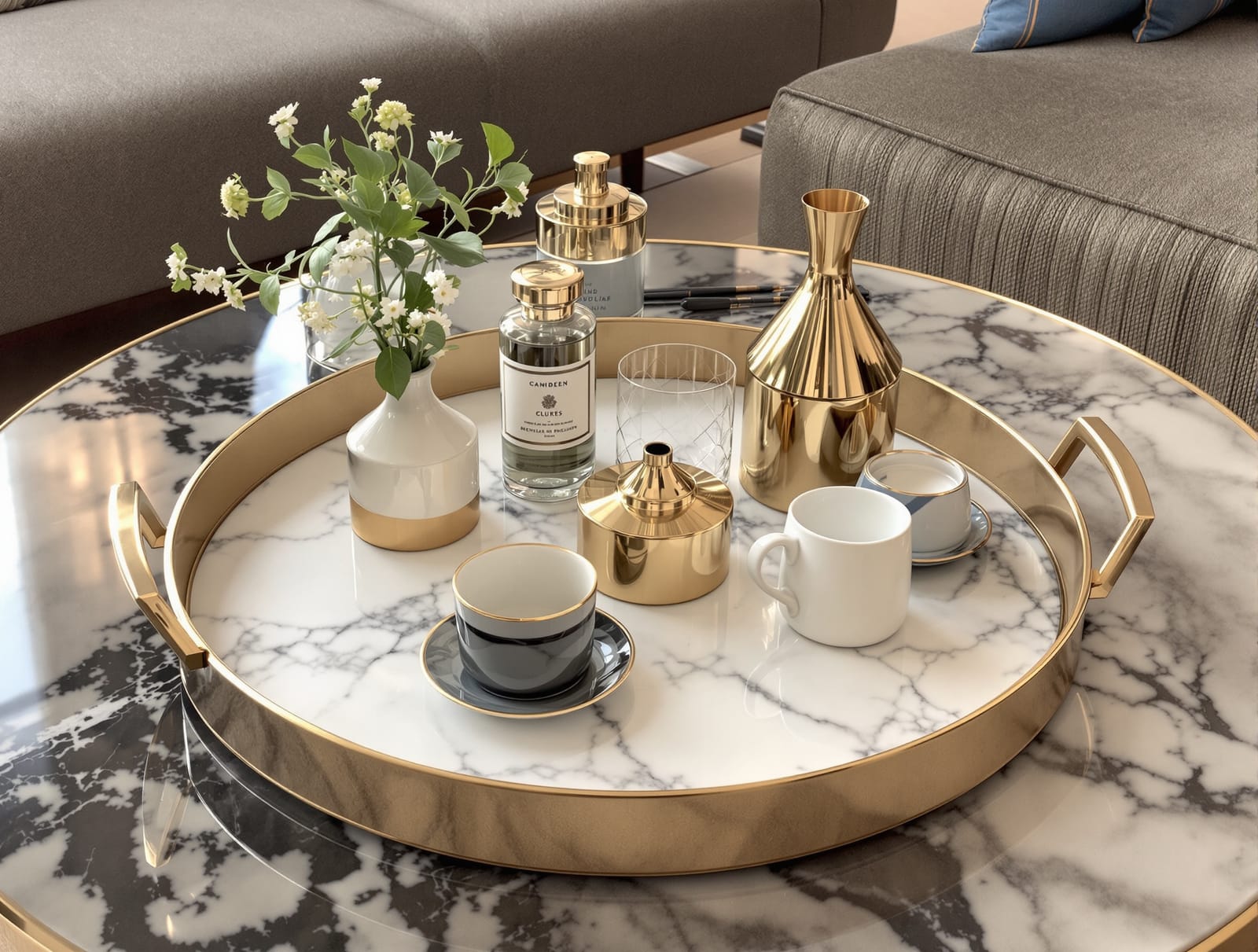
The humble tray is the secret weapon of polished interiors. A fine designer tray — in marble, inlaid brass, lacquer, leather or fine wood — does two things: it organises objects into a deliberate composition, and it is itself an object of quality. Look for solid materials, clean joinery or seamless inlay, and a weight that signals the real thing.
How to style it: use it to corral a small still life — a candle, a low bowl, a single stem — on a coffee table or ottoman. The tray gives a vignette structure and stops a surface looking scattered. One well-chosen tray does more than three random ornaments.
India note: India's tradition of brass and inlay work (including the famed marble inlay of Agra) produces trays of genuine artistry. A handcrafted brass or marble-inlay tray brings local craftsmanship into a contemporary scheme and pairs naturally with the candles and small objects most luxury homes display.
Luxury Candles
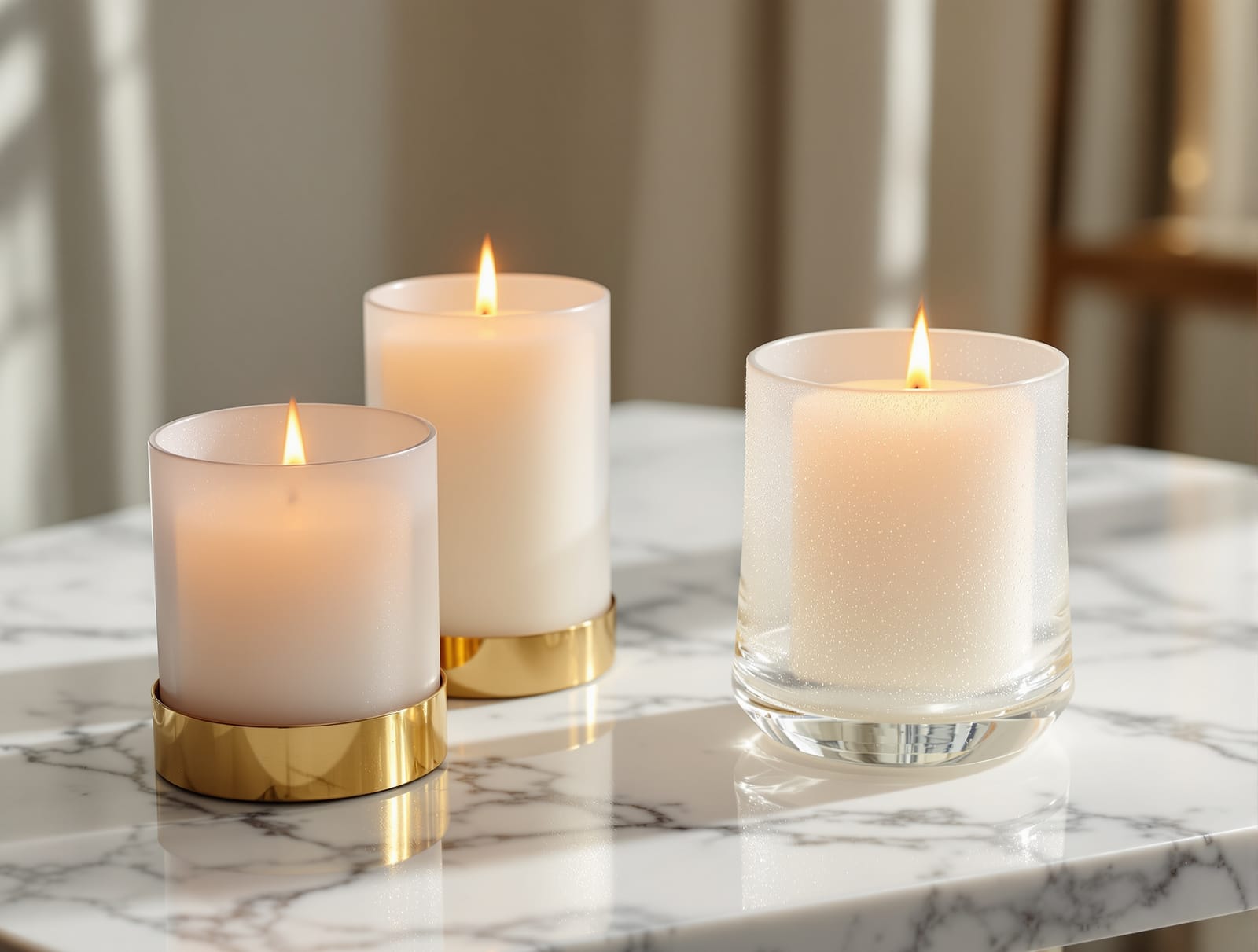
A luxury candle engages the one sense most décor ignores: scent. The value is in the wax (natural soy, coconut or beeswax rather than paraffin), the complexity of the fragrance, and the vessel — a fine glass, ceramic or marble container that becomes a keeper long after the candle is spent. The best candles burn cleanly and throw a considered, layered scent rather than a flat synthetic hit.
How to style it: place candles where their scent and glow gather — an entryway, a coffee table, a bath. Keep the vessel in conversation with the room's palette. One beautiful candle reads as luxury; six discount candles read as a sale rack.
India note: scent layering is intuitive in Indian homes, where incense and fresh flowers already shape the air. A fine candle should complement rather than compete — choose warmer, woodier or floral notes, and light it before guests arrive so the scent has settled.
The Art of Restraint
If one principle separates genuine luxury from expensive clutter, it is restraint. Luxury whispers. The instinct to fill every shelf is the surest way to dilute the pieces you spent the most on.
Negative space is not empty space — it is the frame that lets a fine object be seen. A single Murano vase on a bare console commands attention; the same vase crowded among ten others disappears. Editing is an active discipline: put everything out, then remove until only the pieces that earn their place remain.
Quality over quantity is the whole philosophy in four words. One museum-grade sculpture outclasses a roomful of decent ornaments. When in doubt, take something away. To compose these vignettes before you commit, DesignAI can help you visualise the room first.
Match to Your Style
Fine accessories belong to particular design languages. Match the object to the room.
Luxury Modern-Classic. The natural home of Murano glass and crystal. The refraction of cut crystal and the jewel colours of Venetian glass sit perfectly against the symmetry and formal proportions of a modern-classic scheme. A crystal chandelier over the dining table and a Murano accent on the console speak the same elegant dialect.
Contemporary. Marble art objects and bronze sculpture are the contemporary luxury vocabulary — clean form, honest material, sculptural confidence. A marble sphere, a bronze abstract, a marble-and-brass tray read as quietly current rather than ornate.
Minimal. Even the most pared-back room benefits from a single fine accent — one exceptional object, perfectly placed and lit, does all the work.
To test combinations before you buy, build a Moodboards collection — seeing the chandelier, the Murano accent and the marble objects side by side tells you in minutes what a showroom cannot. Pair this with Vases & Floral Arrangements to complete the tabletop composition.
Budget — What It Costs in India
Indicative ranges for genuine pieces in the Indian market. Prices vary with maker, material and provenance — treat these as orientation, not quotations.
| Accessory | Entry luxe | Mid | Investment |
|---|---|---|---|
| Murano / art glass | ₹8,000–25,000 | ₹25,000–75,000 | ₹1,00,000+ |
| Crystal chandelier | ₹40,000–1,00,000 | ₹1,00,000–4,00,000 | ₹5,00,000+ |
| Designer clock | ₹6,000–20,000 | ₹20,000–60,000 | ₹80,000+ |
| Marble art object | ₹3,000–12,000 | ₹12,000–40,000 | ₹50,000+ |
| Limited-edition sculpture | ₹25,000–75,000 | ₹75,000–3,00,000 | ₹5,00,000+ |
| Designer tray | ₹3,000–10,000 | ₹10,000–30,000 | ₹40,000+ |
| Luxury candle | ₹1,200–3,000 | ₹3,000–6,000 | ₹6,000+ |
The lesson of the table is reassuring: you do not need investment-tier spending to live with luxury. One genuine mid-tier piece, well chosen and well placed, achieves more than a trolley-load of entry-level ones.
Where to Buy in India
A short, honest list of reputable destinations.
- The White Teak Company — lighting specialists known for crystal and statement chandeliers.
- Address Home — luxury home accessories, trays, objets and decorative pieces.
- Good Earth — India's flagship luxury lifestyle house, strong on craft-led objects and tableware.
- Sarita Handa — refined furnishings and accessories with a tailored, contemporary sensibility.
- P N Shah and established fine-living stores — crystal, silver and gifting-grade objects.
- Luxury candle brands — Bath & Body Works for accessible scent; Indian fine-fragrance houses such as Niana and Rosemoore for considered, design-led candles.
- Murano and crystal importers, and contemporary art galleries — for verified Venetian glass, European crystal and limited-edition sculpture, buy through established importers and reputable galleries that document provenance.
Always ask for the maker, the materials and — for editions — the certificate. A seller who cannot answer those questions is selling you a look, not a luxury.
Ten Common Mistakes
1. Too many pieces. Crowding fine objects until none can be seen — the commonest error.
2. Fakes passed as genuine. "Murano-style" glass, plated "crystal," resin "marble." Learn the tells.
3. Over-matching. A perfectly co-ordinated set looks bought, not collected. Vary material and height.
4. Poor lighting on a fine object. A sculpture in shadow is money wasted. Light hero pieces deliberately.
5. Gaudy over tasteful. Mistaking gold, sparkle and size for luxury. Real luxury is quieter.
6. Wrong scale. An oversized chandelier in a small room, or a tiny object lost on a vast console.
7. Ignoring negative space. Filling every surface instead of letting pieces breathe.
8. Buying without provenance. No maker, no story, no documentation — no real luxury.
9. Chasing trends over quality. Fine materials outlast every fad; trend-driven décor dates fast.
10. Neglecting scent. Forgetting that luxury is sensory, not only visual.
FAQ
What is Murano glass?
Murano glass is glass hand-blown on the islands of Murano near Venice, Italy, where the craft has been practised for over seven hundred years. Genuine pieces use traditional techniques such as sommerso, millefiori and gold-leaf inclusion, and typically carry a maker's signature or consortium seal. Anything labelled "Murano-style" is usually a machine-made imitation.
How do I make my home look expensive?
Edit ruthlessly and invest in a few genuine pieces rather than many cheap ones. Choose real materials — glass, crystal, marble, bronze — give each hero object negative space, light it well, and keep the palette restrained. One fine object signals more taste than a crowded display.
How do I tell real crystal from fake?
Genuine lead crystal refracts light into rainbows, has crisp hand-cut facets, feels heavier than ordinary glass, and rings with a clear sustained note when tapped. Plain glass stays dull, sounds flat, and shows shallow, uniform pressed facets. Provenance from a recognised crystal house is the strongest confirmation.
How should I style luxury accessories?
Build small, deliberate vignettes: group in odd numbers of varying heights, use a tray for structure, keep the palette tight, and leave breathing room. Let your finest piece stand alone as a hero, and always light fine objects intentionally rather than leaving them in shadow.
What are the best luxury candle brands in India?
For accessible luxury, Bath & Body Works is widely available. For design-led Indian fine-fragrance candles, houses such as Niana and Rosemoore offer considered scents in keepable vessels. Look for natural wax, a clean burn and a quality vessel worth keeping long after the candle is gone.
Where should I buy fine home accessories in India?
Reputable destinations include Good Earth, Address Home, Sarita Handa and The White Teak Company, alongside fine-living stores such as P N Shah and art galleries for sculpture. For Venetian glass and European crystal, buy through recognised importers who can document provenance.
Luxury, in the end, is a discipline of choosing well and living lightly with beautiful things — fewer objects, finer made, given room to be seen.
Last verified: June 2026 · Next verify: June 2027.
Export this guide
Related Guides — Deep-dive reading
Luxury & Statement Lighting: Drama, Sculpture & Scale (2026)
How to design lighting that actually feels luxurious in an Indian home — layered scenes, deep shadow-and-highlight contrast, hidden sources and premium materials — and how to place one sculptural statement fixture as the jewel of a room without over-lighting the whole thing.
LightingSculptures & Art Objects: How to Choose, Place & Style Them at Home
A homeowner's guide to sculpture materials, scale, placement, lighting, budget and care - for Indian homes
Design StylesDecorative Mirrors — A 2026 Guide for Indian Homes
Space, light and a focal point in one move · Full-height to Venetian · Where to place them and why
Design StylesRelated Tools — Try Free
Cross-Ventilation Analyzer
Estimate airflow and air changes per hour (ACH) from room size, window areas, layout, and local wind — with NBC 2016 Part 8 compliance check.
Ventilation CalculatorFalse Ceiling Cost Estimator
Live ₹/sqft across 8 ceiling types — POP, gypsum, designer, metal, PVC, wooden — with cove and spot lighting for 20 Indian cities.
Cost CalculatorDesign Style Finder Quiz
Answer 10 visual questions to discover your Indian interior style profile with materials and colours.
Interactive Quiz