
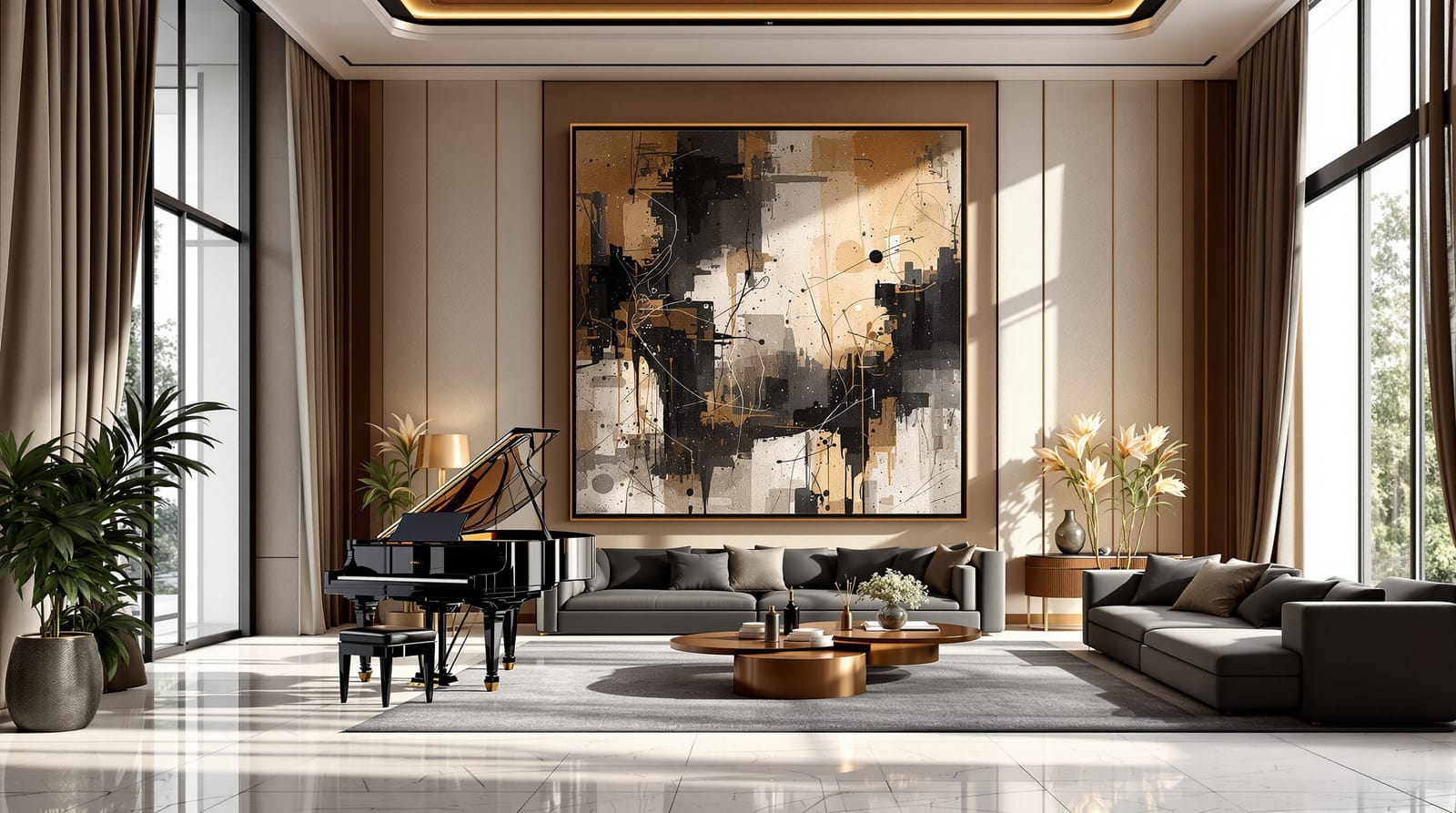
Luxury Statement Pieces — A 2026 Guide for Indian Homes
Grand piano, oversized art, feature sculpture, designer swing, water feature - the one piece a room is built around
A statement piece is the one object a room is designed around — everything else takes its cue from it. Before the rug, before the sofa, before the lighting plan, there is a single decision that sets the emotional temperature of a space: what is the thing you walk in to see? In the most considered luxury homes across Mumbai, Delhi, Bengaluru and Hyderabad, that thing is rarely an accident. It is chosen first, placed with intent, and given the room it deserves. A statement piece does not whisper — it announces the values of the home, taste, restraint and confidence, in one uninterrupted gesture.
This guide is for homeowners who have moved past furnishing a room and now want to compose one. We will look at five pieces that can anchor a space — a grand piano, oversized artwork, a feature sculpture, a designer swing and a water feature — and at the discipline that makes them work.
What Makes a Piece a Statement
Not every expensive object is a statement piece. A statement piece earns its name through four qualities, and missing any one turns it into clutter.
The first is scale — deliberately larger than the objects around it, enough to dominate a sightline rather than blend into a vignette. A small bronze on a console is decor; a two-metre sculpture in a double-height void is a statement.
The second is singularity. There is one. The moment a room has two or three competing focal points, the eye does not know where to rest and the drama collapses into noise.
The third is placement at a focal point — the spot the room naturally directs you toward: the wall you face as you enter, the end of an axis, the centre of a double-height area, the view framed by seating. A piece placed off-axis or in a corner loses most of its power.
The fourth, and the hardest to accept, is the courage to leave space around it. Negative space is not wasted space — it is the frame. A grand piano hemmed in by side tables, or a sculpture crowded by plants, cannot read as a single clear idea. Luxury, more than anything, is the confidence to leave a beautiful thing alone.
Five Statement Pieces
Grand Piano
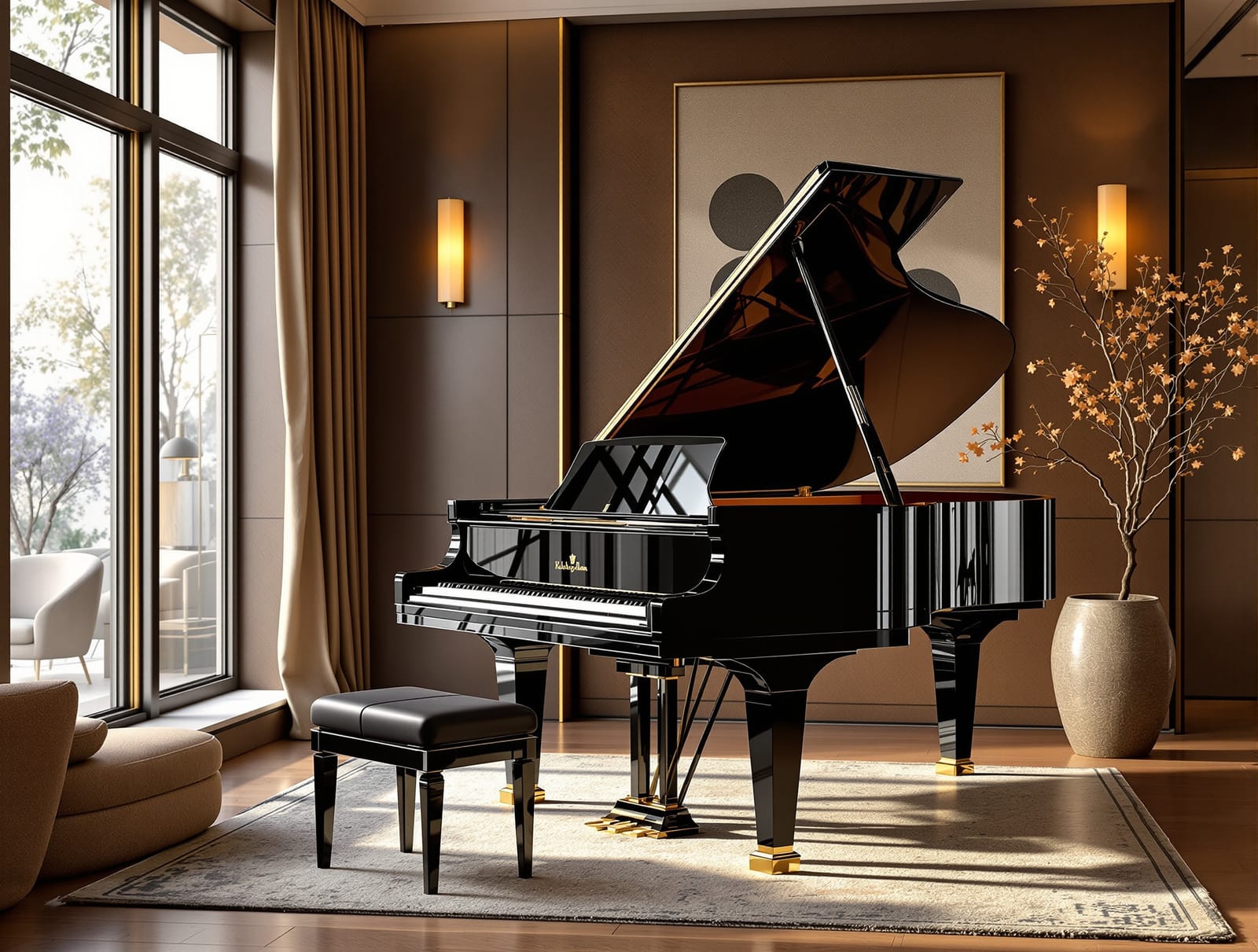
Few objects carry the cultural weight of a grand piano. Even silent, it signals a household that values music and time — things money alone cannot buy. Its impact is architectural: the long curved case, the lifted lid, the gloss that catches and throws light. It turns a living room into a salon.
Where to place it: a grand piano needs an open corner or a position along a longer wall, angled so the curved side and open lid face into the room, with the keyboard accessible without squeezing past furniture. In a double-height or open-plan layout it can sit almost free-standing, becoming the room's pivot. Avoid pushing it flat against a wall like a sideboard — it kills the silhouette.
Practical considerations: a grand piano is heavy (a baby grand is roughly 250–300 kg), so the floor and structure matter. Keep it away from direct sunlight, air-conditioning vents and external walls that swing in temperature, and tune it at least twice a year.
India note: humidity is the real enemy. In Mumbai, coastal Chennai, Kochi and the monsoon belt, a piano needs a Dampp-Chaser-style humidity control system inside the case, plus a dehumidified room. Soundboards crack and pin-blocks loosen when humidity swings between a dry winter and a wet July — budget for this from day one, not after the first damage.
Oversized Artwork
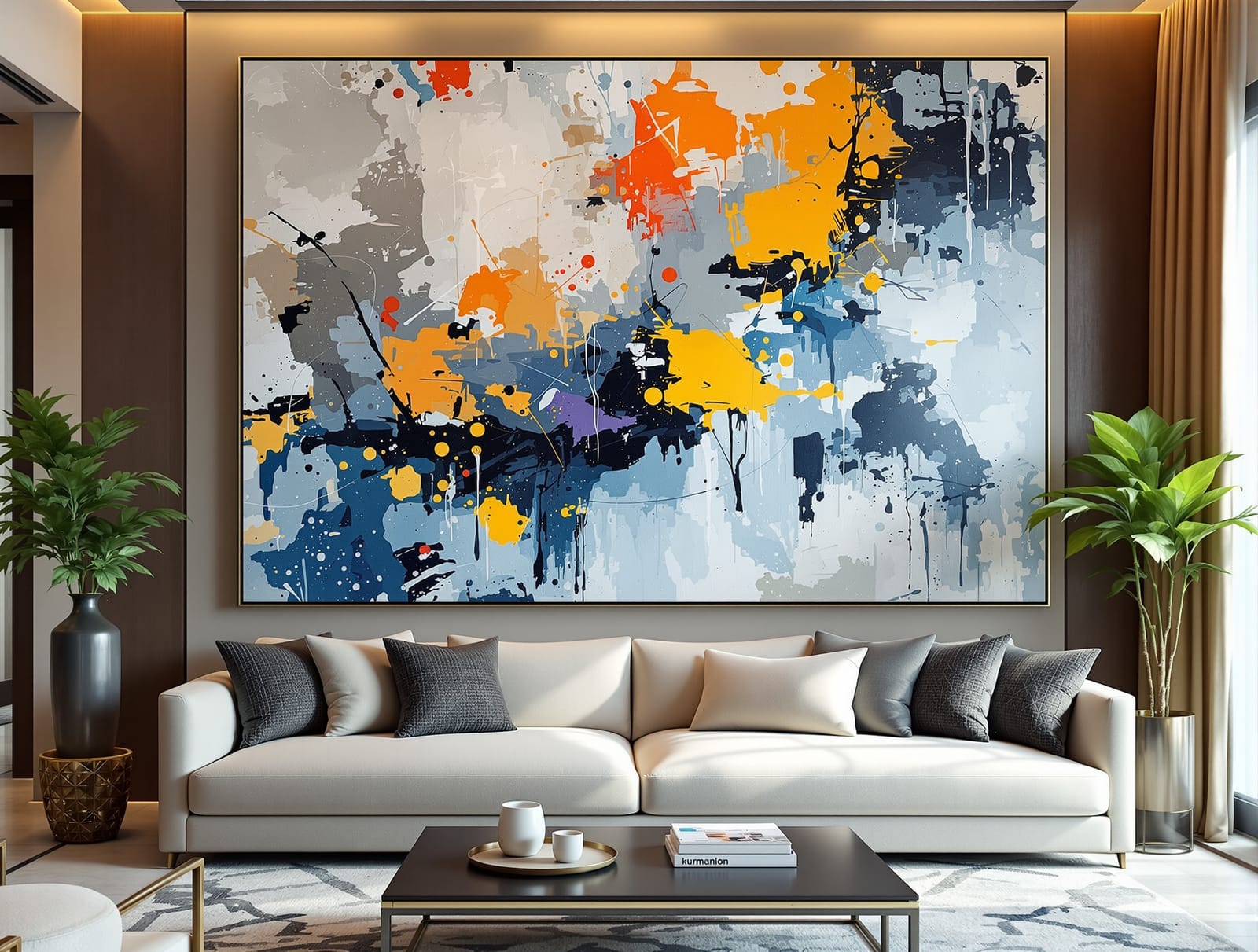
A single large canvas can do what a dozen small frames never will: command a wall and set the room's palette in one stroke. Oversized art is the most flexible statement piece — abstract or figurative, loud or quiet, adapting to almost any style, with immediate impact and zero footprint.
Where and how to place it: the classic position is above a long sofa or console, where the work should span roughly two-thirds to three-quarters of the furniture's width — anything narrower looks marooned. Hang it so the centre sits at about eye level (around 145–150 cm from the floor), even above furniture. On a tall feature wall or stair landing, a single monumental piece can run floor to ceiling.
Practical considerations: large canvases need proper anchoring into masonry or a stud, not a single nail in plaster. Light it deliberately, and keep it off walls that take harsh afternoon sun, which fades pigment and yellows varnish over years.
India note: India has one of the most exciting art markets in the world, and buying from living artists or established galleries is both an aesthetic and an investment decision. Works by modern masters and strong contemporary names hold value well. If you are buying as an investment too, ask for provenance documentation and a gallery invoice, and confirm whether the work needs UV-protective glazing in a sun-bright Indian room.
Feature Sculpture
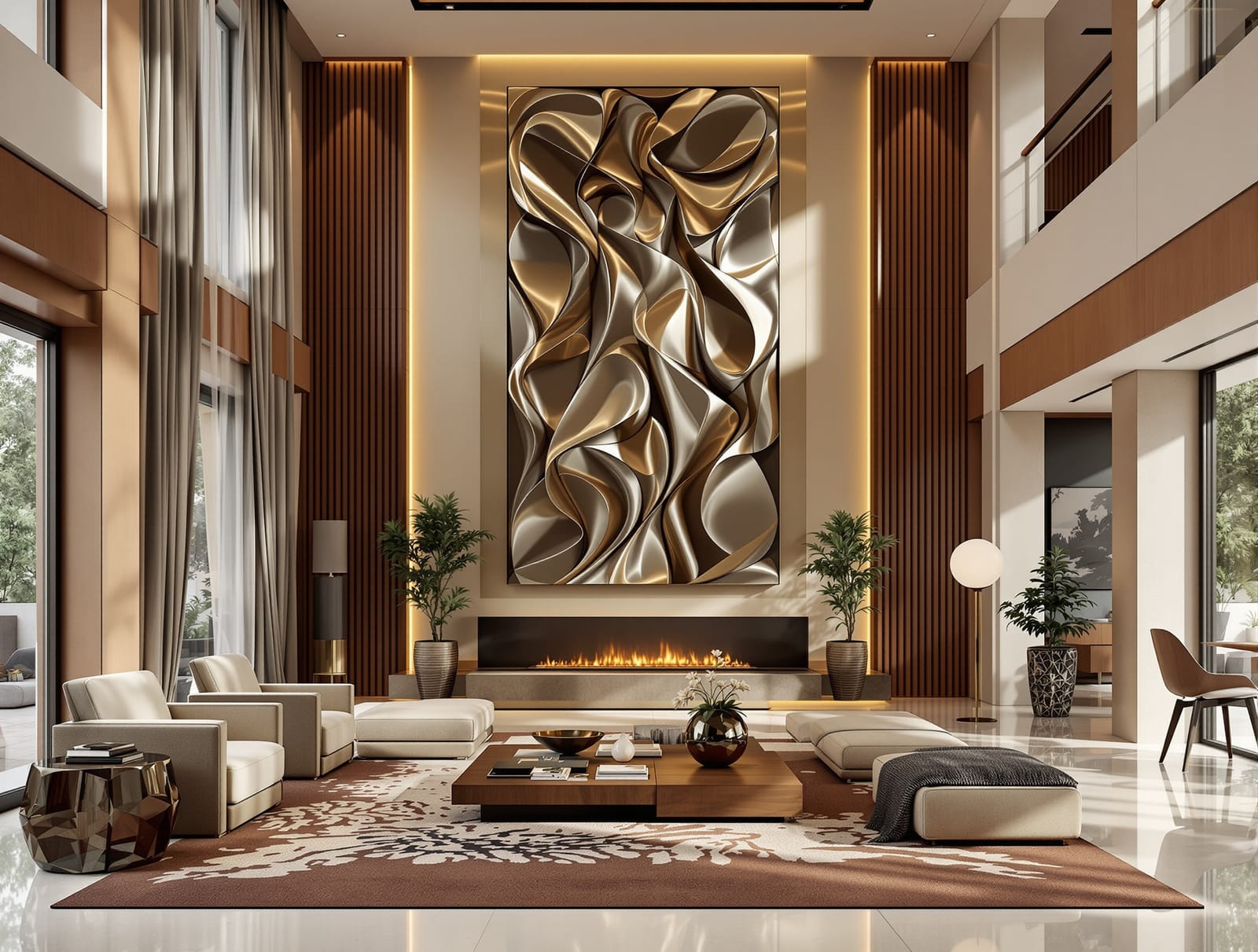
A sculpture is the most sophisticated statement a room can make, because it asks to be walked around. Where a painting is a window, a sculpture shares your space — it casts shadows, changes with the light, and reveals new angles as you move. A single strong piece in bronze, stone, steel or wood gives a room a centre of gravity.
Where and how to place it: a feature sculpture wants a pedestal, a niche, or simply a clear patch of floor where it can be seen in the round — the centre of a double-height living area, the turn of a staircase, an entrance foyer, or the end of a long axis. Give it light from more than one direction so its form is modelled rather than flattened, and keep the space around it clear so the eye reads the silhouette, not the surrounding furniture.
Practical considerations: weight and base stability matter, especially in homes with children or in earthquake-aware regions. Large stone and bronze pieces may need a reinforced plinth, and outdoor or semi-outdoor work needs weather-rated finishes.
India note: India's sculptural traditions run deep, from temple bronzes to contemporary studios casting in the lost-wax method, and a commissioned or gallery-sourced piece sits beautifully against both modern and traditional interiors. If the work is figurative or draws on religious iconography — a Nataraja or a Buddha head — give it a dignified, uncrowded position rather than treating it as a casual prop.
Designer Swing
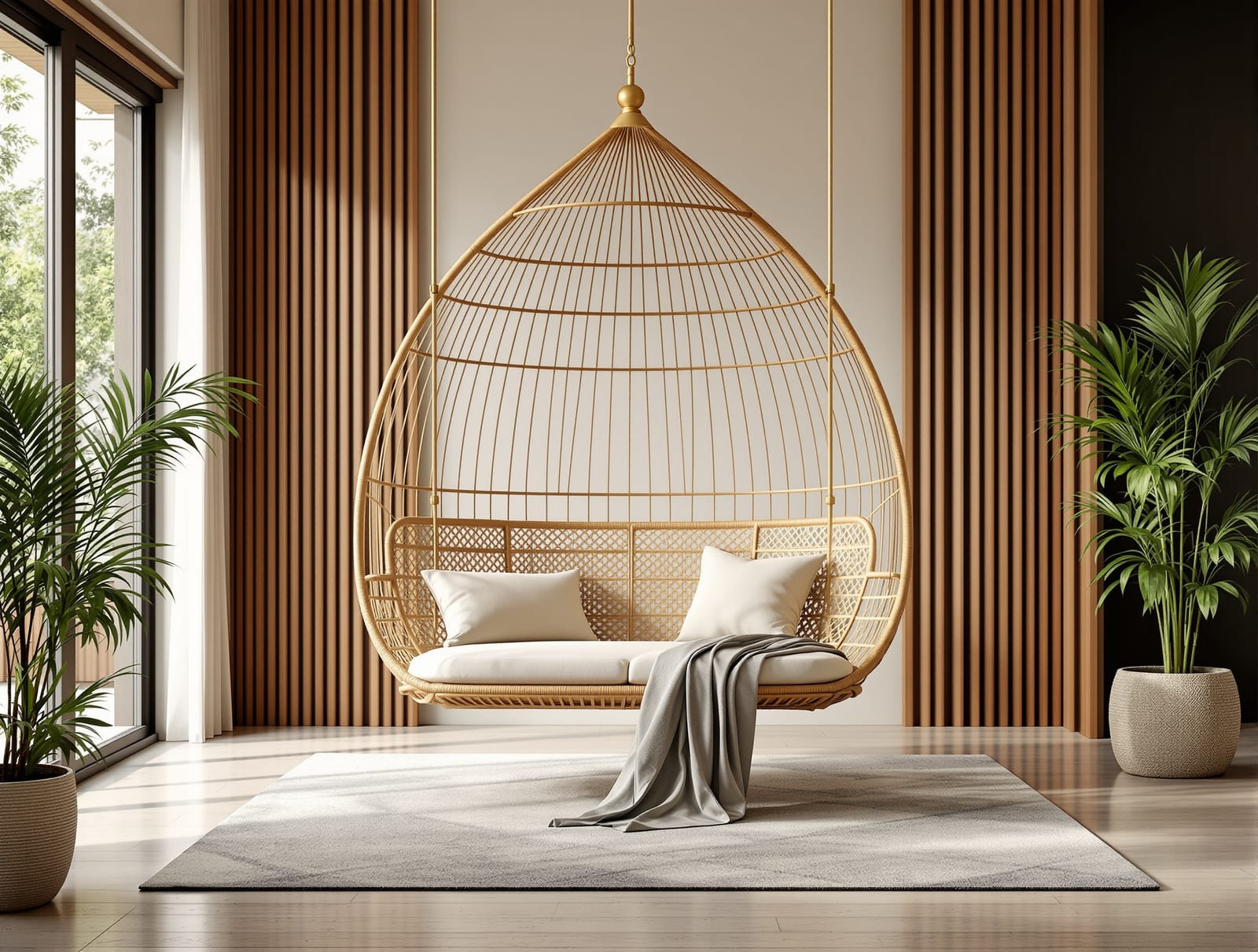
The swing — the jhula or oonjal — is perhaps the most distinctly Indian statement piece, and one enjoying a confident revival in luxury homes. It is rare in that it is meant to be used: it invites you to sit, sway and slow down. A designer swing in carved wood, cane and brass, or sleek powder-coated metal turns a corner of the living room or balcony into the most loved seat in the house.
Where and how to place it: a swing needs a generous arc and a clear view, so it belongs near a window, a balcony edge, or a double-height corner where it can move freely without striking furniture. Allow at least a metre of clearance front and back, and read it as a single anchored gesture, paired with a soft rug and a side table within arm's reach.
Practical considerations: an indoor swing must be installed into a real structural element — an RCC beam or slab, never a false ceiling or plaster. Use rated ceiling hooks, eye-bolts and chains specified for the combined weight of seat and occupants, and have a professional do the load anchoring; solid-wood traditional jhulas can be very heavy.
India note: the oonjal has deep cultural roots — the wooden swing of Chettinad and Tamil homes, the brass-chain jhula of north Indian havelis, the ceremonial swing of many festivals. Choosing one brings heritage into a contemporary home without it feeling like a museum, and a cane-and-brass or teak swing bridges the traditional and the modern effortlessly.
Water Feature
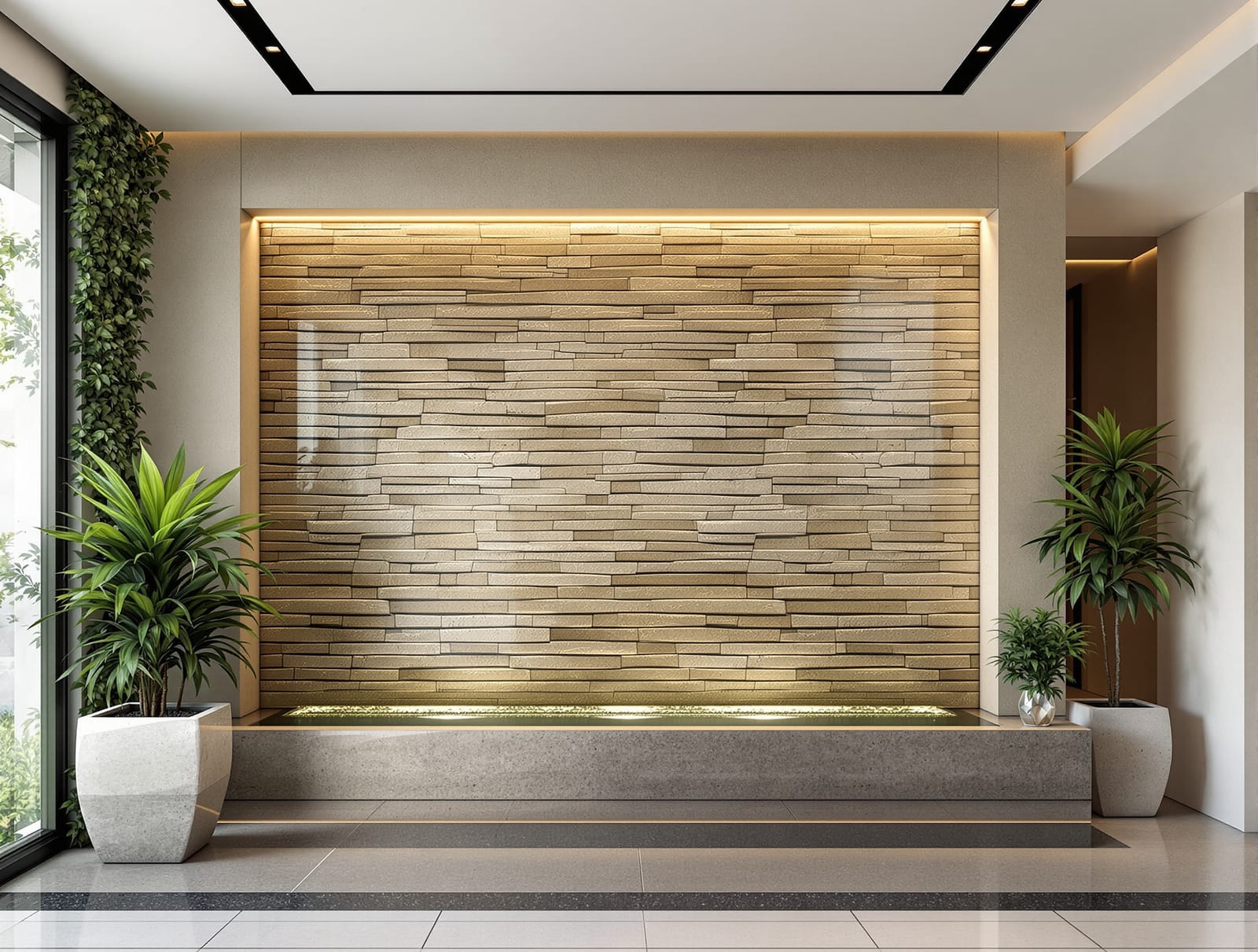
A water feature engages senses the others cannot — sound and movement. A stone water wall, a still reflecting pool, or a sculptural cascade brings a gentle soundtrack and a sense of calm that anchors an entrance, a courtyard or a living-room wall. Its impact is atmospheric as much as visual.
Where and how to place it: water features work at thresholds and arrival points — a foyer, a courtyard, an internal garden, or a feature wall visible from the main seating. A vertical stone or slate wall reads as a textured living surface; a still pool with a single sculptural element reads as serene minimalism. Pair it with focused lighting to catch the movement at night.
Practical considerations: this is the most maintenance-heavy statement piece. It needs reliable waterproofing behind and below, a quiet recirculating pump, easy cleaning access, and a plan for algae and scaling. Indian municipal water is often hard, so mineral deposits on stone are a real issue — budget for periodic descaling and consider a treated supply.
India note: water carries strong Vaastu associations. The traditionally favoured zones for water elements are the north and north-east of the home, which are linked to flow, prosperity and clarity; the south, south-west and south-east are generally discouraged for water. Many homeowners place an entrance water feature in the north-east for exactly this reason. Treat Vaastu as one input among several — alongside structure, sightlines and maintenance access — rather than the only one.
Placement & Negative Space
The single most common failure with statement pieces is crowding. A statement piece needs room to breathe, and that breathing room is exactly what most homeowners are tempted to fill.
The discipline is simple to state and hard to practise: one statement piece per space. A living room can have a grand piano or a feature sculpture, not both fighting for the eye. If you own several extraordinary objects, distribute them across rooms so each gets its own moment.
Think in sightlines. Stand at the doorway and the main seating position and ask what the eye lands on. The statement piece should own that line cleanly, with nothing competing in the foreground, and a clear zone around it — a metre or more of empty floor or blank wall.
Lighting is the other half of placement. A piece in flat ambient light loses its drama. Give it dedicated, directional light — a picture light, a discreet track, framing spotlights, or uplighting for a sculpture or water wall — to reveal form and depth and tell the room where to look after dark.
Match to Your Style
The right statement piece depends entirely on the language of your home. Before you commit, build a Moodboards collection to see how a candidate sits against your palette, materials and furniture — the eye decides faster than words.
For a Luxury interior — rich materials, layered lighting, a sense of occasion — a grand piano or a feature sculpture is the natural anchor; both carry gravitas and reward polished surfaces and generous proportions. See Luxury Apartment Design for how to compose the space around them.
For a Contemporary interior — clean lines, restraint, a confident palette — oversized abstract art is the perfect statement. A single bold canvas injects colour and energy into a minimal room without adding objects to dust.
For an Indo-contemporary or traditional home, a cane-and-brass or carved-teak swing is the piece that belongs. It honours heritage while sitting comfortably in a modern interior, and doubles as the most inviting seat in the house. Pair it with the layering ideas in Luxury Decorative Accessories and the reflective drama of Decorative Mirrors.
If you are unsure which direction suits your space, DesignAI can generate styled visualisations of your room with different statement pieces in place before you spend a rupee.
Budget & Practicalities
Statement pieces span an enormous range, but here is a realistic three-tier sense of cost in Indian rupees, plus the commitments that come with each.
Entry / considered (roughly ₹50,000–₹3,00,000): a large canvas from an emerging artist, a designer metal or cane swing, a compact tabletop or wall water feature, or a smaller sculpture from a gallery's affordable tier.
Mid / serious (roughly ₹3,00,000–₹15,00,000): a quality baby grand, a substantial commissioned sculpture in bronze or stone, an original by an established contemporary artist, a custom carved-teak jhula, or a built-in stone water wall with professional plumbing.
High / collector (₹15,00,000 and well beyond): a premium or concert grand piano, a major work by a sought-after artist, a monumental commissioned sculpture, or a bespoke architectural water feature integrated into the structure.
Beyond the purchase price, plan for the care. A grand piano needs verified floor loading, climate control and twice-yearly tuning. A water feature needs waterproofing, a recirculating pump and ongoing maintenance against algae and scaling. A swing needs professional installation anchored into a beam or slab with rated hardware. Oversized art needs proper wall anchoring and UV-aware placement; sculpture needs a stable base and, for large pieces, a reinforced plinth. The true cost of a statement piece is the purchase plus the care it demands for years.
Where to Source in India
India has a deep and growing market for every category here. A few established names to begin your research:
Art galleries and artists: DAG (Delhi Art Gallery), Vadehra Art Gallery and Nature Morte in Delhi; Chemould Prescott Road, Jhaveri Contemporary and Sakshi Gallery in Mumbai; Gallery Sumukha in Bengaluru; and the online platforms Saffronart and AstaGuru for contemporary work and modern masters at auction.
Sculpture studios and galleries: many of the above galleries represent sculptors as well as painters; for cast bronze and contemporary three-dimensional work, gallery representation is the most reliable route, and several artists take direct commissions.
Piano dealers: Furtados is the long-established national music retailer with showrooms in major cities, and Pratap Music House and other regional dealers stock and service grands. For premium instruments, buy through an authorised dealer so warranty and service are real.
Designer furniture studios (swings and jhulas): high-end furniture houses such as Sources Unlimited and Phantom Hands, plus bespoke carpentry and heritage furniture makers in Jodhpur, Saharanpur and Chennai, produce custom swings in teak, cane and brass.
Landscape and water-feature specialists: water features are best executed by landscape design firms and specialist contractors rather than bought off the shelf; engage one who handles waterproofing, pumps and stone cladding as one package, sourced through your architect or interior designer.
Always verify current offerings, representation and pricing directly — galleries rotate artists and dealers change their lines.
Ten Common Mistakes
1. Too many statement pieces competing. Two or three "wow" objects in one room cancel each other out. Choose one per space and let it win.
2. The wrong scale for the room. A piece too small disappears; one too large overwhelms. Measure against the wall, the ceiling height and the furniture before you buy.
3. Poor placement off the focal point. A statement piece in a dead corner or off the main sightline wastes its impact. Place it where the eye naturally goes.
4. No negative space. Crowding a piece with side tables, plants and accessories destroys its silhouette. Leave a clear zone around it.
5. Neglecting maintenance. A piano left untuned, a water feature growing algae, a swing with loose hardware — neglect turns a statement into an embarrassment.
6. Buying for status, not love. A piece chosen to impress visitors rather than to live with reads as hollow. Buy what genuinely moves you.
7. Ignoring structure and load. Hanging a swing from a false ceiling, or placing a heavy piano or sculpture without checking the floor, is dangerous as well as foolish.
8. Forgetting lighting. A statement piece in flat light loses its drama. Plan dedicated, directional lighting from the start.
9. Chasing trends. A statement piece is a long-term commitment. Trend-led choices look dated fast; timeless ones age into heirlooms.
10. Skipping provenance on art. Buying a significant artwork without a gallery invoice, provenance or authenticity documentation risks both value and authenticity.
FAQ
What is a statement piece in interior design?
A statement piece is the single most striking object in a room — the one the space is designed around. It stands out through scale, singularity and placement at a focal point, and it sets the tone for everything else. Think a grand piano, a monumental canvas, or a feature sculpture.
How do you choose oversized art for a room?
Match the work's width to about two-thirds to three-quarters of the furniture below it, choose a palette that complements the room, and hang it so the centre sits near eye level (around 145–150 cm). Buy a piece you love and that holds value, and light it deliberately.
Is a grand piano good decor?
Yes — a grand piano is one of the most powerful statement pieces a home can have, signalling music, time and taste. But it is a serious commitment: it needs floor loading checked, climate and humidity control (essential in India), placement away from sun and AC vents, and tuning at least twice a year.
What are good indoor swing ideas for Indian homes?
A cane-and-brass or carved-teak jhula near a window or balcony, anchored into a structural RCC beam with rated hardware and professional installation. Allow at least a metre of clearance front and back, pair it with a soft rug and a side table, and treat it as a single anchored gesture rather than crowding it.
Are indoor water features good as per Vaastu?
Vaastu generally favours water elements in the north and north-east of the home, linking these zones to flow, prosperity and clarity, while discouraging water in the south, south-west and south-east. Many homeowners place an entrance water feature in the north-east. Treat Vaastu as one input alongside structure, sightlines and maintenance access.
How much should a statement piece cost in India?
There is no single answer — entry-level considered pieces start around ₹50,000–₹3,00,000, serious pieces run ₹3,00,000–₹15,00,000, and collector-grade pieces go well beyond ₹15,00,000. Always budget for the ongoing care too: tuning, waterproofing, maintenance and professional installation can be significant over time.
A statement piece is not the most expensive thing in the room — it is the most considered. Choose one object you would be happy to live with for decades, give it the scale, the placement and the space it deserves, and let the rest of the room fall quietly into line behind it.
Last verified: June 2026 · Next verify: June 2027.
Export this guide
Related Guides — Deep-dive reading
Decorative Mirrors — A 2026 Guide for Indian Homes
Space, light and a focal point in one move · Full-height to Venetian · Where to place them and why
Design StylesLuxury & Statement Lighting: Drama, Sculpture & Scale (2026)
How to design lighting that actually feels luxurious in an Indian home — layered scenes, deep shadow-and-highlight contrast, hidden sources and premium materials — and how to place one sculptural statement fixture as the jewel of a room without over-lighting the whole thing.
LightingGetting the Most Bang for Your Buck in Interiors
The high-impact-per-rupee moves that make a modest Indian home look expensive
Cost & MoneyRelated Tools — Try Free
False Ceiling Cost Estimator
Live ₹/sqft across 8 ceiling types — POP, gypsum, designer, metal, PVC, wooden — with cove and spot lighting for 20 Indian cities.
Cost CalculatorCross-Ventilation Analyzer
Estimate airflow and air changes per hour (ACH) from room size, window areas, layout, and local wind — with NBC 2016 Part 8 compliance check.
Ventilation CalculatorProperty Tax Calculator — 10 Indian Cities
Estimate annual municipal property tax across BBMP / MCD / MCGM / GHMC / GCC / KMC / PMC / AMC / TMC / PCMC — with self-occupied, tenanted, and age-rebate adjustments.
Property Tax