
Lightning Protection for Outdoor Cameras in India (2026): Keeping the Strike Out
Why a pole-mounted or boundary-wall camera is one of the most lightning-exposed devices on your property, and how a homeowner thinks about the two threats, a direct strike and the far more common induced surge, and the coordinated protection, earthing and placement that keep gear alive through an Indian monsoon.
A camera on a pole at the corner of your plot has a lonely job. It watches the gate, the boundary and the approach, and to do that well it usually sits high and out in the open, often at the very top of a wall or a mast where nothing else stands taller. That is exactly the position lightning looks for. Across much of India the monsoon brings intense thunderstorm activity, and a piece of metal-and-electronics equipment perched as the highest point on a property is not a bystander to that weather, it is a candidate.
This guide is about keeping outdoor and pole-mounted cameras, and the perimeter and gate gear around them, alive through lightning season. It is written for a homeowner, so it is about the ideas and the right questions, not a design manual. The reassuring part is that a camera dying in a storm is usually preventable, and the prevention is well understood: give a strike a safe path that is not through your camera, protect against the far more common surge that arrives without a direct hit, earth everything properly, and place the camera so it is not the exposed target in the first place. You will not design a lightning protection system yourself, but understanding these pieces lets you brief the right professional and spot when a job has been done carelessly.
Scope and how to read this. This is practical protection literacy, not electrical design, legal advice or authoritative code. Lightning protection for a building or site is designed and installed by a competent professional to the applicable standard, and the right approach varies with your structure, location and exposure and changes over time. Always confirm the current position with a qualified lightning-protection or electrical designer and, where a building approval is involved, the Authority Having Jurisdiction, before you act.
The two threats, and why the small one is the common one
Lightning damages an outdoor camera in two quite different ways, and it helps to keep them separate in your mind because the defences are different.
The first is a direct strike. This is the dramatic one: a lightning channel terminates on the camera, the pole or the structure the camera sits on. It is comparatively rare for any one device, but when it happens the energy is enormous, and an unprotected camera at the top of a mast is simply destroyed, often taking the cable and whatever it connects to with it. A direct strike is a life-safety and fire concern too, not only an equipment one, which is why the answer to it is never a gadget you bolt onto the camera. It is a proper path for the strike to follow that does not pass through your electronics.
The second is an induced surge, and this is the one that catches most people out because it needs no direct hit at all. When lightning strikes somewhere nearby, a tree, a pole down the road, the ground a few plots away, the sudden current pushes voltage transients into every nearby conductor. Your camera is wired into three of them at once: the power line feeding it, the data or network cable carrying its signal, and the earth connection at its mount. A surge can travel in along any of these and arrive at the camera, recorder or switch as a spike far beyond what the electronics can survive. Because one flash induces surges over a wide area, this indirect damage happens far more often than a direct hit, which is why equipment on the far side of a compound can fail in a storm that never touched it.
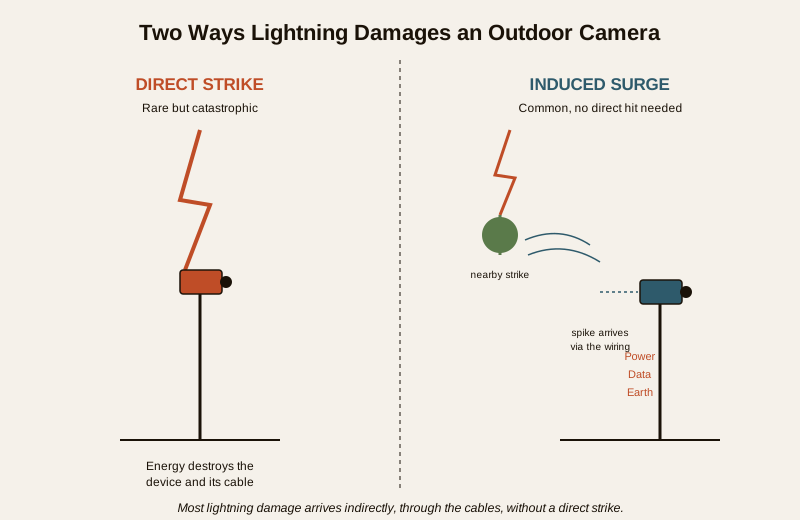
The practical lesson from this split is that protecting a camera means answering both threats. A site that has a fine lightning rod on the roof but no coordinated surge protection is still wide open to the common induced surge; a site full of surge protectors but with a camera standing as the tallest unprotected point still invites the rare direct strike. Real protection links them.
The concepts that protect against a direct strike
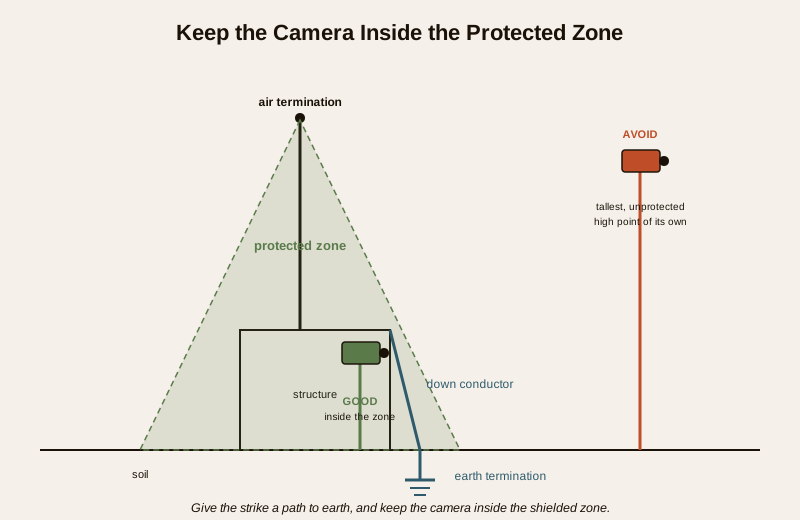
Protection against a direct strike is not about the camera at all. It is about the structure and the site, and it rests on a simple idea: if lightning is going to strike somewhere, give it a deliberate, low-resistance path to ground that it will take in preference to your equipment, and keep your equipment inside the region that path shields.
A designed lightning protection system for a building or site has three linked parts, and it is worth knowing them by name so you can recognise whether one exists.
- Air termination — the part that is meant to be struck, historically called the lightning rod or finial, sometimes a mesh or catenary arrangement on larger structures. Its job is to be the intended point of contact so the strike lands there and not on a random edge, chimney or, crucially, your camera.
- Down conductor — a heavy conductor that carries the strike current from the air termination down the outside of the structure to earth, on a controlled route, keeping that huge current away from the building's inner wiring and occupants.
- Earth termination — the earthing arrangement at the bottom, an earth electrode or pit system, that dissipates the current safely into the ground.
Between them these give a strike a path from the sky to the soil that never has to pass through your electronics. The key homeowner idea layered on top is the protected zone: a properly placed air termination shields a region beneath and around it, and equipment kept within that shielded region is far less likely to be the point a strike terminates on. The practical consequence for cameras is direct: a camera should sit within the protected zone of the site's lightning protection, not project above it as an unprotected high point of its own. If your camera or its pole is the tallest thing around and stands outside any protected zone, you have effectively installed a small lightning rod that also happens to contain electronics.
How big a protected zone is, how tall the air termination must be, how many down conductors and what earthing a site needs, are all engineering questions answered by a competent designer working to the applicable lightning-protection standard for your structure and exposure. Those specifics are not something to guess at or copy from a neighbour, and this guide deliberately gives no dimensions for them. What you carry away is the shape of the solution: an intended strike point, a safe conductor down, a good earth, and the camera kept inside the shielded region.
Surge protection and earthing, the other half that is never optional
Because the induced surge is the common threat, coordinated surge protection and good earthing are not an add-on to lightning protection, they are half of it. Lightning protection without surge protection and earthing is incomplete, and the two must be designed to work together.
Surge protection means placing surge protective devices on the routes a transient can travel, so a spike is clamped and diverted to earth before it reaches the sensitive electronics. For an outdoor camera that means all three routes into it: the power feed, the data or network line, and the earth reference. A camera protected on the power side but left open on the network cable can still be killed by a surge that walks in along the data line, so protection must be coordinated across the routes rather than bolted onto one. The detail of how surge protective devices are chosen and staged lives in the surge protection for CCTV guide.
None of that works without a proper, low-resistance earth to divert the energy into, and a single, well-bonded earthing system so the whole installation rises and falls together in potential rather than one part sitting at a dangerous difference from another. Poor or piecemeal earthing is one of the most common reasons outdoor gear keeps dying in storms even after someone fits surge protectors, because the diverted energy has nowhere clean to go. Earthing has its own treatment in the earthing for CCTV and security equipment guide. The idea to hold on to is that lightning protection, surge protection and earthing are one connected system: leave any one out and the other two are compromised.
Practical placement and cabling for an exposed camera
A great deal of lightning resilience is decided before any protection device is bought, in where the camera goes and how its cable is run. These are choices a homeowner genuinely influences.
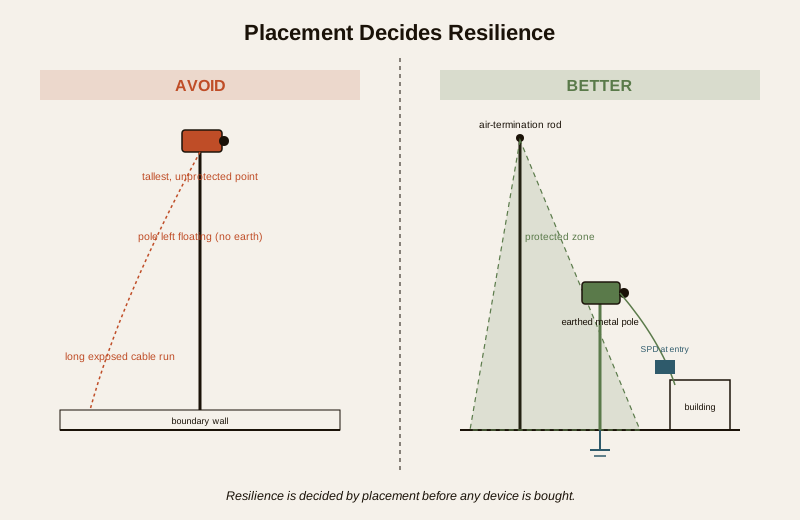
Do not let the camera be the tallest thing on a boundary or roof. The most exposed and avoidable mistake is mounting a camera as a solitary high point, on top of a tall standalone pole at a corner, at the peak of a parapet, above everything else on the terrace, with nothing taller nearby and no protection over it. If height is needed for the view, the answer is to bring the camera within a protected zone, either by having the site's lightning protection extended so its shielded region covers the camera position, or by not placing the camera above the level that protection covers. Coverage and lightning exposure are a genuine trade-off to discuss with your installer, not something to solve by simply going higher.
Use metal poles that are properly earthed, not left floating. A metal camera pole is not automatically a hazard, but a tall metal pole that is not bonded into the earthing system is an invitation, it collects and holds charge and gives a surge somewhere to sit. A properly earthed metal pole, bonded into the site earthing, is part of the solution rather than the problem. This is a point to raise explicitly with whoever erects the pole.
Route and protect the cables thoughtfully. Long external cable runs, especially ones strung high or along a boundary, act as antennas for induced surges and as paths for them to travel indoors to your recorder and network gear. Keeping runs short and sheltered, avoiding long parallel runs beside power lines, and fitting coordinated surge protection where cables enter a building all reduce how much a storm can push in. Weather sealing matters too, since water ingress undermines the earthing and protection you rely on, which is why weatherproofing and lightning resilience go hand in hand, see the weatherproof and IP rating guide for CCTV. These questions sit alongside the wider siting decisions in the outdoor CCTV guide and the perimeter CCTV guide.
Who designs this, and what a homeowner asks for
A real lightning protection system is designed and installed by a competent professional, an electrical or lightning-protection engineer, working to the applicable lightning-protection standard for your structure and exposure. It is not a product you buy off a shelf, and it is not a job to improvise. The designer assesses your building, its height and location, how exposed the site is and what it contains, and specifies the air termination, down conductors and earthing to suit, along with the coordinated surge protection and bonding. This guide names the standard only generically on purpose: the current standard, its edition and the specific values it calls for are exactly the things to confirm with your designer rather than take from an article. Where a building approval is involved, the security and fire regulations guide explains how the Authority Having Jurisdiction fits in.
As a homeowner your job is to ask the right questions and to recognise a thorough answer from a careless one. The table below is a plain-language brief you can take into that conversation.
| What to ask about | What a good answer sounds like | The red flag |
|---|---|---|
| Direct strike path | There is a designed air termination, down conductor and earth for the structure, and the camera sits within its protected zone | The camera is simply the highest point, with nothing above it |
| Induced surge | Coordinated surge protection is fitted on power and data routes, staged and earthed | Surge protection only on the plug, or none at all |
| Earthing | A single, well-bonded, tested earthing system that everything ties into | Separate, unbonded or untested earths, or a floating pole |
| Camera placement | Height and exposure were traded off, camera kept inside the shielded zone | Camera pushed as high as possible for the view alone |
| Cabling | Runs kept short and sheltered, surge protection where cables enter a building | Long high external runs with no entry-point protection |
| Who designed it | A competent lightning-protection or electrical designer, to the applicable standard | Assembled from parts by an untrained installer |
This is a competent-designer job, not a DIY one. Lightning protection deals with life-safety and fire risk as well as equipment, and a system that is designed and installed wrongly can be worse than none, giving a false sense of security or even creating a hazard. Specify what you want protected, then hand the design and installation to a qualified professional and, where a building approval applies, confirm the position with the Authority Having Jurisdiction.
A lightning-resilience checklist for outdoor cameras
Walk the property and sense-check the job against this. It does not replace a designer.
- Is the camera the tallest unprotected point? If so, that is the first thing to fix.
- Is there a designed path for a direct strike? Air termination, down conductor and earth, with the camera inside the protected zone.
- Is coordinated surge protection fitted on all routes? Power and data both, staged and earthed, not just a power strip.
- Is the earthing single, bonded and tested? One system that everything ties into, including any metal pole.
- Are cable runs short, sheltered and protected at entry? Not long high external runs into your recorder.
- Is everything weather-sealed? Water ingress undermines earthing and protection alike.
- Was it designed by a competent professional to the applicable standard? Not assembled by guesswork.
Do not do this
- Do not mount a camera as a solitary tall high point on a corner pole, parapet or terrace with nothing taller and no protection over it.
- Do not rely on a lightning rod alone and skip surge protection and earthing, the common induced surge walks straight past a rod.
- Do not fit surge protectors and ignore earthing, the diverted energy needs a clean path to ground or it does nothing.
- Do not leave a metal pole floating, unbonded to the earthing system.
- Do not string long external cable runs high and unprotected and expect the recorder indoors to survive a nearby strike.
- Do not treat this as DIY, or copy a neighbour's dimensions, the design depends on your specific structure and exposure.
Accepting residual risk
Finally, be honest about what protection can and cannot do. No lightning protection is absolute. A well-designed system dramatically reduces the odds of a direct strike hitting your equipment and of an induced surge getting through, but a rare, severe event can still cause damage; the goal is to make loss unlikely and survivable, not impossible. For an exposed site, plan for the residual risk rather than pretending it away: keep recordings backed up or offsite so a lost camera does not mean lost footage, keep a spare for the most exposed positions so a failure is a quick swap rather than weeks blind, and check whether your home or property insurance covers lightning and surge damage to electronics, since for a genuinely exposed corner that cover can be worth more than one more device. Good protection plus a small margin for the rare event is a calmer position than either fatalism or the belief that a gadget made you invulnerable.
Where to go next
- Surge protection for CCTV — the induced-surge half of the problem in detail, and how surge protective devices are chosen and staged.
- Earthing for CCTV and security equipment — the earthing that everything else depends on.
- Weatherproofing and IP ratings for CCTV — keeping water out, which sits hand in hand with lightning resilience.
- Outdoor CCTV and perimeter CCTV — the wider siting decisions this placement thinking feeds into.
- Security and fire regulations — where the Authority Having Jurisdiction and building approvals fit in.
References
- The applicable lightning-protection standard — lightning protection for a building or site is designed and installed by a competent professional to the current applicable standard for your structure, location and exposure. This guide names it only generically on purpose; confirm the current standard, its edition and the specific values it calls for with a qualified lightning-protection or electrical designer.
- Coordinated protection principle — effective protection against lightning combines a path for a direct strike (air termination, down conductor and earth termination) with coordinated surge protection and a single well-bonded earthing system for the common induced surge. The three are one connected system and are designed to work together.
- India lightning exposure — the monsoon brings intense thunderstorm activity across much of India, making exposed, high-mounted outdoor equipment a genuine candidate for both direct strikes and induced surges. Design decisions should reflect local exposure, confirmed with a competent designer.
This is an educational protection-literacy guide for homeowners, not electrical design, an installation manual or legal advice. Lightning protection is designed and installed by a competent professional to the applicable standard, and the right approach varies with your structure, location and exposure and changes over time. Always confirm the current position with a qualified lightning-protection or electrical designer, and where a building approval is involved with the Authority Having Jurisdiction, before you act.
Export this guide
Related Guides — Deep-dive reading
Earthing for CCTV and Security Equipment in India (2026): The Ground Truth
Why proper earthing quietly keeps your security system safe, alive and clear, what a good earth actually is in plain language, the tell-tale signs of a bad one, and why the earth itself is a job for a licensed electrician, never a do-it-yourself improvisation.
SecurityElectrical Safety for Security Systems in India (2026): Powering It Without Peril
A homeowner's guide to the power side of home and RWA security systems, CCTV, alarms, gates, access control and NVRs, done so it protects you instead of quietly becoming a shock or fire hazard. What makes a supply safe, what to insist on, and why the mains work belongs to a licensed electrician.
SecuritySurge Protection for CCTV in India (2026): Stopping the Spike That Kills Cameras
A plain-language guide to why voltage surges from lightning, grid switching and generators quietly destroy CCTV, NVRs and PoE switches in India, and the layered protection, on power and on data lines, that keeps a system alive through the monsoon.
SecurityRelated Tools — Try Free
CCTV Placement Planner
Pick your property and zones to get a prioritised, zone-by-zone checklist of which camera goes where and how to mount it.
Placement PlannerSecurity Cabling & PoE Planner
Estimate cable length, drops, PoE power budget, the right switch, conduit and cost for a CCTV/security cabling plan.
Cabling PlannerCCTV Camera Coverage & Count Calculator
Estimate how many CCTV cameras you need, the NVR channels, storage in TB for your retention period, and an indicative all-in cost with GST.
CCTV Calculator