
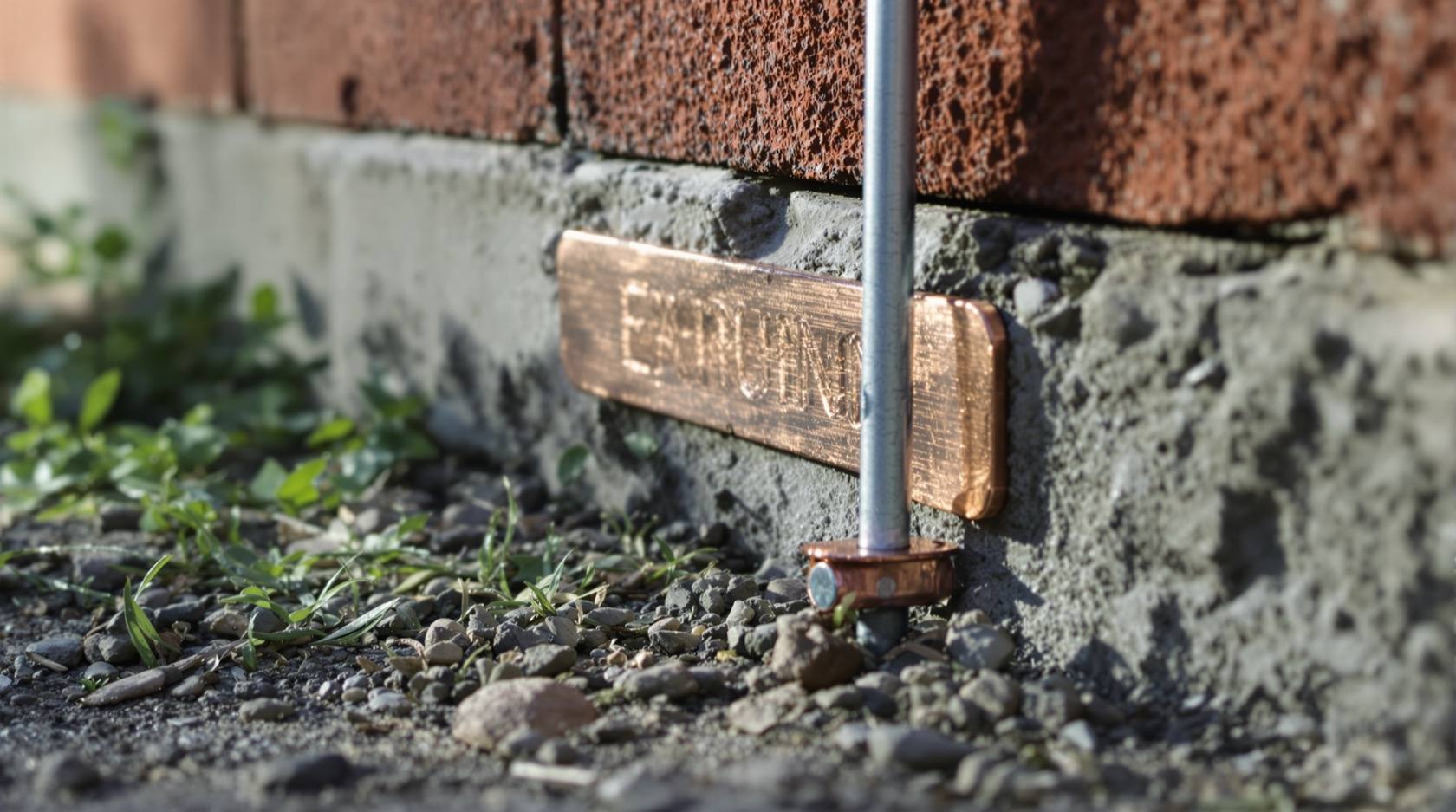
Earthing for CCTV and Security Equipment in India (2026): The Ground Truth
Why proper earthing quietly keeps your security system safe, alive and clear, what a good earth actually is in plain language, the tell-tale signs of a bad one, and why the earth itself is a job for a licensed electrician, never a do-it-yourself improvisation.
Of all the things that decide whether a security system is safe, reliable and worth the money, the one nobody photographs for the brochure is earthing. It is invisible, it is undramatic, and it is the difference between a system that shrugs off a monsoon storm and one that dies in it, between a metal camera housing you can touch and one that can shock you, between clean video and a picture that rolls and flickers for no reason anyone can name. Earthing is the quiet backbone of the whole installation, and most problems that get blamed on "a bad camera" or "cheap cable" are really an earthing problem in disguise.
This guide explains, in plain language, what earthing does for a security system, what a proper earth actually is, how to recognise the signs that yours is wrong, and, most importantly, why the earth itself is something you specify and verify but do not improvise. Earthing sits at the meeting point of electrical safety, surge protection and signal quality, and getting it right is a job for a licensed electrician working to the electrical rules. Your job as the homeowner is to understand why it matters, to demand it is done properly, and to know the questions that separate a real earth from a hopeful wire pushed into the soil.
Scope and how to read this. This is practical literacy about earthing for security equipment, not an electrical manual, a wiring diagram or a substitute for a licensed electrician. Earthing requirements are set by the electrical rules and depend on your site, and the target earth value must be measured, not assumed. Always confirm the design and verify the installation with a licensed electrician and the relevant authority before you rely on it.
Why earthing matters, three ways at once
Earthing is not one job. It is three jobs that happen to share the same wire, and understanding the three is the whole point of taking it seriously.
Safety, the reason it is not optional. Inside a camera, a recorder or a power supply, a fault can put mains voltage where it should never be, onto a metal housing, a pole, a cabinet. If that metal is properly earthed, the fault has a low-resistance path to earth, a large current flows, and the protective device, a fuse or a breaker or an earth-leakage device, trips and cuts the power. If that same metal is not earthed, the fault current has nowhere to go until a person touches the housing and becomes the path themselves. Earthing exists so that a fault trips a breaker instead of shocking a human being. That is not a refinement; it is the reason earthing is a rule and not a suggestion.
Surge and lightning, giving a spike somewhere to go. A voltage spike, from a nearby lightning strike, a grid fault or a switching event, is a sudden flood of energy looking for the path of least resistance to earth. Give it a proper, low-resistance path through an earth and a surge protection device, and it drains harmlessly into the ground. Deny it that path and it will find another one, and that other one runs through your recorder, your camera electronics or your network switch, frying them on the way. This is why so much equipment dies "after a storm": there was no good earth for the surge to take, so it took the equipment. Earthing is the foundation that surge and lightning protection stand on, which is why they are always discussed together.
Signal and noise, the reason your picture is clean. Video and data signals are measured against a reference, a baseline the system calls "ground". If every part of the system shares one clean, common earth reference, that baseline is steady and the picture is stable. If different parts of the system sit at slightly different earth potentials, a small current flows through the cable screen trying to equalise them. That current rides on top of your video as interference, and it shows up as rolling bands, flicker, hum bars or a picture that quietly degrades. This is the notorious "ground loop", and it is an earthing fault wearing the costume of a video fault.
What a proper earth actually is, in plain language
You do not need to be an electrician to hold a correct mental picture of what earthing means. A few plain ideas cover it.
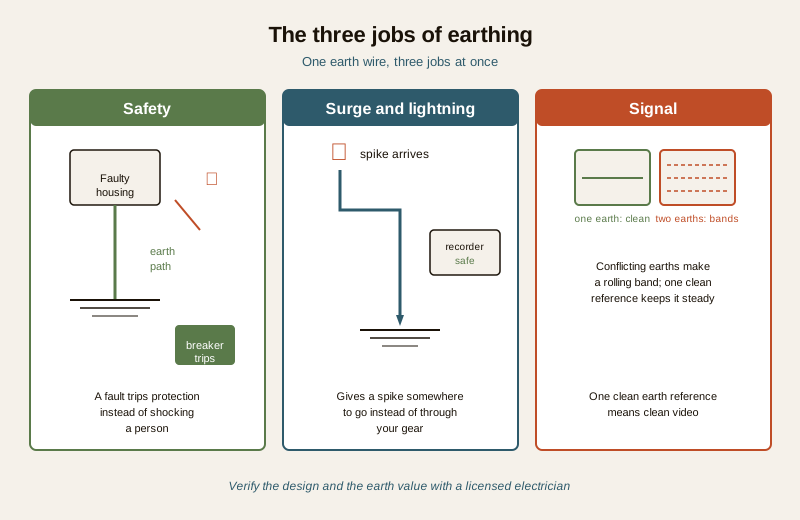
An earth electrode, the connection to the ground itself. At the heart of any earthing system is a physical connection to the mass of the earth, an electrode buried in the soil, sometimes called an earth pit. Its job is to make a genuine, durable, low-resistance contact with the ground so that fault currents and surges can actually drain away. Making a good electrode is a real piece of work, depending on the soil, the moisture and the treatment around it, which is exactly why it belongs to a professional. A wire twisted around a random metal spike hammered in by hand is not an earth electrode; it is a decoration.
Earth continuity, an unbroken path back to it. An electrode is useless if the wire connecting your equipment to it is broken, corroded, loose or too thin. Earth continuity means there is a genuine, unbroken, low-resistance path from every piece of metal that should be earthed all the way back to the electrode. Every joint, every terminal, every length of that path has to be sound, because the earth only works if the whole chain is intact.
Bonding, tying the metal parts together. Bonding means deliberately connecting the metal parts of the installation, the camera housings, the mounting poles, the equipment cabinet, the racks, to the earthing system so they all sit at the same safe potential. An outdoor camera on a metal pole and a metal cabinet on a wall are exactly the parts that need bonding, because they are the metal a person or a surge is most likely to meet.
A single, clean earth reference. The subtle one. The whole system should refer to one common earth, not several conflicting ones. When equipment is fed from different points that each have their own separate earth at a slightly different potential, you get the ground loop described above. The goal is a single, star-like earth reference that everything shares, rather than a tangle of independent earths quietly fighting each other.
Outdoor and elevated parts especially. Anything outdoors, an exterior camera, a gate reader, and anything on a mast or a pole, deserves particular attention, because it is the most exposed to weather, to surges and to a lightning environment, and because a metal pole is both a shock risk and a lightning attractor if left un-earthed.
How bad earthing shows itself
The useful thing about earthing faults is that they announce themselves, if you know the signs. Three symptoms in particular almost always trace back to the earth.
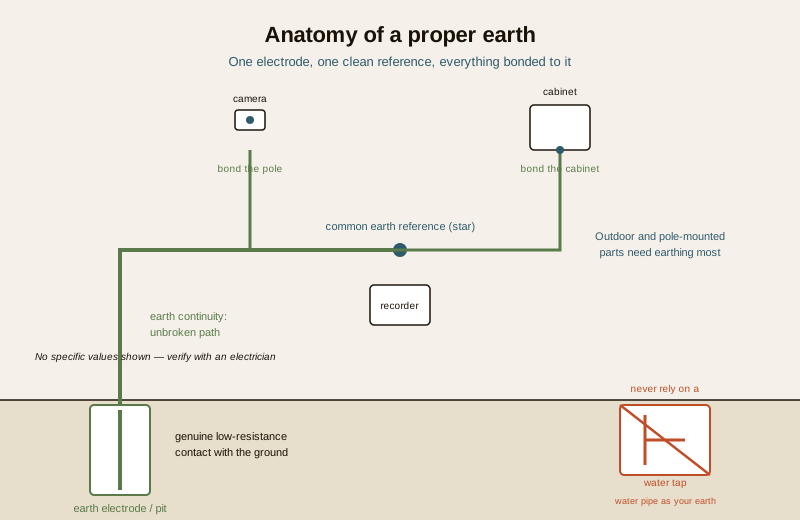
A tingle or shock off a metal part. If touching a camera housing, a metal pole, a cabinet or a gate unit gives you the faintest tingle, or a real shock, stop using it and treat it as an emergency. It means metalwork that should be at earth potential is not, and a fault or leakage is sitting on it waiting for someone to complete the circuit. This is the safety failure the whole earthing system exists to prevent, and it is never acceptable, not even "a little".
Video noise, bands or rolling picture. Flickering, rolling horizontal bands, a faint hum pattern or a picture that degrades for no clear reason is the classic signature of a ground loop, different parts of the system sitting at different earth potentials. People spend money replacing cameras and cable chasing this, when the cure is a clean common earth, and sometimes a ground-loop isolator on the affected run. If the noise appears only on longer or outdoor runs, that points even more firmly at earthing.
Equipment that dies after storms. A recorder, camera or switch that fails during or just after thunderstorm weather, especially repeatedly, is telling you the surge and lightning path is inadequate. The spike had no good earth to drain into, so it drained through the electronics. Replacing the dead unit without fixing the earth and the surge protection just buys you the next casualty.
None of these are cosmetic. A shock is a safety failure, storm deaths are a surge-path failure, and video noise is a signal-reference failure, and all three lead back to the same place. Because earthing ties directly into surge and lightning defence, read this alongside surge protection for CCTV and, for anything on a mast or exposed roofline, lightning protection for outdoor cameras. The three are one system.
The good-earthing checklist
You will not build the earth yourself, but you can recognise a proper one and hold your installer to it. A well-earthed security installation generally shows these features.
| Good earthing has | What it means in practice |
|---|---|
| A proper earth electrode | A genuine, durable earth pit or electrode made to the electrical rules, not an improvised spike |
| Sound earth continuity | An unbroken, low-resistance earth conductor of adequate size from equipment back to the electrode, with solid joints |
| Bonded metalwork | Camera housings, poles, cabinets and racks deliberately connected to the earthing system |
| A single clean reference | One common star earth shared by the system, not several conflicting earths causing ground loops |
| Outdoor and pole earthing | Exterior cameras, gate hardware and every metal mast earthed, with surge and lightning protection tied in |
| A verified earth value | The earth resistance measured and confirmed against the target the electrical rules require, by a competent person |
| Documentation | The electrician records what was installed and the measured result, so it can be re-checked over time |
Notice the last two rows. The target earth value is set by the electrical rules and depends on the installation, and it has to be measured with proper instruments, not guessed. This guide deliberately does not print a number, because quoting one as if it applied everywhere would be wrong, the correct figure is the one your electrician measures and verifies against the applicable rules for your site.
Warning signs and things to never do
Some habits turn an earthing system from protective into dangerous. Treat this list as firm.
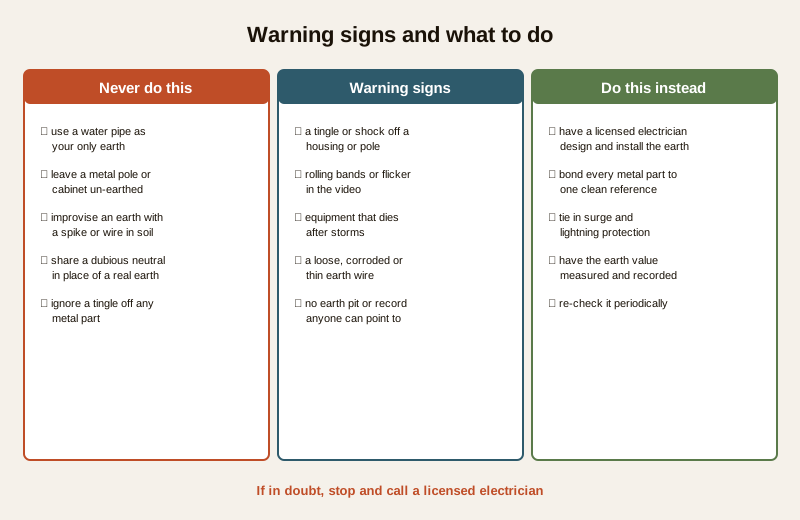
Never do these. Never use a water pipe as your only earth, modern plumbing often has plastic sections that silently break the path, and pipes get replaced without anyone thinking about the earth that depended on them. Never leave a metal camera pole, mast or cabinet un-earthed, it is both a shock risk and a lightning liability. Never improvise an earth with a spike hammered into the soil or a wire pushed into a flower bed, a real electrode is engineered. Never substitute a neutral or a doubtful connection for a genuine earth. And never dismiss a tingle off any metal part as "just static", treat it as a live fault until an electrician proves otherwise.
Why the earth itself is a job for a licensed electrician
Everything above leads to one conclusion: you specify and verify earthing, you do not improvise it. There are good reasons this is not a do-it-yourself task.
The earth is a life-safety system. When it is wrong, the failure mode is a person getting shocked or equipment catching fire, which is precisely why the electrical rules govern how earthing is designed, sized and installed, and why the work belongs to a competent, licensed electrician. Making a genuine low-resistance electrode, sizing the conductors, bonding correctly, achieving a single clean reference and measuring the result all require knowledge and instruments a homeowner does not have. Just as importantly, the target earth value has to be measured and verified against the applicable rules, not assumed, and only a proper earth tester in trained hands can do that.
This connects to the wider electrical and compliance picture. Earthing is part of the electrical safety of the whole installation, covered in electrical safety for security systems, and it interacts with how cable is run and screened, covered in security cabling requirements, and with how the system is powered and backed up, covered in CCTV power supply and UPS. For where earthing sits among the rules and approvals that govern a security and electrical installation, see the security regulations hub. The point running through all of them is the same: a security system is an electrical installation, and its earth is the part you least want done cheaply.
Get it designed and verified. Have a licensed electrician design the earthing, install the electrode and bonding, tie in surge and lightning protection, and measure and record the earth value against the target the electrical rules require for your site. Then have it re-checked periodically, an earth degrades as joints corrode and soil dries. This guide is literacy, not a design, and it is not a substitute for that professional work.
Key takeaways
- Earthing does three jobs at once — it provides a fault path so protection trips instead of shocking someone, a drain path so surges and lightning go to ground instead of through your gear, and a single clean reference so your video is stable.
- A proper earth is a real thing — a genuine electrode in the ground, unbroken earth continuity, every metal part bonded, and one common reference, with outdoor cameras, poles and cabinets earned particular attention.
- Bad earthing announces itself — a tingle or shock off metal, rolling bands or flicker in the video, and equipment dying after storms all trace back to the earth, not to a bad camera.
- Earthing, surge and lightning are one system — the earth is the foundation the surge and lightning protection stand on, so design and read them together.
- You specify and verify, you never improvise — the earth is life-safety work governed by the electrical rules, and the target value must be measured, so the design and the earth value belong to a licensed electrician, not a hopeful wire in the soil.
Where to go next
- Electrical safety for security systems — the wider electrical-safety picture that earthing is part of.
- Surge protection for CCTV — the surge defence that stands on a good earth.
- Lightning protection for outdoor cameras — essential for anything on a mast, pole or exposed roofline.
- Security cabling requirements — how cable, screening and runs interact with earthing and ground loops.
- CCTV power supply and UPS — powering and backing up the system that shares this earth.
- The security regulations hub — where earthing sits among the rules and approvals for a security installation.
References
- The electrical rules and safety regulations (generally, the Electricity Act and the Central Electricity Authority safety regulations, and the relevant Bureau of Indian Standards earthing standard) govern how earthing is designed, installed, sized and verified, and set the target earth value your electrician must measure against. Verify the current requirements and standard numbers with a licensed electrician and the electrical inspectorate for your site, rather than relying on a fixed figure.
- Surge and lightning protection standards and practice are tied directly to earthing, a low-resistance earth is the drain path both depend on, so earthing, surge protection and lightning protection must be designed together by a competent professional.
- A competent, licensed electrician using a proper earth tester is the correct authority to design the earth, install the electrode and bonding, and measure and record the earth value; the earth should also be re-checked periodically as joints corrode and soil conditions change.
This is an educational guide to why earthing matters for CCTV and security equipment and what a good earth looks like, not an electrical design, a wiring manual or legal advice. Earthing is life-safety work governed by the electrical rules, and the target earth value depends on your site and must be measured; always have the design done and the installation verified by a licensed electrician before you rely on it.
Export this guide
Related Guides — Deep-dive reading
Electrical Safety for Security Systems in India (2026): Powering It Without Peril
A homeowner's guide to the power side of home and RWA security systems, CCTV, alarms, gates, access control and NVRs, done so it protects you instead of quietly becoming a shock or fire hazard. What makes a supply safe, what to insist on, and why the mains work belongs to a licensed electrician.
SecurityLightning Protection for Outdoor Cameras in India (2026): Keeping the Strike Out
Why a pole-mounted or boundary-wall camera is one of the most lightning-exposed devices on your property, and how a homeowner thinks about the two threats, a direct strike and the far more common induced surge, and the coordinated protection, earthing and placement that keep gear alive through an Indian monsoon.
SecuritySecurity System Network Failure (2026): When Everything Goes Offline at Once, and How to Get It Back
When your whole security system drops offline together, the fault is almost never in the cameras. It is in the shared network they all lean on. This guide helps an Indian homeowner tell an internet outage from a router, switch or cabling fault, power-cycle things in the right order, and know when to call a professional.
SecurityRelated Tools — Try Free
CCTV Cable-Length Calculator
Total cable to buy for a CCTV job and a warning when a run exceeds the cable's maximum length.
Cable LengthSecurity Cabling & PoE Planner
Estimate cable length, drops, PoE power budget, the right switch, conduit and cost for a CCTV/security cabling plan.
Cabling PlannerCPCB Compliance Checklist for STPs
Tick off CPCB/SPCB outlet standards, monitoring duties and record-keeping to score your sewage treatment plant's compliance readiness.
Checklist