
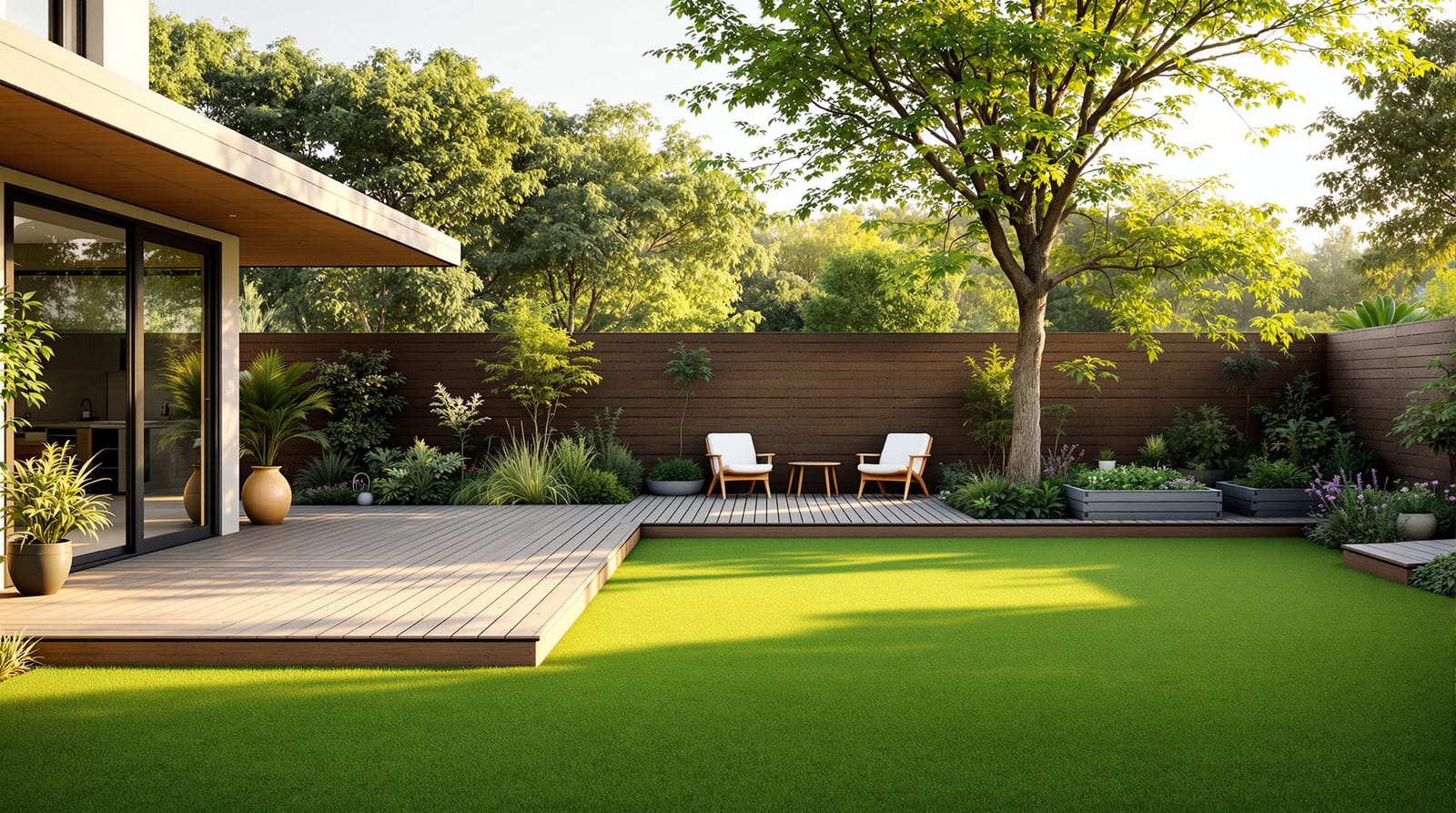
Landscape Zoning for Family Activities
Organising the home garden into activity zones — gather, play, grow, relax, pets, service — and relating them across ages, times and seasons
A family garden works best when it stops being one undifferentiated lawn and becomes a set of activity zones — places to gather, to let children run, to grow food, to retreat quietly, to keep the dog and the dustbins — each sized, sited and connected to suit how your particular family actually lives across a day, a week and the seasons.
Most Indian homes treat the outdoor space as a single leftover: a strip of grass, a couple of pots, maybe a swing. It looks tidy in a photograph and goes almost entirely unused. The reason is rarely the size of the plot — it is that the space asks nothing of you and offers nowhere to land. Zoning fixes this. By dividing the garden into purpose-led areas and then arranging them by who needs to see whom, who needs to be near the kitchen, and who needs to be left alone, you turn a passive lawn into a home that happens to be outdoors. This guide is about that allocation and arrangement — the activity-led zoning logic — not the detailed design of any one zone.
Why zoning beats a single undifferentiated lawn
A lawn-only garden fails on three counts. First, it is mono-functional: grass tolerates light foot traffic and looks green, but it cannot simultaneously host a Sunday lunch, a toddler's mud play and a parent's evening cup of chai without those uses colliding. Second, it is high-maintenance for low return — in most Indian climates a pure lawn is the thirstiest, most labour-hungry element you can install, demanding mowing, watering and weeding while delivering one narrow use. Third, it has no privacy gradient: everything sits in one open plane, so there is no quiet corner to escape to and no buffer between the noisy and the calm.
Zoning solves all three. You match each piece of ground to the activity it serves best, you reduce thirsty lawn to only where play genuinely needs it, and you build a deliberate sequence from sociable to solitary. The same 1,200 sq ft that felt empty as a lawn can comfortably hold five distinct zones once you plan adjacencies rather than just spreading turf. The discipline behind all of this is the same one covered in Residential Site Planning — read the site first, then assign uses to the ground that suits them.
The core family activity zones
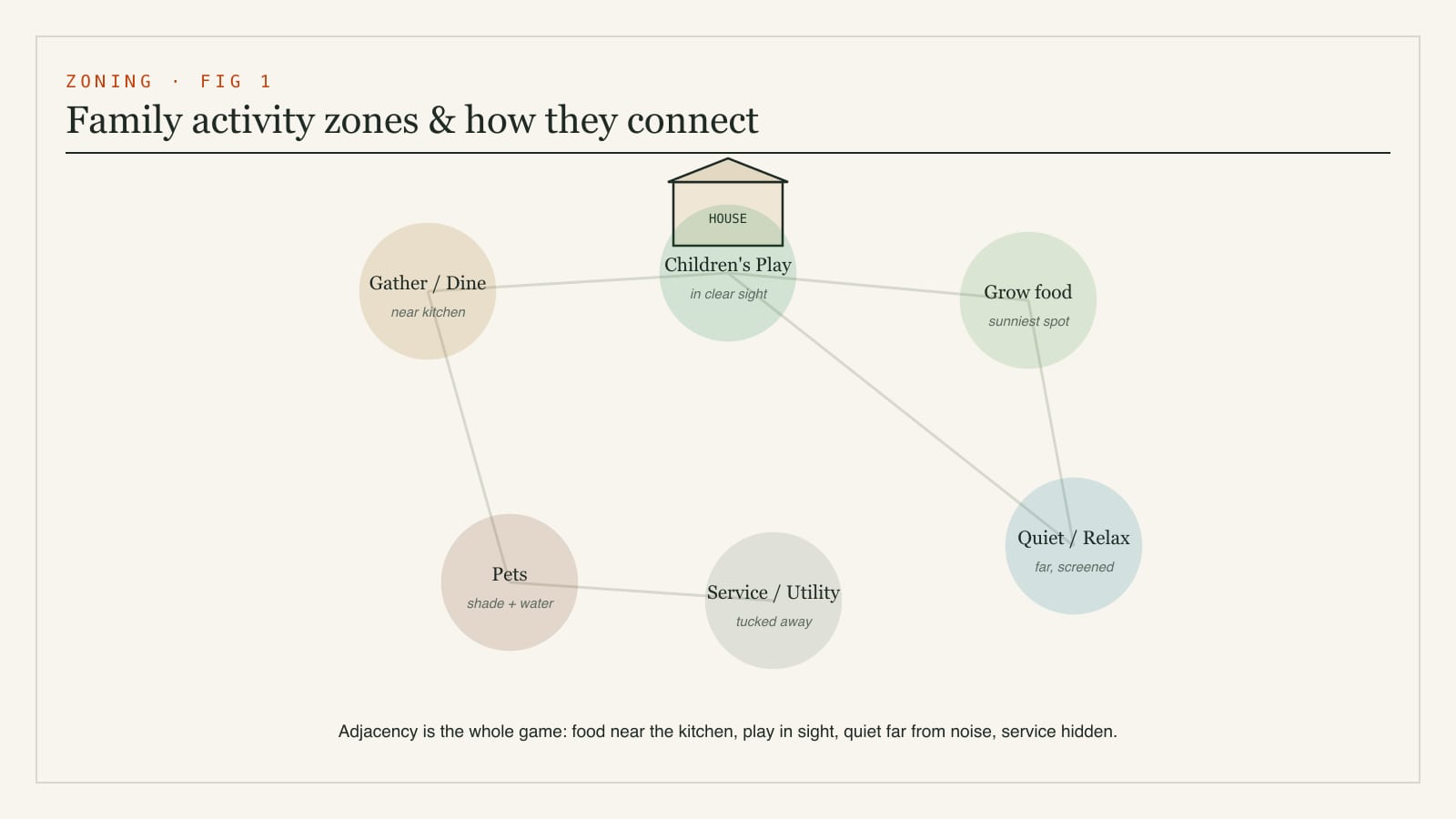
Think of the garden as a small settlement with neighbourhoods. Most Indian families need some subset of seven zones. You will rarely have room for all seven, and that is the point — zoning forces honest priorities.
| Zone | Ideal location / orientation | Typical size (Indian plot) | Surface | Adjacencies to seek | Adjacencies to avoid |
|---|---|---|---|---|---|
| Gathering / dining | Near kitchen door; east or north for shaded morning–evening use; shelter from harsh western sun | 100–200 sq ft (seats 6–8) | Paved/deck — IPS, kota, deck tiles | Kitchen, lawn (sightline) | Dustbins, pet toilet, compost |
| Children's play | Visible from kitchen/living window; soft afternoon shade; level ground | 80–250 sq ft | Lawn, rubberised mat, sand | Gathering zone, house windows | Driveway, water features, road edge |
| Growing food (kitchen garden) | South/east for 5–6 hrs sun; near kitchen and a tap | 40–150 sq ft | Raised beds, soil, mulched paths | Kitchen, compost, water point | Deep shade, play (trampling) |
| Quiet relaxation / retreat | Furthest from gate and play; enclosed by planting; morning or evening shade | 30–80 sq ft | Gravel, deck, single bench/swing | Greenery, water sound | Play, parking, service yard |
| Pets | Shaded, well-drained corner; own water point | 30–100 sq ft | Permeable — gravel, paving, hardy grass | Service access, hose point | Kitchen garden, dining, soft new lawn |
| Work / utility (service) | Tucked behind a screen near boundary or kitchen rear | 40–120 sq ft | Hardstanding | Kitchen, gate, pets | Dining, retreat, main sightlines |
| Circulation (the connective tissue) | Threads between all zones | 3–4 ft wide paths | Paving, stepping stones | All zones | Cutting through play or retreat |
A few notes on the table. The gathering zone wants paving rather than lawn because grass turns to mud under chairs and monsoon footfall; an IPS (Indian patent stone) or kota-stone floor under a pergola survives both. The kitchen garden's non-negotiable is sun and a tap — site it for those, not for looks. The retreat is the one zone people forget to protect; if you do not deliberately put distance and planting between it and the play area, it simply will not work as a retreat.
Matching zones to your family's real life
Zoning is not a fixed template — it is a mirror of your household. Audit who lives there before you draw a single line.
Families with toddlers and young children
Supervision is everything. The play zone must be visible from wherever a parent stands most — usually the kitchen or the main living window — so place gathering and play adjacent and both in sightline of the house. Keep water features, the lap pool and any steep level changes out of this stage entirely; they can be added later. Reserve the largest soft-surface area now, because a toddler's "play" is the whole lawn. The detailed design of these areas — surfaces, equipment, safe fall zones — is its own subject; see Children's Outdoor Play Environments.
Families with teenagers
Teenagers want their own ground and a power point. A semi-private corner — a deck or a covered seat with USB charging and decent wi-fi reach — turns the garden into a place they actually choose. This zone can reuse what was the toddler play area, which is exactly why oversized fixed play equipment is a poor investment.
Multi-generational homes with elders
Elders need level, non-slip routes to a shaded, breeze-catching seat, ideally close to the house so the walk is short and assisted if needed. Avoid gravel and stepping stones on their primary path. A morning-sun seat (east-facing) for the daily sit and a Tulsi or planting they can tend gives purpose. Keep their retreat seat away from the children's noise but within calling distance.
Households with pets
Dogs need a shaded, well-drained spot of their own, a toileting area sited downwind and away from the dining and kitchen-garden zones, and durable ground — hardy grass or permeable paving rather than a delicate new lawn they will dig up. A simple hose point makes clean-up realistic.
Adjacency logic: the heart of zoning
If you remember one principle, make it this: arrange zones along a gradient from public and noisy near the house to private and quiet at the far edge. The classic ordering for an Indian home garden runs:
- Loud and social, close to the house — gathering/dining and children's play sit near the kitchen and living room. Food travels a few steps; children stay in sight; conversation does not have to carry across the plot.
- Productive, near its supply lines — the kitchen garden hugs the kitchen door and a tap, so harvesting a few curry leaves or chillies is a five-second errand, not an expedition.
- Service, screened but accessible — bins, compost, the pet corner and the utility yard tuck behind a screen near the rear or boundary, close enough to the kitchen for daily use but out of every important sightline.
- Quiet, at the far end — the retreat is the last zone, buffered by planting from everything energetic. Distance plus a layer of shrubs is what makes solitude possible.
Three adjacencies to actively avoid: dining downwind of the dustbins or pet toilet; the kitchen garden in the play zone's trampling path; and the retreat anywhere within earshot of the swing set. The connective paths matter too — circulation should skirt the play and retreat zones, never bisect them, so a person crossing to the gate does not walk through a cricket match or someone's quiet hour. The craft of those routes is covered in Outdoor Circulation Design.
Flexing across day, week and season
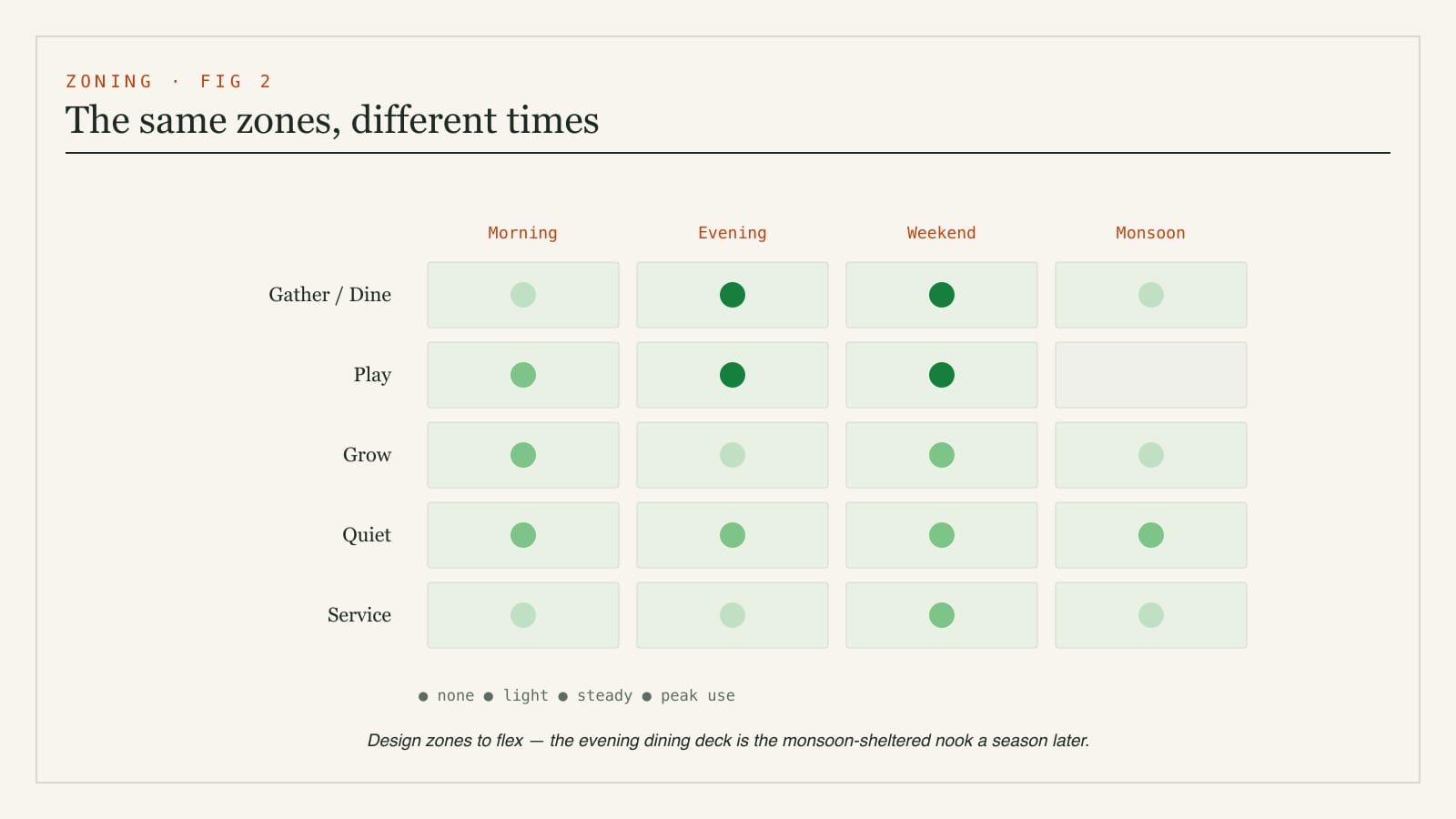
A well-zoned garden is not static — the same ground earns its keep by changing role through the day and the year. This is the difference between a garden that is used for two hours a week and one used daily.
| Time / season | Primary active zones | What flexes |
|---|---|---|
| Weekday morning | Kitchen garden, elder's east seat | Watering, harvesting, the morning sit and chai |
| Weekday evening | Gathering zone, play | After-school and after-work overlap; string lights extend dining past sunset |
| Weekend | All zones at once | Dining expands onto the lawn; play scales up; the retreat is most prized as an escape |
| Summer (Apr–Jun) | Shaded gathering, retreat | Activity shifts to early morning and after 6 pm; the western-shaded corner becomes the usable one |
| Monsoon (Jun–Sep) | Covered gathering, indoor-edge | Lawn and play go off-limits in heavy rain; a roofed or pergola-with-cover zone keeps gathering alive; paved surfaces and good drainage decide whether the garden is usable at all |
| Winter (Nov–Feb) | Open lawn, sunny dining | Sun-seeking — dining moves into the open south-facing patch; play extends through the milder afternoons |
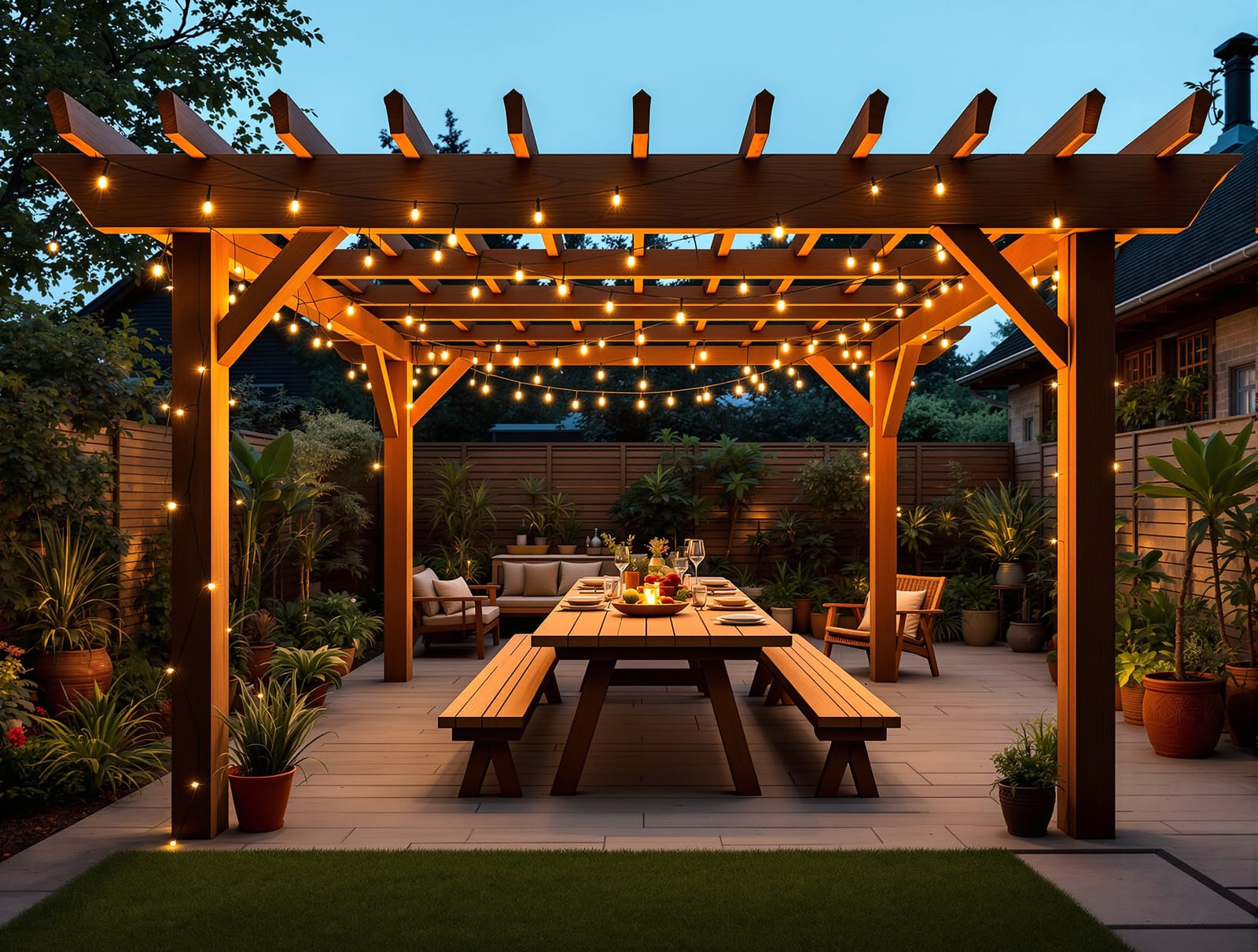
The two big Indian design drivers fall out of this table. First, the monsoon demands at least one covered or quickly drainable zone — plan a pergola with a retractable or fixed cover over the gathering area, and never rely on lawn or unpaved ground as your only outdoor floor, or the garden simply shuts for three months. Second, the hard western afternoon sun means orientation is not optional: site the daytime-use zones (retreat, elder's seat) to catch morning sun and afternoon shade, and shade the west edge with a tree such as Indian almond (Terminalia catappa) or a pergola. For the deeper logic of designing around our climate, see Climate-Responsive Landscape Design, and for choosing the shade trees that make summer zones usable, Best Trees for Indian Homes.
A practical move that buys flexibility: keep furniture light and the lawn-to-paving ratio honest. Stackable or movable seating lets the gathering zone breathe into the lawn at weekends and shrink on weekdays, and a generous paved core means rain or shine you always have somewhere to sit.
Small-plot and apartment-balcony versions
Zoning scales down — it does not disappear. On a tight plot or balcony you collapse seven zones into two or three that stack and time-share rather than spread out.
Small plot (under 500 sq ft of open space): Pick three zones — one social (a compact paved gathering spot), one soft (a small lawn or play mat that doubles as overflow seating), and one productive (raised kitchen-garden beds or grow-bags along a sunny wall). The retreat becomes a single well-placed bench in a planted corner rather than a separate room. Vertical layers do the heavy lifting: a green wall or trellis adds the enclosure that buffers the bench and screens the service corner.
Apartment balcony: Here zones are defined by furniture and time, not walls. A 6×10 ft balcony might be a morning chai-and-plants zone (a couple of chairs facing the rail-mounted herb planters) that becomes an evening gathering spot, with a foldaway table for occasional dining. Use the parapet and walls for the kitchen garden — railing planters of methi, mint, chillies and curry leaf — so the floor stays clear for people. Respect your society's rules: many RWAs restrict drilling into the facade, ban floor-draining that drips onto the flat below, and limit what may be visible from outside, so favour free-standing planters with saucer trays and self-watering pots. The zoning instinct — social near the door, green along the rail, nothing blocking the route in — is identical to the larger garden, just compressed.
A worked example: a 30×40 ft rear garden for a family of five
Picture a 1,200 sq ft rear plot behind a Bengaluru home — two parents, a 4-year-old, a 9-year-old and a grandparent, plus a dog. The kitchen door opens onto the north-east corner.
- Gathering/dining (150 sq ft) sits immediately off the kitchen door — an IPS-floored area under a steel-and-bamboo pergola strung with lights, oriented to catch morning sun and shaded from the west.
- Play lawn (300 sq ft) lies right beside it, in full view of the kitchen window, with a soft Bermuda (Cynodon) turf the children can fall on.
- Kitchen garden (90 sq ft) runs as two raised beds along the sunny eastern wall, a step from the kitchen and beside an existing tap.
- Elder's morning seat is a single shaded bench on a level paved spur off the gathering zone, east-facing, near the house.
- Retreat (50 sq ft) is a gravel-floored nook at the far south-west corner, screened by a row of Murraya (kamini) hedge, deliberately the longest walk from the gate and out of the play zone's noise.
- Service + pet corner (80 sq ft) hides behind a reed screen near the rear boundary — bins, compost, the dog's shaded mat and a hose point, downwind of the dining area.
- A 3 ft paved path loops from the kitchen door past the gathering zone and along the lawn edge to the retreat, skirting — never crossing — the play and quiet zones.
Total committed ground is well under the plot area, leaving planted buffers between zones. Notice what zoning achieved: the cook can watch both children, the elder has a short safe walk to a sunny seat, the dog is out of the dining sightline, and there is genuinely a corner to disappear to.
Common mistakes
- One big lawn and nothing else. Mono-functional, thirsty, and unused — the default that zoning exists to cure.
- The retreat too close to the play zone. Distance and planting are what make quiet possible; skip them and the retreat is just another loud spot.
- Dining downwind of bins or the pet toilet. A single bad adjacency can ruin the most expensive zone.
- No paved or covered zone. The garden then closes for the entire monsoon and is unusable in the summer afternoon.
- Ignoring orientation. West-facing seating bakes; east-facing seating delights. Site by sun, not by what is left over.
- Fixed oversized play equipment. Children outgrow it in five years; plan the play zone to convert to teen or adult use.
- Paths that cut through activity zones. Circulation should connect zones, not slice them apart.
- Zoning the plot before auditing the family. Draw the household first — toddlers, teens, elders, pets — then the zones.
Done well, activity-led zoning is quietly transformative: the same square footage starts hosting real life instead of just looking green. Decide who needs to see whom, who must be near the kitchen, and who must be left alone — and let those answers, not the lawn, shape the ground.
References & further reading
- Indian Society of Landscape Architects (ISOLA) — professional resources and project case studies on residential landscape planning, isola.org.in.
- Catherine Dee, "Form and Fabric in Landscape Architecture: A Visual Introduction" — on spatial structure, thresholds and the sequencing of outdoor rooms.
- Ian H. Thompson, "Landscape Architecture: A Very Short Introduction" — accessible grounding in how landscapes are organised for human use.
- ICAR–Indian Institute of Horticultural Research (IIHR), Bengaluru — guidance on home and kitchen gardening, raised beds and suitable vegetable varieties for Indian conditions.
- Royal Horticultural Society (RHS) — design and planning advice on family gardens, play areas and dividing space into garden rooms, rhs.org.uk.
- Christopher Alexander et al., "A Pattern Language" — patterns on outdoor rooms, sunny places, garden seats and the gradient from public to private space.
Export this guide
Related Guides — Deep-dive reading
How to Plan a Home for Multi-Generational Living
Designing for grandparents, parents and children under one roof — privacy, accessibility and harmony
Home PlanningUnderstanding Sun Path Analysis for Your Home
How the sun actually moves over an Indian site through the day and the year — and why that single fact quietly decides where your kitchen, bedroom and living room should sit.
Site PlanningThe Best Trees for Indian Homes
A research-grade guide to choosing and placing trees around an Indian home — the real cooling and clean-air numbers, the right species for shade, flowers, fragrance and fruit, and the placement science that keeps roots out of your walls and drains.
LandscapeRelated Tools — Try Free
Cross-Ventilation Analyzer
Estimate airflow and air changes per hour (ACH) from room size, window areas, layout, and local wind — with NBC 2016 Part 8 compliance check.
Ventilation CalculatorGarden Planning Toolkit
Get a tailored garden plan — planting layers, Indian species, features and a checklist — from your climate, space, sun and goals.
PlannerWindow Orientation Planner
Pick the best window type, glass and shading by wall direction — north, east, south and west.
Window Tool