
Inverter vs Non-Inverter AC: Why the Compressor Type Matters Most
The single most important AC choice, explained — how an inverter's variable-speed compressor differs from a fixed-speed one, why it saves energy, runs quieter and copes with low voltage, whether the higher price pays back, and the rare case for a fixed-speed unit.
Of all the specs on an air conditioner, one matters more than the rest: is it an inverter or not? The difference is in the compressor — the heart of the AC — and it changes how much energy the unit uses, how quiet and steady it is, and how well it copes with India's unstable voltage. This guide explains inverter versus non-inverter (fixed-speed) simply, whether the higher price pays back, and the rare situations where a fixed-speed unit still makes sense.
It builds on Air Conditioning Basics, part of the HVAC Knowledge Hub.
The safety line & scope. This guide helps you choose. Installation, refrigerant and servicing are a qualified technician's work.
The core difference: how the compressor runs
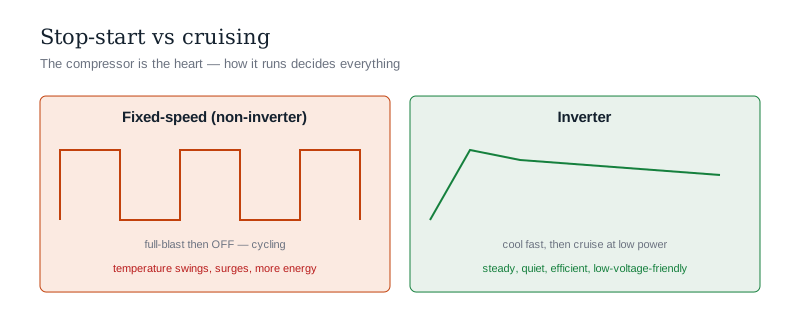
Everything flows from how the compressor works:
- Non-inverter (fixed-speed) — the compressor runs at full power or switches off. To hold a temperature, it cycles on–off–on–off, overshooting and undershooting. Each restart draws a surge and the temperature swings.
- Inverter — a variable-speed compressor modulates its output, running fast to cool the room quickly, then slowing to a gentle, steady low power to hold the temperature — rather than switching off and restarting.
Think of it as stop-start driving versus cruising: the fixed-speed unit repeatedly accelerates from zero; the inverter cruises efficiently at the right speed.
Why inverter is better
The modulation delivers real advantages:
- Energy saving — running steadily at low power (instead of full-blast cycling) uses significantly less electricity — the main reason to choose inverter, reflected in higher ISEER/star ratings.
- Quieter — no loud full-power cycling; it hums along gently.
- Steadier temperature — holds the set temperature closely, without the swings of on-off cycling — more comfortable.
- Better at low voltage — inverter units generally cope with voltage fluctuations better, often running without a stabiliser where the supply is reasonable.
- Gentler on the compressor — fewer hard restarts can mean less wear.
Does the higher price pay back?
The honest maths:
- Inverter ACs cost more upfront — the main barrier.
- They pay it back through lower running cost — because an AC runs for so many hours over Indian summers, the electricity saved typically recovers the premium within a couple of years, then keeps saving for the unit's life (quantify it with the running cost calculator).
- The more you run it, the faster the payback — for any regularly-used room, inverter wins clearly.
- Over the AC's life, an inverter is usually cheaper to own despite costing more to buy — the classic cost lesson.
When a fixed-speed AC still makes sense
The narrow case for non-inverter:
- Very occasional use — a guest room or rarely-cooled space, where the low upfront cost matters more than running-cost savings you'll barely accrue.
- Tightest budget — where the cheapest working unit is the priority and usage is light.
- For anything used regularly, inverter is the clear choice — the exceptions are genuinely occasional-use, low-budget situations.
The one-line answer
Inverter vs non-inverter is the most important AC choice, and it's about the compressor: a fixed-speed unit runs full-blast then switches off, cycling on-off with temperature swings and surges, while an inverter uses a variable-speed compressor that modulates — cooling fast then cruising at a gentle, steady low power. That modulation makes the inverter significantly more energy-efficient (its headline benefit), quieter, steadier in temperature, and better at coping with low voltage. It costs more upfront, but because an AC runs so many hours over Indian summers, the running-cost saving usually pays back the premium within a couple of years and keeps saving — so for any regularly-used room, inverter wins clearly, and only genuinely occasional-use, tight-budget situations justify a fixed-speed unit.
Where to go next
- The fundamentals: Air Conditioning Basics Guide.
- Quantify the saving: AC Running Cost Calculator.
- The other big choice: Split AC vs Window AC Guide.
- Buy well: How to Choose an Air Conditioner Guide.
References
- IS 1391 (Parts 1 & 2 : 2023) Room Air Conditioners, Bureau of Indian Standards.
- Bureau of Energy Efficiency (BEE) — Star Labelling & ISEER (inverter efficiency): https://beeindia.gov.in/
Savings and payback are indicative and depend on usage, tariff and model; verify the current BEE label. Installation and servicing are a qualified technician's work. Verify any standard's status via the BIS catalogue.
Export this guide
Related Guides — Deep-dive reading
Window AC Guide: The Simple, Affordable Single-Room Cooler
The case for the window AC — the all-in-one unit that's cheapest to buy and easiest to install, where it still makes sense over a split, what you give up in noise and efficiency, and how to choose and fit one well.
HVAC & CoolingBEE Star Rating for ACs: How to Read the Label and Buy Smart
The 1–5 star label on every air conditioner, decoded — what BEE stars and ISEER actually mean, why the ratings get tougher over time, how much a higher star really saves, and how to weigh the price premium against the running-cost saving.
HVAC & CoolingBLDC Fans: The Efficient Upgrade to the Ceiling Fan
The quiet revolution in the most-used appliance in an Indian home — how a BLDC ceiling fan uses roughly half the power of an ordinary fan, runs cooler and quieter with remote and speed control, whether the higher price pays back, and what to check when buying.
Electrical & WiringRelated Tools — Try Free
Window Energy Savings Calculator
Compare standard glazing vs Low-E and DGU windows — annual cooling savings, 10-year savings and payback.
Window CalculatorWindow Cost Calculator
Estimate window price plus installation by type, frame material, size, glass and quantity.
Window CalculatorVideo Door Phone Cost Calculator
Pick class, monitors, install stage and extras and get an indicative price band, the often-forgotten install and backup costs, the annual running cost and a five-year total for a home video door phone.
Cost Calculator