
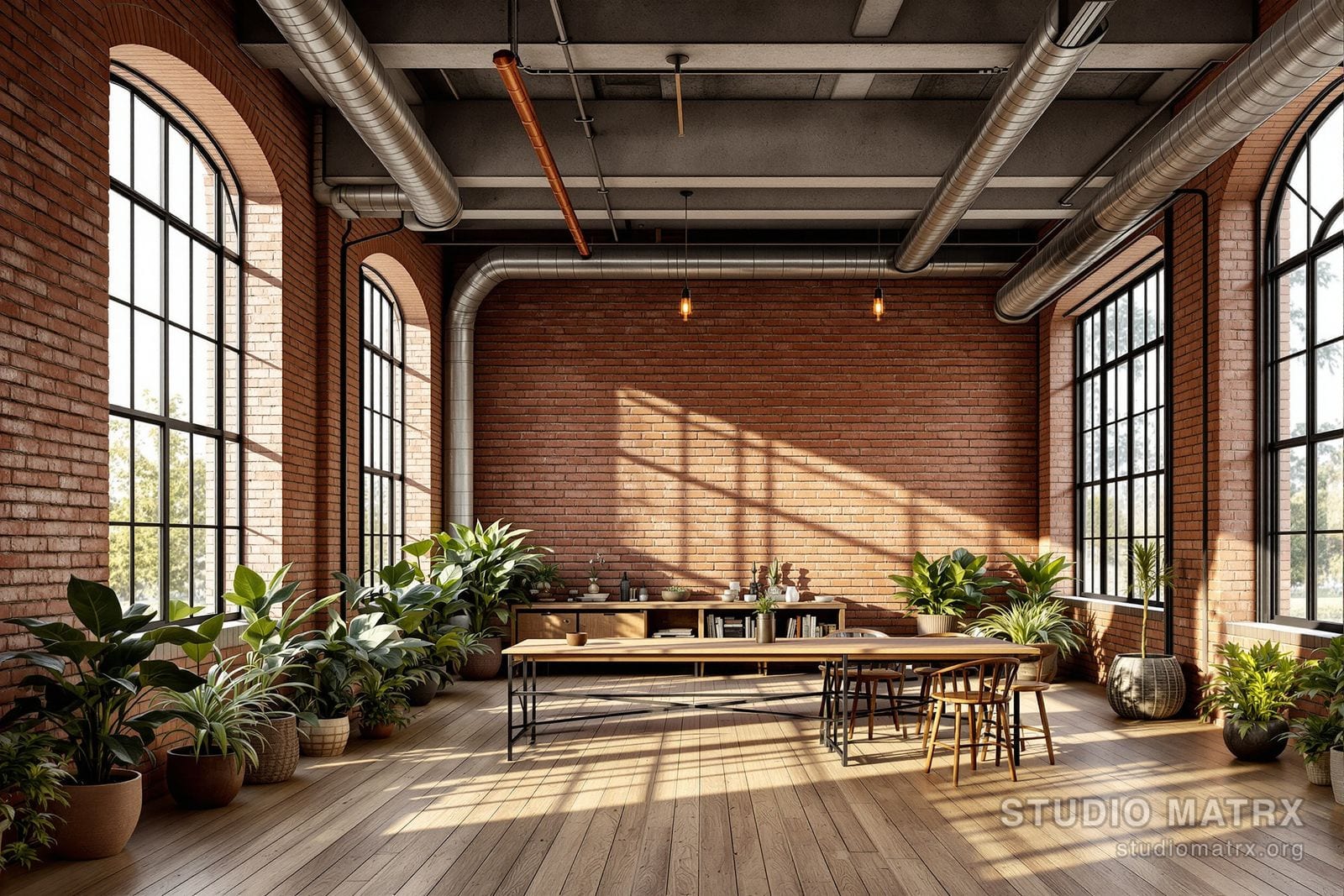
Industrial Style Architecture in India
Exposed brick, black steel and the loft aesthetic for the Indian home
The industrial look began as an accident. When artists in 1960s New York moved into abandoned factories and warehouses, they could not afford to hide the brick, the beams and the pipes - so they left them bare, and a style was born. Sixty years on, that raw warehouse aesthetic - exposed brick, black steel, concrete and honest ductwork - has become one of the most popular ways to fit out a modern Indian home, cafe or studio.
In India the style has two homes. One is genuine adaptive reuse: the old textile mills of Mumbai's Lower Parel, and warehouses across the metros, reborn as lofts, offices and restaurants. The other is brand-new apartments and houses that simply want the look - the openness, the materials and the unpretentious honesty of a working building. Either way, industrial style is less about a facade than about an interior attitude: show the structure, mix the raw with the refined, and let the materials do the decorating.
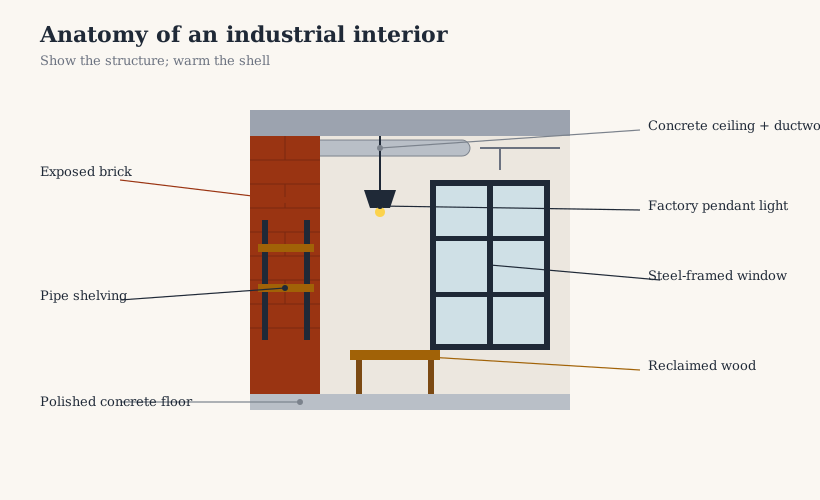
What defines it
Industrial style is the architecture of honesty, borrowed from the factory floor.
| Trait | What it looks like | The idea behind it |
|---|---|---|
| Exposed structure | Bare brick, concrete and steel left visible | The building's bones are the decoration |
| Open volumes | High ceilings, few partitions, mezzanines | The loose, loft-like space of a warehouse |
| Raw and reclaimed materials | Weathered wood, blackened metal, aged brick | Character and patina over polish |
| Honest services | Ducts, conduit and pipes left on show | Nothing concealed; everything legible |
The trick is balance. All-raw reads as cold and unfinished; the best industrial interiors warm the hard shell with wood, leather, textiles and plants, so the space feels lived-in rather than abandoned.
The design elements
A tight, recognisable palette of materials does the work.
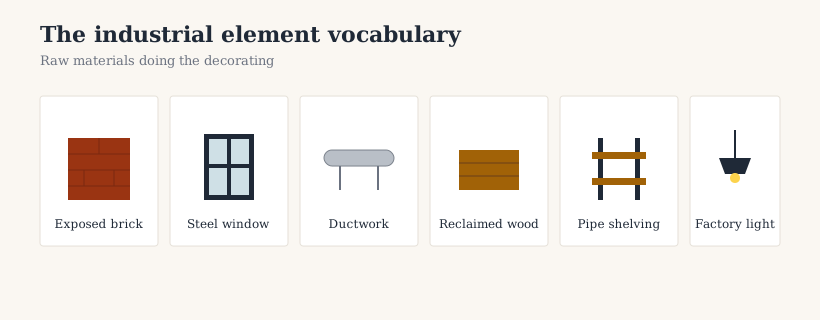
| Element | What it is | Note for Indian homes |
|---|---|---|
| Exposed brick | Bare or lightly sealed brick walls | Works beautifully with India's clay and fly-ash brick |
| Steel-framed windows | Slim black Crittall-style glazing and partitions | Striking, but large panes need shading from the Indian sun |
| Exposed concrete | Raw slabs, columns and polished floors | Thermal mass and easy maintenance - see concrete strength |
| Visible ductwork | Ducts, conduit and trunking left on show | Demands tidy, deliberate routing to look intentional |
| Reclaimed wood and metal | Aged timber, blackened-steel pipe shelving | The warmth that stops the look turning cold |
| Factory lighting | Edison bulbs, metal pendants, track | Pools of warm light against the hard shell |
Where it suits
Industrial is an urban, interior-led style, and in India it lands best in a handful of settings.
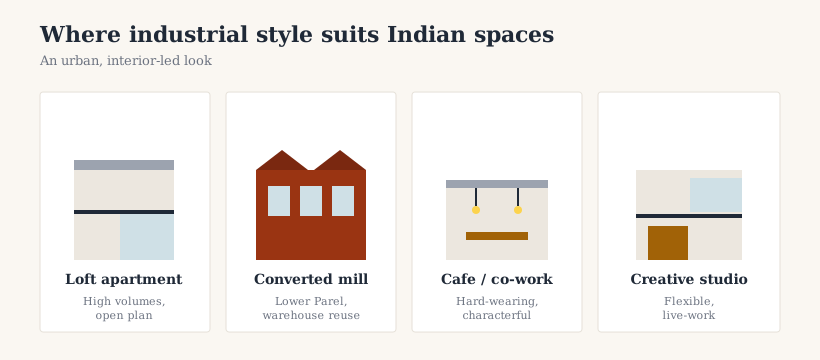
| Setting | Why it fits |
|---|---|
| Loft apartments and penthouses | High volumes and open plans suit the bare-structure look |
| Converted mills and warehouses | Lower Parel and metro warehouse conversions - the real thing |
| Cafes, restaurants and co-working | Hard-wearing, characterful, quick to fit out |
| Creative live-work studios | Flexible, robust, and forgiving of change |
Best for
Industrial style suits the homeowner who wants character without fuss, and durability without delicacy. It is ideal for:
- Urban apartments and penthouses that already have concrete structure to expose.
- Renovations of genuinely industrial buildings, where the bones are the whole point.
- Live-work and creative spaces, where robustness and openness matter more than polish.
It is a weaker fit where you want softness and quiet, or in homes that cannot supply enough warmth - wood, textiles, plants and good lighting - to offset the hard materials. And in the Indian climate, the big steel windows that define the look need real shading, or the rooms overheat. Done with restraint, though, it is one of the most forgiving and low-maintenance ways to make a modern space feel grounded and real - a close relative of minimalism with grit instead of gloss.
Where it comes from
Industrial style has no single architect - it grew bottom-up, from artists and entrepreneurs reusing the leftover buildings of the industrial age, first in New York and London, then everywhere. In India its truest expression is the adaptive reuse of Mumbai's mill lands and the warehouse districts of other metros, where the raw fabric of an older economy is given a second, creative life. For where it sits among India's other looks, see our Contemporary Indian Architecture guide and the Brutalist profile, with which it shares a love of honest concrete; the modern construction materials guide covers much of the palette.
Industrial style endures because it is honest and tough: it asks you to celebrate what a building is made of rather than hide it, and it rewards you with a space that ages well and demands little. Warm its hard shell with wood, light and life, and the old factory look becomes one of the most liveable ideas in the modern Indian home.
This profile refreshes every 12 months. Last verified: June 2026 · Next verify: June 2027.
Export this guide
Related Guides — Deep-dive reading
Industrial Interiors — A 2026 Style Guide for Indian Homes
Raw, honest, warm · Concrete, black metal, reclaimed wood · Loft character, liveable
Design StylesIndo-Contemporary Interiors — A 2026 Style Guide for Indian Homes
Modern shell, Indian warmth · Teak, brass, jaali · The urban India favourite
Design StylesModern Farmhouse Architecture in India
The clean gable, the deep verandah and the weekend home reimagined
Design StylesRelated Tools — Try Free
Cross-Ventilation Analyzer
Estimate airflow and air changes per hour (ACH) from room size, window areas, layout, and local wind — with NBC 2016 Part 8 compliance check.
Ventilation CalculatorMaterial Schedule Generator
Generate a room-wise finish schedule — walls, floors, ceilings, trim, and joinery by location.
Material ScheduleHealing View Impact Calculator
Evidence-Based Design dashboard quantifying the recovery impact of nature view + daylight factor on analgesic use, length of stay, and HCAHPS patient-experience uplift. Calibrated against Ulrich 1984 (Science), Park & Mattson 2008, and the CHD EBD evidence base.
EBD Calculator