

Home Loan Balance Transfer in India: When Refinancing to a Lower Rate Is Worth It (2026)
What a balance transfer really is, how to run the break-even before you switch lenders, the top-up option, the full process, and when it is smarter to just ask your own bank to re-price.
A home loan balance transfer is one of the few levers a borrower can pull, years into a loan, to cut the total interest paid. But it is not free money, and it is not always worth the effort. This guide explains what a transfer is, how to run the break-even that decides it, the top-up loan that usually rides along, the step-by-step process, and the cheaper first move most people forget: simply asking their current lender to lower the rate.
This is an educational explainer, not financial advice. Your actual interest rate, eligibility, processing and legal fees, and sanction are set by the lender and vary case to case. Interest rates move with the RBI repo rate and each lender's spread, and are always indicative here. Confirm every number with the bank in writing, tax questions with a CA or tax advisor, and any big decision with a financial planner before you act.
What a home loan balance transfer actually is
A balance transfer, sometimes called a home loan refinance or a "switch", is the process of moving the outstanding balance of your existing home loan from your current lender to a new one that offers a lower interest rate. The new lender pays off your old loan in full, takes over the mortgage on your property, and you start a fresh loan with them at the new rate.
Nothing about the house changes. The same property secures the same debt. What changes is who holds the loan, the interest rate you pay from that point on, and, because you are re-applying, a fresh round of paperwork and fees. If you are still learning the basics of how repayment works, start with our plain-language pillar on how home loans work in India and the guide to home loan types.
The appeal is simple. On a floating-rate loan, the interest you pay is by far the largest cost over the life of the loan, and it is front-loaded: in the early years most of every EMI is interest, not principal. If a rival lender offers even half a per cent less, the saving over a long remaining tenure can run into lakhs. But whether it beats the cost of switching is a maths question, not a feeling.
The break-even: when a transfer is genuinely worth it
Two conditions must both be true for a balance transfer to pay off:
1. A meaningful rate gap. The new rate has to be low enough, versus your current rate, that the interest you save is real money and not a rounding error.
2. Enough tenure left. You need enough years remaining for those monthly savings to accumulate past the one-time switching costs.
The switching costs are the catch. Expect a processing fee at the new lender, legal and valuation charges for the fresh property check, stamp or MOD costs in some states, and the intangible cost of restarting a fresh, front-loaded amortisation. Add them up, then compare against your monthly saving to find the break-even month, the point after which you are actually ahead.
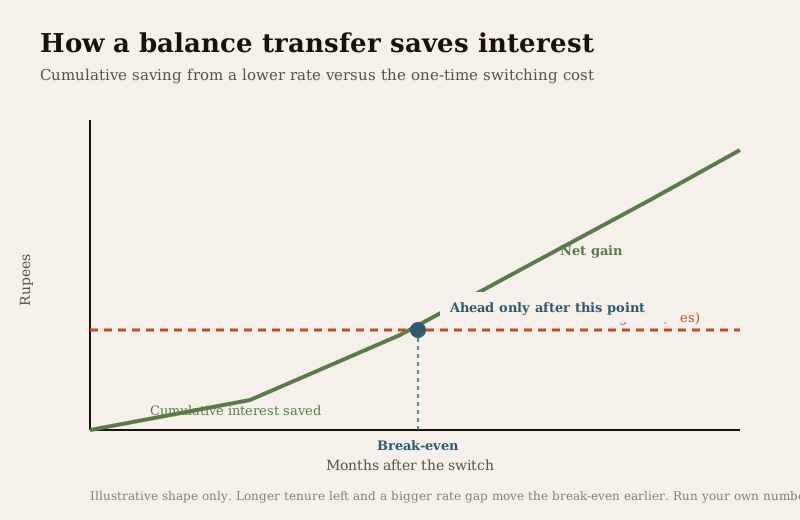
The table below is a simplified illustration of the trade-off. The numbers are indicative only, meant to show the shape of the decision, not to predict your case. Run your own figures on our EMI calculator using your real outstanding balance, both rates, and the tenure left.
| Rate gap (old minus new) | Remaining tenure | Verdict (illustrative) |
|---|---|---|
| Under 0.25 pct | Any | Rarely worth it. Fees usually eat the saving. Ask your bank to re-price first. |
| 0.25 to 0.5 pct | 15 or more years left | Often worth it. Long runway lets small savings compound past the costs. |
| 0.5 to 1 pct | 10 or more years left | Usually worth it. Do the break-even and confirm total fees in writing. |
| Over 1 pct | 7 or more years left | Strong case, subject to fees. Still confirm the new lender's spread will hold. |
| Any gap | Under 5 years left | Usually not worth it. Little interest remains; fees dominate. |
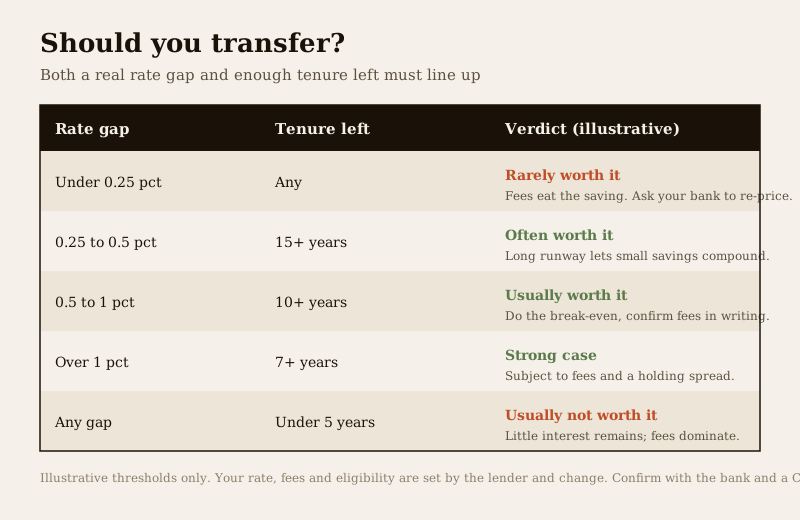
The single most common mistake is looking only at the rate gap and ignoring how much tenure is left. Late in a loan, most of your remaining EMIs are principal, not interest, so there is very little interest left to save, and the fixed switching cost can easily exceed it. A big rate gap with only a few years to go is often a bad transfer.
A quieter cost is the reset. When you refinance, you typically restart the loan and its front-loaded interest schedule. If you take a fresh long tenure to lower the EMI, you may pay more total interest even at a lower rate. Keep the tenure the same or shorter unless lowering the EMI is your specific goal, and see our guide to fixed versus floating interest to understand which rate structure you are actually switching into.
The top-up loan that usually comes with it
Most lenders court balance-transfer borrowers with a top-up loan: an additional amount, over and above your outstanding balance, sanctioned at, or close to, the home loan interest rate. Because it is secured against the same property, a top-up is far cheaper than a personal loan or credit-card debt, and it usually runs on the same long tenure.
A top-up can be sensible for a genuine home need, funding a renovation, or consolidating a costlier debt into a cheaper secured one. It becomes a trap when it is treated as a windfall for spending unrelated to the home, because you are borrowing more, for longer, secured against your house. Borrow the top-up only for something that justifies a long, secured loan, and keep the amount to what you actually need. Note that the tax treatment of a top-up depends entirely on how the money is used, and only a CA can tell you what, if anything, is deductible in your case.
The process, step by step
A balance transfer is essentially a fresh home loan application at the new lender, plus a foreclosure at the old one. The order matters, because the new lender's sanction has to be ready before the old loan is closed.
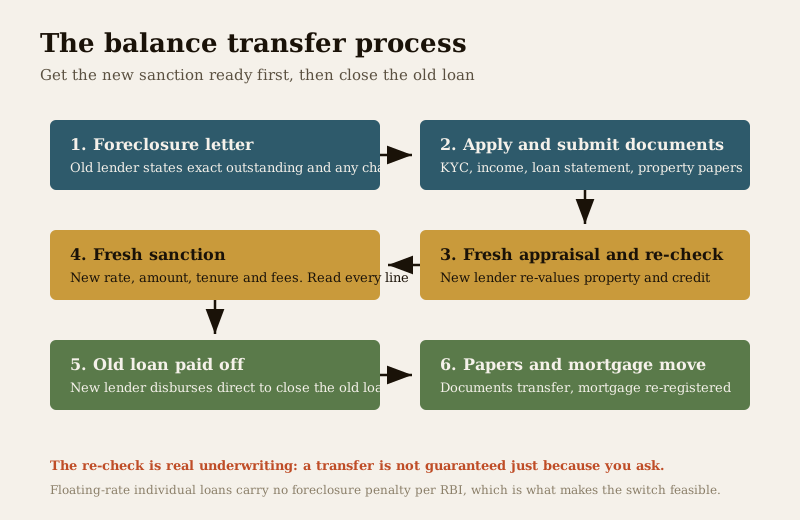
| Step | What happens | Who does it |
|---|---|---|
| 1. Get a foreclosure letter | Ask your current lender for a foreclosure or loan-closure statement showing the exact outstanding and any charges. | You and current lender |
| 2. Apply and submit documents | Apply to the new lender with KYC, income proof, existing loan statement, and the property papers. | You |
| 3. Fresh appraisal | New lender re-checks your eligibility and credit, and does a fresh legal and technical valuation of the property. | New lender |
| 4. Fresh sanction | New lender issues a sanction letter with the new rate, amount, tenure, and fees. Read every line. | New lender |
| 5. Old loan paid off | New lender disburses directly to the old lender to close the loan. | Both lenders |
| 6. Papers move | Original property documents move from the old lender to the new one, and the mortgage is re-registered. | Both lenders |
Two practical notes. First, the property re-check is a real underwriting event: the new lender can value the property or assess your eligibility differently from your original loan, so a transfer is not guaranteed just because you ask. Second, on a floating-rate home loan the RBI does not permit foreclosure or prepayment penalties for individual borrowers, which is what makes switching feasible in the first place. Our guide to prepayment and foreclosure covers how that closure works and how to get the "no dues" and lien-release paperwork right.
When NOT to bother, and the cheaper first move
A transfer is the wrong tool more often than borrowers assume. Skip it when:
- The rate gap is small, roughly a quarter of a per cent or less, because fees will likely swallow the saving.
- You are late in the tenure, with only a few years left, so there is little interest left to save.
- Your credit profile or the property valuation has weakened since your original loan, which could mean a worse offer or a rejection.
- You would stretch the tenure to lower the EMI, quietly raising your total interest even at a lower headline rate.
Before you apply anywhere, make the cheapest move first: ask your current lender to re-price your loan. Lenders would rather trim your spread than lose the account to a rival, and many will lower your rate for a small conversion or switch fee, no new paperwork, no valuation, no fresh mortgage. If your current rate has drifted above what the same bank offers new customers, a polite written request often closes most of the gap in a day. Treat a competitor's sanction letter as leverage. Try re-pricing first; transfer only if your own bank will not match a genuinely better offer elsewhere.
Key takeaways
- A balance transfer moves your outstanding loan to a new lender for a lower rate; the house and the debt stay the same, the rate and the paperwork change.
- Two conditions must both hold: a meaningful rate gap and enough tenure left for the monthly saving to beat the one-time switching costs.
- Run the break-even. Add up processing, legal, valuation, and MOD or stamp fees, then find the month your cumulative saving overtakes them.
- A top-up loan often rides along at near-home-loan rates; use it only for a genuine home need, never as a windfall.
- The process is a fresh sanction and property re-check at the new lender, then foreclosure at the old one, so the transfer is not guaranteed.
- Do not bother if the gap is tiny, you are late in the tenure, or your profile has weakened. Ask your own lender to re-price first.
- All rates, fees, and tax treatment here are indicative and change; confirm with the lender in writing and a CA before acting.
References
- Reserve Bank of India, guidelines on external benchmark-linked lending rates (EBLR) and the repo rate, rbi.org.in.
- Reserve Bank of India, direction that lenders may not levy foreclosure or prepayment charges on floating-rate loans to individual borrowers, rbi.org.in.
- National Housing Bank, borrower guidance on housing finance and fair-practices codes, nhb.org.in.
- CIBIL and other RBI-licensed credit bureaus, on how a new loan application affects your credit report, cibil.com.
- Studio Matrx, how home loans work in India, home loan types, fixed versus floating interest, and prepayment and foreclosure.
- Studio Matrx, EMI calculator, to run your own break-even on real figures.
Interactive · Should you switch?
9.25% → 8.40% on ₹40.0 L
Net benefit of switching
₹4.4 L
Worth transferring on these numbers.
Remaining interest — current lender vs after transfer.
Compares interest over the same remaining tenure and nets off the processing fee. Ignores MODT/stamp and legal charges, which vary by state. Illustrative — not financial advice.
Export this guide
Related Guides — Deep-dive reading
How Home Loans Work in India: The Full Journey from Apply to EMI (2026)
A plain-language map of the home-loan journey end to end - what a home loan is, the players, the key terms, how interest and EMI work, the application-to-disbursement steps, and the levers you actually control - with a loan-journey table and a key-terms glossary.
Home FinanceHome Loan Prepayment and Foreclosure in India: A Plain Guide (2026)
How paying extra into your home loan works - part-prepayment versus full foreclosure, whether to cut your EMI or your tenure, why prepaying early saves the most, and the honest trade-off against investing the money instead.
Home FinanceHome Loan Eligibility Explained: How Much Loan Can You Get in India (2026)
A plain-language explainer of home loan eligibility in India - how income and the FOIR or EMI-to-income rule, your age and tenure, credit score, existing debts, employment type, a co-applicant, property value and LTV all decide how much a lender will sanction - with an indicative illustration table and ways to improve your number.
Home FinanceRelated Tools — Try Free
Home Loan EMI Calculator — 2026
Monthly EMI, total interest, tax savings, and year-by-year amortization across 10 bank rates.
EMI CalculatorHome Loan Eligibility Checker
Eligible home loan amount across 12 Indian banks with rates, tenure, FOIR, and processing fees.
Loan CalculatorBefore & After Studio
Generate AI before-and-after renders to preview how your redesign could look.
DesignAI