
Fluidized Bed Reactor (FBR) for Wastewater: Working, Media & Trade-offs
How a fluidized bed reactor grows a dense biofilm on fine sand or carbon media kept suspended by upflow, packs enormous treatment into a tiny volume, and why it is the tool of choice for high-strength industrial streams rather than ordinary apartment sewage.
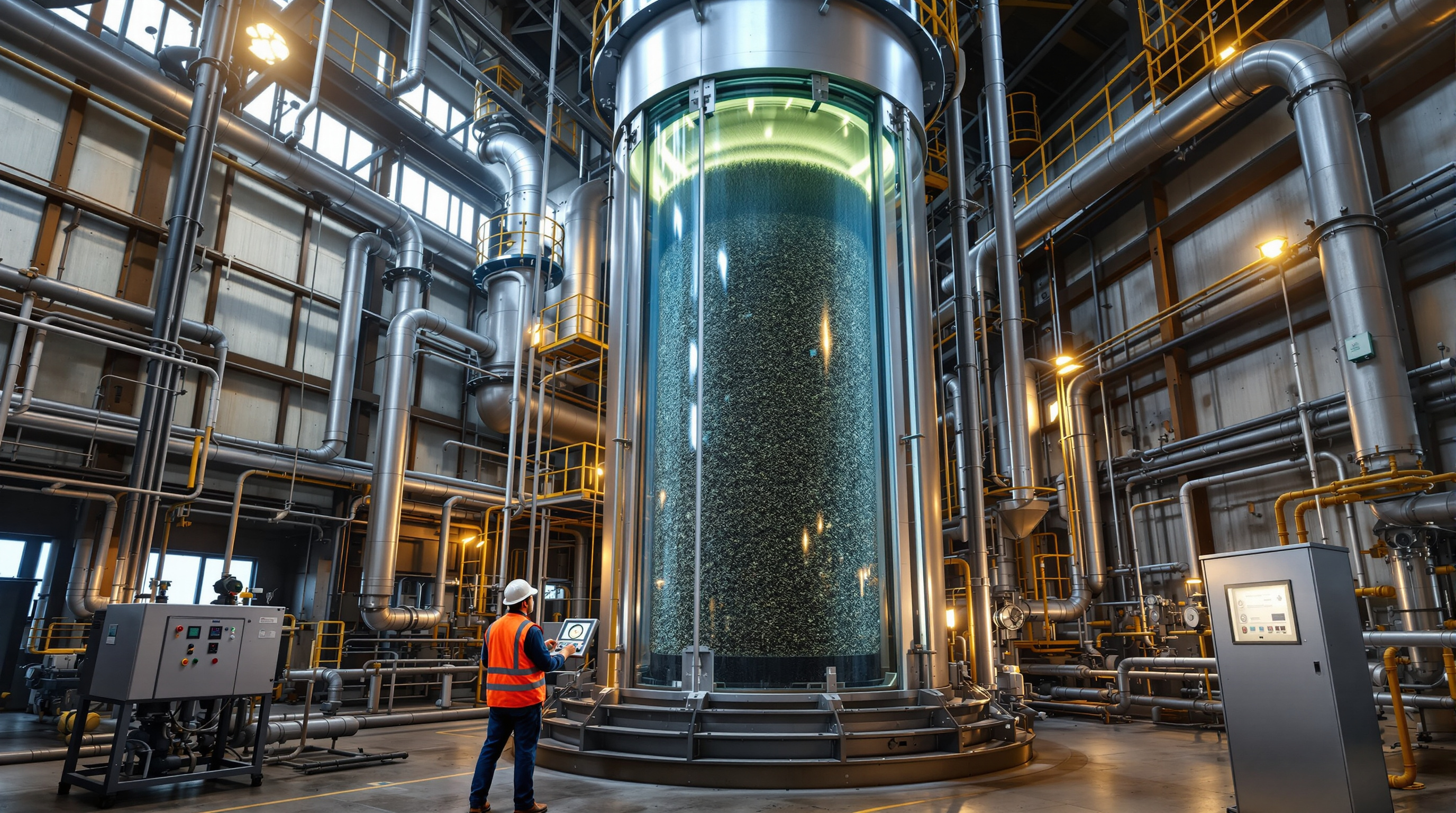
Most of the biological reactors in this library share one comfortable assumption: the wastewater is ordinary domestic sewage, flowing gently through a tank while microbes take their time eating it. The Fluidized Bed Reactor, or FBR, is built for the opposite problem — wastewater that is small in volume but ferociously concentrated, the kind a pharmaceutical unit, distillery or chemical plant produces. Where a conventional plant would need a vast tank, an FBR does the same work in a fraction of the space by cramming an extraordinary amount of biomass into a slender column of churning media.
This guide explains what a fluidized bed reactor actually is, how upflow keeps a bed of fine particles suspended, why that geometry gives such high treatment in such a small volume, and the honest trade-offs that keep it out of the average apartment basement. If you are new to biological treatment, start with the pillar guide What is a Sewage Treatment Plant?; this one assumes you know the difference between suspended and attached growth and zooms in on one intense, specialised way of doing the attached-growth job.
A fluidized bed reactor takes the FBR bargain to its extreme: coat billions of bacteria onto grains of sand so fine that a single tankful offers thousands of square metres of growing surface — then keep every grain dancing in the upflow so the whole bed behaves like a boiling liquid.
The core idea: a bed held up by flow
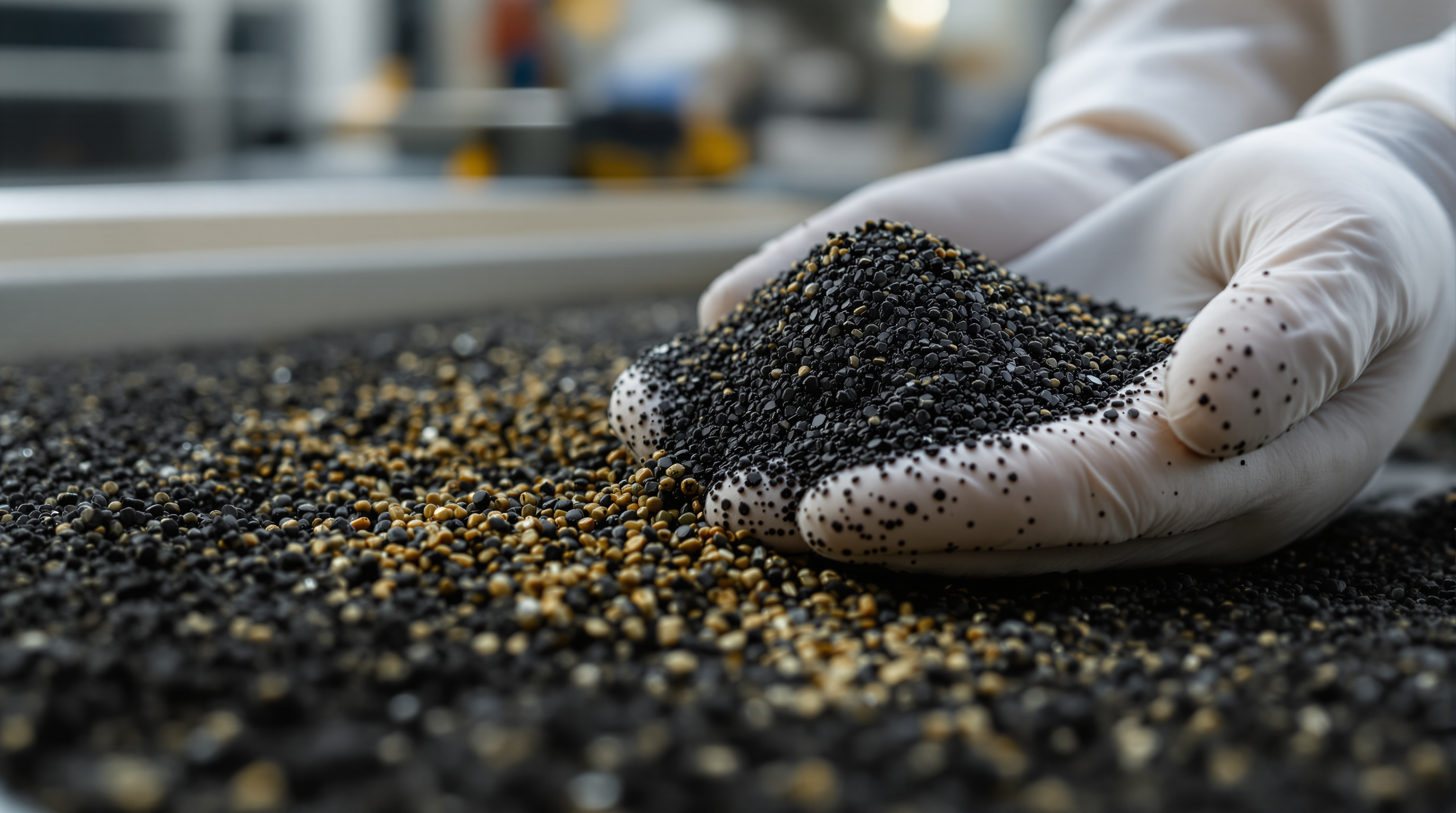
Every biofilm reactor grows its bacteria on a surface instead of floating them loose in the water. The Moving Bed Biofilm Reactor (MBBR) uses centimetre-sized plastic wheels; the FBR uses something far smaller and far more numerous — grains of sand, granular activated carbon (GAC) or anthracite, typically only a fraction of a millimetre across.
The name describes the trick. Wastewater is pumped upward through the reactor fast enough that the drag of the rising water just balances the weight of each particle. At that point the media stops behaving like a packed heap sitting on the floor and starts behaving like a fluid — the bed lifts, expands and the particles circulate freely, colliding and tumbling in suspension. This is fluidization. Push a little harder and the whole bed churns like a gently boiling pot; ease off and the grains settle back into a static bed.
Because the particles are so small, the amount of surface area they present is staggering. A cubic metre of fine media can offer several thousand square metres of area for biofilm — an order of magnitude more than plastic carriers, and orders of magnitude more than the free-floating flocs of the Activated Sludge Process. Coat every one of those grains with a living biofilm and the reactor holds a biomass concentration no suspended-growth tank can approach. That, in one sentence, is why an FBR treats so much in so little volume.
The media and the biofilm
The media is the heart of the system, so it is worth understanding what it does.
- Fine, dense carrier grains. Sand, GAC or anthracite are chosen because they are cheap, hard-wearing and heavy enough to stay in the column rather than wash straight out. GAC has a bonus: its own adsorption capacity buffers spikes of toxic or shock-load compounds, buying the biofilm time — useful for the awkward industrial streams the FBR is built for.
- Enormous protected surface area. The sheer number of tiny grains is what packs thousands of square metres of growing surface into a small footprint.
- A thin, self-regulating biofilm. As wastewater flows past, bacteria settle on the grains and multiply into a slimy coating. The constant grain-to-grain collisions scrub off excess growth, keeping the film young, thin and hungry — exactly what fast treatment needs.
There is a subtlety unique to the FBR. As biofilm thickens, a coated grain gets lighter and bulkier relative to its size, so it rides higher in the column. The heaviest, cleanest grains sit low; the most heavily-coated, lightest ones migrate to the top. The reactor naturally sorts itself — and the operator manages the bed by drawing off the lightest over-grown particles, stripping the excess biofilm, and returning the cleaned media to the bottom.
How a fluidized bed reactor works, step by step
The FBR is only the secondary (biological) stage. The wastewater still needs screening and equalisation ahead of it, and clarification, filtration and disinfection behind it — the standard journey. Inside the column itself:
1. Wastewater enters at the bottom through a distributor plate designed to spread the upflow evenly across the whole cross-section, so no channel of fast water and no dead zone forms.
2. Upflow fluidizes the bed. Because the raw feed alone is rarely enough to hold the bed up, a large stream of treated water is recirculated from the top back to the bottom, adding the velocity needed to keep every grain suspended. This recirculation loop is the defining feature — and the defining cost — of the design.
3. The biofilm devours the pollution. As water rises through the dense, churning bed, the bacteria absorb the dissolved organic load, driving down BOD and COD at a rate a conventional tank cannot match.
4. Oxygen is supplied — or deliberately withheld. In an aerobic FBR, oxygen (often pure O₂ rather than air, to pack in enough) is dissolved into the feed to power the bugs. In an anaerobic FBR, there is no oxygen at all: the microbes digest the waste and give off biogas, much like the UASB reactor but with the biomass anchored on fluidized media instead of forming its own granules.
5. Clean water leaves at the top, with any stray sloughed biofilm settling out in a downstream clarifier before the water moves on to polishing.
Aerobic vs anaerobic FBR
The same column runs two very different ways depending on the stream:
| Factor | Aerobic FBR | Anaerobic FBR |
|---|---|---|
| Oxygen | Supplied (often pure O₂) | None — sealed, oxygen-free |
| By-product | Excess biofilm/sludge | Biogas (energy recovery) |
| Best strength range | Moderate-to-high strength | Very high strength |
| Energy | High (oxygen transfer + pumping) | Lower (no aeration), but pumping remains |
| Typical use | Aerobic polishing of industrial effluent | First-stage treatment of concentrated organic waste |
For very concentrated streams the two are often used in series: an anaerobic FBR knocks down the bulk of the load and yields biogas, then an aerobic stage polishes what remains.
Where it fits — and where it does not
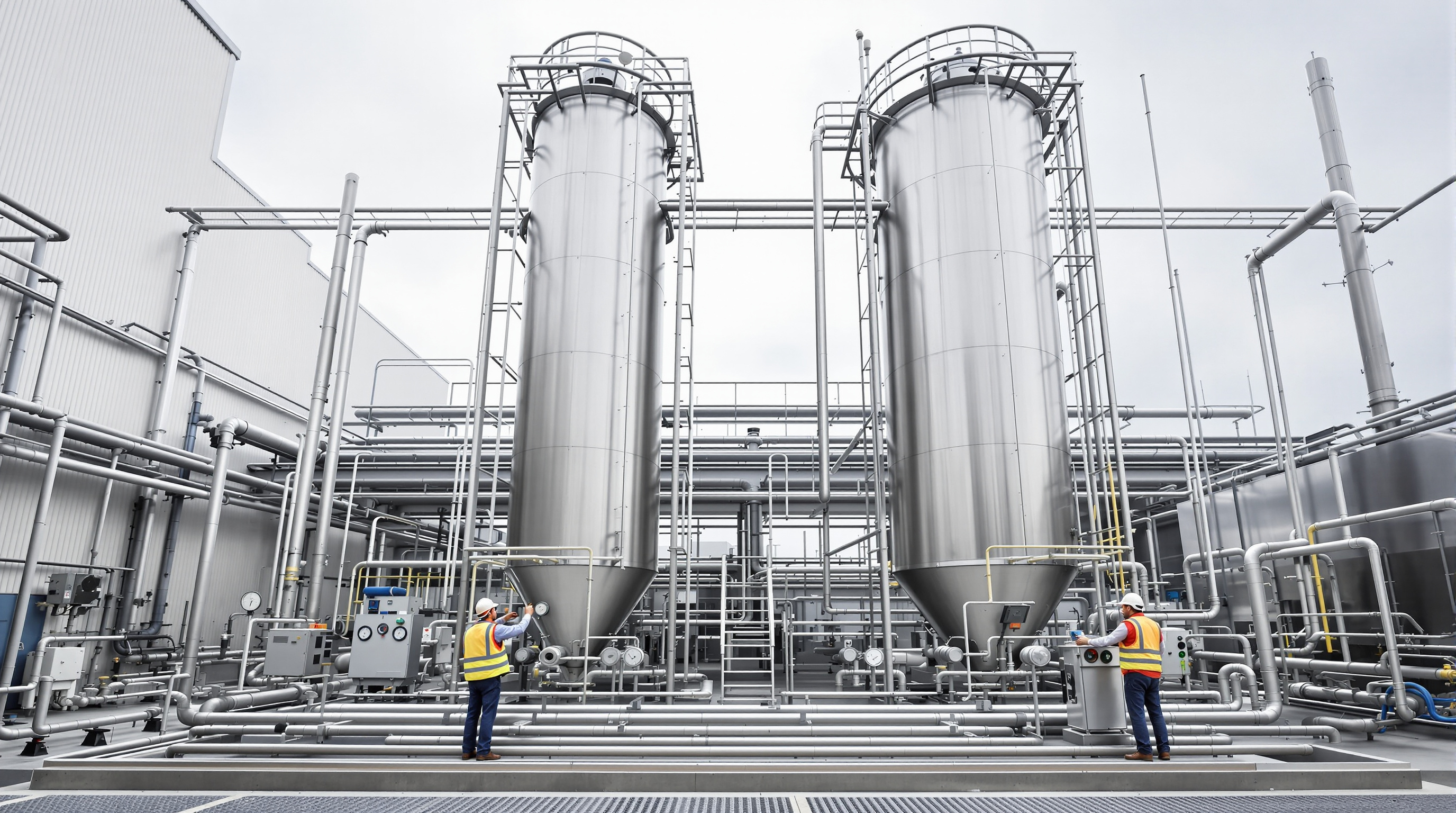
The FBR earns its keep on high-strength, low-volume industrial wastewater: pharmaceutical, distillery, food and beverage, and chemical effluents where the organic load is punishing and floor space is scarce or expensive. Its strengths line up neatly with that job:
- Very high volumetric loading — it treats far more organic load per cubic metre than ASP, MBBR or UASB.
- A tiny footprint — a slender vertical column instead of a sprawling tank farm.
- A dense, stable biomass that resists washout and, with GAC media, tolerates toxic shocks that would poison a suspended-growth plant.
But the same design carries real limitations, which is why you will almost never see an FBR under a residential building:
- Pumping energy. Holding the bed fluidized demands continuous, high-rate recirculation. The pumps run hard around the clock, and the energy bill is high — the opposite of what an apartment wants. If you are weighing power draw across technologies, the Energy Benchmark Calculator is the place to start.
- Delicate hydraulic control. Too little upflow and the bed collapses; too much and media washes out of the top. As biofilm grows, particle density drifts, so the operating window is narrow and needs constant, skilled attention.
- Media loss and operator skill. Grains do escape, and managing biofilm thickness, bed expansion and the distributor plate calls for genuine process expertise — not the modestly-trained staff who run most decentralised STPs.
- Overkill for dilute sewage. For ordinary domestic wastewater the FBR is expensive complexity solving a problem you do not have; MBBR, SBR or a plain ASP will treat it more cheaply and far more forgivingly.
The bottom line
A fluidized bed reactor is the attached-growth idea pushed to its logical extreme: grow the treatment bacteria as a biofilm on grains of sand or carbon so fine that a small column holds a colossal surface area, then keep the whole bed suspended in upflowing water so it behaves like a churning liquid. The pay-off is exceptional treatment in a minimal footprint — which makes the FBR a specialist's tool for the concentrated, difficult effluents of industry, not a fixture of the residential basement. Where the load is fierce and land is dear, few reactors do more with less.
From here, compare the FBR with its gentler attached-growth cousin in the MBBR guide, and with the anaerobic high-strength alternative in the UASB reactor guide. To browse the full range of processes, visit the Sewage Treatment Plants guide library.
Export this guide
Related Guides — Deep-dive reading
Moving Bed Biofilm Reactor (MBBR): Media, Working & Benefits
The most popular STP technology in Indian apartments, explained: how thousands of free-floating plastic carriers grow a living biofilm, why that packs high treatment into a small tank, what the media fill ratio means, and how MBBR compares to ASP and MBR.
Sewage Treatment PlantsUpflow Anaerobic Sludge Blanket (UASB): Anaerobic Sewage Treatment Explained
The no-oxygen reactor where sewage flows up through a blanket of granular sludge, destroying pollution while producing biogas and using almost no energy — how the sludge blanket and gas-solid separator work, why Indian municipal STPs favour it, and why it always needs an aerobic polishing step.
Sewage Treatment PlantsAnaerobic Baffled Reactor (ABR): The Low-Energy Heart of DEWATS Explained
A series of baffled compartments where sewage snakes up and down beneath a blanket of anaerobic sludge, destroying pollution with no power, no moving parts and almost no attention — how the baffles and sludge blanket work, why DEWATS schemes across India are built around it, and why it always needs a polishing step to finish the job.
Sewage Treatment PlantsRelated Tools — Try Free
Apartment STP Planner
Plan an apartment complex sewage treatment plant from flats and occupancy — get population load, sewage flow, recommended STP capacity in KLD, treatment technology and approximate space.
PlannerIndustrial Wastewater Treatment Planner
Pick your dominant industrial wastewater and daily flow to see whether you need an STP or ETP, a 1–5 treatment complexity rating, and how rough capex scales.
PlannerPopulation Equivalent (PE) Calculator
Convert an organic pollution load into Population Equivalent from flow and BOD concentration — the BOD load in kg/day and equivalent number of people.
STP Calculator