
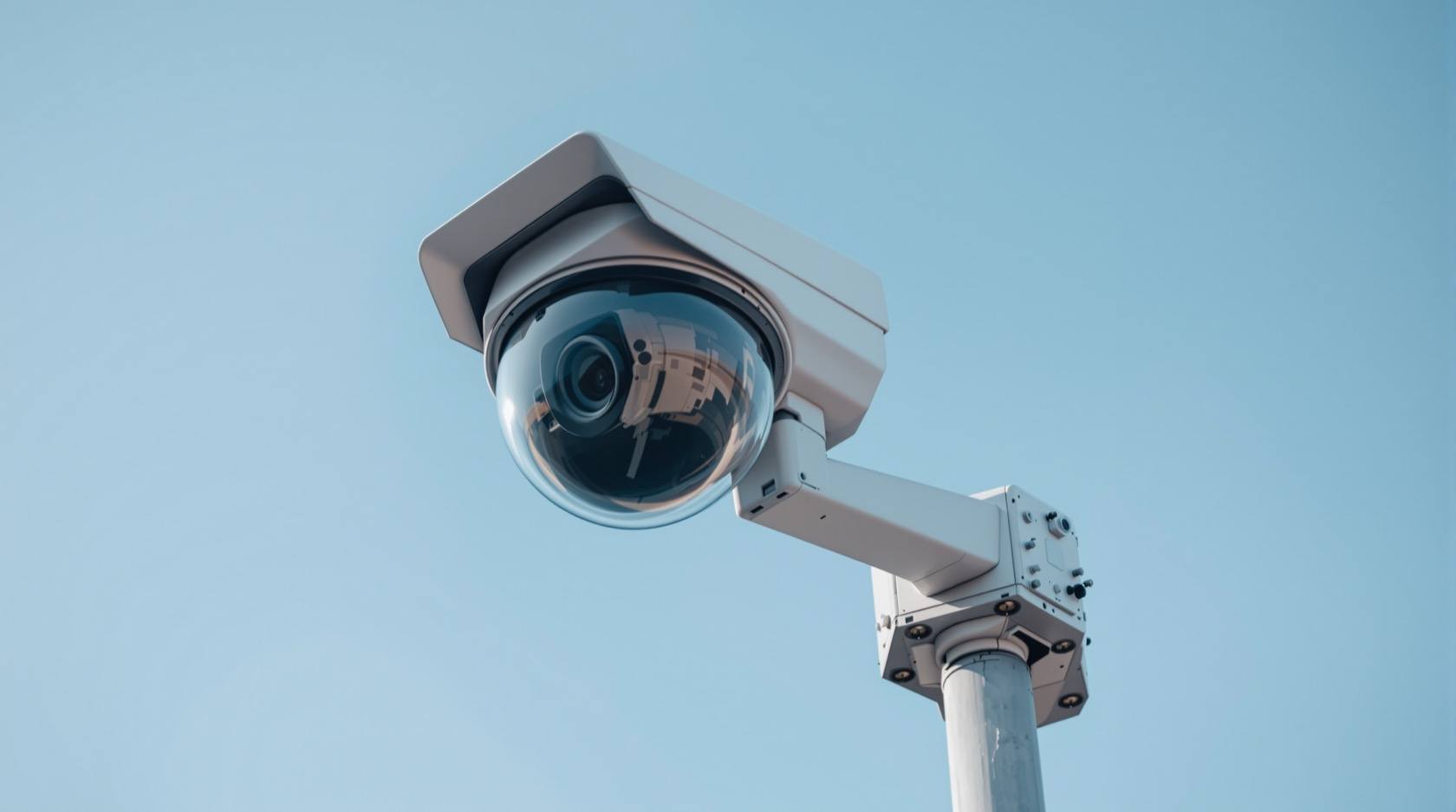
Fixed vs PTZ Camera in India (2026): Which One Actually Guards Your Home?
The tempting choice between several plain fixed cameras and one motorised pan-tilt-zoom that can swivel and zoom in. What each really does, how they compare on coverage, cost, detail, reliability and who operates them — and the honest verdict on why a home is almost always better served by fixed.
Stand in a CCTV showroom and the salesman will steer you, almost every time, towards the clever one: a PTZ camera — pan, tilt, zoom — that swivels on a motor, sweeps the whole compound and zooms in to read a face across the yard. Next to it sits a plain fixed camera that just stares at one scene and never moves. One of them looks like the future and the other looks like a doorbell. So why do most security professionals, asked to protect an ordinary home, quietly fit the plain ones?
Because the two are answering different questions. A fixed camera answers "what happened at this spot?" — always, whether anyone is watching or not. A PTZ answers "let me look closer over there" — but only where it happens to be pointing at that moment. The honest answer to fixed versus PTZ is that it depends on whether a person is driving the camera, and on a home nobody is. That single fact decides most of it, and this guide walks through why.
Scope and how to read this. This is a neutral head-to-head to help you choose the right kind of camera, not a sales pitch for the flashier one or a price list. Both types are legitimate and each wins in the right setting — the mistake is buying a PTZ for a job that wants fixed cameras. It is not a buying or cost guide; for choosing a camera end to end see the wider selection guide cross-linked below. Cameras and their footage are personal data under the Digital Personal Data Protection Act, 2023 — point them at your own property, never into a neighbour's windows or a public street you do not control, and put up notice where people are recorded. Have a qualified installer mount and configure anything at height or outdoors.
What each one is
A fixed camera points at one scene and stays there. Its lens is set once — a gate, a front door, a driveway, a back yard — and from then on it records everything that happens in that frame, all day, every day, with no one touching it. It has no motor. Its field of view is whatever the lens gives it, wide or narrow, and that view never changes. The great virtue hides in that simplicity: because it never looks away, a fixed camera cannot miss what happens in its scene. If something occurs at the gate, the gate camera saw it, full stop.
A PTZ camera ("pan-tilt-zoom") is a motorised camera in a dome that can rotate left and right (pan), angle up and down (tilt) and zoom its lens in and out. A person at a control station can drive it live to follow someone across a car park, or zoom in to read a number plate a hundred metres away. Left alone, it can run an "auto-tour" — a preset patrol that swings from view to view on a timer, or it can sit parked on one preset position. Its power is reach and detail: one PTZ can survey a very large area and then magnify any part of it on demand. That is genuinely impressive, and it is exactly why it gets oversold.
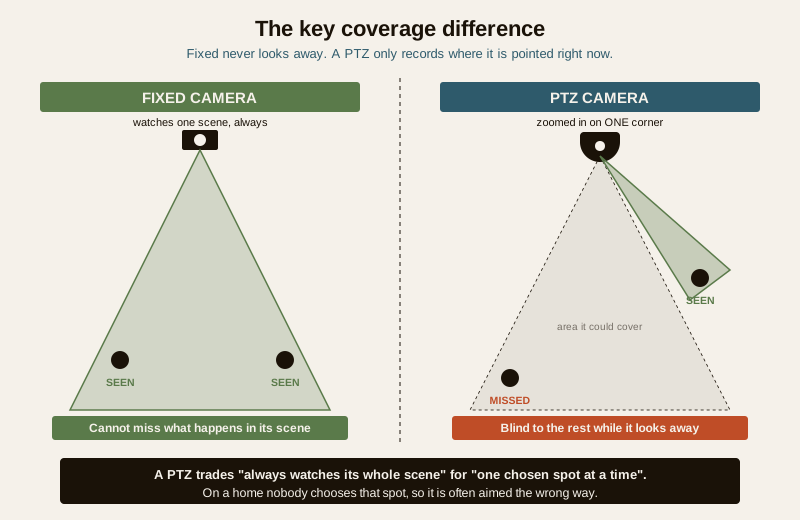
The catch is built into how it works, and it is the single most important thing to understand before you spend: a PTZ only records where it is currently pointed. When it swings east to look at the driveway, it is blind to the west gate. When it zooms in to inspect one corner, everything outside that narrow zoom is unrecorded. A PTZ trades the fixed camera's "always watching its whole scene" for "watching one chosen spot at a time, very well". If nobody is choosing that spot in real time, it is often pointed at the wrong place when it matters.
The head-to-head
Set the two side by side across what actually differs in practice. Read it as trade-offs, not a scoreboard — each has real strengths, and they suit very different situations.
| Dimension | Fixed camera | PTZ camera |
|---|---|---|
| Coverage model | Always watches its whole scene; nothing in frame is missed | Records only where it is pointed; can miss an incident while looking elsewhere |
| Detail on demand | Fixed; you see whatever the set view captures | Can zoom in to read a distant plate or face — its standout strength |
| Area per camera | Covers one scene; you fit several to cover a property | One unit can survey a very wide area, but one spot at a time |
| Cost | Much cheaper per camera | Considerably dearer for the camera, mount and cabling |
| Moving parts and reliability | No motor; solid, long-lived, little to go wrong | Motor and gears wear over years; more to fail and service |
| Who operates it | No one needs to; it just records | Shines with a live operator or control room driving it |
| On a home, unattended | Does its whole job untouched | Usually sits on one preset — a costly fixed camera with a motor |
| Best at | Reliable, always-on coverage of a known spot | Live-driven surveillance of a large area, and zoom-in inspection |
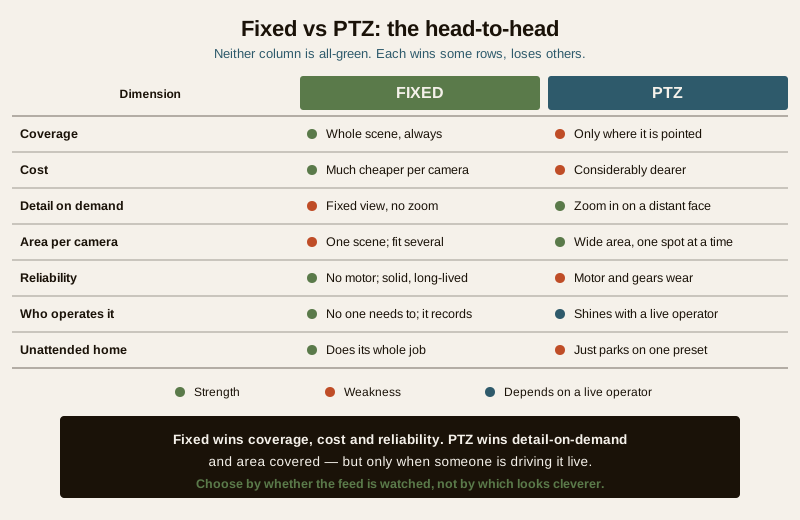
Two rows carry most of the decision. The first is coverage model. A fixed camera's whole value is that it never looks away — the gate camera is always on the gate. A PTZ's motor is a double-edged gift: it can look anywhere, which means at any given second it is not looking almost everywhere. On a busy monitored site a human uses that to follow the action; on an unwatched home it just means the one camera is often aimed away from where the trouble starts.
The second is who operates it. A PTZ is a tool for an operator. Its zoom, its tracking, its ability to follow a person across a wide yard all assume someone is at a screen making it do those things in the moment. Give it that operator — a control room, a gatehouse guard, a security desk — and it is superb. Take the operator away and most of its cleverness goes to sleep: it parks on a single preset and behaves like a fixed camera that cost several times as much and has a motor waiting to fail.
The honest home warning. On a typical home, no one is watching the live feed and no one is driving the PTZ. It ends up parked on one view almost all the time — so you have paid a premium for detail-on-demand that no one is on hand to demand. Worse, if it is set to auto-tour, it is guaranteed to be looking the wrong way for part of every cycle. For a home, several fixed cameras that each never blink almost always beat one roving PTZ.
Where a PTZ genuinely earns its place
None of this makes PTZ a bad camera — it makes it a specialised one. It is the right choice, clearly, in three settings:
- Large areas with a live operator. A big compound, a commercial car park, a factory yard, a gated community gatehouse or a security control room with someone at the monitors: here a PTZ is in its element. The operator sweeps the wide area, spots something, and drives the camera to follow and zoom in on it live. This is the job PTZ was built for, and one PTZ can replace several fixed cameras when a human is steering it.
- A supplementary "zoom-in" camera alongside fixed ones. A common professional pattern is fixed cameras doing the reliable always-on coverage of every entry and boundary, plus one PTZ as an extra pair of eyes to zoom in on anything the fixed cameras flag. The PTZ adds detail; it never replaces the fixed coverage underneath it. This is the only PTZ role that makes sense on a serious home setup, and even then only after the fixed cameras are all in place.
- Watching a wide, distant scene where reach matters. A long boundary, a large open plot or a far perimeter where you occasionally need to magnify a distant point — and where someone will actually look — can justify a PTZ's zoom that a fixed lens cannot match. For how that zoom itself works and its limits, see CCTV optical vs digital zoom.
For the full picture of what a PTZ is, how it is controlled and where it fits, see the dedicated PTZ CCTV cameras guide. The theme across all three cases is the same: PTZ pays off when someone is driving it, or when it merely tops up fixed cameras that are already covering everything.
Which suits whom
This is where the choice actually gets made — by the setting and who is watching, not by which looks cleverer in the shop.
- Almost any home — fixed. A house, a flat, a villa or a small compound is covered by fixed cameras: one on the gate, one on the front door, one over the driveway, one on the back. Each never looks away, they are far cheaper, and there is nothing to wear out. Nobody is sitting at a screen to drive a PTZ anyway, so its main advantage never gets used.
- Any spot that must never be missed — fixed. The gate, the front door, the cash counter, the main entry: these want a camera that is glued to that scene forever, which is precisely what a fixed camera is and precisely what a PTZ is not.
- A large compound, parking or commercial site with a control room — PTZ (plus fixed). Where a guard or operator actually watches live, a PTZ lets one person survey a big area and zoom in on demand — with fixed cameras still covering the fixed high-risk points underneath.
- A serious home wanting extra reach — mostly fixed, one PTZ as a top-up. If a large property genuinely needs to magnify a distant boundary occasionally, add a single PTZ as a supplement after every entry and edge already has its own fixed camera. Never let the PTZ be the coverage.
- A tight budget — fixed, without hesitation. Your money buys several always-watching fixed cameras or one roving PTZ that is often pointed away. For protection per rupee, several fixed cameras win easily.
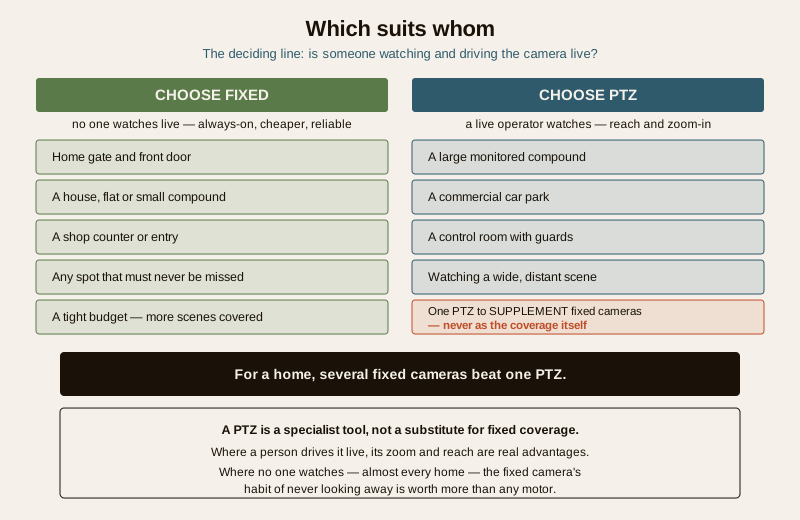
Notice the pattern: the deciding line is is someone driving it? Where a live operator watches, the PTZ's reach and zoom become real advantages. Where no one watches — which describes almost every home — those advantages sleep, and the fixed camera's stubborn habit of never looking away is worth more than all the motors in the world.
How to decide
Do not choose by which camera sounds more advanced. Run your situation through four plain questions:
1. Will anyone watch and drive the camera live? If yes — a control room, a gatehouse, a guard at a desk — a PTZ can earn its keep. If no, as at nearly every home, its main power is wasted; choose fixed.
2. Does this spot need to be covered every second? A gate, a door, a counter must never be missed — that is a fixed camera's job, because a PTZ looking elsewhere is a gap. Cover the must-not-miss spots with fixed first, always.
3. Is it the coverage, or an extra? If a camera is doing the actual guarding, make it fixed. A PTZ is only sound as a supplement on top of complete fixed coverage — never as the thing standing between you and a break-in.
4. What does the budget buy? The same money is several always-on fixed cameras or one roving PTZ. For a home, more scenes reliably watched beats one scene watched brilliantly and the rest missed.
A PTZ is not a substitute for fixed coverage — it is a specialist tool for people who watch live or a top-up for systems that already have their bases covered. Fit whichever you pick into the whole-camera decision — resolution, lens, day-night performance, siting — with how to choose a CCTV camera, and note that the fixed-versus-PTZ question is separate from the housing question of dome vs bullet camera.
The honest bottom line
Fixed versus PTZ looks like plain against clever, but it is really always-watching against watching-one-spot-at-a-time. The fixed camera is the cheaper, more reliable, no-moving-parts choice that never looks away — which is exactly what guarding a home is about. The PTZ is a magnificent tool in the hands of a live operator over a big area, and a fine supplementary zoom on a well-covered site, but on an unwatched home it collapses into an expensive fixed camera with a motor. For almost every home, several fixed cameras beat one PTZ, and a PTZ is never a replacement for fixed coverage — at most an addition to it.
Key takeaways
- Fixed watches its whole scene always; PTZ records only where it is pointed — a PTZ can miss the incident while looking elsewhere, and that is the decisive difference.
- A PTZ shines only with a live operator — a control room, gatehouse or guard driving it; on an unwatched home it just parks on one preset and wastes its main advantage.
- PTZ is dearer and has a motor that wears — fixed cameras are cheaper, solid and long-lived.
- PTZ's real strengths are zoom-in detail and covering a large area for a watching operator — genuine advantages, but only where someone is watching.
- For a home, several fixed cameras almost always beat one PTZ — more scenes reliably watched beats one scene watched brilliantly while the rest go unrecorded.
- A PTZ is a supplement, never the coverage — cover every must-not-miss spot with fixed cameras first; add a PTZ only as an extra, never as the guard itself.
Where to go next
- PTZ CCTV cameras — the full guide to what a PTZ is, how it is controlled and where it fits.
- How to choose a CCTV camera — fit the fixed-or-PTZ decision into the whole-camera choice: resolution, lens, day-night and siting.
- CCTV optical vs digital zoom — what a PTZ's zoom really delivers, and its limits.
- Dome vs bullet camera — the separate housing decision that sits alongside this one.
- The security comparison guide and the compare sub-hub for more head-to-heads, the CCTV sub-hub for siting and coverage, and the main security hub for the whole picture.
References
- Digital Personal Data Protection Act, 2023 — home and business CCTV records personal data; record only your own property, avoid neighbours' private space and public areas you do not control, post notice where people are recorded, and secure the footage. Verify current provisions at https://www.meity.gov.in/
- Manufacturer datasheets for fixed and PTZ cameras — the pan/tilt range, optical zoom factor, preset and auto-tour behaviour, and ingress-protection rating that determine what a given camera can and cannot do; check these on the specific model before siting it, especially the difference between optical and digital zoom.
This is an educational comparison to help you choose a type of camera, not a buying, pricing or installation manual, and not legal advice. Both fixed and PTZ cameras are legitimate; the right one depends on whether the feed is watched live and on the setting. Cover must-not-miss spots with fixed cameras, treat a PTZ as a supplement, have a qualified installer mount and configure cameras at height or outdoors, and confirm your recording practice against the DPDP Act, 2023 before you deploy.
Export this guide
Related Guides — Deep-dive reading
PTZ Cameras: When One Moving Camera Is Worth It in India
What a PTZ (pan-tilt-zoom) camera really does, the blind-spot catch every homeowner must understand, and where a motorised zoom camera earns its keep versus plain fixed cameras.
SecurityCCTV vs Physical Guarding in India (2026): Cameras, Guards or Both?
An honest head-to-head between electronic CCTV surveillance and manned physical guarding for a home, villa, gated community, shop or small site in India — what each really does, where each wins, and why the best answer is almost always a layered combination rather than one or the other.
SecurityHow to Choose a CCTV Camera (2026): The Homeowner's Decision Guide for India
Cut through the spec-sheet noise and choose the right CCTV camera for each spot around an Indian home. What actually matters — sensor and low-light performance, lens and field of view, form factor, IP and IK ratings, honest smart features — and the marketing claims to ignore.
SecurityRelated Tools — Try Free
CCTV Camera Coverage & Count Calculator
Estimate how many CCTV cameras you need, the NVR channels, storage in TB for your retention period, and an indicative all-in cost with GST.
CCTV CalculatorCCTV Lens & Field-of-View Calculator
Focal length, sensor and resolution to field-of-view angle, scene width and DORI detect/observe/recognise/identify distances.
Lens & FoVStamp Duty Calculator — All Indian States
Stamp duty + registration charges for all 28 states and 8 UTs — gender concessions, urban/rural variants, metro cess built in.
Stamp Duty