
Fire Sprinklers vs Water Mist in India (2026): Which Suppression System, and When?
Traditional sprinklers soak a fire with larger water droplets on mature, code-standard infrastructure; water mist uses very fine fog that cools and displaces oxygen with far less water. An even-handed, India-grounded head-to-head that ends in a which-suits-which-application verdict, chosen to the code and the hazard.
You are protecting a building, or a specific hazard inside it, and the automatic water-based suppression question has narrowed to two families: a traditional fire sprinkler system, or a water mist system. Both put water on a fire automatically; they do it in very different ways, at very different water volumes, on very different infrastructure and budgets. Neither is a gimmick, and neither is a universal answer.
The honest one-line answer: it depends on the hazard, the occupancy, how sensitive the contents and the building are to water, how much water supply you can actually get to the site, and what the National Building Code and your fire officer require. Sprinklers are the proven, standardised default for most general buildings; water mist is the specialist tool where water must be minimised or where a particular hazard rewards fine-droplet cooling. This is the even-handed head-to-head, what each system is, how they compare across the things that matter, and, most usefully, which suits which application. It is emphatically not a choice you make on price.
Scope and how to read this. This is a neutral decision guide for facility managers, builders, architects, developers and consultants, comparing two legitimate engineered life-safety systems, not a sales pitch, not a price list and not an installation manual. Both are valid; each wins in real contexts, and this guide gives each its true strengths and weaknesses. Crucially, a suppression system is a life-safety choice made to the National Building Code (NBC = SP 7:2026), to the specific hazard and occupancy, to the available water supply, and to the fire officer's approval, and it must be DESIGNED by a licensed fire-protection engineer, never selected as "the cheaper one". For deeper single-system detail see the sprinkler systems guide and the water mist systems guide; for the wider set of security-and-safety comparisons, the security comparison pillar.
What each system actually is
Both are automatic, water-based suppression systems fed from a pump and a stored water supply through fixed pipework to nozzles above the protected space. What differs is the droplet, the water volume, and the pressure, and almost everything else follows from that.
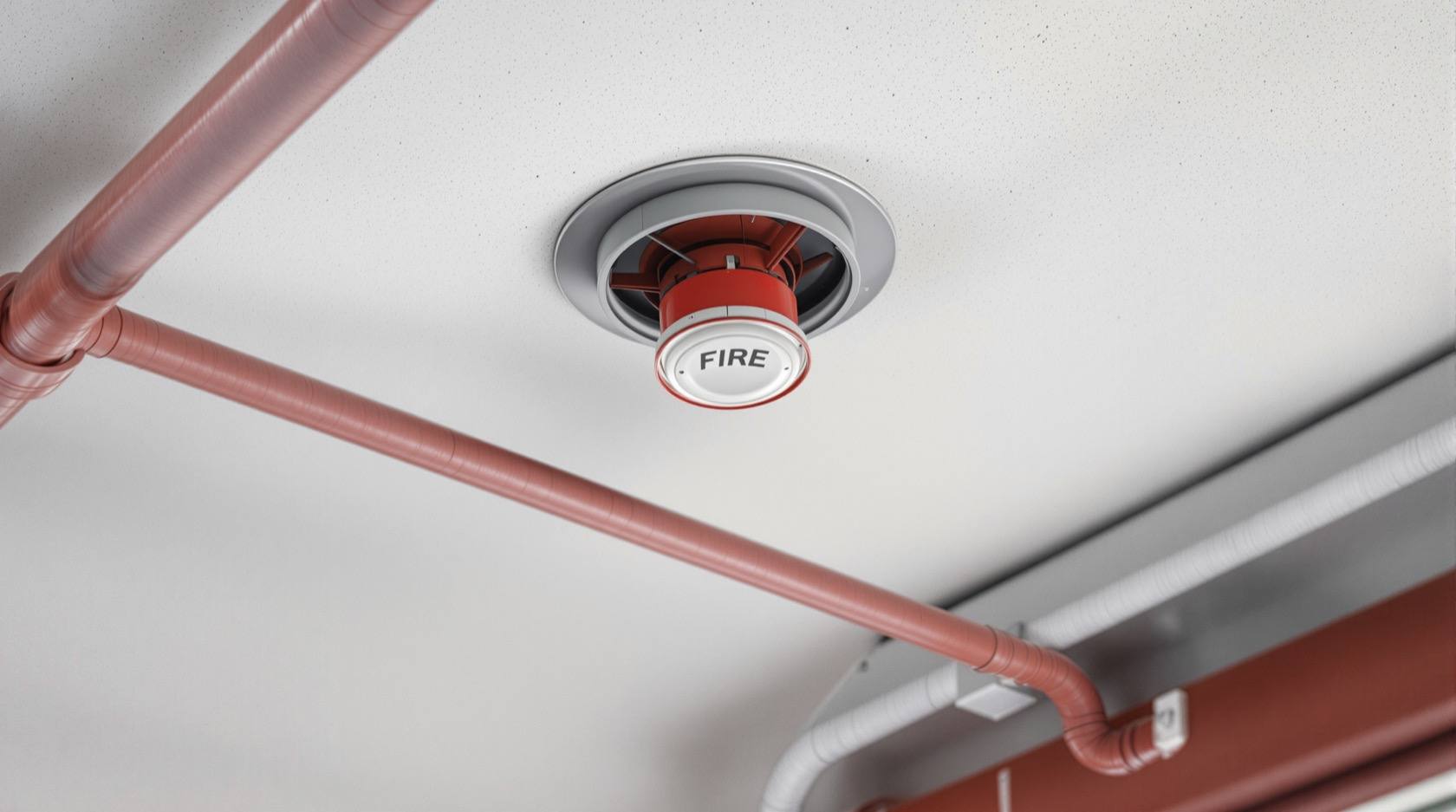
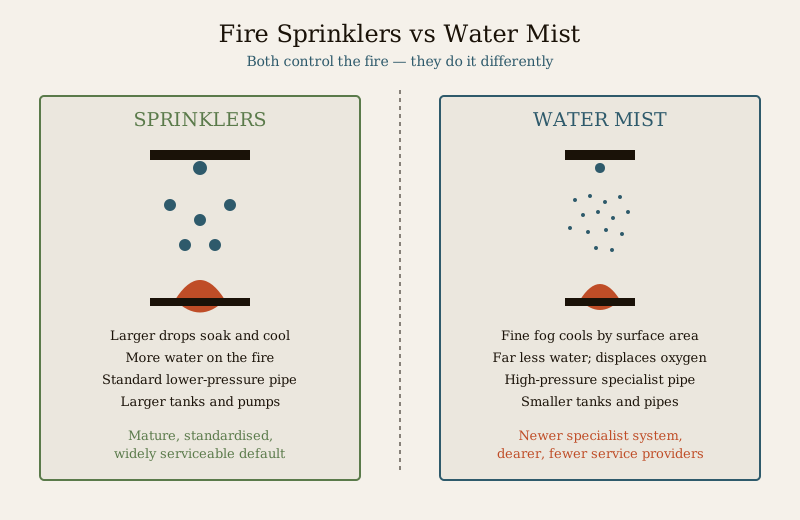
Fire sprinklers discharge relatively large water droplets at moderate pressure through sprinkler heads that open when heat bursts their glass bulb or fusible link. Only the heads over the fire operate; each wets and soaks its area, cooling the burning material and the surroundings and pre-wetting what has not yet caught, so the fire is controlled and stopped from spreading. This is a mature, standardised, code-anchored technology: the design rules, occupancy hazard classifications, head spacing, pipe sizing and water-density requirements are long-established, and the components, installers and service firms are widely available across India. It is the default automatic suppression system for the vast majority of occupancies, and NBC provisions and local fire rules are written around it. The trade-off is water: a sprinkler system moves a lot of it, which means large tanks, large pipes, a substantial pump set, and real water damage to whatever is soaked.
Water mist discharges very fine water droplets, a fog or mist, usually at high pressure through specialised small-bore nozzles. Because the droplets are so small, the same amount of water presents a far greater surface area, so it absorbs heat and cools extremely efficiently; the mist also flashes to steam at the fire, and that expanding steam locally displaces oxygen around the seat of the fire. The result is that mist can knock a fire down using a fraction of the water a sprinkler system would use, often a small percentage of it. Less water means far less water damage, smaller tanks and pipes, and a lighter footprint, but it comes on high-pressure pumps and specialist pipework and nozzles, with tighter design assumptions (mist works best in reasonably enclosed spaces and against specific hazards), a smaller pool of qualified designers and service providers in India, and a higher cost.
The head-to-head
Set the two families side by side across the dimensions that actually decide the question. Read it even-handedly: each column has genuine strengths and genuine weaknesses.
| Dimension | Fire sprinklers | Water mist |
|---|---|---|
| Droplet and mechanism | Larger drops soak and cool; pre-wet surroundings | Fine fog cools by surface area and locally displaces oxygen |
| Water used | High volume; a lot of water on the fire | Much lower volume, often a small fraction of sprinkler flow |
| Water damage | Significant; soaks contents and floors below | Far less; a major advantage for water-sensitive contents |
| Tanks and pipe sizing | Large storage tank, large pipes, big pump set | Smaller tanks and pipework; lighter footprint |
| Infrastructure and pressure | Standard moderate-pressure pumps and pipe | High-pressure pumps and specialist nozzles and tubing |
| Effectiveness | Proven default across most general occupancies | Excels at cooling and enclosed-space and specialist hazards |
| Maturity and codes | Long-established, standardised, code-anchored | Newer, engineered per project to its listing and hazard |
| Cost | Generally lower; standardised components | Generally higher; specialist design and maintenance |
| Serviceability in India | Widely serviceable; many installers and parts | Fewer specialist service providers; niche parts |
| Best-fit signal | General buildings where water supply and damage are acceptable | Water-sensitive, limited-water, or specialist-hazard cases |
A few honest clarifications behind the table. On effectiveness, this is not "one works and one does not", both control fire; sprinklers are the broadly proven default across ordinary occupancies, while mist is outstanding at cooling and in enclosed spaces and against certain hazards, but is more sensitive to being designed and enclosed correctly for its listed application. On water supply, mist's low demand is a decisive advantage wherever a large water main or tank is genuinely hard to provide. On cost and maturity, sprinklers win on price, standardisation and the depth of the Indian service ecosystem; mist costs more up front and over its life and depends on a narrower pool of specialists, and that operational reality must be weighed, not just the capital number.
The water-and-damage point, stated plainly. Mist's headline strength is that it does far more with far less water, so it protects contents and structure that water itself would ruin, and it eases sites where a big water supply is impractical. That is a real engineering advantage, not marketing. It is still an advantage that only matters when the hazard and occupancy actually call for it, which is a decision for a fire-protection engineer against the code, not a reason to reach for mist by default.
Which suits which application
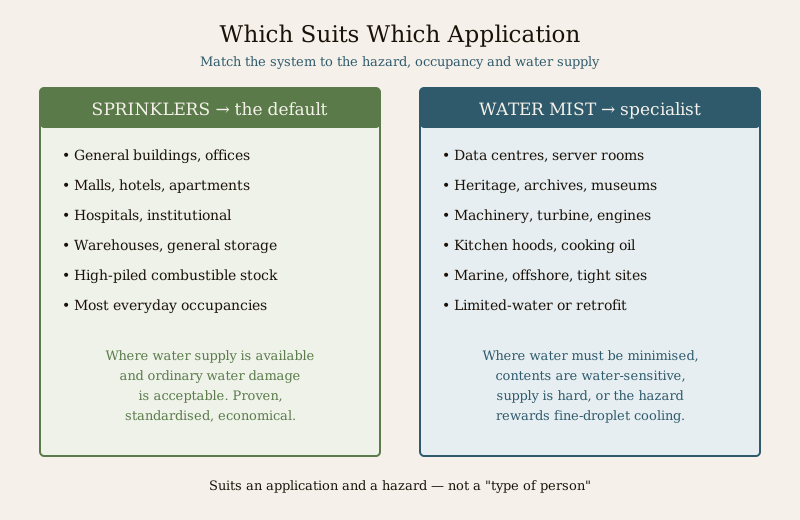
This is the useful part, and note the framing: suppression suits an application, a hazard and an occupancy, not a "type of person". Match the system to what you are protecting.
- General buildings, most occupancies, the default case, sprinklers. Offices, malls, hotels, hospitals, apartments, warehouses and most general storage and commercial space are exactly what the sprinkler codes are written for. Where water supply is available and ordinary water damage is acceptable, sprinklers are the proven, standardised, economical, widely-serviceable default, and usually what NBC and the local fire authority expect.
- Warehouses and high-piled general storage, sprinklers. Large stacked-combustible storage is classic sprinkler territory, with density and design worked out for the commodity and rack arrangement.
- Data centres, server rooms and electrical or electronic spaces, mist (with engineering). Where soaking equipment would cause damage far beyond the fire, mist's very low water volume and cooling action are attractive, and it is engineered specifically for the room and its risk alongside detection and, often, a gas system decision.
- Heritage and irreplaceable-contents buildings, mist. For archives, museums, palaces and heritage fabric, minimising water damage is the whole point, and mist's small droplet and low volume directly serve that.
- Machinery, turbine, engine and generator enclosures, mist. Enclosed machinery spaces, turbine halls and engine rooms are a strong mist application: the enclosure suits the oxygen-displacement effect and the cooling knocks down hot, energetic fires.
- Commercial kitchen hoods and cooking hazards, mist (specialist). Fine-droplet systems are used for cooking-oil and kitchen-hood fires where cooling and the specific hazard listing matter.
- Marine, offshore and space-and-weight-constrained sites, mist. Where storing and moving large volumes of water is impractical, mist's small tanks and light pipework are decisive.
- Sites where a large water supply is genuinely hard, mist. Remote plots, retrofits into finished buildings, or places where a big main or tank simply cannot be provided are where mist's low demand earns its premium.
How to decide: a framework, not a price war
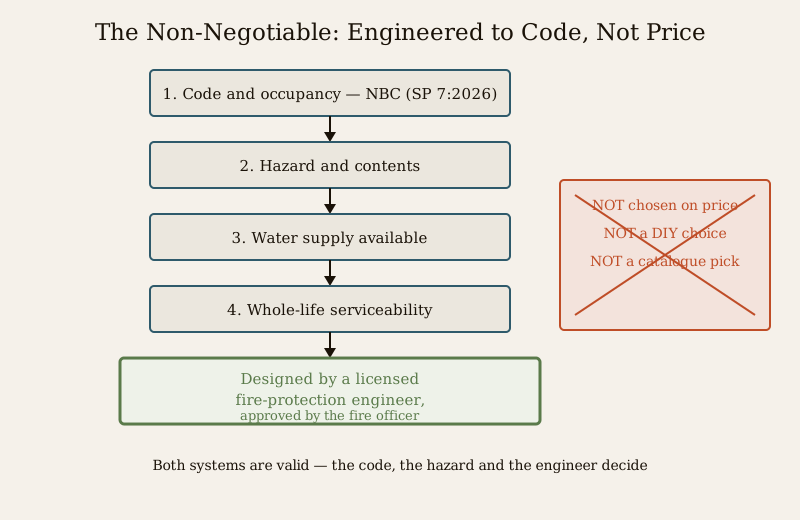
There is no universal winner here, and, more importantly, the decision is not yours to make on cost alone. A water-based suppression system is engineered life-safety infrastructure, and the sequence is fixed:
1. Start from the code and the occupancy. NBC (SP 7:2026) and the local fire authority classify the occupancy and set what suppression is required, where, and to what performance. That frames everything; you design to it, you do not shop under it.
2. Characterise the hazard and the contents. What burns, how it is arranged, how enclosed the space is, and how sensitive the contents and structure are to water. This is where the sprinkler-versus-mist signal first appears.
3. Assess the water supply. What flow and storage can the site realistically provide? A constrained supply pushes toward mist; an ample one keeps sprinklers easy.
4. Weigh whole-life reality, not just capital cost. Sprinklers are cheaper, standardised and widely serviceable in India; mist costs more and leans on a narrower pool of specialists for design and maintenance. Serviceability over twenty years is part of the decision, not an afterthought.
5. Have it designed and signed off by a licensed fire-protection engineer, and approved by the fire officer. The engineer sizes, lists and specifies the system to the code and the hazard; the fire officer approves it. Suppression is one part of a fire strategy that also includes detection and alarm, egress and compartmentation, so it is composed with them, never in isolation, the same discipline as choosing a fire alarm.
The non-negotiable. Do not choose between sprinklers and water mist on price, and do not treat it as a DIY or procurement-catalogue decision. Both are legitimate engineered life-safety systems; the right one is whichever the code, the hazard, the occupancy, the water supply and the fire officer's approval point to, as designed by a licensed fire-protection engineer. A suppression system chosen to save money and installed to the wrong hazard is not a saving, it is a life-safety failure waiting for a fire.
The verdict
Sprinklers and water mist are not rivals so much as different tools for different fire problems. Sprinklers are the mature, standardised, economical, widely-serviceable default that protects most of the built environment and that the codes are written around; their cost is water volume and water damage. Water mist is the specialist system that does far more with far less water, protecting water-sensitive contents, data and electrical rooms, heritage fabric, machinery and turbine enclosures, kitchen hoods, marine spaces and limited-water sites, at the price of high-pressure specialist infrastructure, higher cost and fewer service providers.
For most general buildings, sprinklers. Where water must be minimised or the hazard is specialist, mist. And in every case, the choice is made to the National Building Code, to the hazard, to the water supply and to the fire officer's approval, by a licensed fire-protection engineer, never to a price tag.
Key takeaways
- Both are legitimate engineered life-safety suppression systems chosen to the code, the hazard and the application, never selected as "the cheaper one".
- Sprinklers soak with larger droplets on mature, standardised, lower-pressure, widely-serviceable infrastructure and are the proven default for most general occupancies; they use a lot of water and cause real water damage.
- Water mist uses very fine fog to cool and locally displace oxygen with far less water, so far less water damage, smaller tanks and pipes, on high-pressure specialist pumps and pipework at higher cost and with fewer Indian service providers.
- Sprinklers suit general buildings; mist suits water-sensitive, limited-water and specialist hazards such as data centres, heritage, machinery and turbine enclosures, kitchen hoods and marine.
- The decision follows a fixed sequence, code and occupancy, hazard and contents, water supply, whole-life serviceability, and must be designed by a licensed fire-protection engineer and approved by the fire officer per NBC (SP 7:2026).
Where to go next
- Sprinkler systems in India and sprinkler system maintenance for the sprinkler family in depth.
- Water mist systems in India for the mist family in depth.
- How to choose a fire alarm, because suppression is composed with detection and alarm, not chosen alone.
- The security comparison pillar and the comparison sub-hub for the wider set of head-to-head decision guides.
- The fire-safety hub and the main security hub for the full fire and building-safety picture.
References
- National Building Code of India (SP 7), Bureau of Indian Standards, Part 4 Fire and Life Safety, occupancy classification, means of egress, and requirements for automatic fire-suppression and water-based systems. Verify the current edition (SP 7:2026) via the BIS catalogue: https://www.services.bis.gov.in/
- Local fire prevention and life-safety rules and the State Fire Service, which review and approve fire-protection designs and issue the No Objection Certificate for the occupancy; requirements vary by state and building type.
- Manufacturer listings and third-party approvals for the specific sprinkler or water-mist system, which define the hazards, occupancies, spacing and water-supply assumptions a system is qualified for; a licensed fire-protection engineer designs to these.
This is an educational, even-handed decision overview for facility managers, builders, architects, developers and consultants, not legal advice, an installation manual or a substitute for engineered design. A water-based suppression system is life-safety infrastructure chosen to the National Building Code, the hazard, the occupancy, the water supply and the fire officer's approval, and must be designed by a licensed fire-protection engineer; verify any standard's current status via the BIS catalogue before relying on it.
Export this guide
Related Guides — Deep-dive reading
Water Mist Systems in India (2026): High-Pressure Fog That Fights Fire With Less Water
Water mist suppresses fire with an ultra-fine high-pressure fog that cools and steam-smothers using a fraction of a sprinkler's water - why the droplets matter, where it fits, and why the design belongs to a fire engineer.
SecurityFire Sprinkler Systems in India (2026): How They Work, Types & When NBC Requires Them
Automatic fire sprinklers control or extinguish a fire at its origin, day or night - and only the head over the fire opens, not the whole building. This guide explains wet, dry, pre-action and deluge systems and where the NBC requires them.
SecurityHow to Choose a Fire Alarm in India (2026): A Life-Safety, Code-Governed Buying Guide
A fire alarm is not shopped on price or looks. It is specified to the National Building Code and the local fire officer, built from listed and certified parts, and installed by a licensed contractor. This guide shows a homeowner, manager or architect how to choose and verify one correctly.
SecurityRelated Tools — Try Free
Rainwater Tank Sizer
How big should your rainwater tank be? Computes annual harvest, recommended tank capacity in litres, water-bill savings, and payback — for 10 Indian cities.
RWH CalculatorBefore vs After — Cost Reality Check
Compare what you expected to pay vs what you actually paid, category by category.
Reality CheckAcoustic Privacy (STC) Visualizer
Indian healthcare acoustic visualizer — compare wall assemblies and noise sources, see received SPL after STC attenuation, and check FGI 2018 / IS 1950 / NABH speech-privacy compliance with live dual-canvas waveform.
Acoustic Tool