
Fire Alarm Testing Checklist for India (2026): A Record, Not the Rulebook
A ready-to-adapt checklist to record the testing of a fire alarm and detection system at commissioning and periodically — with the loud reminder that the code (NBC, SP 7:2026), the manufacturer and the fire officer set the actual scope, methods, pass criteria and frequencies, not this sheet.
A fire alarm and detection system is only trustworthy if it is tested — and the testing is only defensible if it is recorded. This page gives you a ready-to-adapt fire alarm testing checklist: a structured sheet a competent fire technician, a facilities manager or a security and PMC coordinator can fill in while the system is tested at commissioning and at each periodic test through its life. It sits in the operate-and-maintain phase of a project, right after the panel is commissioned, and it feeds the maintenance file the building keeps for the fire officer and the Fire NOC renewal.
Read the first sentence of the next paragraph twice, because it is the whole point of this page.
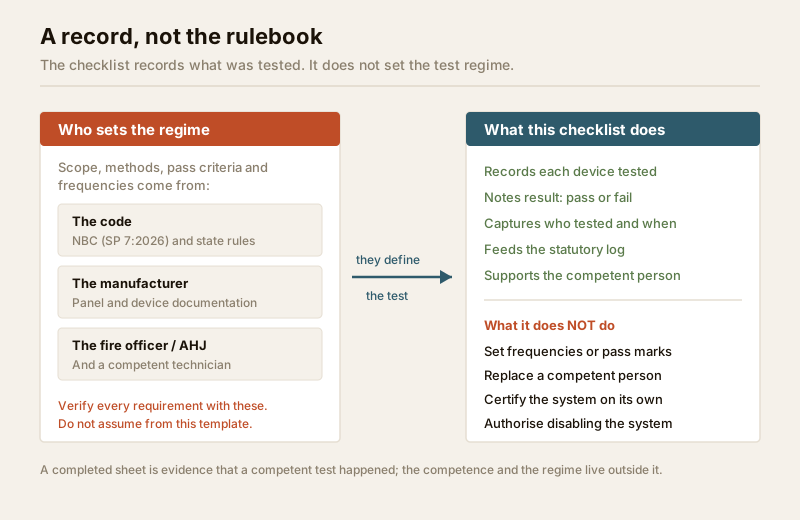
Scope & how to read this. This checklist is a RECORD and an AID. It does NOT define the test regime and it does NOT replace a competent person. The actual scope, methods, pass criteria and — above all — the test FREQUENCIES come from the National Building Code (NBC, SP 7:2026), the equipment manufacturer's documentation and the fire officer or a competent fire technician appointed for your building. Treat every row below as "typically recorded, subject to the code and the manufacturer — verify". This is a ready-to-adapt template, not authoritative, contractual or legal wording; get professional and statutory review, and defer all specifics to your project, the code and the Authority Having Jurisdiction (AHJ).
What it is, and when it is used
The checklist is the paper (or digital) trail that proves each part of the fire alarm system was exercised and behaved correctly. It is used in two situations, and the difference matters:
- At commissioning — a first, complete functional test of every device and every cause-and-effect action, witnessed and recorded before the system is accepted and before the Fire NOC stage that depends on it. The fire alarm testing explainer walks through what that acceptance testing involves.
- Periodically, in service — routine tests through the building's life to confirm the system still works. What is tested, and how often, is set by the code and the manufacturer and confirmed with the fire officer. This sheet only records that the tests happened and their result; it never decides when they are due.
Who fills it in: a competent fire technician or the fire alarm contractor doing the testing, counter-checked by the building's facilities or safety officer. Who receives it: the building owner or occupier, who keeps it in the statutory fire safety records. It is a companion to the device inventory it is tested against — see the fire alarm device schedule — and to the panel documentation covered in the fire alarm panels guide.
The kinds of checks a fire alarm test typically records
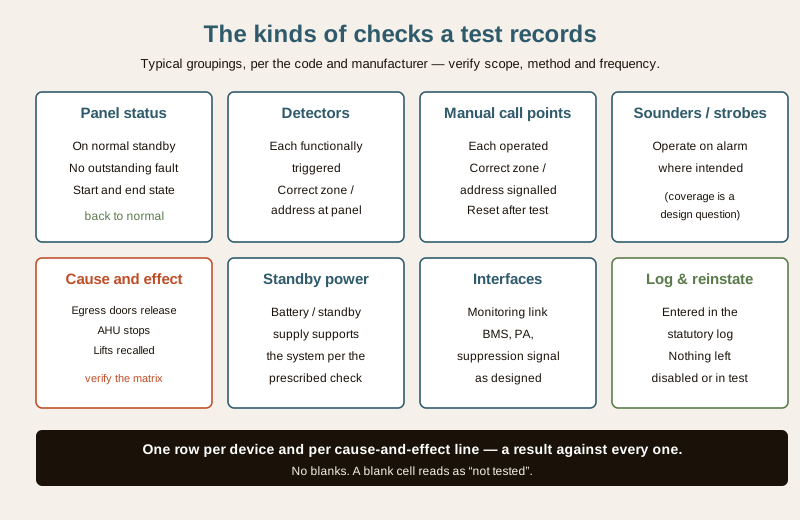
A fire alarm test is not one action; it is a series of checks across the whole detection-and-alarm chain. Grouped below are the kinds of things a test typically records. Read the grouping as a map of what to have columns for — not as a statement of what your code requires, how it must be done, or how often. Verify the actual list, method and pass criteria with the manufacturer and the fire officer.
- Panel status and faults — the control panel is powered, on normal standby, showing no outstanding fault, disablement or test condition at the start, and returned to normal at the end. Any fault seen during the test is logged and cleared or reported.
- Detectors — each smoke, heat or multi-sensor detector is functionally triggered by the appropriate manufacturer-approved method and confirmed to raise an alarm at the panel signalling the correct zone or address. Note the device by its schedule reference.
- Manual call points — each call point is operated and confirmed to signal the correct zone or address, then reset per the manufacturer's method.
- Sounders and strobes — audible sounders and visual beacons operate on alarm where they are meant to. Whether coverage and levels are adequate is a design-and-code question for the competent person; this sheet records only that each device operated.
- Cause-and-effect actions — the outputs the alarm is designed to drive: for example releasing access-controlled egress doors so people can get out, stopping air-handling units, recalling or grounding lifts, or signalling to a monitoring point. These come from the project's cause-and-effect (input-output) matrix, and each line of that matrix is tested and its result recorded. Verify the matrix against the approved design.
- Standby power — the battery and standby supply support the system as intended when normal power is removed, per the manufacturer and code. Record only the observed result of the prescribed check.
- Interfaces — links to other systems (monitoring, building management, suppression release, public address) behave as designed on alarm and on restore.
- The log and reinstatement — the whole test is entered in the statutory log, and the system is confirmed back to full normal operation with nothing left isolated, disabled or in test.
Because release of egress doors and lift recall are life-safety actions, a wrong result on any cause-and-effect line is not a "note for later" — it is a stop-and-fix item for the competent person before the system is accepted back into service.
Worked example (illustrative only)
Below is a filled fragment so you can see how the sheet is used. The device references, zones and actions are illustrative; the results are made up to show the format. It is example only — verify the test regime, methods and pass criteria with the fire officer and the manufacturer, and adapt to your project.
Example only, not a template of what your building requires. These rows exist to show the columns in use. They do not tell you what to test, how, or how often — that is set by the code, the manufacturer and the fire officer.
| Device / zone (per schedule) | Check recorded | Result | Notes |
|---|---|---|---|
| Panel, main FACP | On normal standby, no fault at start | Pass | Verify against manufacturer indications |
| Zone 1 — smoke detector SD-1-04 | Functionally triggered, correct zone/address at panel | Pass | Reset per manufacturer method |
| Zone 1 — heat detector HD-1-02 | Functionally triggered, correct zone/address | Pass | e.g. kitchen lobby |
| Zone 2 — manual call point MCP-2-01 | Operated, correct zone/address signalled | Pass | Reset after test |
| Zone 2 — sounder SND-2-03 | Operated on alarm | Pass | Coverage is a design question, not this test |
| Cause-and-effect — egress door D-12 | Access door released on alarm | Pass | Verify against approved C-and-E matrix |
| Cause-and-effect — AHU-3 | AHU stopped on alarm | Fail | Interface not responding — raised as defect, retest required |
| Cause-and-effect — lift bank A | Lifts recalled to designated level | Pass | Confirm designated level with design |
| Standby power | System supported on standby per prescribed check | Pass | Method and duration per code/manufacturer |
| Interface — monitoring link | Alarm and restore signalled to monitoring point | Pass | Confirm with monitoring provider |
| System reinstated | All zones normal, nothing left disabled or in test | Pass | Logged; panel back to normal standby |
The "Fail" row is deliberate: a real sheet must be able to carry a failure honestly, drive a defect and a retest, and never be quietly ticked to close the visit.
Blank template (copy and adapt)
Copy the table below into your own sheet, printed form or maintenance software. Add or remove columns to suit your project and the fire officer's requirements — for example a device serial, the test method used, the technician's initials, or a photo reference. Keep one row per device or per cause-and-effect line so nothing is tested "in bulk" without a result against it.
| Device / zone (per schedule) | Check | Result (Pass / Fail / N.A.) | Notes / defect / retest |
|---|---|---|---|
| ... panel status ... | ... | ... | ... |
| ... detector ... | ... | ... | ... |
| ... detector ... | ... | ... | ... |
| ... manual call point ... | ... | ... | ... |
| ... sounder / strobe ... | ... | ... | ... |
| ... cause-and-effect line ... | ... | ... | ... |
| ... standby power ... | ... | ... | ... |
| ... interface ... | ... | ... | ... |
| ... system reinstated ... | ... | ... | ... |
Pair it with a short header block that carries the details the fire officer will look for: building and system reference, test type (commissioning or periodic), the date, the competent person's name and credentials, who was notified before the test, and a sign-off that the system was left fully operational.
| Header field | Enter | Header field | Enter |
|---|---|---|---|
| Building / system ref | ... | Test type (commissioning / periodic) | ... |
| Date and time | ... | Competent person / firm | ... |
| Notified before test (who) | ... | Isolation applied and removed | ... |
| Defects raised / retest due | ... | System left fully operational (sign) | ... |
Field and column guide
- Device / zone — always use the reference from the fire alarm device schedule so the sheet, the drawings and the panel all agree on what "SD-1-04" means.
- Check — one clear action per row, in the manufacturer-approved way. If in doubt about the method, that is a question for the competent person, not a guess on site.
- Result — Pass, Fail or N.A., never blank. A blank cell reads as "not tested" and undermines the whole record.
- Notes / defect / retest — where a Fail becomes a tracked defect and a retest, and where you flag anything to verify against the approved cause-and-effect matrix.
- Frequency — deliberately NOT a column of fixed numbers here, because the interval is set by the code and the manufacturer and confirmed with the fire officer. If you add a "next due" column, populate it from that regime, not from this page.
The life-safety rules that override the sheet
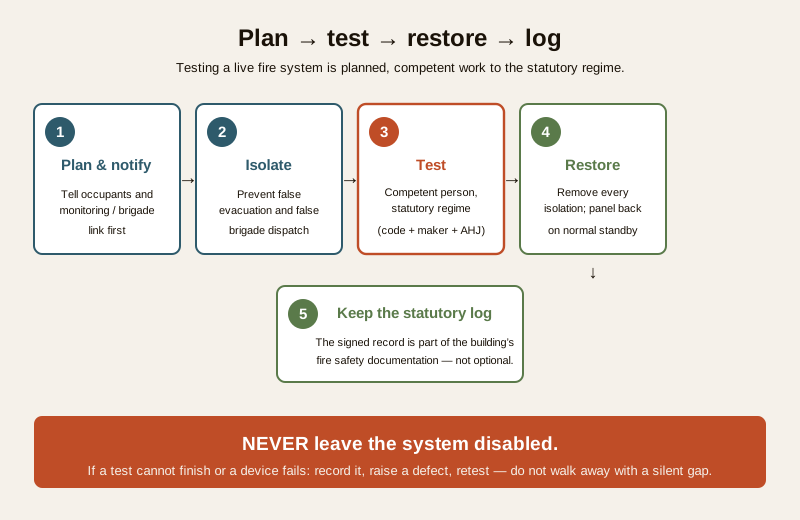
Testing a live fire system is planned, competent work — and the system is NEVER left disabled. A fire alarm test touches a system that people's lives depend on. Before you start, PLAN it: notify occupants and any monitoring or fire-brigade link, and isolate the parts that would otherwise cause a false evacuation or a false brigade dispatch, in the manner the code and manufacturer require. Do the testing through a COMPETENT PERSON to the STATUTORY REGIME set by the code (NBC, SP 7:2026), the manufacturer and the fire officer — not to this checklist. When finished, RESTORE the system to full working order, remove every isolation and disablement, and confirm the panel is back on normal standby. NEVER walk away leaving detection or alarm disabled. And KEEP THE STATUTORY LOG — the completed record is part of the building's fire safety documentation, not an optional courtesy.
If a test cannot be completed, or a device or a cause-and-effect action fails, the honest position is to record it, raise a defect, arrange the retest, and make sure the building is not left with a silent gap in protection in the meantime. That judgement belongs to the competent person.
How it connects to the other documents
- The fire alarm device schedule is the inventory this sheet tests against — every row here should trace to a device there.
- The fire alarm panels guide covers the control equipment whose status, faults and cause-and-effect outputs you are recording.
- The fire alarm testing explainer sets out what acceptance and periodic testing involve, of which this checklist is the record.
- On a wider commissioning visit, run it alongside the security commissioning checklist, and pair it with emergency lighting testing so the whole life-safety layer is exercised and recorded together.
- Browse the full toolkit from the security resources library and the professional security resources guide.
Completion check before you close the visit
- Every device and every cause-and-effect line has a result, not a blank.
- Every Fail has a defect reference and a retest plan.
- Every isolation and disablement applied for the test has been removed.
- The panel is confirmed back on normal standby with no outstanding fault.
- The record is signed by the competent person and filed in the statutory fire safety records.
References
- National Building Code of India (NBC) — SP 7:2026 — the authoritative source for fire detection and alarm requirements, including test scope and frequencies; verify the current provisions rather than relying on any checklist. Confirm the current edition at https://www.services.bis.gov.in/
- Manufacturer documentation for your specific panel, detectors, call points and interfaces — the authoritative source for test methods, functional-test tools and pass criteria; follow it over any generic instruction.
- The fire officer or Authority Having Jurisdiction for your building — the authority on the applicable test regime, the Fire NOC and the maintenance records to keep.
This is an educational, ready-to-adapt template, not legal advice or a substitute for a competent person. Fire alarm testing must be planned, carried out by a competent fire technician and recorded to the statutory regime, and the system must never be left disabled. Defer all scope, methods, pass criteria and frequencies to the code, the manufacturer and the fire officer.
Export this guide
Related Guides — Deep-dive reading
Access Control Testing Checklist for India (2026): Every Door Opens and Locks as Designed
A ready-to-adapt per-door and system checklist to verify an access-control installation at commissioning and as a periodic check, with the egress and fire-to-release life-safety tests that must always pass before sign-off.
SecuritySecurity Fire Alarm Integration in India (2026): Smart Alerts, Certified Systems, Fail-Safe Egress
The most important sentence a smart-home designer can say about fire is also the least profitable: a smart-home smoke sensor or fire notification is a helpful add-on, not a substitute for a certified fire-alarm system. This guide draws the line hard — life-safety detection and alarm belongs to the NBC-governed certified system — and then covers the genuinely useful, correctly-scoped automations the smart layer can add on a verified fire signal: unlock for egress, open the gate for the fire tender, light the escape path, stop the away-scene, and notify everyone loudly. All of it fail-safe. None of it in the way of the system that actually saves lives.
SecuritySprinkler System Maintenance in India (2026): Keeping a Life-Safety System Ready
A fire sprinkler system is a life-safety installation that must work on the one day it is needed — this professional guide covers the scheduled checks, statutory tests and record-keeping that keep a wet, dry or pre-action system live: water supply and pressure, valves in the correct open position, control and alarm valves, sprinkler heads kept clear, and the roles of the competent fire contractor versus the facility manager.
SecurityRelated Tools — Try Free
Access-Control Battery-Backup Calculator
Size the standby battery so an access system keeps running through a power cut, with an egress life-safety note.
Battery BackupCCTV Commissioning & Handover Checklist
An interactive go/no-go checklist to run at handover — cameras day and night, recording, alerts, passwords and documents — before you clear the final bill.
Handover ChecklistEmergency-Egress Checker
A life-safety self-check that access-controlled doors on escape routes still let people out in an emergency.
Egress Check