
National Building Code Window Requirements
What NBC 2016 requires of a home window in India: glazed area for light, openable area for ventilation, by-room minimums, ceiling heights and the bye-law that actually governs.
The National Building Code of India (NBC 2016) is the country's recommendatory model code. It does not become law by itself: your local municipal building bye-law adopts and amends it, and that bye-law is what your building inspector, your architect's drawings and your occupancy certificate actually answer to. NBC sets the baseline numbers most bye-laws echo, so it is the right place to learn what a compliant window has to do. But the single most important honesty in this guide is this: the exact percentages below shift from city to city. Always verify the local building bye-law before you finalise a window.
NBC is the recipe everyone copies; your municipal bye-law is the dish that gets served. When a number matters for sanction, read the bye-law, not the model code.
This is the code requirement reference. If you want to choose window sizes, sills and proportions as a design decision, read the design cousin, Window Size Standards in India. Here we cover only what NBC 2016 and the adopting bye-laws require.
Two jobs every window must do: light and ventilation
NBC treats a window as serving two separate functions, each measured against the floor area of the room it sits in.
- Light is delivered by the glazed area of the window. NBC and most bye-laws expect the glazed (transparent) area to be of the order of 10 per cent of the floor area of a habitable room, with a practical minimum around 1 sq m for a normal room.
- Ventilation is delivered by the openable area of the window, the part that actually swings or slides open. This is commonly taken as roughly half the glazed area, landing around 4 to 5 per cent of the room's floor area. Some bye-laws instead state the openable area must be greater than or equal to one-tenth (1/10) of the floor area. The two ways of phrasing it are close but not identical, which is exactly why you check your city's rule.
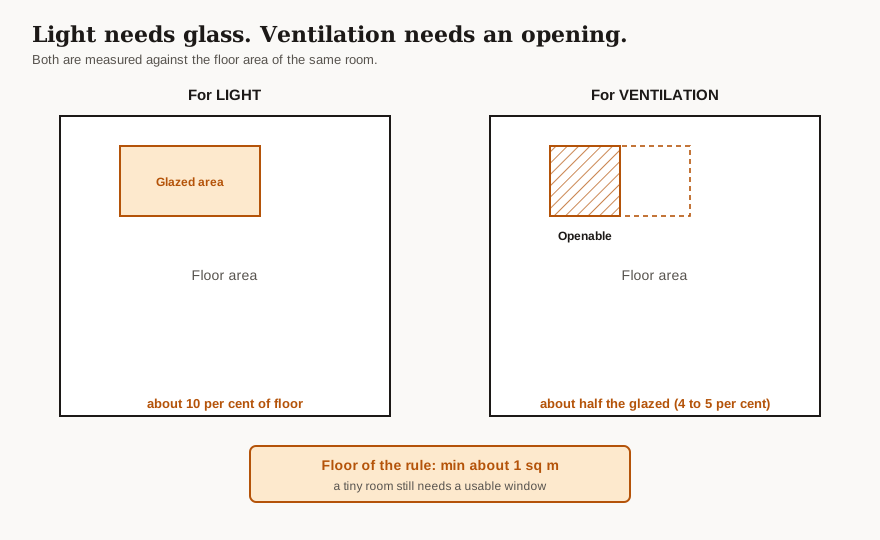
So a 12 sq m bedroom (roughly 3.6 m by 3.3 m) would expect about 1.2 sq m of glazed area for light and around 0.6 sq m of openable area for ventilation. A single 1.2 m by 1.2 m window with two openable shutters typically satisfies both at once, which is why that size is so common in Indian homes.
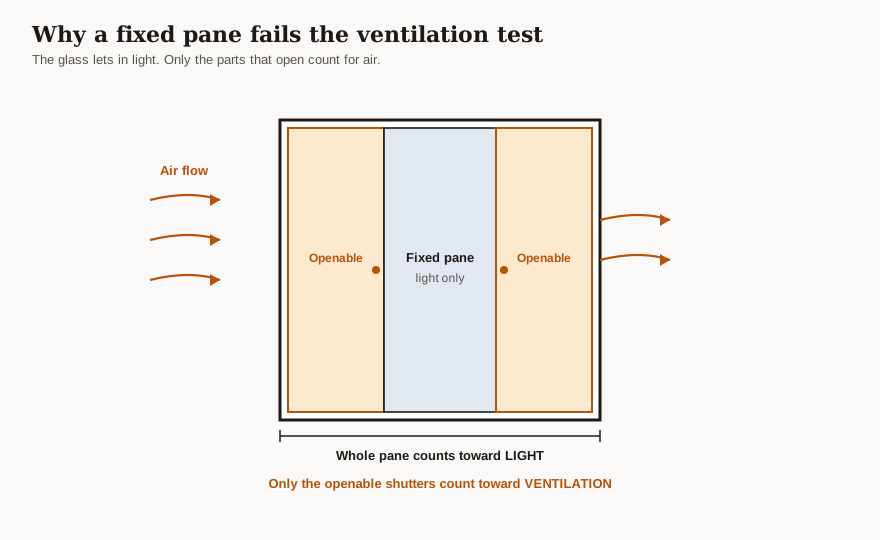
A critical trap: a large fixed glass pane gives you light but zero ventilation credit. If your design leans on big picture windows, the openable portion still has to meet the ventilation figure on its own, often through separate ventilators or openable side-lights.
The "opening to outside air" rule
A habitable room cannot draw its light and air from an enclosed pocket of the building. NBC requires the aperture to open to external air directly, or to an open verandah, provided that verandah is not deeper than about 2.4 m. Open a window onto a deeper covered space and the room is treated as not naturally lit or ventilated. Internal rooms that cannot reach an outside wall must instead rely on a ventilation shaft of the minimum plan size set by the bye-law, or on mechanical (artificial) ventilation, which then changes the permissible ceiling height (see below).
By-room minimums
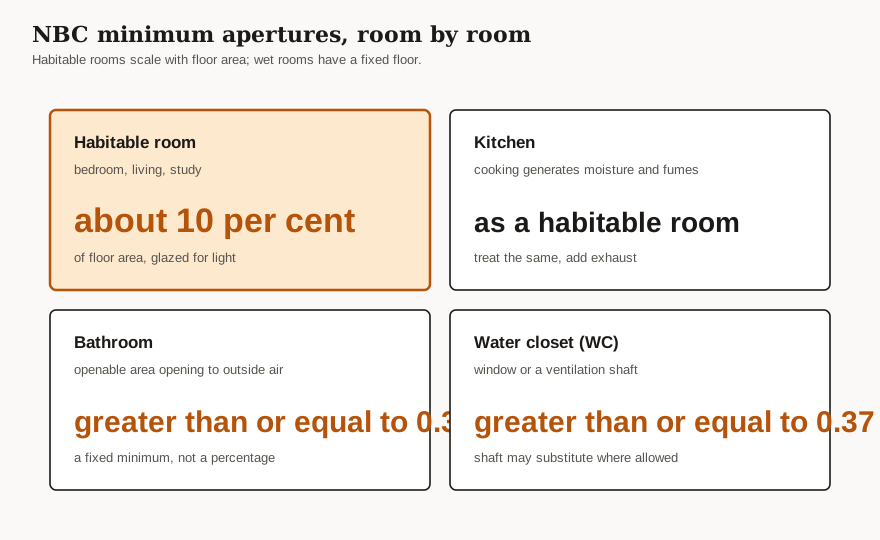
NBC and the bye-laws set different floors for different room types. Kitchens are treated as habitable for light and air. Bathrooms and water-closets get a far smaller, specific minimum because privacy competes with daylight.
| Room type | Light (glazed area) | Ventilation (openable area) | Notes |
|---|---|---|---|
| Habitable room (bedroom, living) | approx. 10 per cent of floor area, min approx. 1 sq m | approx. half the glazed area (approx. 4 to 5 per cent of floor area) | Must open to outside air or verandah less than or equal to 2.4 m |
| Kitchen | as habitable room | as habitable room, plus a flue/exhaust path | Treated as habitable for light and air |
| Bathroom | small | openable window greater than or equal to 0.37 sq m | Or a shaft / mechanical exhaust where no outside wall |
| Water-closet (WC) | small | openable window greater than or equal to 0.37 sq m | Same shaft / mechanical alternative |
| Store, stair, corridor | not habitable | adequate per bye-law | No habitable minimum; egress rules still apply |
The figure to remember for the wet rooms is 0.37 sq m of openable window (about 0.6 m by 0.6 m), or an approved ventilation shaft or mechanical exhaust where there is no external wall.
Ceiling height is tied to how the room breathes
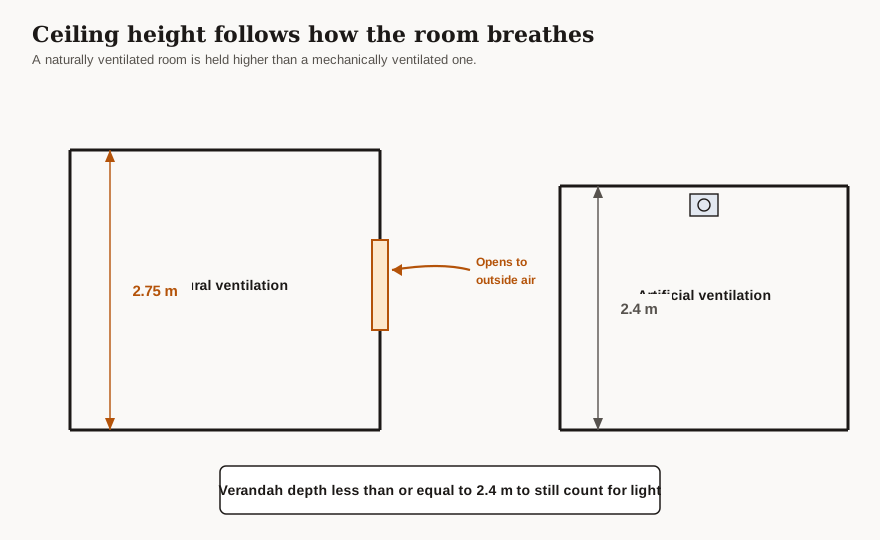
NBC links the permitted ceiling height to whether a room is naturally or artificially ventilated, because taller rooms move stale air better when the only driver is the window.
| Condition | Minimum clear ceiling height |
|---|---|
| Habitable room, naturally ventilated | 2.75 m (commonly cited as 2.7 m) |
| Habitable room, artificially (mechanically) ventilated or air-conditioned | 2.4 m |
| Kitchen | approx. 2.75 m (verify bye-law) |
| Bathroom, WC, store | approx. 2.1 to 2.2 m (verify bye-law) |
If you drop a ceiling below 2.75 m in a naturally ventilated habitable room, the bye-law will usually require mechanical ventilation to compensate.
Obstruction, right-to-light and shafts
A window's compliance is not only about the hole in the wall: it is about whether daylight and air can actually reach it. Bye-laws set a minimum open space (setback) in front of habitable-room windows so a neighbouring wall or your own block does not obstruct them, and a window opening into an interior courtyard or shaft must meet that shaft's minimum dimensions. A long-standing window can also acquire a right to light (an easement) that a neighbour's new construction must not extinguish, although the modern setback rules in the bye-law are the day-to-day control. Treat "is there enough open space in front of this window" as part of the requirement, not an afterthought.
Compliance checklist
| Check | NBC baseline | Verified against local bye-law? |
|---|---|---|
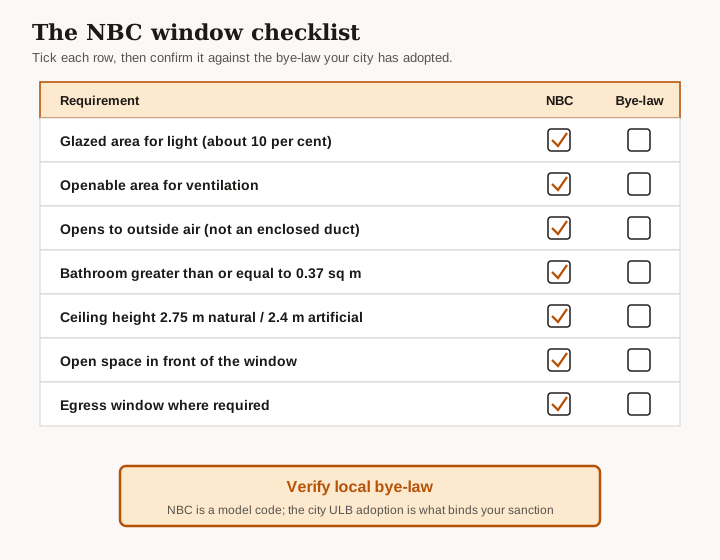
| Glazed area for light | approx. 10 per cent of floor area, min approx. 1 sq m | Yes / No |
| Openable area for ventilation | approx. half glazed, or greater than or equal to 1/10 floor area | Yes / No |
| Opens to outside air or verandah | verandah depth less than or equal to 2.4 m | Yes / No |
| Bathroom / WC opening | greater than or equal to 0.37 sq m, or shaft / exhaust | Yes / No |
| Ceiling height | 2.75 m natural / 2.4 m artificial | Yes / No |
| Open space / shaft in front of window | per bye-law setback | Yes / No |
| Egress window in bedrooms / basement | low sill, openable, quick-release grille | Yes / No |
The numbers in this guide are indicative. NBC 2016 is a model code; the municipal building bye-law that adopts and amends it governs in practice, and figures, room definitions and shaft sizes vary by state and city. Confirm every value with your local bye-law and your licensed architect before sanction.
Where to go next
- The standards pillar that maps every code touching a home window: Residential Window Standards in India.
- The design cousin (sizes, sills and proportions as a design choice, not a code minimum): Window Size Standards in India.
- The fire-escape sibling in this cluster: Emergency Escape Window Requirements.
- The broad sanction context: Building Regulations and Compliance.
References
- National Building Code of India 2016, Bureau of Indian Standards: https://www.bis.gov.in/standards/technical-department/national-building-code/
- Bureau of Indian Standards (IS codes and NBC catalogue): https://www.bis.gov.in/
- Eco-Niwas Samhita (residential envelope code), Bureau of Energy Efficiency: https://beeindia.gov.in/en/programmes/eco-niwas-samhita-ens
Export this guide
Related Guides — Deep-dive reading
Bathroom Building Regulations in India: NBC 2016 & Municipal Bye-Law Requirements
What the National Building Code and your local building bye-laws actually require of a bathroom or toilet — minimum room sizes, ceiling height, mandatory ventilation and light, the WC-not-into-kitchen rule, and how plan approval works.
BathroomsSolar Energy Mandates in Buildings: Where India Requires Solar
Solar water heating and rooftop PV requirements in building bye-laws and energy codes, and how they differ from subsidies
Building Regulations & ComplianceWindow Size Standards for Indian Homes (2026): Dimensions, Sills and the 10 Percent Rule
Standard window dimensions by room, sill and head heights, the NBC 10 per cent rule, and how to build a window schedule on your drawings.
Windows & GlazingRelated Tools — Try Free
Cross-Ventilation Analyzer
Estimate airflow and air changes per hour (ACH) from room size, window areas, layout, and local wind — with NBC 2016 Part 8 compliance check.
Ventilation CalculatorWindow Size Calculator
Get the right window size, glazing area and openable area for any room using NBC daylight rules.
Window ToolFull-Room BOQ — Living, Bedroom, Kitchen, Bath
Room-wise BOQ across living, bedrooms, kitchen, utility, and bathrooms with line-item pricing.
Full-Room BOQ