
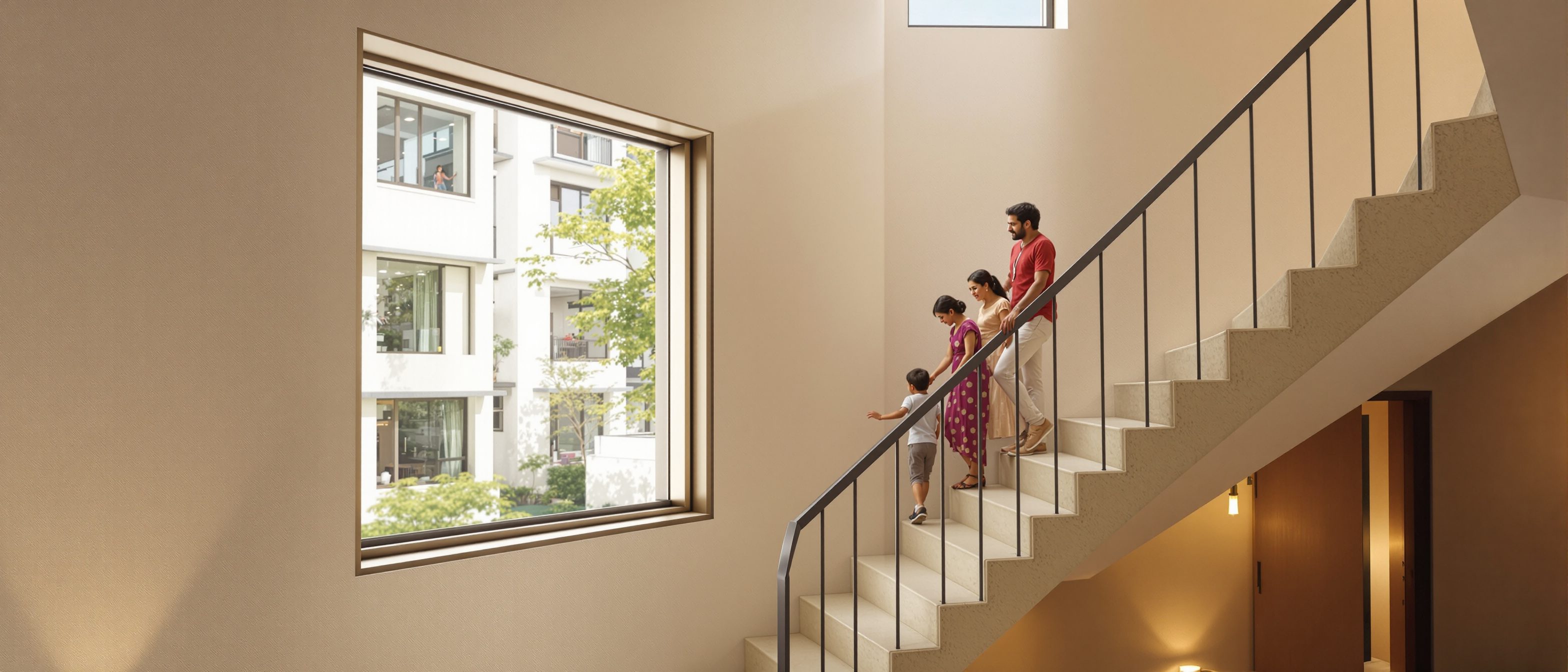
Fire Safety and Windows
What NBC 2016 Part 4 asks of windows in a fire: fire-rated glazing, spandrels, smoke venting and the grille-escape rule
A window is usually thought of as a way to let light and air in. In a fire it becomes something else: a path along which flames and smoke travel from floor to floor, a barrier that must hold a corridor smoke-free long enough for people to leave, and sometimes the only way out of a burning room. The National Building Code of India 2016, Part 4 (Fire and Life Safety), treats windows in all three roles. This guide explains what the code asks of windows in a fire, in plain terms for an Indian homeowner.
This is a compliance reference, not a design how-to. Wherever a number appears, treat it as indicative and verify your local municipal building bye-law, which adopts and amends the NBC and governs in practice.
A different hazard from "safety glass"
It is easy to confuse two completely separate ideas, so we will say it first and clearly.
- Human-impact safety glass (toughened or laminated glass to IS 2553) protects a person from being cut if they walk into or fall against the glass. That is covered in our companion guide on safety glass for homes in India.
- Fire-rated glazing is a different thing entirely. It is glass and framing designed to resist fire and stop its spread for a stated period — measured in minutes, not in shatter pattern.
A toughened glass door can be perfectly safe to walk through and offer almost no fire resistance. A fire-rated screen can hold back a blaze for an hour and not be "safety glass" in the impact sense at all. This guide is about fire.
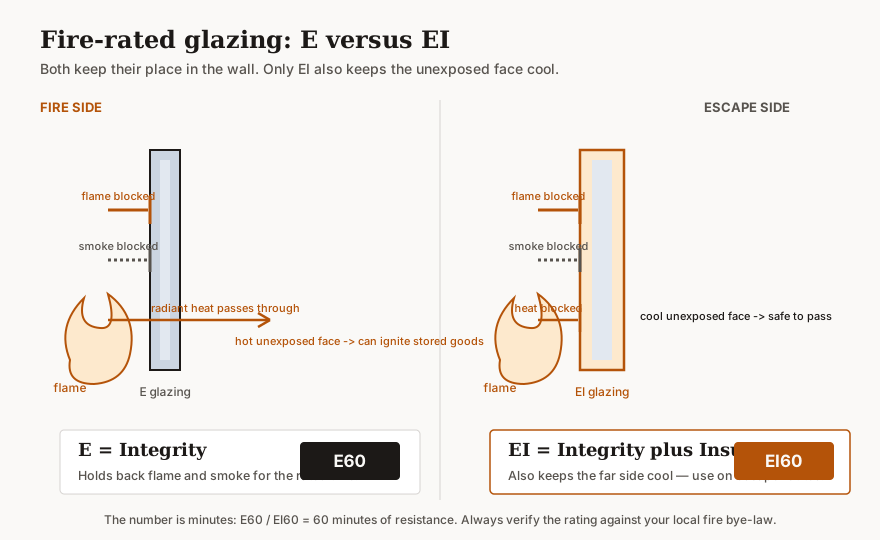
How fire ratings are written: E and EI
Fire resistance of a glazed element is expressed by a letter and a number of minutes.
| Class | What it guarantees | Heat passes through? | Typical use at a window |
|---|---|---|---|
| E (Integrity) | Holds back flame, hot gases and smoke; stays in one piece | Yes, radiant heat still transmits | Where you only need to stop flame and smoke crossing |
| EI (Integrity and Insulation) | Does E, and also keeps the unexposed face cool enough not to ignite nearby items | No, the cool side stays safe | Near an escape route or where people may pass close to the glass |
| EW | Integrity plus limited radiation control (between E and EI) | Partly | Some facade and boundary situations |
So E60 means "integrity for 60 minutes". EI60 means "integrity and insulation for 60 minutes". The minutes you commonly see in residential and small-occupancy work are 30, 60, 90 and 120. The local fire officer and the bye-law decide which rating applies where; do not assume.
Common fire-rated glazing products in India include wired glass (a steel mesh holds the pane together when it cracks — integrity only), fire-resistant ceramic glass, and intumescent laminated units whose interlayer foams up opaque when heated, delivering the insulation (I) part of an EI rating.
Fire spread between floors: the spandrel
One of the least-understood fire rules concerns the strip of wall between the top of one floor's window and the bottom of the window above — the spandrel. In a fire, flames leaving a lower window lick up the facade and can re-enter the window of the flat above. A solid, fire-resisting spandrel of adequate height (or a projecting horizontal fin) slows that vertical jump.
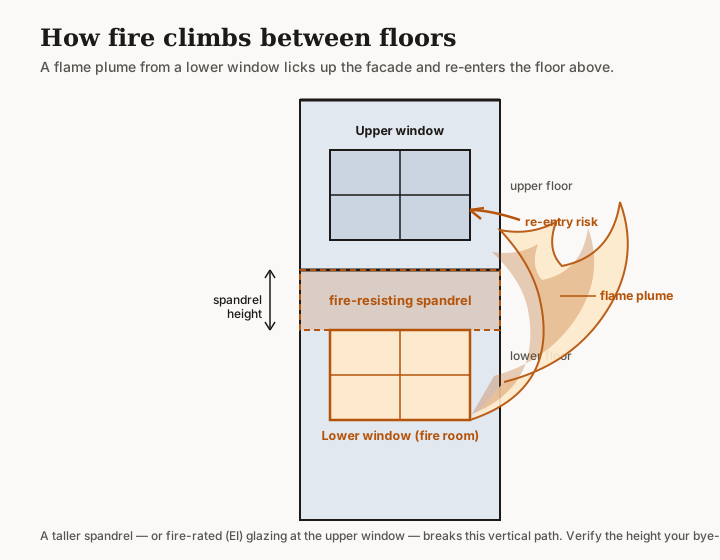
This matters most in apartments and stacked construction. If you are buying a flat or planning a facade renovation, a continuous run of glazing from floor to floor with no fire-resisting spandrel is a red flag worth raising with the architect or society. The same logic limits how close a window may sit to the plot boundary and to a neighbour's openings, so that a fire next door does not reach in through your glass. These distances are set by your bye-law.
Where fire-rated glazing is actually required
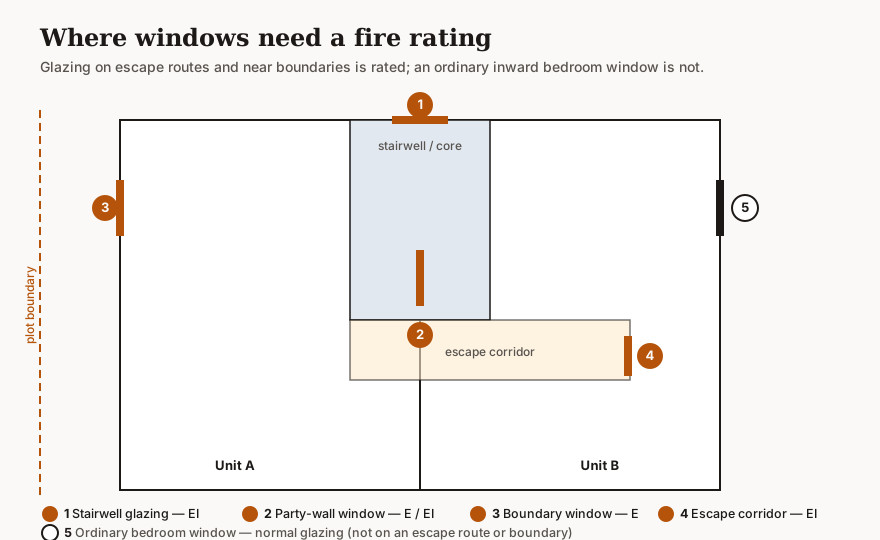
You do not need fire glass everywhere — that would be needlessly expensive. The code asks for it at specific points where a window forms part of a fire-separating wall or sits beside an escape route.
| Location | Why it is fire-critical | Typical expectation |
|---|---|---|
| Glazing in a stairwell or protected lobby wall | The staircase is the escape route; it must stay tenable | EI-rated, often 60 minutes |
| A window in a wall separating two dwelling units | Stops fire crossing from one home to the next | E or EI per bye-law |
| Window near the plot boundary or facing a neighbour's opening | Resists fire spread between buildings | E-rated, distance-dependent |
| Glazing onto an internal corridor used for escape | Keeps the route smoke-free | EI-rated |
| Ordinary external bedroom or living-room window | Not a fire-separating element | Normal glazing (but see escape rules below) |
Smoke ventilation
Windows also help remove smoke. NBC Part 4 expects naturally ventilated escape routes and certain rooms to have openable area to the outside so heat and smoke can clear, and it sets out mechanical smoke extraction for enclosed spaces and basements. For a home, the practical takeaway is that an openable window in a stairwell or a basement is not optional decoration — it is part of the life-safety system. Painted-shut or grille-locked openings defeat it.
The grille rule: never trap yourself
This is the single most important point for Indian homes, where security grilles are near-universal.
A grille fitted for burglary protection must never become a cage in a fire. NBC and fire-safety practice require that escape must not be blocked — so at least one openable, quick-release grille per room is the rule that saves lives.
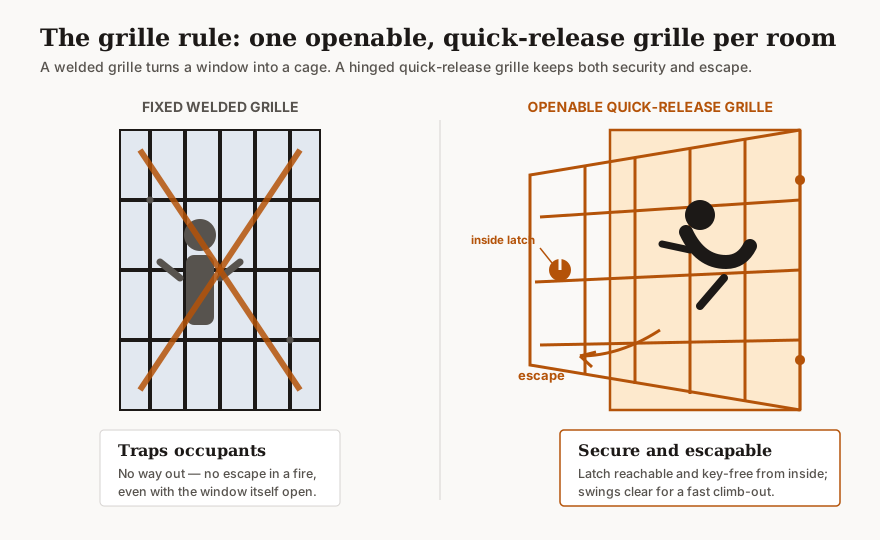
A fixed, welded MS grille across the only window of a bedroom means that if the door is on fire, there is no way out. The fix is simple and cheap: at least one grille per habitable room should be a hinged, openable, internally-latched type — openable by hand from inside without a key, but not reachable from outside. This connects directly to our emergency escape window requirements guide, which sizes the escape opening itself.
Fire-safety window checklist
| Check | What good looks like |
|---|---|
| Stairwell and lobby glazing | Fire-rated (E or EI) to the rating your bye-law sets |
| Boundary and party-wall windows | Rated and spaced per the plot-boundary distance rule |
| Spandrel between stacked windows | Solid, fire-resisting; no full floor-to-floor glass without protection |
| Smoke venting | Stairwell and basement windows openable to outside air |
| Bedroom grilles | At least one openable, quick-release grille per room, key-free from inside |
| Product proof | Fire-rated units carry a test certificate stating E / EI and minutes |
| Sign-off | Cross-checked against the building bye-law and the local fire officer |
When in doubt, ask the supplier for the fire test certificate (it will name the class and the minutes) and ask the architect which walls the bye-law treats as fire-separating. The honest reality is that the local bye-law and the fire department's no-objection process decide the specifics — this guide tells you what to look for and what questions to ask.
Related reading
- The umbrella map of every code that touches a home window: Residential Window Standards in India.
- The different hazard — cut-resistant glass: Safety Glass for Homes in India.
- The escape opening itself: Emergency Escape Window Requirements.
- Where windows fit in the wider rulebook: Building Regulations and Compliance.
References
- Bureau of Indian Standards — National Building Code of India 2016 (Part 4: Fire and Life Safety): https://www.bis.gov.in/standards/technical-department/national-building-code/
- National Disaster Management Authority — fire safety in buildings guidance: https://ndma.gov.in/Natural-Hazards/Fire
- Bureau of Indian Standards — IS 2553 (Part 1): 2018, Safety glass: https://www.services.bis.gov.in/php/BIS_2.0/bisconnect/knowyourstandards/Indian_standards/isdetails
Export this guide
Related Guides — Deep-dive reading
Emergency Escape Window Requirements in India
Egress window sizing, sill height and the openable-grille rule that keeps a bedroom from becoming a fire trap
Windows & GlazingNational Building Code Window Requirements
What NBC 2016 requires of a home window in India: glazed area for light, openable area for ventilation, by-room minimums, ceiling heights and the bye-law that actually governs.
Windows & GlazingWindow Design for Apartments (India): Working With Openings You Cannot Move
You rarely get to move an apartment window, so the design happens at the glass, the balcony and the bye-laws. Films, blinds, secondary glazing, safe grilles, single-aspect cross ventilation and what the society actually lets you change.
Windows & GlazingRelated Tools — Try Free
Cross-Ventilation Analyzer
Estimate airflow and air changes per hour (ACH) from room size, window areas, layout, and local wind — with NBC 2016 Part 8 compliance check.
Ventilation CalculatorWindow Size Calculator
Get the right window size, glazing area and openable area for any room using NBC daylight rules.
Window ToolWindow Grill Design Selector
Pick a window grille style and material by priority — security, looks, budget, view — and estimate cost.
Window Tool